


28 May Wealthy from the Water
Deep in the oral history archive of the Confederated Salish and Kootenai Tribes (CSKT), a 1977 recording captured the words of Pend d’Oreille elder Mitch Smallsalmon. He recalled the abundance of the landscape that now encompasses western Montana, and the good fortune of the Salish and Pend d’Oreille people who have called this place home since time immemorial. His now well-known words encapsulate the ancient, reciprocal, and enduring relationship his people have always had with the region’s lakes, rivers, and creeks: “Kʷem̓t šey̓ še nk̓ʷúlexʷ qe sqʷyúlexʷ ɫiʔe l sewɫkʷ. (“And by that, we were wealthy from the water.”)
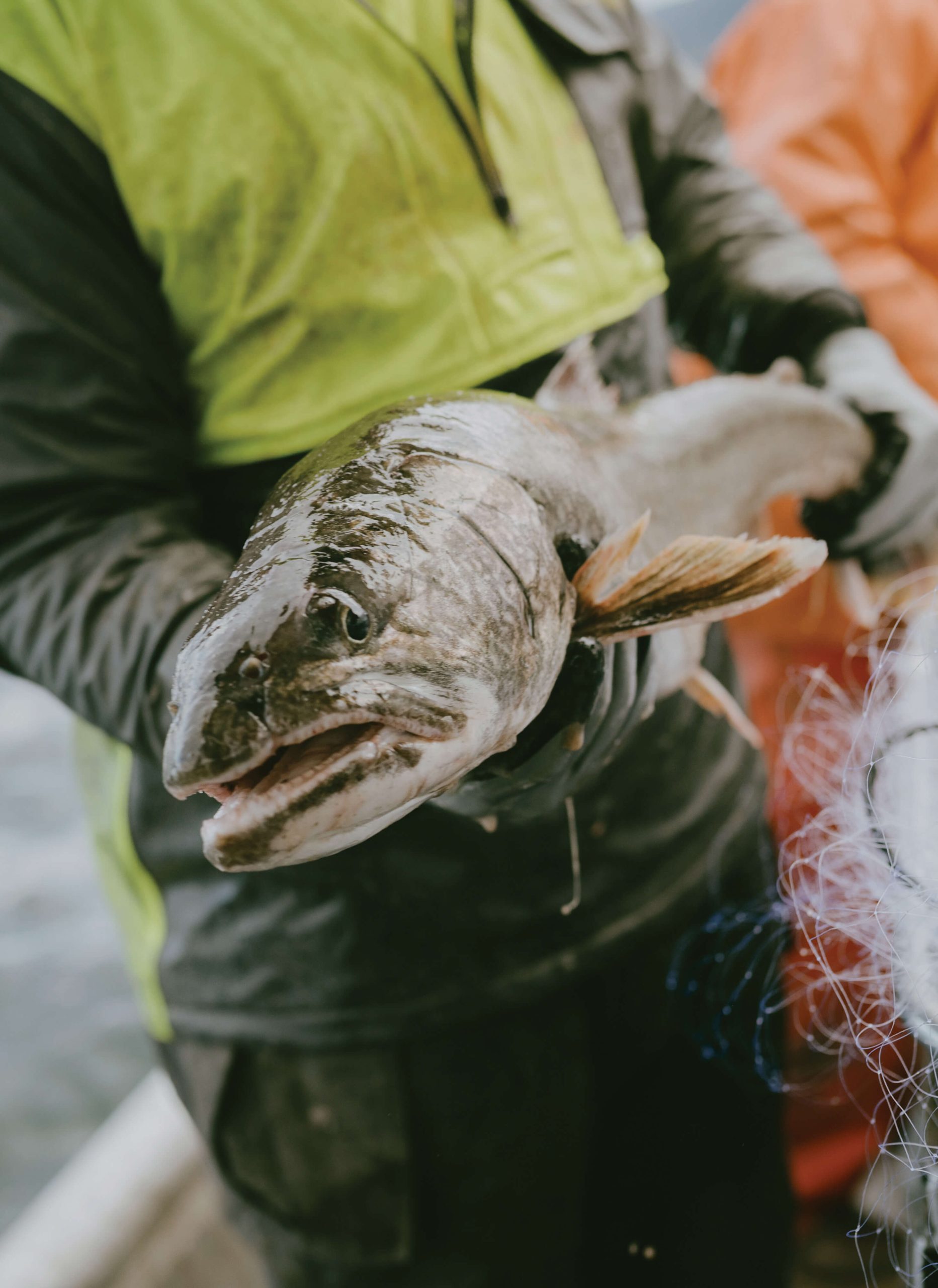
Invasive lake trout like this one removed from a Flathead Lake gill net can grow up to 4 feet in length and eat fish up to half their size, making them predators to even the largest westslope cutthroat trout in the lake.
While the Salish (Séliš), Kalispell (Ql̓ispé), and Kootenai (Ktunaxa) have always hunted and gathered, it was historically the abundant fisheries that provided a constant and reliable source of food — the wealth they pulled from the water. Bull trout, especially, were a staple, as evidenced by their prominence in Salish place names: Nłʔáyčstm (Missoula), “place of the small bull trout;” Naáycčstm Swełkʷs (Blackfoot River), “bull trout’s waters;” and many others.
Endemic to the western United States, bull trout were an ideal food source: plentiful, large (up to 3 feet long and over 20 pounds), and available year-round. “I remember an elder telling me that when she was young, they would walk out on Flathead Lake back when it used to freeze all the time,” says Cindy Benson, fisheries specialist for the CSKT and a tribal member herself. “They would go out to Wild Horse Island, cut holes in the ice, and fish for their food. And they would catch huge bull trout. They would have to chop their holes bigger to get the fish back through the ice.”
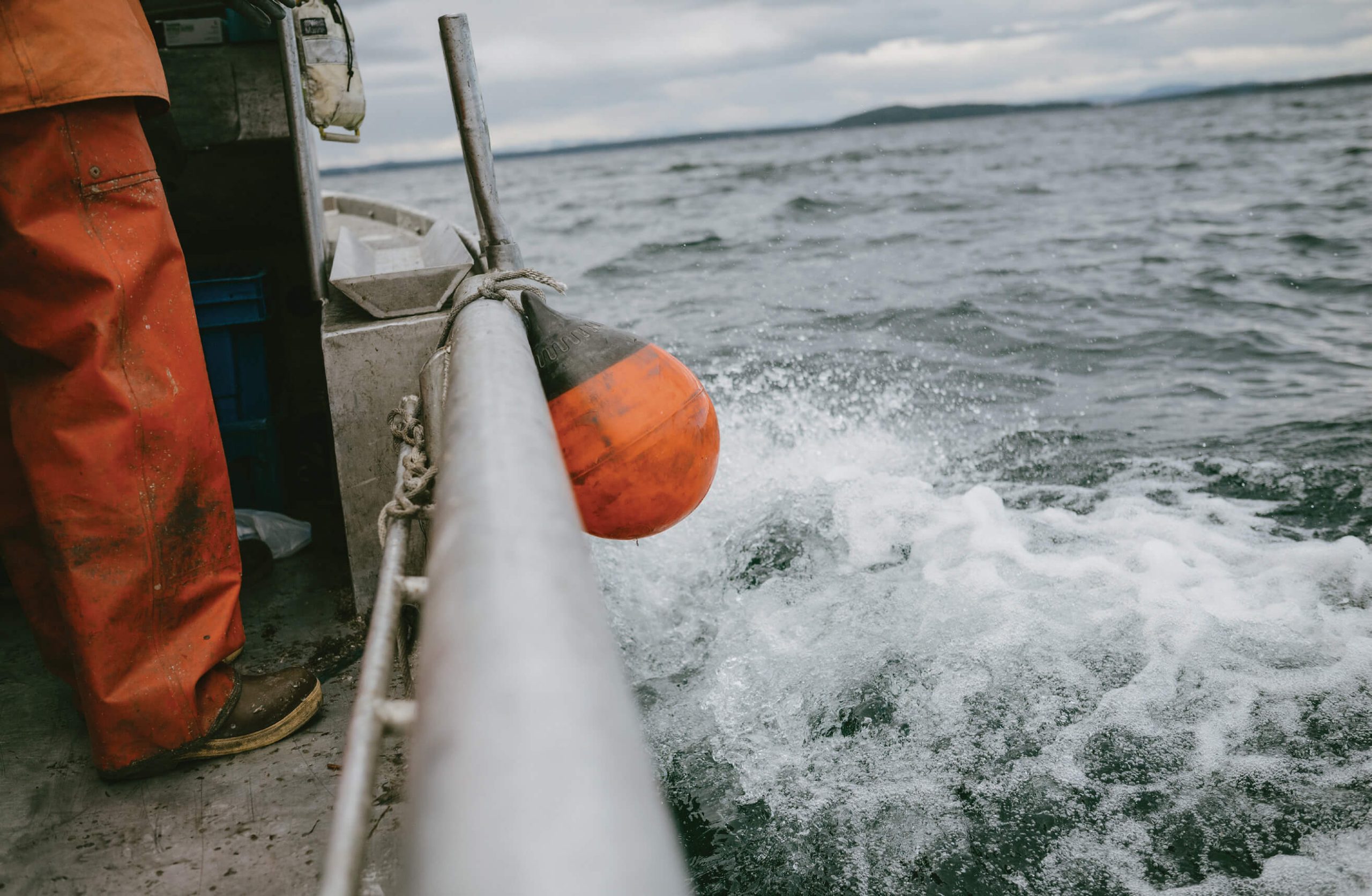
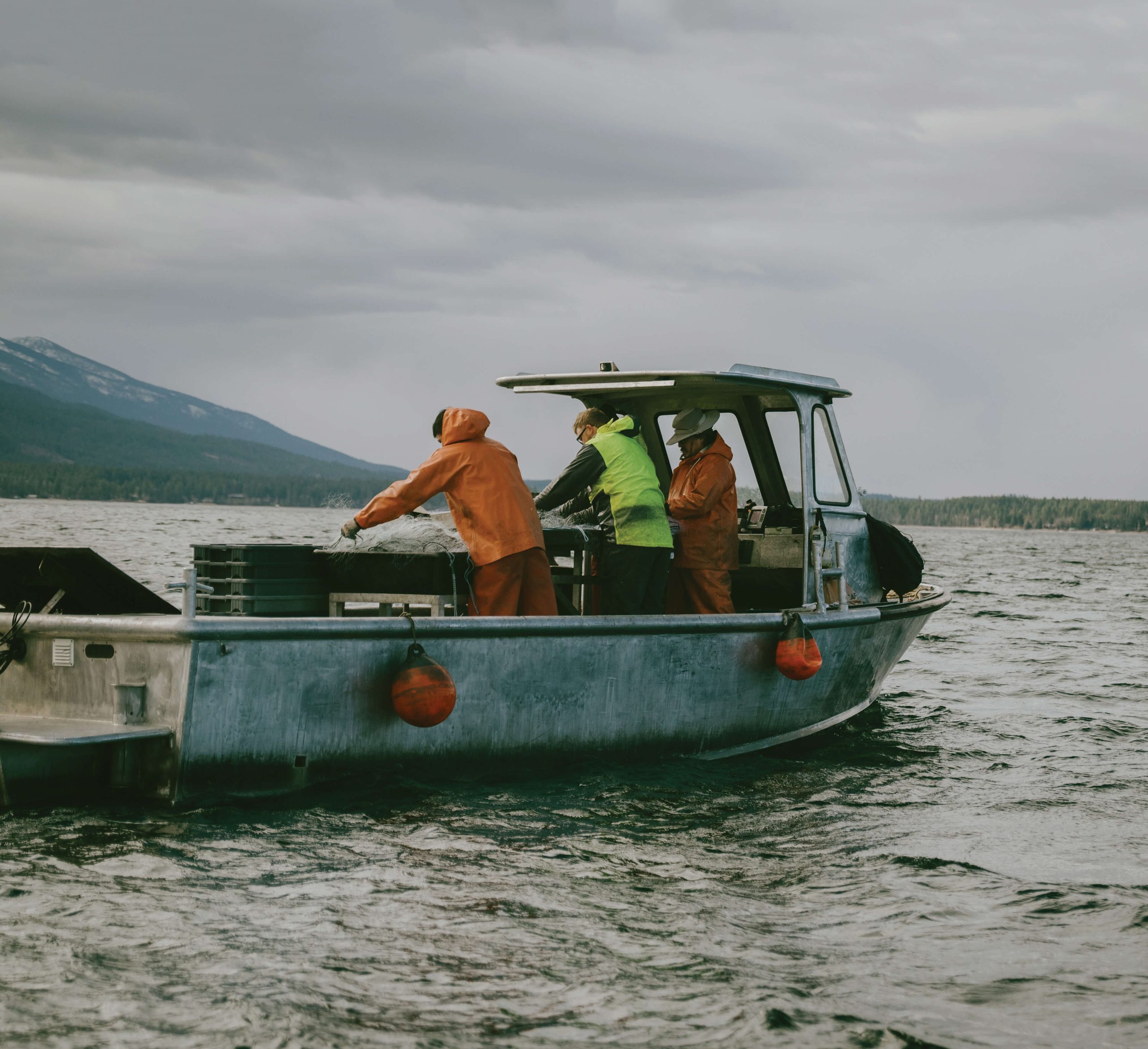
As part of the CSKT’s Fisheries Program, Native Fish Keepers owns and operates a fleet of fishing boats to deploy gill nets in Flathead Lake as a way to manage the population of invasive lake trout.
And so it was on Flathead Lake up until the 1980s: Bull trout remained the apex fish species, and the tribes maintained their ties to the culturally important species. Then, suddenly, everything changed.
To understand what happened, you must travel back to the early 1900s, when misguided management plans triggered a cascade of unintended consequences that are still being felt today. During that time, resource managers introduced several non-native species to the lake with an eye toward sportfishing, most notably kokanee — a landlocked salmon — and lake trout — a large-mouthed fish with a voracious appetite.
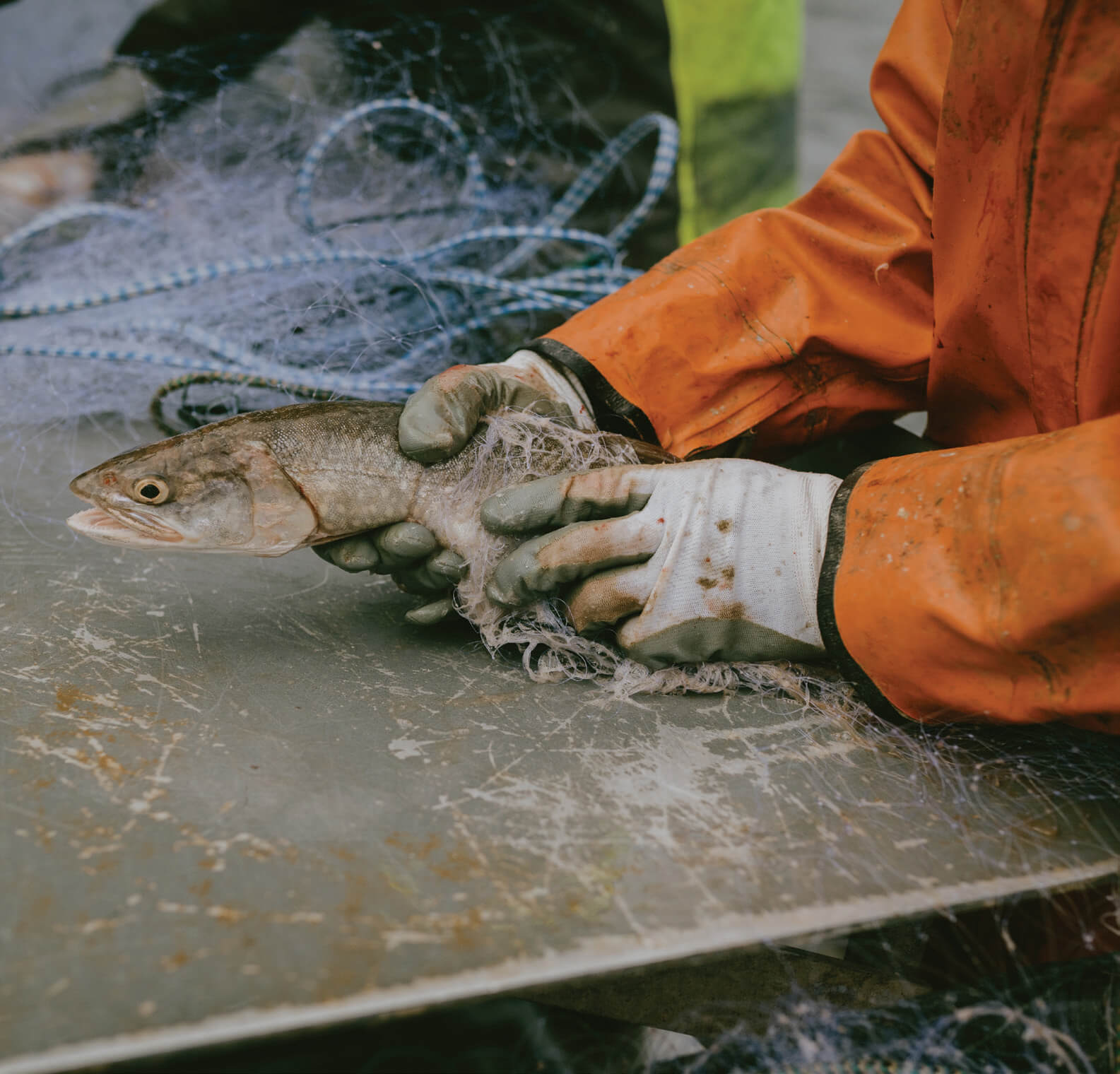
A CSKT Fisheries technician pulls a small lake trout from a gill net on Flathead Lake. Fish of this size are ideal for commercial sale, as larger fish accumulate heavy metals and may not be safe for human consumption.
“[Lake trout] are a top predator, completely adapted to lake environments,” says Barry Hansen, a fisheries biologist with CSKT. “Therefore, over the last hundred years or more, managers have wanted to plant them in lakes throughout the West. And they’ve done very well. You then add mysis to the equation, and it’s just gasoline on the fire.”
What are mysis, and why are they in the lake?
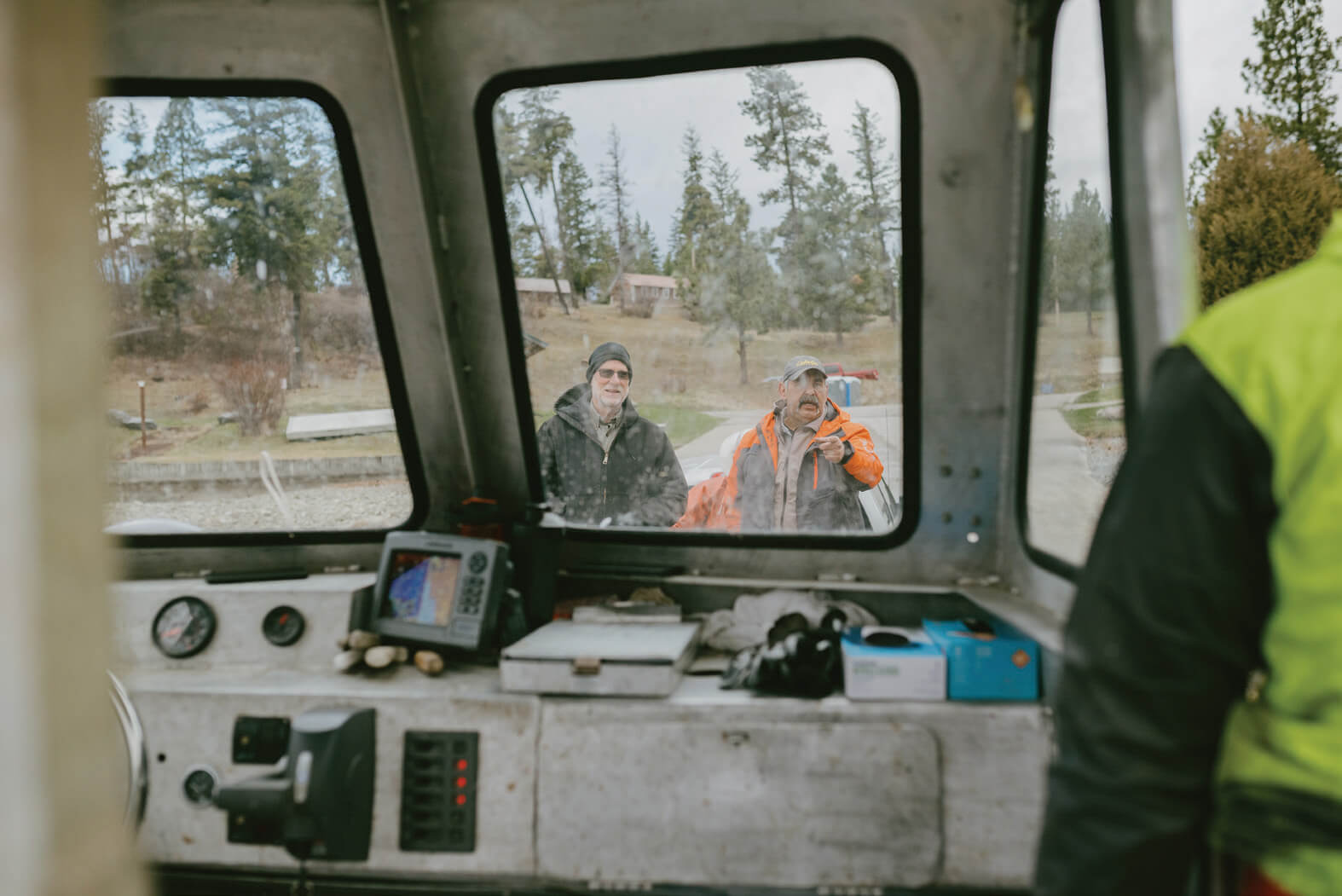
CSKT Fisheries biologist Barry Hansen and technician Joe Santos assist in launching one of the gill-net boats owned by the tribes. Native Fish Keepers sets and pulls gill nets on Flathead Lake nearly every day between March and December.
A tiny shrimp species native to deep, cold lakes in the eastern part of North America, Europe, and the Arctic, mysis arrived in Flathead Lake in 1981, after being introduced elsewhere in the watershed as a food source for kokanee. The kokanee population was thriving — drawing fishermen and tourists from far and wide — but managers reasoned that, with an additional food source, the population would fare even better.
They were wrong. When mysis arrived in the lake, kokanee populations plummeted. By 1988, they had all but vanished. Unfortunately, the plan failed to consider the habits of the species in question: Kokanee spend the day feeding and then head to the bottom of the lake at night. Mysis do the opposite, and while they’re feeding at night, they gorge on the zooplankton that kokanee typically eat.
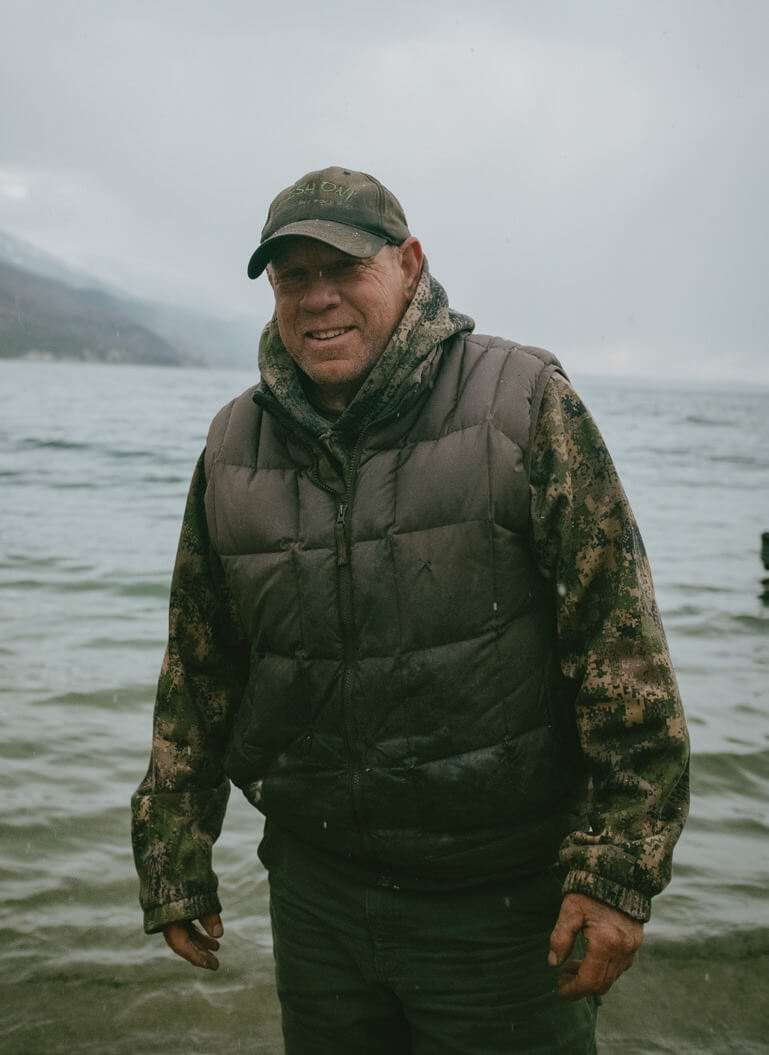
As part of their efforts to reduce lake trout numbers, the tribes have launched Mack Days. Held twice a year in the spring and fall, the contest brings in serious and dedicated anglers who spend days at a time at the lake hoping to win a portion of the more than $200,000 in prizes given out over the course of the 2-month-long event. Jerry Benson, pictured, of Plains, Montana has been a regular in the competition since its inception.
The intended food source suddenly became a competitor. Meanwhile, the lake trout population — which had, until that point, remained relatively small — took advantage of the situation, eating both mysis and kokanee, as well as the native bull trout.
Lake trout numbers skyrocketed while bull trout numbers went into freefall. “I remember when my dad used to fish when I was little,” recalls Benson. “They used to just catch bull trout and westslope cutthroat. And I remember the day that he and his friend caught their first lake trout. They were shocked.”
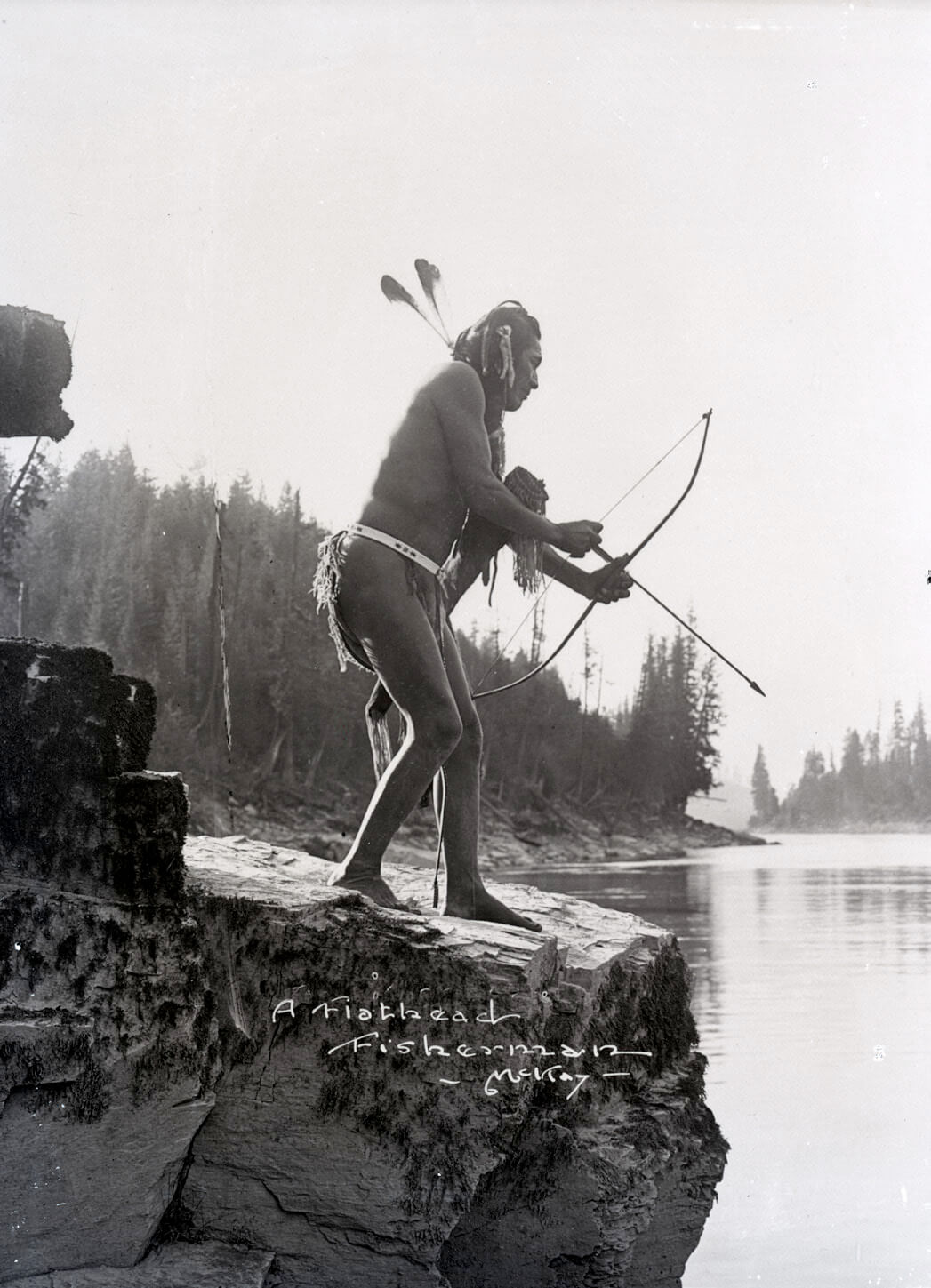
Sam Resurrection hunts fish with a bow and arrow, possibly on Flathead Lake. This method of fishing was common, particularly in certain waterways: Silver Bow Creek in Butte was known as Snťapqey (“Place Where Something is Shot in the Head”), specifically referring to bull trout. | ARCHIVES & SPECIAL COLLECTIONS, MANSFIELD LIBRARY, UNIVERSITY OF MONTANA
Within 10 years, bull trout were listed as a threatened species under the Endangered Species Act. (To be clear, bull trout populations had been in decline throughout their range for many decades due to the pressures of mining, logging, dams, irrigation, and other non-native species.) As co-managers of Flathead Lake, the CSKT Division of Fish, Wildlife, Recreation, and Conservation knew that they had to take action.
“If we, as the Salish and Kootenai Tribes, did not choose to intervene in the system, all the evidence suggested we would lose the native fish,” says Hansen. “Bull trout are culturally very important; biodiversity is very important and respected. And the tribes decided something had to be done. So we pretty much jumped in with both feet and implemented these various measures to control [lake trout] abundance.”
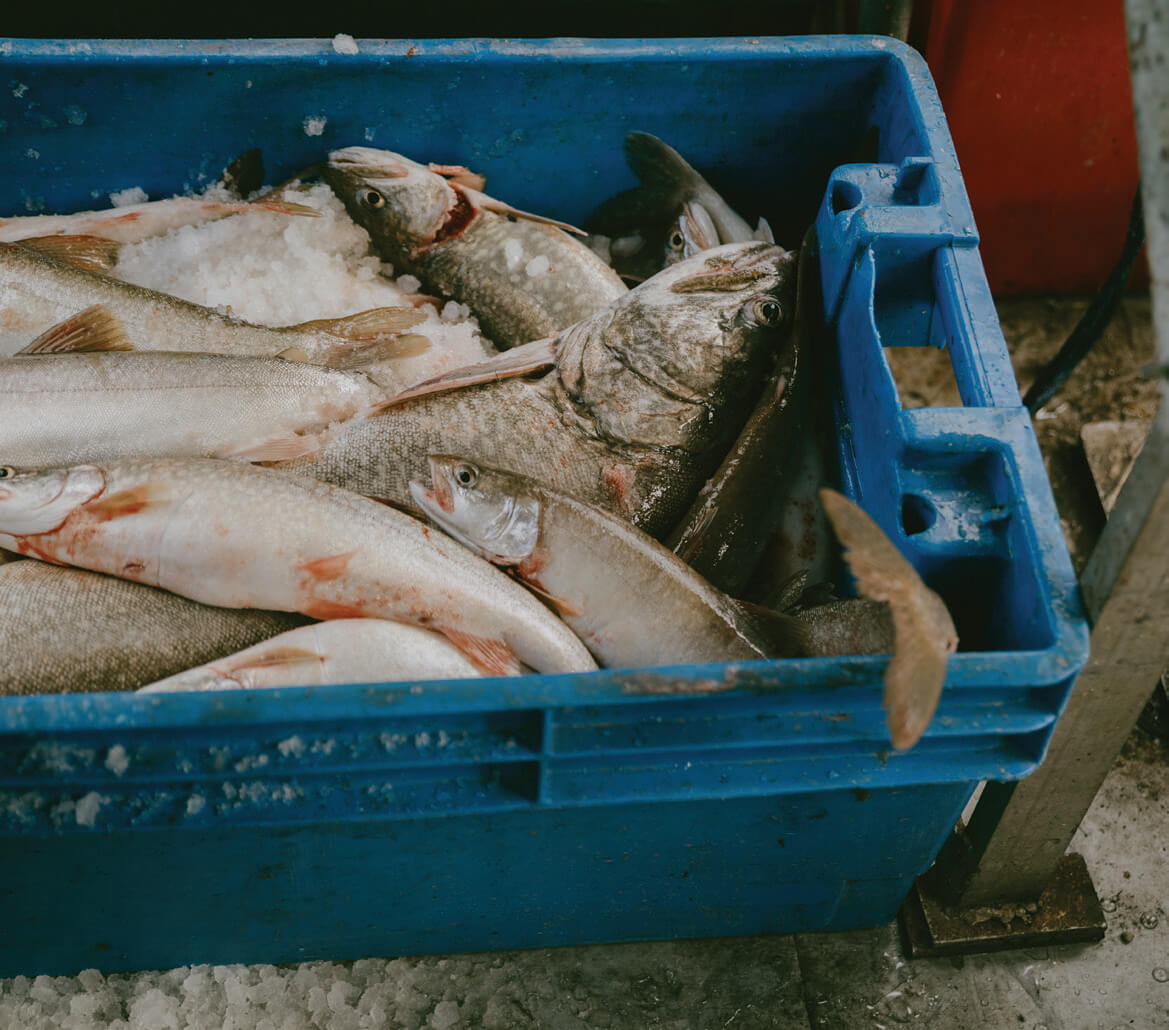
Freshly caught lake trout are ready to be transported back to the processing plant at Yellow Bay. Native Fish Keepers operates a small processing facility where they cut, package, and distribute fish to local grocers and restaurants.
They wrote up a management plan that prioritized the health of native species and the ecosystem as a whole while also recognizing the popularity of lake trout as a sport fish. “There are always so many challenges in education and comparing value systems,” says Hansen. “You know, I sympathize with people that love to fish and they don’t care what they catch as long as there’s something there to catch. I love lake trout, but they don’t belong here. There are those that want to fish everything near home. But if you want to fish lake trout, you should have to travel, because you’re not in lake trout country here.”
Despite some resistance from charter captains and state fisheries managers, and after much negotiation, the tribes adopted a two-pronged approach to reach a compromised goal of a 75 percent reduction. And, unlike some other lake trout removal programs that just throw the fish away, they vowed to put them to good use: “If we committed to removing these fish,” says Hansen, “we also committed to not wasting them.”
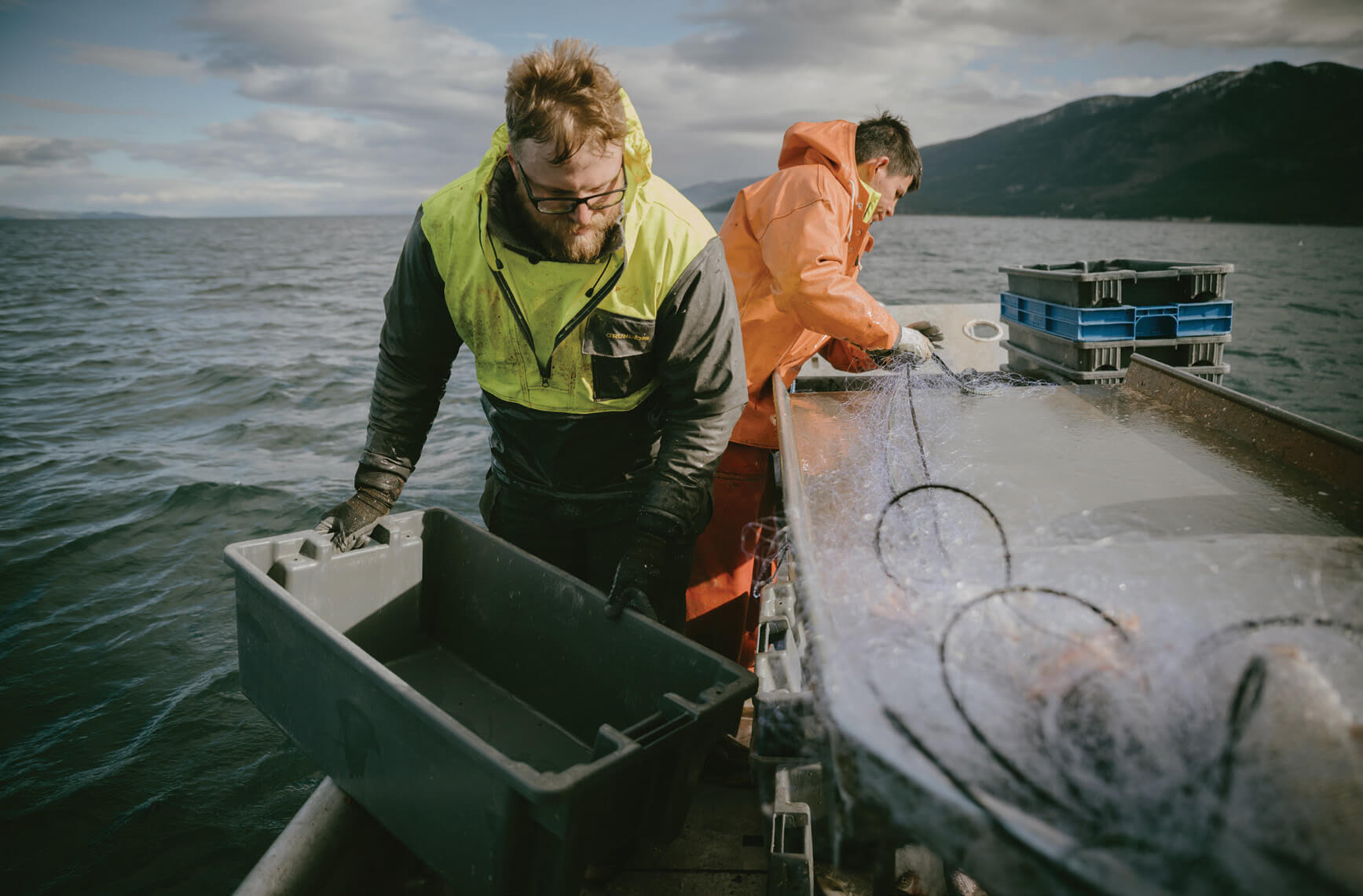
Technicians Watson and Parr haul in a gill net that was set the day prior.
In 2002, they launched a biannual, weeks-long fishing derby known as Mack Days (Mackinaw is another name for lake trout). Anglers come from far and wide in the spring and fall to spend long days catching lake trout, competing for hundreds of thousands of dollars in cash and prizes — all funded by the tribes. The fish are then processed at a tribally owned and operated facility. The event has grown in popularity and success since its inception in 2025; the spring event brought in more than 60,000 fish.
In 2014, CSKT began a gill-netting program to further reduce the lake trout population. As with the Mack Days fish, their catch was initially donated to food banks and the tribes’ food sovereignty program. But by 2017, the volume of their catch had increased, and they decided that, in addition to the donations, they could also market the fish to subsidize the program. The tribal council founded Native Fish Keepers, a nonprofit corporation responsible for catching, processing, packaging, and distributing the lake trout and whitefish.
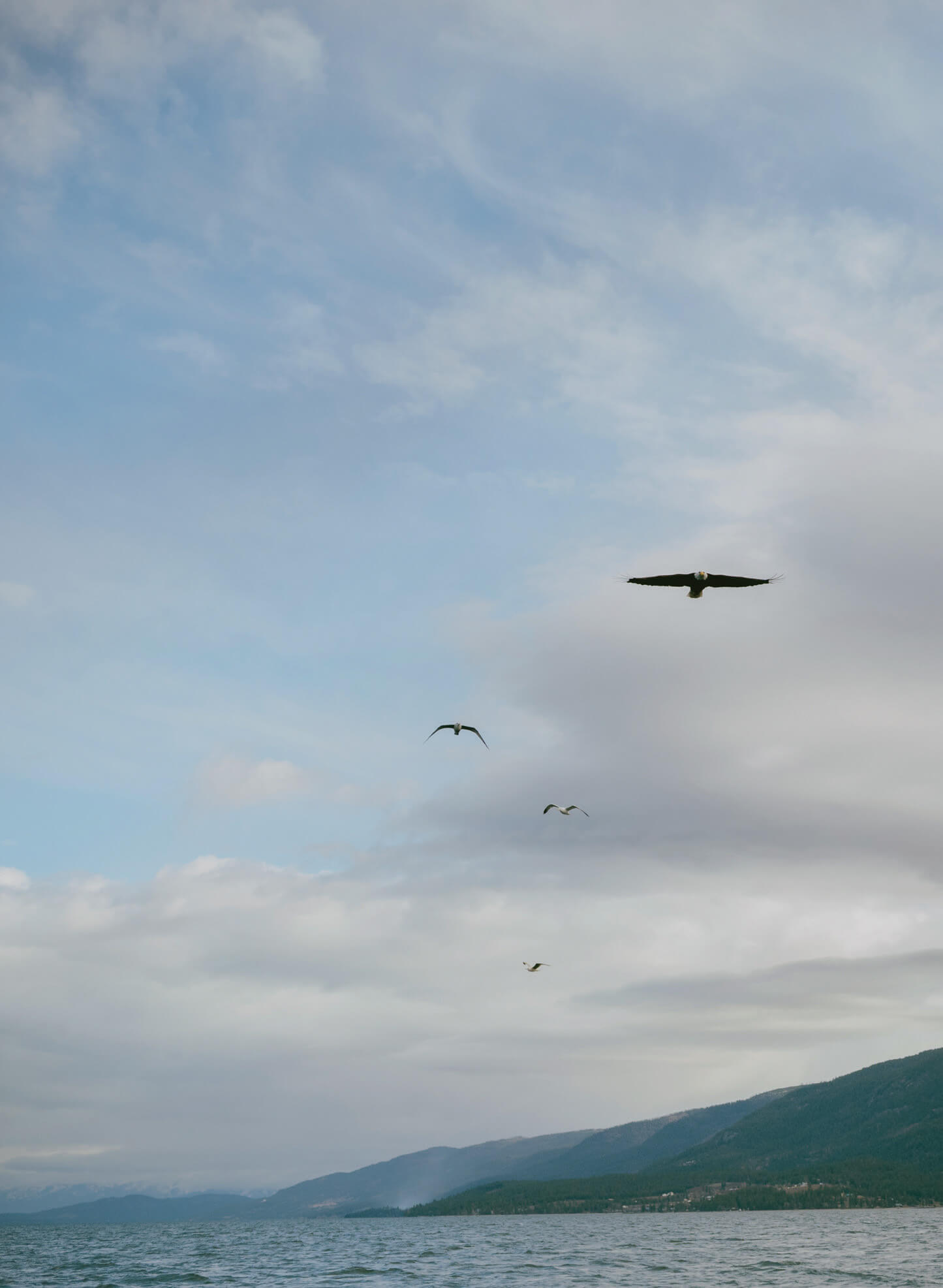
Eagles follow behind the boat as it pulls a gill net along the east side of Flathead Lake.
“[Suppression] has been a very big effort, and it’s very expensive,” says Hansen. “It requires a large number of people, facilities, and equipment. All the revenue from Native Fish Keepers goes back into the program, and that covers only roughly 20 percent of our costs.”
Benson mentions that consumers like the idea of buying fish that’s locally caught and processed. “It gets sold all the way from Whitefish to Bozeman. Restaurants want fish that’s caught in Montana on their menu.” In addition to the restaurants, Native Fish Keepers’ products can be found in the freezer aisle of a few dozen grocery stores throughout the region.
“And I think many of our consumers like the fact that it’s conservation-based and it’s local and it’s wild,” says Hansen. “You know, every other fish population is overexploited, so it’s nice to buy a fish that you may have decided is important for your diet and know that it’s helpful rather than harmful.”

Native Fish Keepers supplies processed fish to local grocers and restaurants in hopes of establishing a commercial demand for the fish, which in turn funds their efforts. As part of a seasonal menu, The Bonfire in Woods Bay has offered a citrus-seared lake trout fillet served with chimichurri.
Both Benson and Hansen agree that this is a project that may never truly end: There will always be lake trout in Flathead Lake, and bull trout may never fully recover. But neither seems at all deterred by the enormity of the task, nor would they ever entertain giving up. Benson imagines the alternative: “You’d hate it if we didn’t do anything and, in 20 years, these bull trout disappeared and, all of a sudden, our grandkids looked at us and asked, ‘What happened? Why didn’t somebody do something?’”
“We’ve seen quite a bit of success,” says Hansen. “And what I mean by that is we can measure a degree of reduction in the lake trout abundance in Flathead. Unfortunately, we don’t see any change in the native species. So, either that’s going to be too big a challenge, or it’s just a matter of time until we get there.”
And while the ongoing suppression efforts carry a hefty price tag, the region’s waters still carry the wealth that Smallsalmon referenced decades ago. It’s a richness of history and a reciprocal relationship that has endured through upheaval. “[The tribes] have lived with these species for as long as they’ve existed,” says Hansen. “As far back as they can go, they’ve interacted with these species. They’ve allowed them to survive, and it’s integrated into their culture and their sustenance and even their clothing.”
Though progress may be slow, Benson says she’s proud of the tribes for the work they’ve done so far to rejuvenate and honor a fishery that has sustained them since their earliest days. “It’s what’s important to the tribes because it’s what’s important to the elders. And we’ve stuck with it.”
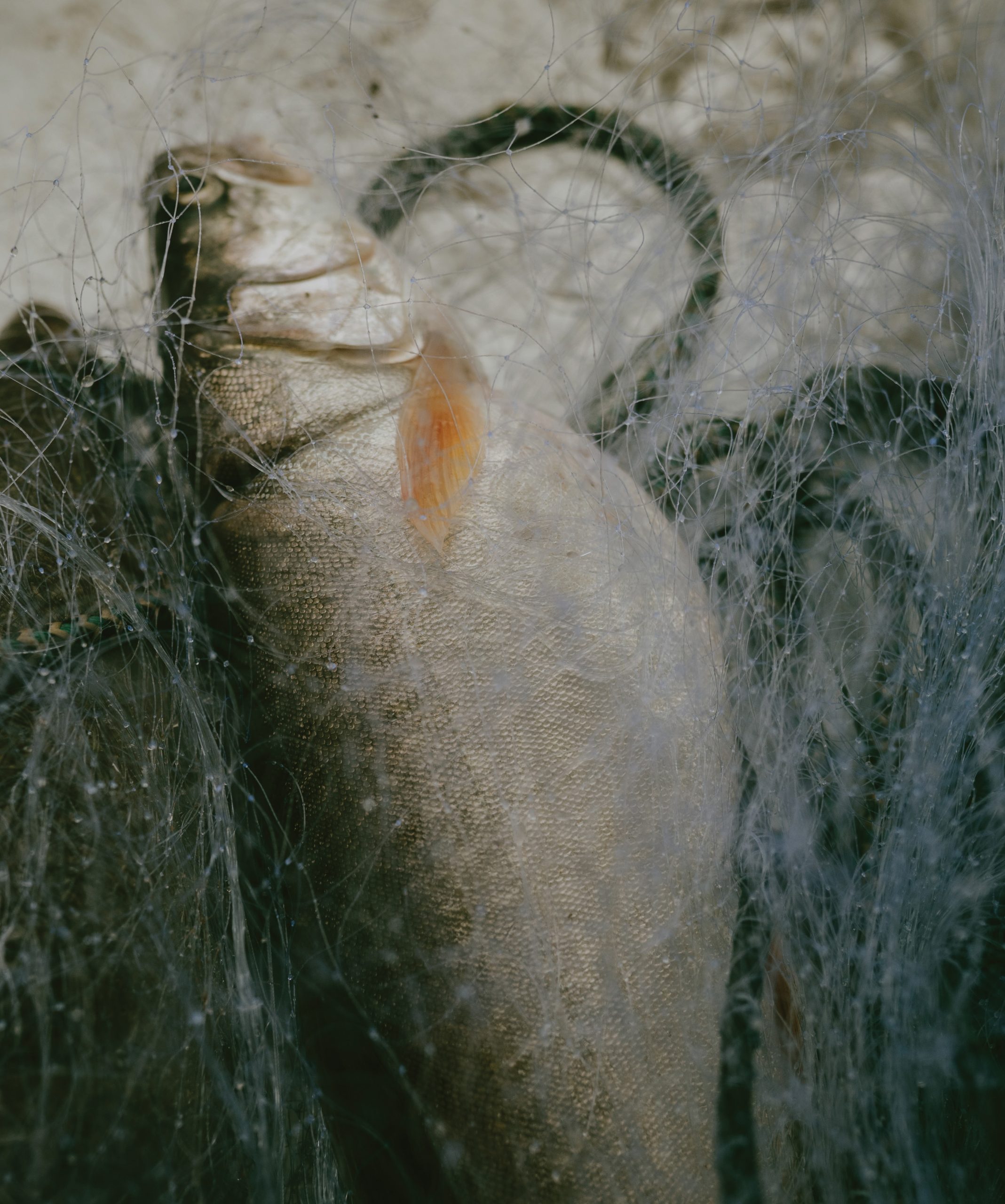
Sediment, Silver
Written by Donalyn White
Editor’s Note: What follows is a lyrical, place-based reflection on the collapse of the introduced kokanee salmon population in Montana’s Flathead Lake following the introduction of mysis shrimp and the complexity of even small, well-intentioned interventions.
I dream only in the shape of salmon.
Silver and red fish thread thick
through the night on the backs of my eyelids,
an inherited imprint of my father’s stories.
Back then, my dad says,
back then the salmon ran so thick through the rivers
you could walk across their backs
to the other side.
Back then, he says,
there were eagles in the trees,
dozens — no, hundreds —
that plunged down
to snatch their plenty
between the rolling backs of grizzlies.
Back then, he says, the bears had but to scoop their lazy paws
into the rushing water to bring them up
overflowing with spawning surplus.
That was when the shimmering scales of the kokanee
held their own luminosity;
and if you looked out onto the rivers at night,
you’d see about a million or more
sparkling silver galaxies swirling upstream
on their backs.
My father says/said/will say it again
because the story refuses to stay told
that people who didn’t know a damn thing of shimmer —
of galaxies folded into water —
believed they could make more of both;
could make radiance a resource.
As he tells it,
the men came with clean boots and careful language.
They came with charts and numbers.
A small addition, they said,
a deeper feast for the fish,
a better balance stitched invisibly below the surface.
And as they spoke,
even the moon leaned closer to listen;
she, too, mistook their confidence for wisdom.
As my dad tells it,
the shrimp arrived in Flathead Lake
when the men in their clean boots stepped into the water.
They lifted their faces to the sky
and their naive prayers turned to silver dust
as they hit the surface.
At dusk that night,
the moon bent low enough
to be read like a palm.
And the gut-hungry shrimp fed when the water slept,
lifting plankton from the dark,
leaving the daylight with its mouth open and empty.
So the food web loosened its knots,
and the lake trout grew,
and the kokanee went hungry,
fleeing upwards with zooplankton like ghosts.
He told me that by the third moon,
the lake had two shadows.
One held sound, one swallowed it whole.
After that, the bears’ paws started to come up empty,
and the eagles found only water,
and everything learned a new rule:
what feeds at night, survives.
He says that when the salmon disappeared,
the trees began to fall and the hills went bald.
Streams warmed, loosened, went faster,
as if — empty of the run —
they were eager to be finished.
My father says, will say, and when he is done saying,
the story will look for another mouth,
will press their silver insistence
against the softest parts of sleep
and then I will say
that these days, the valley breathes thin.
My kin live more by the light of their screens
than the shimmer of scale.
Even the moon arrives filtered now,
caught in glass,
its pale authority waning.
It has been a long time
since my feet last stood where my fathers have.
But the ground there still remembers my weight,
and the moon still manages to pool
in our old footprints.
Sometimes, at night,
the lake opens inside me —
water where there should be bone,
current in the place of breath.
And there — still —
against the back of my eyelids,
the kokanee feed only by moonlight,
swimming a thousand miles from home.
Melissa Mylchreest is a freelance writer and artist based in western Montana. When she’s not at her desk or in the studio, she can be found enjoying the state’s public lands and rivers with her two- and four-legged friends and family.
Aaron Agosto is a freelance photographer based in Montana’s Flathead Valley. His clients include Esquire Magazine, The New York Times, The Guardian, and The Wall Street Journal, among others. When not making pictures, he can be found out with his fly rod and his dog, Hayduke, on one of the state’s many rivers.
Donalyn White is a doctoral student and teacher in California. Raised in Colorado, with multigenerational roots in western Montana, she carries an enduring love for living in the shadows of the Rocky Mountains. Her work appears or is forthcoming in Door is a Jar, Truthout, and Counterpunch, among others.
No Comments