


31 Jul Round Up: Landmark: New sculpture at the University of Montana stands as a tribute to Rudy Autio
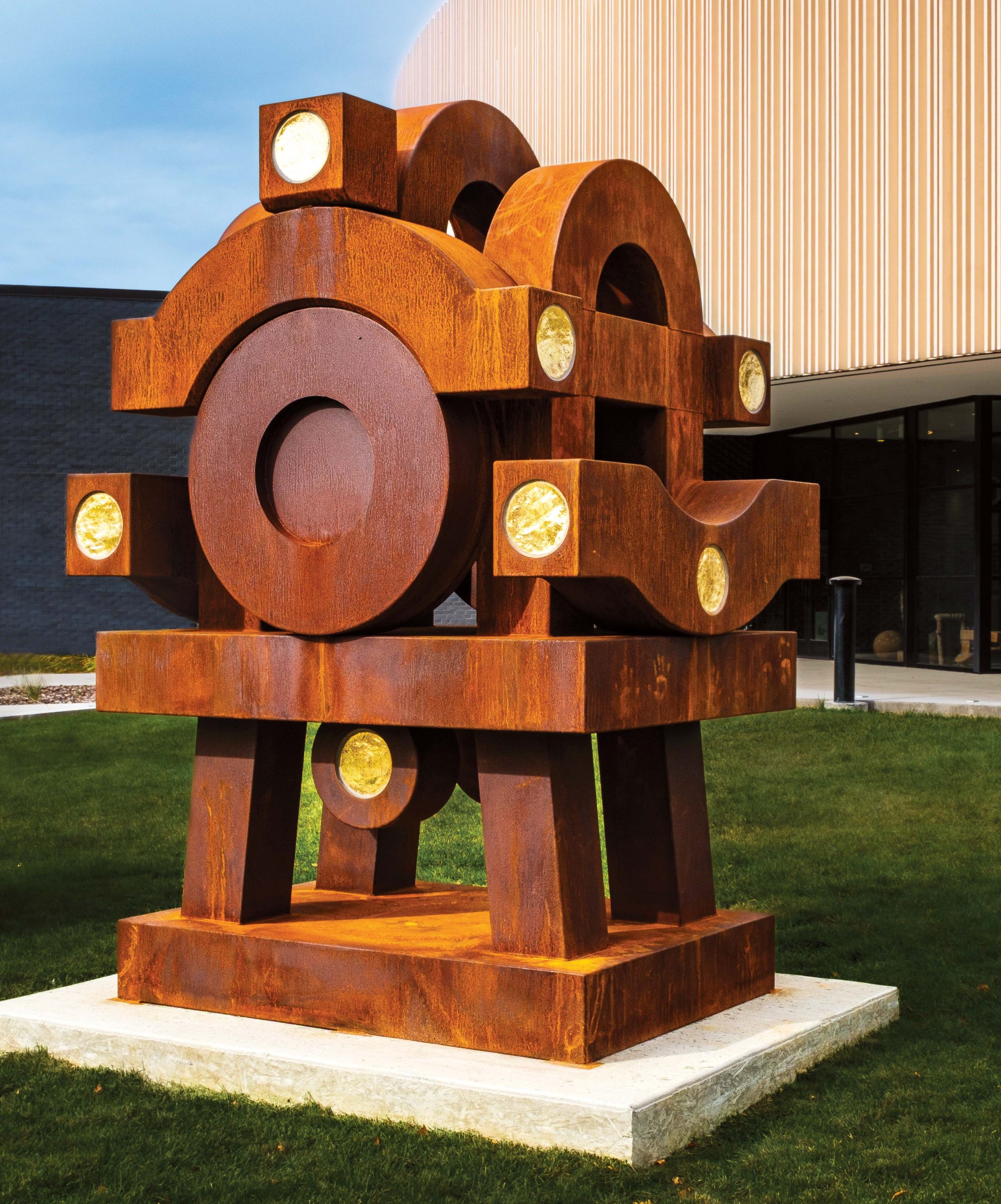
After seven years of dedicated work and fundraising, Rudy Autio [1926–2007] is now remembered through a newly remade steel version of his 1966 sculpture known as Signal. The new piece stands at the entrance of the University of Montana’s Miller Hall in Missoula, where Autio, an internationally recognized artist, established the ceramics program in 1957.
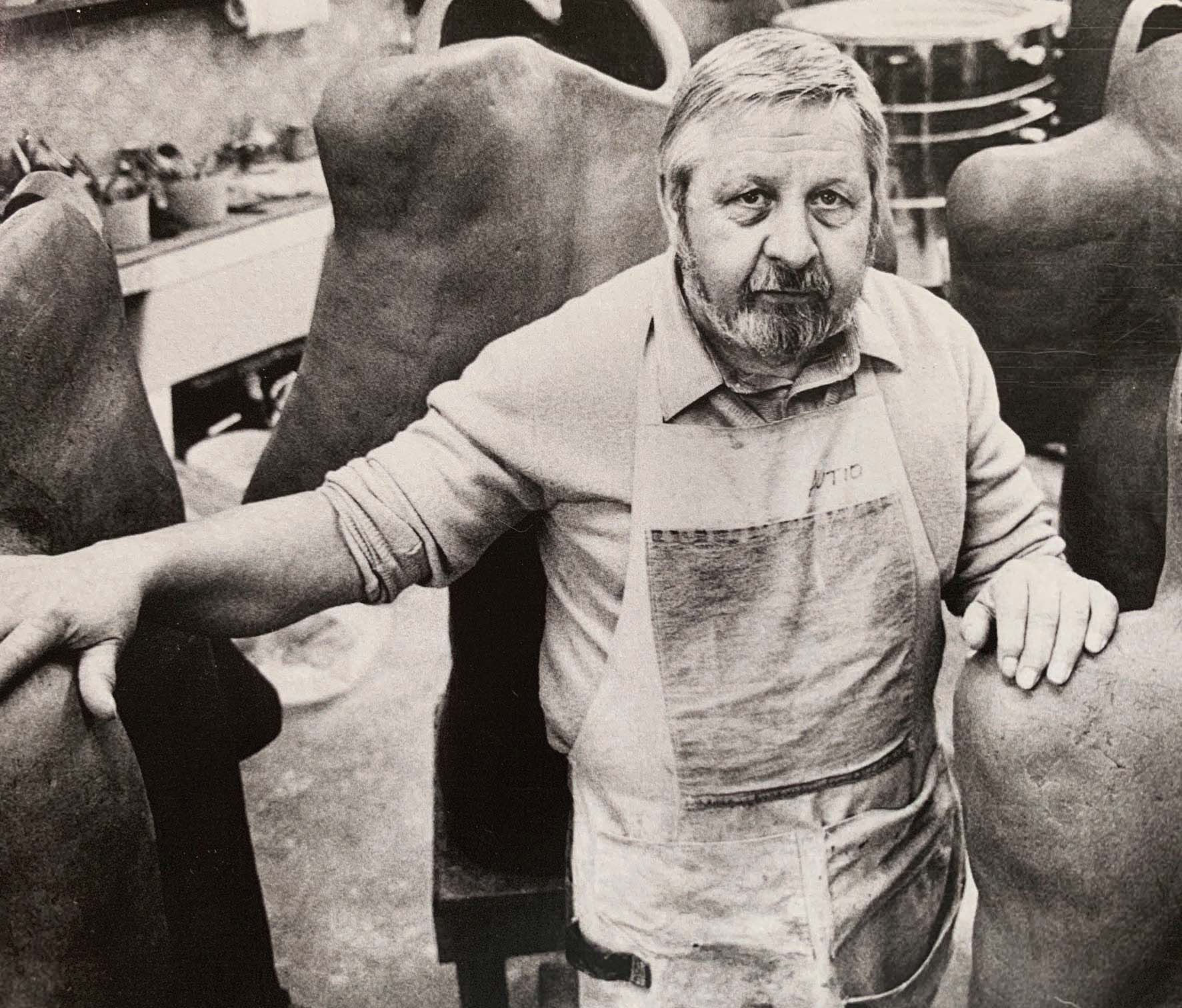
Rudy Autio was a pioneering figure in ceramic art, with influence that extended from Montana to the international art world. His work bridged traditional pottery and contemporary sculpture, drawing on Japanese ceramic aesthetics and philosophical ideas to bring a broader cultural perspective to his practice. | COURTESY OF LISA AUTIO
“Signal had quite a bit of history,” says H. Rafael Chacón, director of the university’s Montana Museum of Art and Culture. “Rudy proposed pieces for both the University of Montana (UM) and Montana State University (MSU), but neither institution gave him much money, so he built them from rebar and concrete. They were never meant to last. The one here was relocated around the campus and repaired twice.”
The one given to MSU disappeared, most likely taken down due to deterioration.]
Though produced on a tight budget, Signal was an important sculpture for Autio’s career. Fresh from Montana State College (the former name of MSU), and before going to graduate school, Autio and Pete Voulkos became the first directors of the Archie Bray Foundation in Helena. Then, in 1952, Shoji Hamada and Bernard Leach visited the newly conceived clay center. At that time, Autio became fascinated with Hamada’s work, which was based on the Japanese Mingei movement that celebrates the beauty of everyday handmade objects and their spiritual connection to nature.
“That visit was a turning point for Rudy. He thought about that a lot,” says Hugh Warford, who repaired Signal in 1974 and in 1998 and worked alongside Autio’s daughter, Lisa Autio, to produce the new sculpture. According to Warford, Signal stands as the piece most closely connected to Autio’s artistic vision, reflecting his deep interest in Mingei.
Signal portrays balance and harmony. It’s an architectural project based on Japanese design principles. The structure’s elements are seen not just as physical components but as spiritual, which reinforces the sculpture’s significance as both an artistic and philosophical statement, says Chacón.
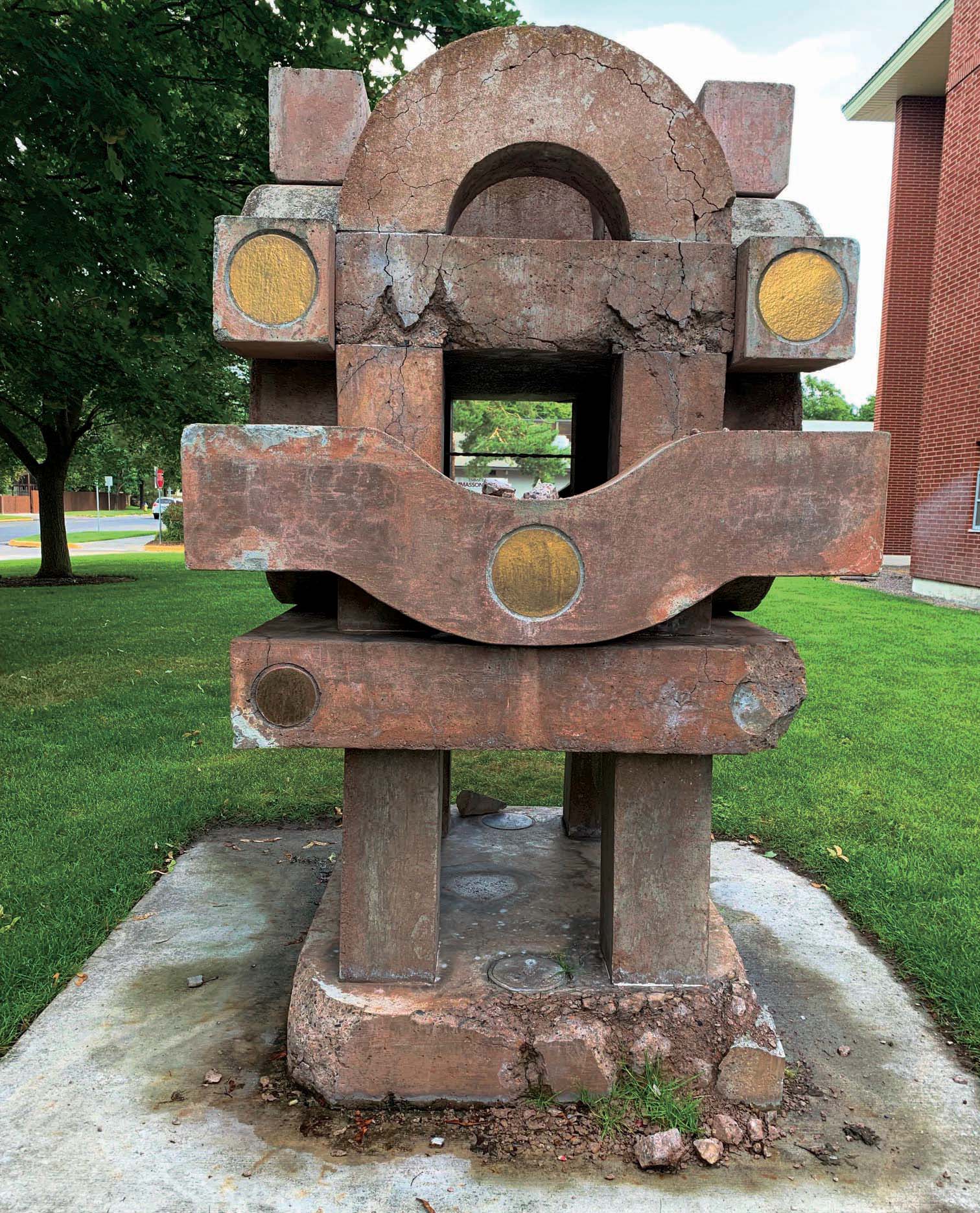
Commissioned by the University of Montana, Signal was originally made of concrete and rebar, which deteriorated after nearly 60 years and was retired from campus in 2024. | COURTESY OF LISA AUTIO
“Part of what Rudy was interested in was how materials are animus, containing spiritual energy,” Chacón adds. “He was combining gate forms with a more robust three-dimensional sculpture.”
While a celebrated example of Autio’s artistic talent, Signal fared poorly under environmental conditions. “Over the years, when it sat between the music building and the art building, it deteriorated a little bit,” Lisa says. “Then eventually, it was moved to sit in front of one of the dorms on Arthur Avenue. One day in 2018, I was driving down Arthur Avenue to look at the old sculpture, and I was really, really shocked at its condition.”
In 2024, after being on view and exposed to the elements for nearly 60 years, the piece was retired from campus. Right away, Lisa set to work raising money to reproduce the sculpture after the university offered seed money for the project, ultimately raising over $70,000.
As Lisa and Warford neared completion of the reconstructed piece, they sought to finish it with a patina to match the original. The duo sprayed it with a sandblaster and applied hydrogen peroxide, salt, and vinegar to produce a rusty-brown homemade patina, and Warford found a way to develop a gold luster across the edges. Once complete, the refabrication was installed and dedicated on October 8, 2025, in celebration of what would have been Autio’s 99th birthday.
“We could not imagine removing the sculpture without replacing it; generations of kids grew up with it, climbing on it,” Chacón says. “We rebuilt it the way Rudy originally wanted it, in Cor-ten steel and ceramics. I think it’s going to last a lot longer than the original.”
No Comments