


25 Sep Precarious Pintails
The first songbird to arrive on the thawing Northern Plains each spring isn’t the meadowlark. It’s the northern pintail, a graceful duck that whistles like your favorite uncle. That is, badly.
Still, it’s the sound of spring across Montana’s Hi-Line and Canada’s prairie provinces. This high-pitched, wheezing whistle is accompanied by the whoosh of acrobatic pintails winging to shallow prairie wetlands that have just shed their ice.
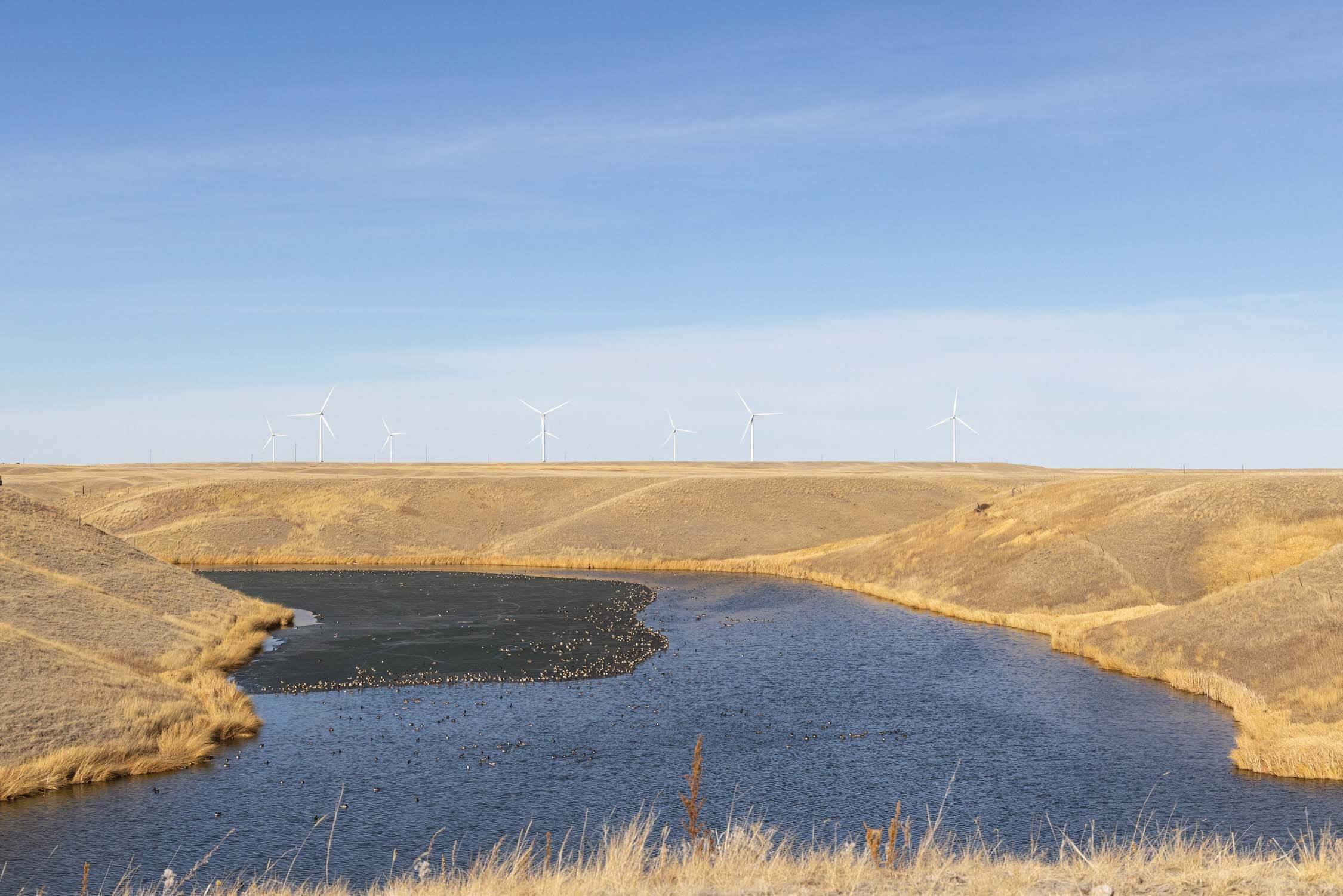
Northbound pintails follow the melting snow and ice of early spring, congregating on shallow ponds and prairie potholes as they seek nesting habitat.
Pintails are the vanguard of the northern waterfowl migration, following the receding snowline as they move up from wintering grounds on the Texas Gulf Coast and central California’s rice fields. They’re seeking what biologists call ephemeral water: snowmelt basins that might be gone in a week or two but bloom with crustaceans and tender vegetation coaxed to life by the weak springtime sun.
Then, just like that, the pintails and their whistles are gone, replaced by mallards and wigeon, sonorous Canada geese, and the rest of the sleep-in waterfowl species. The restless pintails are northbound, some following that sheet-water thaw line all the way to the Yukon and Alaska, whistling as they wing, seeking the perfect spot to make a nest and warm their eggs.
Pintails evolved to utilize large swaths of undisturbed shortgrass prairie for their nests. The Great Plains’ fallow farming practices mimicked that native landscape, but chemical fallowing and pulse cropping has limited nesting habitat.
This is a relatively new phenomenon, this overflight of pintails above Montana and their historic nesting habitat in what looks to humans more like pronghorn country than a duck factory. And it’s concerning to biologists who view pintails as an indicator species for the ecological health of the shortgrass prairie of the Northern Plains.
It’s concerning to duck hunters, too, who consider a mature, fully plumed pintail the ultimate waterfowl trophy, partly for its scarcity, but mainly because pintails don’t decoy as readily as mallards and other dabbling species.
“You earn every pintail you shoot,” says Adam McDaniel, a Montana-based biologist for Ducks Unlimited. “They’re the birds that circle your decoys three or four times before they commit, and still stay just on the edge of [shotgun] range.”
Most Montana waterfowl hunters add pintails to their bags early in the fall season. Because these southbound ducks aren’t fully plumed yet — their distinctive racing stripe that starts near their ears not yet blazing white and their namesake tails not yet pinned — they can look like juvenile mallards. But next to the mighty canvasback, a late-season pintail is what you’d call a destination duck, meaning that serious waterfowlers will travel a long way for a chance at one.
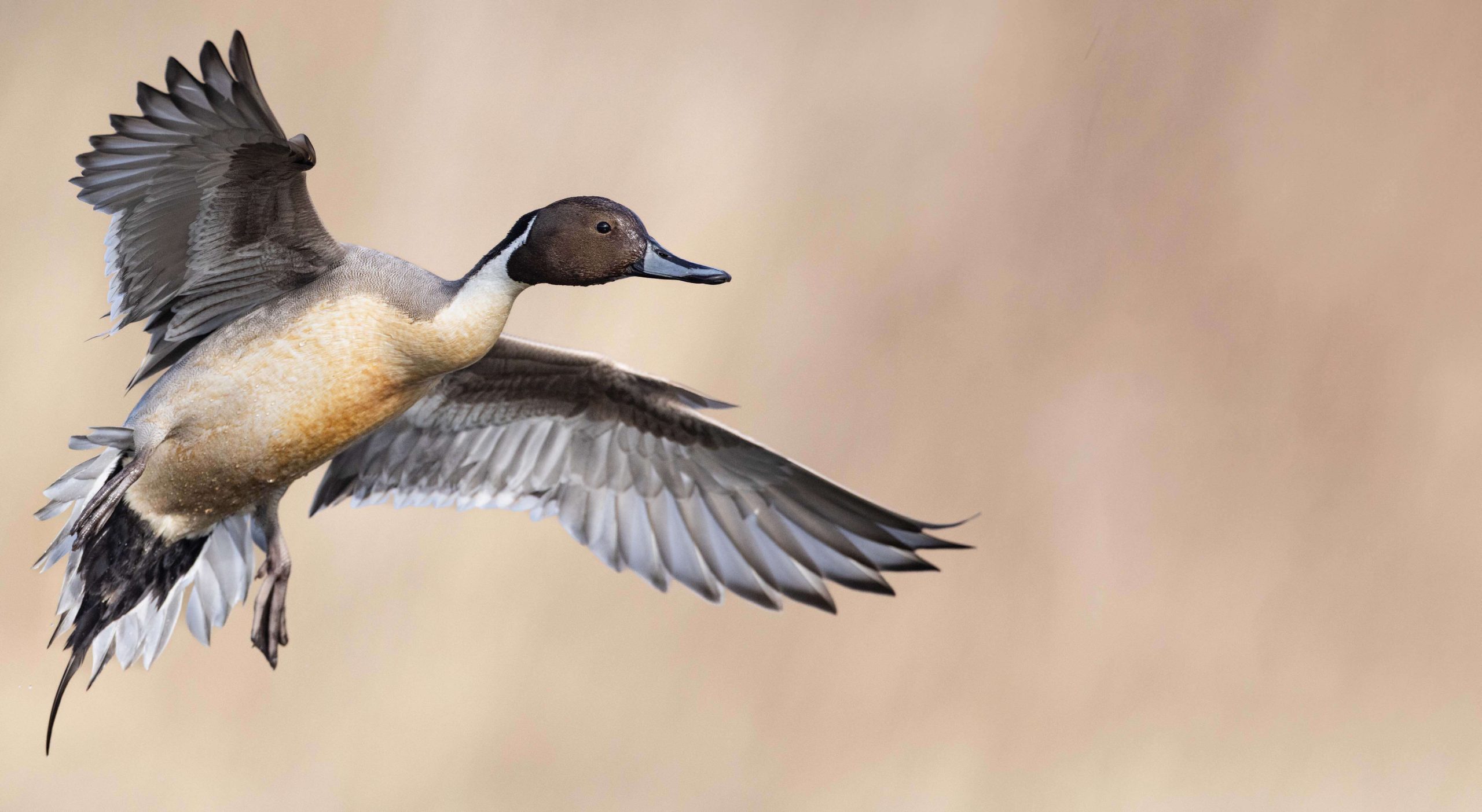
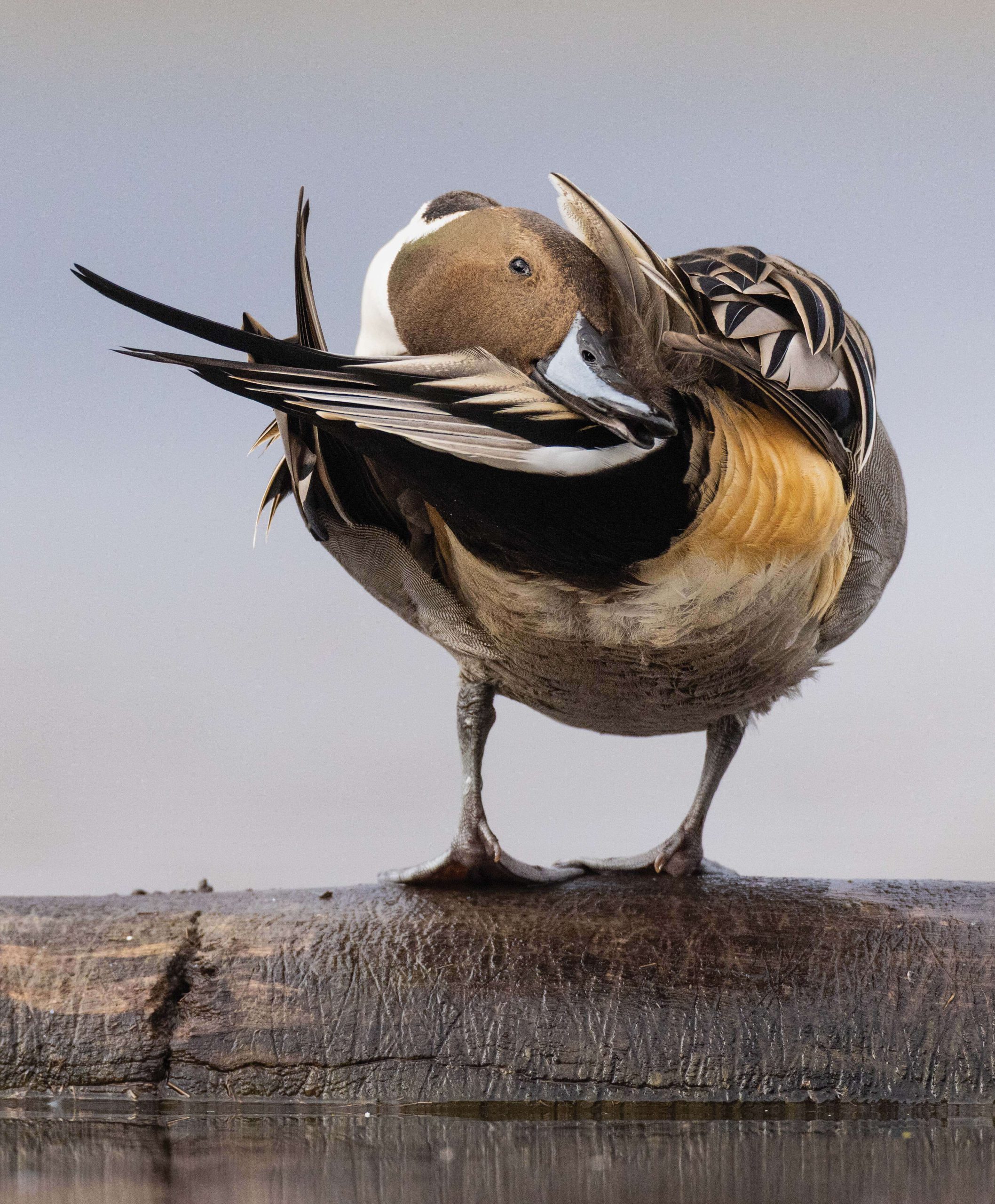
In the southern portions of the Central and Pacific flyways, pintails are called bull sprigs for their pencil-like tails. Serious duck hunters measure a pintail’s sprig the way serious elk hunters measure inches of antler. Add a chocolate-colored head, slate-blue bill, and a green iridescence to their wings, and a drake pintail is a masterpiece of proportion and style. Hens, too, have an elegance that sets them apart from blocky mallards. Greyhounds of the sky, they’re sometimes called for their sleek lines and fast flight.
Montana’s Role in Pintail Conservation
According to biologists, the continental pintail population is stable to slightly declining. We’re not likely to run out of this stately sentinel of spring any time soon, but the decline is troubling, because it comes after years of increasing pintail populations.
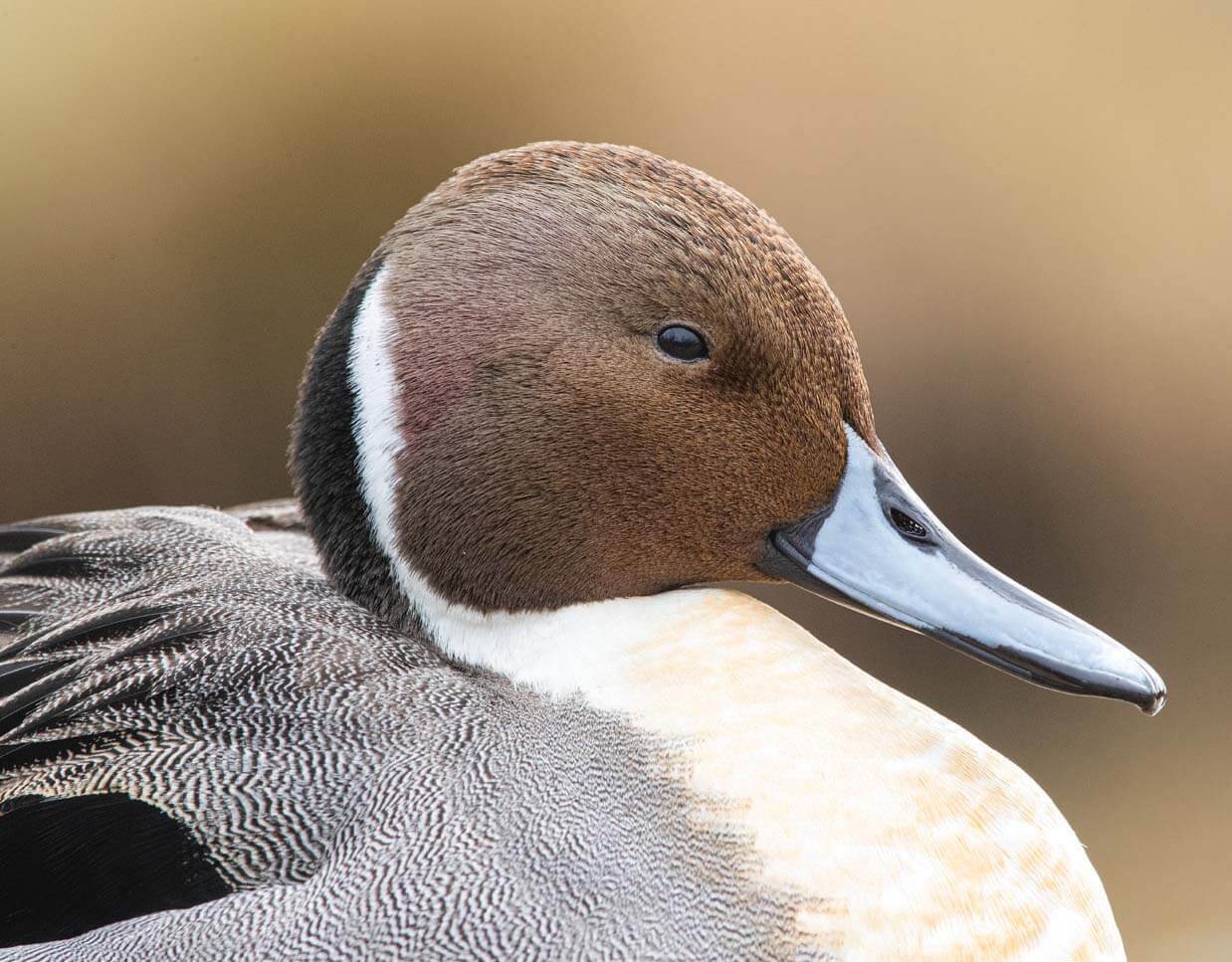
“Historically, the core breeding range for pintails was the shortgrass prairie: the Dakotas, northern Montana, southern Saskatchewan, and the prairie portion of Alberta,” says Josh Vest, science coordinator for the Prairie Potholes Joint Venture, a consortium of agencies and non-governmental organizations that collaborate on conservation practices for waterfowl and other wildlife on the Northern Plains. “These birds evolved to be nomadic, to move to take advantage of changing conditions in wet years and dry years.”
Pintails search out “flashy water,” Vest says. It’s not exactly wetlands; maybe call these temporary habitats moistlands. These are prairie depressions that might fill with rainwater one week and be cracked and dry the next. Pintails hop from one wet wash to the next as they near nesting in April, but adjacent grass and cover is nearly as important as the water to hide the nest from predators and enable a hen to find food near its brood site.
Once hens start to nest, they need about 30 days uninterrupted as they lay, incubate, and hatch their brood.
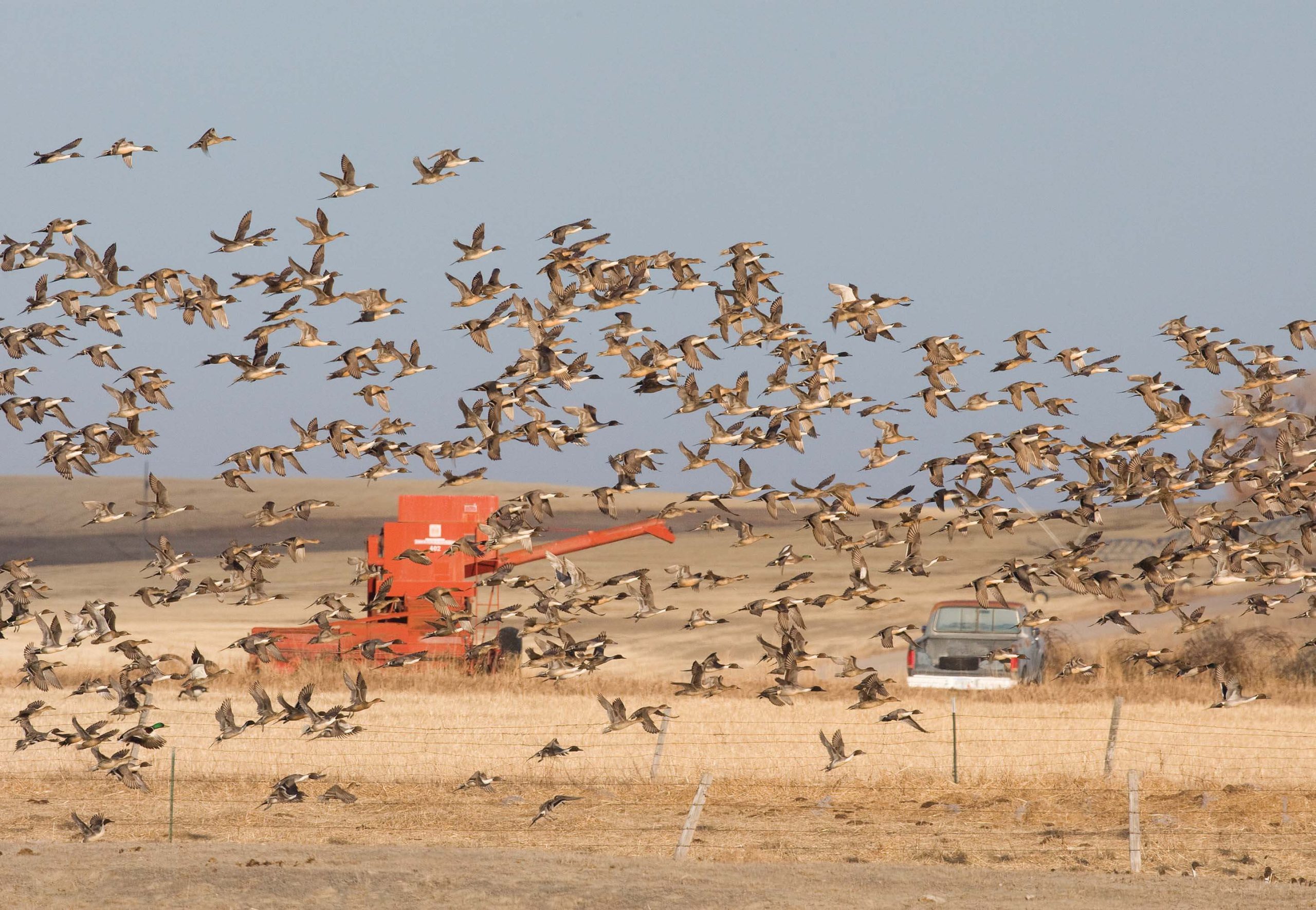
Traditional wheat farms, like this place near Fairfield on Montana’s Rocky Mountain Front, have sustained duck populations as native prairie has been converted to cropland.
The biggest change to this opportunistic nesting strategy was in the years following World War II, when millions of acres of shortgrass prairie pasture were plowed under to raise winter wheat to feed a postwar economy.
You’d think this landscape conversion would doom our noble pintail. But you’d be wrong.
“It turns out that things worked out pretty well for pintails in that postwar era, because farmers universally adopted summer fallow,” says Vest. This is a farming practice in semi-arid regions designed to conserve soil moisture. A farmer might plant and harvest a full section of wheat one year, but they leave the neighboring section fallow, or unplanted. This banks soil moisture and readies the fallow ground for next year’s crop, when the rested land is farmed and the neighboring section is fallowed. By cropping every other section each year, wheat farmers mimicked the undisturbed habitat of the shortgrass prairie on their summer fallow sections.
“We saw a big bump in pintail populations in the 1950s and 1960s, as summer fallow practices became the norm,” says Vest. “Those fallow fields gave birds lots of places to nest and secure nesting habitat because farmers weren’t running machinery on those fallow fields.”
The Pulse Crop Revolution
But farming practices on the Northern Plains started to change in the 1980s and ’90s, just as a prolonged drought dried up prairie wetlands. Chem fallow, or spraying summer fallow fields with herbicides to kill water-sucking weeds, displaced nesting pintails. Then some farmers started planting their summer fallow with pulse crops like lentils, chickpeas, and Great Northern beans that add nutrients to the ground without taking up much moisture.
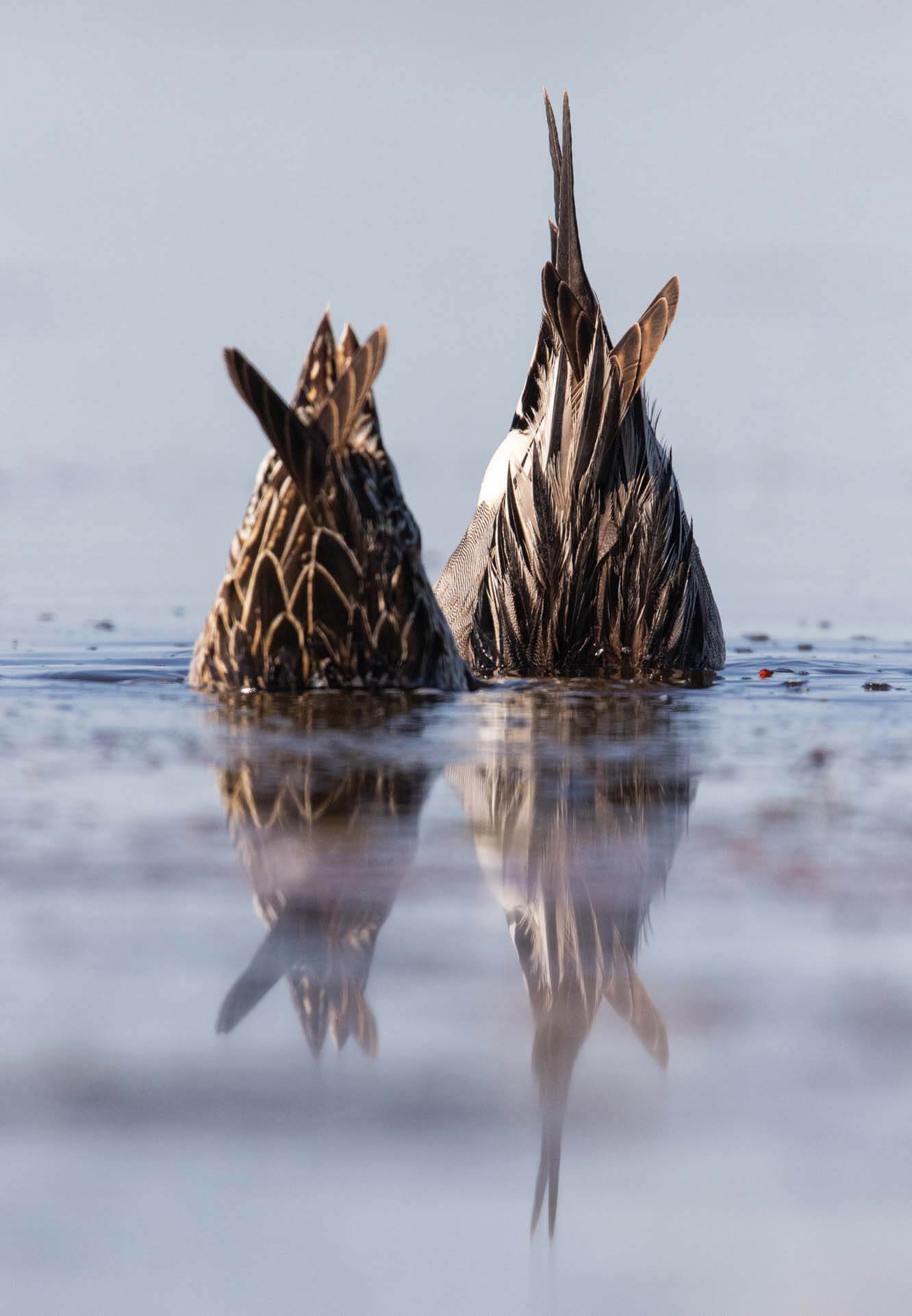
Along with mallards, pintails are called dabbling ducks for their bottoms-up feeding practice.
That additional activity in pintail country has changed the game for this sentinel species, often disrupting nests in previously hospitable fallowed fields.
“Pintails nest incredibly early, as early as April,” says Vest. “That’s often before a field has been cultivated or seeded. So you have a duck that thinks a fallow field or last year’s wheat stubble looks enough like the shortgrass prairie to work for a nest, but then the farmer comes along and cultivates and seeds it. Those pintails are doomed to have a failed nest.”
Unlike mallards, which readily renest multiple times a spring if necessary, hen pintails are unlikely to renest after a failed attempt.
As more acres of the Northern Plains are farmed, undisturbed nesting habitat for opportunistic pintails is being lost. On the ground, that means fewer pintails nest in Montana’s wheat belt.
Instead, they overfly the state, and much of prairie Canada, and look to nest in the undisturbed boreal forest and tundra of the wild north.
These alternative nest sites tend to produce fewer chicks because of changeable conditions, predators, and the air miles required to reach these remote habitats.
The Dakotas were the first to see pintail declines as habitat fragmentation increased. Next were the Canadian Prairies, a leader in the pulse-crop revolution of the past 20 years that has lost so much critical habitat that Vest calls vast areas of Canada “an ecological trap” for nesting ducks. Fortunately, Montana still has a good deal of pintail habitat, thanks to work by Ducks Unlimited, Prairie Potholes Joint Venture partners, and an intact ranching economy.
Herds and Birds
“As we think about sustaining waterfowl populations — not just pintails — we key in on keeping both perennial and ephemeral wetlands functioning and keeping grass green-side up,” says Vest. Intact grasslands are vital nesting habitats for pintails, as well as mallards, wigeon, gadwall, northern shovelers, and other so-called puddle ducks. “One key to keeping grass is having a healthy and sustainable grazing and ranching community.”
It seems to go without saying, but cows need two things, says McDaniel of Ducks Unlimited. They need grass and water.
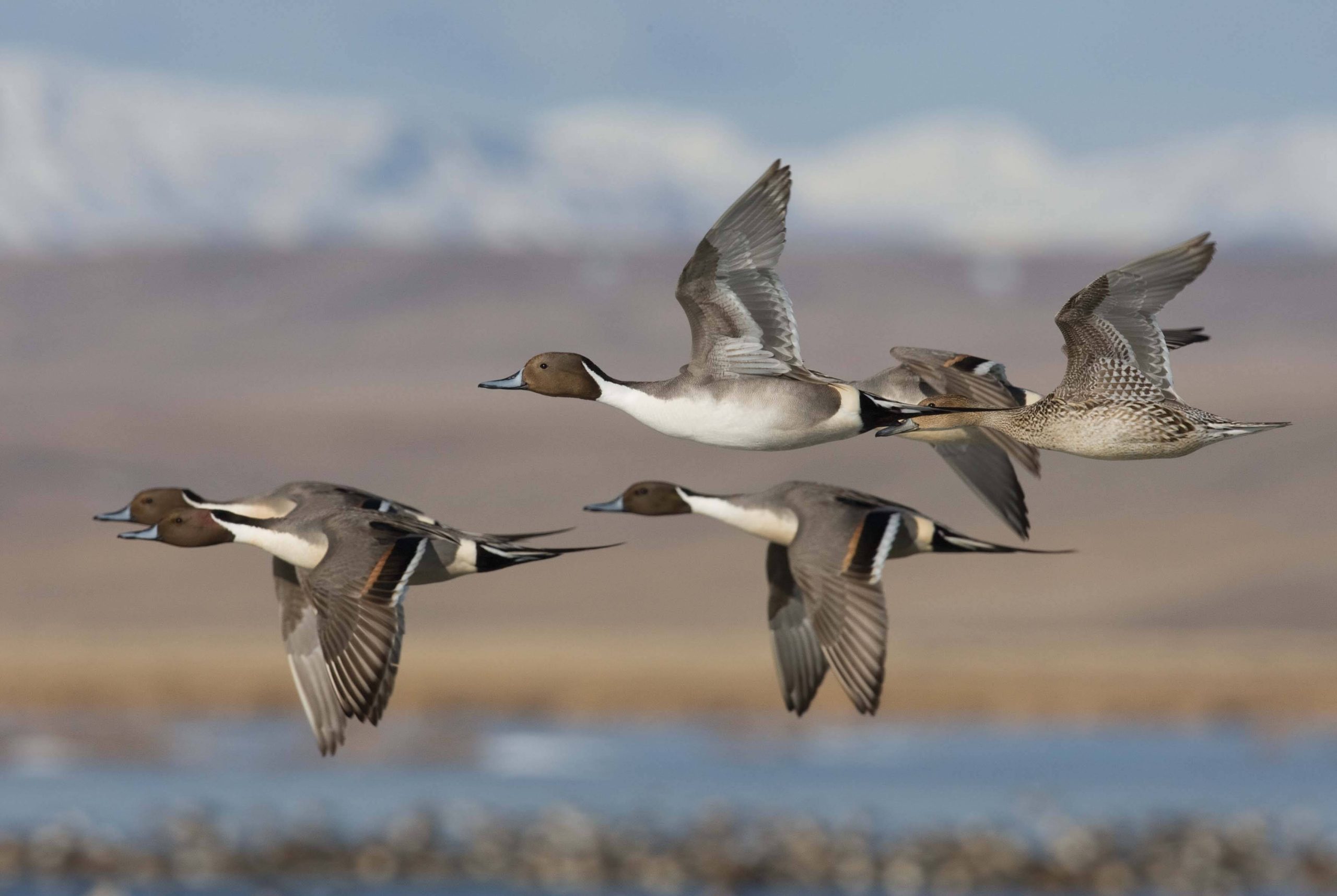
Called greyhounds of the sky for their racing stripes and fast flight, pintails migrate thousands of miles between wintering grounds and nesting habitat.
“Those are the two things that waterfowl populations need, too,” he says. “In terms of conservation policy, anything our partners do to support traditional ranching is good for waterfowl. It turns out that what’s good for the herd is good for the bird, and vice versa.”
Conservation groups are doing what they can to maintain and even add water to the continent’s prairie landscape. But that’s dependent on large-scale climate trends. What humans can do for waterfowl and other native species is to reduce habitat fragmentation.
“Looking at North America from a pintail’s perspective, the Dakotas were perennially the most important breeding and nesting habitats because of their combination of water and grass,” says McDaniel. “That eastern portion of the Prairie Pothole Region is still important, but it’s become so fragmented with farming practices that it’s not as well utilized by pintails.”
Instead, the ducks are choosing habitats to the north and west of the Dakotas: ranch country.
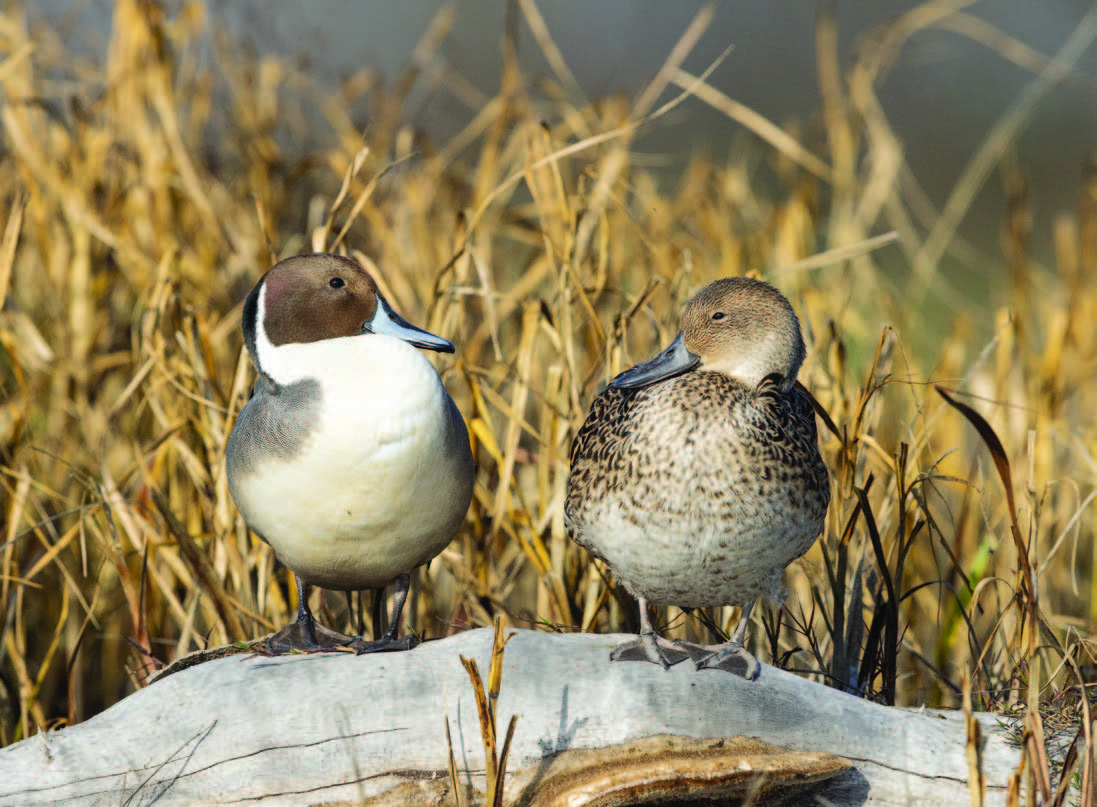
After breeding in late March and early April, pintail hens incubate nests for about 30 days.
“The best thing we can do for ducks is to keep ranchers ranching,” says Vest. “Keep those grasslands in grass.”
That’s why waterfowl organizations pursue conservation easements with working ranchers to incentivize grazing over grain farming and advocate public policies that provide ranchers with the same incentive payments and price-support structures that corn, wheat, and soybean farmers routinely receive from the federal Farm Bill.
As Congress negotiates the next Farm Bill, pintail advocates will look to maintain or increase acreage in the Conservation Reserve Program that incentivizes landowners to plant grass on fragile cropland. They’ll be pitching soil-health programs like cover crops and regenerative agriculture that tend to recharge wetlands.
And they’ll be advocating for any federal help to keep the ranching economy healthy.
“The more we do to incentivize ranchers to be good stewards, the better our waterfowl populations will be,” says Vest. It’s a collective effort to ensure the sound of a prairie spring remains the wavering whistle of an incoming pintail.
Andrew McKean writes about hunting, conservation, and wildlife management from his home in Glasgow, Montana. The former editor-in-chief of Outdoor Life magazine and the current hunting editor, McKean is the author of How To Hunt Everything. He also contributes to a number of national publications.
Donald M. Jones has been a full-time Montana-based wildlife photographer for over 30 years. While photographing everything from frogs to bears keeps him captivated, Jones’s passion for birds keeps him perpendicular to the earth’s surface. He is currently working on his 14th book, which is due to be released in the spring of 2027; donaldmjones.com.
No Comments