


28 May Painting En Plein Air
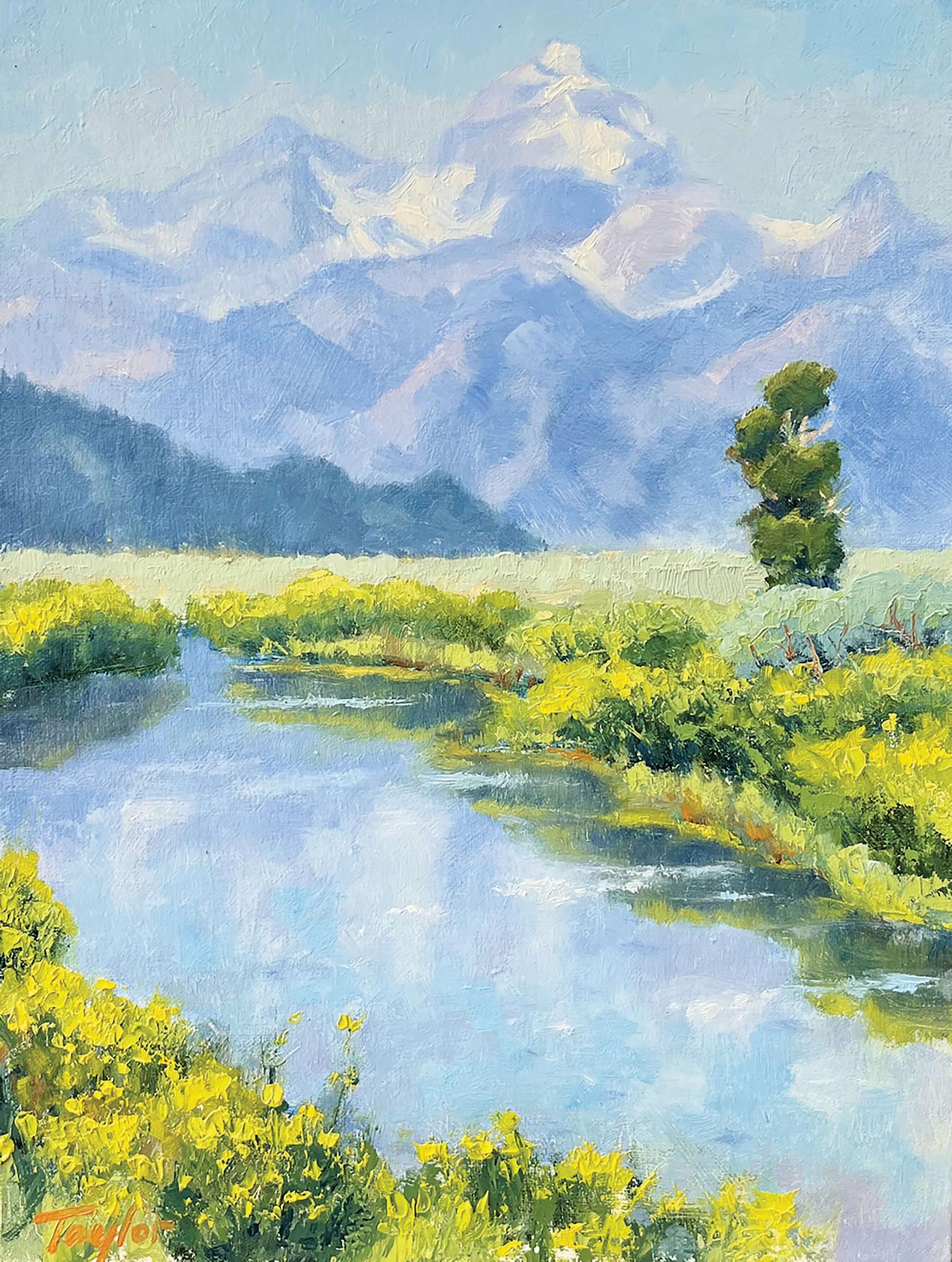
Sometimes when you’re painting outdoors, wild animals wander into your field of view. That’s what Andy Taylor has learned as he paints en plein air in locations along the Snake River or in Grand Teton National Park. He’s had moose saunter into the scene and bison cross the roadway in front of him, and he’s always watchful for bears and other animals that might make an appearance. “It helps painting with a group, because you’ve got extra sets of eyes,” Taylor says.
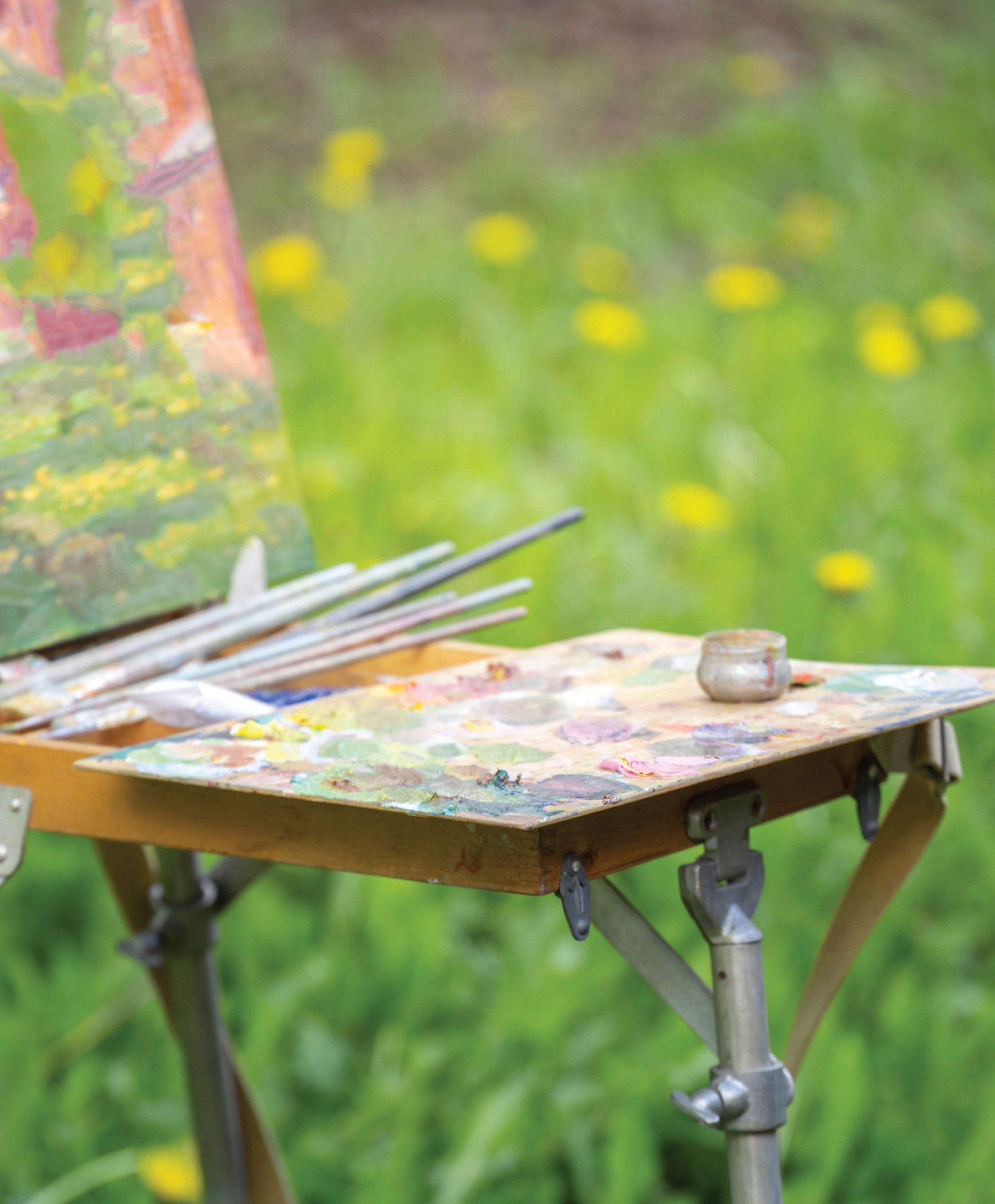
Taylor is part of the Tetons’ popular plein air art scene. Every summer, artists celebrate the area’s rugged landscape and abundant wildlife by painting outdoors, and two local festivals are devoted to creating art en plein air. Artists also gather each week during the warmer months to spend time together with their craft in gorgeous natural settings as part of Teton Plein Air Painters.
ADOBE STOCK
The group began meeting in 2012, and now every Tuesday from May through October they gather and create art together. The Art Association of Jackson Hole helps with logistics and communication for the group, and participants are members of the association.
Taylor first joined the group about 10 years ago, when he was visiting the area and met a Teton Plein Air Painters member at a local art event who invited him to join the weekly gathering. Taylor later moved to Bondurant, Wyoming and watched the group blossom. “The core group started with just a couple of local artists, and it grew,” he says. “It bloomed into something that is huge.”
Most weeks, 15 to 20 artists join the gathering, though weather can impact the turnout, with snowy, rainy, cold, or foggy days unsurprisingly being less of a draw than gorgeous bluebird ones. Members range from beginner to professional artists, with a mix of locals, part-time residents, and visitors.
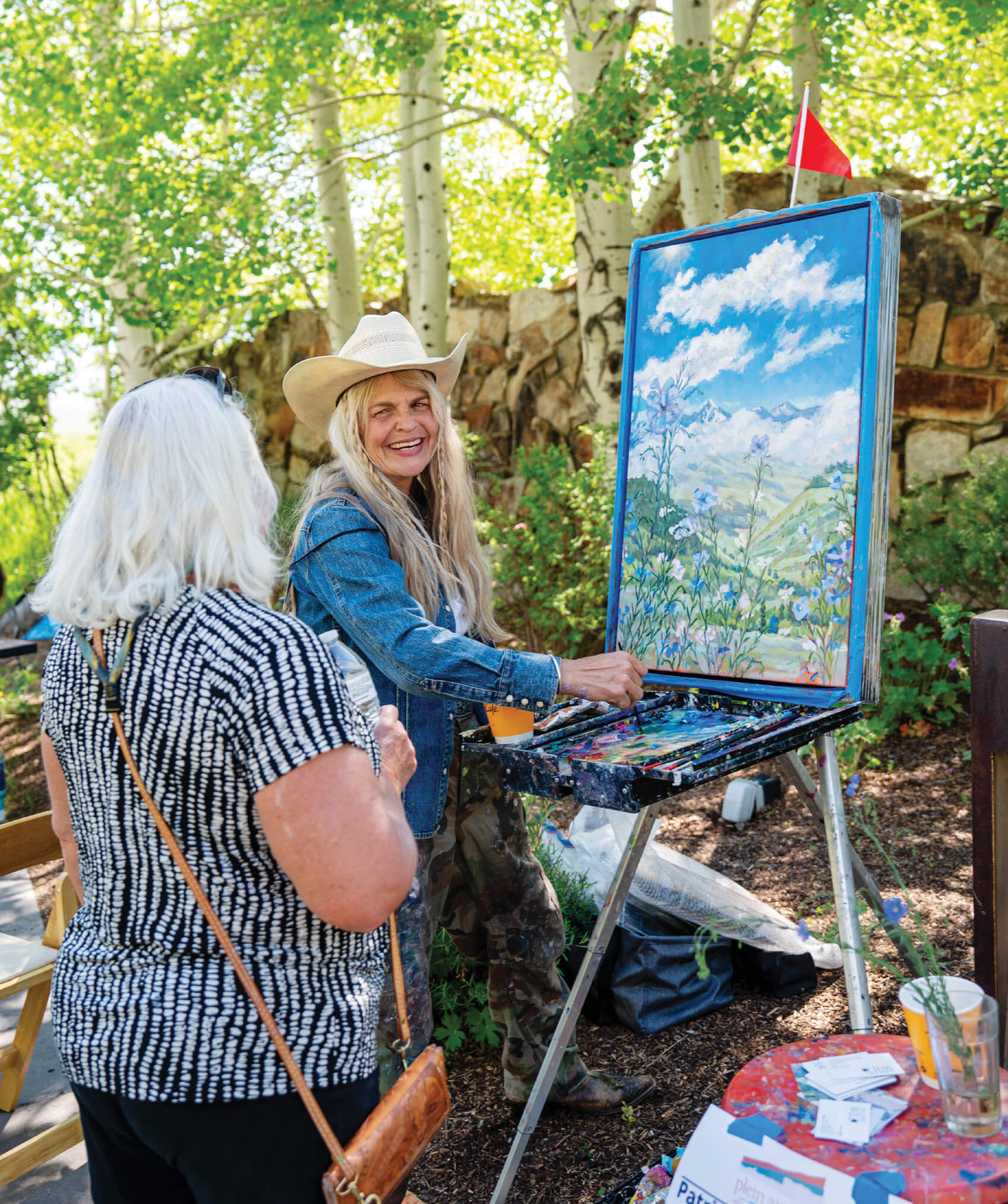
Artist Patricia Griffin chats with an attendee at Plein Air Fest, held annually at Jackson Hole’s National Museum of Wildlife Art, while putting the final touches on her piece. | COURTESY OF THE NATIONAL MUSEUM OF WILDLIFE ART
Each artist adds to the experience, and Taylor says the group camaraderie is a big part of the draw, with the wide range of skill and experience levels allowing for an exchange of knowledge. “People get a lot of encouragement and even critiques that move their work to the next level, which I think is pretty cool,” Taylor says.
Sometimes they’ll meet in Jackson and Teton County, Wyoming, while other times the group will head over Teton Pass to Teton Valley, Idaho or other locations. While some meeting spots are on public lands, other times the group is invited to paint on private property, and occasionally they will even paint cityscapes, like scenes from downtown Jackson.
While the region’s stunning scenery helps create inspired artworks, it also provides an ever-evolving natural studio space that makes painting a challenge. “You always have to be on your toes,” Taylor says. “That’s one of the aspects that appeals to me — the changing light, the way you can’t just sit back and let the painting go. You have to stay on top of it. It’s a huge challenge, but when you get a good painting, you really feel some sense of satisfaction. It’s hard to beat.”
The process of painting in nature also leaves Taylor and other artists with a special connection to the land. “When I go back and look at an old painting, it draws me instantly back to that moment where I made it,” Taylor says. “And that’s kind of irreplaceable. You can take thousands of photographs, but you don’t have that connection.”
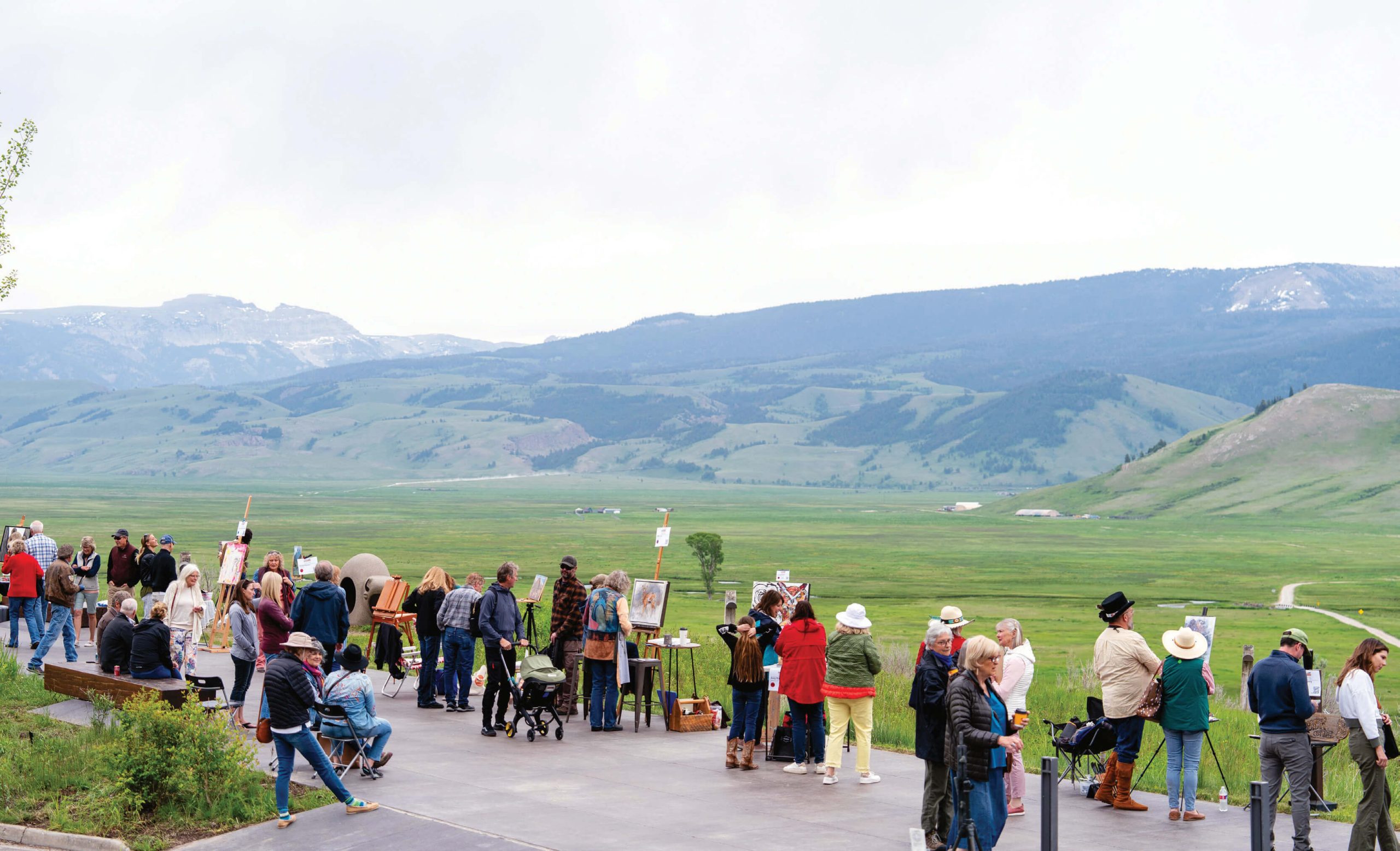
Each year, artists spread out across the National Museum of Wildlife Art’s 3/4-mile Sculpture Trail to paint and many are inspired by the expansive views of the National Elk Refuge. | COURTESY OF THE NATIONAL MUSEUM OF WILDLIFE ART
These keepsakes are sentimental for artists, and they also allow visitors and residents alike to take their Teton memories home with them by purchasing paintings that resonate. Both Jackson, Wyoming and Driggs, Idaho are home to annual summer festivals focused on plein air painting, and the events provide opportunities for people to purchase the art that was created on-site.
Each summer, the National Museum of Wildlife Art in Jackson hosts Plein Air Fest, scheduled this year for June 13. The event kicks off the summer season and lets people watch and chat with artists as they create art along the museum’s outdoor Sculpture Trail. The popular event drew 1,000 attendees last year, with people gathered to watch approximately 50 artists hailing from as far away as the East Coast and Texas. “People can watch artists paint, and they can engage with the community and then really have a fun time outdoors,” says Stefanie Nishio, programs and events manager at the National Museum of Wildlife Art.
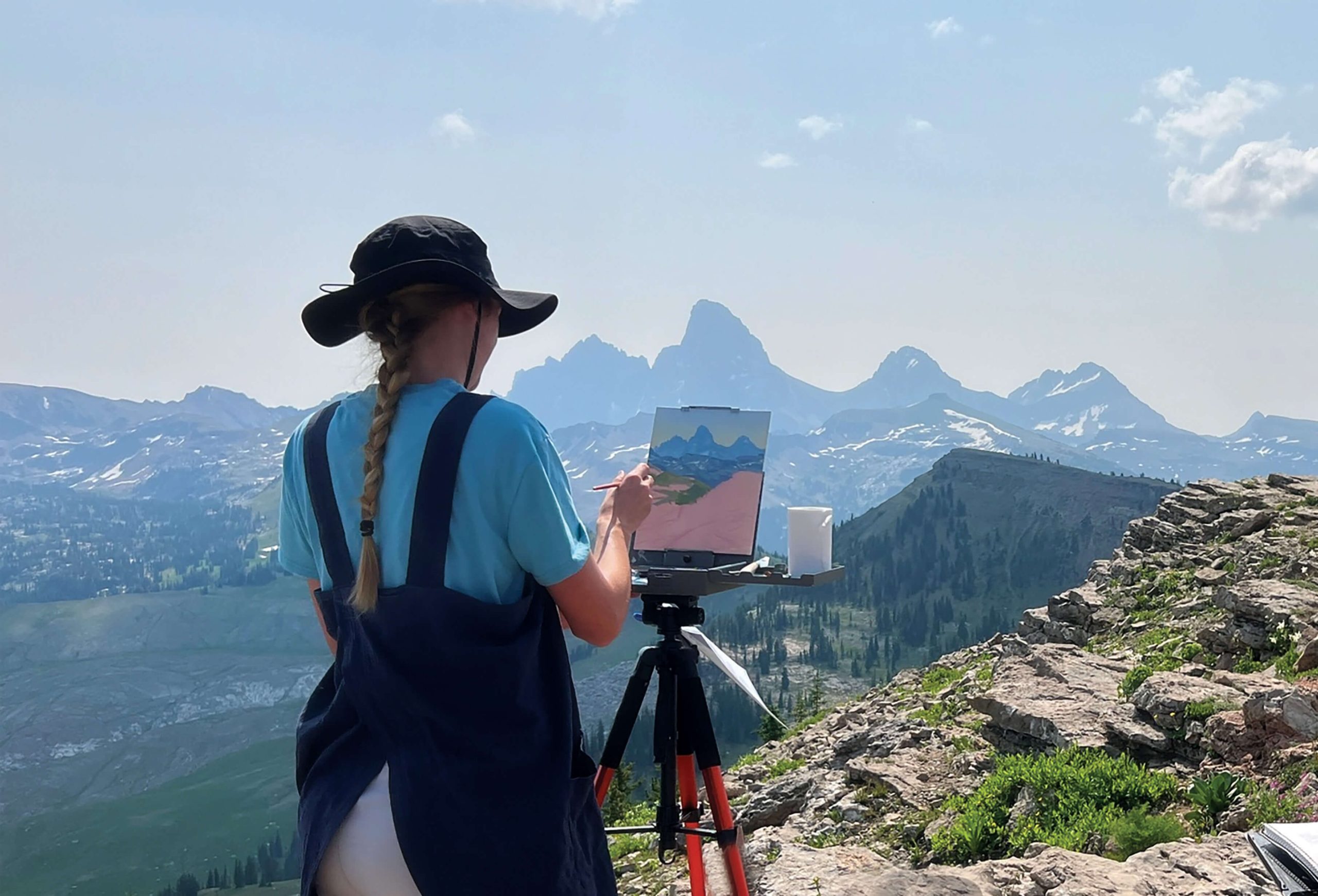
A 2024 Driggs Plein Air Festival judge and workshop instructor, Suzie Baker captures Teton views from Fred’s Mountain at Grand Targhee Resort during the festival’s Paint Out event. | COURTESY OF THE DOWNTOWN DRIGGS ASSOCIATION
Robert Martinez is a Riverton, Wyoming-based artist who has participated in the museum’s Plein Air Fest for three years. He is a board member for the Wyoming Arts Council, and his work honors his Northern Arapaho heritage. His art is based on the art tradition of painting or drawing over antique ledgers and paper.
“In the mid to late-1800s, we were being pushed onto reservations, and we couldn’t hunt buffalo,” Martinez says. “They were pushing us onto these specific lands. We couldn’t make our traditional winter count hides, commemorating events that had happened in the year.” In place of the buffalo hide they would normally use as a pictorial calendar and historic record, Indigenous people used already-filled-out ledgers, which led to a form of art that involves painting on top of antique ledgers and paper. “It became a traditional art form, and it’s carried on today by many other Native artists,” he says.
Martinez’s plein air work tends to focus on wildlife and landscape scenery, using antique ledgers and paper as his canvas. His method involves planning a bit before he arrives, sketching, using a frisket masking material to cover parts of the canvas, and then airbrushing to create vibrant background tones. Next, he peels off the frisket and works with graphite and acrylics to add more detailed touches.
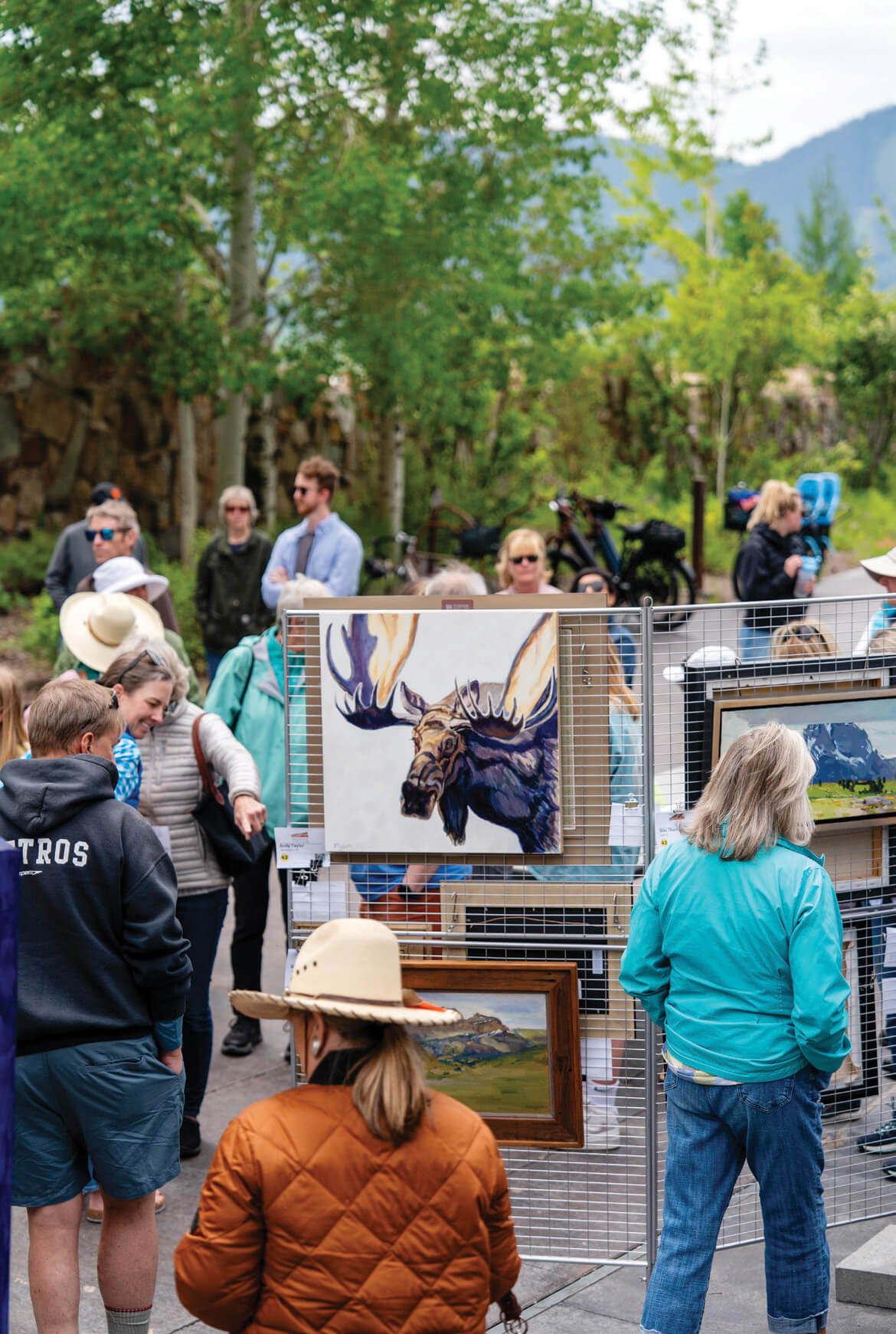
Plein Air Fest concludes with a silent auction, where attendees can browse the freshly completed pieces hung on racks before placing their bids. | COURTESY OF THE NATIONAL MUSEUM OF WILDLIFE ART
Painting outdoors with an airbrush can be a challenge, but he enjoys the practice despite the potential weather difficulties. “Wyoming will be Wyoming,” he says. “You never can tell what the weather’s going to be.”
Later in the summer, the nonprofit Downtown Driggs Association hosts the annual Driggs Plein Air Festival in Teton Valley, Idaho. Currently in its 15th year, the event is open to the public July 26 – August 1, with artist participation beginning July 22. Around 75 artists from the United States and as far away as Saskatchewan will be in attendance. Artists Kathryn Stats and John Lintott will serve as judges and conduct workshops at the festival, where attendees can enjoy an exhibition and sale, opening reception, quick-draw competitions, paint-outs, awards, and a collector’s night. Artists will also fan out throughout the area to create art.
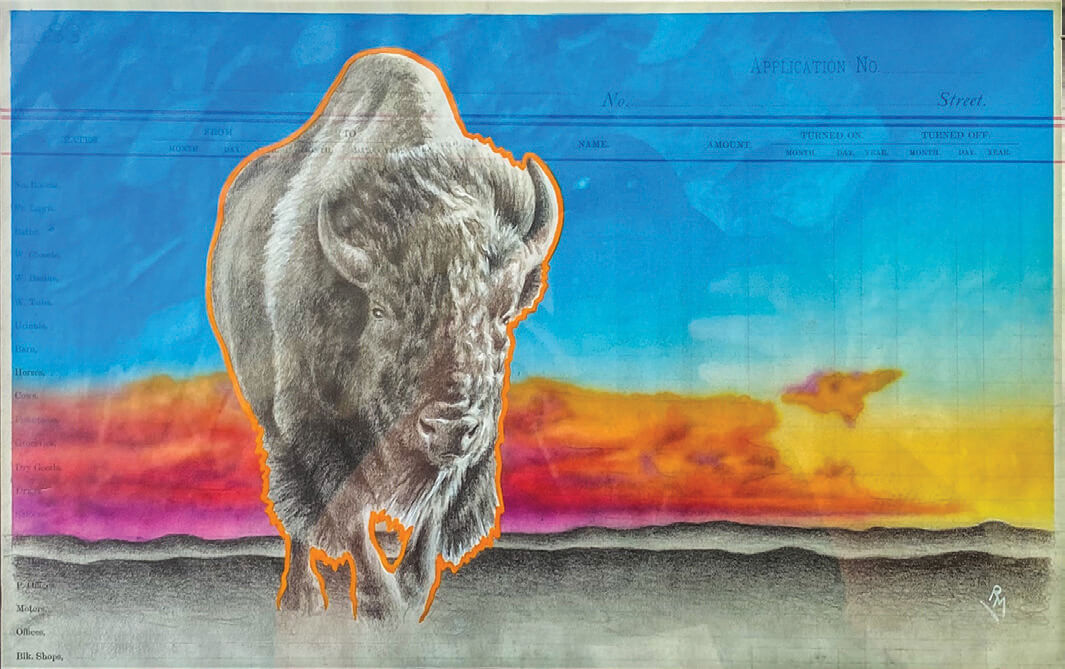
Evening Stroll | BY ROBERT MARTINEZ | ACRYLIC & GRAPHITE ON ANTIQUE 1897 LEDGER PAPER | 8.5 X 13 INCHES
“[Artists] go out into the valley to paint, and our community loves it,” says Lisa Simmons, executive director of the Downtown Driggs Association. “People see them painting up in the heights of Targhee, down by the Teton River, along the roads, out in the fields, and just up walking trails. These 75 artists are spread out across the valley capturing the beauty of the Greater Yellowstone Ecosystem, and it’s really fun for people to say, ‘Oh, this artist was painting in my backyard,’ and they come back and want to buy the art that day.”
Connections between artists, community members, and visitors help enhance the vibrancy of the local art scene, though this dynamic ultimately hinges on people’s ties to nature and the environment. “It all comes back to place, and people connecting so deeply to the natural world,” Simmons says, adding that this draw to nature is why millions of visitors come to Grand Teton and Yellowstone national parks each year. “It’s an art form that really highlights [people’s] emotional connection to the natural world. … It’s a way for people to take home a little piece of that love and that connection and hang it on their wall. It’s a memory, and I think that’s part of why this event is so successful.”
Kristen Pope is a freelance writer and editor who covers stories about mountain living, science, conservation, travel, and the outdoors for a number of outlets; kepope.com.
No Comments