


28 May Local Knowledge: Godfather of the Montana Agate
The first of a lifetime of Yellowstone River agates was dropped, almost literally, at the feet of young Tom Harmon. When his elementary school playground in Sidney, Montana was graveled, Harmon and his classmates spent recess scrounging for agates in the crushed rock. Over lunch, they hustled to Howard Sissel’s jewelry store nearby and sold their finds for a nickel or a dime. “Just around the corner from Sissel’s was Jerry’s Market,” recalls Harmon, now 81. “We’d spend our agate money on candy. My little brain just sucked that up. There was a whole economy built around finding those pretty rocks.”

Harmon has lived nearly his entire life along the Lower Yellowstone River and now runs an agate and jewelry shop connected to his home between Glendive and Sidney.
The source for those rocks was just out of town, in and along the capricious Yellowstone River that was only a few miles upstream from its confluence with the Missouri River, just over the North Dakota state line.
Later in the 1950s, Harmon scaled up his agate economy by finding, cutting, polishing, and later selling Montana moss agates across the region and eventually the world. Along the way, he devoted himself to first learning and then communicating the geologic history of agates to budding gemologists. Harmon’s agates have ornamented bolo ties, belt buckles, watchbands, and ornate rings, bracelets, and pendants that seem to glow with a warm radiance. His free-carved agate slabs are like impressionist paintings that reveal a different scene every time the light changes.
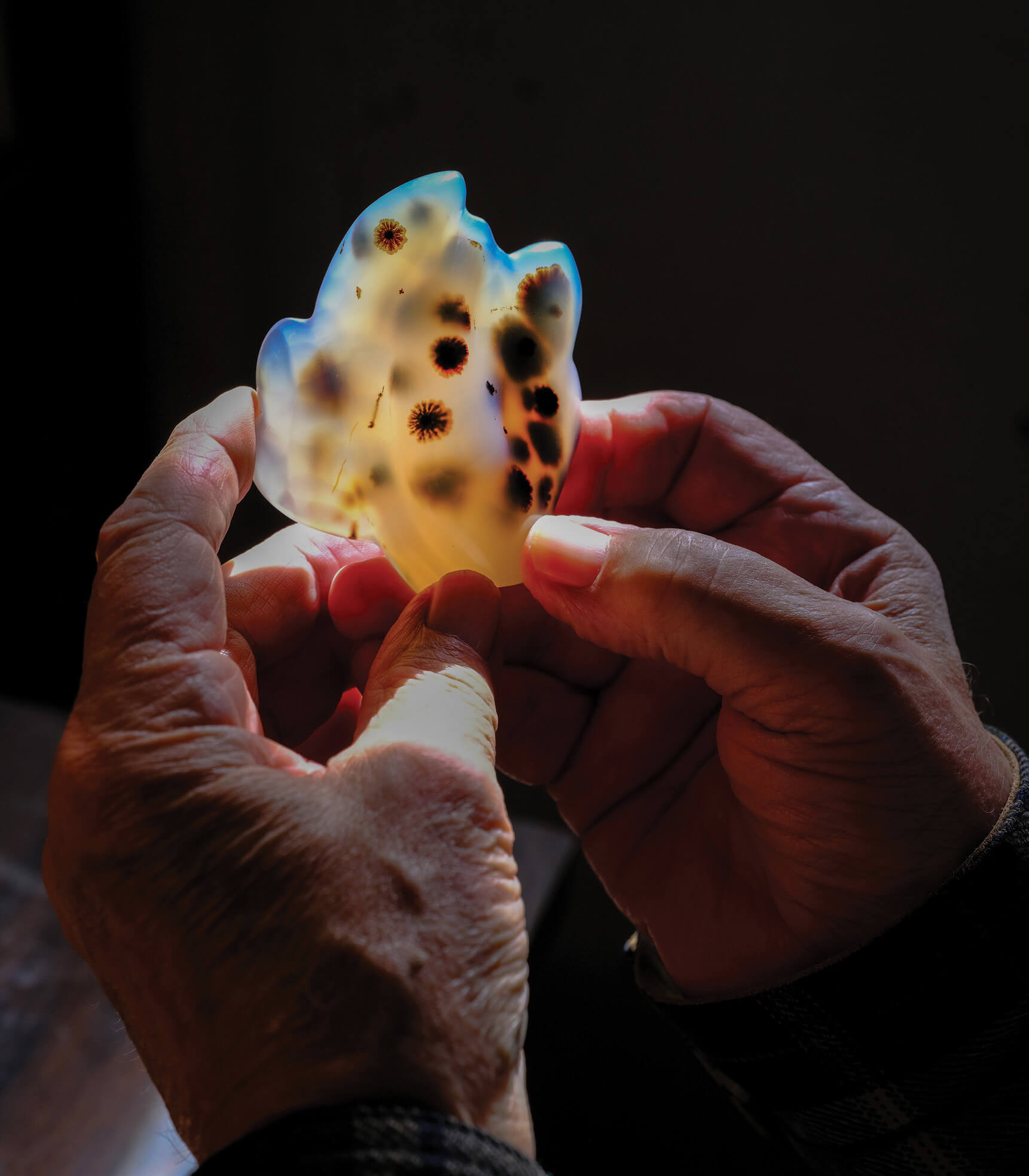
In his 70-plus years of working agates, Tom Harmon has learned to “read” the rock by looking at it through bright light.
Harmon’s first book, The River Runs North: A Story of Montana Moss Agate, published in 2000, is a journey through his own awakening to the beauty and charms of the Yellowstone’s agates and to the methods of recognizing and highlighting the internal features, called dendrites, that give moss agates their distinctive appearance. When cut and buffed correctly, the dendrites look like fairytale trees, starbursts, the setting sun, or even the Yellowstone River itself.
But the book is also a journey through time. Harmon traces the creation of agates from the volcanic slurry of the Yellowstone Plateau and from older volcanism farther north, in what’s now Saskatchewan and Manitoba. Formed mainly from silicon dioxide, or quartz, agates started as liquid flowing into seeps and filling the burned-out centers of tree trunks and limbs. As the silica gelled, molten minerals flowed into its fissures. The quartz cooled into roundish nodules before hardening, capturing those impurities in its milky interior.
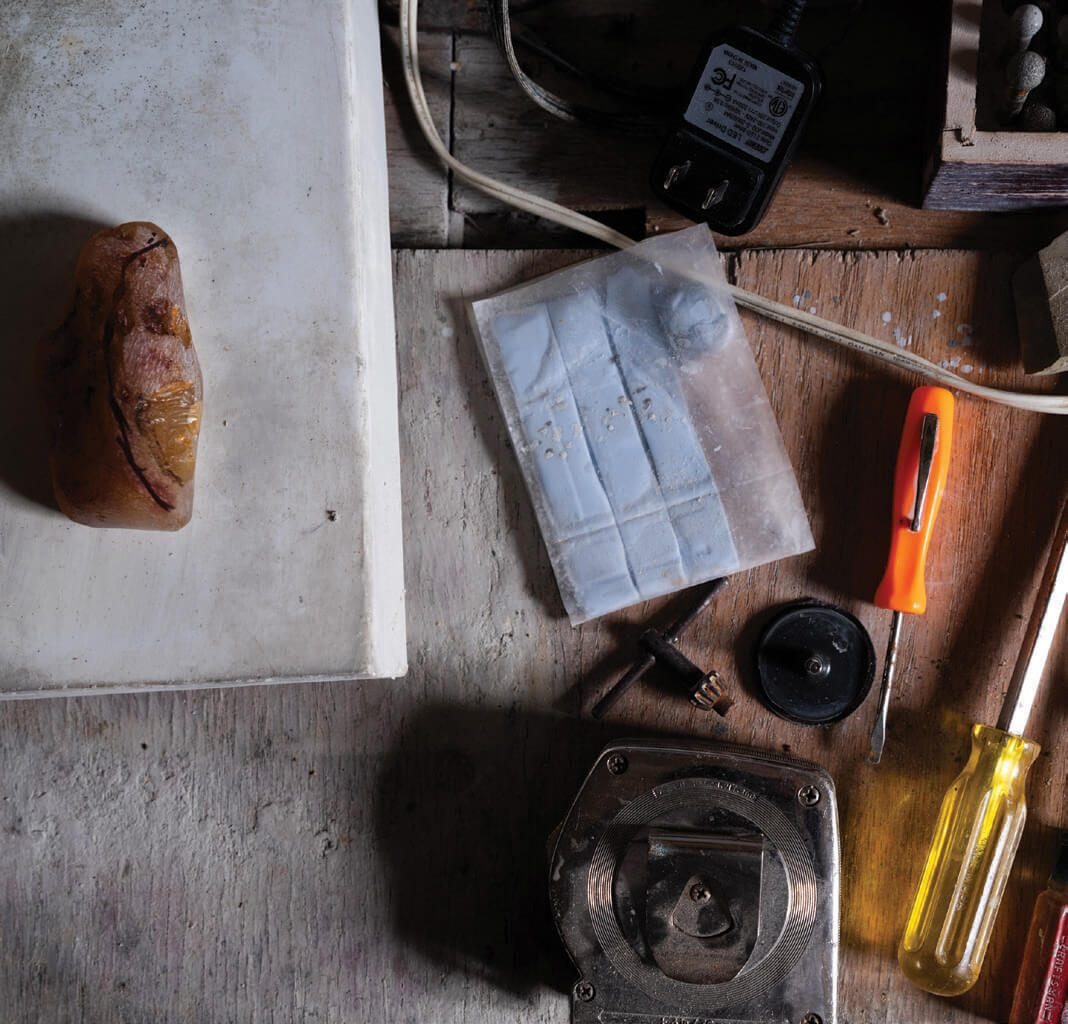
A few tools are absolutely essential to the agate-cutting trade, including those necessary for delicate shaping.
As the Rockies rose and rivers rushed, many of those nodules were nudged downstream by currents, broken apart by the violent tumbling and grinding as they were washed along. While the upper Yellowstone holds some remnant agates, the epicenter of the river’s moss agate deposits is on the lower river, downstream of the Bighorn River confluence and especially from about Miles City down to Sidney. If Montana’s Little Belt Mountains are associated with Yogo sapphires, the Lower Yellowstone is associated with moss agates. Both were designated as Montana’s state gemstone in 1969.
Harmon stresses that the Yellowstone Plateau isn’t the only source of agates. Another is the Flaxville Formation, a 100-foot-thick drift of agate-bearing alluvial gravel that covers much of eastern Montana. Its southern terminus is at the Yellowstone, which is why, he says, you can find distinctly different types of agates along the river.
Lighter-skinned agates with creamy centers are found farther upstream, he says, and probably originated on the Yellowstone Plateau. Rougher, darker-crusted agates with more black-speckled dendrites that originated in the north are more frequently found downstream of Intake, a major irrigation diversion of the Yellowstone between Glendive and Sidney.
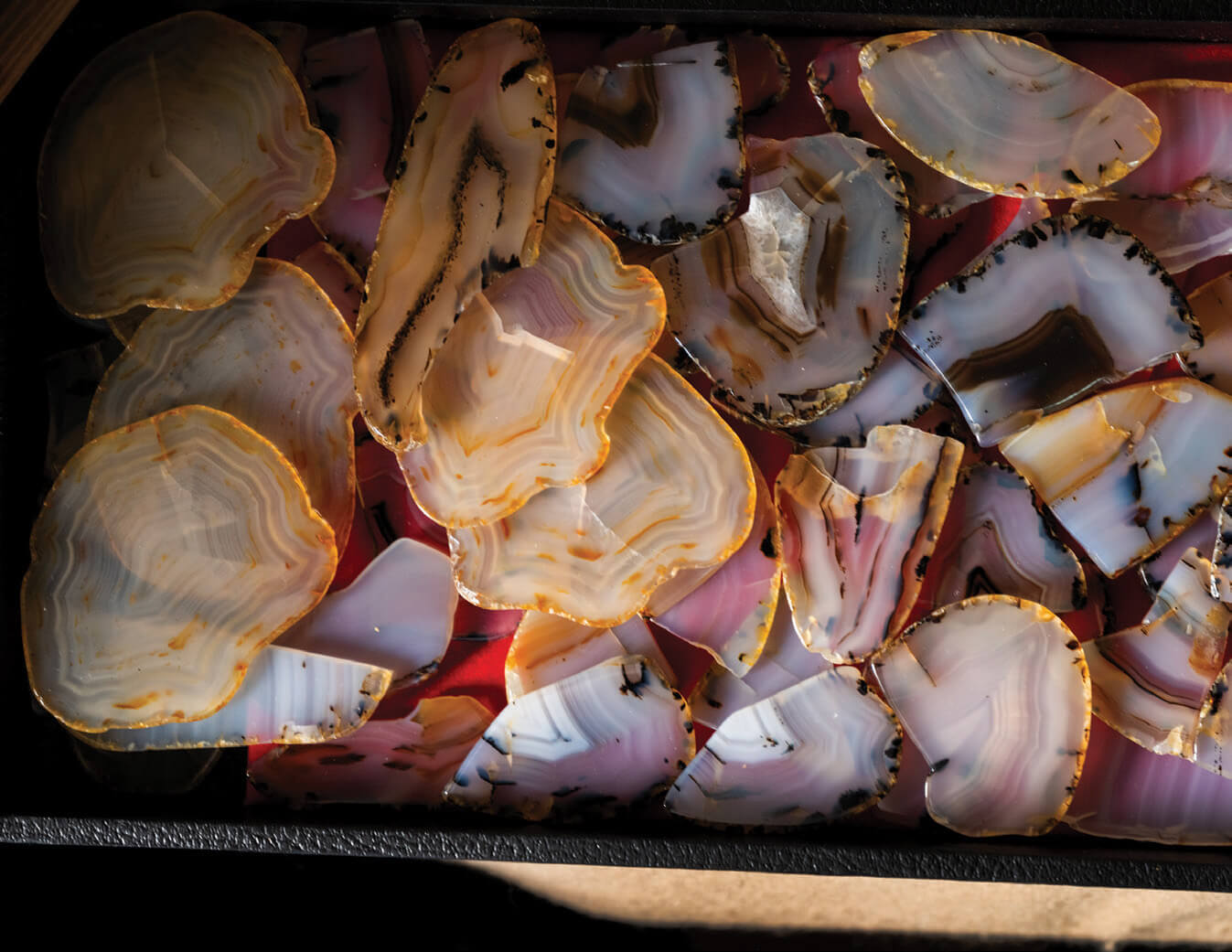
Harmon cuts agates into thin slabs that show their rings, distinctive colors, and internal features. These slabs will become centerpieces for necklaces, bolo ties, and belt buckles.
“Though a mix of light-skinned and dark-skinned agates can be found in the same area, the agates do change several times from one end of a main deposit to the other,” Harmon wrote in his first book. The only constant is the joy of spying one of these Montana treasures among the rocks and gravel of the riverbank, gifts from 60 million years ago and 500 miles of gushing, rock-tumbling water.
“Beginners will see the little, clear, broken agates first,” he says. “If the sun is shining, they’ll just wink right at you. You have to train your eye to see the darker-skinned ones, but once you do you can almost see into it and how its structure is laid out. The way they’re formed, they often have a center nucleus with banding around it and then individual spots or dendrites scattered through them. Every single one is different.”
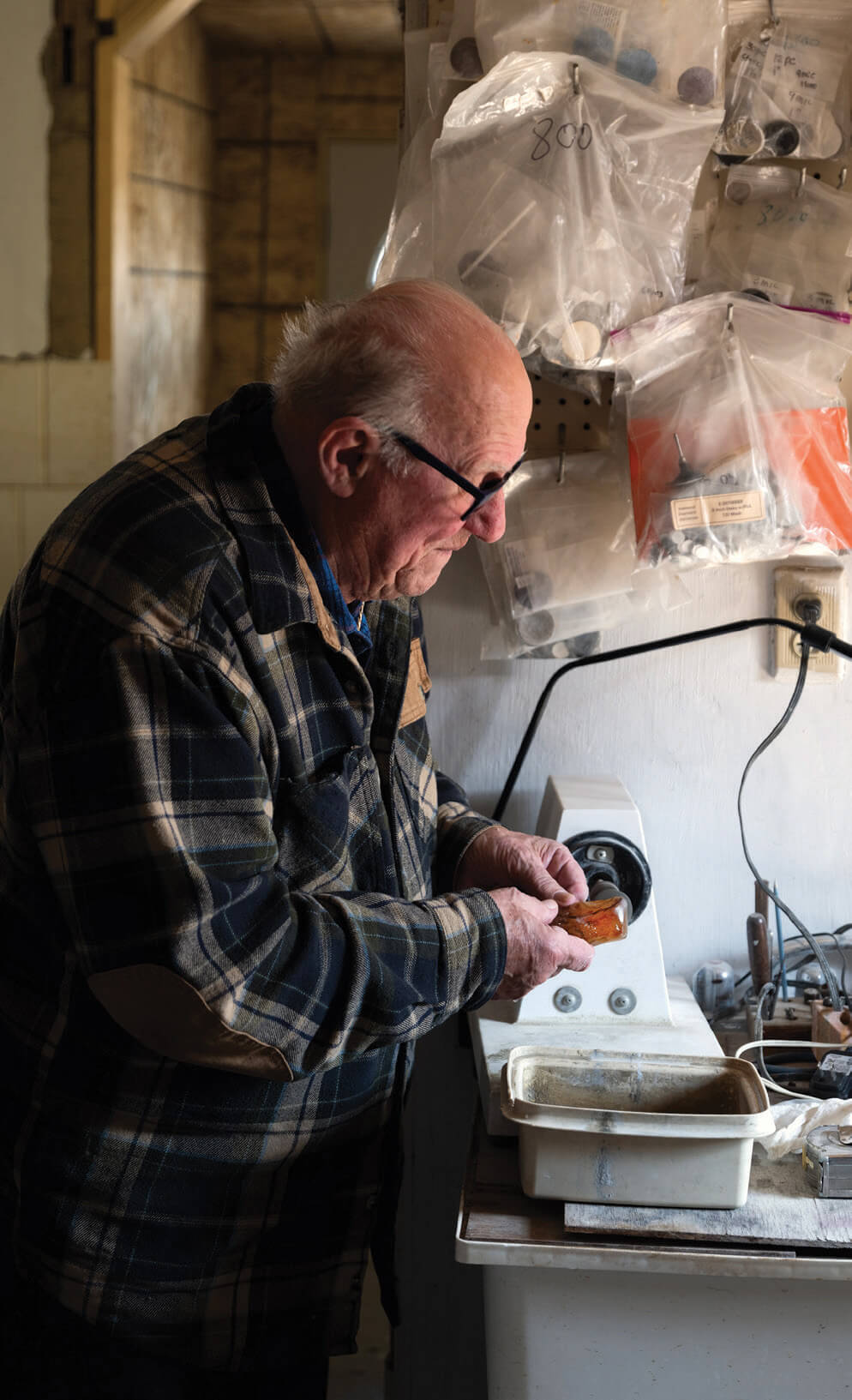
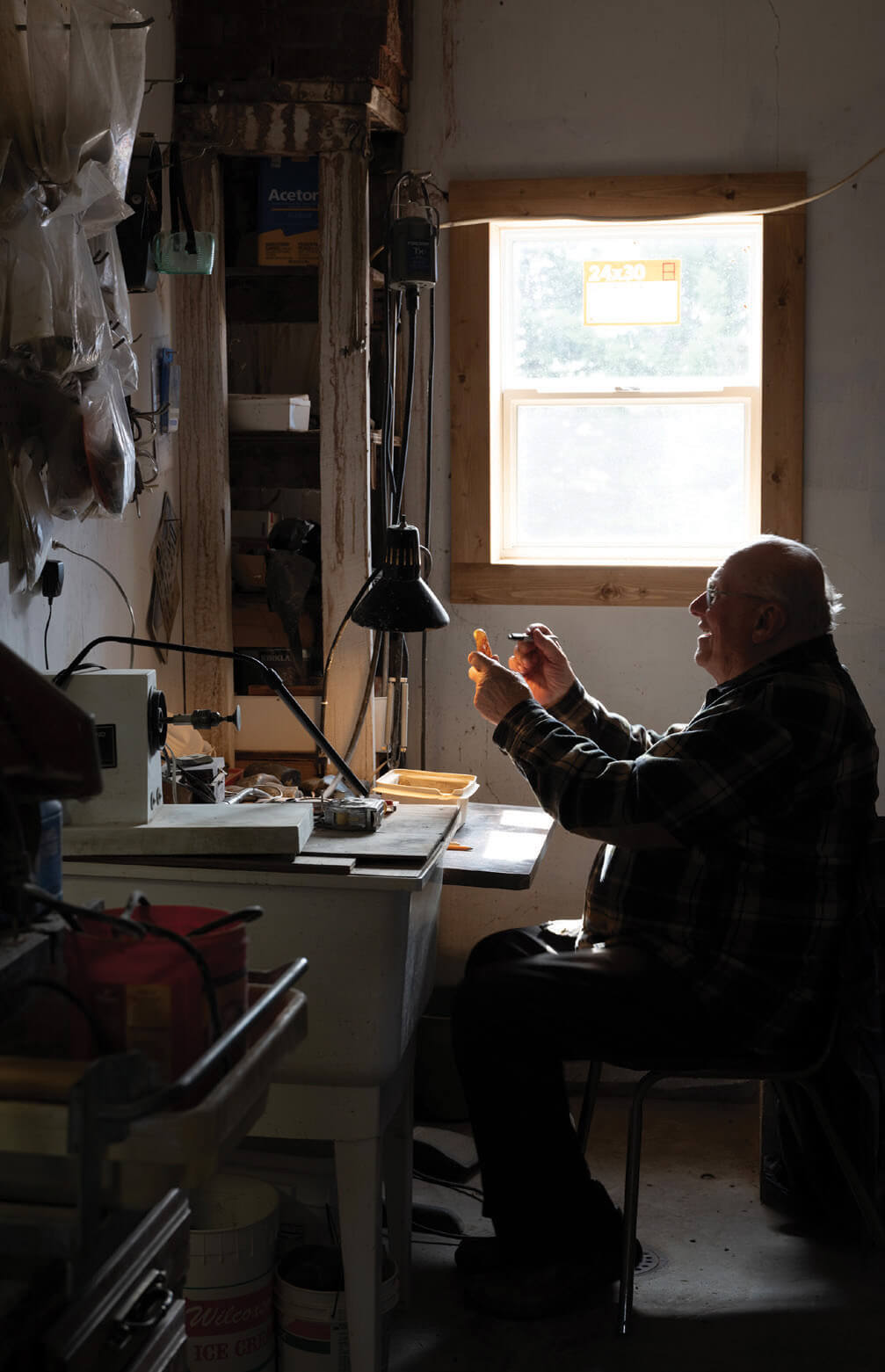
Harmon studies a particularly ornamental agate at his cutting and grinding station, located in a converted milking parlor.
Harmon has written four more books on the wider topics of agates’ geologic origins and distribution, and has authored a dozen magazine articles detailing how to grade and cut them. While he still loves “picking,” his term for scouring the banks of the Lower Yellowstone for bagel-sized agates, he’s also a self-taught metalsmith who shapes and crafts the gold and silver settings for his jewelry-grade stones. And Harmon has become a recognized evangelist for Montana moss agates.
In this panoramic perspective of his craft, Harmon is unique in Montana’s long history of miners. It’s a rare prospector who also refines the ore or shapes the gem, just as it’s unusual for a metalsmith to also peddle their jewelry, but Harmon does it all with a twinkle in his eye and a deep reverence for the resource.
“God’s gift,” Harmon calls moss agates, and he says his own calling, sharpened over 70 years of picking, grading, and cutting, is a certain responsibility to identify and coax into view the complex character of each rock. “I’ve felt compelled to write down some of my techniques as a cutter so people would get the best out of an agate, not only for themselves but for the agate,” says Harmon. “There’s nothing worse than a really dandy specimen cut wrong. You waste it. The really good ones are quite rare.”
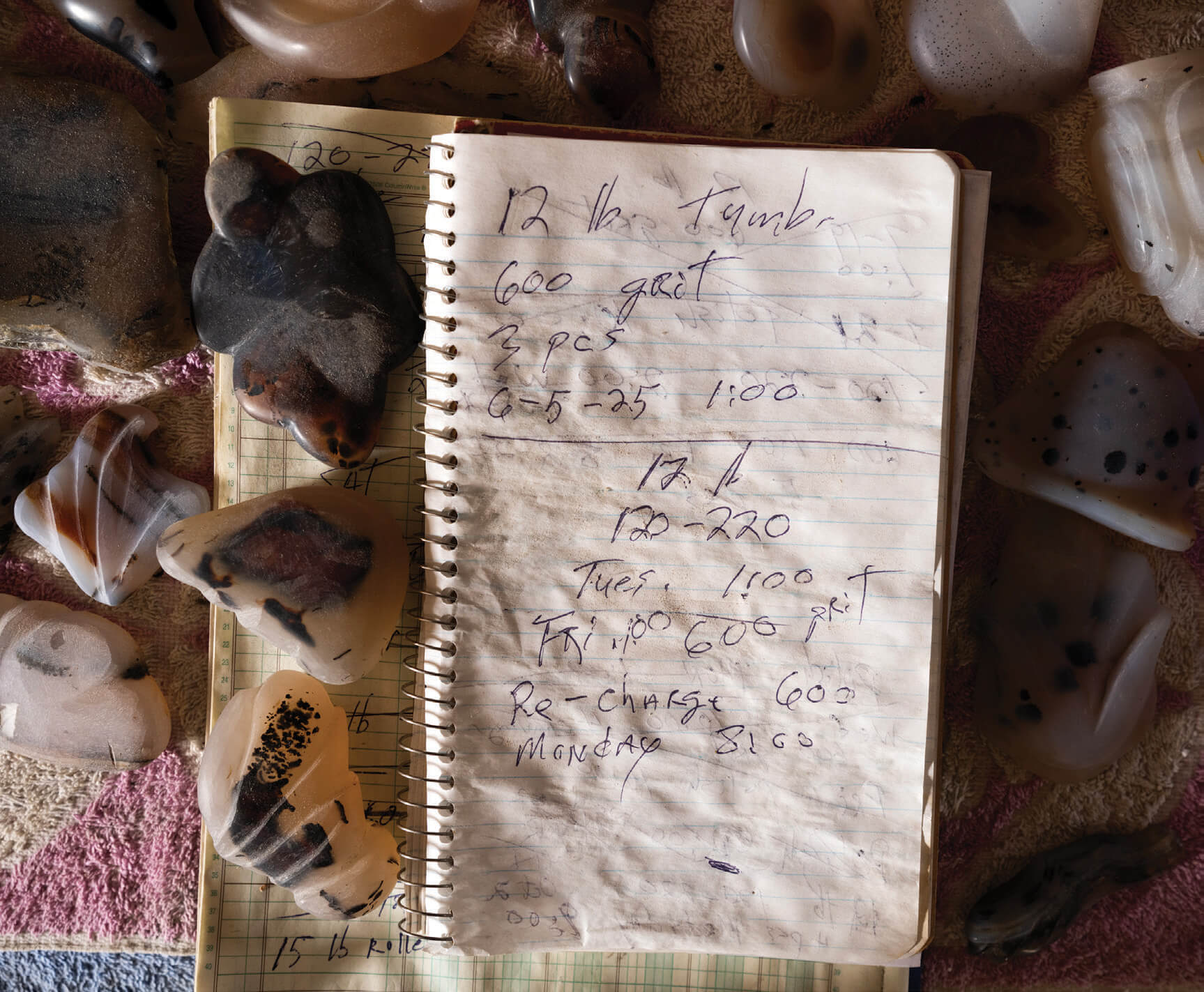
Converting raw rock into jewelry-grade specimens takes hours of cutting, carving, polishing, and shaping the moss agates that Harmon “picks” along the nearby Yellowstone River.
They’re also more complex and, to Harmon’s eye, more interesting than a diamond or a sapphire. “A diamond is just carbon under pressure,” he says. “They’ve even found ways to manufacture diamonds and rubies. But you can’t reproduce or manufacture an agate. They’re so complex, and each one is different. An agate nodule has character, from its formation in a prehistoric tree or limb to the injection of iron and manganese oxides when the whole world was in a flow state.”
Though he doesn’t travel as much as he once did, the rock-collecting world now comes to Harmon, who presides over a combination museum and art-and-jewelry gallery just off Montana Highway 16 near the tiny Yellowstone Valley town of Crane. Most of the exhibition agates are not for sale, though Harmon says some of his favorites, carefully cut and polished to reveal lush apricot swirls, leafy figures, and ink-blot dendrites, might leave the shop with an especially persuasive buyer.
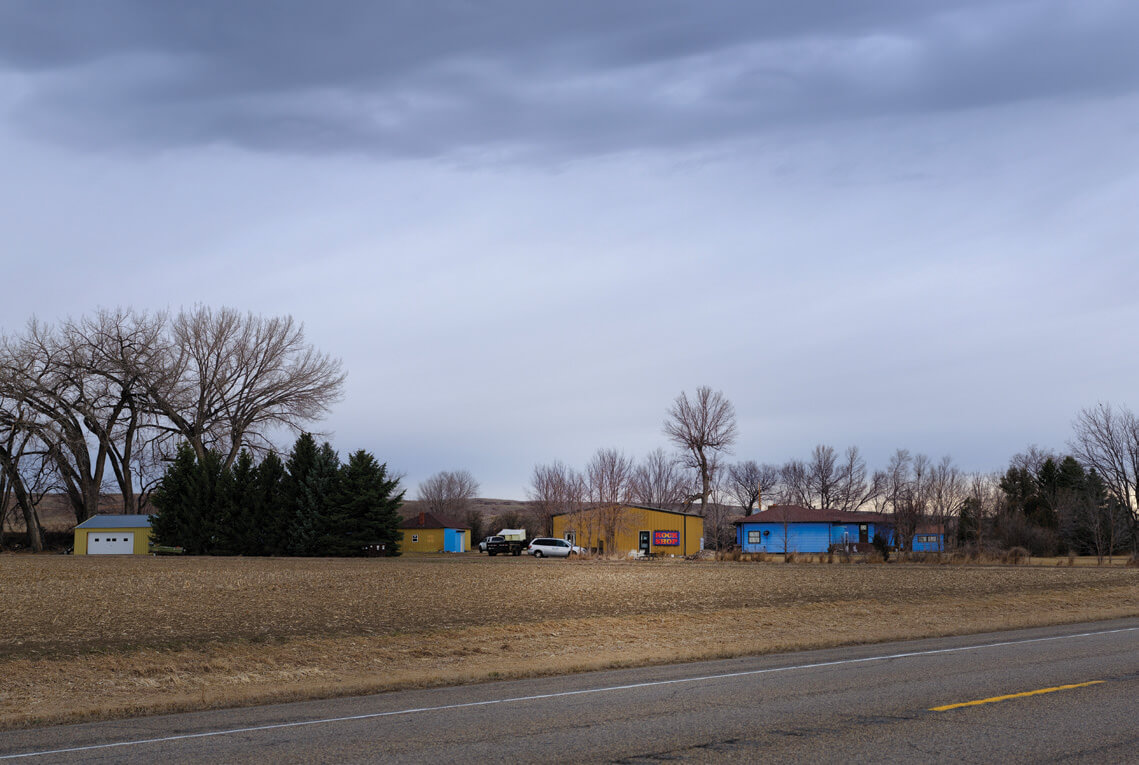
Harmon’s workshop and agate gallery is located just off Montana Highway 16, near the tiny Yellowstone River town of Crane.
Harmon’s son is also in the business. After apprenticing as a picker, cutter, and goldsmith, Jim Harmon now leads agate-picking tours of the Yellowstone in his jetboat. Harmon’s Agate Adventures guarantees clients will leave with an agate, even if it’s one from the pile of rough-skinned stones that surround Harmon’s museum and rock-cutting shop.
Harmon says he’s perpetuating a tradition that’s as foundational to the Yellowstone River Valley economy as sugar beet farming. “When I was a kid, and even stretching way back to the 1920s and before, when the first homesteaders were moving in after the irrigation canals were dug, every little town along the Yellowstone had a rock-and-mineral shop,” says Harmon. “There were a couple agate shops in Terry, Glendive had a handful, Miles City had four or five. There was Sissel’s Jewelry Store in Sidney, where I sold my first agates. It might not have been a big business, but it was a way to make some extra money during hard times, or between harvests.”
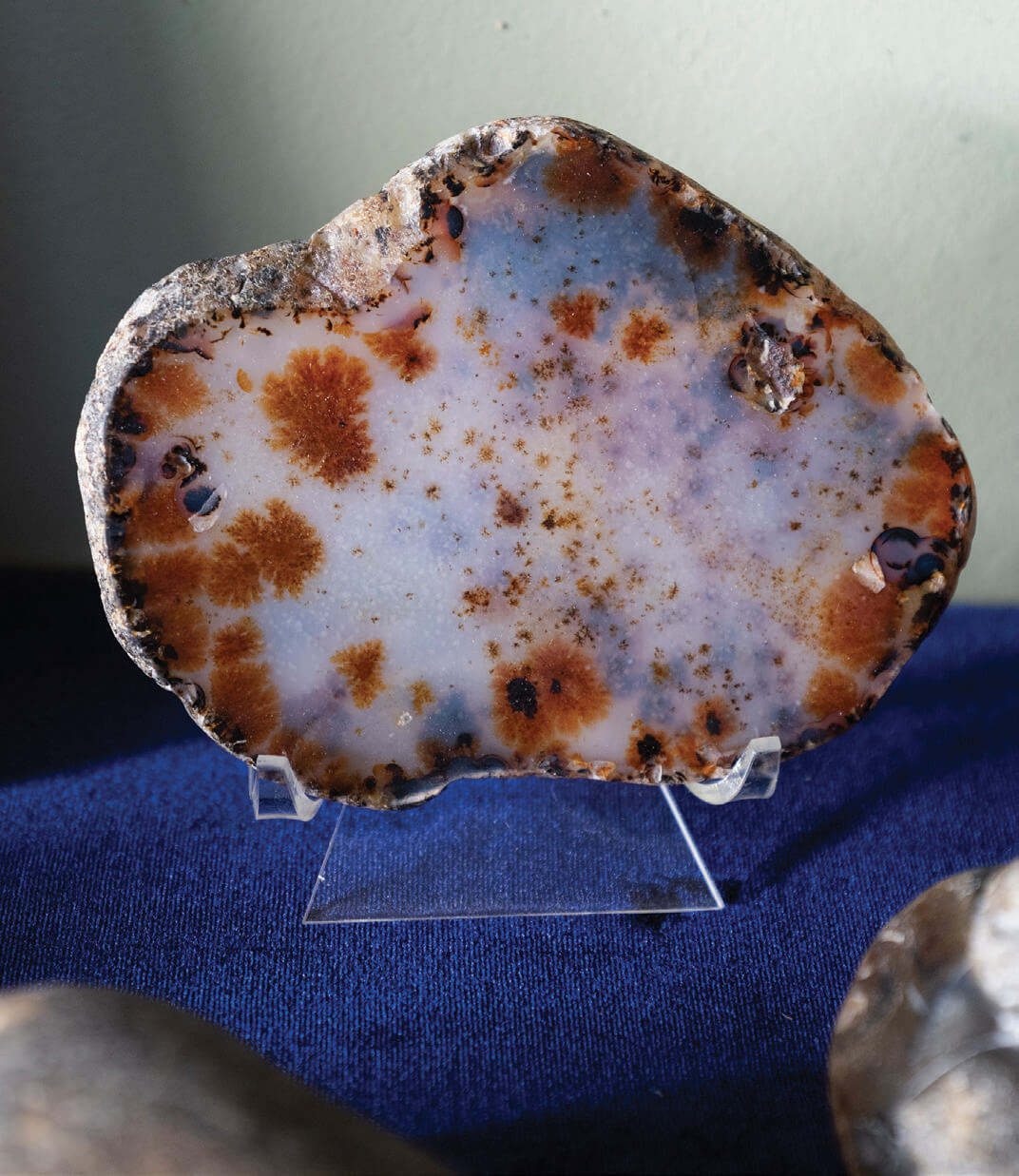
Particularly distinctive, moss agates are decorated with unique internal features. These dendrites resemble starbursts, sunsets, trees, ferns, and even horses or bison.
The Yellowstone River has been the constant provider of fresh agates. When the ice goes out of the river in the spring and flooding from the headwater mountains recedes, the Harmons will be out on its banks, picking. “We’ll start following the receding water as soon as we can get on the river,” says Jim. “Then we’ll just follow the drop. The river might drop 6 inches overnight, but that means 10 feet of exposed gravel that is different gravel than you saw the year before, because the river is always shifting and changing, either bringing in new rocks or exposing rocks that were there all along.”
Agates aren’t unique to Montana. They can be found nearly anywhere volcanism shaped the landscape and geology of the world, from Brazil to Madagascar. But many agate deposits are concentrated, where the semi-precious stones are easily mined and eventually depleted. Montana’s moss agates, in contrast, have been spread across hundreds of miles of the free-flowing Yellowstone, and farther through the broad alluvial fan of the Flaxville gravel deposit. That wide distribution means rockhounds inspired to look for these distinctively Montana gemstones will continue to find them.
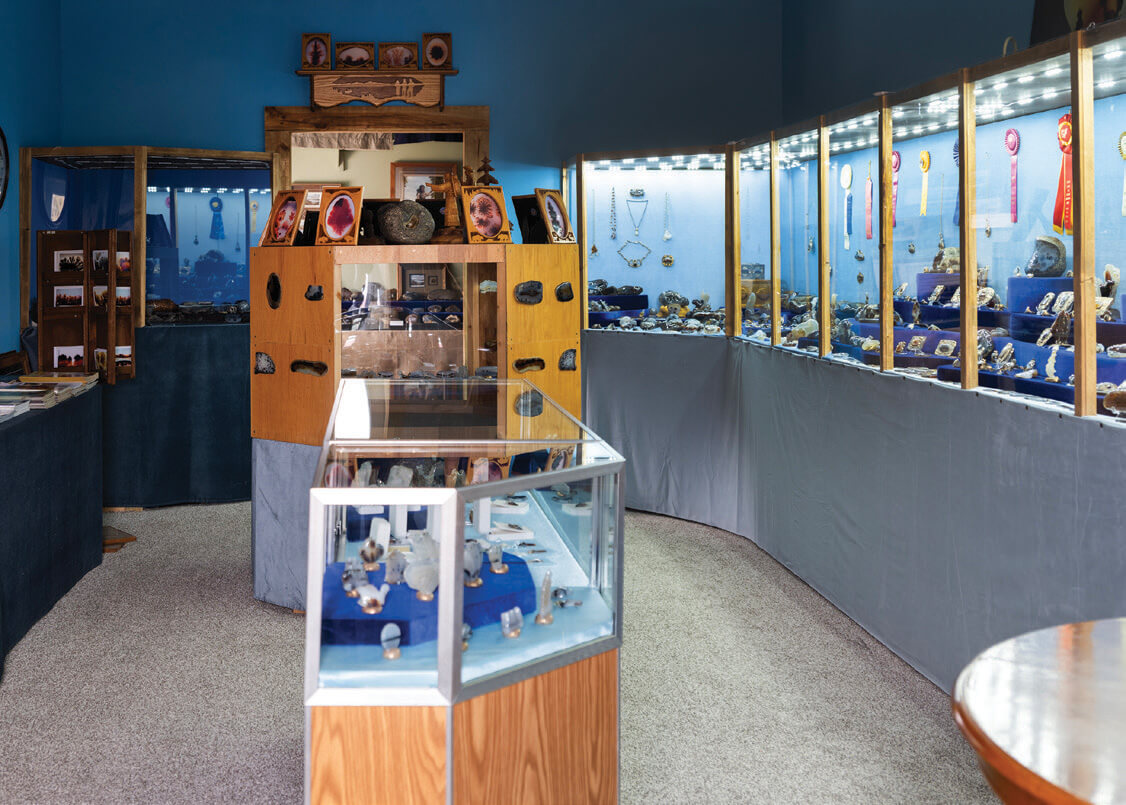
Harmon’s gallery features cases filled with his custom jewelry, special agates that are among his favorites from his seven decades of picking, and plenty of small agates for sale. The gallery also includes paintings depicting events of the Lewis and Clark Expedition on the nearby Yellowstone River in 1806.
“There’s lots of good-cutting rock out there,” says Harmon. “They’re so scattered that it makes picking an adventure, but it makes finding a good one a real treasure.”
Andrew McKean writes about hunting, conservation, and wildlife management from his home in Glasgow, Montana. The former editor-in-chief of Outdoor Life magazine and the current hunting editor, McKean is the author of How To Hunt Everything. He also contributes to a number of national publications.
A writer and photographer, Janie Osborne is based in Montana and covers projects that explore life in the American West. Osborne is a longtime contributor to The New York Times, and her photography work has been recognized by American Photography, with selections appearing in both the AP 41 and AP 42 annuals in 2025 and 2026.
No Comments