


31 Jul History: From Circus Wagons to the Bitterroot Valley
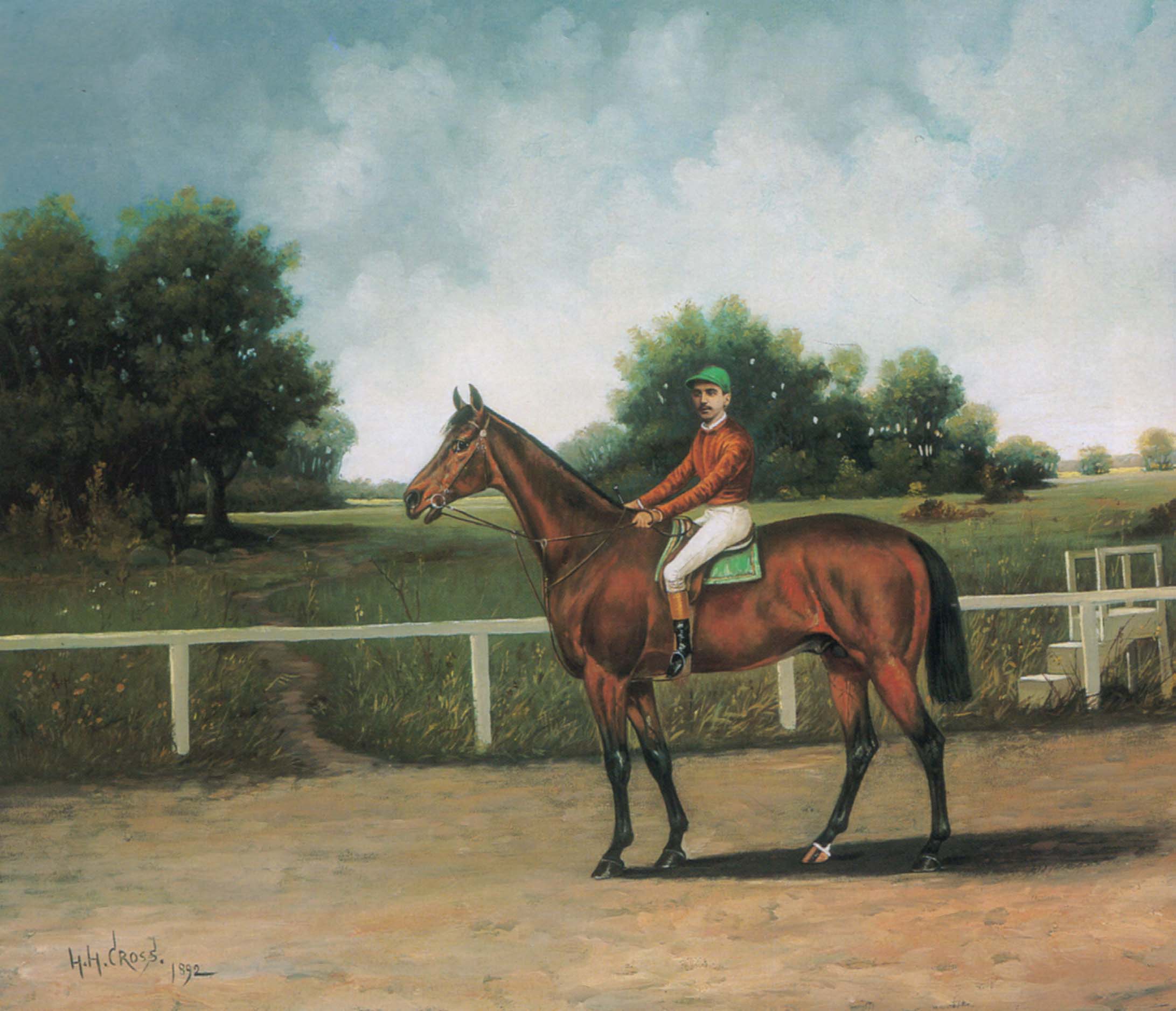
In September 1892, artist Henry Herman “H.H.” Cross set up a studio at Marcus Daly’s Montana Hotel in Anaconda. There, Cross spent six months creating paintings of Daly’s racehorses, and on January 16, 1893, The Salt Lake Tribune reported that the hotel was “the Mecca for all the art-loving tourists who pass through the state,” describing the horse portraits displayed there as “so true to nature that one is almost tempted to hold out a caressing hand.”
Anaconda’s newspapers called Cross “the prince of raconteurs” and “a capital story-teller.” Mentored by hucksters such as Phineas Taylor “P.T.” Barnum and Buffalo Bill Cody, Cross embellished his past and built his own myth, yet his actual story is one filled with adventure. Over 100 of his paintings still exist in museums, galleries, and private homes, providing a romanticized snapshot of a period that was already disappearing into nostalgia by the late 1800s.
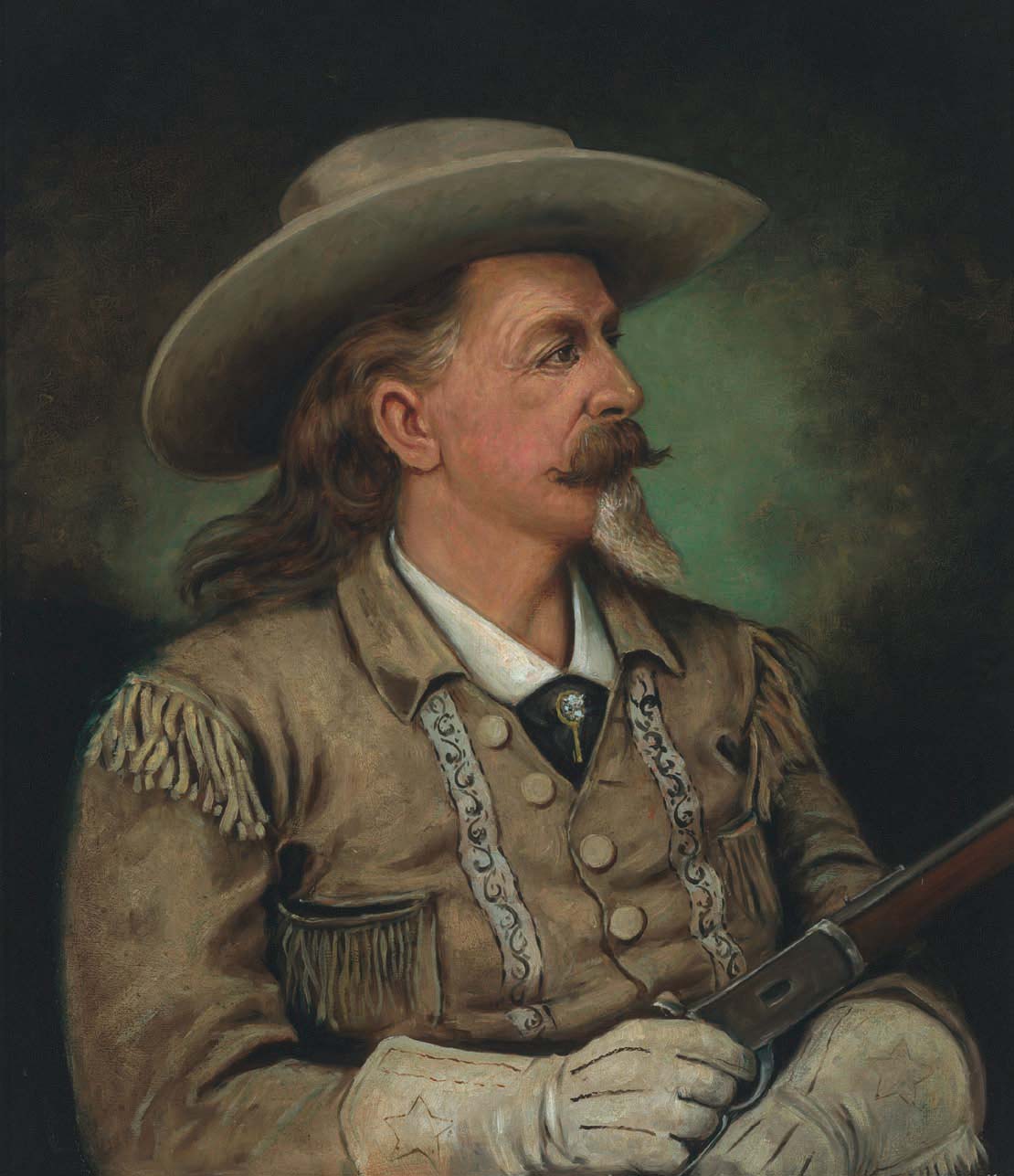
Buffalo Bill Cody was a patron and promoter of Cross, who produced a portrait of Cody in 1888. | GILCREASE MUSEUM
Born in Upstate New York in 1837, Cross ran away at age 15 to join the circus. A self-taught artist, he got his start painting animals on circus wagons, ultimately working for Barnum, who launched a traveling circus in 1871.
Cross may have served in the military in the 1860s, possibly in the West. However, during that time, he also created racehorse portraits for wealthy patrons, including shipping magnate Cornelius Vanderbilt. An early work captured the finish of an 1854 match race on Long Island, portraying Vanderbilt and other turfmen in the crowd.
Along the way, Cross befriended William F. “Buffalo Bill” Cody, who first toured with an acting troupe in the mid-1870s before launching his Wild West Show in 1883. While the time of their first meeting is unknown, it’s possible they connected because Cross’s skill at painting circus wagons transferred to promoting Cody’s Wild West extravaganzas.
Though Cross eventually made Chicago his home base, he also spent time in California, painting for racehorse breeder and silver tycoon E.J. “Lucky” Baldwin. In 1894, Baldwin’s cousin, Elnora, a vaudeville performer, became Cross’s second wife, and though the couple separated, their daughter, Stastia Cross Curry, followed her father’s footsteps by joining a circus. She worked with elephants and horses, then became a trick rider and sharpshooter in 20th-century Wild West shows. When Cross died in Chicago in 1918, Stastia was at his side.
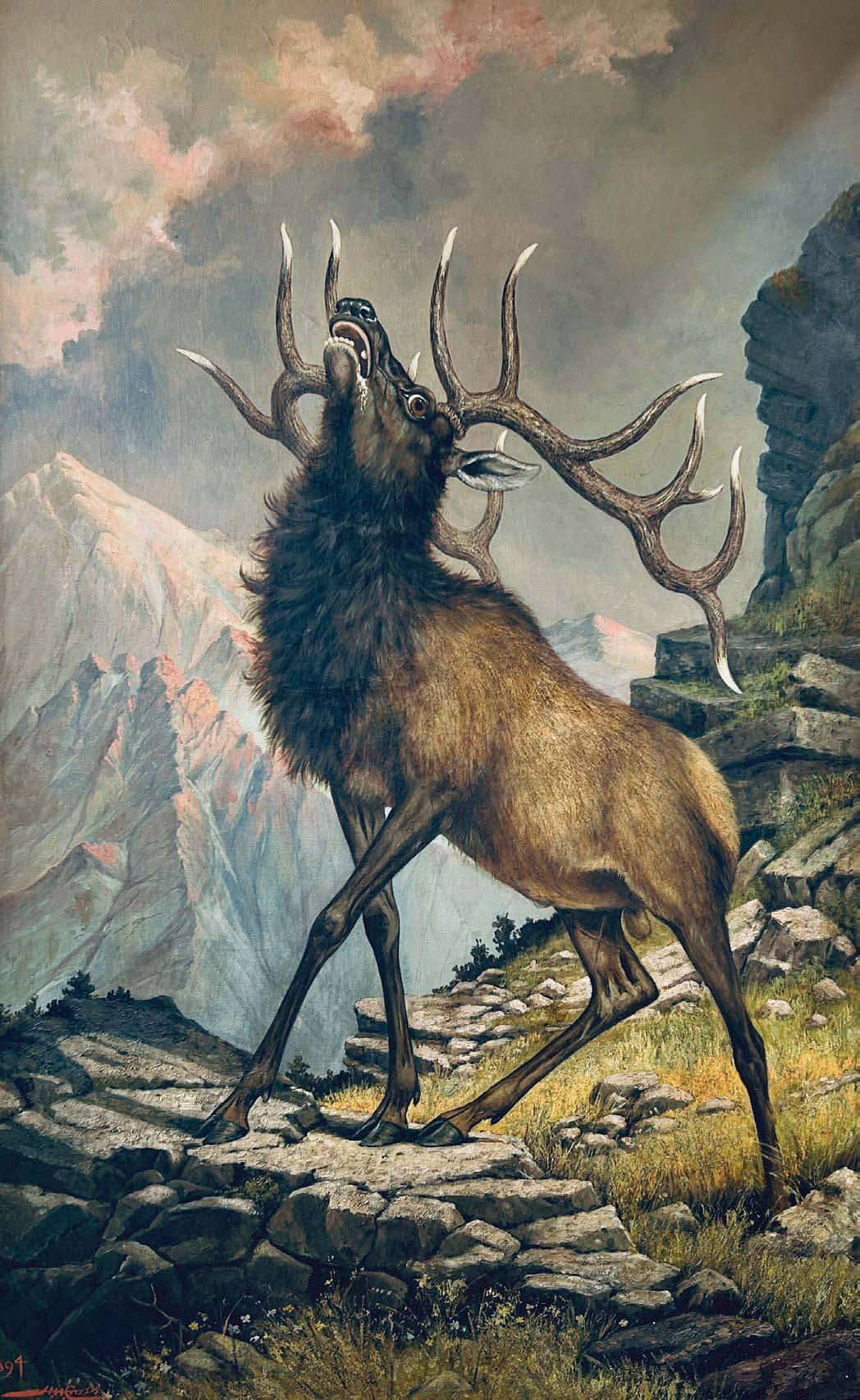
Cross gave An Elk, a 75- by 45-inch oil painting, to the Anaconda Elks Lodge in 1894 and it remains there to this day. | ANACONDA ELKS LODGE #239
Marcus Daly — one of Butte’s Copper Kings — probably met Cross via Baldwin; both men loved racehorses. When Daly’s first Thoroughbred champion, named Montana, began winning races on the East Coast, he offered Cross a $6,000 contract to paint. Cross visited Daly in December 1891, then returned in September 1892 and set up shop in Anaconda until February 1893, taking trips to Daly’s Bitter Root Stock Farm in Hamilton and capturing the landscape of the Bitterroot.
Newspapers reported that Daly ended up paying Cross over $30,000. In addition to several majestic 7- by 10-foot canvases, Cross completed over a dozen paintings of Daly’s individual racehorses, including Montana and the promising colt Tammany, but also harness racers such as the trotting stallion Prodigal and champion pacing mare Yolo Maid.
True to his character, Cross played as hard as he worked. On a two-week hunting trip to W.H. Raymond’s Belmont Park estate near Twin Bridges, he shot an “unusually large” grizzly bear. While in Anaconda painting for Daly, he spent evenings at the local Elks Lodge, where he regaled members with tales of his worldwide travels — some of which may have even been true. In December 1892, the Anaconda Lodge made him a lifetime member. In return, he created a 75- by 45-inch oil, simply titled An Elk. Delivered in December 1894, it still hangs in a place of honor at the lodge.
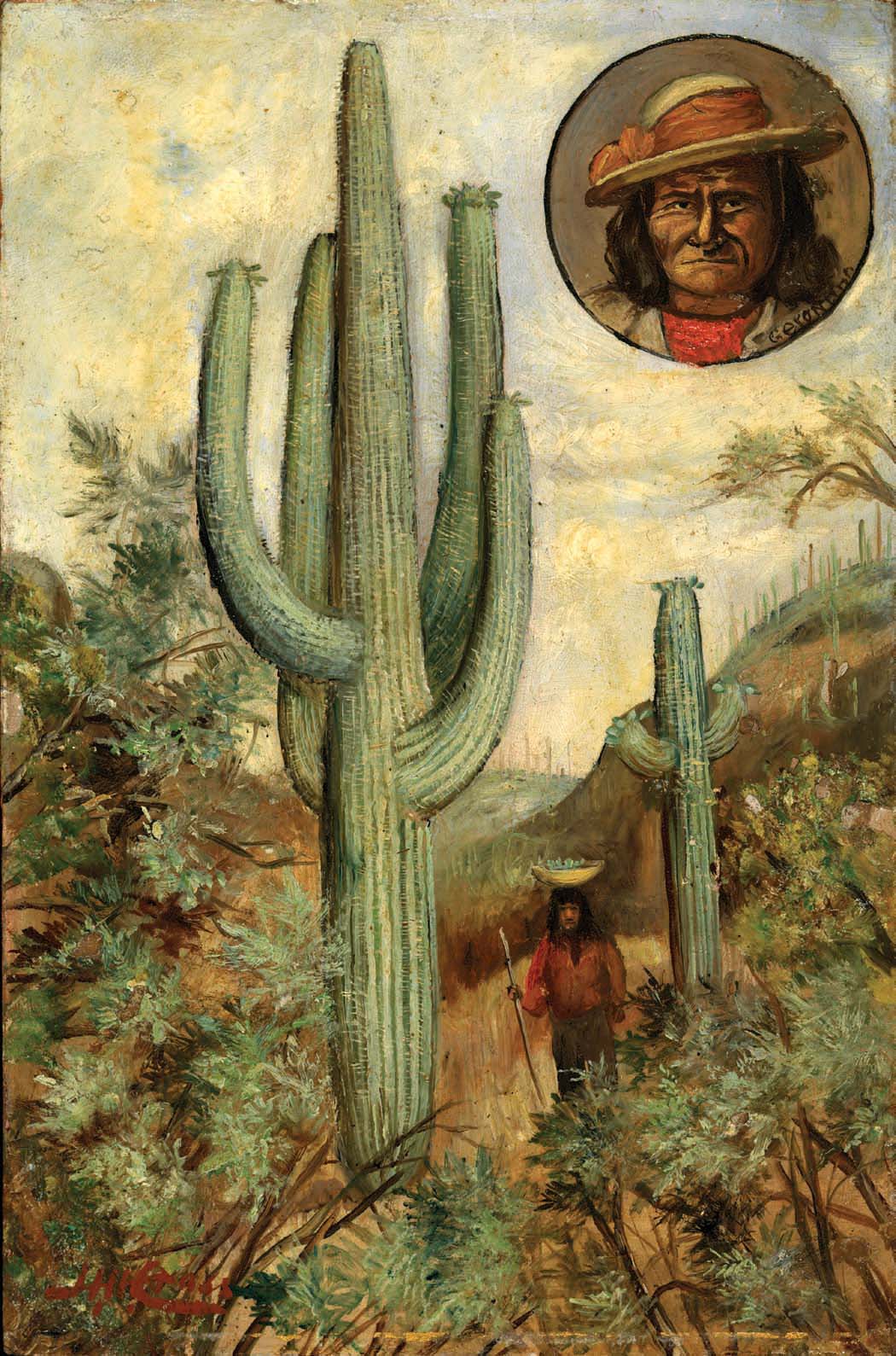
Cross’s experiences in the West informed his subject matter, and in the late 1890s he shifted from painting racehorses to focus on frontier nostalgia, such as in Cactus Landscape with Portrait of Geronimo, 1886–1909 | SMITHSONIAN AMERICAN ART MUSEUM
Cross went to Livingston and Yellowstone Park in 1895 to get some “studies of bears from life.” Soon after, he sent three paintings, one of a bison and two of “mountain sheep,” to an area friend, Joe Swindlehurst. This marked the point when Cross moved away from painting racehorses and turned to frontier nostalgia. He visited Wyoming in 1897 or 1899, where he created wilderness landscapes and portraits of Indigenous people.
The apex of his career came courtesy of Minneapolis lumber magnate Thomas Walker. After buying 13 Cross paintings from a New York art dealer, Walker reached out to Cody, who reassured Walker — probably falsely — that Cross had truly “lived with the tribes.” By 1909, Walker owned 26 paintings, and Cross had a new patron. Walker wanted a collection of “portraits of the prominent actors in the early history of the West and its Indian wars,” and these commissions allowed Cross to complete 125 works in the final decade of his life.
Cross’s storytelling made him many friends, though his tales stretched the truth. For example, he said that he went to Paris in 1855 to study art with noted animal painter Rosa Bonheur, a claim historians consider dubious. Given that Bonheur painted Buffalo Bill when the Wild West Show traveled to Paris in 1889, it is more likely that Cody and Cross developed the tale to enhance Cross’s credibility as an artist.
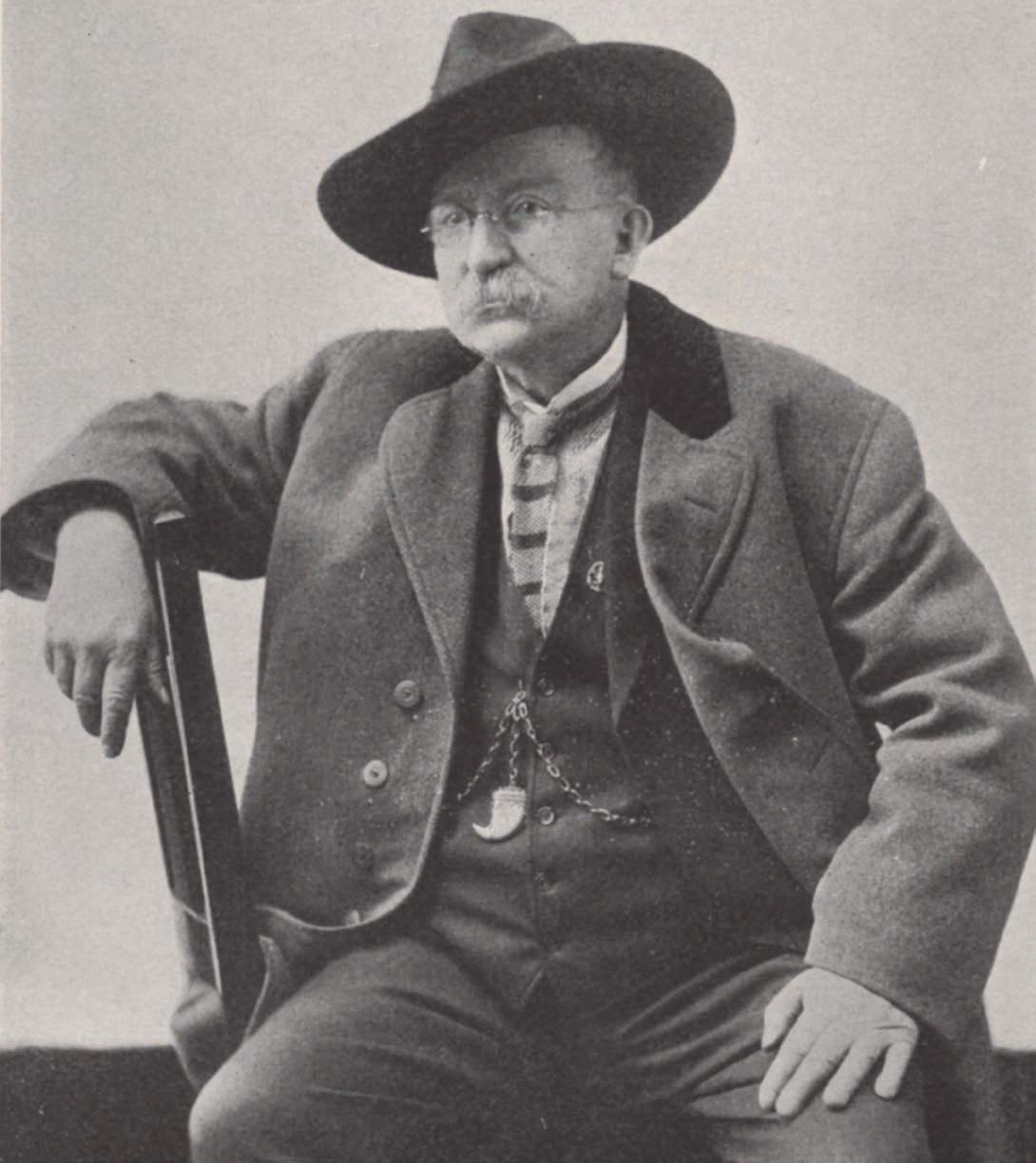
Cross, a self-taught artist, left home at 15 to work for a traveling circus before his career would take him west. | THE T.B. WALKER COLLECTION OF INDIAN PORTRAITS
Other stories, such as Cross’s claim he visited Africa seeking animals for Barnum’s circus, may contain grains of truth, though not all details line up with documented facts. Similarly, historians dispute whether he lived with Native people or was in Minnesota in 1862–63 to sketch the Santee (Isáŋyathi) men sentenced to hang after the Dakota Uprising. However, he probably did meet Lakota leaders Red Cloud and Sitting Bull during the years they toured with Cody’s Wild West Show.
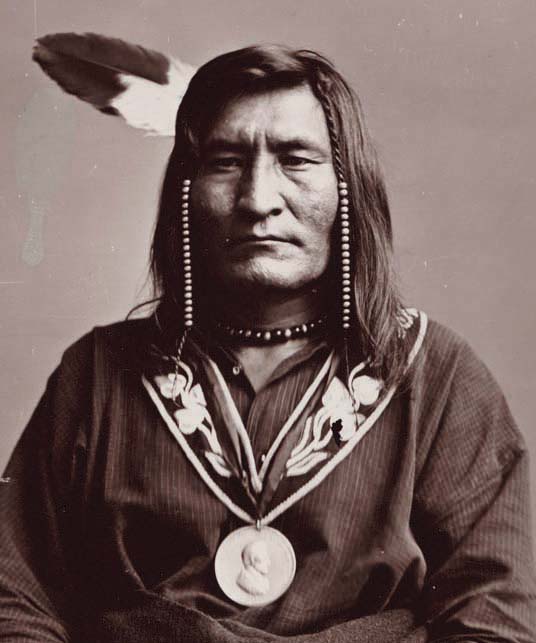
Though Cody claimed Cross was “the greatest painter of Indian portraiture of all times,” art scholars today are less enthusiastic, considering his work overly dramatic. Cross said his work was painted from life, but he clearly used photographs as reference material. He also took shortcuts. In the Daly racehorse paintings, some jockeys have oddly positioned heads, which, upon close examination, turn out to be small photographs of the actual people, glued onto the canvases, hand-colored, and varnished. Cross also backdated some of his paintings, such as placing an 1879 date on a work that could not have been painted until the mid-1890s.
Unquestionably a raconteur and strongly influenced by years spent painting wagons for two of the 19th century’s best-known hucksters, Cross’s works and life story reveal a colorful look at life in the late 1800s. At least 18 of his Daly racehorse paintings are thought to exist today. After Daly’s granddaughter, Margit Sigray Bessenyey, died, the contents of the Daly Mansion went on the block in a 1986 auction in Hamilton. Seven Cross paintings sold.
WIKIMEDIA COMMONS
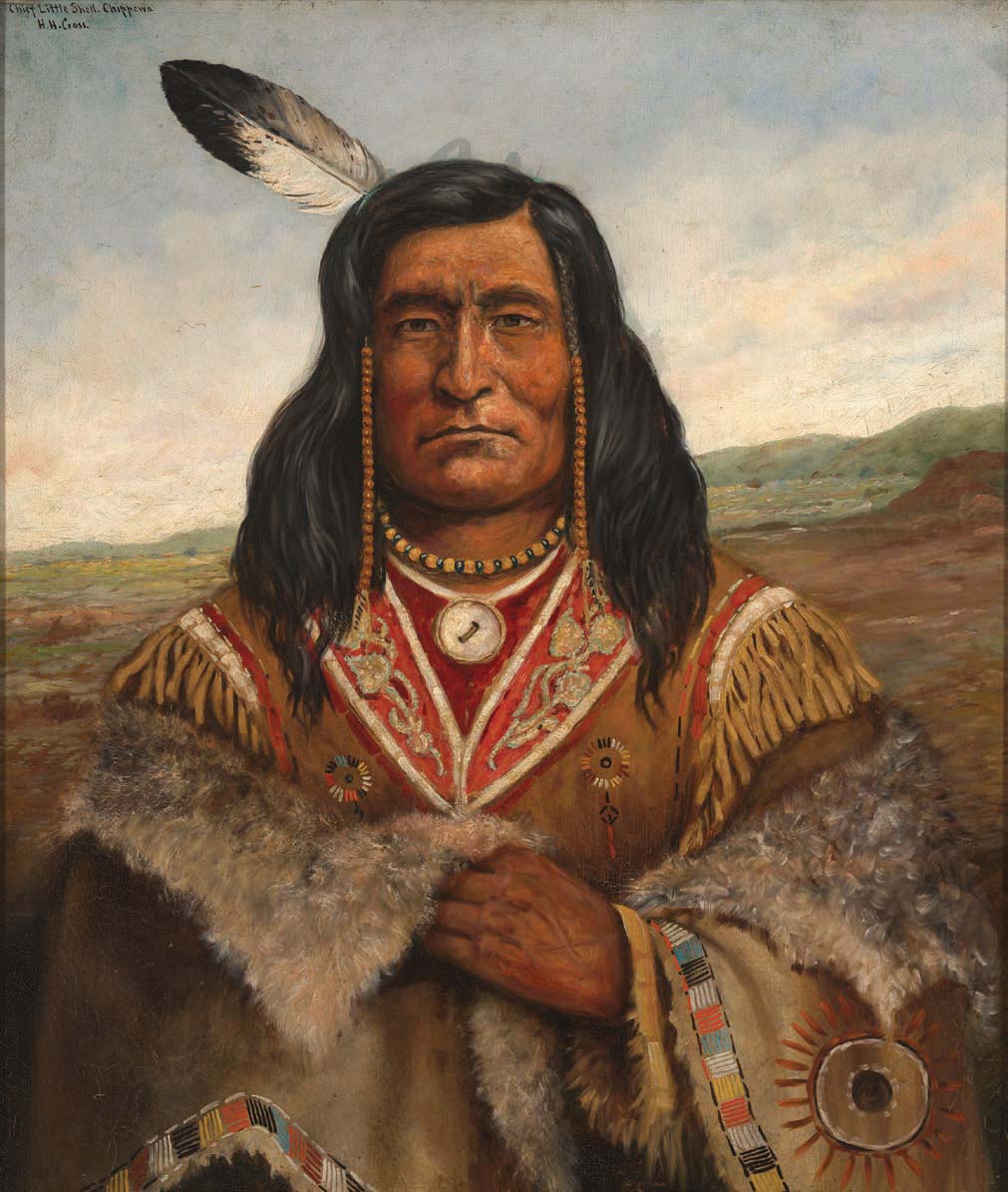
Cross sometimes used photographs as reference material, as in the undated Chief Little Shell, Chippewa for which he used a studio portrait of the chief from 1892. | GILCREASE MUSEUM
Today, two of Cross’s massive 7- by 10-foot landscapes hang on the main floor of the Mansfield Library at the University of Montana in Missoula. Purchased at the 1986 Daly auction for $23,500, they were later donated back to the Daly Mansion Preservation Trust and restored. Stallions at the Marcus Daly Bitterroot Farm showcases nine Thoroughbreds, with the background providing a snapshot of Hamilton in 1892, showing Daly’s half-mile covered racetrack and the “Big Mill” that processed timber used in the Butte mines. The other landscape, Horses with Keeper, Marcus Daly Bitterroot Farm, shows a herd of the “trotters” — Daly’s harness racing mares — some with foals at side. Behind this idealized, bucolic scene rises the
majestic Bitterroot Range, the afternoon sun illuminating the highest peaks.
Eleven Daly horse paintings went to Christie’s of New York and sold in 1987. New York City’s Hirschl & Adler Galleries purchased 10. According to gallery director Eric Baumgartner, of those 10, four are still available at the gallery for sale.
The fate of the 11th painting is almost a tale from Antiques Roadshow. Cross painted Daly’s Thoroughbred stallion Hyder Ali, sire of Spokane, the Montana-foaled winner of the 1889 Kentucky Derby. Christie’s sold the painting to a private individual in 1987. More than three decades later, the buyer’s estate put it up on eBay, where it sold for about a 10th of its value. Seeing the artist’s signature, the new owner reached out to the Daly Mansion and this author for information on Henry Cross and discovered the provenance of the work.
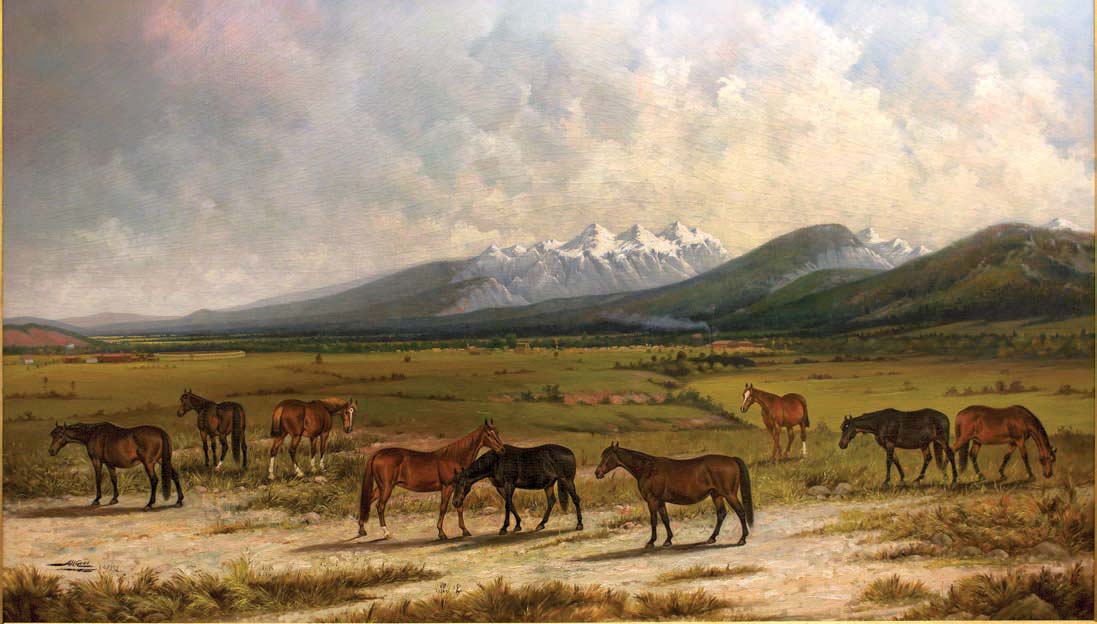
In Stallions at the Marcus Daly Bitterroot Farm, 1892, the landscape shows Hamilton, Montana’s “Big Mill” and Daly’s covered racetrack in the background. The models for the Thoroughbred “stallions” may actually have been mares. | MANSFIELD LIBRARY, UNIVERSITY OF MONTANA/DALY MANSION PRESERVATION TRUST
Though Cross is largely forgotten today, his works are a time capsule of the late 1800s and deserve another look, if anything, to catch a view of Western life framed through high society. Many portraits are now at the Thomas Gilcrease Institute in Tulsa, Oklahoma, and other works are at the Buffalo Bill Center of the West in Cody, Wyoming. Yet, dozens of other paintings, such as Hyder Ali and An Elk, are scattered across the West. It’s a modern-day treasure hunt.
Brenda Wahler, a fourth-generation Montanan from Helena, combines her skills as an attorney, horsewoman, and independent historian to unearth the complex realities behind the myths of the American West. Her recent books, Marcus Daly’s Road to Montana and Marcus Daly’s Montana Empires, examine the Copper King’s complex legacy.
No Comments