


25 Sep Dining Out: A Neighborhood Experience
Remle Colestock, head chef at Glorietta Trattoria in Jackson, Wyoming, was named a 2026 James Beard Foundation Award Semifinalist for Best Chef in the Mountain Region, encompassing Colorado, Idaho, Montana, Utah, and Wyoming. It was his, and the Italian restaurant’s, first time as a semifinalist for any James Beard Award, which recognizes excellence in the culinary arts, food and beverage, and hospitality industries. A James Beard Award — even being named a semifinalist — is considered among the restaurant industry’s most prestigious honors.
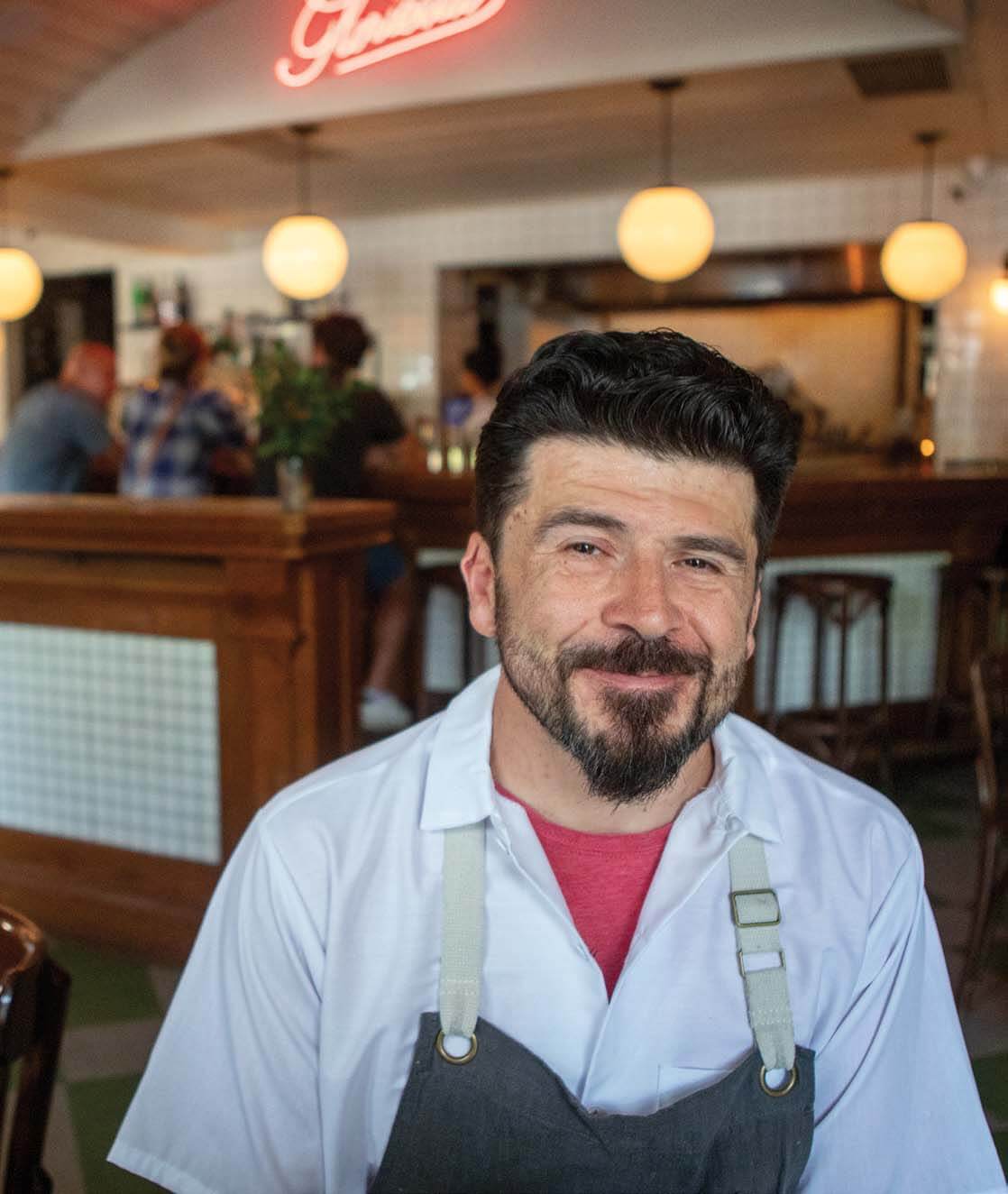
Colestock was named a 2026 James Beard Foundation Award Semifinalist for Best Chef in the Mountain Region.
A couple of months before the nominations were announced, the foodie website Chowhound included Glorietta on its list “The Absolute Best Italian Restaurant in Every U.S. State, Hands Down,” writing that the menu featured “ridiculously good Italian dishes.”
But, while Colestock, who has led Glorietta’s kitchen since 2023, is honored by such national recognition, more important to him is how the restaurant rates with Jackson Hole locals in the annual “Best of Jackson Hole” Awards. And in 2026, Glorietta won five of these: four golds (Best Chef, Best Craft Cocktail, Best Date Night, and Best Italian) and one silver (Best Restaurant).
“Feedback from locals is what means the most to me and the rest of the staff,” he says.

The Il Brodo is a gin-based martini that incorporates vermouth, parmesan, oregano, and Castelvetrano olive brine.
Glorietta general manager Tyler Gomez says the driving force behind the restaurant, which was named after Mount Glory, a popular peak for backcountry skiing on Teton Pass, is for it to be a spot for the neighborhood.
“It’s been this way since the beginning,” he says. “We’re less about tourists and more about the town. A lot of restaurants have a vision of what they want to do and then shove it down people’s throats. Glorietta has evolved by listening to the community and what it wants.”
Glorietta opened in early 2017 in a space just far enough from Jackson’s downtown that the diners who opt for a table on its flower-filled patio don’t hear the nightly shootout on Town Square. The structure was originally built as a house, but, for at least three decades before Glorietta took over, was home to Nani’s Genuine Pasta House, which locals loved because it felt like eating in a friend’s convivial, cozy kitchen. Glorietta owner Erik Warner had worked at Nani’s as a host.

Patrons gather in front of Glorietta Trattoria in Jackson, Wyoming, where the structure was originally built and designed as a family home before being remodeled into a restaurant. Glorietta is the second Italian restaurant to call the building home.
While Warner and his partners did a complete refresh of the interior — think black-and-white photos of women in spaghetti Westerns (to which Gomez says, “We serve spaghetti, and we’re in the West.”), white tile, warm and natural materials, and a wrap-around bar that looks at the wood-fired grill — the vibe stayed the same.
“It was important to keep the quintessential character and warmth of it feeling like a home,” Gomez says. “It’s a neighborhood place where everyone would feel comfortable hanging out.”
Of course, physical design is only one component of feeling comfortable, especially in a restaurant.
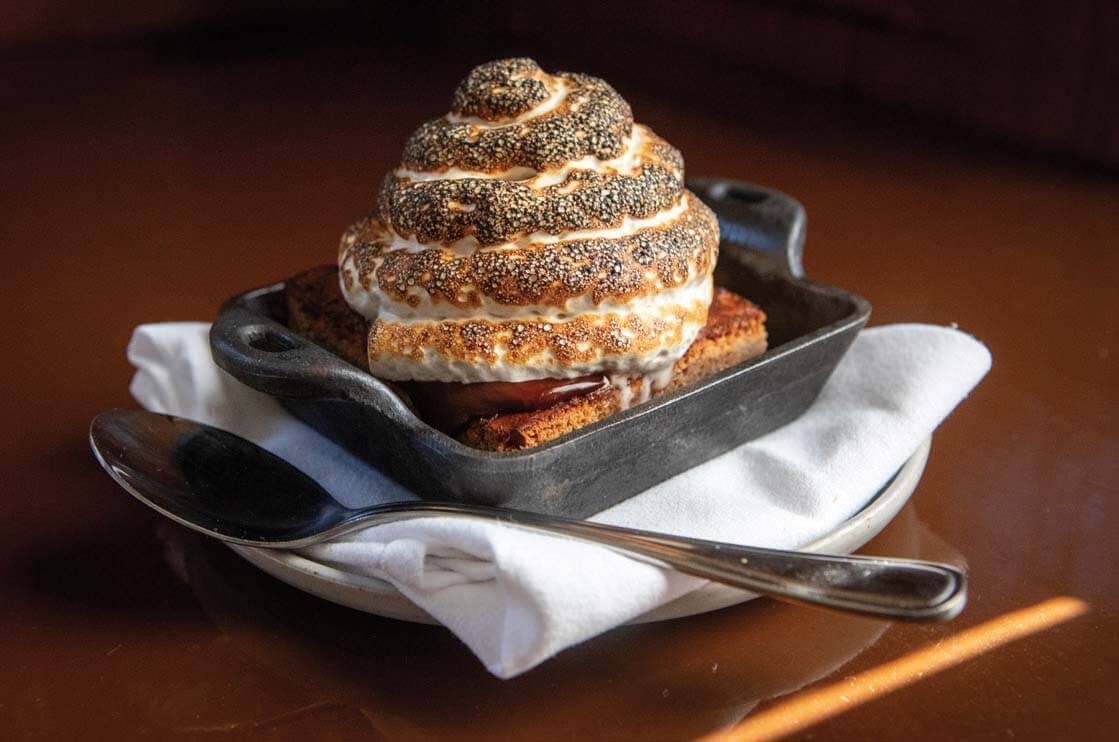
The s’mores-inspired dessert uses Wyoming Heritage’s Red Fife wheat to make the “graham” blondie, served with smoked ganache and a honey meringue that is reminiscent of a Baked Alaska.
“We keep the menu focused on simple, clean products and keep them at a good price,” Gomez says.
“We aggressively hire good people with good souls who care deeply about what they do. You can teach [anyone] to serve tables, but you can’t teach someone to show kindness, humor, and love at 7:30 on a Saturday night.”
“There is so much crazy going on in the world; in here you’re safe for a couple of hours,” he adds. “We take care of each other and of guests. The food and drinks do a lot of the work for us, but it’s really the seasoned pros excited to be here and to offer guests a good product. We’re selling an experience over food and drinks.”
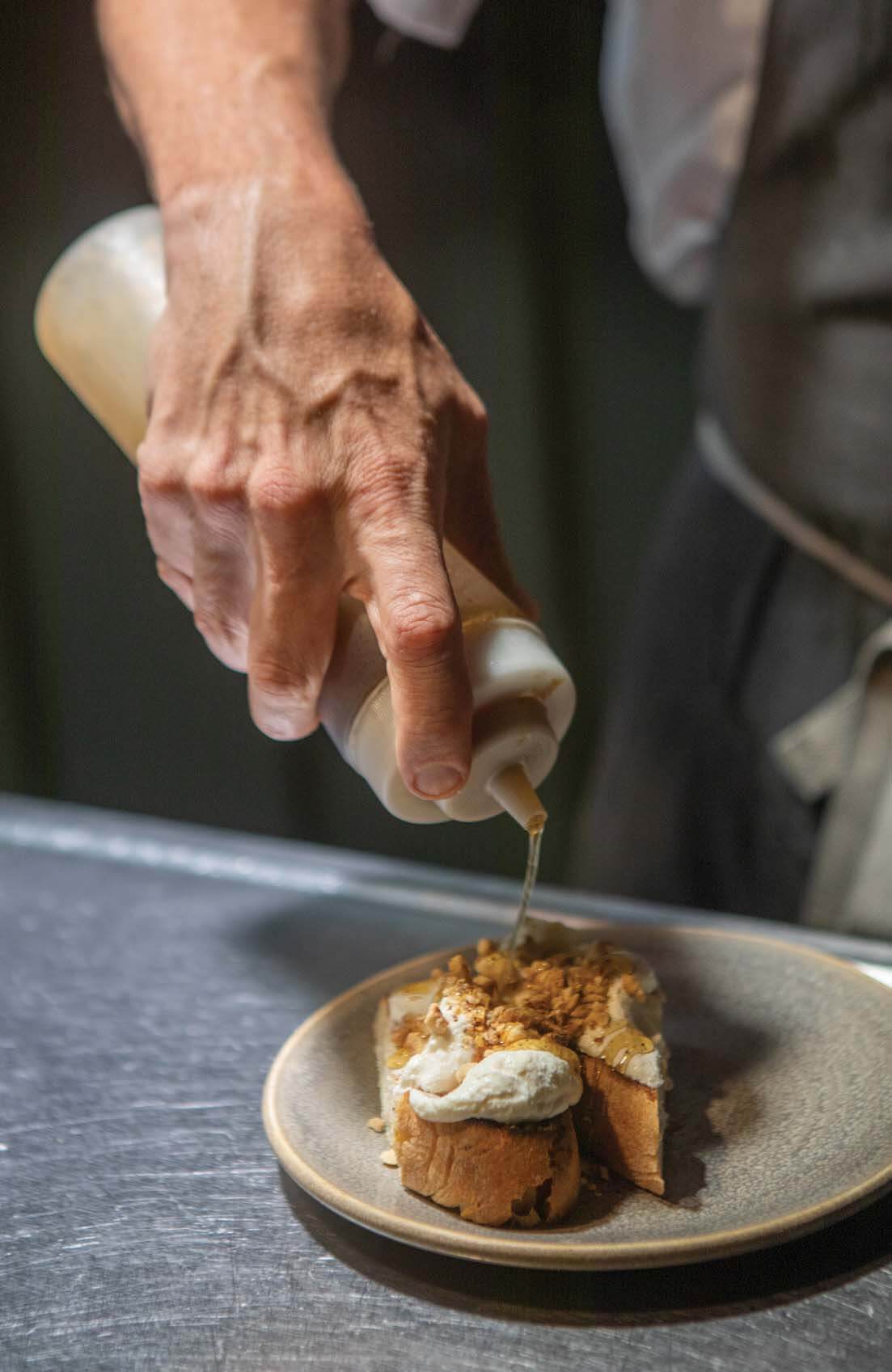
Colestock finishes the crostini, topped with ricotta and hazelnuts, with truffle honey.
But the food, as Chowhound puts it, is “ridiculously good.” So are the drinks, especially the Il Brodo, which uses Ginepraio Mediterranean gin, Baldoria Umami vermouth, La Fuerza Blanco vermouth, parmesan, oregano, and Castelvetrano olive brine to prove that the best cocktails aren’t sweet.
Colestock, who grew up in Green River, Wyoming and started his culinary career in Minneapolis after a first career as a graphic designer, describes Glorietta’s food as “finesse-driven, but casual. We take a simple approach focused on quality ingredients and put a lot of love into each dish.”
While the menu changes between summer and winter, from summer to summer and winter to winter Colestock says it only changes about 10 percent. He doesn’t feel the need to change things just to change them, but he and his team do revisit every recipe at an astoundingly granular level every season.
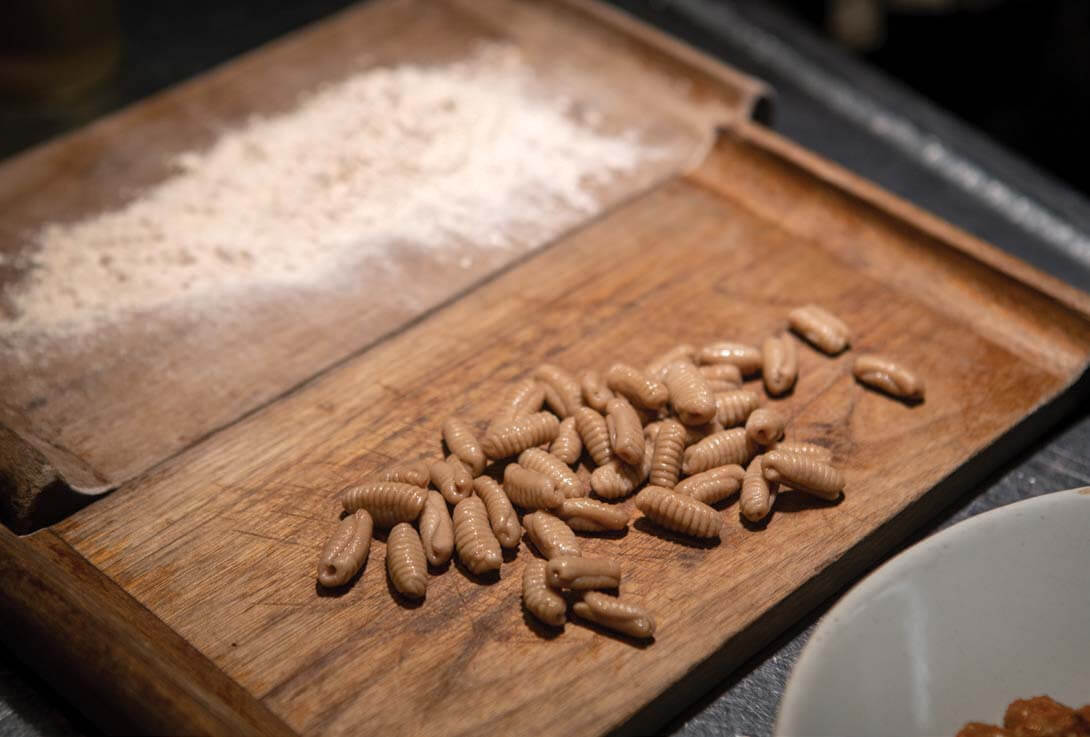
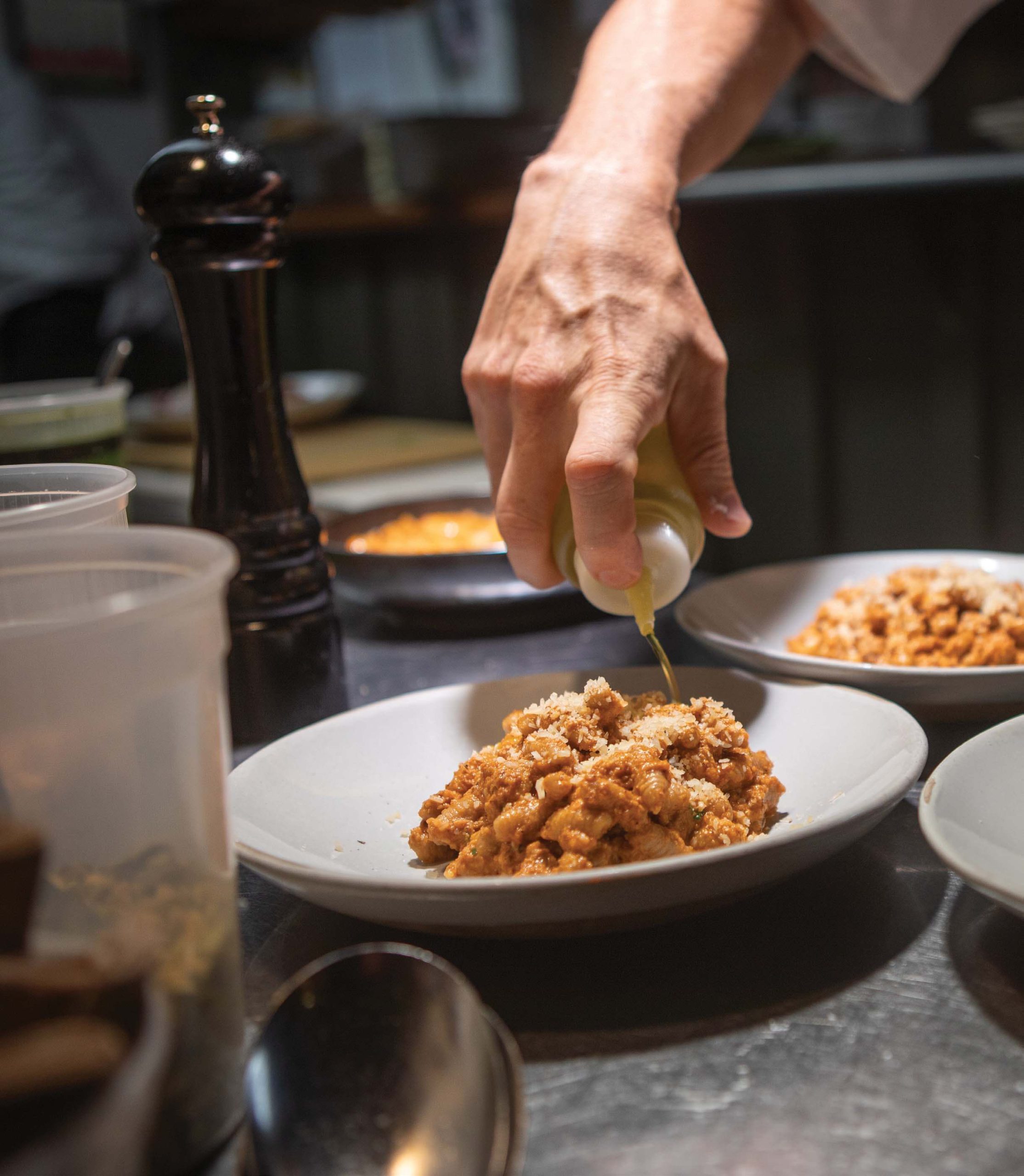
Colestock’s rye cavatelli pasta is handmade with Wyoming Heritage Grains Gazelle rye flour.
For example, on this summer’s menu, the rigatoni amatriciana with pecorino looked the same as it did last summer, but Colestock and his team cut the pieces of pork in the sauce smaller. “They dissolve into the sauce, and it’s better,” he says. “Cooking, at its heart, is that no one is inventing things that have never been done before. That challenges us to execute what we do to the best of our ability.”
Executing every dish at a high level starts long before an order comes into the kitchen. Glorietta hand-builds all the pasta on the menu except spaghetti, preparing it in the basement using flours selected after years of experimentation.
The quality of the ingredients is an integral part of the final product. The rye cavatelli uses Gazelle rye from Wyoming Heritage Grains and pairs it with elk bolognese. The s’mores dessert uses Wyoming Heritage’s Red Fife wheat to make the graham cracker. Founded in 2019 by fifth-generation Big Horn Basin farmer Sara Wood, Wyoming Heritage Grains uses regenerative practices to grow ancient and heritage varieties of wheat and other grains like Gazelle rye and Red Fife and Sonora White wheats and then stone mills them.
Colestock likes Wyoming Heritage Grains both because they are local and for the flavor their products bring to dishes. “The combination of the rye [pasta], elk, and bolognese is not exactly traditional, but the flavors come together with the earthy and nutty subtle finish [of the rye],” he says.
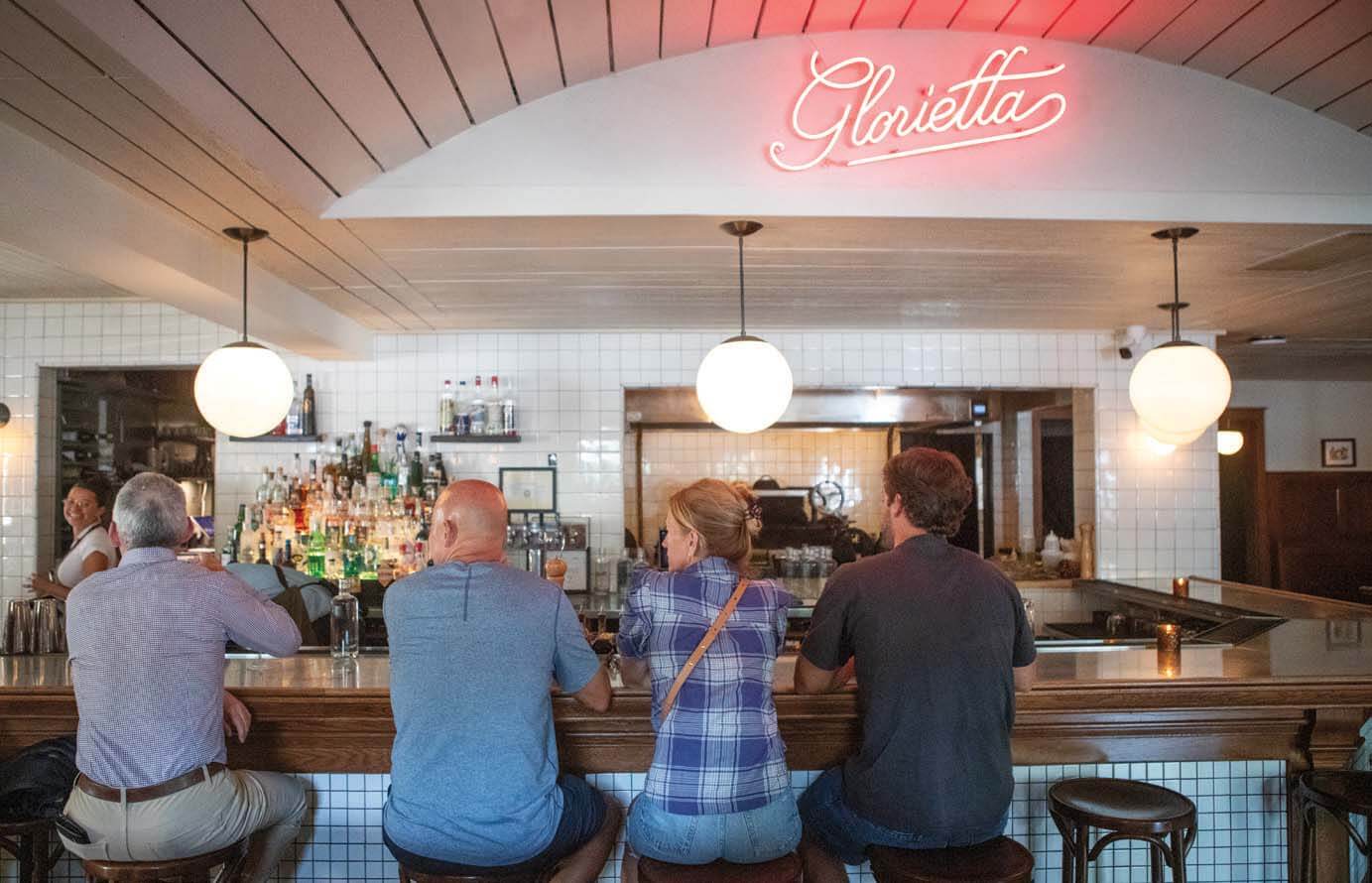
Glorietta’s signature neon sign gleams over the bar, adding to the distinct look inside the main dining room.
The crostini that is the base for Glorietta’s antipasti dish doesn’t use flour from Wyoming Heritage Grains, but Colestock says it is one of the most popular items on the menu. Topped with whipped ricotta, truffle honey, and hazelnuts, the flaky crostini melts in your mouth. Other favorites are spaghetti with mushrooms, leeks, mascarpone, and poached egg; fusilli alla vodka with spicy ‘nduja, pecorino, and basil; and the Caesar salad.
“On paper, none of our dishes jump out as revolutionary, and that is kind of the point,” Colestock says. “I’m wise enough that I feel I don’t need to do it better when it is already delicious as it is.”
And the reviewers Colestock cares the most about agree: Locals have awarded Glorietta gold in the Italian category in “Best of Jackson Hole” for nine years running.
Based in Jackson, Wyoming, Dina Mishev is the editor-in-chief of Jackson Hole magazine.
Amber Baesler is an editorial, commercial, and documentary photographer that calls the Tetons home. Her work is inspired by the American West and life in the mountains.
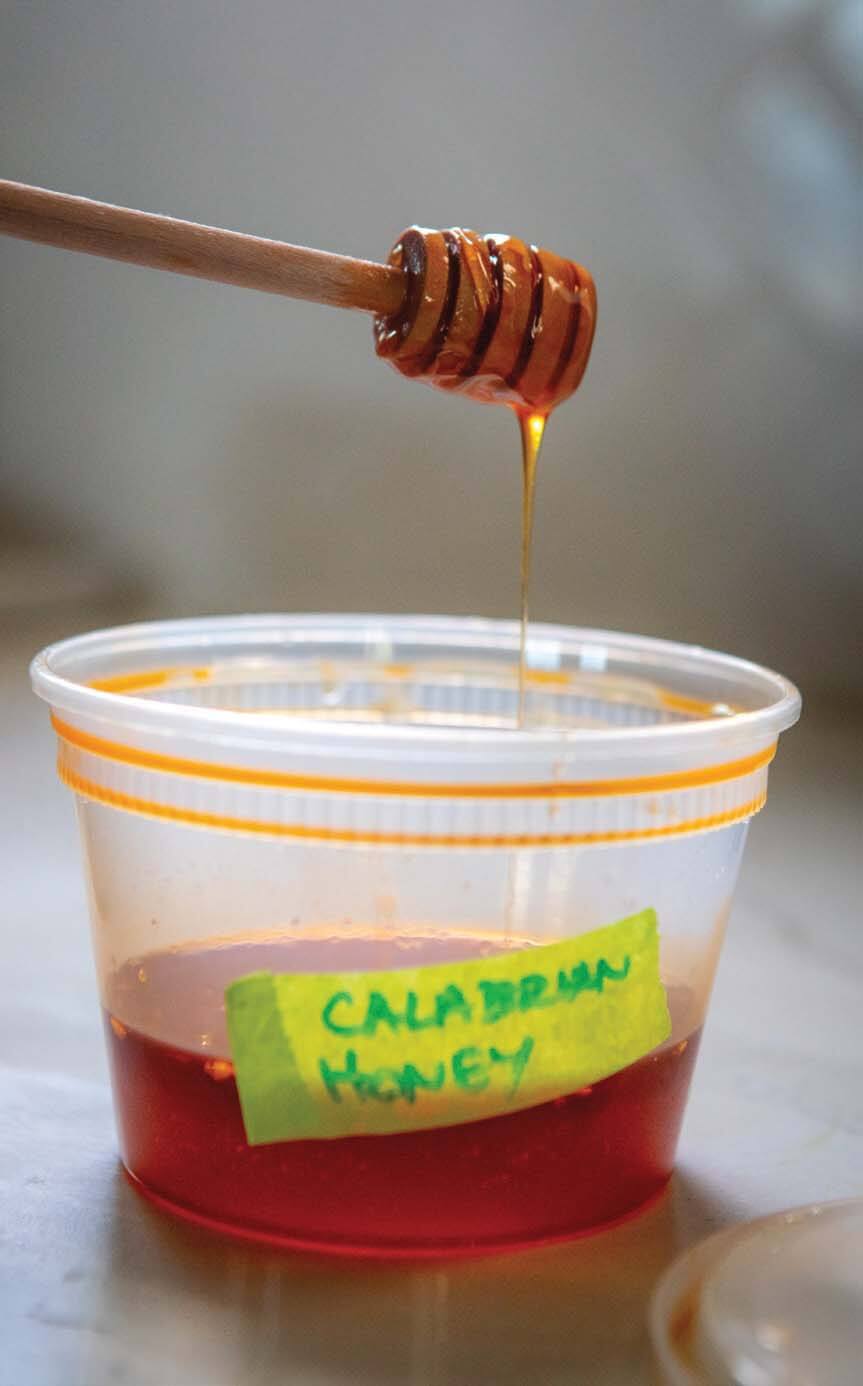
Calabrian Honey
By Remle Colestock of Glorietta Trattoria
Although not used on any dishes at Glorietta Trattoria, I love using this honey recipe when cooking for events organized by the nonprofit Slow Food in the Tetons, which I’ve been involved with since moving to Jackson in 2017. My preferred honey to use is the raw wildflower honey from Chasing Paradise, which is based in Teton Valley, Idaho.
Makes about 1 cup
¾ cup honey
2 tablespoons strained Calabrian chiles, finely chopped
1 tablespoon smoked paprika
1 tablespoon cinnamon sugar
Add honey and chiles to a saucepan and heat over medium. Simmer then stir in paprika and cinnamon sugar. Turn off heat and let flavors combine for 30 minutes. Strain and enjoy as a topping that adds a sweet kick to anything savory.
No Comments