


25 Sep Books: Reading the West
She repeated it like a mantra: “You can no more win a war than you can win an earthquake.” Jeannette Rankin dedicated her life to making the world a better place. She advocated for better working conditions and labor rights, women’s suffrage, restricting child labor, improving prison conditions, civil rights, and voting rights. Believing that these facets of democracy were inextricably linked, she advocated above all else for peace.
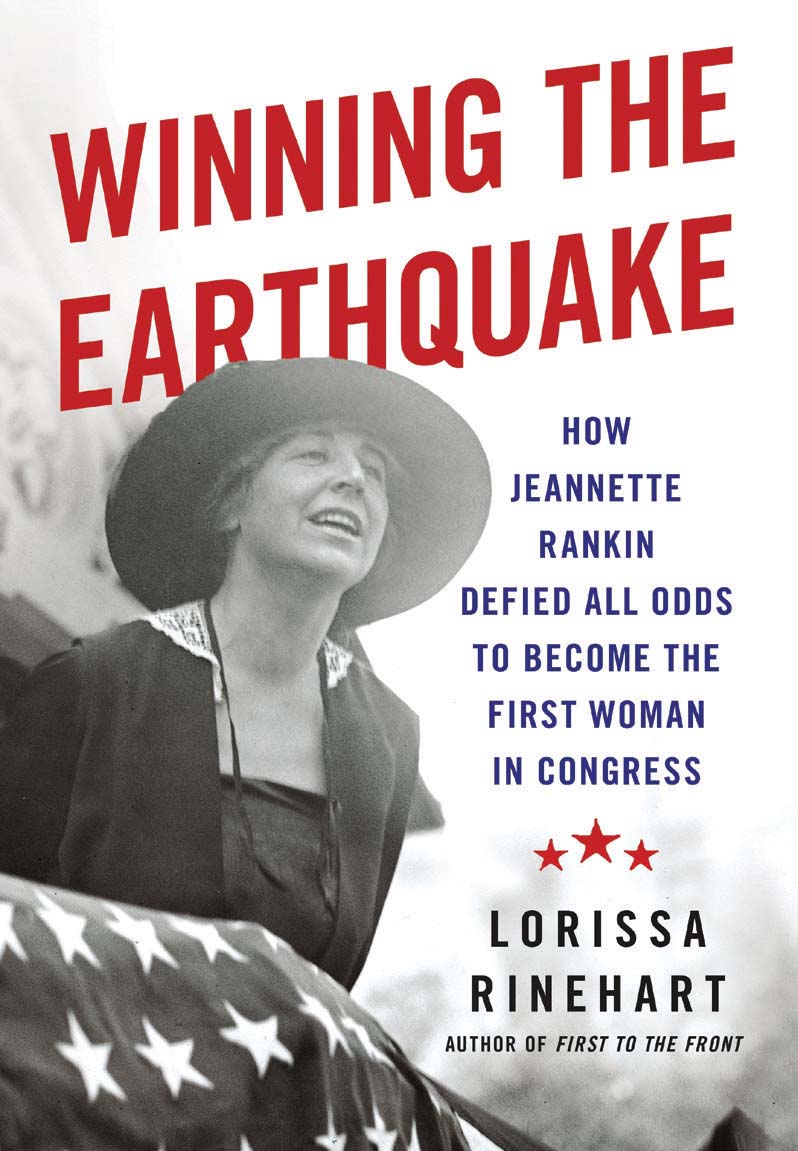
In Winning the Earthquake: How Jeannette Rankin Defied All Odds to Become the First Woman in Congress (St. Martin’s Press, $33), Lorissa Rinehart has given us an illuminating biography of one of our nation’s true heroes.
Born near Missoula, Montana in 1880, Rankin’s childhood was spent helping with chores on her family ranch. With a “prodigious energy” and a wisdom beyond her years, she became instrumental in her father’s business dealings. She cooked and sewed and cleaned the house. Out of the home, she repaired fences, split wood, and dug ditches. There was not a defined line, at least not on a Montana ranch, between women’s and men’s work.
To her, it seemed obvious: Men and women do equal work, they should have an equal vote. Her values were forged from her life experience. She urged her father to take better care of their ranch hands because she saw their conditions while working beside them.
After years working around the country championing labor rights and women’s suffrage, she ran for U.S. Congress. Montana, only recently giving women the right to vote at that point, sent her to Washington, D.C., with an overwhelming victory. Rankin became the first woman to serve in the U.S. House of Representatives. She quickly went to work writing legislation that would become the 19th Amendment.
She cast the most conspicuous vote opposed to the U.S. entering WWI. In her second congressional term, some 24 years later, she cast the only vote opposing the U.S. entering WWII. Willing to pay the political price for voting her conscience, Rankin only served two terms in the House and, after years of tireless political lobbying and peace activism, faded from public life.
With dazzling prose, lucid storytelling, and an enviable ability to connect the past to the present, Rinehart has brought Rankin’s legacy to life. It’s one that was forged by astonishing tenacity, a genuine moral compass, and an undying belief in the spirit of peace. The longevity of that belief might be the most remarkable aspect of Rankin. Even toward the end of her long life, she was still unwavering in her commitment to help build a more perfect union and a more peaceful world.
“Jeannette’s greatest flaw was her belief that if people knew the truth, they would demand justice,” Rinehart writes. “Her greatest strength was that even after so many defeats and so much evidence to the contrary, she continued to believe.”
Of Note
During the Lewis and Clark Expedition, both captains and some enlisted men in the Corps of Discovery wrote over a million words as they made notes, journal entries, and observations. Over the past two centuries, millions more words have been written about nearly every aspect of the expedition. It would be an impressive achievement to discover a fresh new perspective in such a well-trodden field.
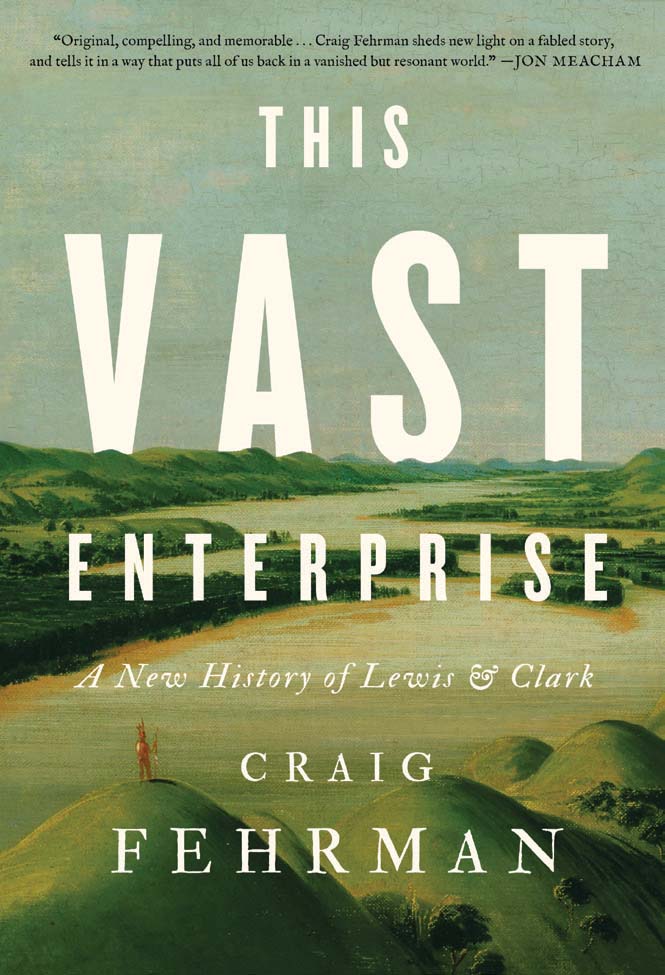
Not only is Craig Fehrman’s This Vast Enterprise: A New History of Lewis & Clark (Avid Reader Press, $35) a fresh new perspective, it is a more human story. Fehrman widens the focus of his account by giving voice to those within the expedition and also to those who encountered the expedition on its westward course. “They were all complicated humans, with complicated worlds of their own,” he writes.
Through different perspectives, languages, and cultures, Fehrman does not let us forget that to relay history is to tell a story. The one he tells has a large cast. “When their lives come together — when their worlds collide on equal terms — it doesn’t just make for better history,” he writes. “It makes for a better story, too.”
As Fehrman progresses through the chronology of the Corps of Discovery’s 8,000-mile journey, he centers each chapter on a specific person involved with the expedition. There are, of course, chapters focused on each captain, but there are also chapters on William Clark’s slave York, the Shoshone teenager Sacajawea, and Sergeant John Ordway. There are chapters devoted to the Lakota leader Black Buffalo, the Clatsop leader Coboway, and the Piikani teenager Wolf Calf. By bringing together vast amounts of written and oral history, This Vast Enterprise breathes vital new life into a story we thought we knew well.
When Deb Haaland’s mother worked for the Bureau of Indian Affairs, she was required to go to Washington, D.C., once a year. While there, she would work on the fourth floor of the Main Interior Building, two floors below the office of the interior secretary. She would not have imagined that one day her daughter would be sworn in as the secretary of the interior. In 2021, Haaland became the first Native American to serve as a cabinet secretary in our nation’s history.
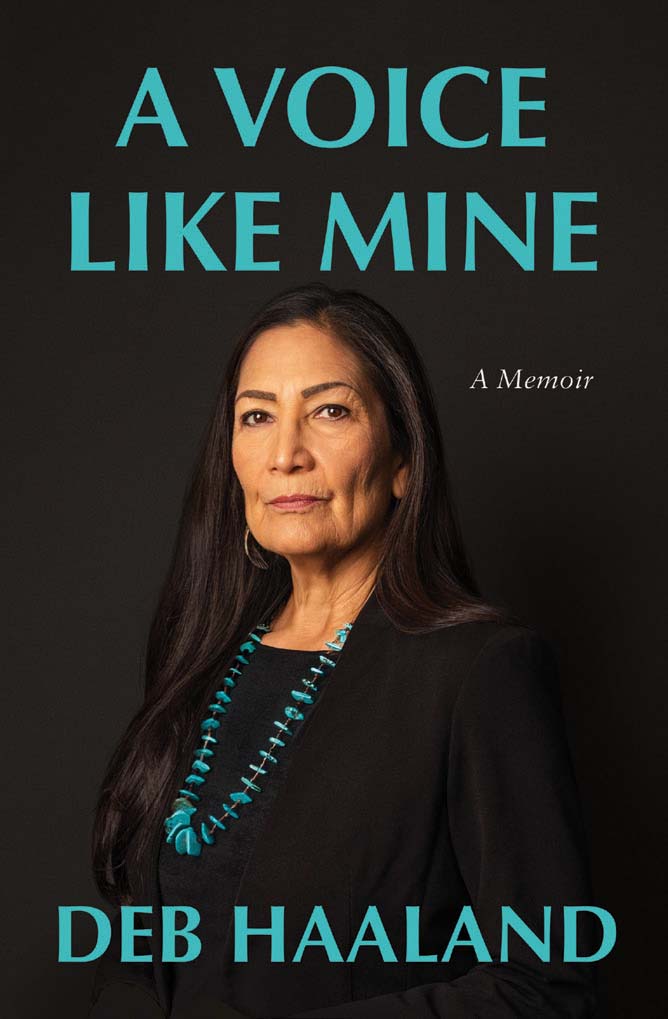
Haaland’s memoir, A Voice Like Mine (Holt, $28.99), is a heartfelt and inspiring story of finding purpose in public service. Through her humble origins as the child of a military family that frequently moved, Haaland struggled in her early adulthood through poverty and alcoholism. She persevered and found herself pulled toward public service through political organizing, serving in Congress, becoming the interior secretary, and now currently running for governor of New Mexico.
Through all her successes, Haaland has never forgotten her past. Her personal story, which includes her own poetry and recipes, inspires readers to honor their own past while looking toward making a better future. “We all have obligations to our earth, our country, our communities, our families, and to each other as human beings.” A Voice Like Mine reminds us that real leadership is based in honor and respect and love.
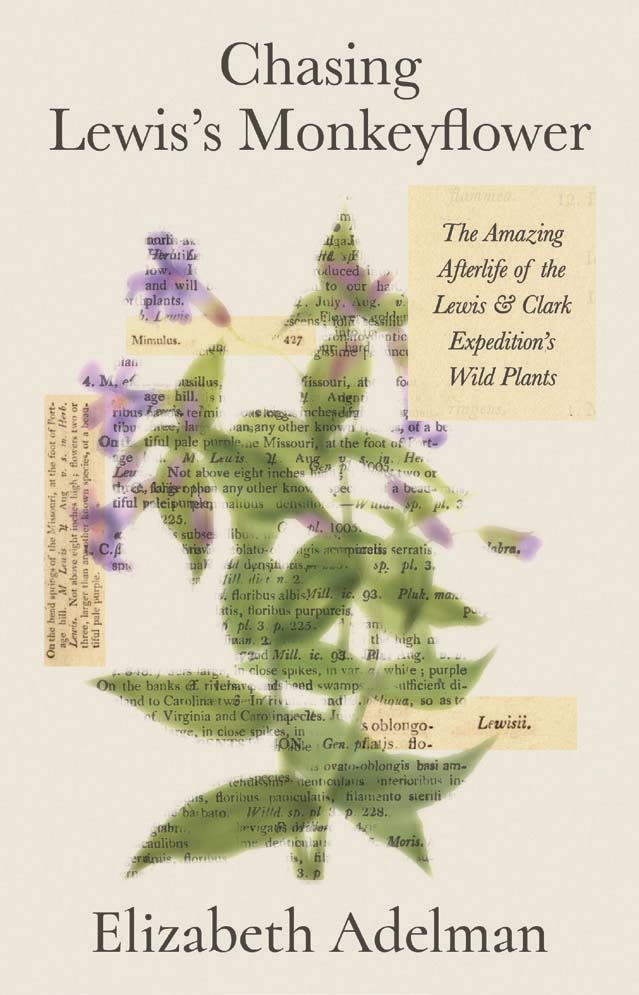
If he spotted a plant that he had not seen before, Meriwether Lewis, co-captain of the Corps of Discovery, wouldn’t dare miss the chance to grab it: “No matter where he was, no matter what problems the party faced, some extreme, Lewis continued his pursuit of plants,” writes author Elizabeth Adelman.
In Chasing Lewis’s Monkeyflower: The Amazing Afterlife of the Lewis & Clark Expedition’s Wild Plants (Farrar, Straus, and Giroux, $32), Adelman takes a deep look into one of the most famous botanical collections in the world.
Not only did President Jefferson expect flora specimens to be collected and brought back, he also expected Lewis to write “science-worthy” books about all the discoveries from the two-and-a-half-year journey. Appointing Lewis governor of the Louisiana Territory, Jefferson left Lewis with little time to actually work on those books. Lewis’s subsequent suicide left those books unwritten, and it resulted in the chaotic dispersal of his flora collection.
Adelman brings readers into the curious world of plant collecting in the early 19th century. Lewis’s plant specimens ended up in the hands of a wide cast of characters. While some wanted those specimens simply to advance the world’s taxonomy, others got their hands on them for less noble reasons. We find plenty of botanists behaving badly as they surreptitiously claim credit for discoveries they did not make and pilfer specimens they did not come by honestly.
The trail gets harder to see as time goes by. Specimens get lost, overlooked, mislabeled, or miscataloged. Today, most of them are now safely kept in herbariums. But still, mystery remains: some of Lewis’s specimens (including the book’s eponymous plant) are still unaccounted for. Chasing Lewis’s Monkeyflower leaves us wondering, “Will these be found?”
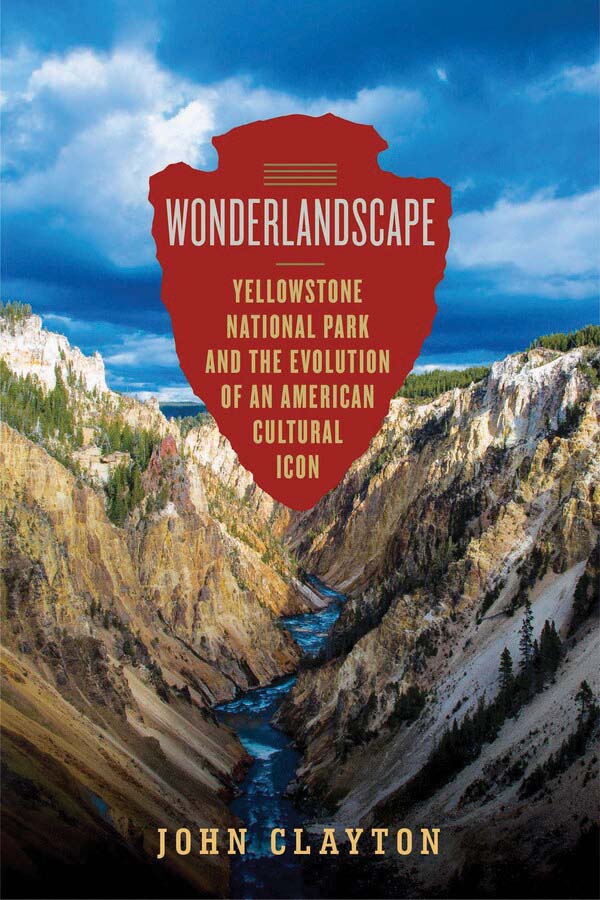
There is something special about your first visit to Yellowstone National Park. Historian John Clayton first visited Yellowstone in 1988 and it began his mission to better understand the park not only as a natural landscape but a cultural one.
In Wonderlandscape: Yellowstone National Park and the Evolution of an American Cultural Icon (Pegasus Books, $19.95), Clayton traces how our collective interpretation of this beloved place has changed over time. From landscape paintings by Thomas Moran to photographs by Ansel Adams to the Jellystone Park from the 1960s cartoon Yogi Bear, Clayton makes it clear that it is not only the natural wonders that have shaped how we see this unique place. By continually redefining how we view Yellowstone, we have a clearer understanding of — and, hopefully, more appreciation for — this land of wonder.
“The story of Yellowstone,” Clayton writes, “is the story of a place gifted with natural wonders and cultural force, and with powerful yet ever-changing ways to harness those gifts for the greater good.”
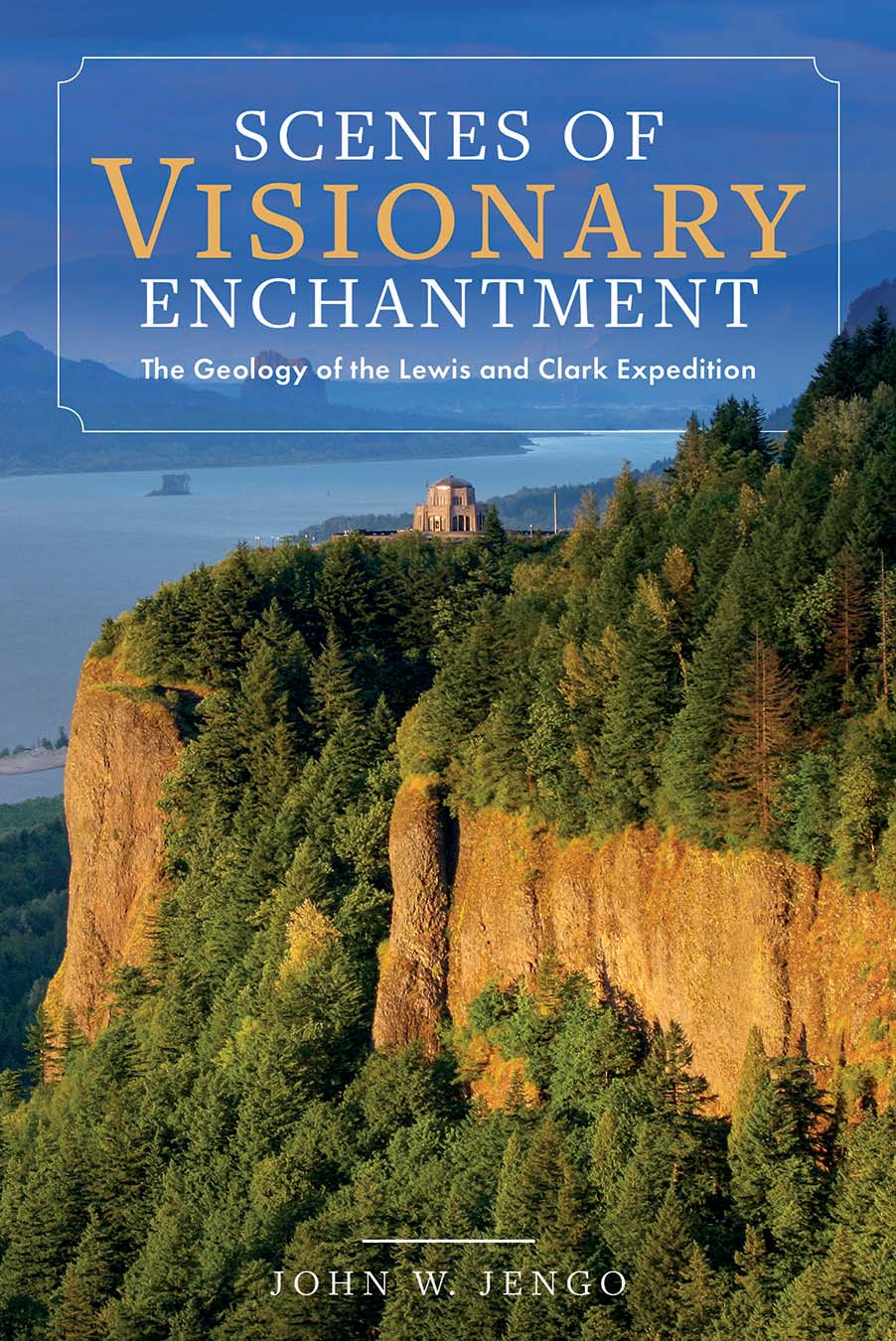
To follow the trail of the Lewis and Clark Expedition today, over 200 years after President Jefferson commissioned the Corps of Discovery to find that elusive Northwest Passage, would be to encounter a landscape that has changed almost beyond recognition.
“Yet the rocks remain,” John W. Jengo writes in his remarkable new book, Scenes of Visionary Enchantment: The Geology of the Lewis and Clark Expedition (Washington State University Press, $34.95). “These rocks and outcrops are the only physical objects one can witness today that the captains and enlisted men actually saw.”
Jengo, a professional geologist, has spent years not only immersed in the journals of the expedition, but also hiking, biking, rafting, and canoeing along its course. He proves to be a perfect guide to the geological observations made by the Lewis and Clark Expedition, giving the reader an account that is interesting, accessible, and always engaging.
Andrew Guschausky is a former bookseller. In 2014, he opened Cassiopeia Books in Great Falls, Montana.
No Comments