


31 Jul Books: Reading the West
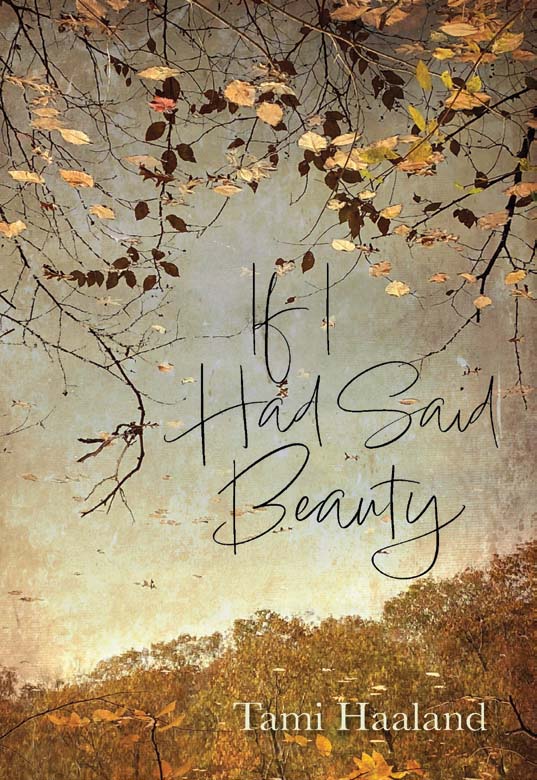
“I hardly know myself / and this has always been true,” says the speaker in the poem “Evening Song.” Former Montana Poet Laureate Tami Haaland’s new collection of poetry, If I Had Said Beauty (Lost Horse Press, $20), is a deep and thoughtful investigation into the self — how it is formed by those who came before us, how it relates to the natural world, and how we may expand our understanding of it.
This work looks back through family letters and photographs, handed-down objects, and memories. Pulled back through time, it reaches toward distant ancestors, different continents — back further still to earlier hominids, shared DNA. “The lines go deeper, become invisible, lead everywhere and nowhere, to molecules, to the sea.”
The breath of life flows through these poems as they expand and contract. The smallest detail of our own selves we so often leave behind. Memory. Hair. Saliva. “How can we not get along?” the speaker in “Entanglement” asks. “We are everywhere, among each other, / already mixed and woven.”
With wisdom born of patient listening and careful observation, Haaland also shows us how expansive our sense of self can become — “a glimpse of the infinite / takes hold and all connection is possible.”
As the world has grown fraught with division, it can be difficult to recognize our common humanity. If I Had Said Beauty shows us how our vast selves intersect and how futile it is to cling to our divisions. We would do well to listen. We would do well to honor our connections.
One of Haaland’s many gifts as a writer is to reveal the beauty within the ephemeral nature of existence. The details of everyday life are often easy to overlook. Sometimes we hardly know ourselves. Her work can show us how to listen, to look closely. We begin to better know our own self and, like the mountain ash in the final poem, it “seems to / glow from within.”
Of Note
“I’m trying to puzzle through our curious and bewildering existence,” writes Sean Hill. A professor of creative writing at the University of Montana, Hill has crafted something beautifully singular with his new work, The Negroes Send Their Love: Poems, Perspectives, and Possible Futures (Milkweed, $20). This book is composed of poems, personal reflections, letters, essays, short stories, recipes, etymologies, redacted documents, and a futuristic documentary script. There are conversations with his young son and meditations on the climate crisis. There are imaginings of humanity in the 25th century, mining asteroids in the darkness of outer space.
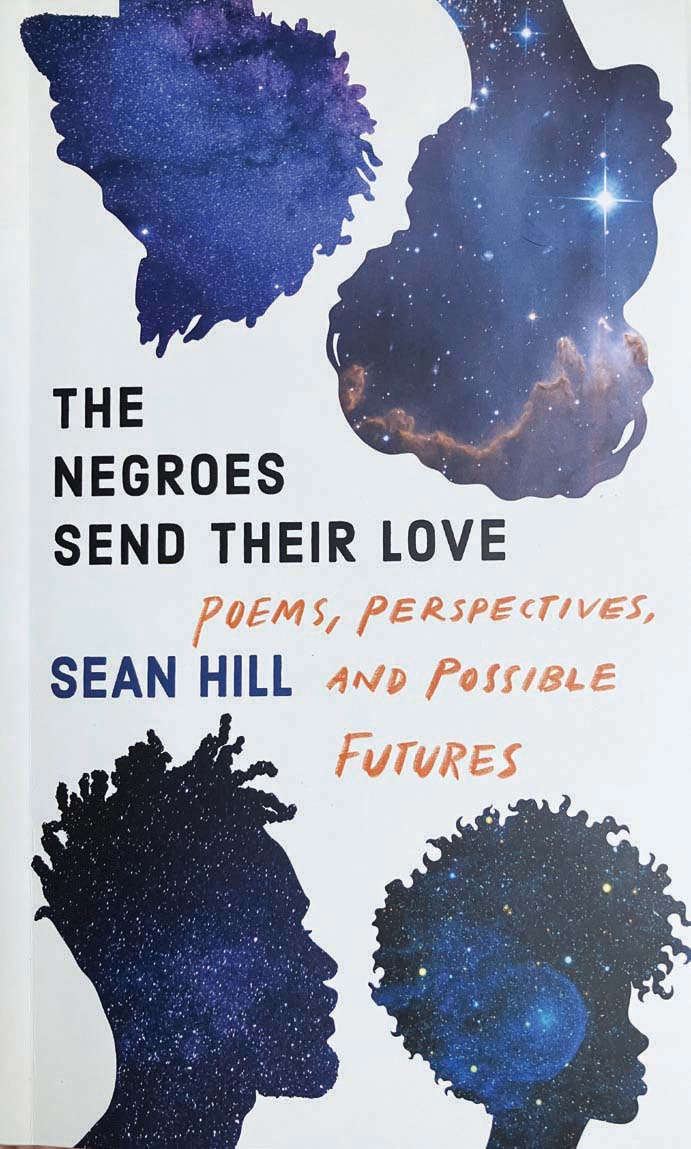
But let’s start at the beginning. The Negroes Send Their Love opens in the Antebellum South. The Old Governor’s Mansion in Milledgeville, Georgia (the town where Hill was born and raised) was built in the 1800s. Those who built it (“enslaved hands shaped clay // to make bricks to build storied big houses”) and those who took care of it are all given a voice. The third-person perspective becomes the first-person, and, through time, the “I” is “encompassing and tries to consider all the Negroes before me and in this collection and after me, the poet.”
There are moments in The Negroes Send Their Love that offer such unbridled creativity that you feel jolted from the encounter. And there are moments both of pain and of beauty that will make it impossible for you not to cry. Hill’s large-heartedness welcomes every reader into these transforming pages as we collectively try to puzzle through our own existences. We simultaneously ask and answer, “What holds a world together?”
Gabriel Furshong is a poet based in Helena, Montana. Beginning in 2000, he spent five years volunteering for human rights organizations in Guatemala in the raw aftermath of the country’s brutal civil war.
Former Montana poet laureates Melissa Kwasny and M.L. Smoker edited the 2009 anthology, I Go to the Ruined Place: Contemporary Poems in Defense of Global Human Rights. It features a contribution by Furshong titled “Reburial” about witnessing children’s bodies exhumed in a village in Guatemala — the remains placed into pine crates.
In his debut collection, Surrounding the Country a Chasm (Slapering Hol Press, $15), Furshong includes a reworked version of “Reburial,” ending with a moment impossible to forget: “Kneeling at the grave / mothers old enough to be grandmothers // their voices quaver and wail / their voices mend the sequence.”
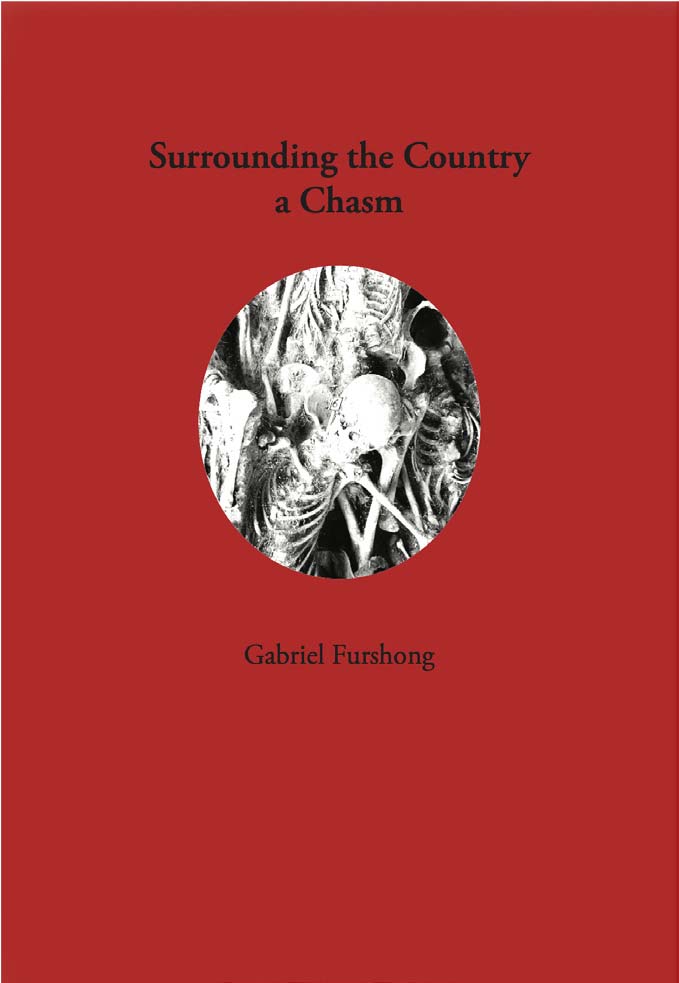
How do we collectively understand these dissonant aberrations of war and violence? What if we are simply incapable of living peacefully? “Then we must cultivate a
disbelief / in moral limitations / we will go now / we will be / each feeling leading to a word / each word leading to a hand.”
Furshong’s poems refuse to let these survivors’ stories fade. The light within Surrounding the Country a Chasm seeks to redress the darkness. That light was kindled by the survivors in the war-ravaged villages and cities, and carried forth considerately, compassionately, reverently in the beautifully spare verse of Furshong’s collection. We are left to witness the resilience of the human spirit: “With their backs turned away / the future is where they face.”
In his revised and expanded edition of Vagabond Song: Neo-Haibun from the Peregrine Journals (Elk River Books, $20), Marc Beaudin has created a portrait of the poet as a young hitchhiker. Lighting out with only a canvas rucksack and a journal, Beaudin spent nearly 20 years on a personal journey not as a tourist but as a traveler.
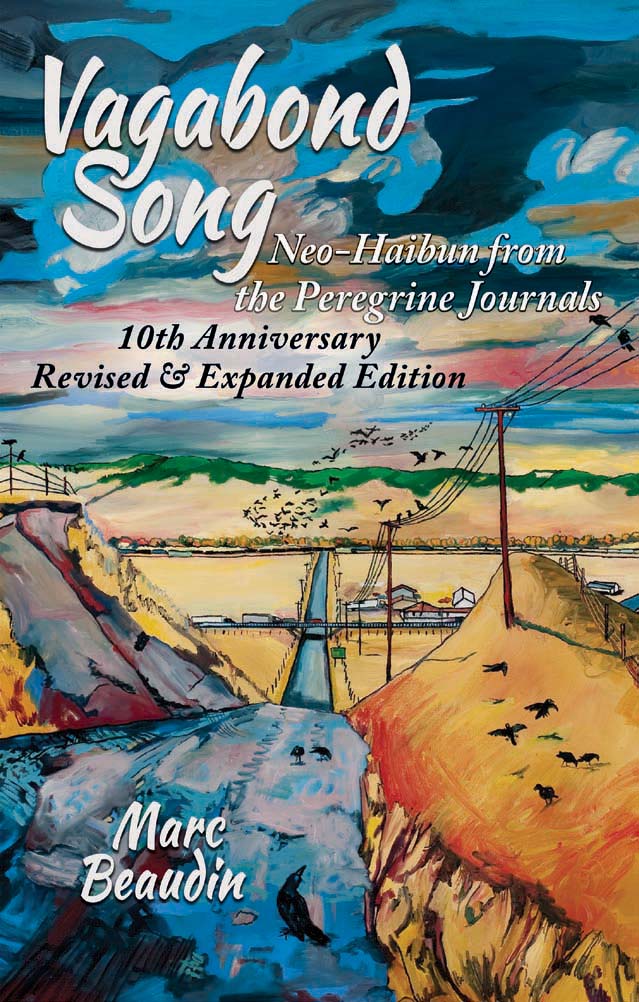
“A tourist is from a definite place called ‘Home’ and going to a definite place called ‘Vacation.’ But a traveler is home wherever he is. There is no from or to. No past or future.”
To travel on the open road first requires an open mind and an open heart. Beaudin displays both in poetry and prose as he walks along back roads and blue highways, his thumb raised in the air, embracing the mystery of where the open road takes him. From the woodsy state of Michigan to the desert of the Southwest, from Mexico to Ireland, the poet’s wanderlust is infectious.
In fact, you might not travel through Vagabond Song long before you, too, feel beckoned to light out on your own journey toward a destination unknown, with a rucksack on your back and Beaudin’s book tucked under your arm.
From fly fishing for trout on a small creek in rural Pennsylvania to casting a lure from the ninth floor of a cruise ship in Bermuda in hopes of landing a jack, Stephen Sautner’s interests in fishing are catholic enough that he will pursue just about any fish in any conditions using any method.
A longtime contributor to several publications, including The New York Times, Sautner has been writing about fishing almost as long as he has been a fisherman. His new book, Every Cast: Chronicles of a Deeply Hooked Angler (Lyons Press, $29.95), features 60 essays that span decades of fishing adventures.
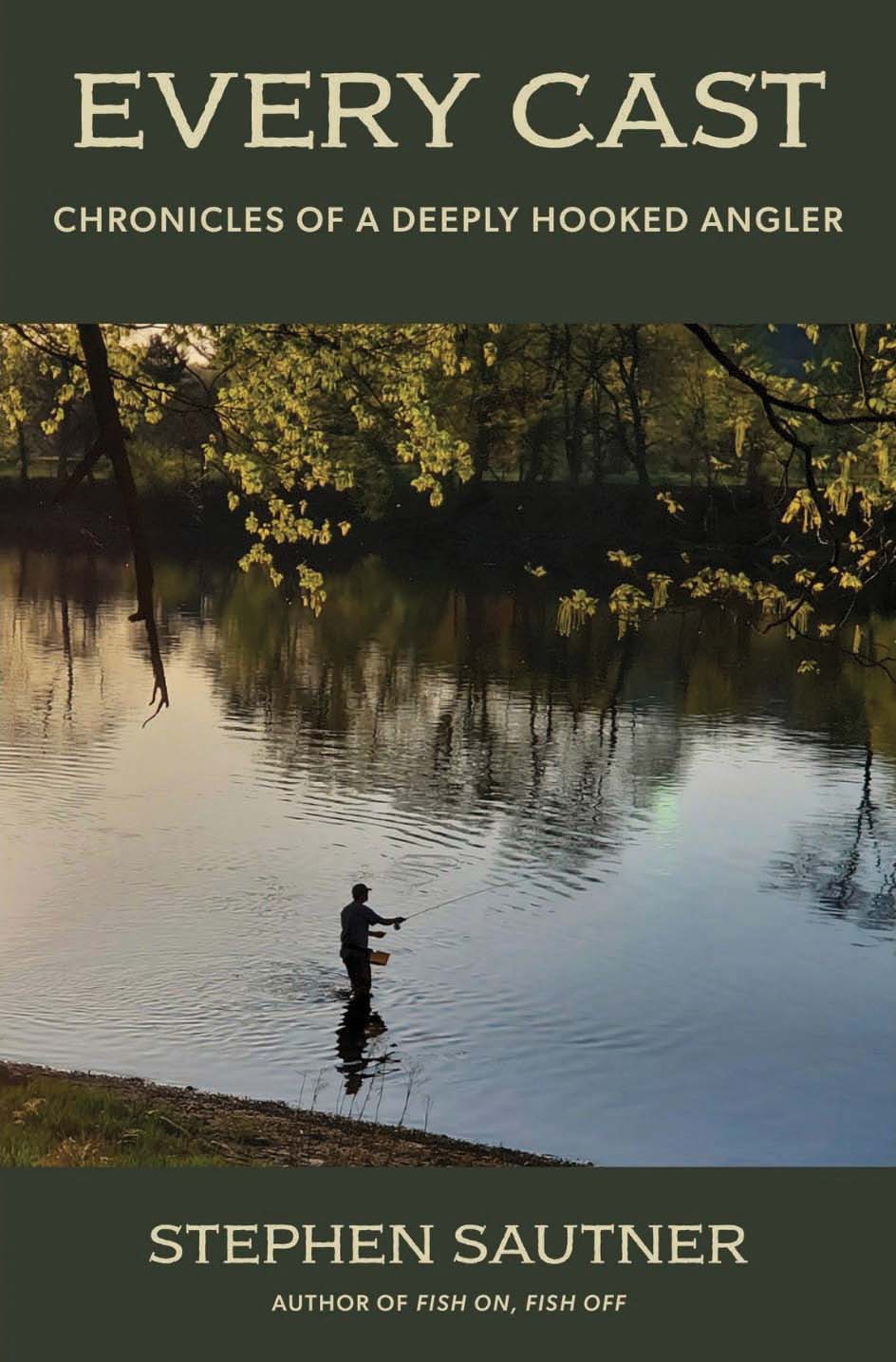
Learning long ago that fishing was not merely a pastime, Sautner admits in the introduction: “When I’m not on or in the water, my days are spent thinking about the next hatch or the waxing moon. I pantomime double hauls while walking to the bathroom. I drift off to sleep thinking of rising trout or busting stripers. I sometimes jar myself awake with a hook set or broken line.”
As a self-confessed “fish junkie,” his pursuit balances itself somewhere between crazed obsession and spiritual devotion. Sometimes poignant, sometimes hilarious, always engaging, Sautner proves to be the consummate fishing buddy. After just a couple of stories, you may well find yourself hooked.
Filmmaker and author Kris Millgate’s most recent wildlife documentary, Sage Wisdom West, took her through the high desert landscapes of Oregon, Idaho, Nevada, Wyoming, and Montana as she captured footage of one of our most elusive upland game birds: the greater sage-grouse.
Millgate’s new book, My Place Among Birds: Misadventures in the Desert (Tight Line Media, $18.87), is a behind-the-scenes look at her own personal experience of making the documentary, and also the dismal circumstances of its subject.
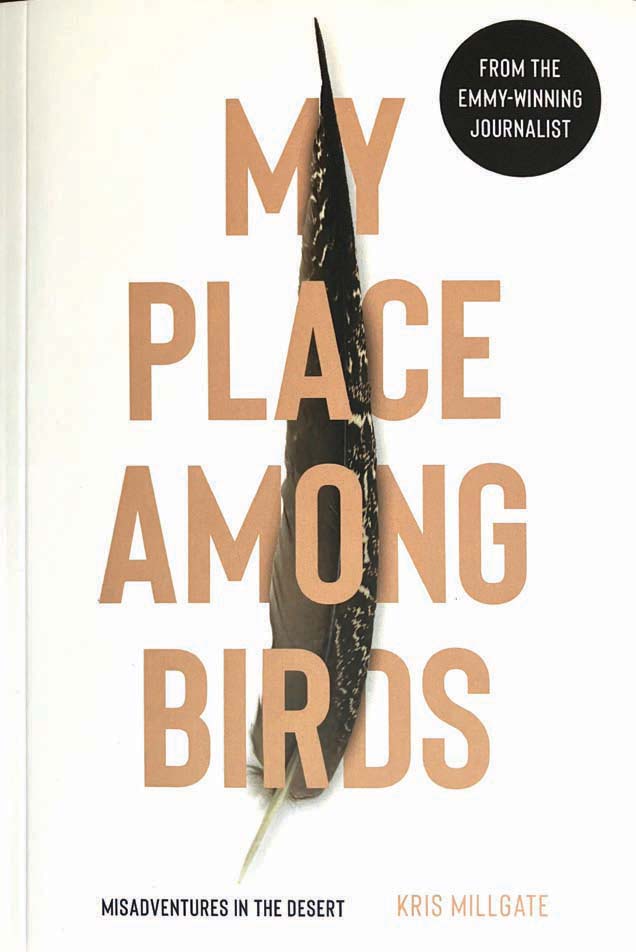
The greater sage-grouse population has declined by 80 percent in the past half century. Millgate states that it is the loss of sagebrush that has plunged the bird’s population from several million to only a few hundred thousand.
Already losing great swaths of sagebrush steppe to ever-expanding development, the remaining ecosystem is losing its hold due to increased fires. Approximately 1.3 million acres of sagebrush are lost every year and, as Millgate writes, “sagebrush is quick to burn, but slow to grow.” After fires, invasive weeds quickly displace the native shrub. Without sagebrush to provide essential habitat and food, the greater sage-grouse population will continue to dwindle.
Thankfully, there are conservation efforts to keep remaining sagebrush landscapes intact. But that depends on public lands remaining public. “Undeveloped public land ensures food, shelter, and migration for wildlife,” Millgate explains. “Sell public land, develop public land, dismantle the priceless priority of public land in exchange for private profit, and you not only disown the poor man, you abandon the wild.” Sage wisdom, indeed.
Andrew Guschausky is a former bookseller. In 2014, he opened Cassiopeia Books in Great Falls, Montana.
No Comments