


28 May Books: Reading the West
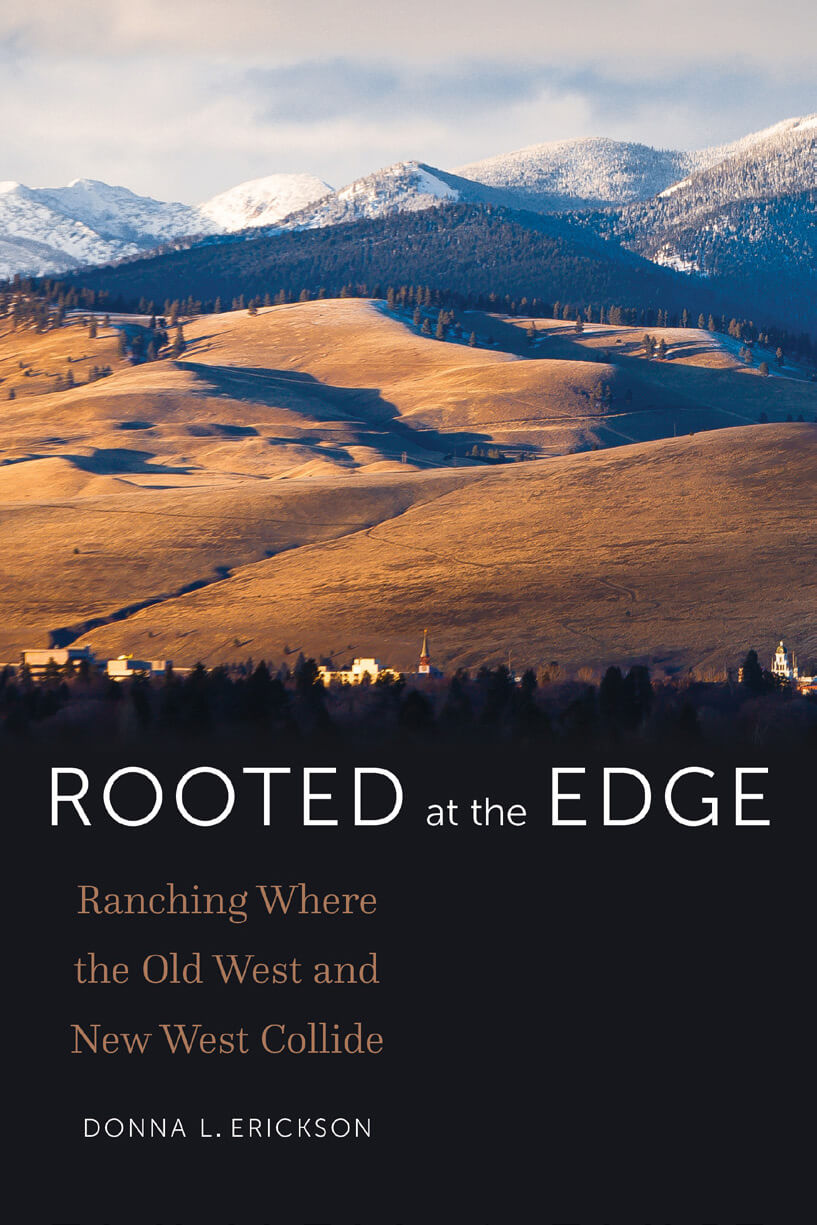
From a distance, the grassy hills just north of Missoula look like disheveled blankets. Known locally as the North Hills, this stretch of land separates the ever-growing university town from the mountains of the Rattlesnake Wilderness.
Donna L. Erickson grew up in the North Hills, on the Skyline Ranch that her grandparents purchased 80 years ago. Her book, Rooted at the Edge: Ranching Where the Old West and New West Collide (University of Nebraska Press, $24.95), is a heartfelt history of these hills. Erickson’s connection to this beloved place provides her a unique vantage point — she can see the precarious situation as the future of this land hangs in the balance: “The North Hills area is a pivot point, an edge, a place where the city and the wilderness nearly collide and where small areas of farm and ranchland separate them,” she writes. “Edges are often contested.”
“Across the West, we see increasing homogenization of the landscape. Rural lifestyles are compromised by suburbanization, economic hardship, and family dynamics,” describes Erickson. “A way of life and a way of work are vanishing.”
Too dry to support many trees, the ponderosa pines are sparse on her family’s property in the North Hills. There is one tree that Erickson returns to; its significance has earned it a nickname. “The Lone Pine, not a particularly stunning specimen of Montana’s state tree, is the place for family ritual,” she writes.
After being the family’s stalwart tree for generations, the Lone Pine is starting to succumb to the mountain pine beetle. Erickson contemplates the color of its needles. She has watched them turn from green to yellow to rust. “I struggle not to interpret the Lone Pine’s declining health as a symbol for the North Hills’ future,” she admits.
But she doesn’t have to look far to find another interpretation. The many possible futures are equally rooted in the collective interpretations of this unique place. “Optimistically, small pines continue to sprout up on that hillside below the Lone Pine, and adolescent trees appear to thrive.” She reminds us, as she reminds herself, “Renewal is possible.”

Dubbed by The New Yorker as “The Custodian of Forgotten Books,” Brad Bigelow is a writer, instructor, and editor based in Missoula. For the past 20 years, Bigelow has highlighted overlooked, obscure, and out-of-print books on his Neglected Books website. The site is a cornucopia for bibliophiles and rare book enthusiasts, featuring over 600 articles — a hefty majority of them written by Bigelow himself.
The origins of Bigelow’s new book, Virginia Faulkner: A Life in Two Acts (University of Nebraska Press, $34.95), are found in a Neglected Books article from 2008. It features a novel published in 1940 that he describes as “… pure froth — but it’s premium quality froth.” It was Virginia Faulkner’s third and final novel.
Hailed as “another Dorothy Parker” and a “high-browed Colette,” Faulkner’s writing career was as promising as they come. A best-selling novelist by age 21, she followed up her debut novel — a wise-cracking screwball comedy — with more published work that took her from her home in Lincoln, Nebraska to New York City and Hollywood.
Her meteoric rise changed course, however, as she struggled with alcoholism and depression, spending months in sanatoriums. In 1955, Faulkner moved back home to Lincoln. “Virginia never again published a work of fiction — indeed, never worked as a commercial writer again,” Bigelow writes. “But she was about to discover where her genius truly lay.”
Nearly by accident, Faulkner became the editor of the University of Nebraska Press. While editing an anthology of Nebraska writers, she began to see her home state in a new literary light. Soon, it was her mission to republish the neglected books of Nebraska authors. In particular, she made it her life’s work to rescue Willa Cather’s literary reputation from the pesky pigeonhole of “regional author.”
However, the real turning point in Faulkner’s life was when she met Bernice Slote. Faulkner found in Slote — herself a scholar and poet — someone with whom she truly connected, and together they tirelessly championed the work of their beloved Cather.
But before they met in person, Faulkner first met Slote on the page. After receiving her manuscript, Faulkner wrote in reply: “This study seems to me to fulfill every requirement of scholarship and literary artistry. Everything that is told has a function and is effectively told; each fact is presented in its proper place and exhibited in its proper relationship; the separate parts build harmoniously to a satisfying whole.”
Much the same can be said for Bigelow’s illuminating biography of Faulkner. Her life was nothing short of extraordinary. How perfectly fitting it is, then, to have her life’s story told by an extraordinary biographer.
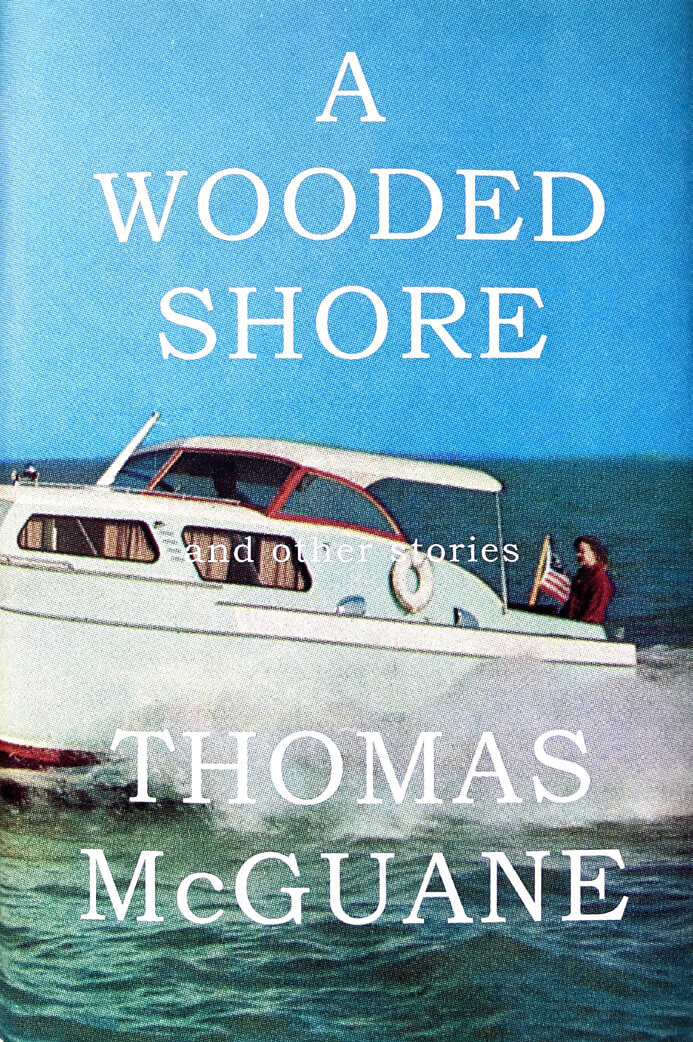
The small Montana towns in Thomas McGuane’s recent short story collection, A Wooded Shore: and other stories (Knopf, $27), could be anywhere, sparsely populated by people who aren’t going anywhere.
“It wasn’t the end of the world, but you could see it from there.”
McGuane’s protagonists are often schlubs. With their follies and foibles frequently on full display, they navigate life a little askew, usually unaware of just how ridiculous they are. In the story “Not Here You Don’t,” the main character wonders, after receiving unsought advice from his therapist, “Why pick on high-functioning basket cases?”
In “Retail,” an insurance salesman remembers his high school days when he affected a new, manly voice to woo his love interest, a girl from Butte. She responded by punching him in the nose. “To this day, he retained a deviated septum and raised a hand to his face whenever he passed a Butte exit on the interstate.”
We read a McGuane book the way we watch a Buster Keaton film: The laughs keep us in our seat, but we can’t help noticing the sadness behind it all — eventually we must simply marvel at the craftsmanship, the artistry, the bizarre and durable beauty.
Like Anton Chekhov, McGuane writes stories that are impeccably precise, quickly moving the narrative forward in just a paragraph or two. Like Italo Svevo, McGuane has a knack for creating characters who don’t take the world all that seriously. Like Mark Twain, McGuane’s wit is evident in every sentence.
But let’s admit it: All these comparisons break down after a while. While it’s true that the literary underpinnings of his work are far more expansive than is often acknowledged, he is out there on his own … a singular voice, a genuine original.
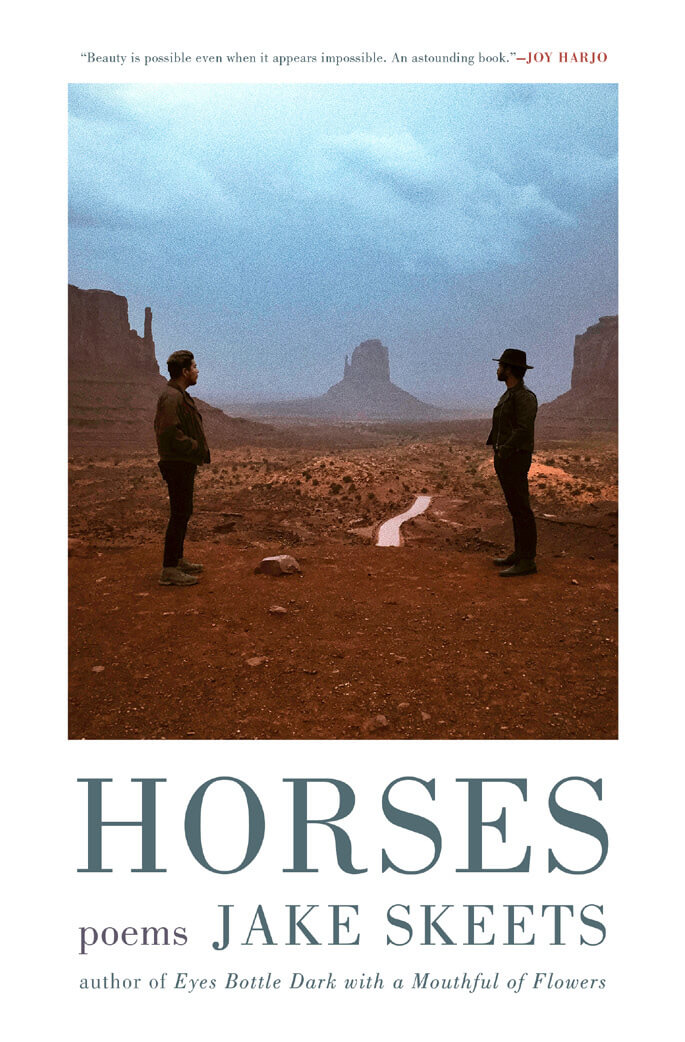
Jake Skeets’ astonishing new collection of poems, Horses (Milkweed, $18), reveals a brilliant American voice. The Navajo Nation Poet Laureate, Skeets is a poet with a private vocabulary. In the manner of Emily Dickinson, certain words are repeated in Skeets’ poems, and, through their repetition and their mirroring, their intense intimacy becomes ever more expansive.
Sharing its title with Patti Smith’s debut album, Horses begins with a tragic scene: Nearly 200 wild horses were found dead on Navajo land in 2018. Desperate for water due to a prolonged drought, the horses approached a stock pond that had dried up. “here, enshrined / with the memory / of a stock pond / horses buried / thigh-deep in mud / clawing for the first world / for something we left behind”
In our current reality — a reality imagined by Samuel Beckett where so many are in the dark, crawling endlessly through the mud — a song may only be a gurgle in the throat. The beautifully wrought structure of Horses is built out of expressions that breathe meaning back into life, that find hope in the coming morning, that return water to the land. As Patti Smith sang, there is no land but the land.
Like horses, these poems carry their reader toward “a rain-lit morning in open field.”
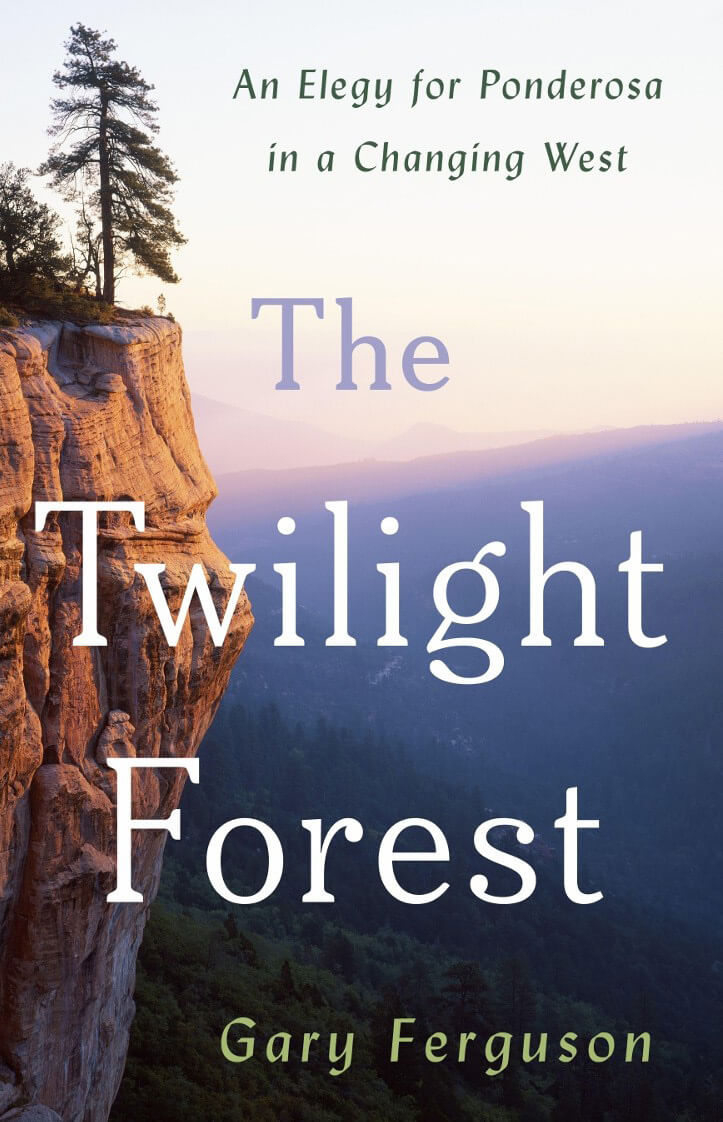
“I’ve come on this trip to witness a vanishing,” Gary Ferguson writes in the first pages of The Twilight Forest: An Elegy for Ponderosa in a Changing West (Island Press, $30).
The ponderosa pine is unmistakable in its enormous stature, its overwhelming scent of vanilla, its scaly bark that flakes off in jigsaw-puzzle-like pieces, and its trunk the color of cinnamon, which lightens to the color of butterscotch as it matures. Known for its resilience and ability to adapt to some of the harshest environments, the tree is a “super survivor.”
And yet, many of our ponderosa forests are vanishing rapidly due to drought, wildfires, disease, and the western pine beetle, all of which are inextricably linked to anthropogenic climate change.
As Ferguson details the devastating decline of these forests, he also gives us eye-opening natural and cultural histories, as well as his own personal relationship with Pinus ponderosa. “It’s enough to leave some people cynical,” Ferguson admits, “maybe lead them to conclude that ideas about fostering compassion for the Earth are hopelessly naïve.”
He assures us, “They are not.” Using the example of the complex mycelium networks that allow trees to communicate and share nutrients, he asserts that it is only by working together that we will strengthen our ties and continue on, not just as humans working together, but as humanity embracing its kinship with our fellow beings on this planet. “We are rising and we are falling, as we always have, together.”
Andrew Guschausky is a former bookseller. In 2014, he opened Cassiopeia Books in Great Falls, Montana.
No Comments