


31 Jul Round Up: Spotlight: Montana sculptor Jim Dolan aims to destigmatize mental illness
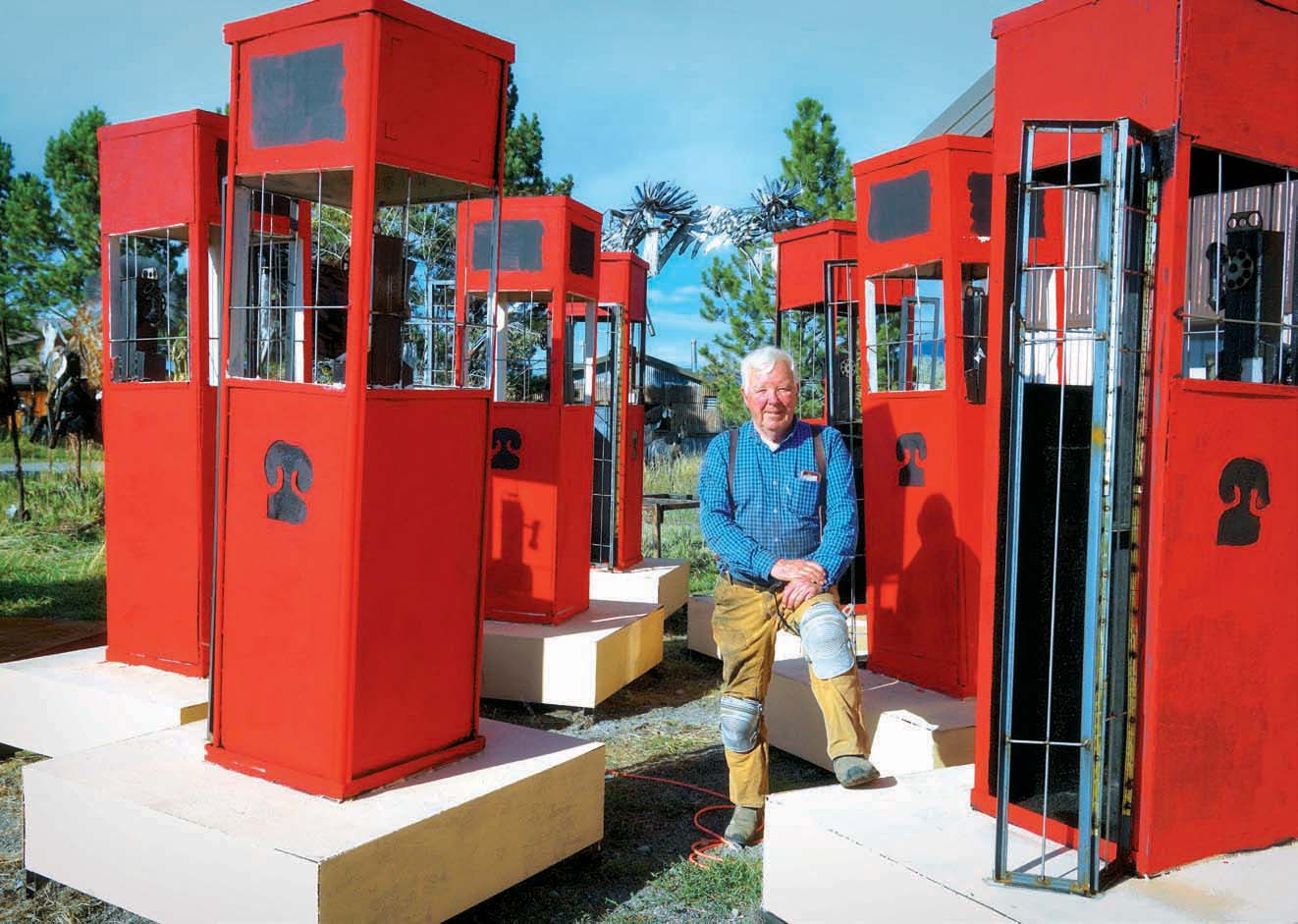
Under a bluebird sky in early spring, Jim Dolan stands amid a grove of bright red “phone booths” outside his Belgrade, Montana sculpture studio. Over the coming months, he’s planting them throughout the state beside quiet country roads, in wheat fields, in places where they might catch people’s attention.
When Dolan learned Montana has one of the highest suicide rates nationwide, the 78-year-old artist and humanitarian known for public art projects, including the Bleu Horses in Three Forks, decided to do something. Using his metal-sculpting skills, he created 24 booths, each with a replica old-school dial phone inside. They’re not intended to make calls — they aren’t functional. But Dolan does mean to send a message. Atop each booth he inscribed messages: “Call home,” “Keep in touch,” and “Dial 988.” His hope is to uproot the spread of suicides that has plagued the state for decades and to fertilize discussions about mental health, particularly in the agricultural community.
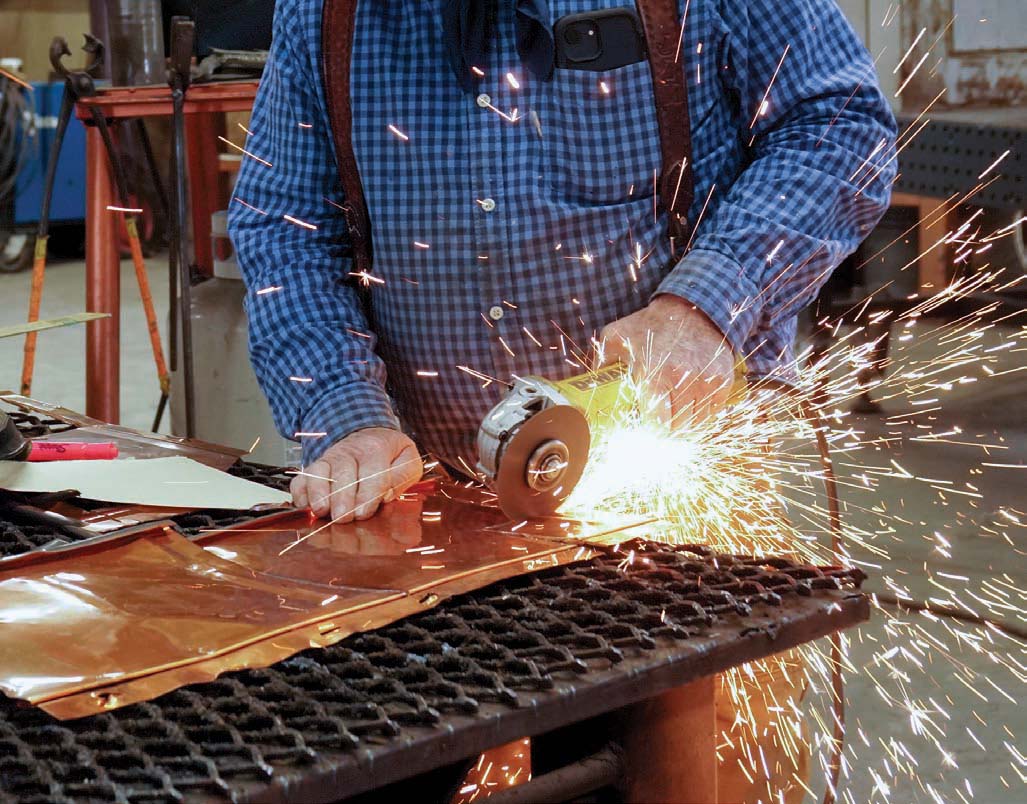
Dolan cuts copper sheeting for a horse sculpture in his Belgrade studio.
Montana adopted the 988 National Suicide Prevention Lifeline in 2022, connecting callers to one of three Montana call centers. Karl Rosston, Montana’s suicide prevention coordinator, reports that in 2025, the state’s helplines responded to more than 16,000 calls, chats, and texts. Of those callers, about 83 percent felt stabilized enough not to need further medical intervention.
“So we know the 988 system works,” he says. “People just need someone to talk to.”
This is particularly true for youth. A study published in the Journal of the American Medical Association in April indicates that the national suicide rate between July 2022 and December 2024 for people aged 15–34 was lower than rates projected before the helpline launch. Researchers also saw a significant reduction in suicide rates for youth, with data from 10 states fielding the highest increase in answered calls, reporting an 18.2 percent reduction in suicides.
Rosston also says people in rural communities are at higher risk for suicide. Contributing factors include lack of behavioral health services, stigma, social isolation, access to firearms, and alcohol use. Farmers and ranchers often adopt a “bootstrap mentality,” considering depression a weakness or a burden on others. So Rosston was delighted to see one of Dolan’s phone booths peeking out of a wheat field outside Glasgow.
“If nothing else, it piques someone’s interest in what 988 is,” he says.
Others agree.
Nancy Schlepp lives on a ranch in Ringling that’s been in her family since 1896. She’s no stranger to the tragedy of suicide — an uncle, her husband’s step-grandfather, and her daughter’s best friend died by suicide. When Dolan, a longtime friend, contacted her about his project, she wanted her community of fewer than 50 residents to be one of the first to have a booth installed.
“I think we all have someone who we lost to suicide,” she says, sitting in the Ringling Church in front of which one of the booths stands sentry over U.S. Route 89 between Livingston and White Sulphur Springs. “It’s just something we don’t talk about, but we should.”
Schlepp recalls a period in her life when she would have benefited from talking with a professional. In 2018, her mother, father, and sister all died within months of each other. In that same year, her family lost 12 calves in a ferocious snowstorm that isolated the herd. Neither she nor her husband sought help, but “looking back now, I wish we had,” she says. She’s optimistic the paradigm can shift.
“I hope the phone booths remind people to check on their neighbors because that’s how we got through [that year] — our wonderful neighbors graciously volunteering to help us.”
On the eastern side of Montana, Courtney Kibblewhite helped Dolan find locations and get permissions. She also printed informational resources to place inside the booths. Her media company, Northern Ag Network, launched Beyond the Weather in 2021 — an awareness campaign to eliminate the stigma of talking about and seeking support for mental health.
Beyond the Weather’s website hosts personal stories written or recorded by farmers and ranchers. In May, Trevor Schock, secretary of the Montana Grain Growers Association, wrote about his struggles when an arm injury left him unable to “even pour myself a bowl of cereal.”
“It took a lot for me to admit, even to myself, that I was not OK,” he wrote. “I could not shake the feeling that I was somehow less capable than before.” He worried about the upcoming planting season. But through conversations with friends and family, he realized that bottling up his emotions wasn’t healthy.
“Coincidentally, not long before my injury, Jim Dolan placed one of his red ‘Call Home’ phone booths near one of our fields along Highway 13 [near Vida],” he says. “Seeing that phone booth nearly every day has become a reminder that it is important to talk through both the good days and the bad ones.”
Though Dolan’s commitment is unassailable, creating the booths was more challenging than he’d anticipated.
“The hardest part was when I realized I wanted to do more than one,” he says. “The first one was creative. The next one was correcting the measurements. The next 22 were just doing the same thing over and over and over again. It was exhausting. It wasn’t doing art; it was just plain work.”
Soon, two dozen booths will abide the seasons along roads and in fields, reminding people that they matter. Dolan acknowledges the project is a small thing, but “it might get someone to think,” he says. “It’s not going to cure anything, but it’s one more tool in the box. My hope is that these spare some families the heartache.”
No Comments