


20 Nov Grace: An Elk Story
When I think about hunting, I don’t think about the good parts. The dream chase, the success story, the perfect hunt. I think about the work, the grueling hikes, the long-after-dark treks back to camp. And most of all I think of the agony it’s caused me. Why then, do I keep coming back?
It started when I was 12. A red-headed girl trudging behind her dad, mile after mile, day after day. I killed my first deer that first year. A young mule deer buck. I felt the thrill of pride and the respect for the game, and I definitely felt the 40 pounds I packed out on my back.
For the next several years, I walked in my dad’s tracks and shot deer. Every year, I grew a little more savvy in the woods. Dad would stop and stare up into the trees, and I would strain my eyes trying to see what he was seeing. Then he would point out beautiful house logs or a lovely stand of lodgepole whips. To a teenager, this seemed a waste of valuable time when we could be gone over the next horizon looking for elk. But under his teaching, the woods grew alive with the tracks and stories of woodland animals. Once we found a sleepy old bear nodding off in a dark old forest. Another time, a mountain lion with two kittens came padding along the overgrown logging road where Dad and I sat watching in an old clear-cut. The three cats climbed onto a big stump, and I forgot my bloodlust for elk as I watched them licking and preening, for all the world like the barn cats at home. But when the big she-cat stretched and strolled off into the darkening forest, I shivered.
Elk-less hunting seasons glided by, and with them slowly went my self-respect. I was jinxed, I said, smiling at the world, but I didn’t really believe that for a minute. I just didn’t have what it took. All my friends came home with elk. Bulls. Big bulls. Dad did what he could for me, but butchering other hunters’ elk was what he did for a living. And I was his right-hand man.
The years also brought along my siblings. Gradually I was weaned from Dad’s tracks and learned to face the silence — and the noises — of the hunt alone. And finally, I was promoted to the reluctant role of guide.
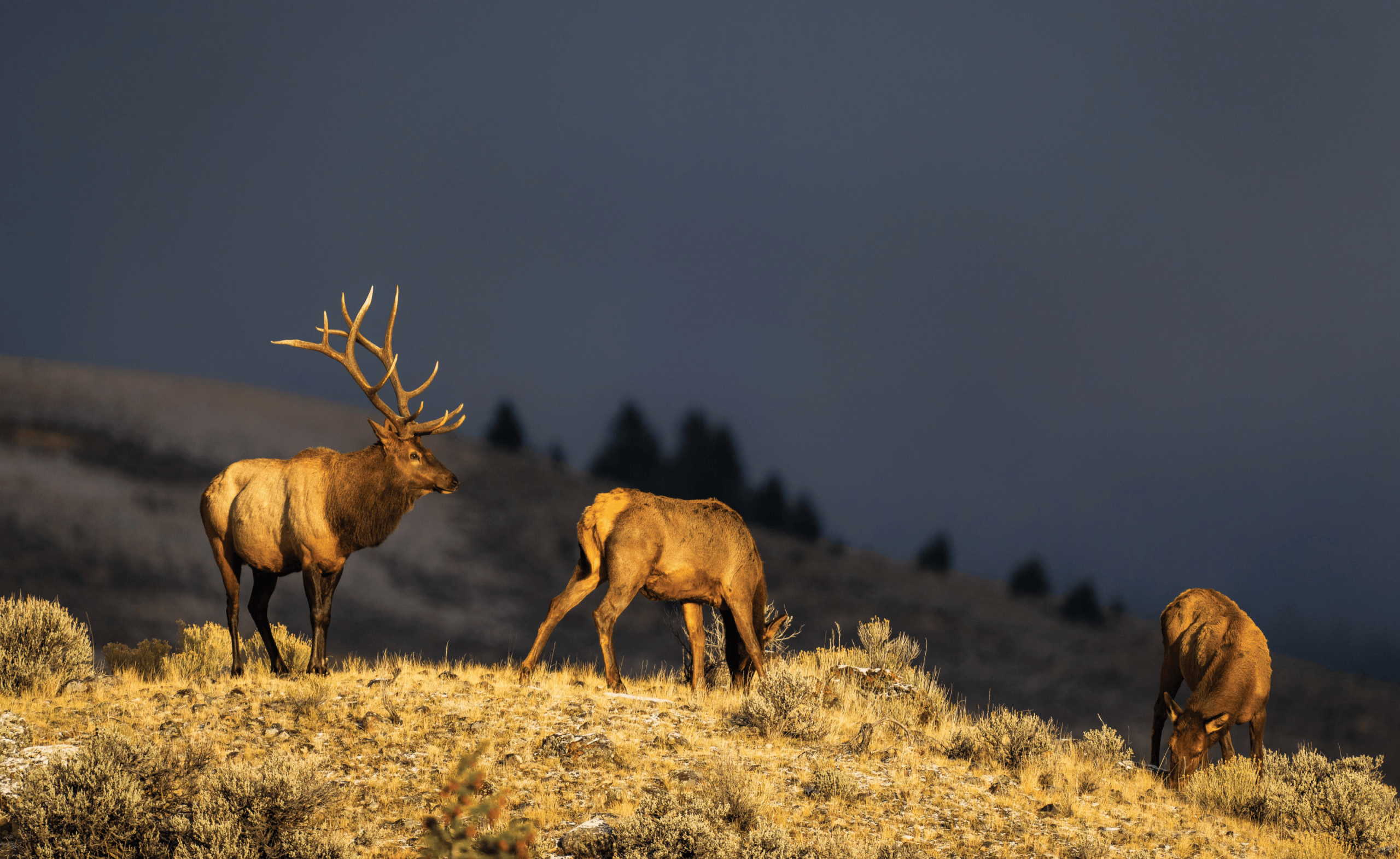
Rocky Mountain elk are a quintessential western mammal, with big bulls prized for their allure by the hunting community.
As we walked the woods together, family ties grew closer. There was the clear, cold night of a Montana November. My younger brother, Michael, and I huddled at the edge of a meadow high in the mountains, watching the last minutes of daylight fade. Over the ridge, we knew Dad and two sisters were walking their beat. Or sitting, which was much more unbearable.
As the very last of the shooting light left the meadow, a shot broke the icy silence. Michael and I stared at each other, too astonished to speak. Then we took off for the other side of the mountain.
When we got there, a fire was burning on the far end of the meadow, and in its light we saw the large rack of a six-point bull elk that had stepped out within range of Dad’s old 7mm. As we dressed the elk by the light of the fire, then started down off the mountain in subzero temperatures, there was a glow in my heart. Family, I was beginning to see, was more important than killing elk.
Why then, a year later, did I find myself scrubbing away furtive tears in the dark after my sister shot her first bull? I hugged her; I helped her pack it out. But I cried.
And finally, it was my turn. The perfect hunt.
Michael and I were hunting our way down a snow-filled canyon in
southwest Montana. Late afternoon fatigue was setting in. Pictures of the warm wall tent and food cooking edged out mental clarity. Then suddenly, there he was. On the other side of the canyon, a bull stepped out of the trees.
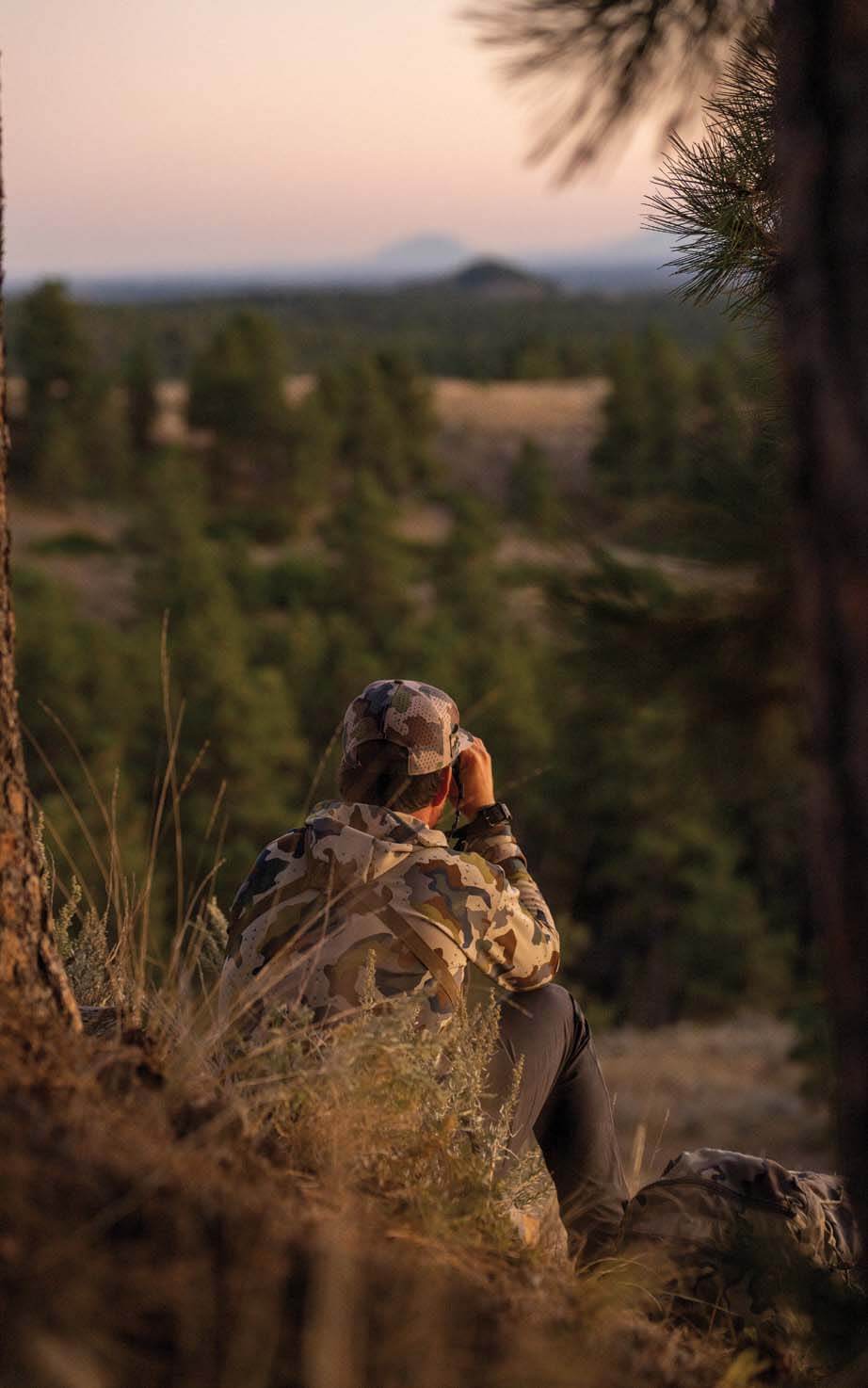
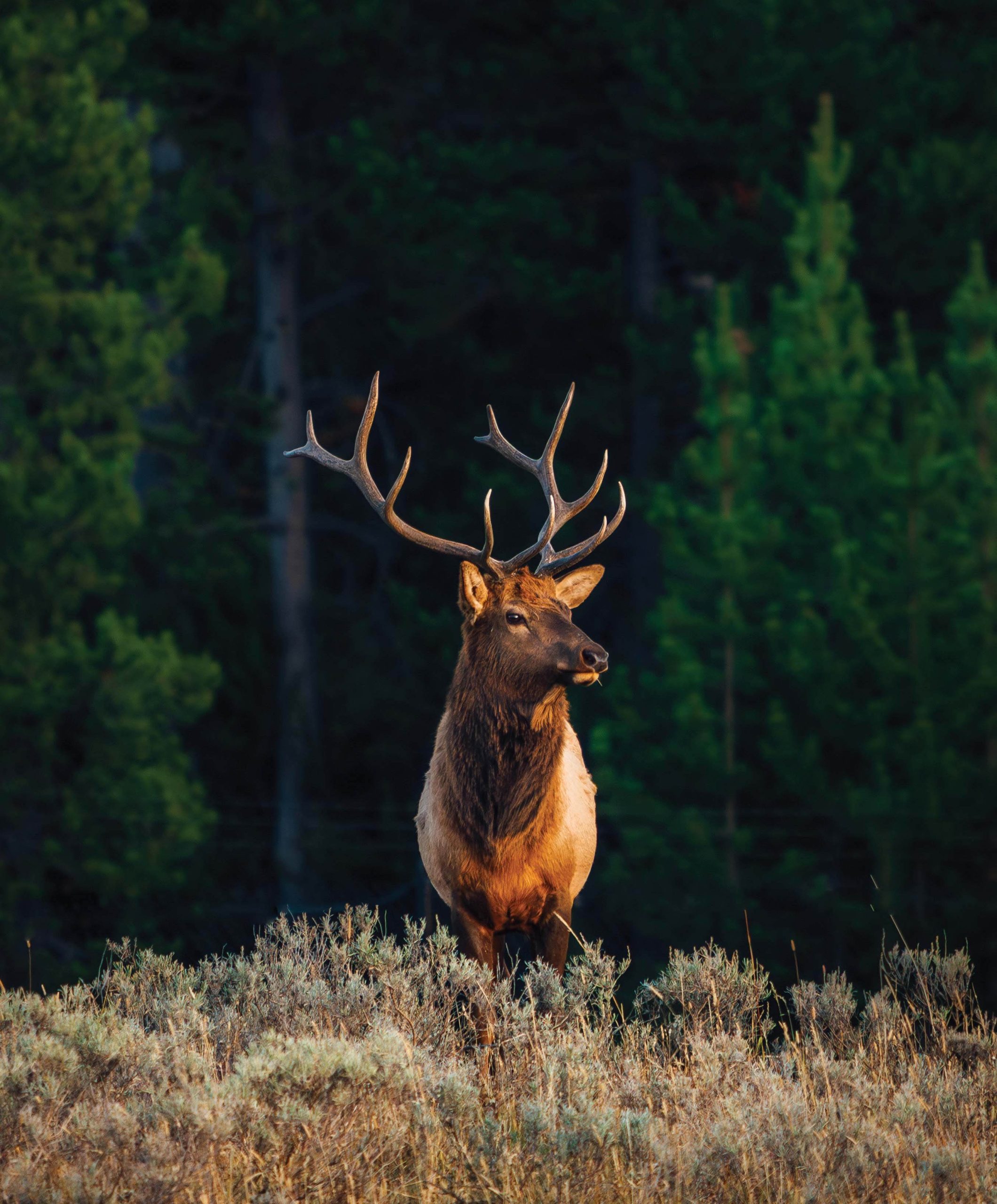
Elk spend a great deal of time in the timber, and the patient hunter may be rewarded with a glimpse of their golden bodies.
We crept back the way we had just come and eased into place by a fallen tree. Across the meadow, the bull cropped grass, his antlers swaying over his back. Four other elk fed inside the trees. I ranged the closest bull at 250 or 300 yards. Hold a little high, I told myself. I held a little high and pulled the trigger. He dropped. Elk crashed off through the forest.
My heart roared in my ears and I felt shaky and lightheaded. Michael clapped me on the back. But then, the bull got to his feet. He swayed and staggered off into the trees. I tried to put the scope on him again, but there was no time. He was gone.
In disbelief, we walked over to where that big, beautiful elk had lain. We found hair, a few tiny drops of blood, and a lot of chewed-up ground. We tracked as long as we could, daylight slipping away. But finally, we called it quits and hiked back to camp, both feeling too terrible to speak.
That evening I hit rock bottom. There was nothing left but self-hate and anguish and a certainty that I did not belong among the circles of elk hunters.
The next morning dawned clear and bright. My fiancé, Eric, had come to meet us for that last morning’s hunt, and together we climbed to the top of a high ridge where we could see for miles in every direction. Fresh elk tracks crisscrossed the bald ridge and the white of the mountains seemed to touch the blue of the sky. He told me he loved me.
Another year and another hunting season. COVID and a baby. Fear and an elk tag. Was it worth trying again?
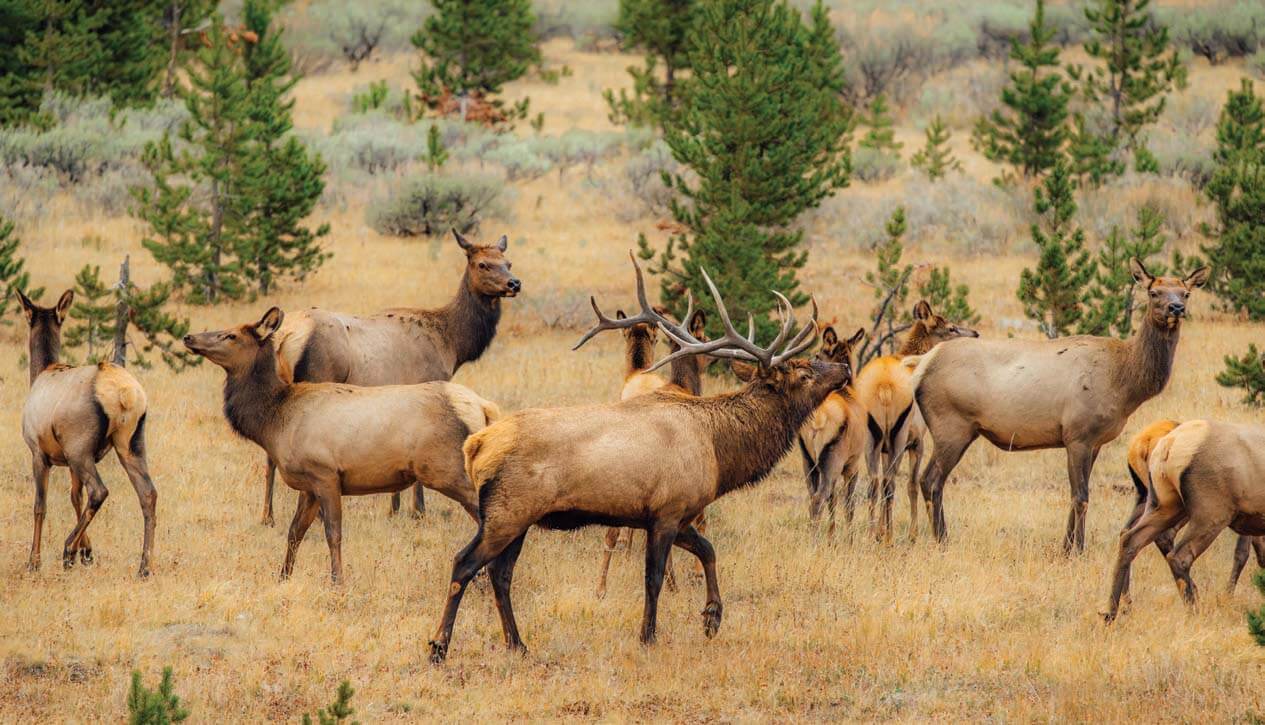
Montana’s rifle season comes after the rut, when bugling bulls collect their harem of cows during the breeding season.
Eric, now my husband, had drawn an elk tag for the Missouri Breaks. We had applied as a party, so I had one too. I also had a 7-month-old nursing baby. And a voice inside me that said, Don’t even try.
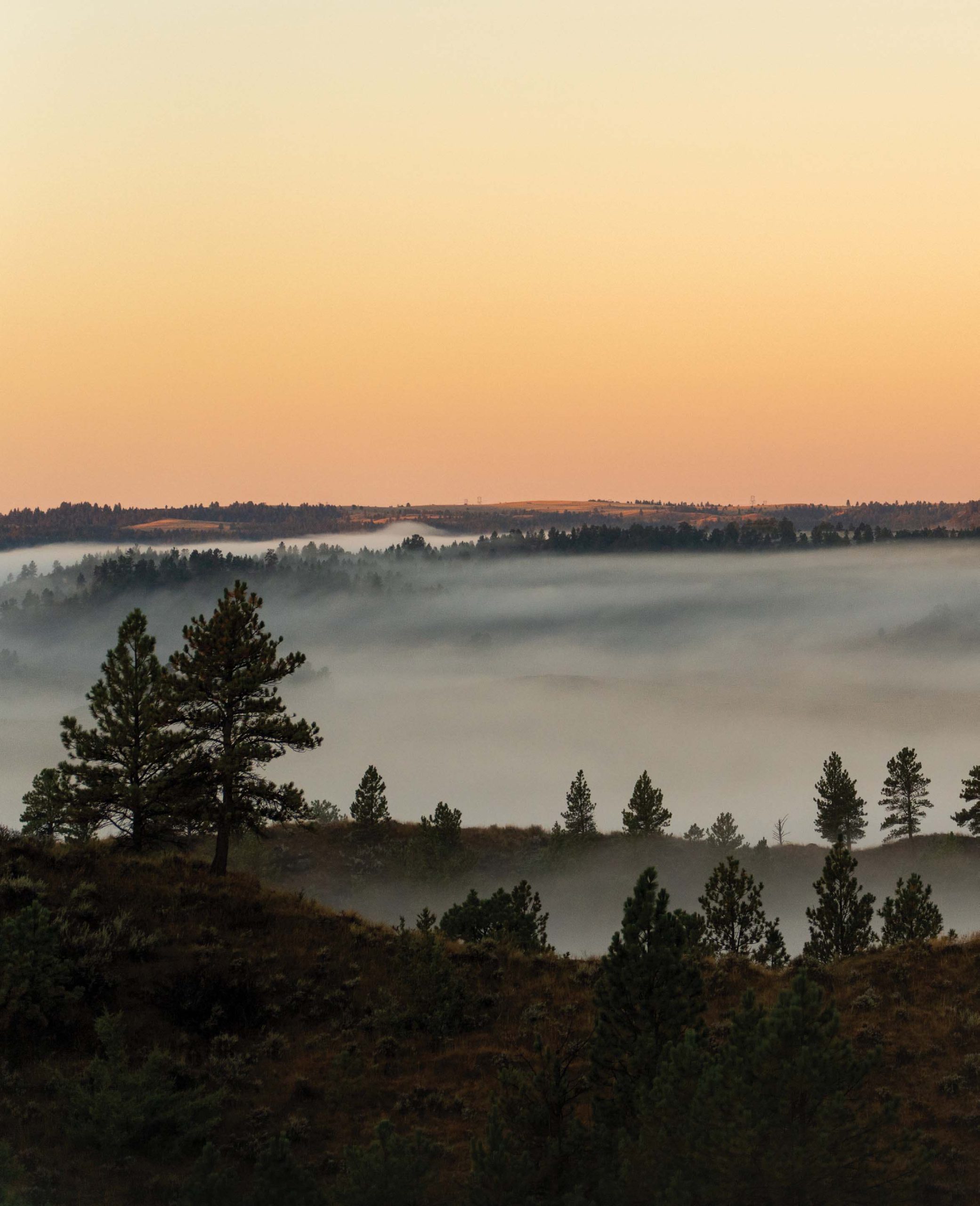
Yet on a November morning, I found myself in camouflage once more, in the middle of an eastern Montana sunrise, and way out in the sagebrush flats, seven elk were feeding.
My sister Katrina was along as babysitter. I returned to the trailer we were using for camp and fed my baby again. “Mom’s after an elk,” I said. “Be a good boy.” I figured we had about a five-hour window to hunt before I had to be back for my baby.
We ran. Long coulees led toward the creek bottom, and we dropped into one for cover. The elk had started moving toward us, and Eric said four more had joined the first seven. They were all bulls.
Up out of one drainage, down into the next, across the face of a hill. It was warming up, and I was gasping for breath as my lately sedentary legs fumbled to find their stride. We inched over the top of the last hill overlooking the flat creek bottom. “There they are,” Eric whispered. Still a ways off, the whole herd was moving across the open. I crawled forward to a bush and put my binoculars up. Tines danced above a sea of heavy bodies. The elk disappeared behind a ridge. “C’mon, we have to go,” Eric said.
Again we ran, finding a draw that led us toward and ahead of the elk. Again we stopped, melding into the hillside as a notch between two hillsides revealed the bulls.
“They’re almost within range,” my husband whispered. “Are you ready?”
I was too warm. Trying to calm my racing nerves, I took a drink of water, then stripped off my sweatshirt. My shoes were loose, and I knelt to tie them. Eric moved ahead, and I panicked. “Wait!”
We kept running. Legs churning, gasping for air. Trying to foresee the outcome.
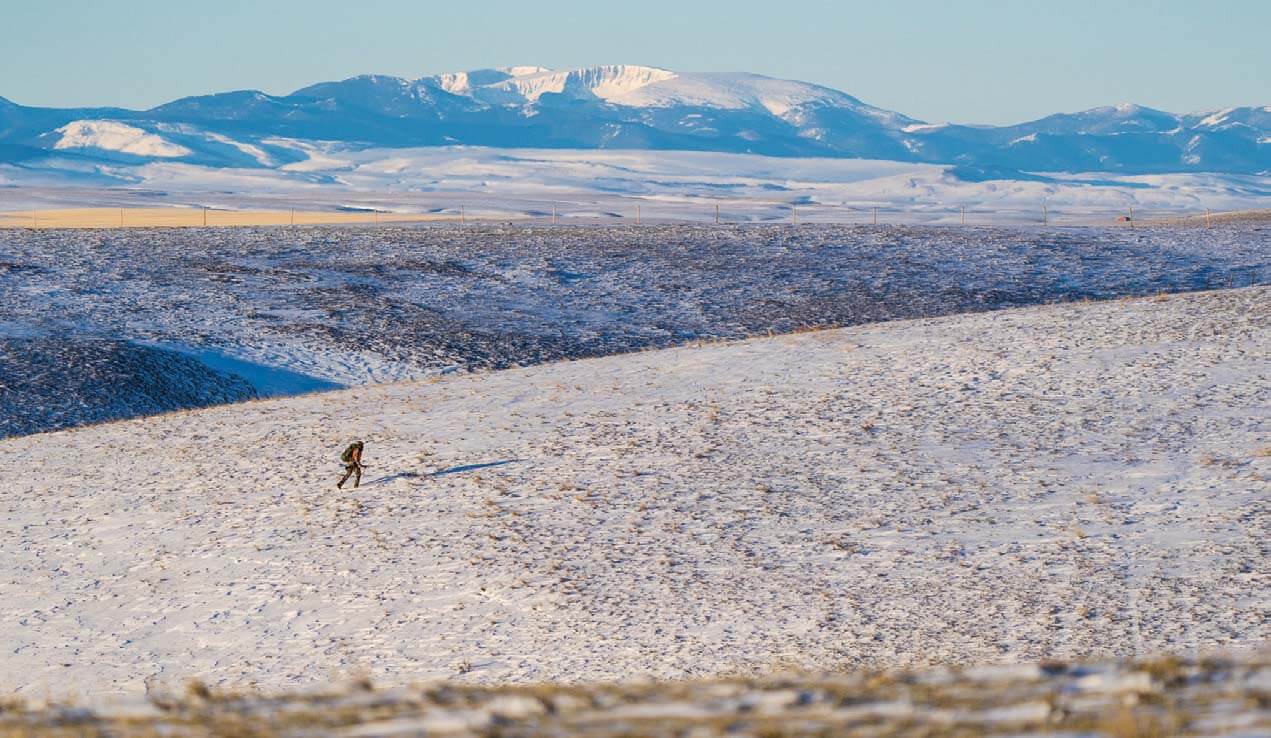
Snow storms in October and November typically help hunter success as animals move from the high country toward their winter ranges.
All during the chase, a voice in my head had been whispering, mocking me, draining my energy. I pushed it away and focused on what mattered. Silence, speed, the voice of the land, the animal we were after. But now, as we closed in on our quarry, I listened to it. I grabbed my husband’s elbow.
“I don’t think I want to shoot,” I said.
“Why not?”
Why not? This whole hunt had been for me. My husband knew how much I wanted to kill a bull elk. Here, perhaps, was the climax.
“I want you to shoot,” I said.
I was afraid. The memories were too demoralizing. But there was another, slightly more noble reason. My husband had shot a few elk already, but they were all the toothpick frames of the young bull. He had yet to tag a mature, heavy six-point. I wanted this for him.
“We’ll see,” he said.
We climbed up the last knoll, knowing the elk were just on the other side. Pushing our faces over the edge, we froze. The small knoll pulsed with elk. Tines hovered in a cloud. Sunlight outlined every detail of each large body. The wind was in our favor. The distance was 260 yards.
I felt alive and wild and joyful. Eric was lying on his stomach, looking through the scope. He looked at me with a question in his eyes. I nodded at him, at peace with my decision. “Shoot,” I mouthed. I wriggled back a few feet, reached for my binoculars, and moved back into position. Out of the 11 elk, we had both noticed one with antlers slightly lighter in color. He seemed to be one of the biggest. “Wait on that one,” I said.
In the hills, the crack of the rifle seemed to come from many directions at once. The elk bunched up, uncertain of which way to run. I saw the big bull, the one with the light-colored antlers, hunch up with blood gushing from his side. The rifle spoke again and the wounded elk went crashing down the hill. He was ours.
When we brought the head and antlers back to our excited little boy, I knew for sure: It was worth it.
Exactly a year later, my husband and I were threading our way through sagebrush again, toward the sunrise, chasing elk.
We were in eastern Montana, mostly hunting mule deer. But it was a legal area for cows and spikes. I still wanted an elk.
In a way, it felt like it couldn’t be a year since our spectacular hunt in the Breaks. And in a way it felt like a hundred years. Change was everywhere. Family moving. Careers changing. Relationships threatened. Decisions pending. We almost didn’t go hunting. And yet, we carved out one week, took with us our 1-year-old, his grandparents, my sister, and her husband.
And now here we were: in the snow, in the morning, listening to a chorus of coyotes across the valley.
After an hour of climbing steep little ridges and falling down the other sides, I saw them.
“Elk,” I hissed, throwing myself down. About a dozen cows fed in the shade of an opposing hillside. Eric ranged them.
“280 yards,” he whispered. “Are you ready?”
Time slowed, locked into place. The pack on the ground, my gloves off, and the steel of the rifle cold in my hands. I lay down and the ground rose in front of me to block off my view. A panicky feeling rose inside me. This is your last chance, my nemesis whispered to me. If you mess this up, you’re done. A determination as cold as the barrel I was holding took over. I would not mess this up. Eric bolstered the pack up and I repositioned, just able to see.
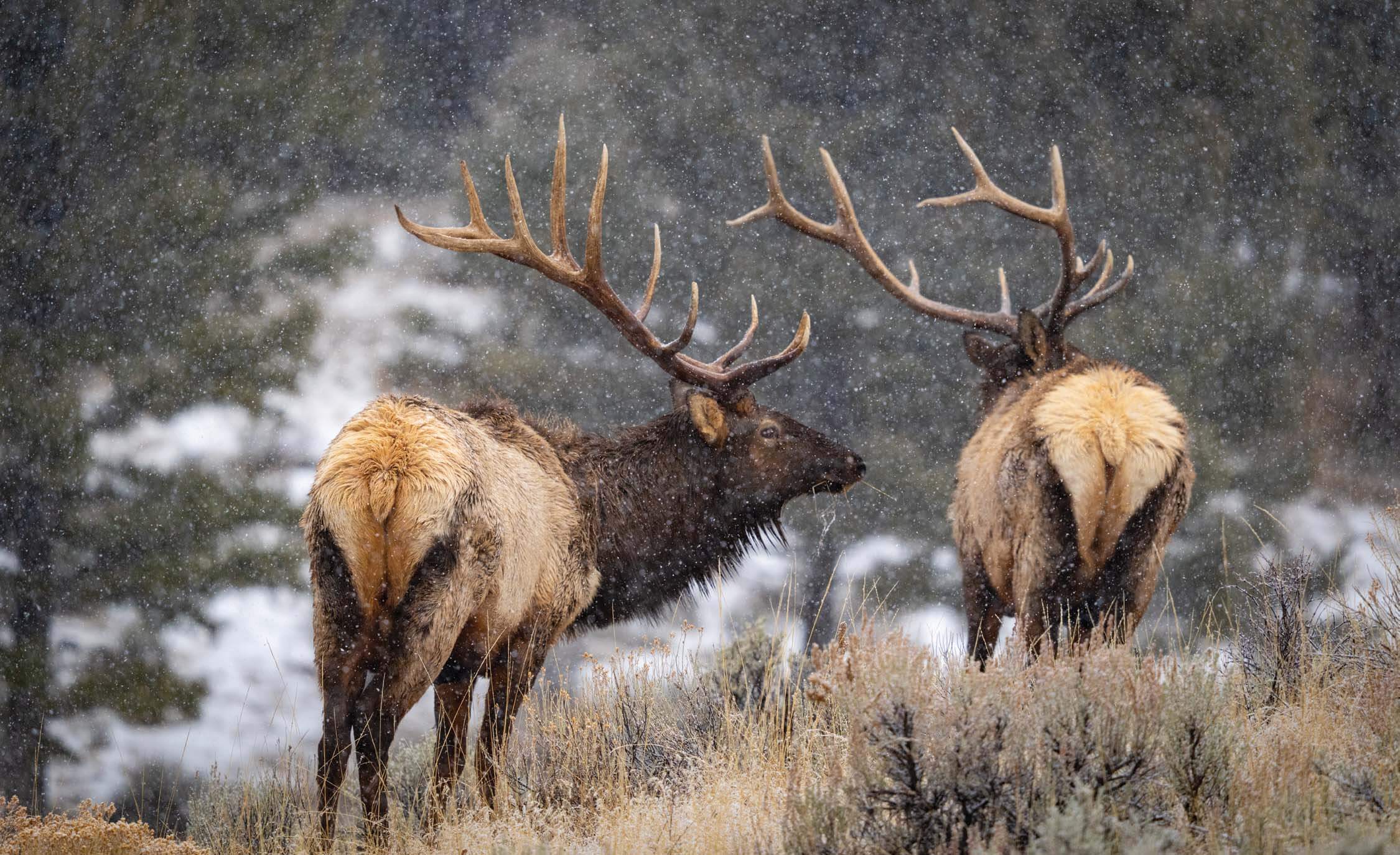
The elk were fanning out, moving toward the top of the hill. I picked out one cow standing a little apart from the rest, and I fixed her position into my mind. The moment was almost perfect.
When I shot, the cows picked up their heads and milled about, unsure of where their predator was. My cow still stood in the same position. Misery washed over me.
We belly crawled forward through the cacti for about 20 feet, and when we looked again the elk were all gone. Not again, I thought, Dear God, not again.
Eric glassed the spot where the elk had stood, looked at me, started to say something, then changed his mind. “Let’s go take a look,” he said.
I retrieved my gloves and pack, and we made our way into the shadow of the next ridge. Only minutes earlier a dozen large animals had been there. Now only us and the cackle of a magpie. Watching for blood or hair, anything to indicate contact, I approached the spot where my cow had stood. There was nothing but tall sagebrush and trampled snow, and then suddenly, there was the dead body of an elk.
I stopped. I almost stopped breathing. I looked around frantically for Eric, who was coming up behind me, smiling. “Looks like you didn’t miss after all,” he said.
Kneeling in the snow beside the dead elk, I put my hands on her still-warm body and marveled at what I had been given. The gift of family. The gift of grace and a chance to forgive myself. The gift of a partner who loves me without expectations. Maybe I was hunting those gifts as much as I was hunting elk.
Maybe along with that dead cow, I learned that gifts are given, not earned. And maybe that’s why I keep coming back.
Heidi Beachy is a busy mom, farmer, writer, and hunter. She and her husband, Eric, feel privileged to raise their children in Montana and especially love when the tamaracks change color in the fall.
Professional wildlife and landscape photographer Seth Royal Kroft is a Billings native who spent his upbringing participating in all the outdoor activities Montana had to offer. Kroft’s work focuses on the mountain regions of Montana and Yellowstone National Park and has been featured in hotels, luxury apartments, magazines, travel guides, billboards, magazines, international online articles, and more. In collaboration with Aspinwall Mountain Wear, Kroft recently opened up his own art gallery in the heart of downtown Billings;
sethroyalkroft.com.
No Comments