



18 Nov Round Up: Between the Pages: An excerpt from Montana Rocks! A Guide to Geologic Sites Under the Big Sky
Editor’s Note: A professor of geology at the University of Montana Western in Dillon, Robert C. Thomas is the author or coauthor of more than 75 publications. This piece is excerpted from his latest title, Montana Rocks! A Guide to Geologic Sites Under the Big Sky, and is published with permission from the author and publisher Geological Society of America.
Lewis and Clark Caverns became Montana’s first state park in 1937. The limestone caverns are at least 600 feet deep and boast three-quarters of a mile of accessible passageways you can tour with a guide. The origin of the caverns started with the deposition of Madison Group limestone in a tropical ocean that covered the area from 358 to 325 million years ago. Look for button-shaped crinoid and horn-shaped coral fossils in the rocks along the walking path to the cavern entrance. The rocks were folded and faulted during Laramide compression, forming fractures in smaller folds that would later influence the location of the caverns. A few million years ago, when crustal stretching started to uplift the mountains we see today, the ancestral Jefferson River started to cut down as the land rose, initiating cavern formation.
The caverns formed as rainwater incorporated carbon dioxide from the air and decaying organic matter in the soil to form a weak carbonic acid that percolated down to the water table. The slightly acidic groundwater slowly dissolved openings in the bedding and fractures within the cores of small folds in the limestone. The caverns concentrated where the groundwater perched above impermeable layers of a muddier limestone in the lower Madison Group, preventing cavern formation from occurring any deeper. Eventually, as the river cut deep into the rising land, the groundwater table dropped, and the caverns drained. They are now 1,300 feet above the river. The caverns likely formed in Pleistocene time, and once drained, the roofs collapsed, leaving rubble piles and arched ceilings.
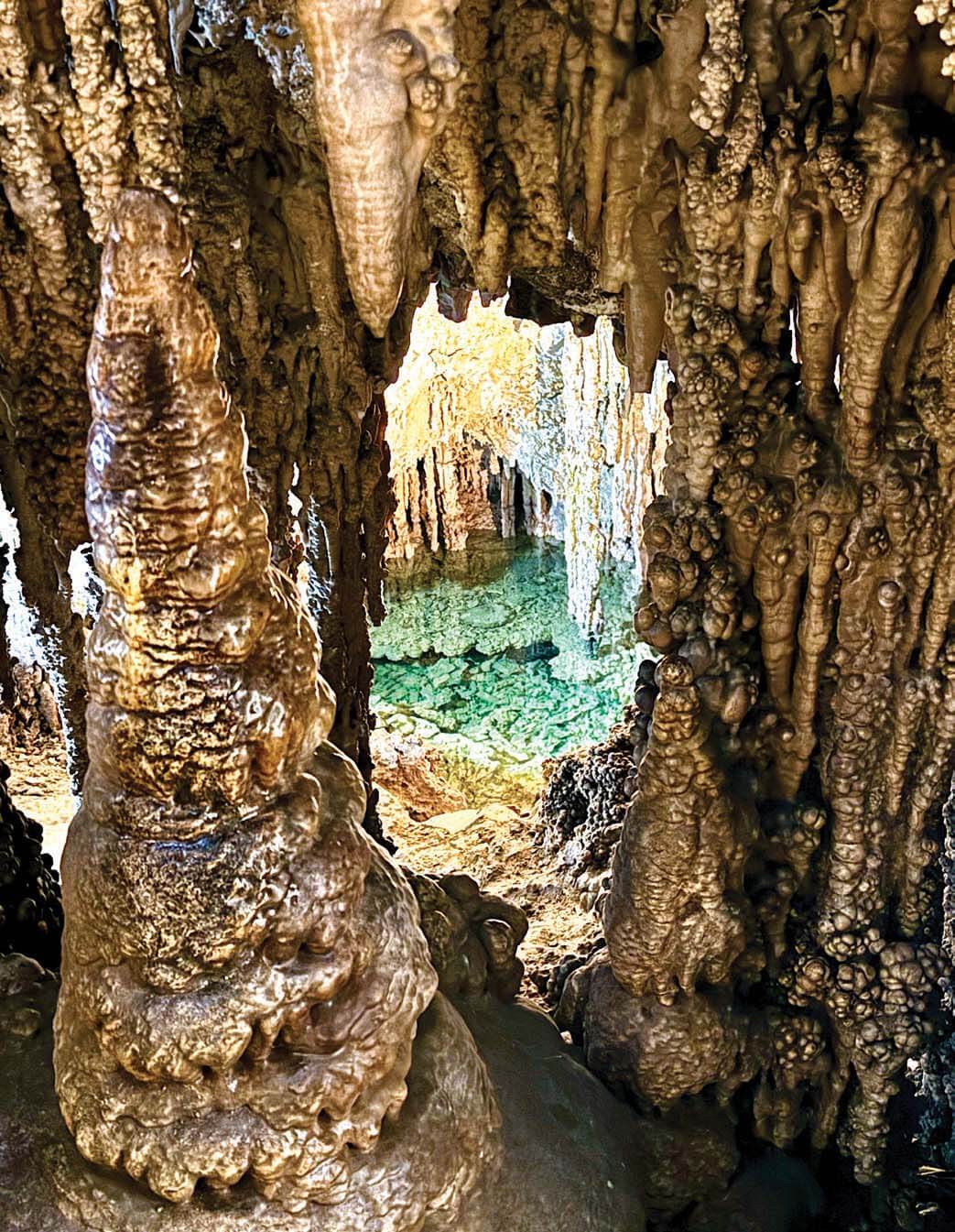
The speleothems, or cave formations, formed when water carrying dissolved limestone seeped inside the drained caverns, released carbon dioxide (making it less acidic), and precipitated crystals of calcite. As the water slowly dripped, it formed icicle-like stalactites that hang from the ceiling, stalagmites that grow upward from the cave floor, and columns where they join. Each drop of water can deposit a layer of calcite, which are visible in broken speleothems. The rate of growth can vary greatly, but typically, it takes thousands of years to accumulate just a few centimeters of calcite.
No Comments