


20 Nov Images of the West: Shades of Black
I once asked my photography class, “Do you see in black-and-white?” One student out of 10 said, “Yes.” I couldn’t fathom non-color in my creative eye or imagination, and neither could most of my students.
Yet, how often have I come home to look at the photos I’ve just spent days shooting, and few actually say wow to me? After staring in frustration at the unremarkable images on my computer screen, the key to black-and-white suddenly unlocked the clasp on my color brain.
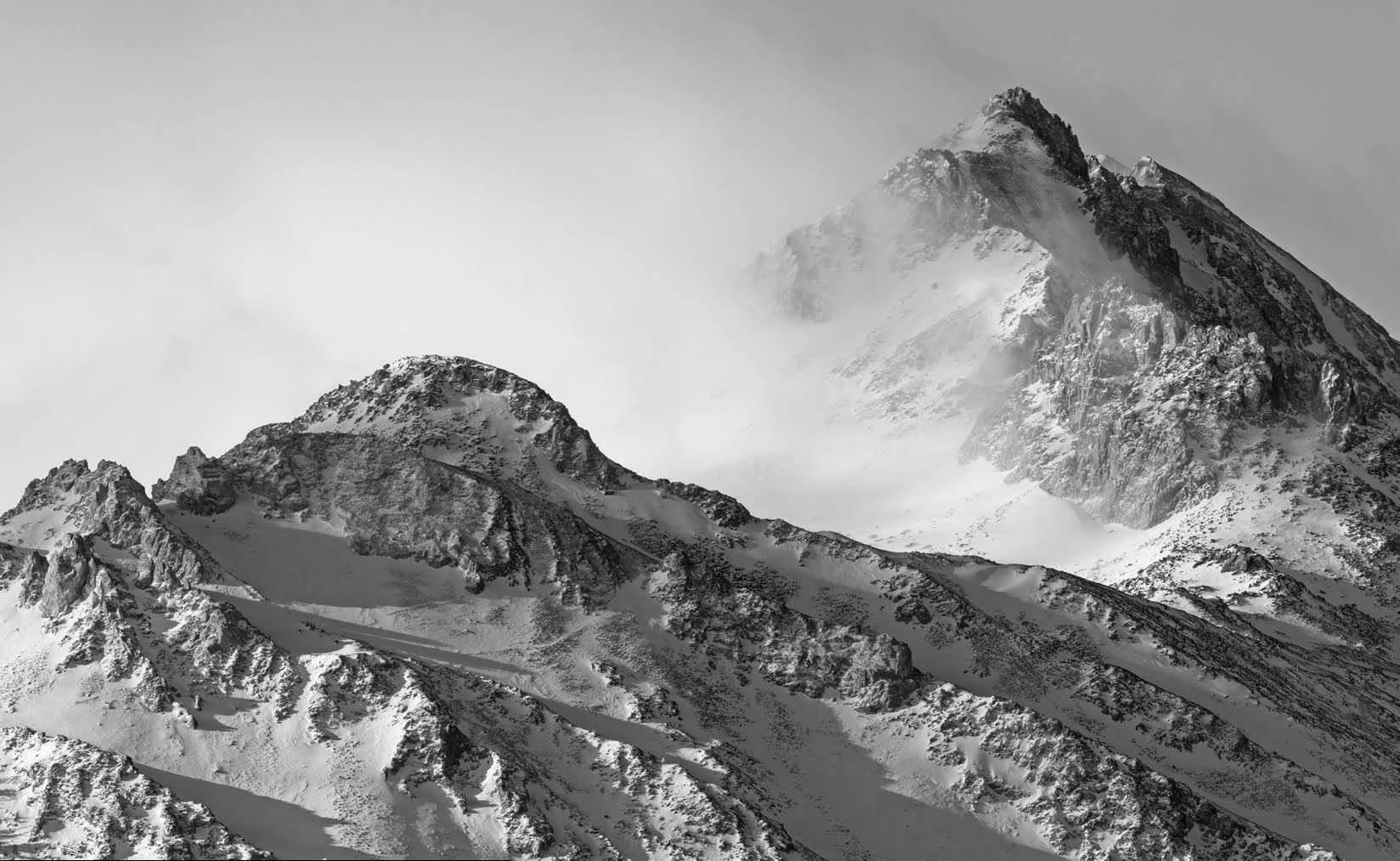
Electric Peak in the Gallatin Range is stunning with its craggy ridges encompassed within turbulent clouds. Black-and-white is prime for this stormy weather situation.
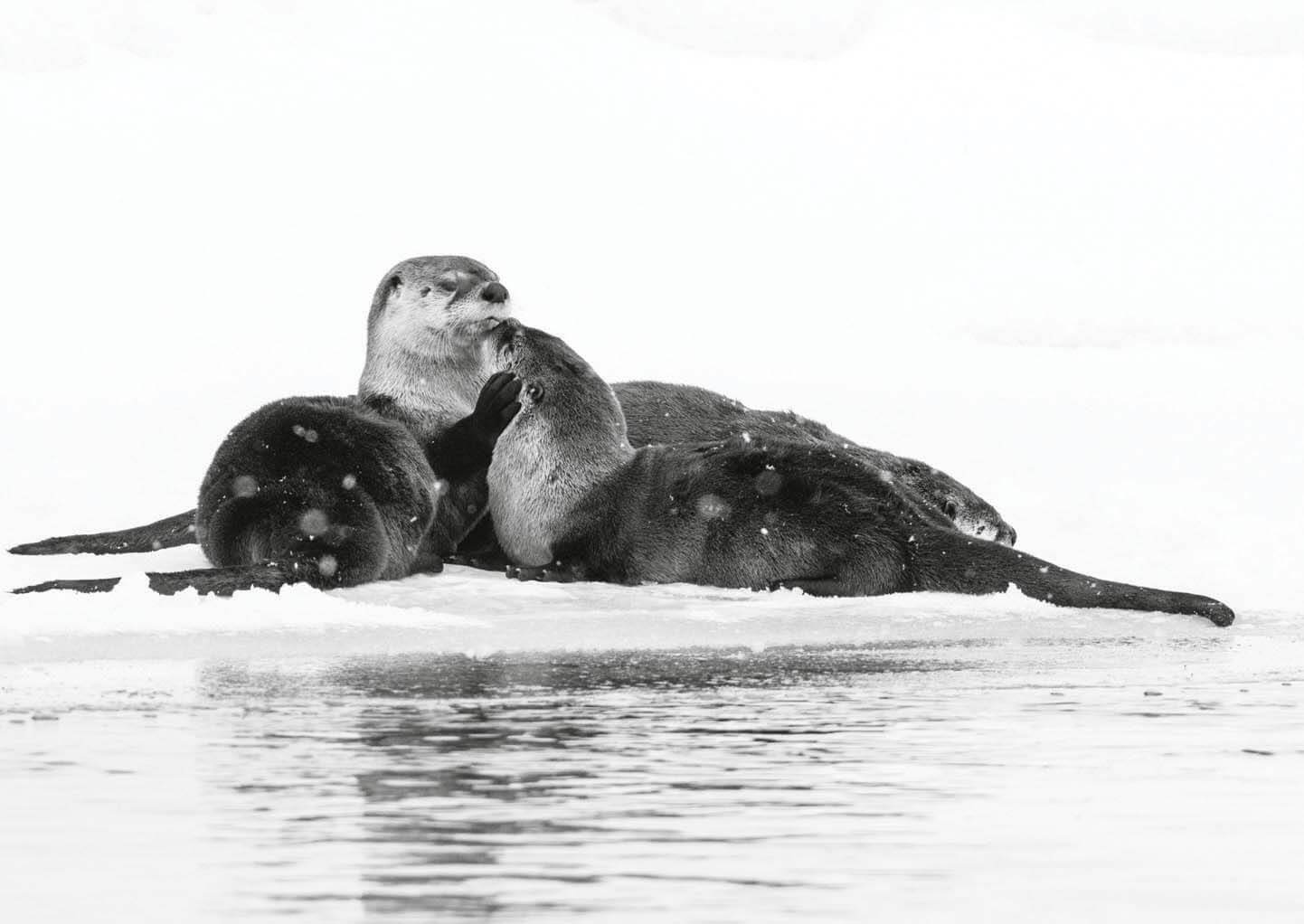
It was a cold, blustery morning when the author photographed this mother otter and her young. The wind was gusting and whipping, the tripod almost fell over.
During my decades of nature photography, rarely did this idea enter my mind. As my eye and brain have evolved, I realize extreme light against dark gives the contrast required for exquisite black-and-white photos. Layers of black shades, from white to grays to the darkest of dark, create a variety of moods within an image. The essence becomes stunning and breathtaking. When this happens, nondescript wildlife or landscapes suddenly come alive in a starker manner, as simplicity within subjects is revealed without color distractions. It has become an enlightened stage in my photography career, as I explore these contrasting shades within my recent and past photos.
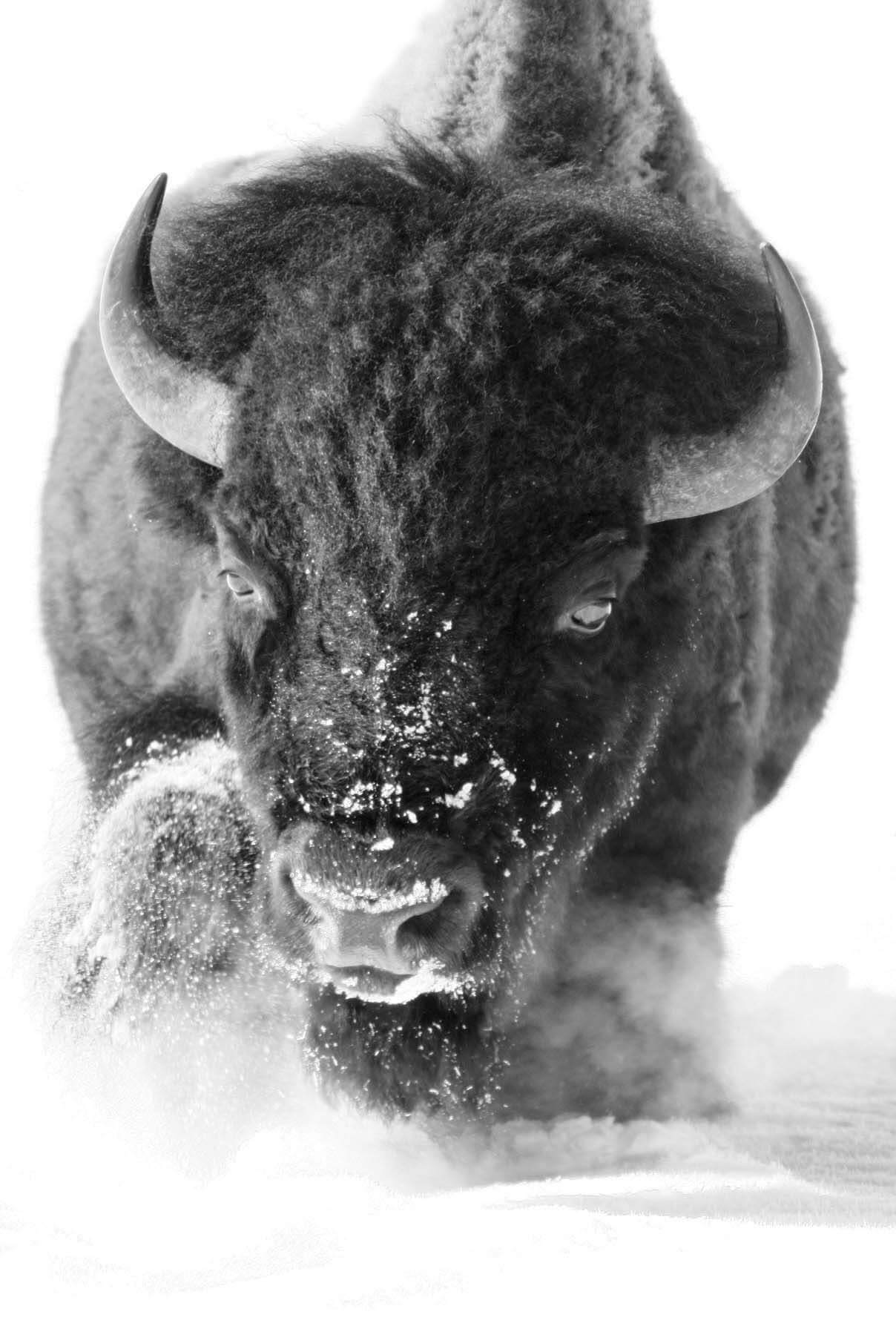
This bison is a good example of a colored image hibernating in the author’s library for 15 years. When she began considering black-and-white for editing, she pulled the image from her library and converted the colors, resulting in a bull that looks more threatening than before.
Contrasting elements between light and dark shades take me to a higher level seeking and understanding daylight situations. Harsh lighting is my primary tool in highlighting the subject; lack of vibrant color becomes secondary. This is foreign to my photo thinking, since the golden glow at both ends of the day is often the most beautiful time to be out there capturing the soft warmth of amber hues within the landscape. Those warm tones lack the gradual shades of light to dark that are needed for black-and-white images. Thus, those midtone shades of greens, blues, and ambers on a palette of autumn or summer background colors are monochromatic within the color spectrum. During these seasons, they are the least contrasty colors for black-and-white.
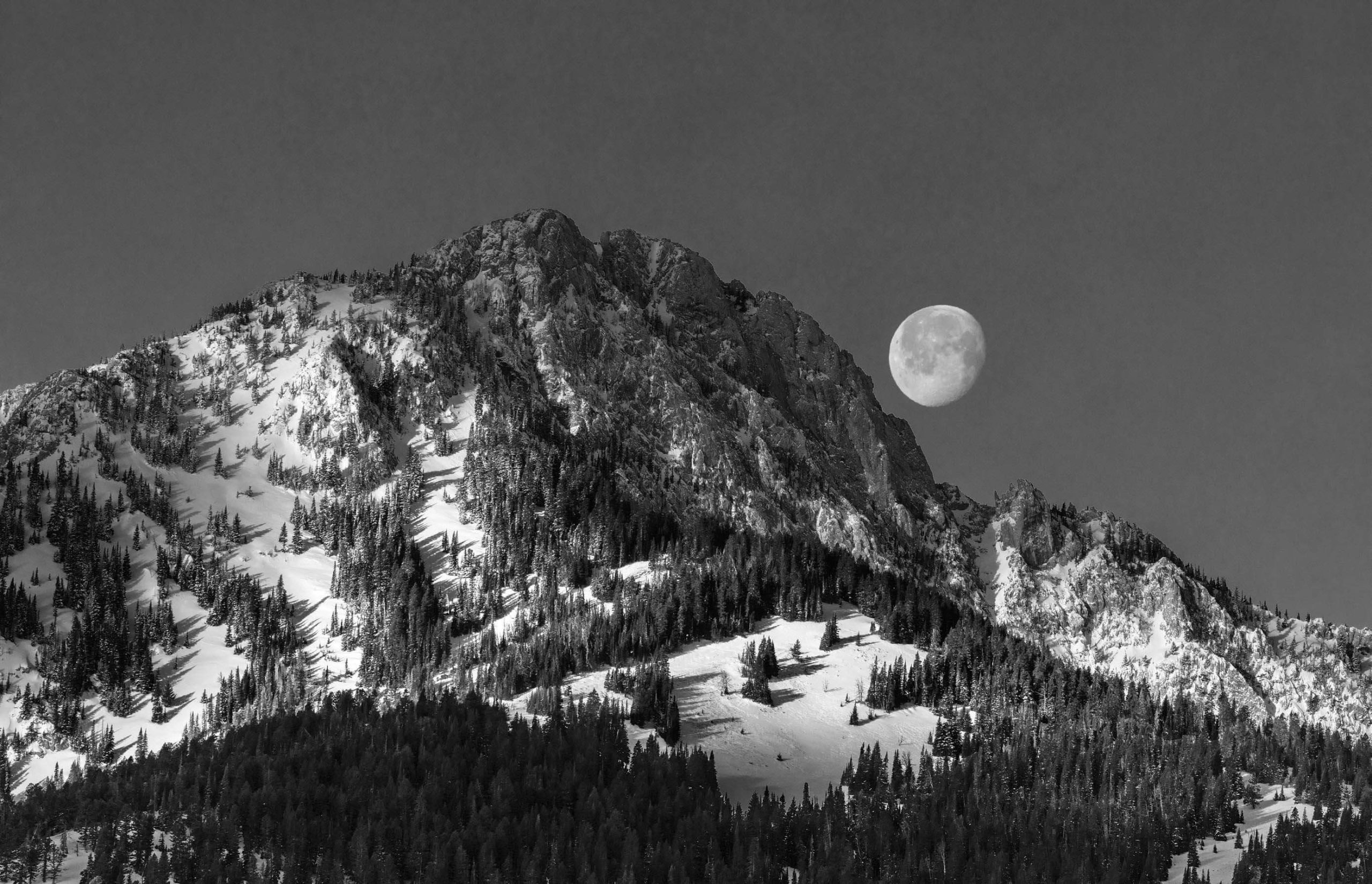
During another cold and frosty morning, the author spotted the moon as it began its downward plunge behind the Bridger Mountains. With high contrast between snowy slopes, trees, rocky ridges, and the moon, plus a perfect blue sky, all came together with shades of white to black.
Winter is a season in high contrast, where dark subjects create a mood within white fields or with snow delineating the craggy mountain ridges and peaks. Add turbulent storm clouds, and I’ve got a winning photo. Dark against light swirls when blizzards encase bison as they trudge down the wintry road or are belly deep within the cold depths. Snowflakes flutter and drift like feathers while black-and-white horses munch on a Montana breakfast.
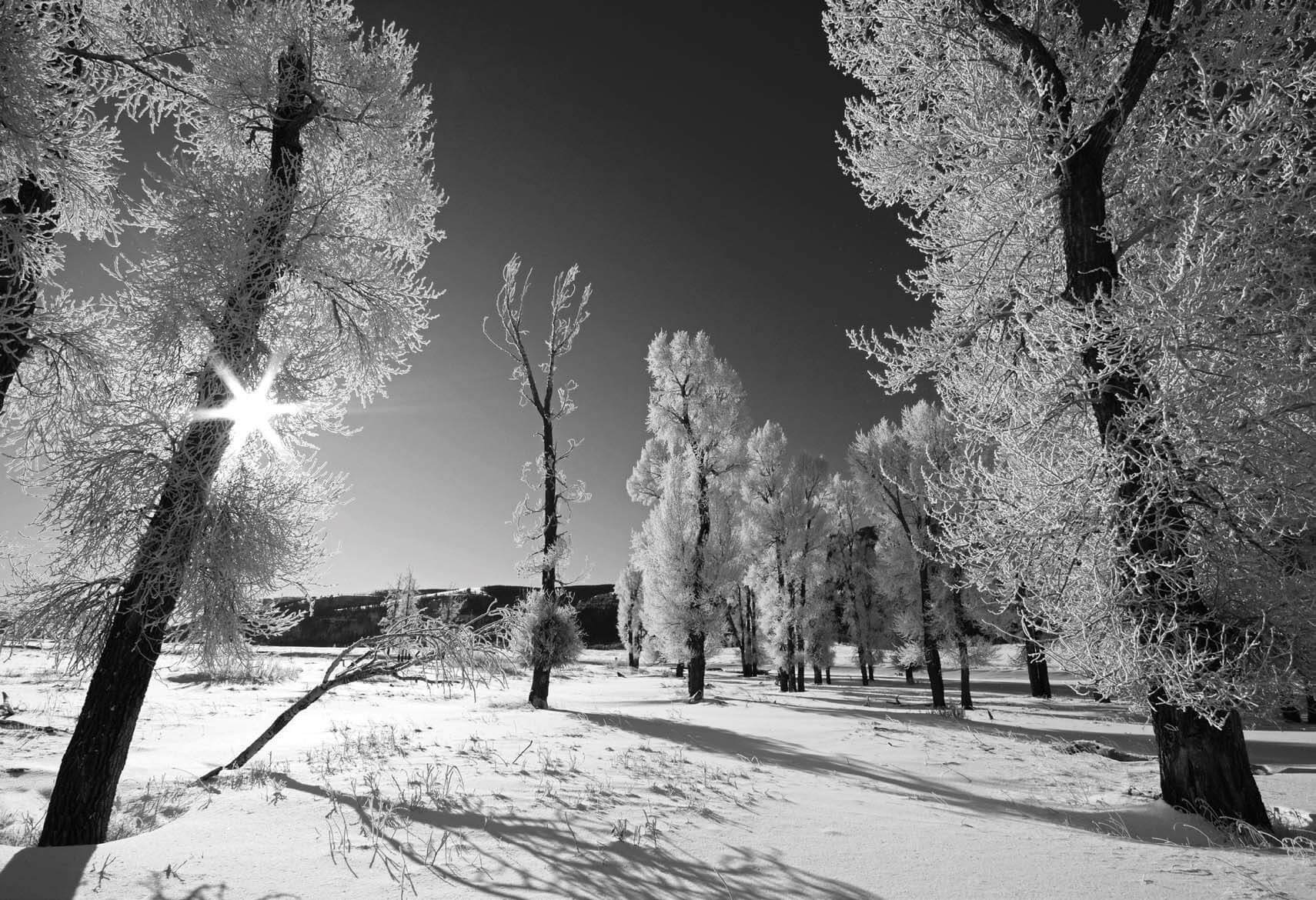
While on snowshoes in Yellowstone National Park, the author experienced plummeting temperatures that dropped well below zero, reaching somewhere around minus 35 degrees. She had to keep moving to shake off the cold but was able to capture a sun star peeking from behind the hoarfrost trees.
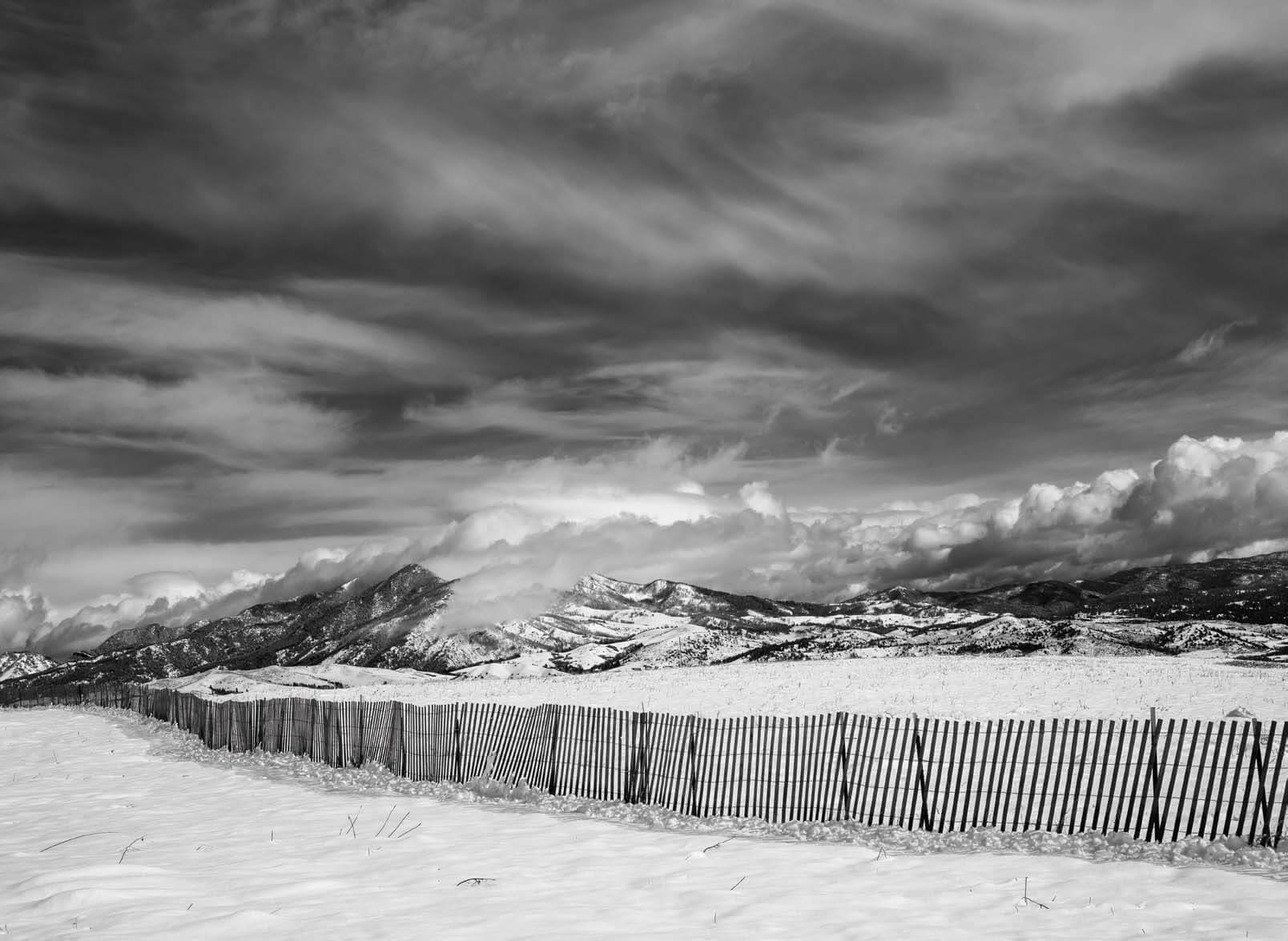
The Bridger Mountains under windswept skies and framed with the old snow fence look more menacing in black-and-white. Clouds definitely give any photo more impact.
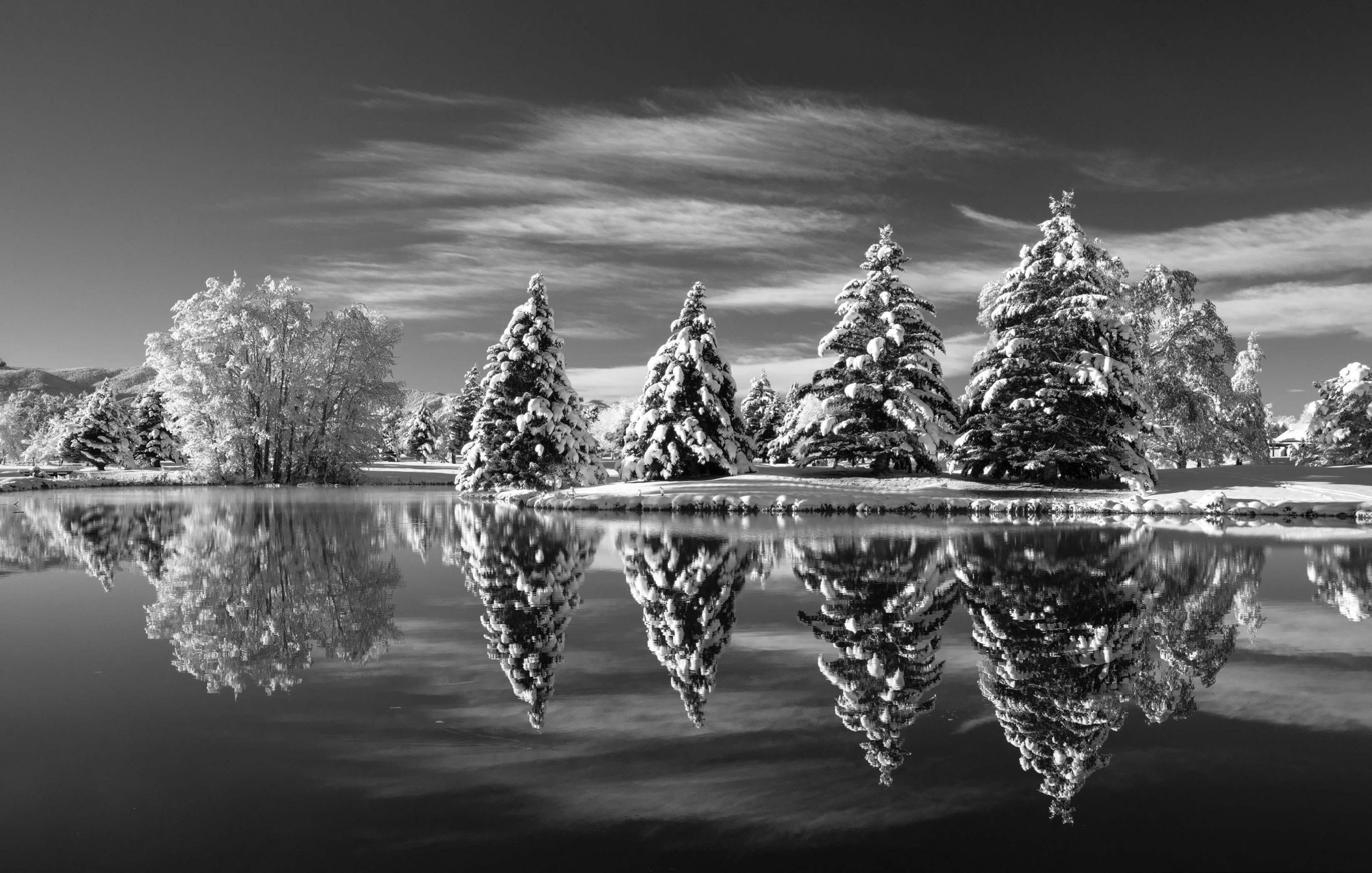
Enchanting, brilliant blue skies, flushed against steamy thermals, snow ghost trees, or low-lying fog with mountain peaks rising above the mist are all wonderful photos because of those lighter blue skies. Tempestuous weather brings drama, which suggests impact. When I convert my color images, I use black-and-white presets, which are on any editing program. When I have high contrast between light and dark, I most often rely on the infrared preset to further edit. As shapes become more defined, so does the mood of the image. Stripping a photo of color, an emotional atmosphere results, awakening an inner response to the picture. Thus, a viewer experiences emotion versus reality as they observe the interplay between light and dark.
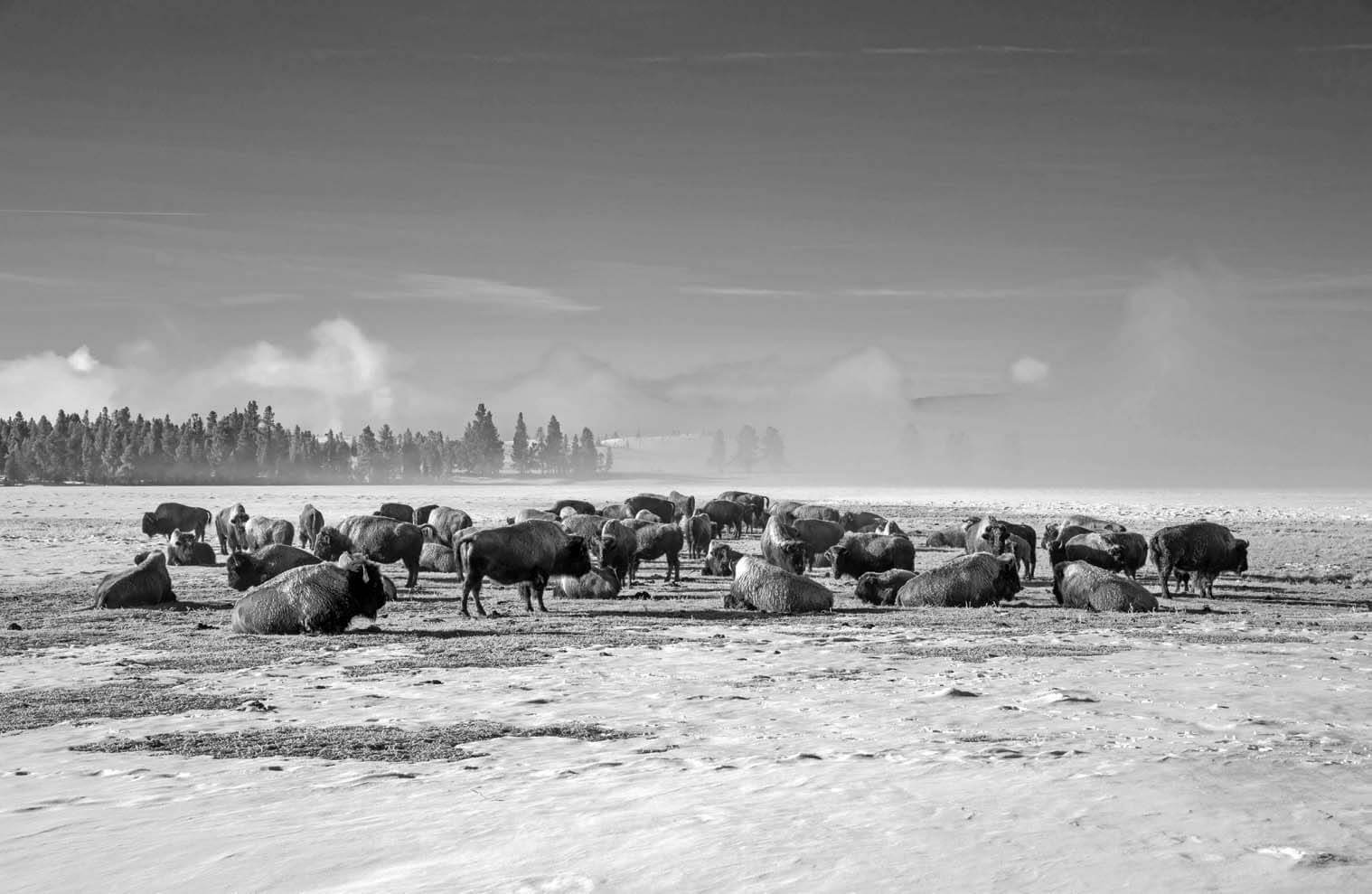
It was just 10 degrees while the author sat frozen on the back of a snowmobile in Yellowstone. Disregarding the cold, she became transfixed on an encased hoarfrost bison herd as the fog gradually lifted.
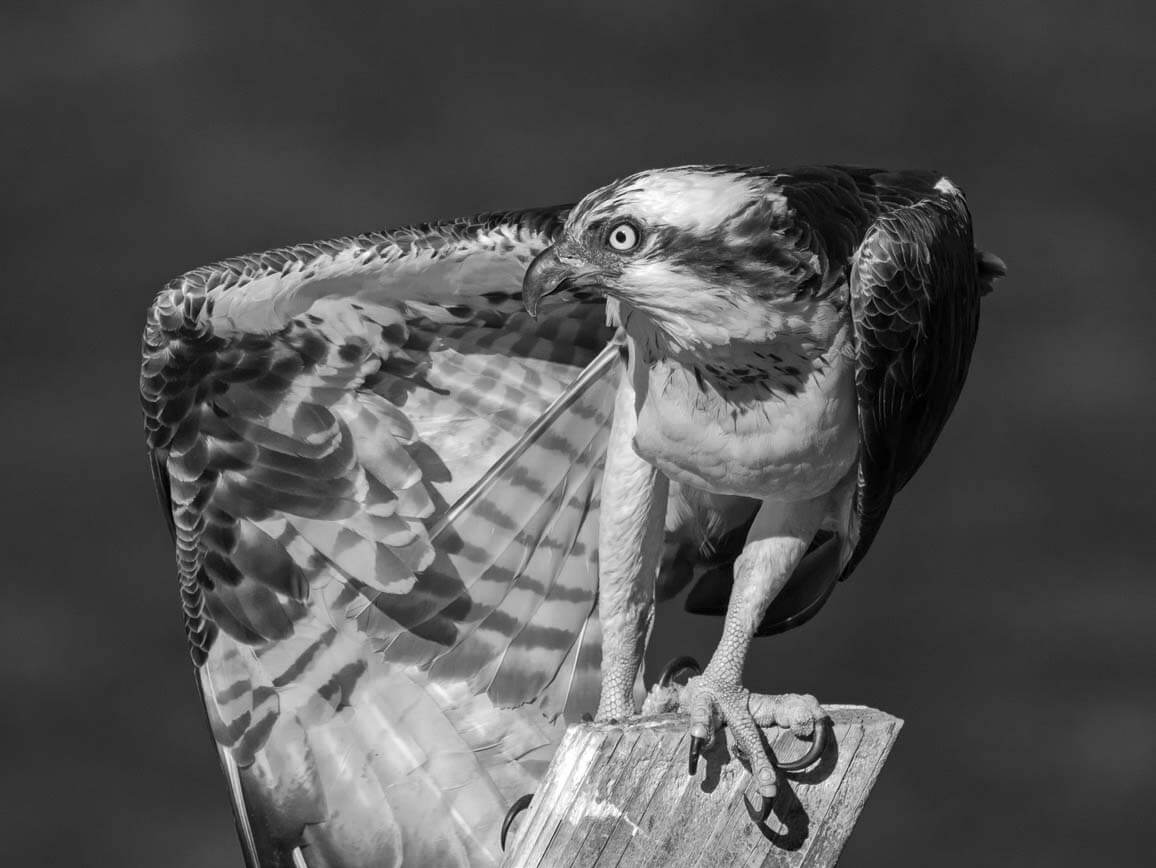
This mother osprey took the time to stretch and pose with her flared wing. Osprey are perfect for black-and-white photos because of their extreme, dark wing feathers contrasting against the white in their head, breast, and leg feathers.
Not every photo is conducive to black-and-white. As a matter of fact, when I go out in the field to shoot, my mind is typically on the reality of color. It’s not until I start my editing that I realize which images in high contrast just might look great in shades of black. Many of them contain those dark edges against winter white.
Carol Polich has been a nature photographer and author for the past three decades. Her written and visual work has been featured in regional, national, and international magazines, and her images have been included in calendars, on postcards, and throughout numerous national parks. When she’s not in the field, she teaches photo classes. Polich has three photo books to her credit; wildnaturetrails.com.
No Comments