



20 Nov Beyond Oro Y Plata
A clearwater babbling stream, Yogo Creek rises high in central Montana’s Little Belt Mountains and drops some 3,000 feet on its 15-mile route northeast to join the Judith River. Originally part of the Piegan Blackfeet homeland, its steep valley didn’t receive much attention from settlers until 1866, when a prospector found traces of gold in its streambed. As word of the discovery spread, miners began to trickle in only to be driven out by the Blackfeet.
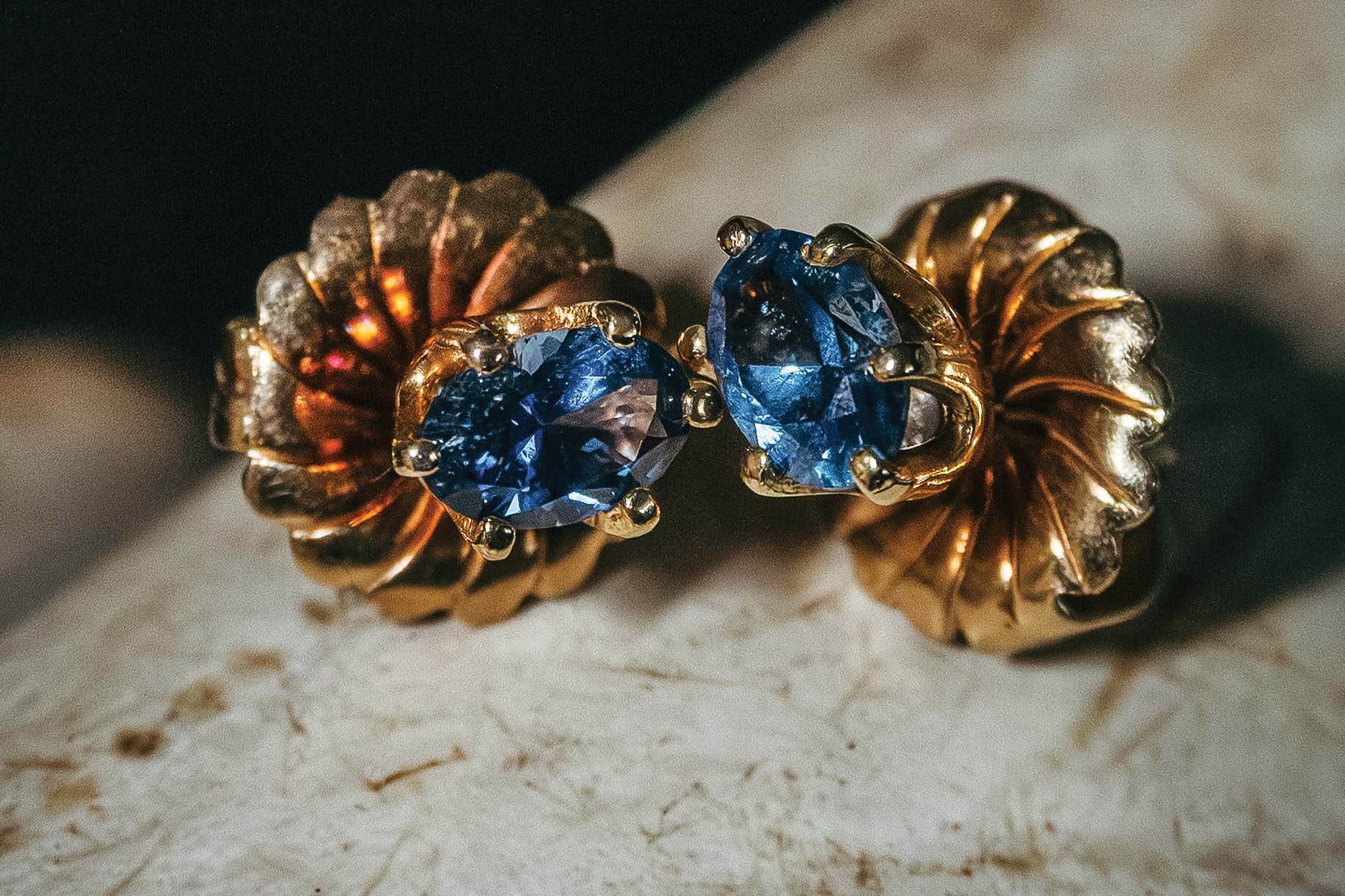
Because of her September birthday, the author’s wife, Lori, enjoys the ideal birthstone for a fourth-generation Montanan. Friend Lanny Perry found, cut, and set these Yogos for her earrings. | DON AND LORI THOMAS
When more gold was reported from the area 10 years later, the rush was on, this time in numbers sufficient to displace the remaining Natives in another version of a story playing out across the West. In 1878, reports from the bustling mining camp then known as Yogo City began to mention “blue nuggets” in the alluvial deposits that held the gold. No one recognized their significance until 1894, when someone — allegedly a local schoolteacher, although this has never been confirmed — correctly identified them as sapphires. Thus began a fascinating but underappreciated chapter in the history of Montana’s complex relationship with its mineral resources.
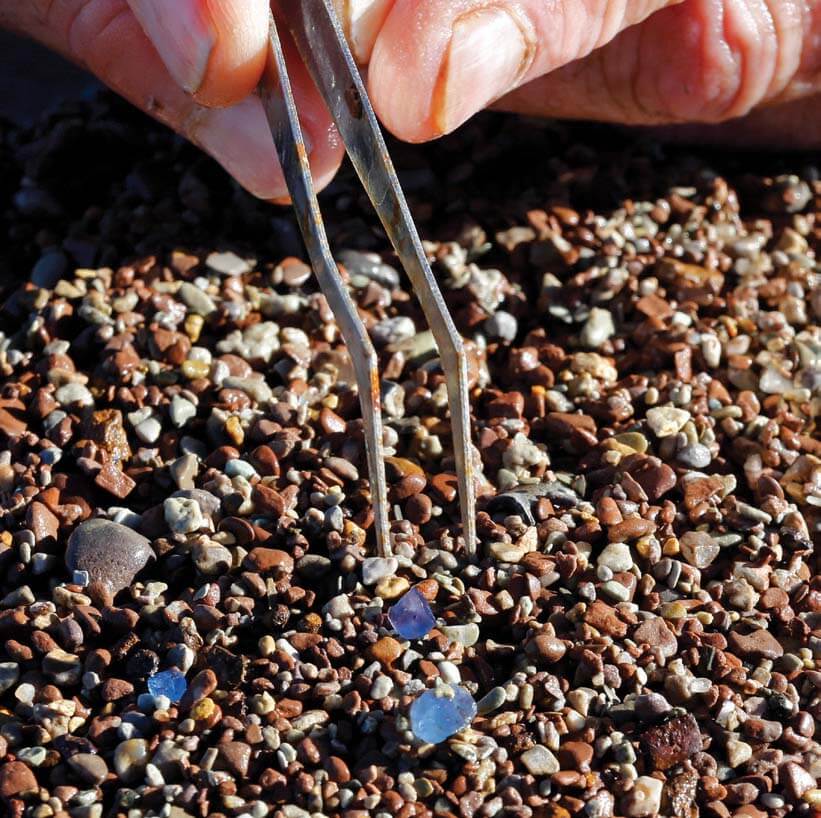
Most Yogo sapphires are small, but they compensate with unique color and clarity. | DENVER BRYAN
While Yogo Creek’s sapphires eventually became Montana’s best-known gemstones, they were not the first sapphires discovered in the state. In 1865, prospector Ed Collins found sapphires in gravel bars along the Missouri River and sent some to New York City and Amsterdam for evaluation. The verdict proved disappointing, as the gems were small and their color and clarity were poor. (Consider the “Four Cs” of gemstone evaluation: cut, color, clarity, and carats.) Sapphires found near Bozeman and Butte shortly thereafter demonstrated the same defects, creating a poor reputation for Montana sapphires. Yogo Creek specimens eventually proved the exception.
Today, most gem-quality sapphires come from overseas locations including Sri Lanka, Australia, and Southeast Asia. Nonetheless, those from the Little Belts maintain a high worldwide reputation for several reasons.
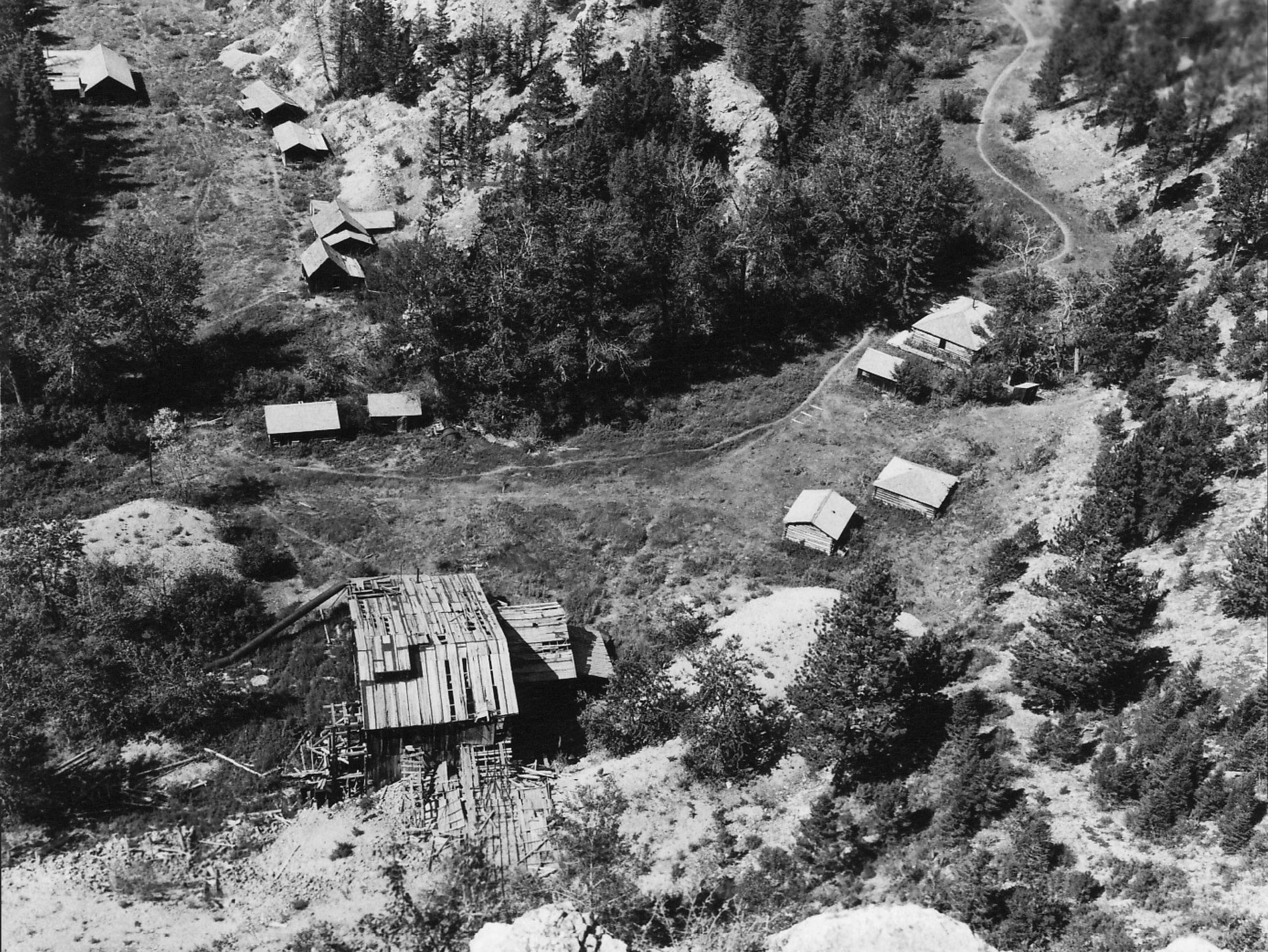
This vintage photo shows the original Yogo City mining town on upper Yogo Creek circa 1880. | LEWISTOWN PUBLIC LIBRARY
Sapphires are made of corundum, an exceptionally hard crystalline form of aluminum oxide. Rubies are composed of the same substance. Trace amounts of chromium make the latter gems red, while combinations of iron and titanium are responsible for sapphires’ variable shades of blue.
Although it’s not the first of the Four Cs, color plays a large role in determining the quality of a gemstone. Yogos are prized for their “cornflower” blue coloration. Named for its similarity to the cornflower blossom, this shade is lighter than the deep blue of royal sapphires and gathers light exceptionally well. The precise definition of cornflower blue seems somewhat arbitrary, but, like art, you know it when you see it. My wife, Lori, certainly has no trouble doing so, especially before her September birthday. Conveniently for her, given our proximity to Yogo Creek and friendship with its previous mine operator, sapphires are the September birthstone.
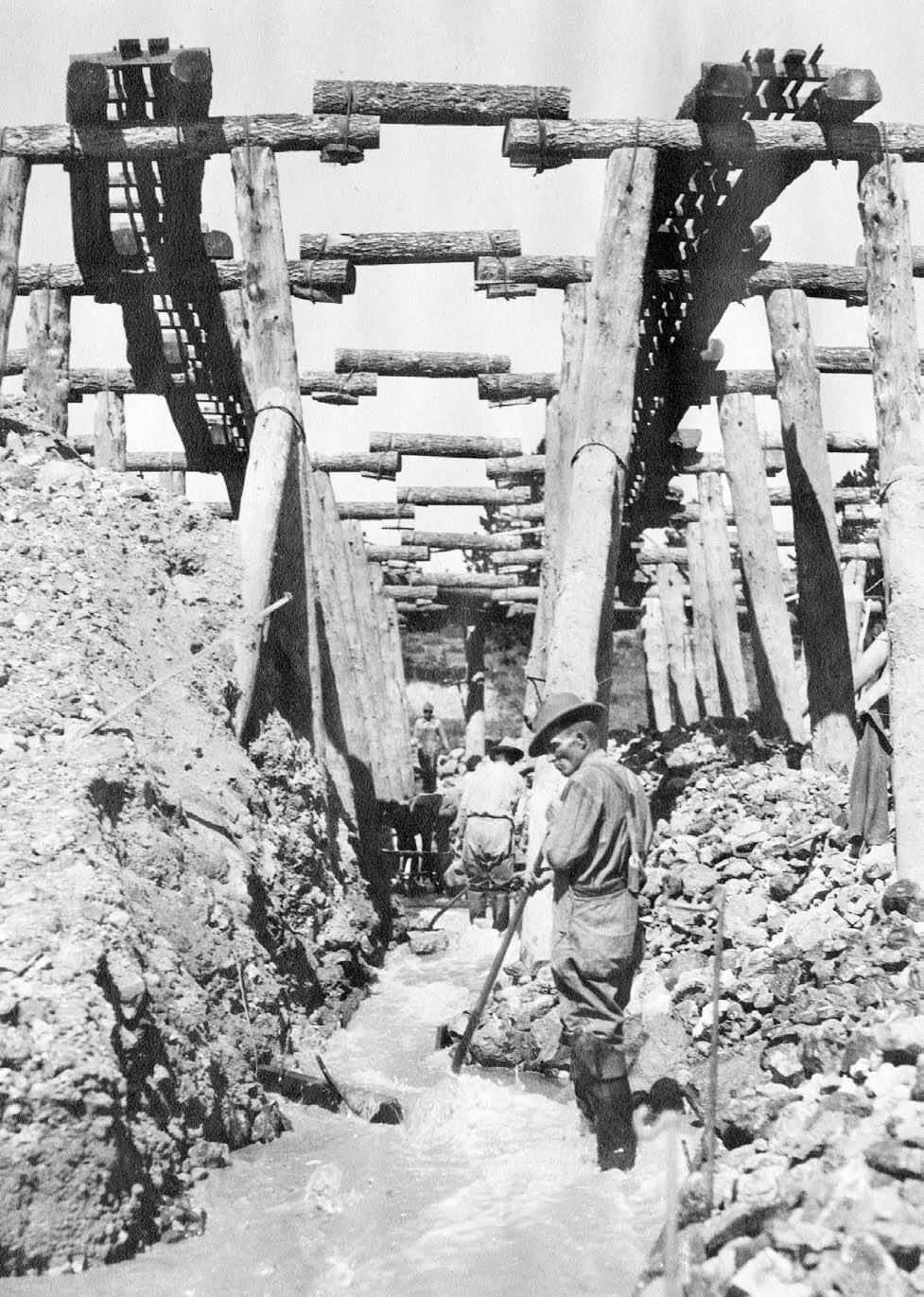
Superficial sluice mining occurred at the English Mine in the 1920s. | MONTANA HISTORICAL SOCIETY
Clarity — the third of the Four Cs — provides another clue to Yogos’ reputation. Most of the world’s sapphires come from shallow alluvial deposits and were formed under low pressure and temperature conditions, creating numerous inclusions and fractures. In contrast, Yogos were formed at high pressure and temperatures in deep igneous rock, conditions that eliminated many of those flaws and resulted in exceptional natural clarity. They also demonstrate a unique ability to retain their color and brilliance in artificial light, which most sapphires do not. I would love to be able to explain the optics of that phenomenon, but it’s above my pay grade. However, Yogos don’t require going outside on a subzero Montana day to show off a new sapphire engagement ring at its best.
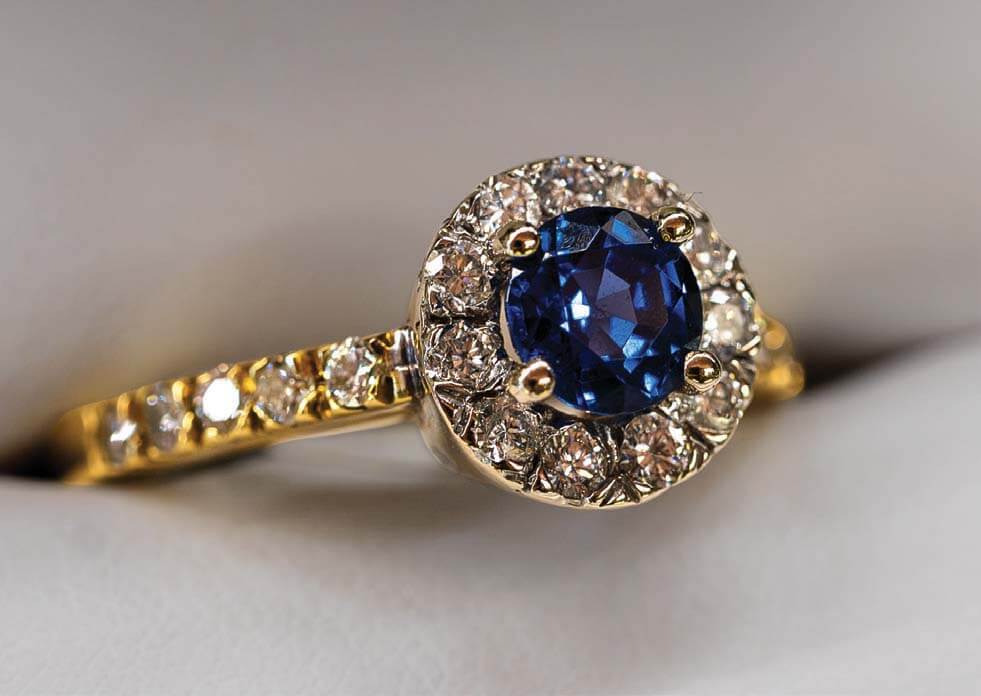
On display at Lewistown’s Moccasin Mountain Gallery, this .88 carat-total-weight sapphire demonstrates the Yogo’s ability to shine under artificial light. | DON AND LORI THOMAS
Fully appreciating those two qualities in a Yogo requires understanding one of the lapidary world’s family secrets. Jewelers have long known that clarity and color can be enhanced by exposing sapphires to high temperatures. During the 1970s, Thai gem cutters began heat-treating large quantities of low-grade sapphires from Sri Lanka. By 1980, over 90 percent of the world’s sapphires had been “cooked.” Yogo sapphires neither require nor benefit from heat treatment. In 1982, Intergem, the consortium mining Yogos at the time, began promoting theirs as some of the few “natural” sapphires on the world market, precipitating a long, bitter conflict within the gem world.
The other two of the Four Cs — cut and carats — don’t contribute as much to Yogos’ reputation. Found in 1910, the largest known Yogo was cut to a weight of 8.5 carats, but that specimen was exceptional. Most Yogos are small, weighing less than one carat (0.2 grams) and measuring less than 2 millimeters in diameter. Width and weight do not correlate precisely. Since sapphires are denser than diamonds, a cut diamond may look bigger than a sapphire of the same weight, the more important of the two measurements in determining value.
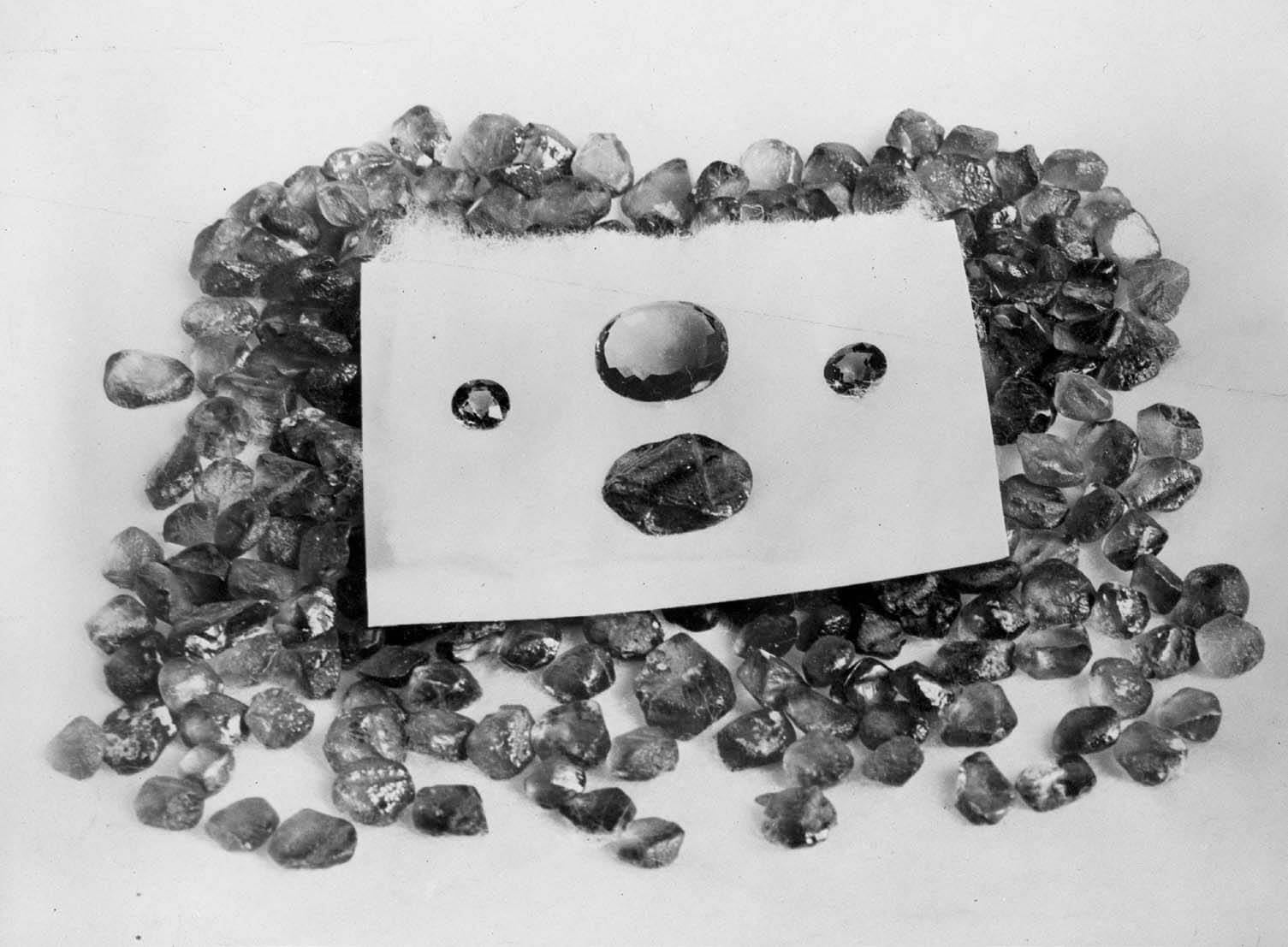
These rough sapphires must resemble the “blue pebbles” found in the early days before anyone recognized them as sapphires. | ARCHIVES & SPECIAL COLLECTIONS, MANSFIELD LIBRARY, UNIVERSITY OF MONTANA
I don’t have much to say about the final of the Four Cs, since the cutting process is the jeweler’s domain. However, for years, gem cutters have credited Yogos’ crystal structure and lack of inclusions for exceptional results in the cutting process. Today, the process of turning a Yogo into a gemstone has its own Montana flavor. While most rough sapphires are cut overseas, many Yogos are turned into finished gems by artisans here in Montana.
Serious efforts to mine Yogo sapphires began when a local rancher named Jake Hoover sent some specimens he’d found while mining gold on Yogo Creek to Tiffany’s in New York City for evaluation. There, gem authority George Kunz declared them “the finest precious gemstones ever found in the United States.” (Kunz also seems to have been the first to use the term “cornflower blue” to describe their color.) That opinion set in motion another long chapter in the West’s history of boom-and-bust mining operations. As usual, some people made money, more went broke, and at least one died.
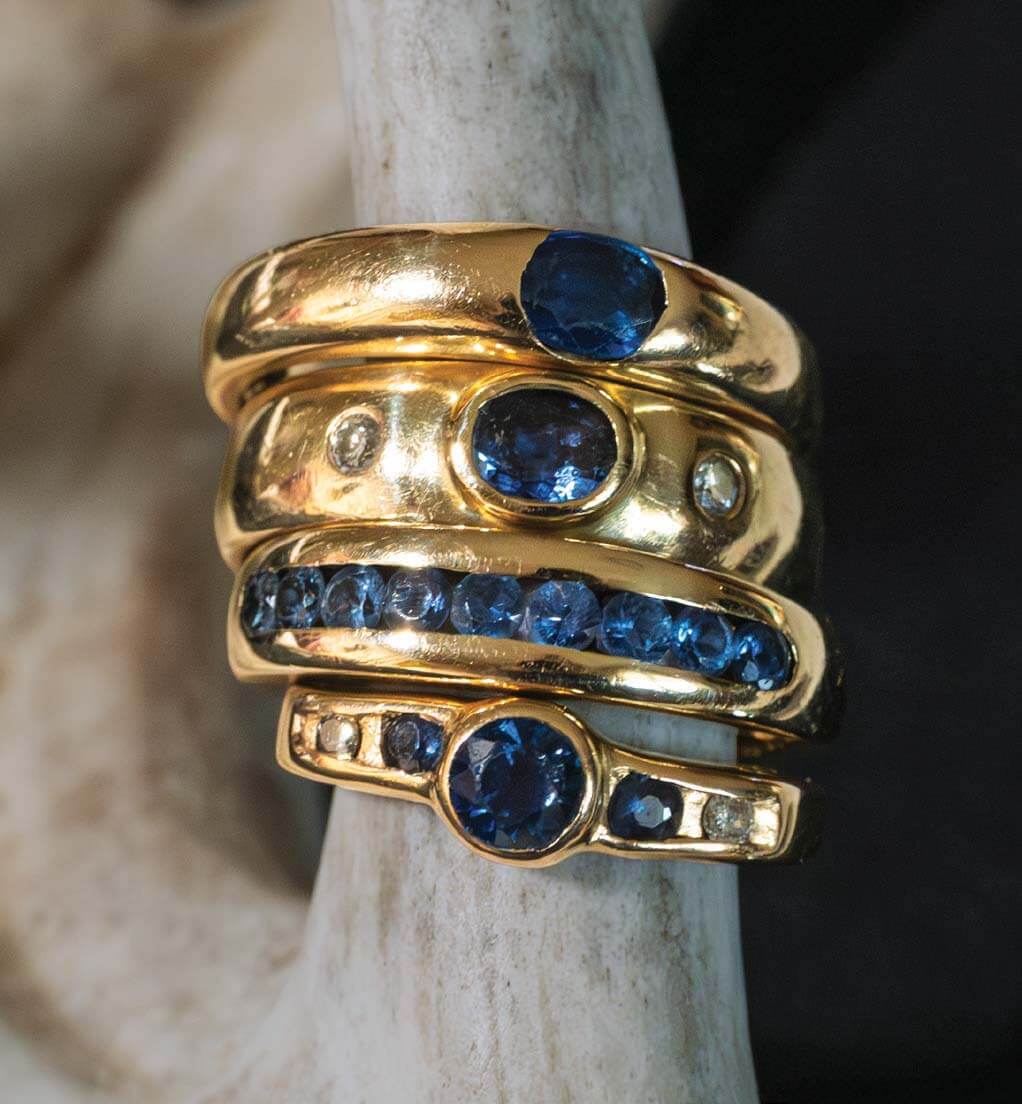
More joy has been bestowed upon Lori, courtesy of a September birthday and the right friend. | DON AND LORI THOMAS
As an interesting historical aside, in 1881, Hoover befriended a 16-year-old newcomer looking for a job. The kid’s name was Charlie Russell. Of course, Russell went on to become one of the West’s premier artists, demonstrating a remarkably keen eye for the nuances of frontier culture as it was disappearing all around him. After finding work as a wrangler, Russell remained in the area under Hoover’s wing until 1892, when he moved to Great Falls to concentrate on his art. His 1907 oil on canvas A Quiet Day in Utica (then, as now, the closest town to Yogo Creek) captures the spirit of the time and place better than words ever could. Both Hoover and Russell himself appear in the painting, which, sadly for Montanans, now resides in Texas and not the C.M. Russell Museum in Great Falls.
In 1896, a sheepherder named Jim Ettien found a sapphire east of Yogo Creek, allegedly in the diggings from a gopher hole. Aware of Kunz’s glowing report about the local sapphires’ quality, Hoover shrewdly bought mineral rights for the location. After assembling enough investors to fund the project, most of them British, the New Mine Sapphire Syndicate began work on what became known as the English Mine. The operation ran profitably from 1899 to 1920, when severe flooding shut it down. While records suggest that the English Mine had produced 13 million carats of rough sapphires by then, yield and profitability plummeted thereafter.
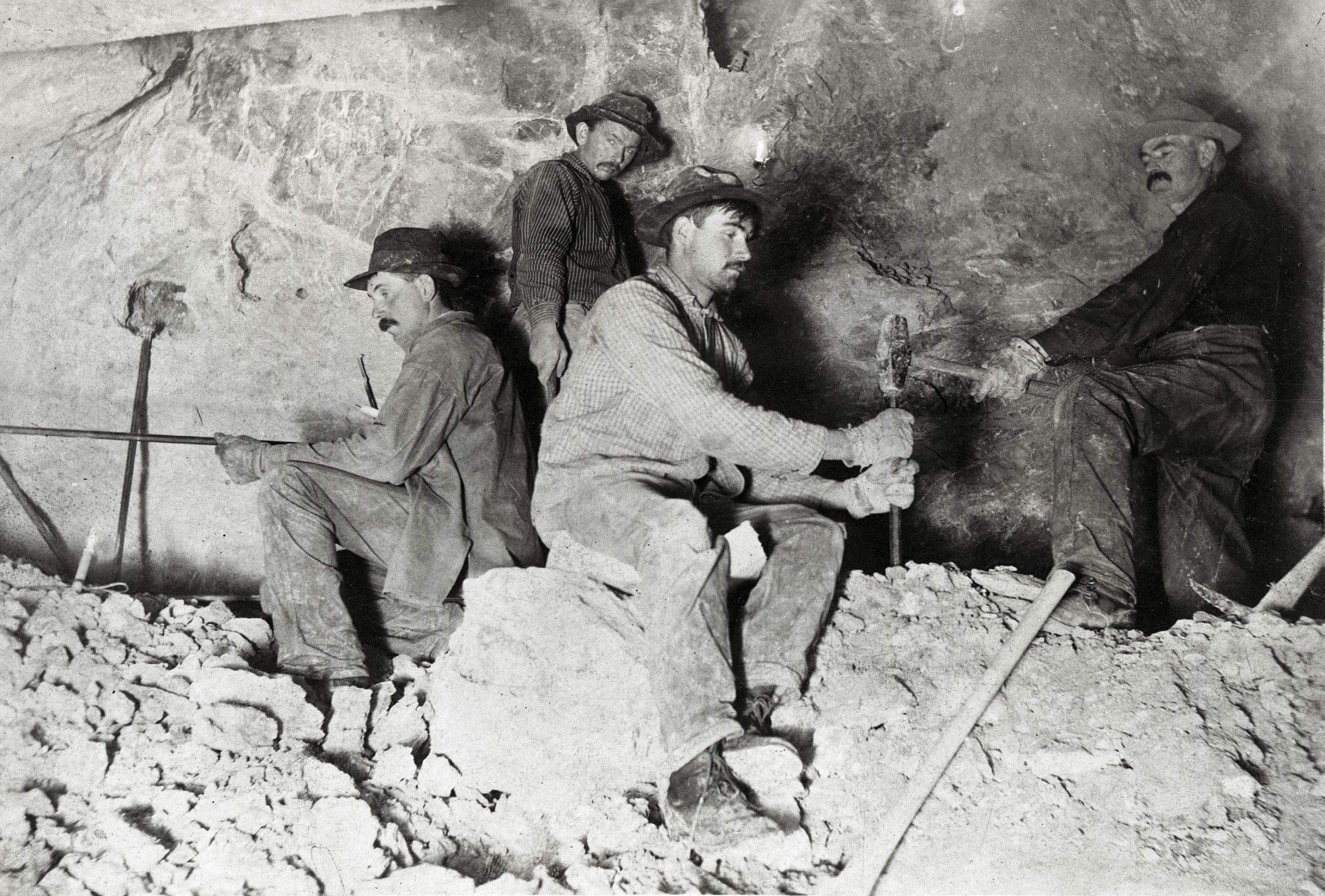
While Yogos’ origins in deep rock created unique qualities that set them apart from other sapphires, those attributes came at a price. In contrast to the superficial alluvial deposits from which most sapphires came, mining Yogos on a commercial scale eventually proved to be dark, dirty, and dangerous work.
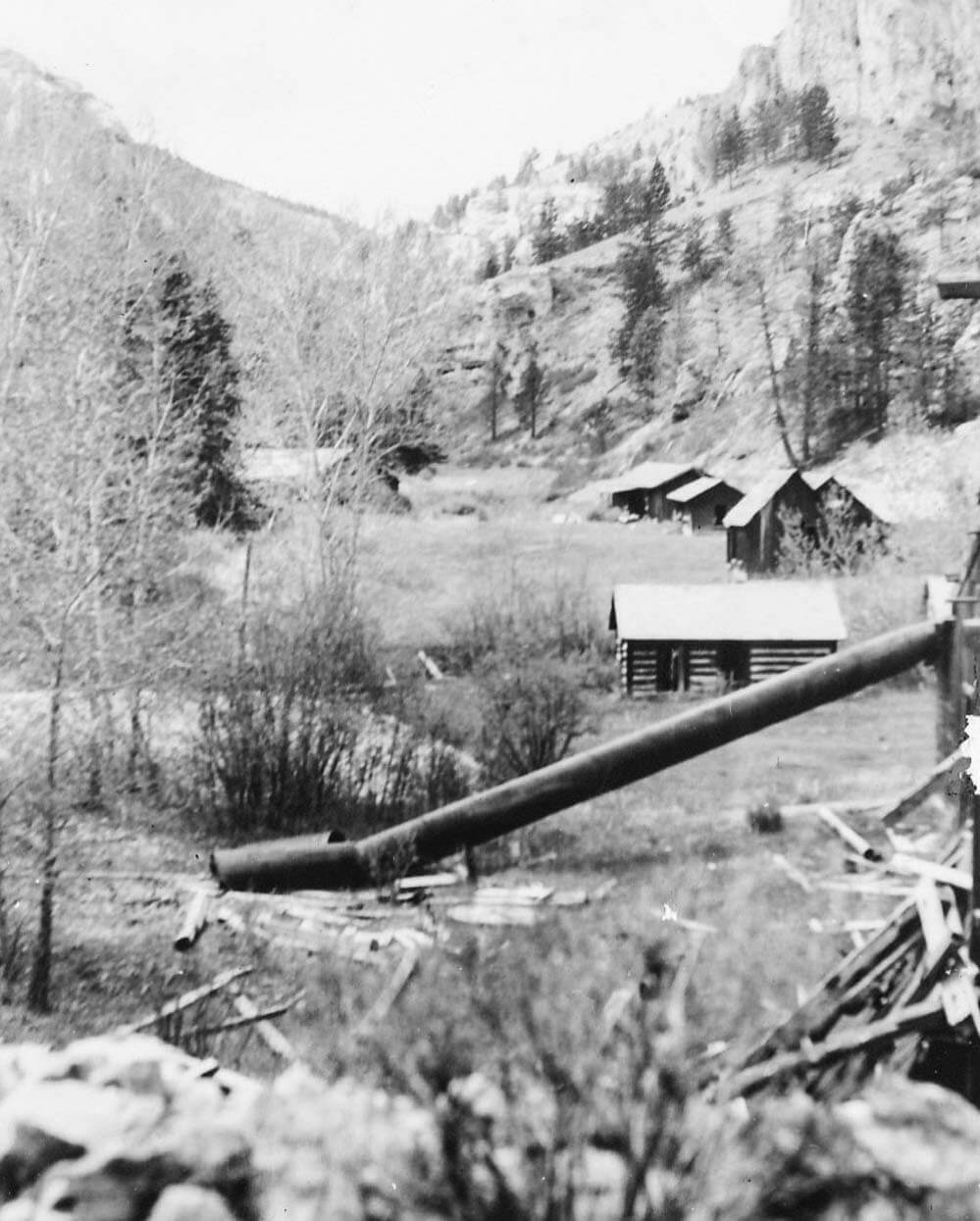
In the 1800s, this mining camp on upper Yogo Creek qualified as a “city.” Nothing remains of it today. | LEWISTOWN PUBLIC LIBRARY
The gems lay in what became known as the Yogo Dike, first identified by sheepherder Ettien. A complex series of connected formations, the dike is composed of an unusual igneous rock called lamprophyre that intruded under pressure into seams in the surrounding limestone bedrock. Initially, the English Mine recovered sapphires near the surface by high-pressure sluicing. Once the easy pickings were exhausted, miners who arrived after the English Mine flooded had to bore deep to reach the main Yogo Dike downstream from what was once Yogo City. This required all the complexities, risks, and expense of deep hard-rock mining, much of which exceeded the resources and expertise of the groups that tried to do so profitably.
Mine ownership passed through multiple investment groups over the next century. At least 13 American-owned syndicates tried and failed to keep it economically viable. I suspect that many of these efforts were driven more by the allure of the elusive Eureka! moment than by sound business analysis. These failures didn’t reflect the quality of the sapphires, which remained widely respected despite their small size. The challenge was extracting them. The costs of mining the Yogo Dike were not just monetary.
In 1984, Lanny Perry and Chuck Ridgeway, both third-generation members of local ranch families, stumbled upon some promising rock in a part of the Yogo Creek drainage that had not been mined before. By the following year, they were at work on the small but productive (and still successful) Vortex Mine.
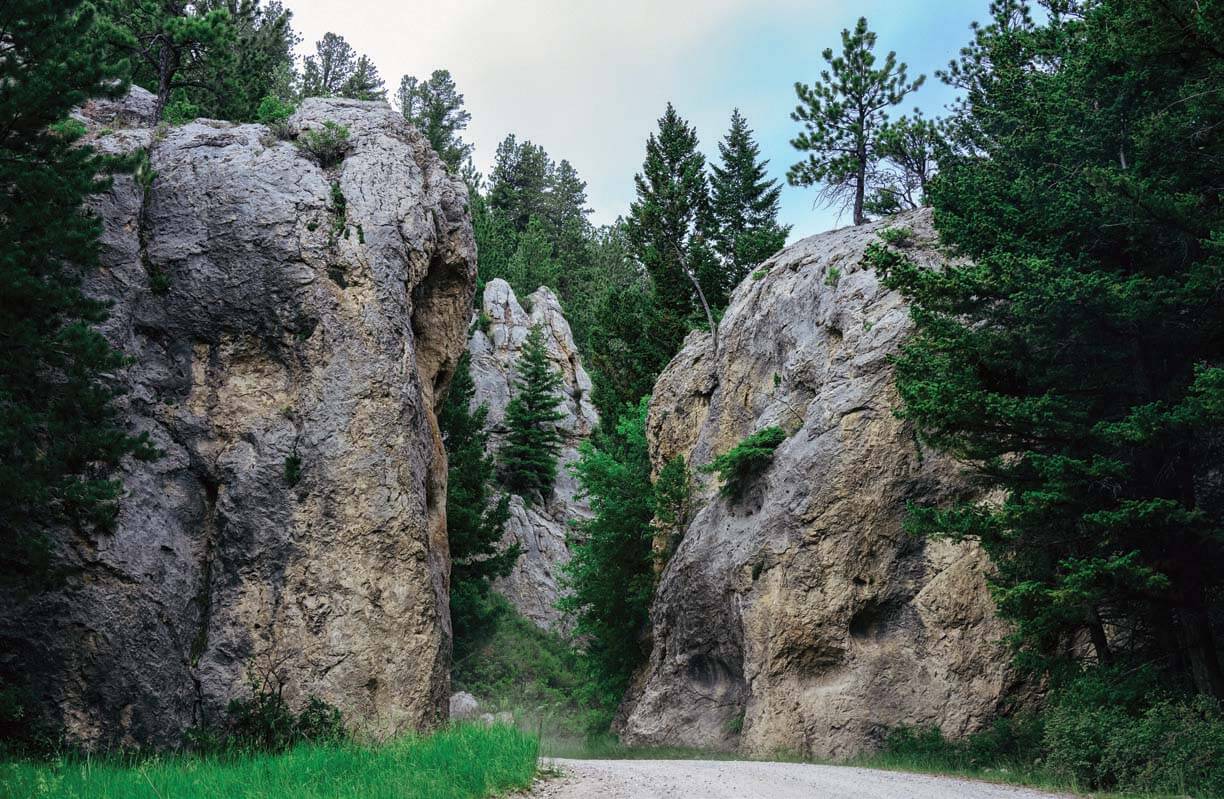
Now known as Tollgate Hill, this tight approach through limestone cliffs leads from the Judith River Wildlife Management Area to today’s Vortex Mine. | DON AND LORI THOMAS
A new owner, Mike Roberts, purchased the Vortex Mine in 2008. He quickly blended into the local community and earned a reputation as a hard worker, routinely spending 15-hour days underground and often working alone. On the night of March 19, 2012, he sent out a distress call but was unresponsive when rescuers arrived and found him partially buried under a pile of fallen rock. He was declared dead at the scene. The investigation by the federal Mining Safety and Health Administration found nothing amiss other than failure to adequately stabilize overhead rock, which doesn’t seem particularly helpful. Roberts was mourned by the community and is still missed by all who knew him.
Today, not all Yogo sapphires require a harrowing plunge into the depths of the earth to retrieve. (Full disclosure: Because of severe claustrophobia, I have declined several invitations to make the descent into the Vortex Mine.) In 1968, Roncor, the corporation running the mine at the time, subdivided a parcel of land overlying old mine tailings and granted buyers rights to mine their lots as long as they used no mechanical equipment. The result was Sapphire Village, a cluster of trailers and cabins at the intersection of the South Fork and Yogo Creek roads south of Utica. For over 50 years, the rockhounds and hobby miners who own those lots have dug through countless tons of dirt with pick and shovel in search of sapphires. Despite the high ratio of work to reward, they do find some. Living in nearby Lewistown, I know many proud owners of jewelry made from Sapphire Village gems.
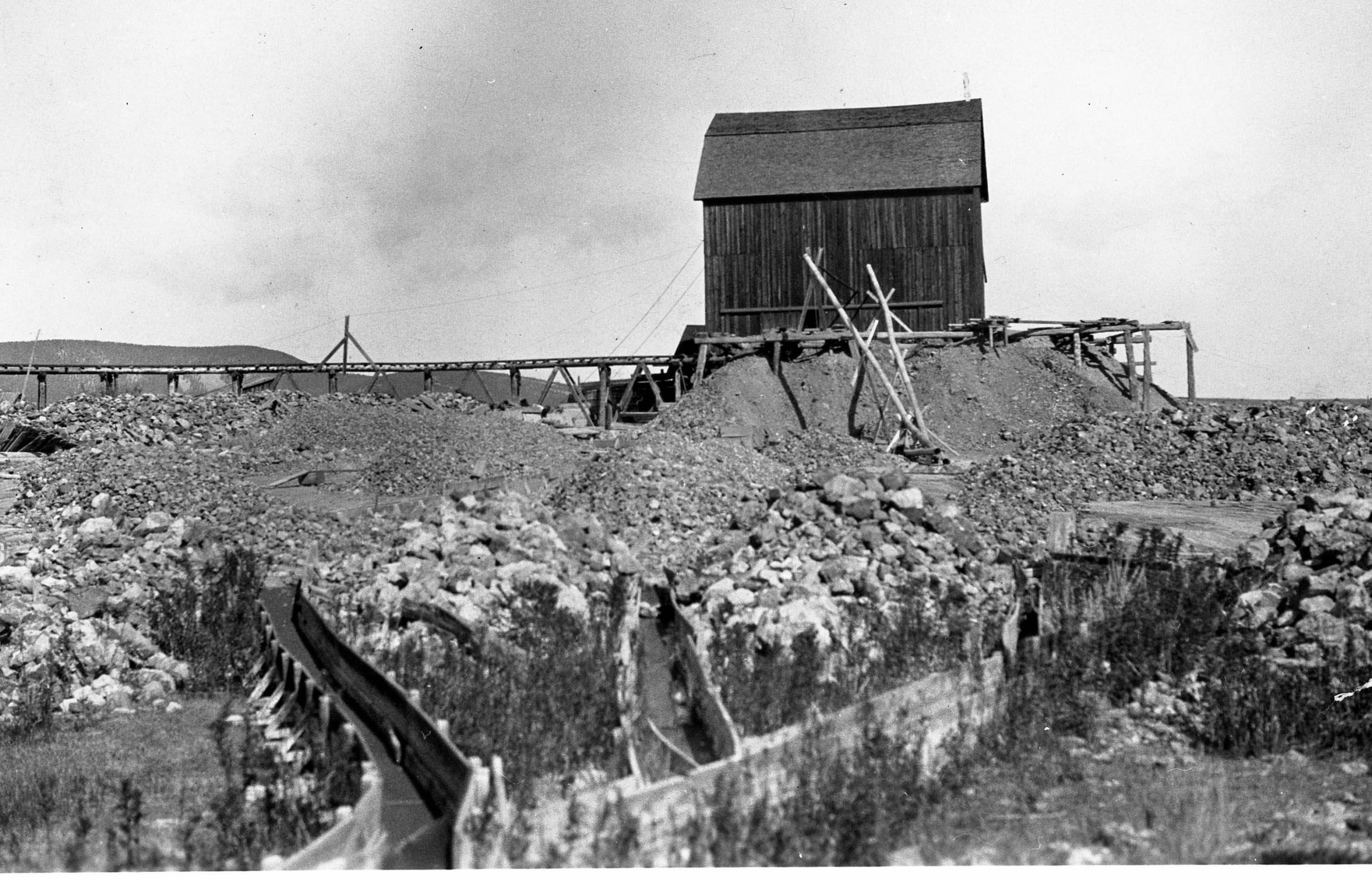
Once operated by British investors as the New Mine Sapphire Syndicate, the English Mine went bust after extensive flooding in 1920, leaving it one of many Yogo sapphire ventures to fail. | ARCHIVES & SPECIAL COLLECTIONS, MANSFIELD LIBRARY, UNIVERSITY OF MONTANA
Underground hard-rock miners understand the risks Roberts took and accept them, as do others engaged in exciting but dangerous work like bush flying or commercial fishing in the North Pacific. During the wandering course of my own life, I’ve participated in two of those activities and had friends in all three. Despite the risks and often low financial returns, it is my impression that pilots, miners, and commercial fishermen enjoy some of the highest job satisfaction ratings of any workers I know. I won’t attempt to explain why.
In 1969, Yogo sapphires became one of Montana’s two official state gemstones. (Agate is the second.) More of us should appreciate their story. They come out of the ground here in Montana and most are made into jewelry here in Montana. What could make a more appropriate article of jewelry to wear in the Treasure State?
A central Montana resident since 1973, E. Donnall Thomas Jr. has been everything from a physician to a bear hunting guide in Alaska. He writes about the outdoors for numerous publications and lives in Lewistown, Montana with his wife, Lori, and their bird dogs.
No Comments