


25 Sep Outside: Newbie at Elk Camp
“We need to move quickly,” my husband, Jack, urged, tethering our horses to the trunk of a fir tree as the dawn’s golden fingers grasped the darkness. “Take only your gun and a small pack. We’ve got a stiff climb.”
Jack and I sprinted up a steep grade in a race against the sun. My heart pounded in my ears and sweat streamed under my camo. Through the silhouetted trees, I sensed an elongated meadow to our left, the legendary bull pasture, so nicknamed because many hunters in Jack’s family had harvested large elk from this remote opening in the montane. At sunrise, emboldened wapiti often emerged from the timber to graze the bull pasture’s wild grasses and forbs.
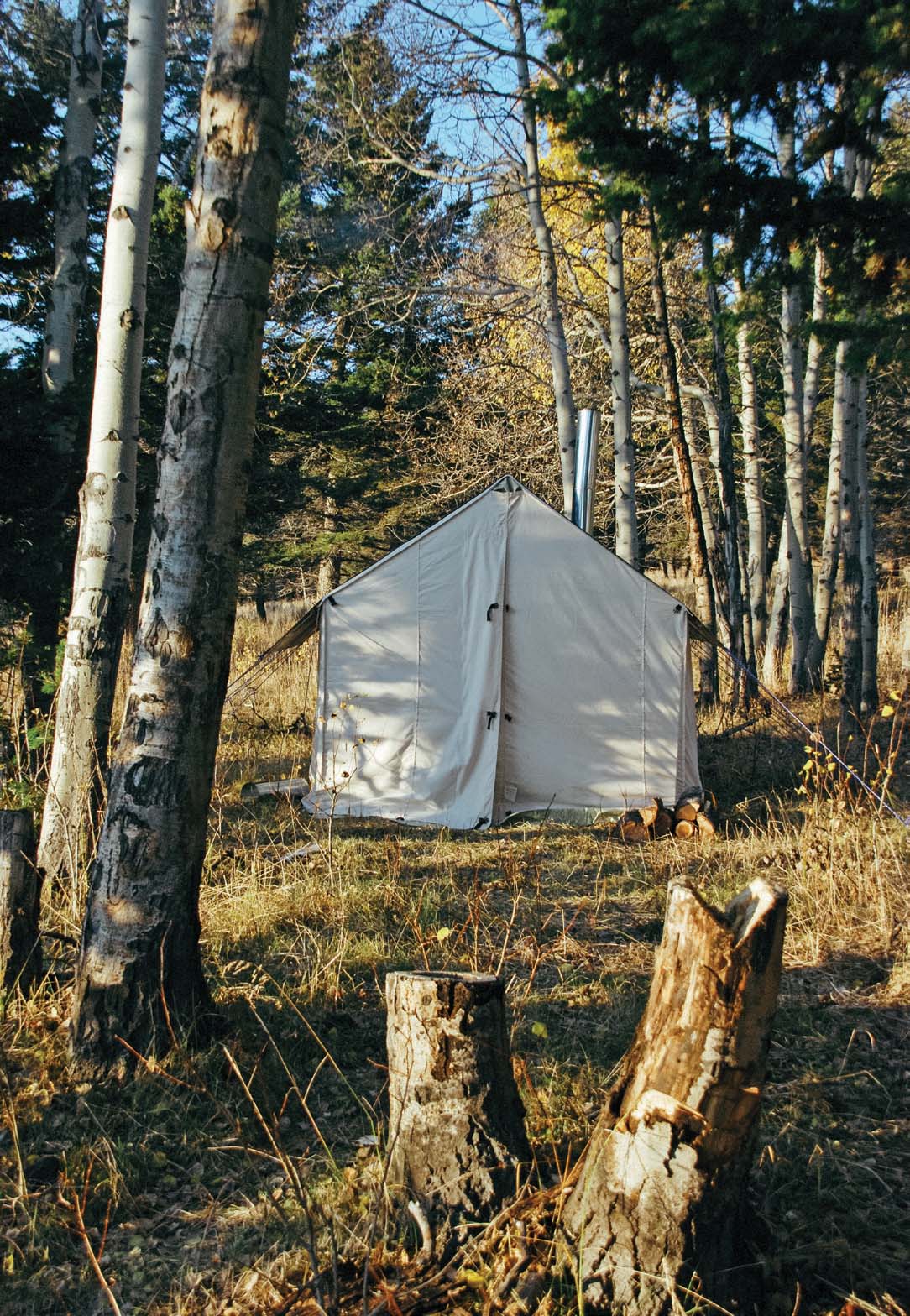
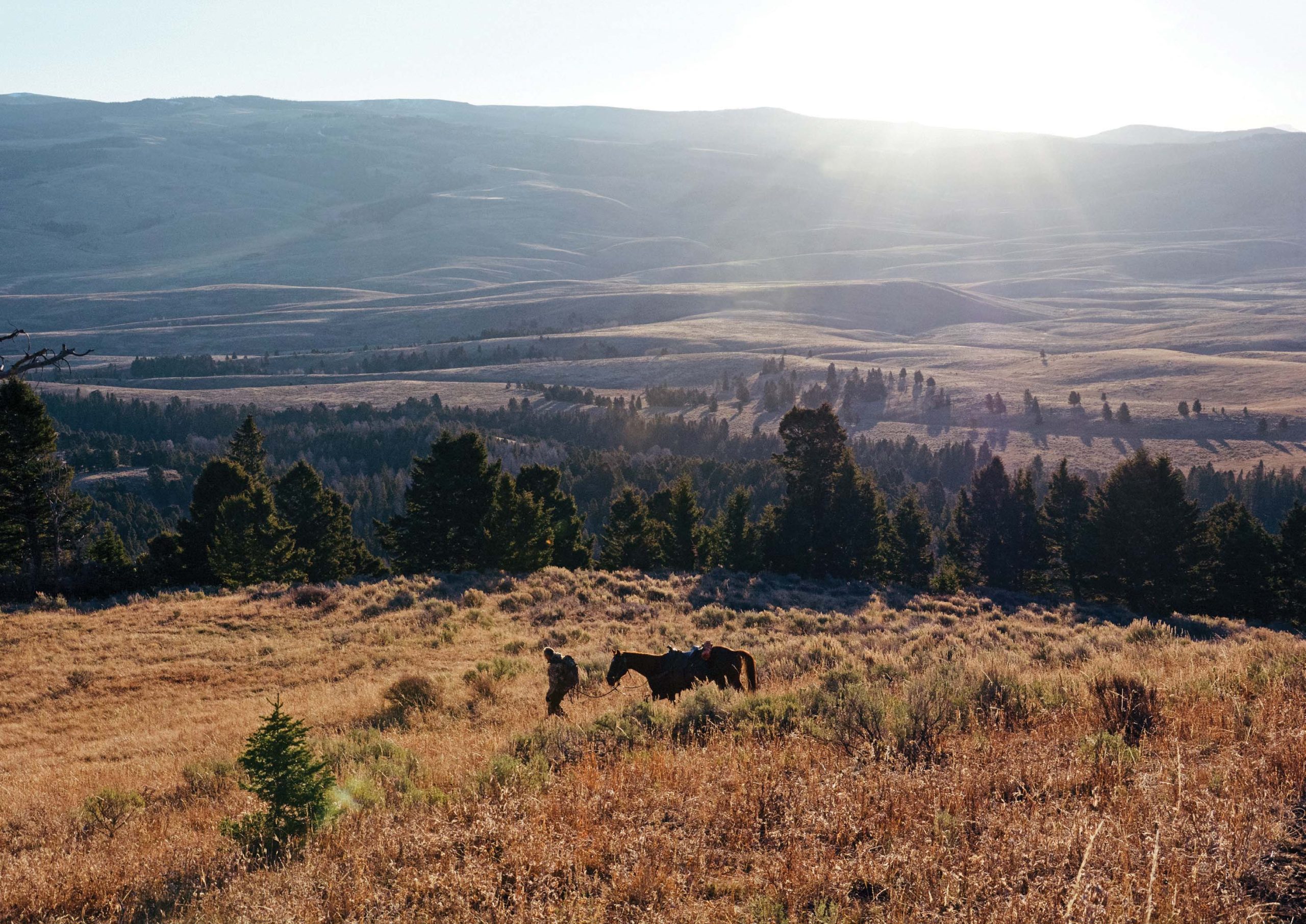
A hunter leads his horse across one of the larger meadows above the Ballards’ elk camp in Montana’s Snowcrest Mountains. • Everyone at elk camp sleeps in a wall tent. This is one of the smaller abodes, tucked in among golden aspens.
We veered into the park at its highest point, then cautiously traversed toward the other side. About halfway across the clearing, we stopped and sat, scanning the meadow for elk as the day brightened. An hour passed, then another without a hint of elk. I glanced at my watch. It was 10 a.m. I had already been up for seven hours. My concentration waning, I leaned back against the hillside and unwittingly dozed off.
“Elk!” Jack said in an urgent whisper, poking my thigh. “Shoot!”
Flustered, I quickly sat up, saw a cow elk walking below us, and shouldered my rifle, but I was too slow. She disappeared below a shallow ridge in the near-vertical meadow. As an elk hunting newbie, I needed another second or two.
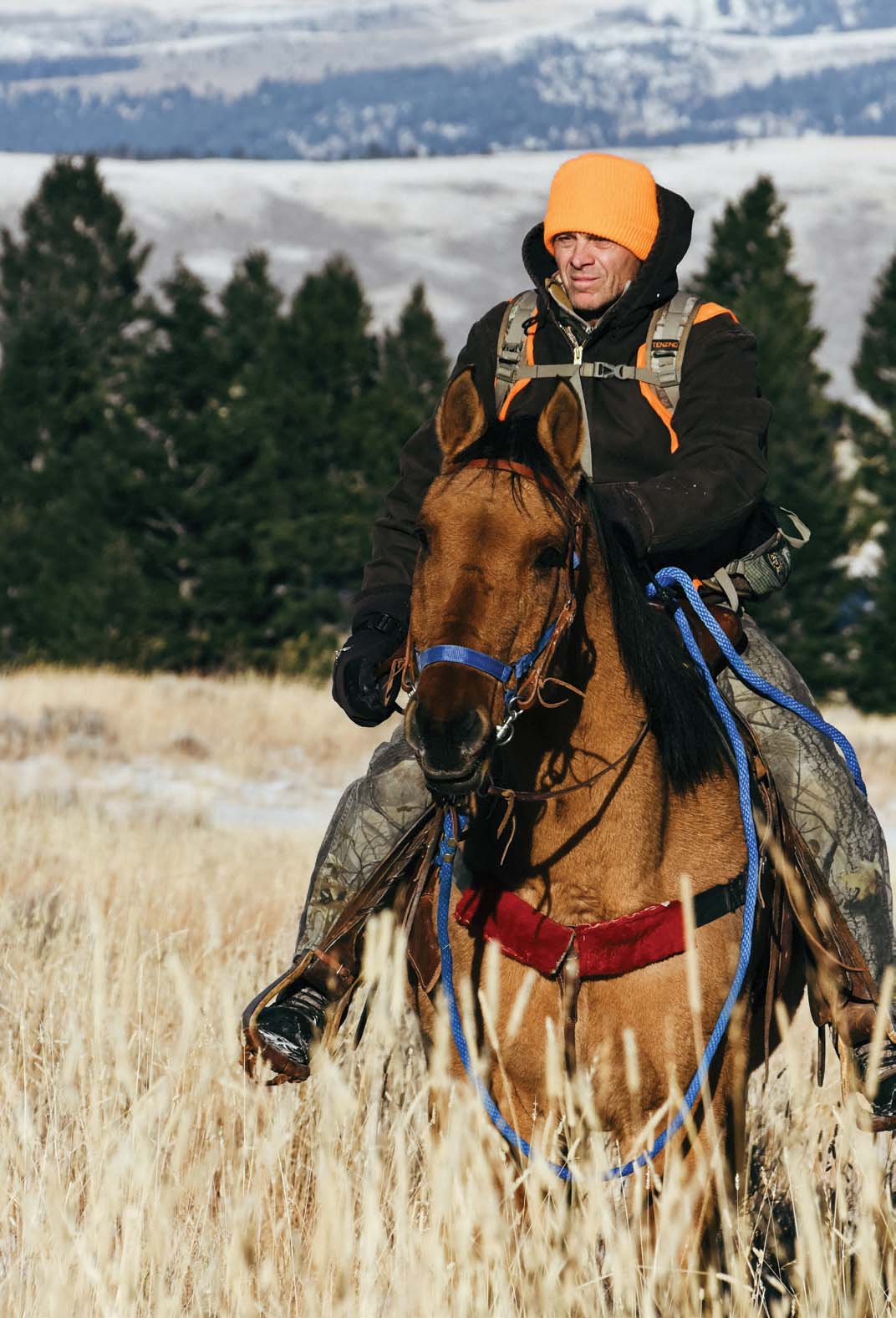
Jack Ballard heads into the high country on horseback. If he shoots an elk, the meat gets packed out on the horse and he has a long but happy walk.
“By the trees,” Jack said, pointing to a small opening in the timber about 50 yards to our right.
Another cow approached the edge of the meadow, intending to follow the first one. I pulled the trigger as she paused, deciding whether to retreat back into the bushes or continue into the open.
“Nice shot!” Jack exclaimed, giving me a warm hug.
My eyes welled with tears as the adrenaline subsided and a sense of happiness and relief overwhelmed me. Harvesting an elk in the wind-swept Snowcrest Mountains in southwestern Montana had not been a gimme. I had awoken in the wee hours, tripped over logs, scratched my face, banged my shins, and frozen my fingers and toes for multiple days, then, finally, sweet success.
A longtime upland and waterfowl hunter, I moved to Montana in 2011 when Jack, an avid big-game hunter, asked me to marry him. He welcomed me into his family’s elk-hunting culture, but others were less happy about it.
Over 60 years ago, Jack’s father and two uncles began hunting each fall in the Snowcrests, camping in wall tents and using horses to go deep into the backcountry to find elk. The hunting was challenging due to the untamed terrain and unpredictable weather, but the wall tents were cozy, heated by woodstoves. We slept on cots in fleece-lined sleeping bags with real pillows under our heads. We filled our bellies and played cribbage each evening until our eyelids drooped so low we couldn’t tell an ace from a deuce. Those were time-honored elk camp traditions, but women in the camp were not.
What’s more, Jack’s 85-year-old uncle, Tom, who started elk camp with Jack’s father, was returning for the first time in a decade. He made it clear before he arrived that elk camp was no place for women. I arrived feeling like an interloper. Maybe if I brought an elk back to camp, Tom would be more accepting of my presence.
We found the downed cow about 20 yards from the edge of the meadow. Jack lit a small campfire to keep us warm, then got to work field dressing and quartering my prize.
“Want a hot dog?” he asked, slicing off a piece of the tenderloin. He ran a stick through it, then roasted it over the fire like a marshmallow. It was delicious: tender and mild with just a hint of a wild flavor.
Then, he sliced off another thin slab, but instead of cooking it, he took a bite of the raw meat. “How about some elk sushi?” he offered.
This time I wasn’t so sure, but I tried a corner of it to please him. It was even better than the hot dog, on par with the finest steak tartare. We ate more sushi until we couldn’t stuff another morsel into our mouths.
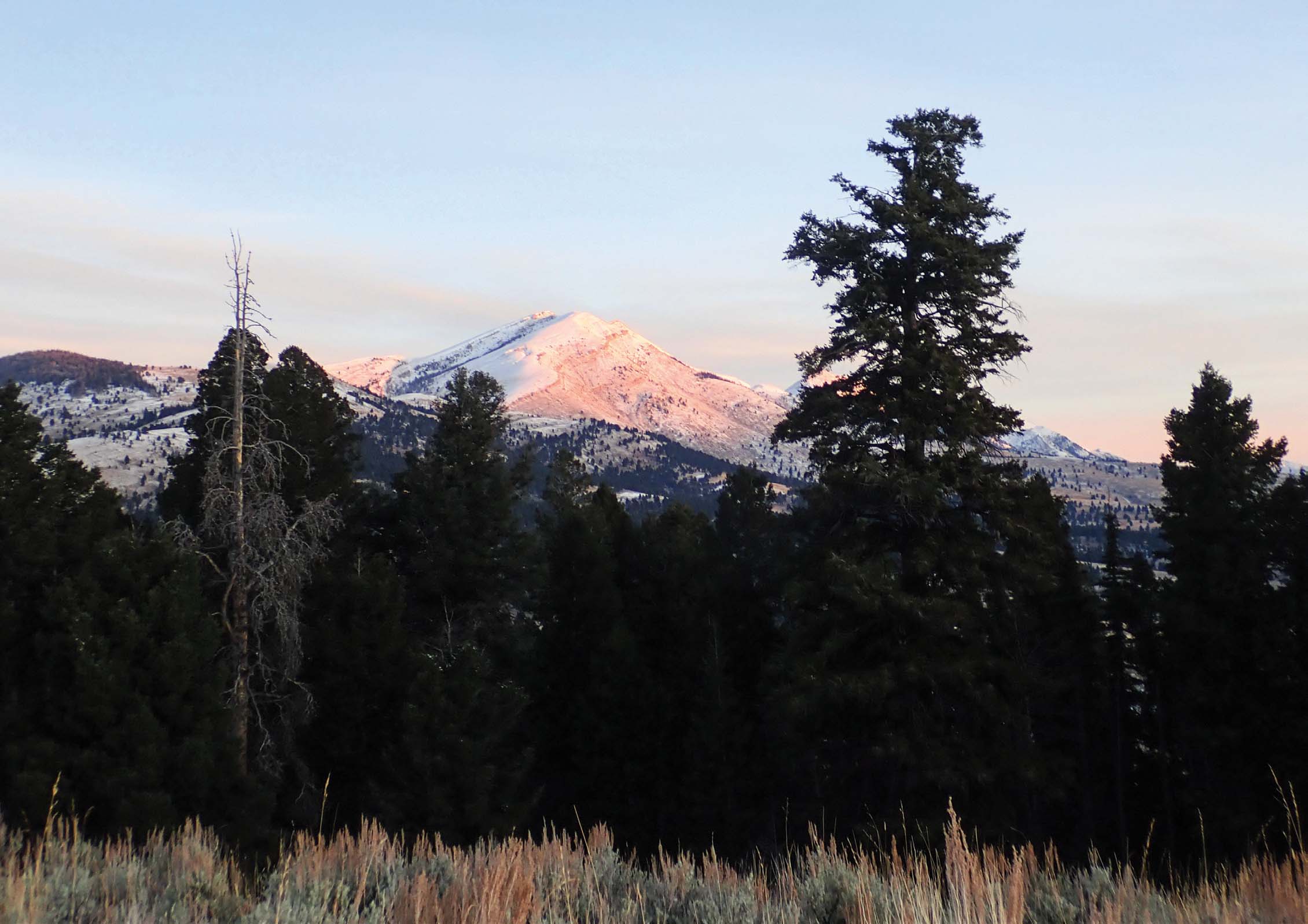
Elk hunting is as much about immersion in Montana’s rugged wildlands as it is the challenge of the harvest. Some inspirational views, like this one of Slide Rock Mountain, are only possible deep in the backcountry.
“Elk sushi is much tastier than a granola bar,” I said, chuckling.
We placed the rest of the tenderloin and other meat into muslin game bags, which we hoisted atop several stumps to get them off the ground and away from the rest of the carcass. An hour later, we returned with the horses.
“I’ve got some bad news,” Jack announced. “I forgot the saddle panniers. I don’t have much rope either.” In his hand he held two 8-inch strands of nylon rope, each less than a quarter-inch thick. How were we going to get 400 pounds of meat back to camp?
Jack, who had grown up on a farm near Three Forks, Montana, was ever the resourceful rancher. He took out his knife and cut a couple of leather laces off the saddle strings, then used the laces to tie the game bags to the saddle horn. Next, he cut a few lengths of nylon strap off his backpack to secure the meat to the sides of the saddle. The muslin bags strained under the weight of the meat, but if we were lucky, they would last long enough to return to camp.
They did. A couple of hours later, we arrived at the wall tents. Tom emerged from a tent to get the full story, which Jack told, thankfully leaving out my falling asleep. I stood proudly by the game bags, wondering how Tom would react. I had shot an elk, but it was a cow, not a bull. Maybe he considered shooting a cow a waste of a tag.
“Congratulations!” he said with a smile, giving me a hug. “First elk of the camp!” And first elk of my life. From that moment on, I felt part of the camp. After six decades, elk camp had become part of the fabric of Jack’s family, and I was now part of it.
Over the next few years, when Jack’s two sons and daughter each turned 12 years old (the youngest age for a standard hunting license in Montana), they came to elk camp for the first time, a tradition that started when Jack, his brothers, and several cousins were young hunters. The newbies helped set up camp, cared for and rode the horses, learned to track elk in the high country, and then enjoyed a hearty dinner and cribbage each evening, just as I had also done as a newbie. Sometimes one of them shot an elk.
Each kid eagerly looked forward to their first opportunity to go to elk camp. They had heard countless stories about it, and though they didn’t call it that, it was the family’s rite of passage and an experience they each seemed to cherish. Yet oddly, they didn’t return after the first or second year.
At first, they were busy with school and fall sports, then they were in college or had jobs, but so did the generations before them. It’s not that they weren’t interested; they just didn’t make the time for it. “Next year” became the standard reply to the annual invitation.
At some point, we will need stronger backs to set up the camp. More importantly, if the camp is to continue after we can no longer do it, our kids, who are now adults, need to learn about the ways of the elk and the rugged terrain that those regal animals inhabit, not only for their safety and success as hunters, but also for the wapiti. Without seeing the dawn break over the bull pasture, will they cherish the mountains and the wildlife?
In the meantime, Jack and I will be back. After all, it’s our family tradition.
Lisa Ballard is a writer, photographer, and professional skier from Red Lodge, Montana. She is the author of 13 books and hundreds of articles over her 35-year media career. In 2024, the Outdoor Writers Association of America honored Ballard with its prestigious Joan Wulff Enduring Excellence Award; lisaballardoutdoors.com.
No Comments