


25 Sep Local Knowledge: Rooted in Food, Home, and Healing
Before I even get to the front door, I’m surrounded by creatures: a couple of farm dogs, one of them definitely smiling, and a Great Pyrenees, both eager to be petted. There are chickens milling about, and I see red Scottish Highland cattle and some fuzzy Icelandic sheep just beyond the garden. The sound of a turkey gobbling blends with summer birdsong. Mackenzie Fink’s almost-4-year-old daughter greets me at the threshold with two tiny kittens: one black, the other Siamese. She offers me the black one.
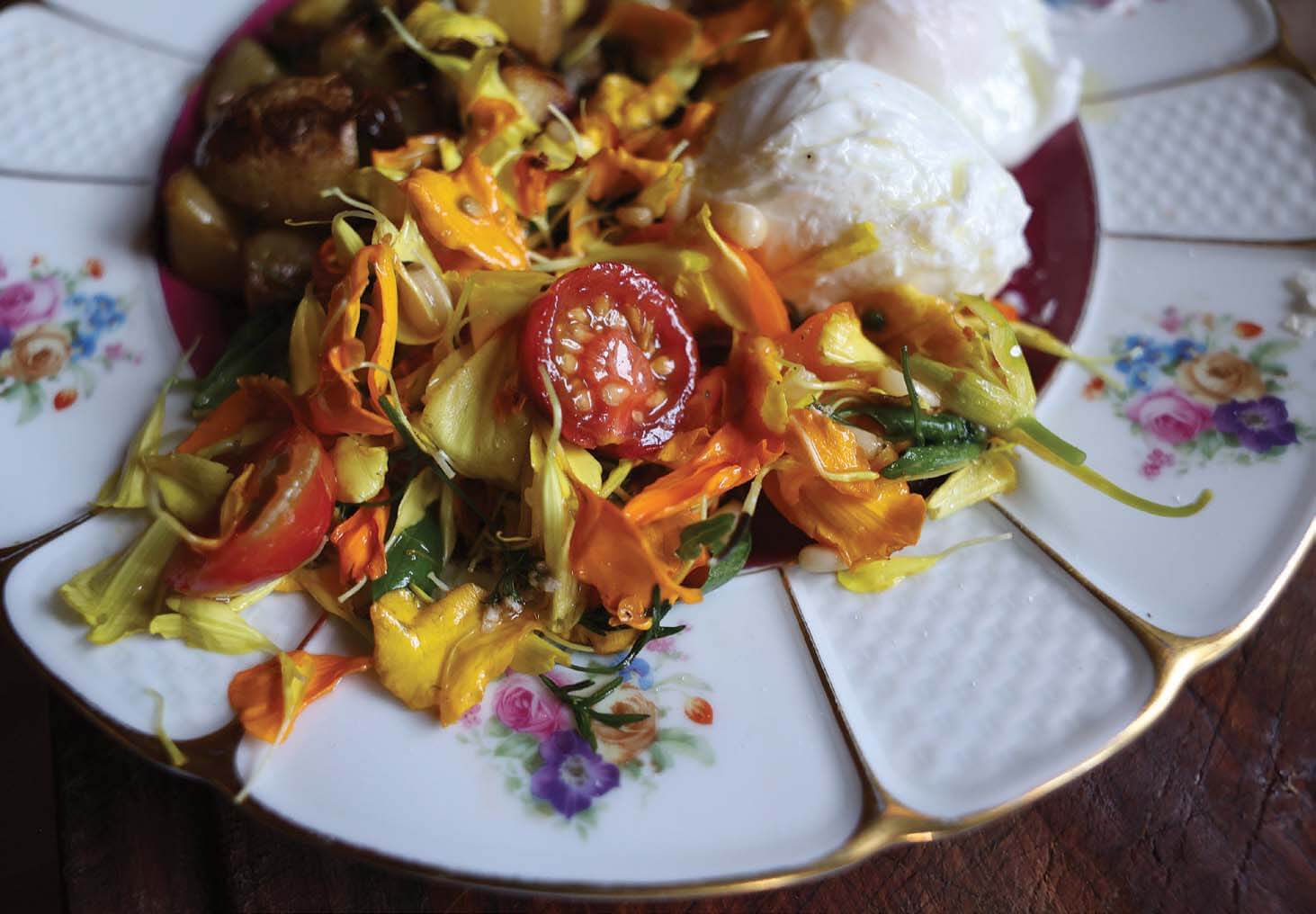
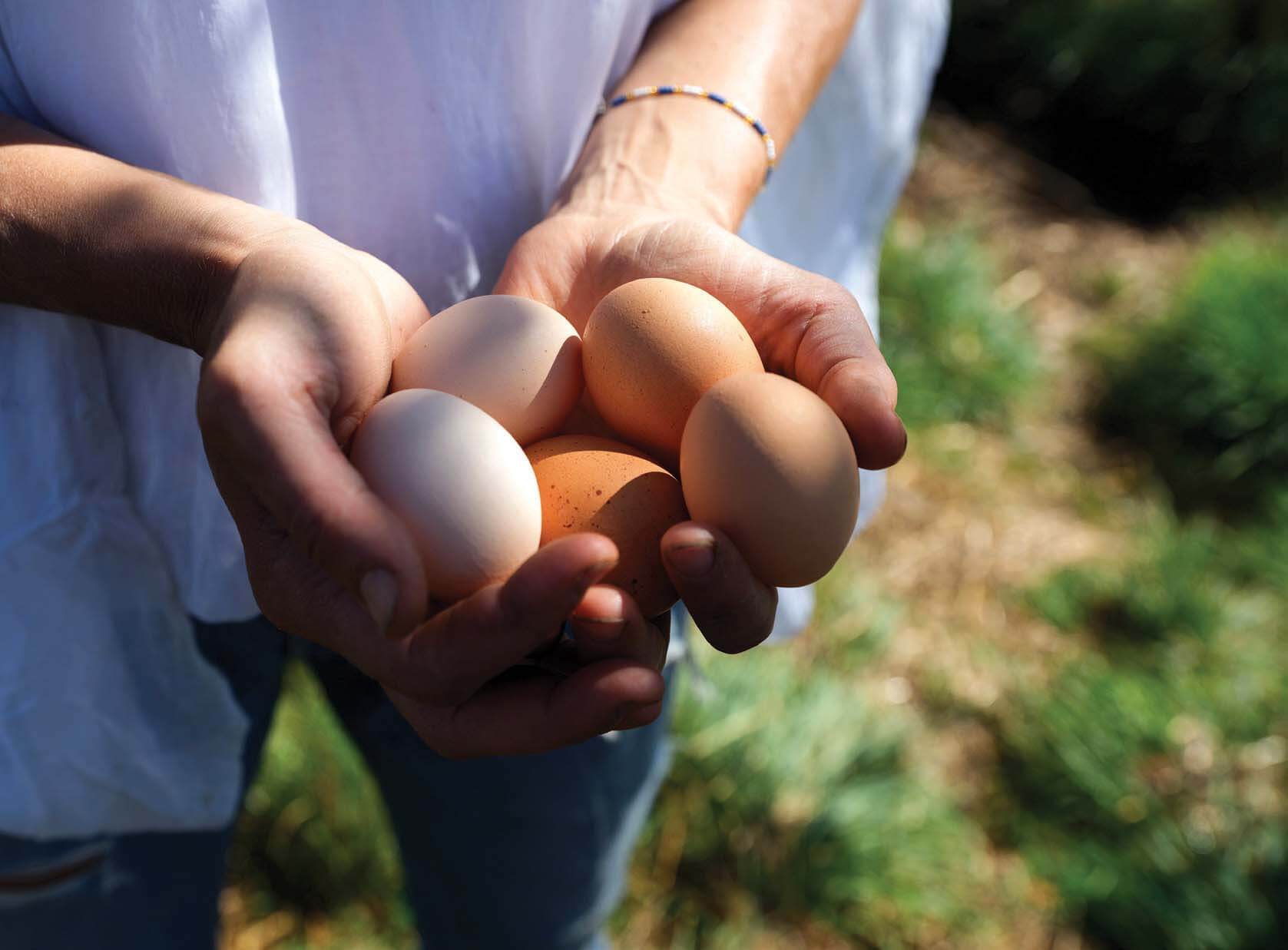
Fink’s home cooking is as fresh and colorful as it is delicious and healthy. This meal includes eggs, potatoes, and marigold salad raised on her homestead and is in alignment with her Simple Feast recipe featured in her new cookbook.
“It’s a lot of life,” Fink says as she welcomes me into her kitchen, the obvious heart of her home. She’s cutting golden beets, drizzling them with oil, and sliding them into the oven. There are eggs poaching on the stovetop, and the smell of coffee cuts through a sweet earthy scent, maybe from the pile of fresh green herbs on her countertop or the lamb slow-roasting in the oven. A mound of candles on the countertop looks almost geological. There are three young girls catching kittens in the next room, passing them around, cooing. Everyone is barefoot.
Fink describes the family’s southwest Montana homestead as the cornerstone of all their work.
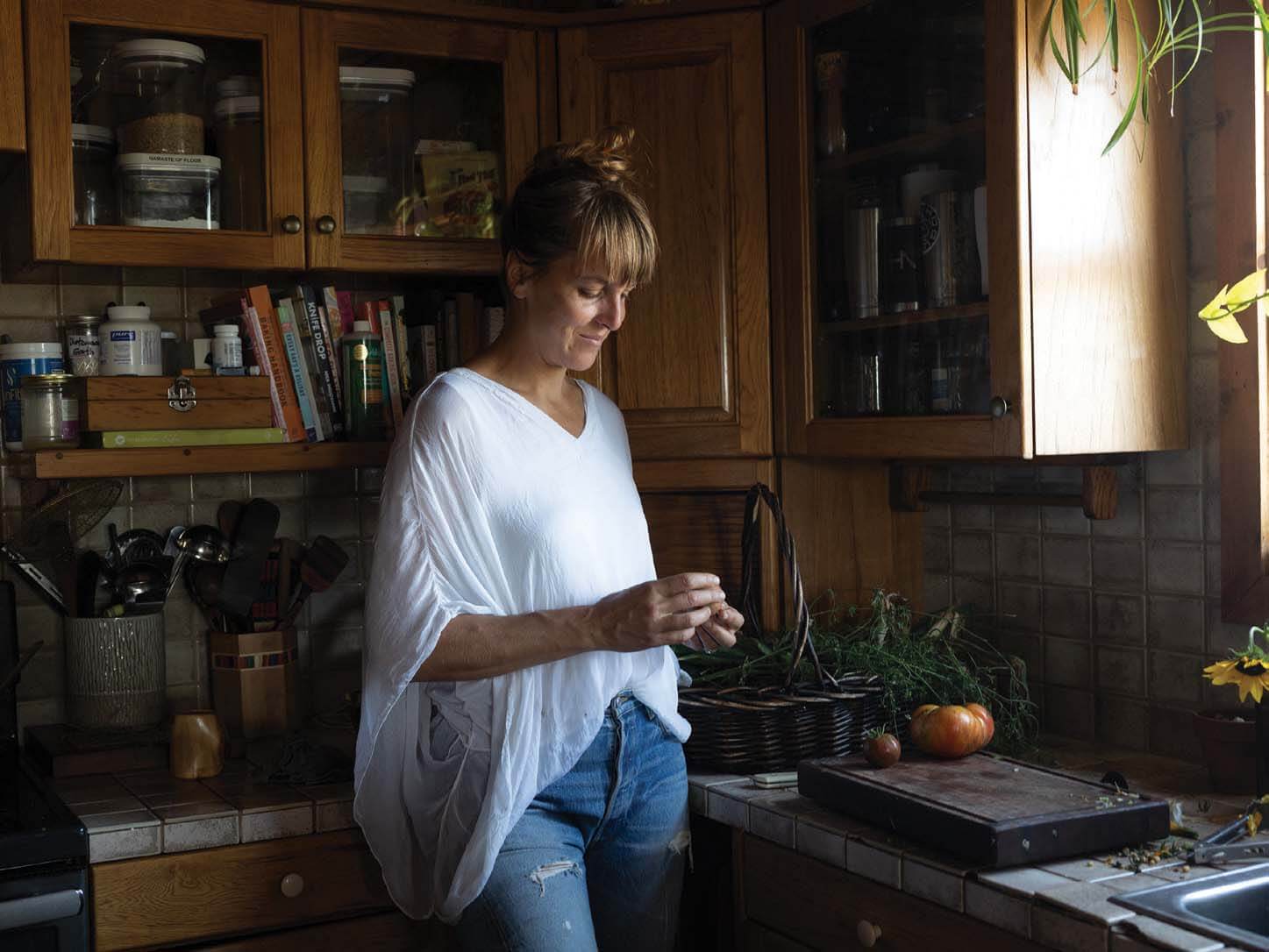
Fink always looks at home in her lived-in and well-loved kitchen.
“It all starts in your home,” she says. How they care for the land and their animals is how they care for themselves and each other: with intention, earned wisdom, and resounding love. The brick home was built in 1981, and Fink and her husband, Micah, have been restoring their homestead, room by room and acre by acre, over the seven years they’ve inhabited it with their five children, who range in age from almost-4 to 20. “We call it the money pit,” she says with a laugh.
In conversation throughout the morning, it’s clear to me that Fink can do anything she sets her mind to, from plumbing in a new toilet to building fence to training to run 100 miles in Morocco, from the Atlas Mountains to the Sahara Desert, later this year.
“It takes a lifetime to build a dream,” she says.
Everywhere I look, that dream is taking shape.
In 2014, Micah had finished 13 combat deployments as a Navy SEAL and paramilitary contractor, work that Fink says can be “horrific.” She saw her husband struggling to reacclimate. In an effort to find peace wherever he could, Micah and the couple’s oldest daughter, Bella, set out on a backpacking trip in the Spanish Peaks, where they ran into some folks with a string of horses. In the quiet alpine beauty, an idea was born. Micah wanted to start a program for combat veterans.
“The fire in my man’s belly was so strong,” Fink says.
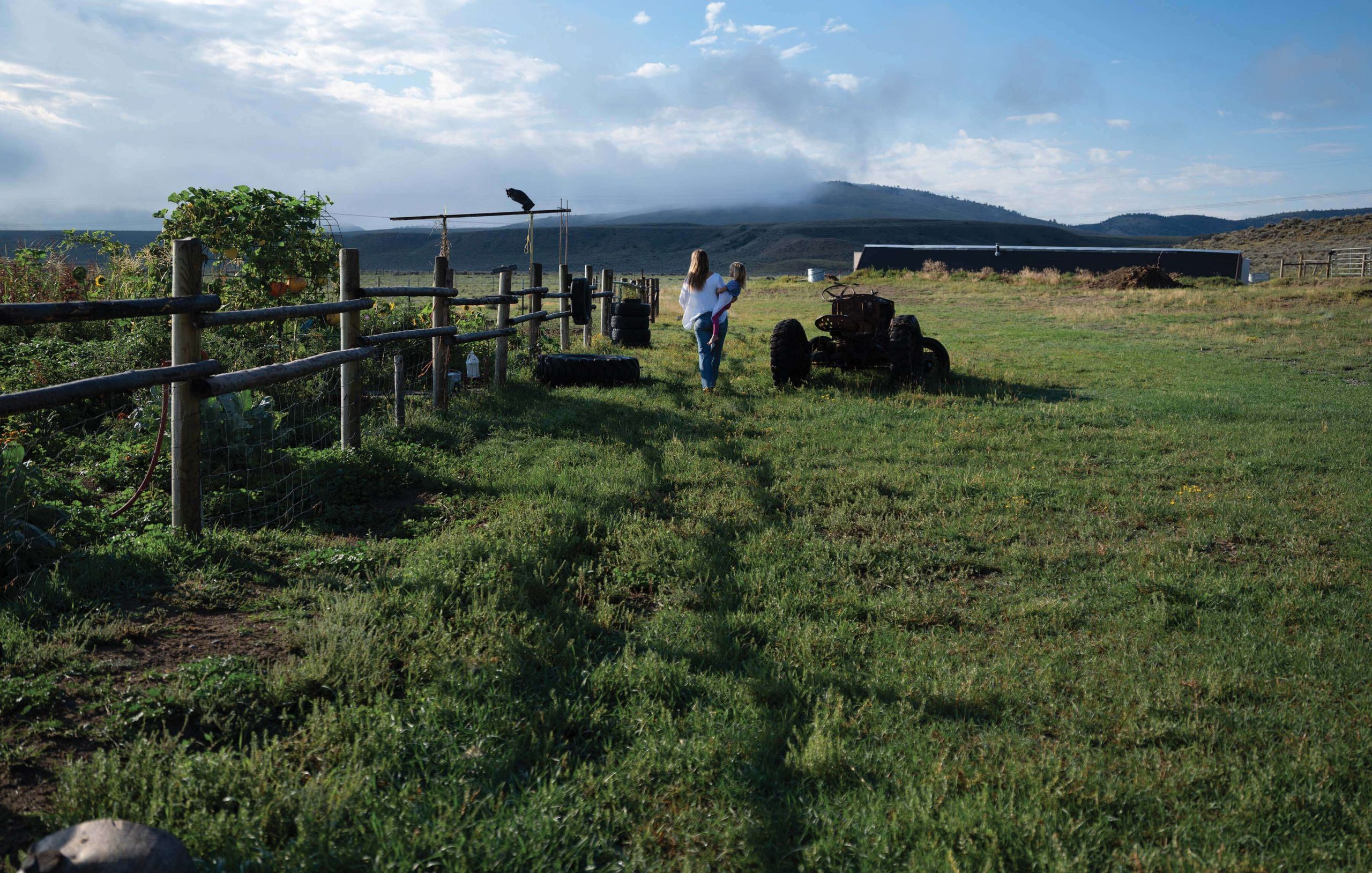
In the thick of harvest season, Fink and her youngest daughter walk past the garden to the greenhouse.
Together, the couple founded the nonprofit Heroes and Horses, offering a 41-day program designed to heal veterans through a holistic approach that utilizes nature, the horse-human connection, and several ways of reconnecting men to their own bodies. During the program, participants live on the Double H ranch near Ennis, working daily with horses and mules, and spend 11 days on a wilderness pack trip. The goal, quite simply, Fink says, is “to un-program the programmed” and to “reset nervous systems that are wired for chaos” using, among other tools, challenge, schedule, and ritual.
So often, Fink explains, combat veterans are neurologically addicted to the survival state, able not only to withstand the chaos of battle, but to thrive in it. When they get back home, she says, some men try to recreate the chaos — through addiction, among other means — to stay in that activated state. Heroes and Horses gives veterans a way to heal themselves. In the short documentary “When Horses Heal,” one of several made about Heroes and Horses, Micah explains that the program is a process that uses struggle through physical and environmental challenges to help the men shift purpose from the outside to the inside and learn that the answers they seek can only be found internally.
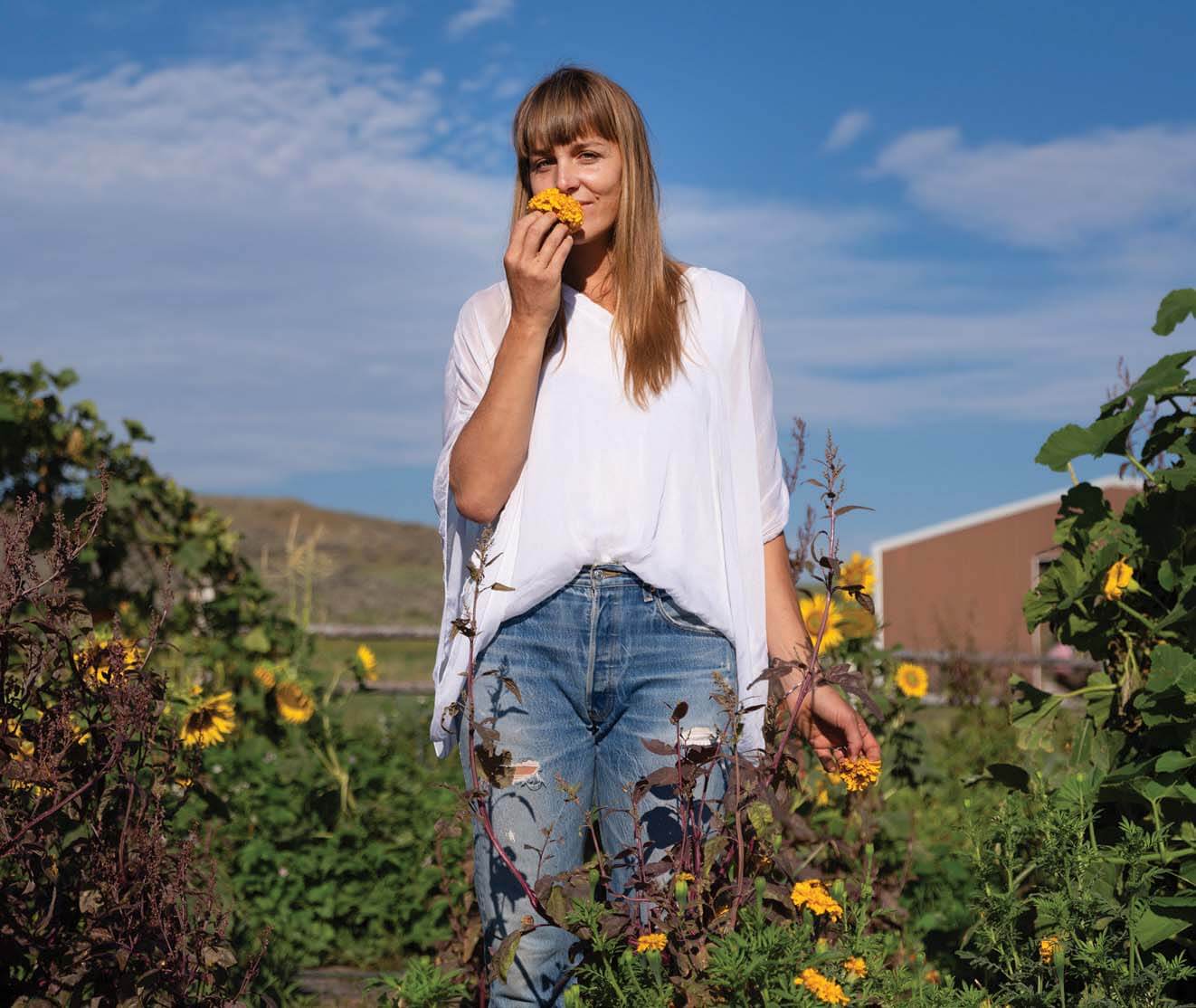
Not only does Fink’s garden provide food for the family but flowers all season long.
The program has grown steadily over the years: Last year 27 combat veterans graduated in four classes, and they introduced Healing Through Tradition, a program for young people affected by war. In 2024, Fink developed the Resilient Heart spouse program to serve the spouses of combat veterans. And Heroes and Horses Australia launched to serve Australian combat veterans in 2025. All the work is designed to ignite purpose and deliver lasting change — and healing — to participants and their loved ones.
One of the myriad ways Fink has shaped the evolution of the program is through food. “It’s how I love people,” she says of cooking. And though the campfire meals 12 years ago looked like tortilla sandwiches and Hamburger Helper, today her gourmet anti-inflammatory meal program is at the center of the healing process with chef Jim Bender at the helm, creating three extraordinary whole-foods meals daily. “He is the heartbeat in the HH kitchen,” Fink says.
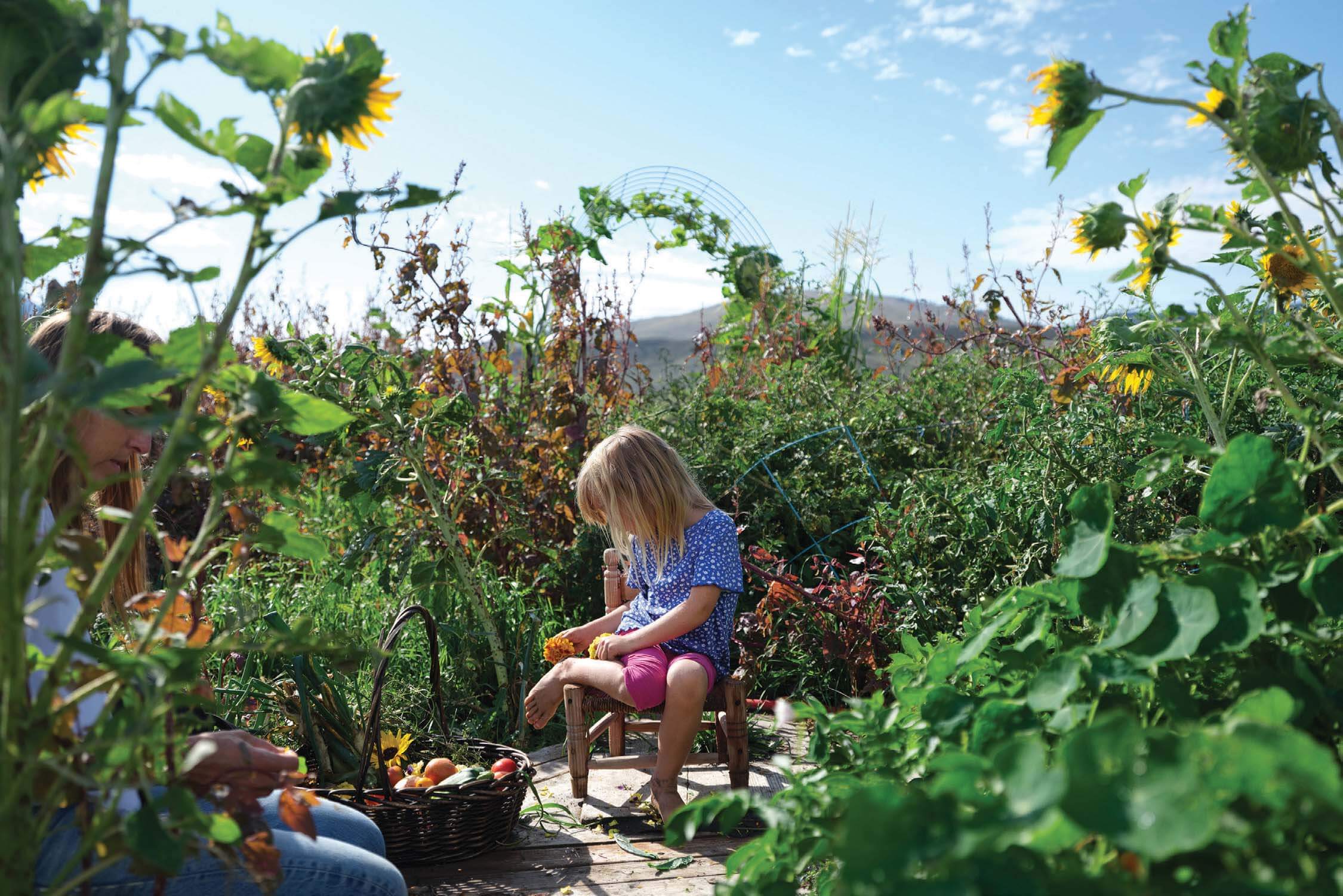
Fink’s youngest daughter takes a break in the garden, a sea of green in late summer.
“I am a purist, especially when it comes to food,” she adds. “Food is medicine. And [what we eat] is a direct reflection of what’s happening on the inside.” To that end, Fink created a cookbook — The Anti-Inflammatory Farmacy, published in 2025 — based on her whole-foods nutrition program.
“The book was written first and foremost for me,” she says, mentioning her own health journey with Micah. “But it’s also for men who don’t cook,” she adds with a laugh. Inspired loosely by the Whole30 approach she and Micah espoused early on in pursuit of their own wellness, Fink’s anti-inflammatory food program is based on four pillars: whole foods, balanced nutrition, simplicity, and intuitive eating. “Everything is simple, accessible, uncomplicated,” Fink explains, offering that most of her recipes have fewer than five steps.
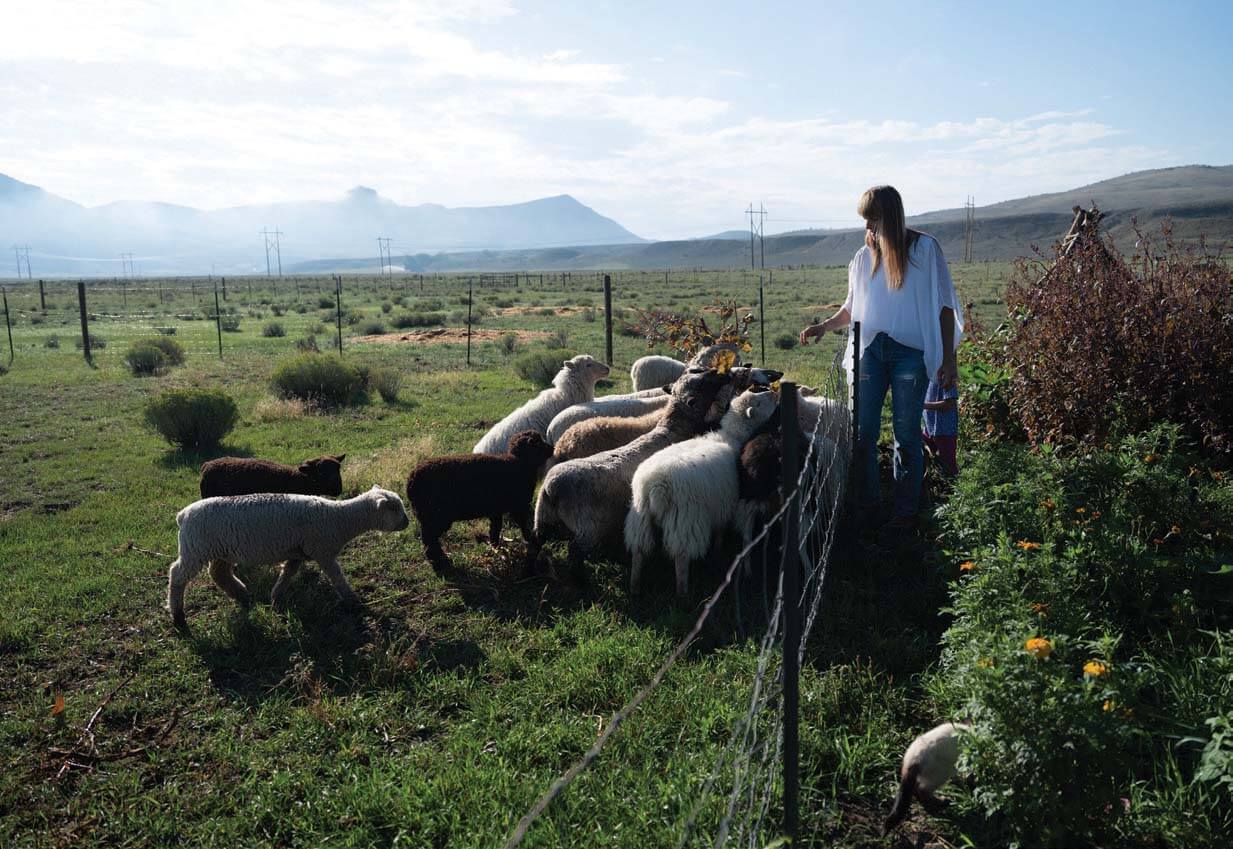
The Finks raise Icelandic and babydoll sheep which provide for one of Fink’s favorite recipes in her new cookbook: hearty lamb tagine stew.
More than that, though, the recipes, images, philosophy, and wisdom that fill the pages of her book are mouthwatering. The book is broken into 55 simple but succulent recipes for everything from homemade meatballs smothered in Dunie’s tomato sauce — Fink grew up in Pennsylvania with two Italian grandmothers — to blackberry-citrus sirloin kebabs and the Warrior Bowl, a delectable choose-your-own-adventure-type recipe that calls for three vegetables, nuts, seeds, and a protein. As testament to the recipes’ approachability and adaptability, the bowl takes just 15–18 minutes to prep and cook and can utilize almost any vegetable or protein, including leftovers. And before you worry that these recipes might be too healthy, rest assured that Fink includes sweets like homemade chocolate and coconut-chocolate chia pudding.
More than just a collection of recipes, though, the cookbook is a guide to healthy eating with tools, including a seven-day meal plan and pantry list as well as techniques for healing inflammation. It’s a meditation on connection within our own bodies, among each other, and with the planet we all inhabit.
“Food sits at the foundation of everything,” Fink says. “In so many ways, we’ve forgotten that.” With her book and the work she does at Heroes and Horses, as well as on her own homestead, Fink seeks to remind us.
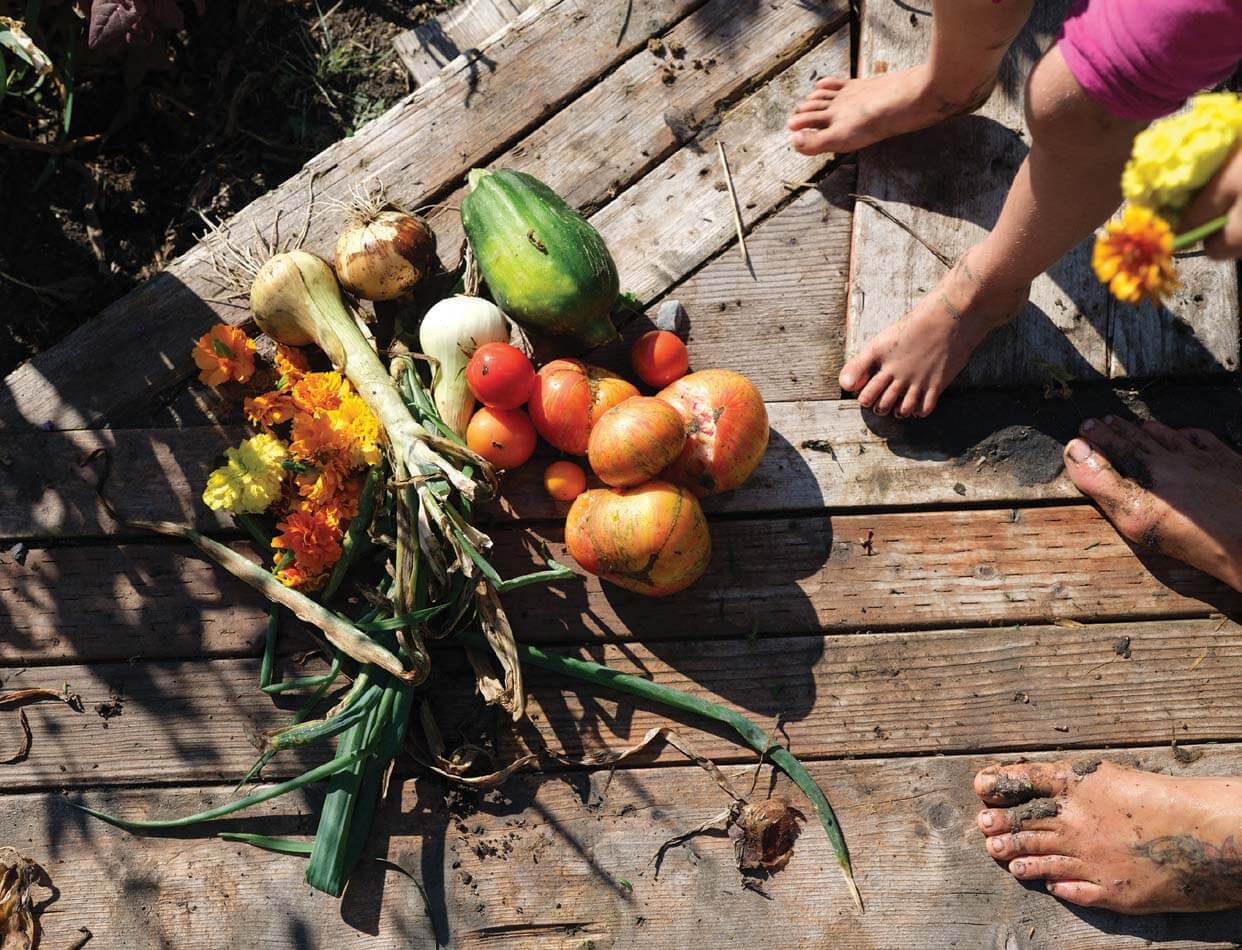
Mother and daughter sit in the sun with the morning’s harvest.
After she shows me the garden, where I marvel at the squash tipi and the sunflower fort she built with her children, we amble through the greenhouse that she and Micah constructed and have been working to plumb with geothermal heat so that it stays 55 degrees year-round, creating a zone 8 in the middle of Montana. Beneath a row of gorgeous tomatoes, she points to the table where she homeschools the kids in the Waldorf tradition of bringing innate wisdom out of the child. We talk about biodynamic farming and the mycelium beneath the soil. We talk about some of the extraordinary trips she and Micah have taken the children on for months at a time, to deeply inhabit another place, another culture: Peru, Indonesia, Fiji, and next up, Morocco.
“The truth is, I’m still learning,” she says, and it’s not a stretch to consider that learning for her is living. Fink describes almost everything on their homestead as her teachers: the garden, their sheep, her children, the hardship, and most of all, Micah. “He’s an incredible human,” she says. “He’s a catalyst, someone who draws you to your edge to see your potential. We are each other’s greatest teachers.”
Under the cover of her back porch, we settle down to eat one of her go-to breakfast bowls. It’s as colorful as it is flavorful, with roasted golden beets, lentils, the eggs she was poaching, sliced avocado, fresh spinach leaves, and ground beef with tangy carrot-cashew sauce, a drizzle of balsamic, and, naturally, a spray of edible flowers. I can only laugh at the deliciousness and beauty of every bite, each one so different from the one before. The dogs are asleep at our feet, and a giant gray cat stretches out in the sun, now high overhead.
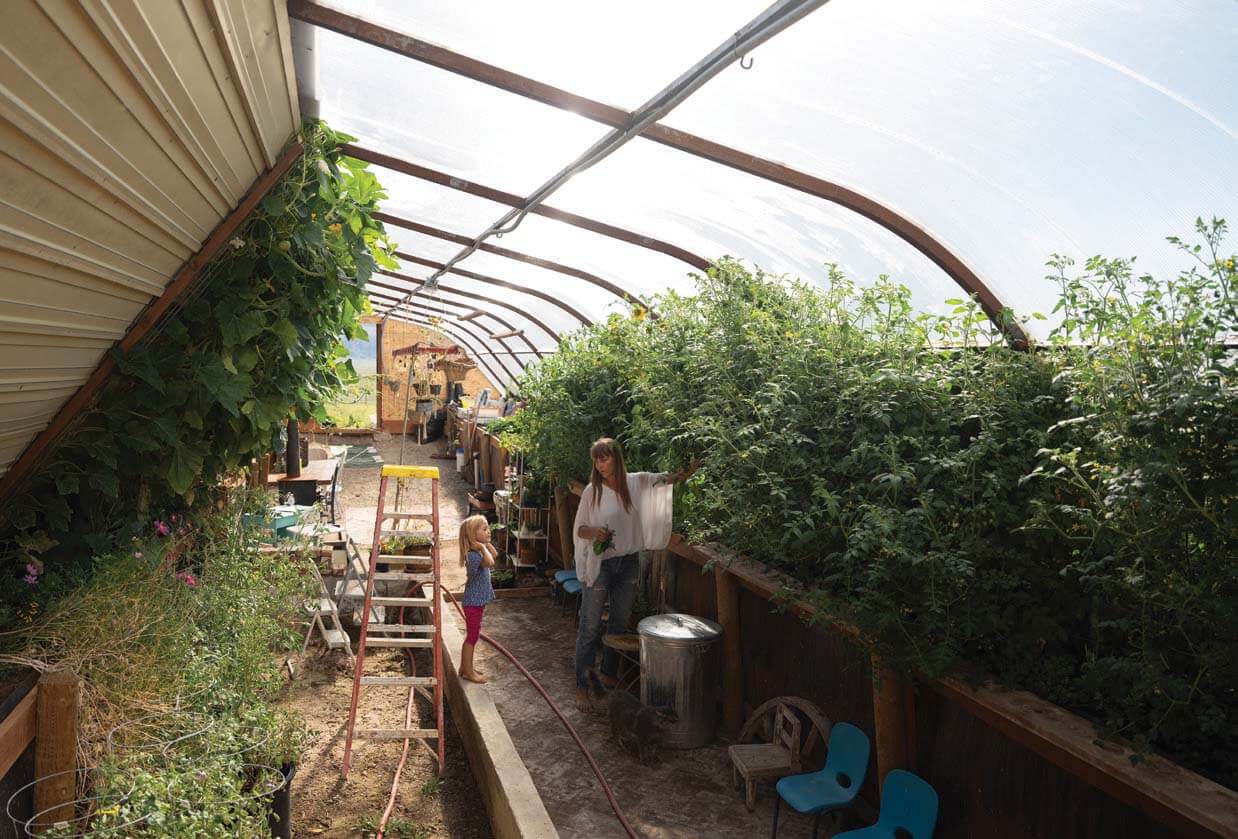
The greenhouse, which was designed to use geothermal heat to maintain a zone 8 growing region year-round, is also the classroom where Fink homeschools her children.
“We came here to live,” she says. “And how you do anything is how you do everything.” Her dream is here, now. Her dream is in the living and the life she and Micah are making, the family they have built, and the work they do — the people whose lives they touch. I savor the last delicious bite and am filled, sated with gratitude.
A writer and editor for various publications, Carter Walker covers art, architecture, food, travel, and culture. Her latest travel guide from Moon Books, Yellowstone to Glacier National Parks Road Trip, was released in 2026. She has a Master of Fine Arts in creative writing from the University of Southern Maine’s Stonecoast program and always has at least one creative project going. Walker is a founding board member of The Montana Project, which empowers Montana artists to advocate for the places that inspire them.
Montana-based writer and photographer Janie Osborne covers projects that explore life in the American West. She is a longtime contributor to The New York Times, and her photography work has been recognized by American Photography, with selections appearing in both the AP 41 and AP 42 annuals in 2025 and 2026.
No Comments