



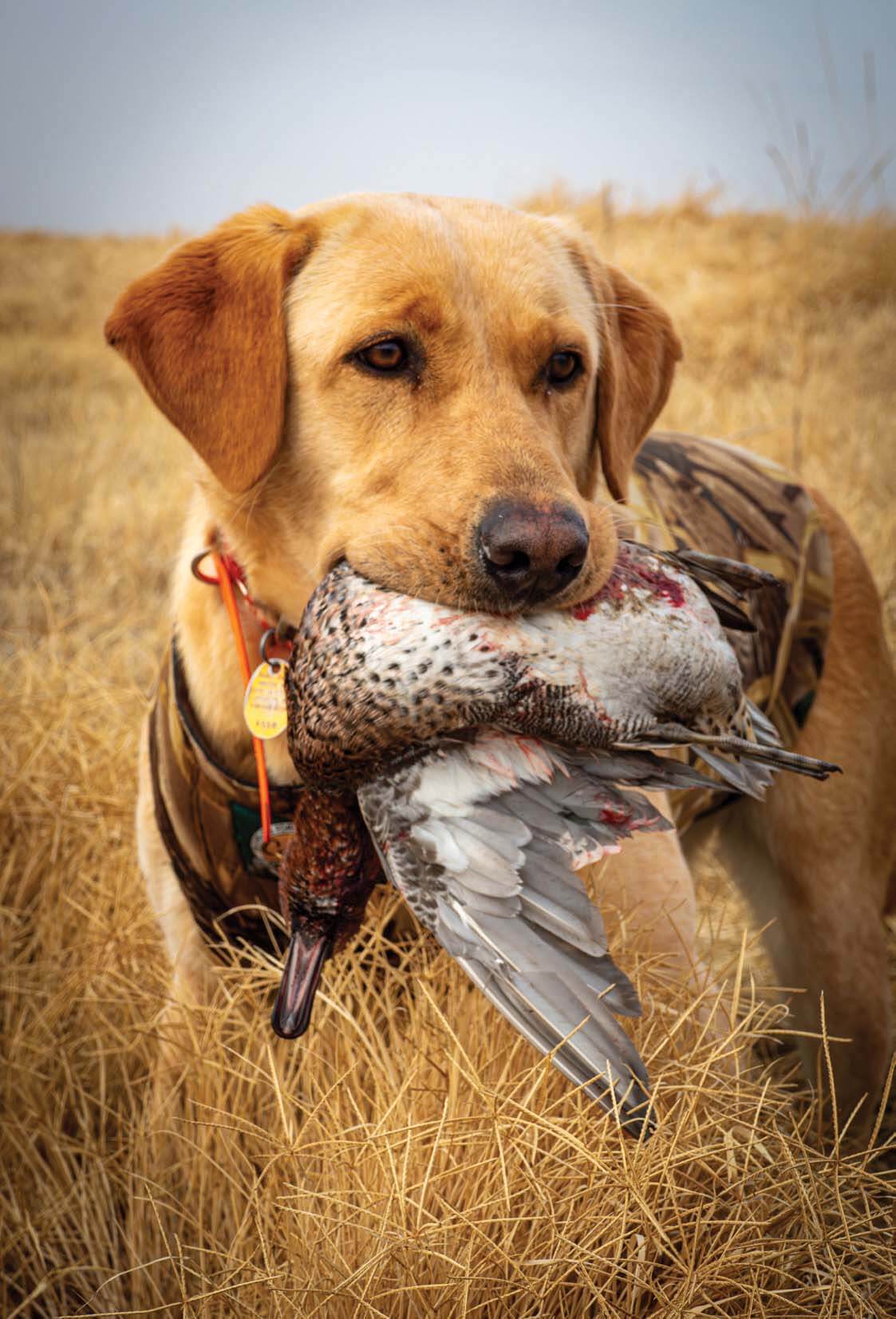
25 Sep Round Up: Between the Pages: An excerpt from A Dog for All Seasons
Editor’s Note: Outdoorsman E. Donnall Thomas Jr. has spent a lifetime in the field, forging a close connection with his working dogs. Today, he lives with his wife, Lori Thomas, in central Montana. This piece is adapted from their latest book collaboration, A Dog for All Seasons, available from donthomasbooks.com, and is published with permission from the author.
By the time I saw the mallards approaching the decoys, the birds already had their flaps down and their landing gear extended. The shooting itself was kid stuff. By the time the ejectors spat the empties into my gloved hand, one drake lay dead on the creek’s far bank while a second bobbed away on the current.
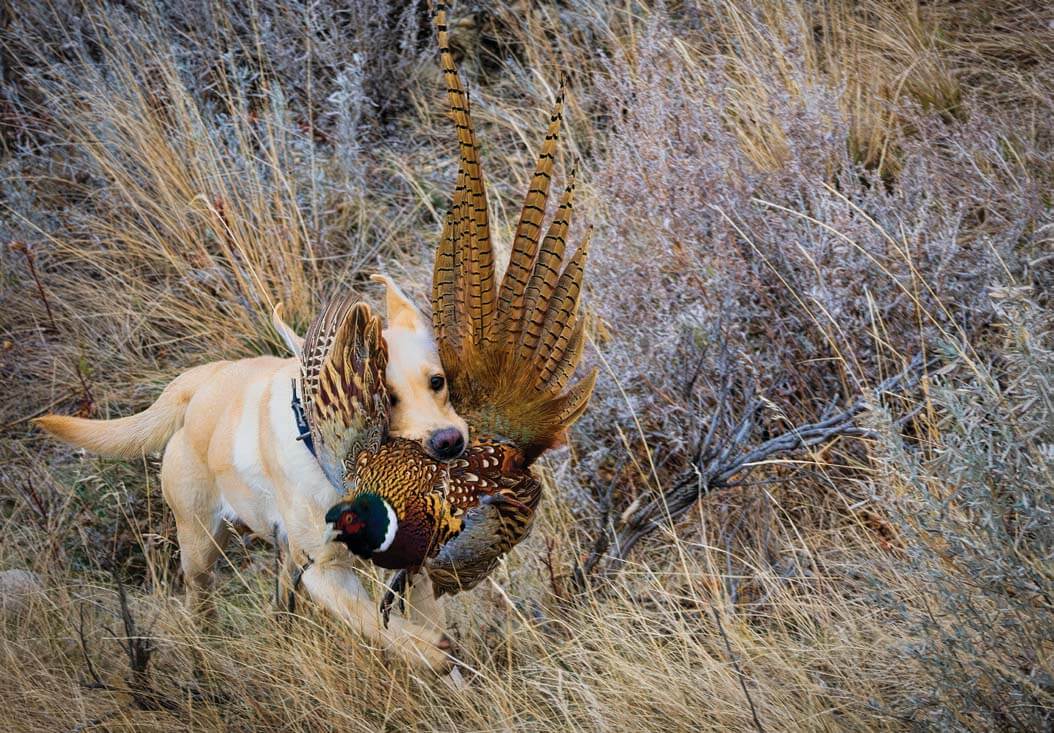
Sky, my male yellow Lab, remained at my side, his attention focused across the creek. However, that bird wasn’t going anywhere; the second was the problem. When I gave him a line on the floating bird he tore off downstream on the bank — technically a fault by field trial standards, but just what I’d spent his first two seasons training him to do. I wanted him to recover birds, not win ribbons.
When he drew even with the duck, he hit the water in a geyser of spray and zeroed in on his moving target. After scrambling back up the bank with that bird in his mouth, he sprinted back to my side, where I accepted the delivery and sent him for the second. Several minutes later I was giving him his mission accomplished pat on the head and stuffing two drake mallards into my game vest.
Labrador retrievers can be different dogs to different people: field trial competitors, hunting dogs, household companions. Those of us who hunt with our Labs reserve the right to break the rules when appropriate. Running a bank represents a fault in field trials, but when I’ve sent one of my Labs into flowing water after a mallard, I want the dog back on dry land as soon as possible, safe and sound with a duck in its mouth. I’ll always trade adherence to someone else’s standards for a limit of ducks and a happy dog.
The thermometer stood just below freezing when I issued the command to fetch and sent him plunging into the water that morning. How could anyone who cares about dogs have asked such a thing? To which I would respond: How could I have asked him not to?
The Labs we know evolved, in the true Darwinian sense, from British stock imported during the 1600s to assist Devonshire emigrants fishing the coast of Newfoundland. Dogs that could not adapt to that harsh environment disappeared from the gene pool, one way or another. Labs meant to survive fetched buoys, nets, and lines from the frigid North Atlantic. A modern Lab hitting cold water with a splash is just expressing its genetics.
To summarize the Lab’s personality in one word I’d choose enthusiasm, toward anything from a morning duck hunt to a walk in the park. Jumping into a river on a cold day may not be our idea of a good time, but Labs feel otherwise. Non-hunting Lab lovers willing to keep an open mind should find a way to invite themselves along on one of those outings. A morning in a duck blind offers the best way to understand the essential character of the Labrador retriever.
Given the breed’s increasing popularity, the appearance of more Labs in non-hunting households was inevitable. These new Lab enthusiasts demonstrate attitudes toward hunting ranging from unfulfilled interest to opposition. As with politics and religion, tolerance for opposing views should be welcome. Perhaps love of Labs will provide a badly needed catalyst for common cause among hunters, non-hunters, and anti-hunters who share a passion for Montana’s outdoors. It’s hard to imagine a
better-qualified ambassador of goodwill than an enthusiastic Labrador retriever.
Perhaps to a greater extent than any other hunting breed, the Lab now serves as friend and companion to non-hunting owners, which may be the breed’s greatest accomplishment.
Another Lab, another season. Dry grass crunches underfoot as the whole prairie sizzles beneath the Indian summer sun. Cold water and late season duck hunts seem as far removed as the Lab’s original stomping grounds on the North Atlantic. No matter; Sonny’s never met a hunting trip he didn’t like.
How the dog can smell anything in such miserable scenting conditions remains beyond me, but we’ve both learned some tricks about September sharptail hunting over the years. The first is to save the dog from his own early season enthusiasm, which is why he’s plodding along at heel against his wishes. The second is to remember Sutton’s Law and concentrate our efforts where the money is. That’s why we’re heading for the buffaloberry bushes.
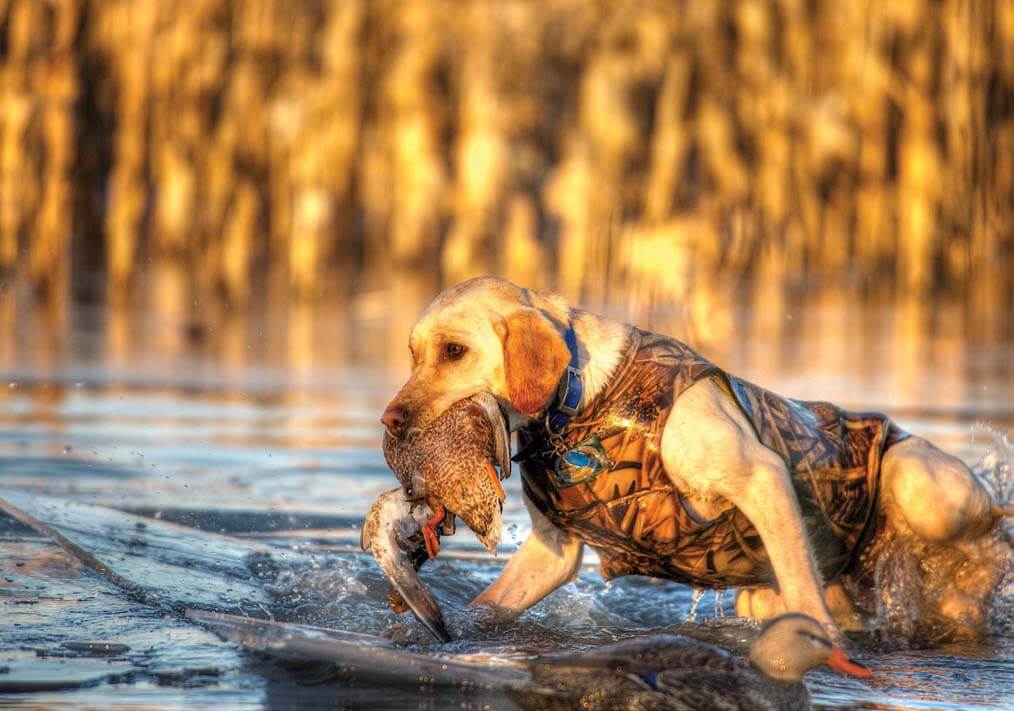
Silver-leafed and spiny, the first dense clump of brush offers the only shade we’ve seen since we left the truck. Flushing birds by myself from its depths would be a fool’s errand. Even if I could fight my way through the thorns, I’d never be able to get a shot off. That’s where the dog comes in, and Sonny knows it.
Positioning myself on the sidehill above the brush, I cluck softly to the dog and the long off-season tedium comes to an end as he bounds down the hill and launches into the cover. Moments later, the first gamebird of the year erupts into the azure sky and crumples at the shotgun’s report. Finally, it’s time for the dog to do what he’s been bred to do: retrieve.
As Sonny charges back up the hill with the bird in his mouth, I pause to consider the breed’s variety of modern job descriptions. I’ve enjoyed my versatile hunting Labs’ company in the pursuit of everything from desert quail to arctic geese, and they have served my family just as well on laid back evenings in front of the fireplace with the kids.
Labs are truly dogs for all seasons … and all people who love dogs.
No Comments