


25 Sep A Love Letter to Montana’s Dive Bars
Next to the iconic Missouri River, in the small city of Great Falls, Montana, I’m crouched with a camera near a mannequin wearing a repurposed prom dress in a room overflowing with fabrics, threads, and sequins.
At center is a Singer sewing machine and at the helm is Sandra Johnson-Thares, seamstress of mermaid costumes and owner of the Sip ’n Dip, a tiki retro cocktail lounge.
Yes, you read mermaid costumes.
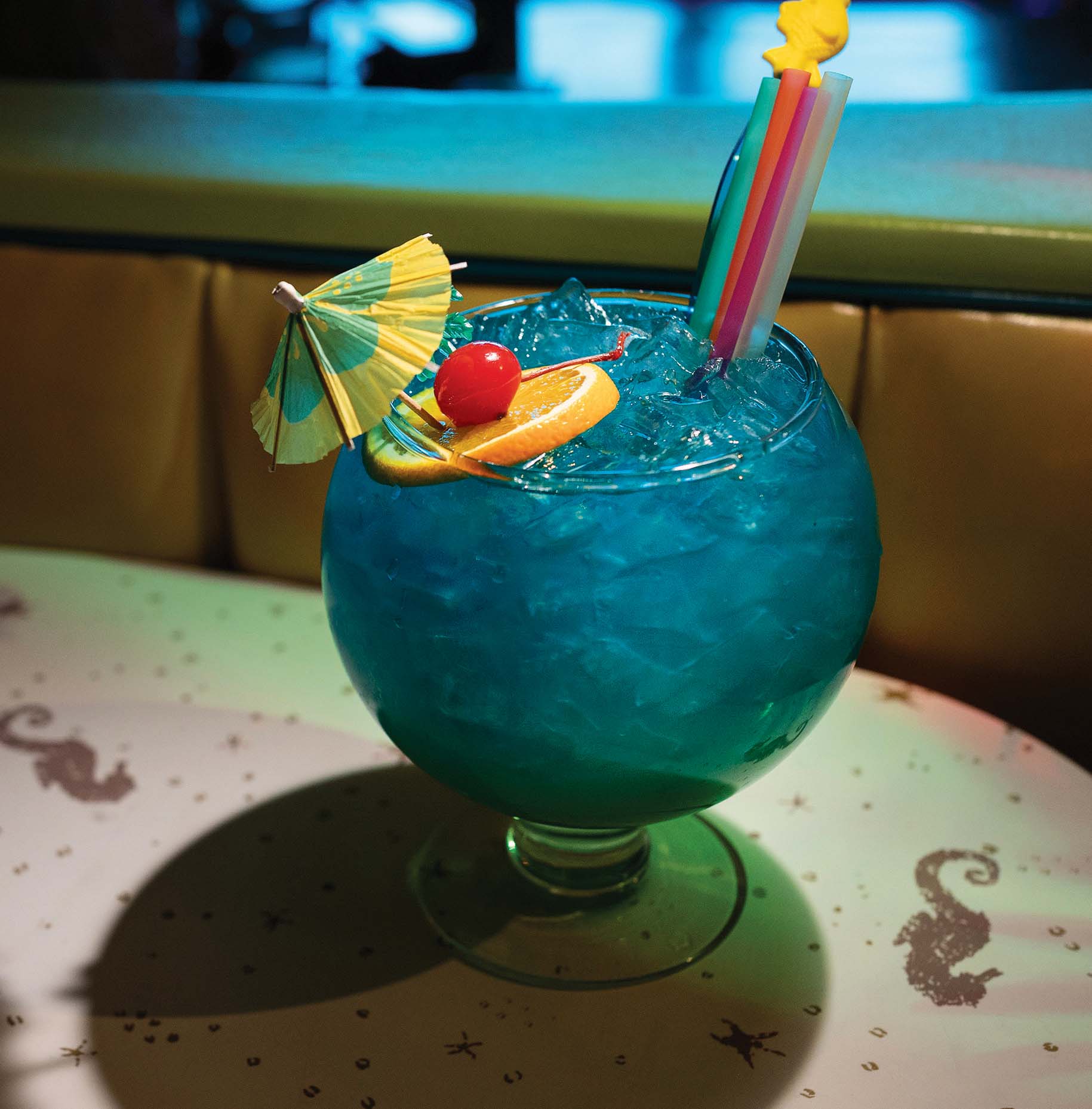
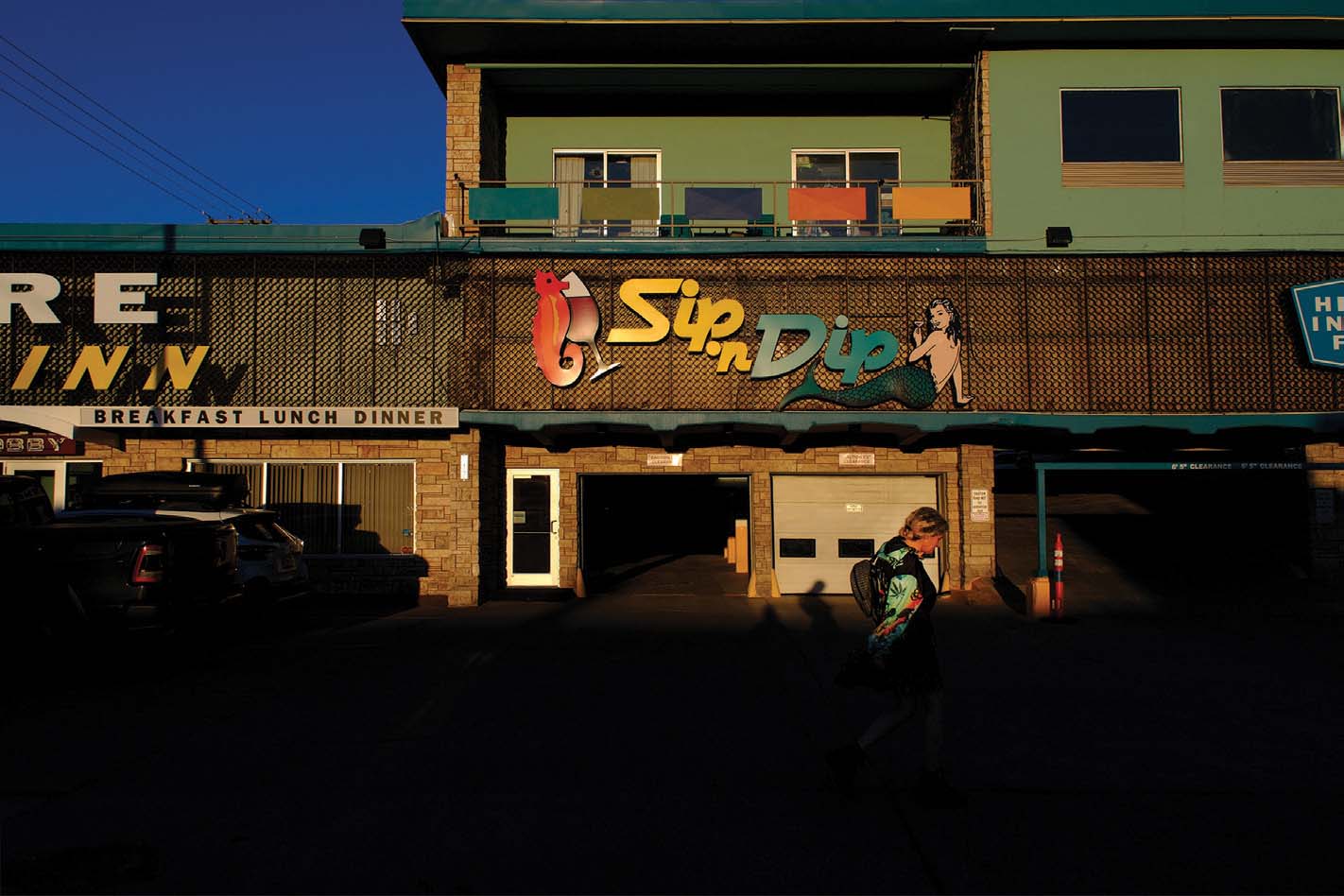
The Sip ’n Dip has been serving the popular bright blue, 51-ounce Fishbowl cocktail since 1996.
Located in the O’Haire Motor Inn, also owned by Johnson-Thares, the Sip ’n Dip features windows with underwater views of swimming mermaids. (Currently, there are no mermen.) And as part of their employment, each mermaid receives two tails and two tops, all handmade by Johnson-Thares.
In 1996, the first swimming mermaid appeared on New Year’s Eve as a housekeeper who’d donned a green plastic tablecloth. Over time, the concept became popular and grew into a weekend feature before coming to define the Sip ’n Dip experience, with swimmers on deck six or seven times a week.
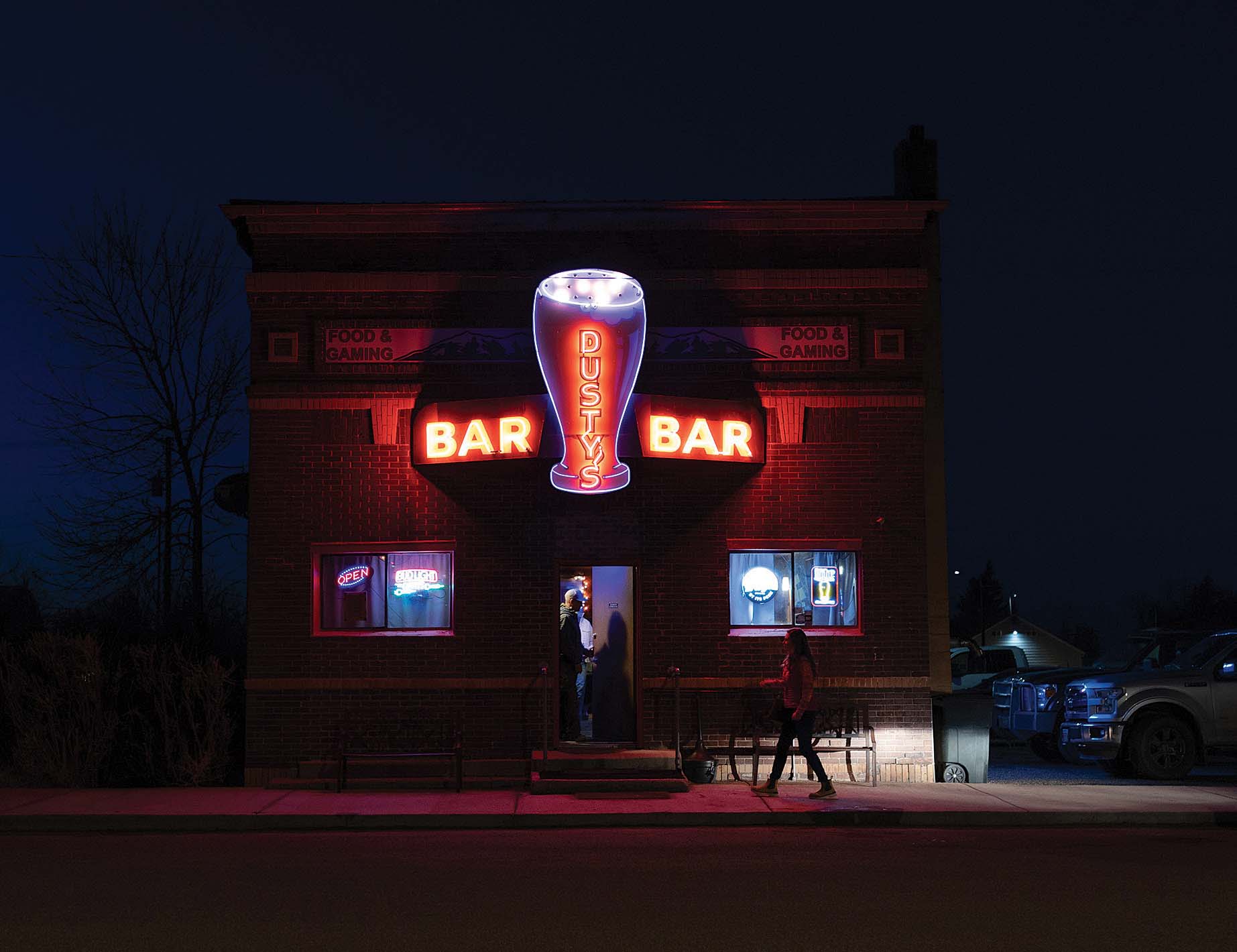
No one knows the precise origin of the iconic beer mug sign marking the entrance to Dusty’s in Brady, Montana, which opened as a bar in 1946.
There are also holiday singalongs — and a Mermaid Bingo Night was added in 2024. Basically, it’s three rounds of bingo with the mermaids holding up the number cards. “It’s something to do on a cold Montana winter Monday,” Johnson-Thares says. Most nights, everyone gets a Hawaiian lei. And the prizes, while not monetary, are “fabulous,” she says.
“It brings in all kinds of people,” Johnson-Thares adds. “People say things like ‘I drove six hours to see the mermaid.’ There are seriously some people that are fanatical that they have to see a mermaid.”
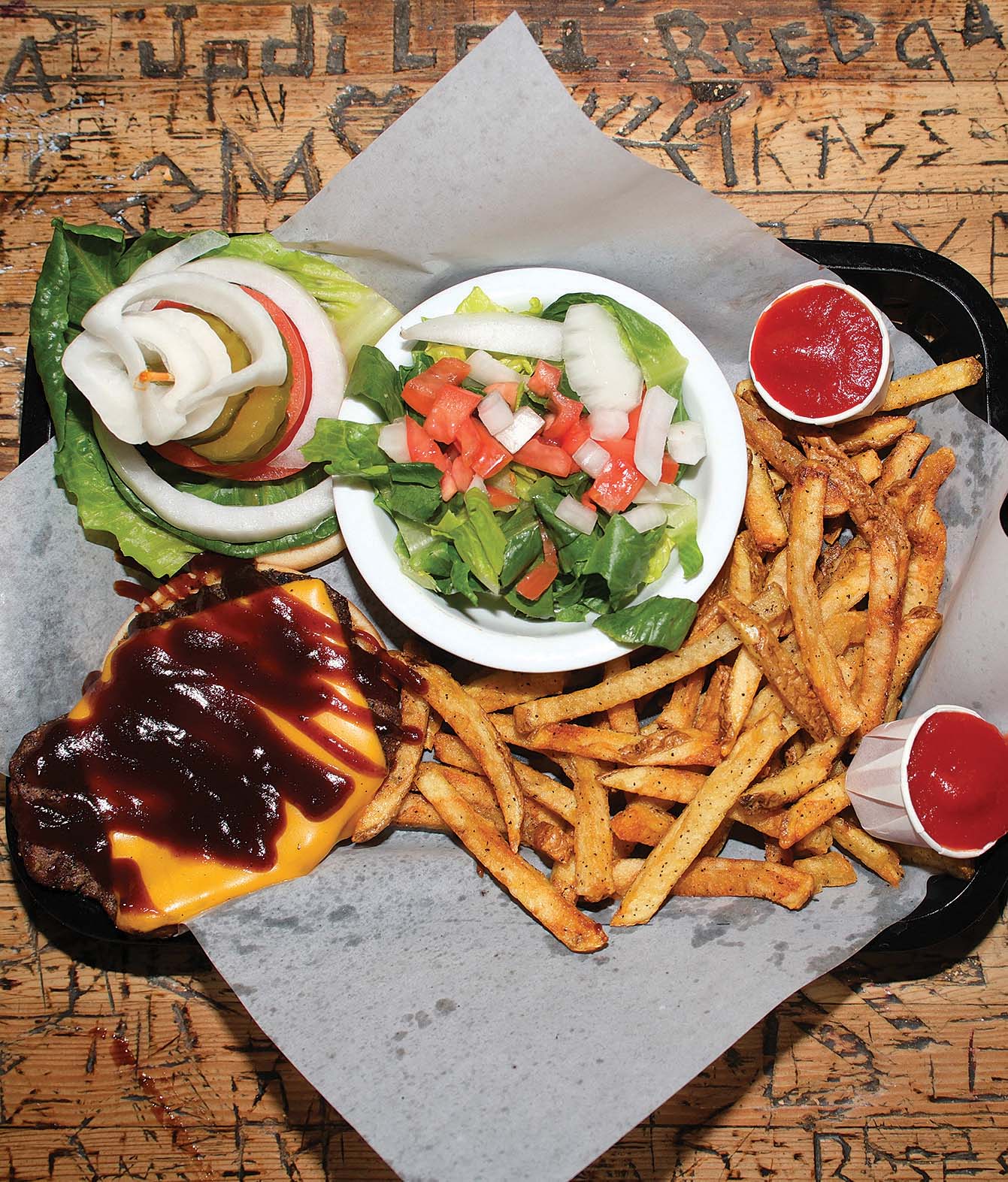
The Haufbrau, in Bozeman, Montana, has been serving the famous Lanny burger for more than 50 years.
Magic takes all forms, I learn, as I set out to explore dive bar culture in Montana and discover what is at the heart of these gritty institutions.
Sometimes the magic entails a chance meeting, as it did for me years ago. I recall the floor was sticky with peanut shells and beer. I could feel a crunch underfoot, drowned by the din of garbled conversation as my friends and I made our way to a wobbly table at the Haufbrau House in Bozeman.
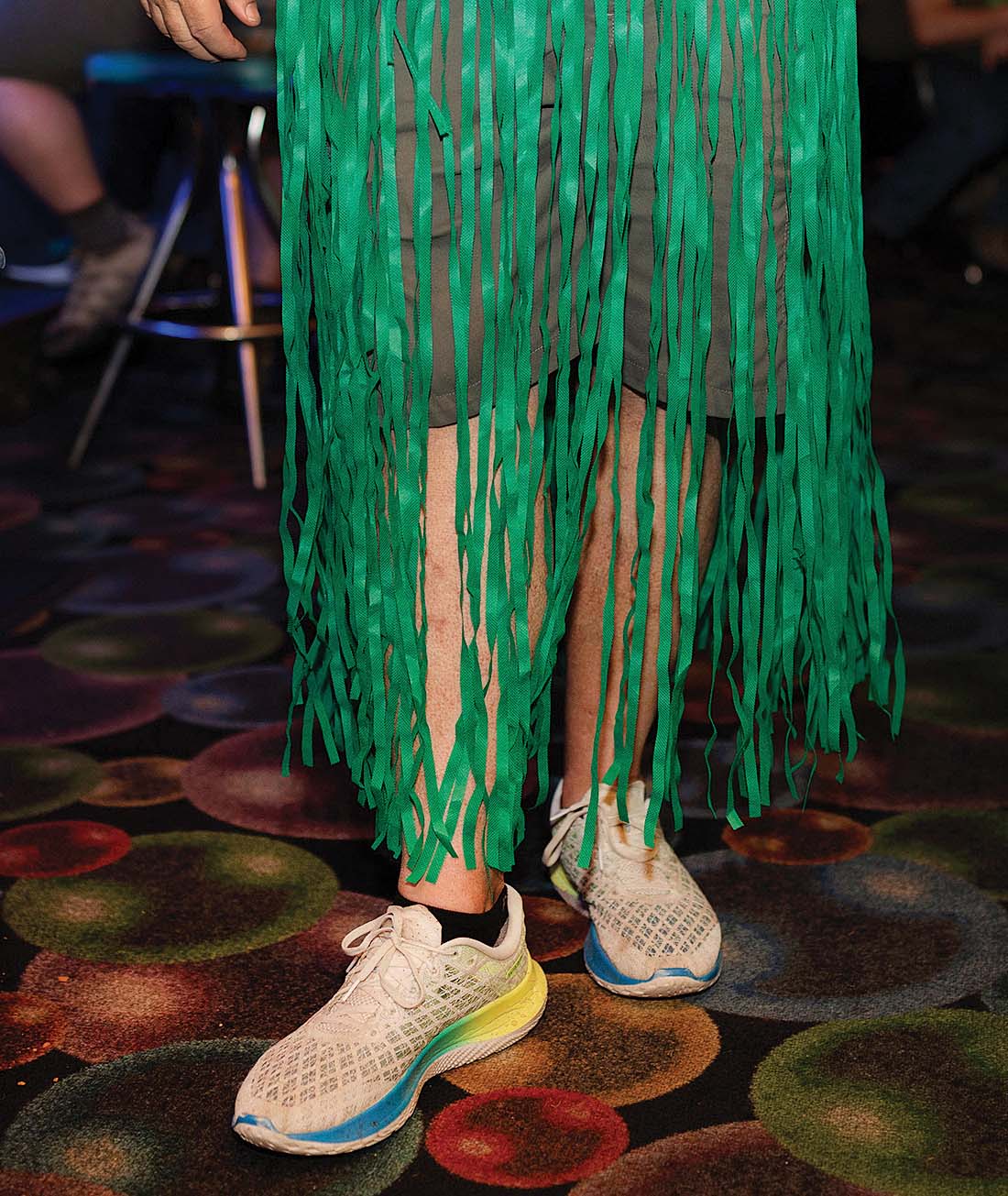
The tropical Luau evening at the Sip n’ Dip occurs one night per mermaid bingo season. Here, the bingo announcer wears a grass skirt with white sneakers in the spirit of the fun and quirky occasion.
I was there to hear a friend play guitar and sing at open mic night. As it turns out, so was my future spouse.
I was emboldened by the emotion of a recent breakup, the energy of a girls’ night, and, perhaps most important, the liquid courage and contagious spirit of the dive bar. When I spotted him across the room, I flicked a peanut in his direction.
Within a matter of hours he said, “I love you.”
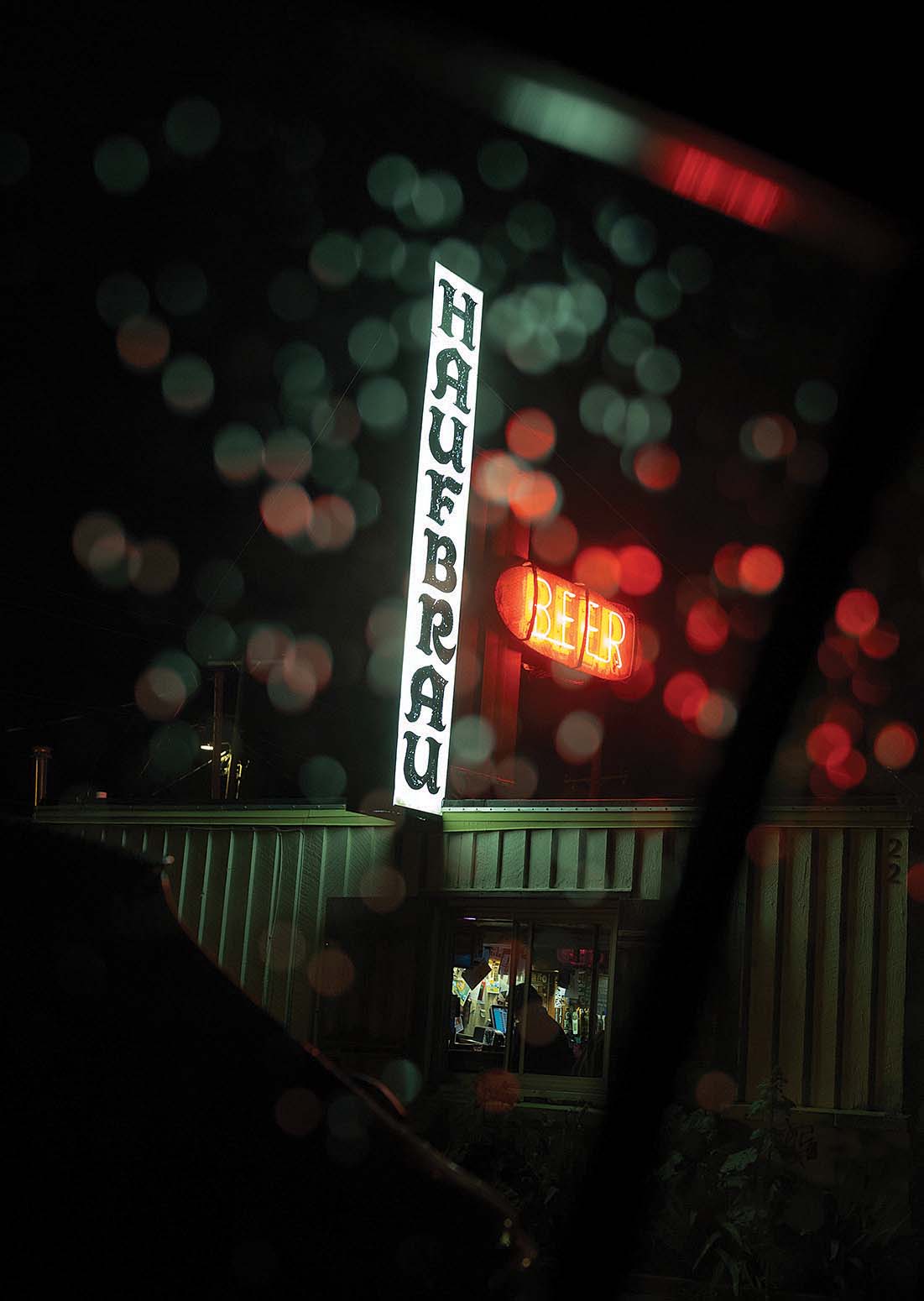
The Haufbrau, also commonly referred to as The Hauf, has been a popular Bozeman dive bar for nearly 60 years.
The Hauf is a close cousin of sorts with The Filler — officially known as The Filling Station and owned by the same family: Bill Frye, mother Cin Frye, and brother Don Frye. The Hauf, referred to by one bartender at The Filler as “The South Office,” has been a downtown staple for nearly 60 years, with the interior sporting quintessential dive bar paraphernalia.
The walls of The Filler are also covered, boasting everything from vintage license plates and street signs to a large red flying horse at ceiling height, an old-school buffalo shoulder mount wearing a Hawaiian lei, and a deer ridden by a skeleton.
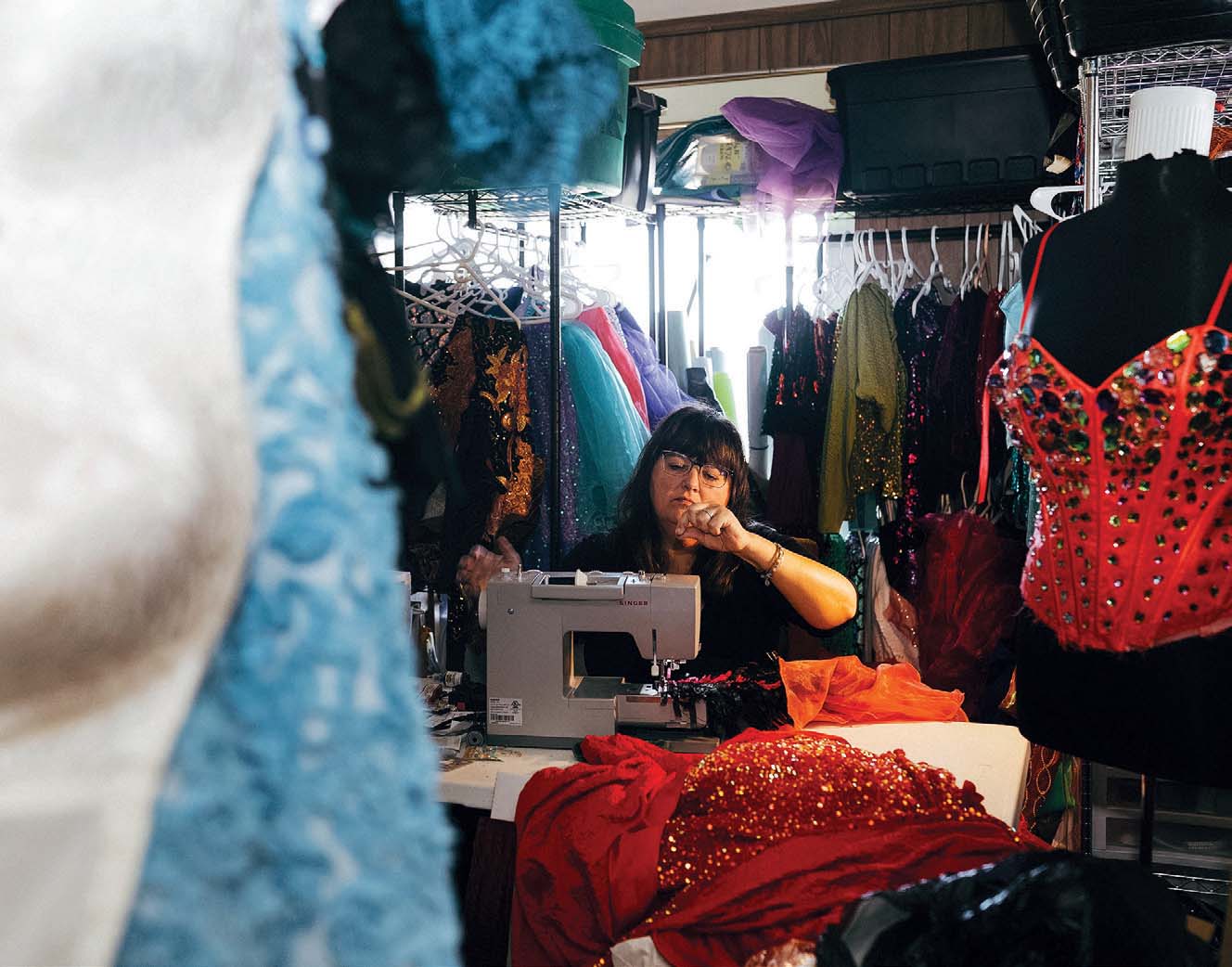
Sip n’ Dip owner Sandra Johnson-Thares has been sewing mermaid costumes — two tails and two tops per swimmer — for 31 years.
“That stuff just accumulates,” says Bill, whose parents purchased The Hauf in 1969 and opened The Filler in 1976.
“I think the skeleton was a Halloween prop that ended up on the deer,” Bill says, adding that the mount is relatively new, acquired within the last 20 years. “A regular who is a taxidermist brought that down.”
Many things at The Filler have been donated by customers, some en route to the city dump down the road. Other decor was collected by Bill’s parents — who he says “collected [vintage things] before collecting was popular.”
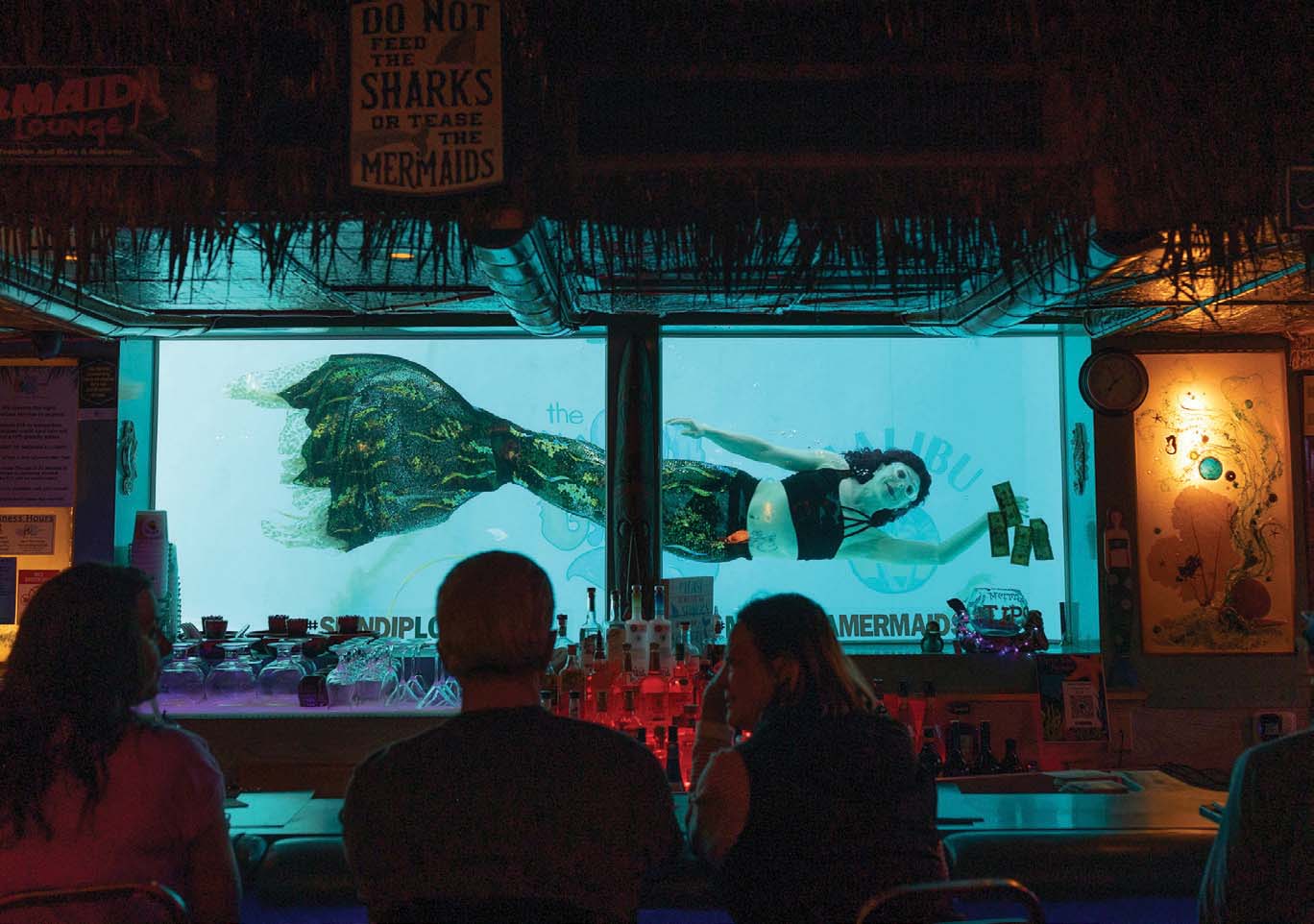
Located in the O’Haire Motor Inn, the Sip ’n Dip features windows with underwater views of swimming mermaids.
“The bison head is off the record,” he says, revealing just a few scant details: There’s something about a third floor, a lodge near Glacier National Park, a rope, taxidermy, and a bunch of guys who brought the mount to Bozeman. But, he concludes, those people are all dead now, so it’s OK to write about it.
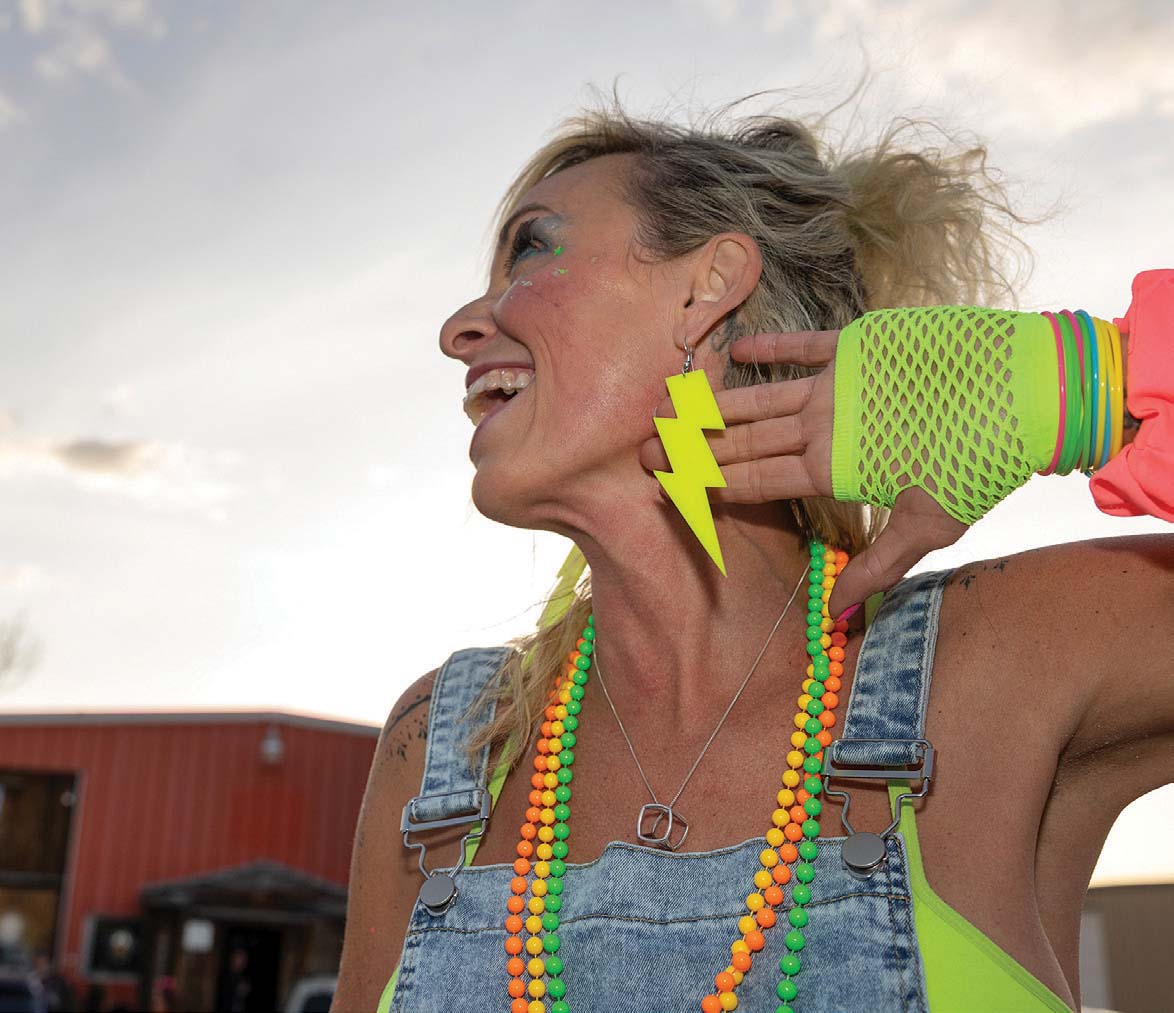
The variety of people who come to The Filler and The Hauf are as colorful as the decor. I see everything from a pressed tattersall Oxford shirt to cowboy boots to camouflage pants to tattooed legs to 1980s costume attire.
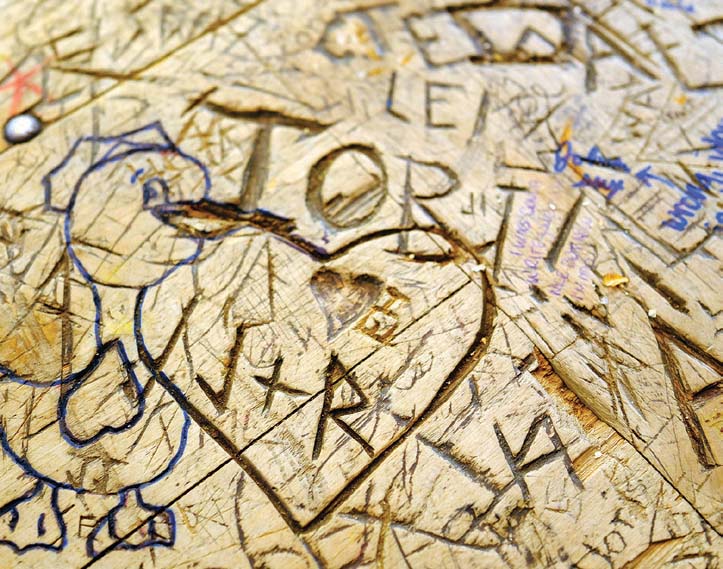
Etched wooden tabletops at The Hauf — signed by hundreds of customers over the years — epitomize the casual dive bar atmosphere and are reflective
of the beloved bar’s popularity
In a town now populated with all kinds of bars, from social clubs to wine tasting rooms to rooftop hangouts, the old establishments uniquely stand out.
“There are no more [dive bars] coming in,” Bill says. And, because of the high cost of commercial properties and alcohol licenses, “[it takes] a minimum of several million [dollars] to open a new bar in Bozeman. When we purchased The Hauf in 1969, the whole thing was under $100,000. And that was a lot at the time. Today, we couldn’t afford to sell because of the high property gains tax. We are caught in a trap.”
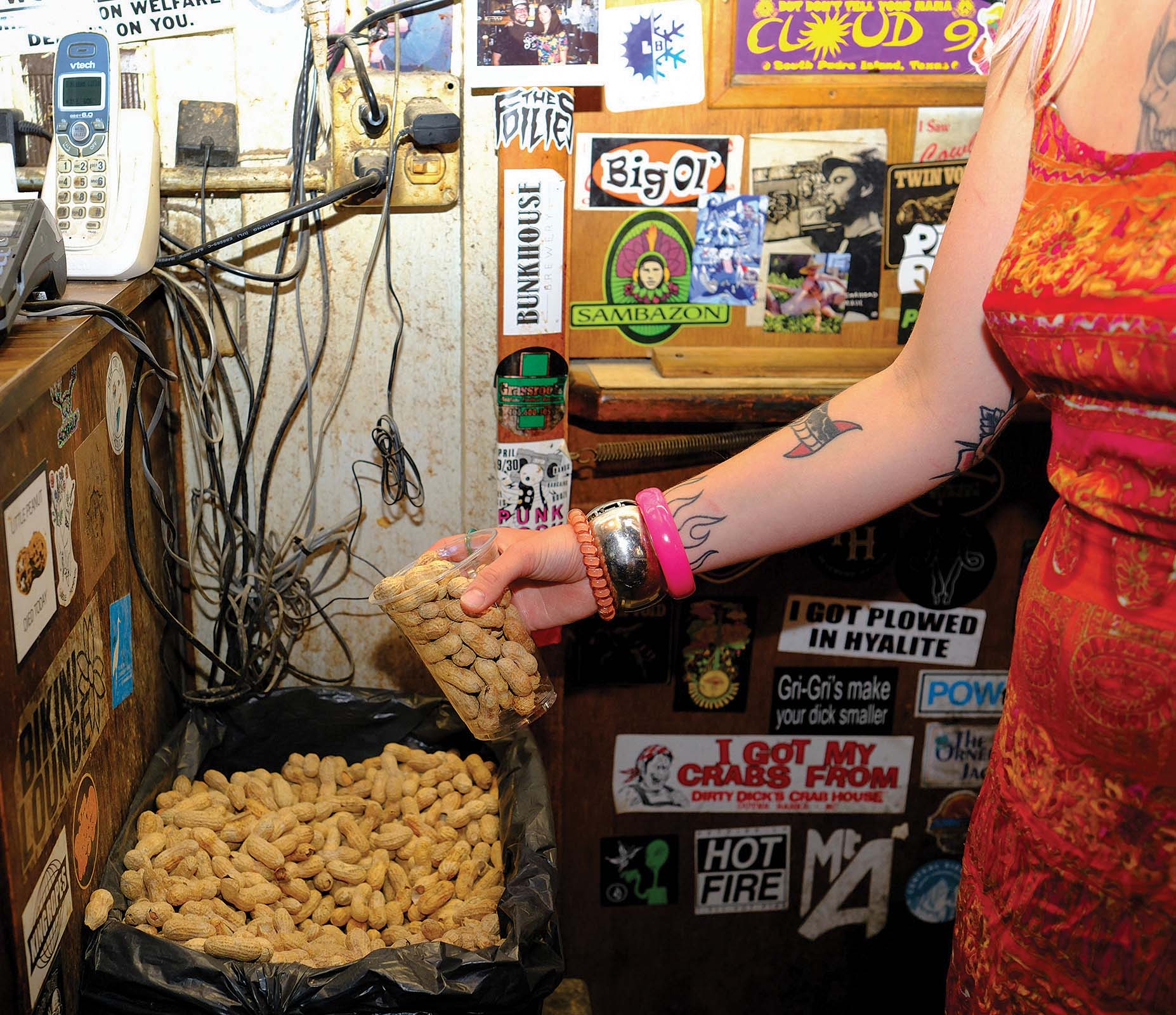
In Bozeman, the Haufbrau serves shelled peanuts, a staple for many dive bars across the state.
Fortunately, though, Bill says The Filler remains busy as a performance venue. “Music pays the rent,” he says.
Indeed.
Musician Drew McDowell is among those who have taken the stage at The Filler. He has performed there since 2008 and keeps coming back because it’s a place that gives freedom to the artists.
“If you are playing a show at The Filler, you have fun because you are playing songs you want to play and taking risks,” he says. “You’re not afraid to play a wrong note. There are so many artists who get launched into fame at The Filler.”
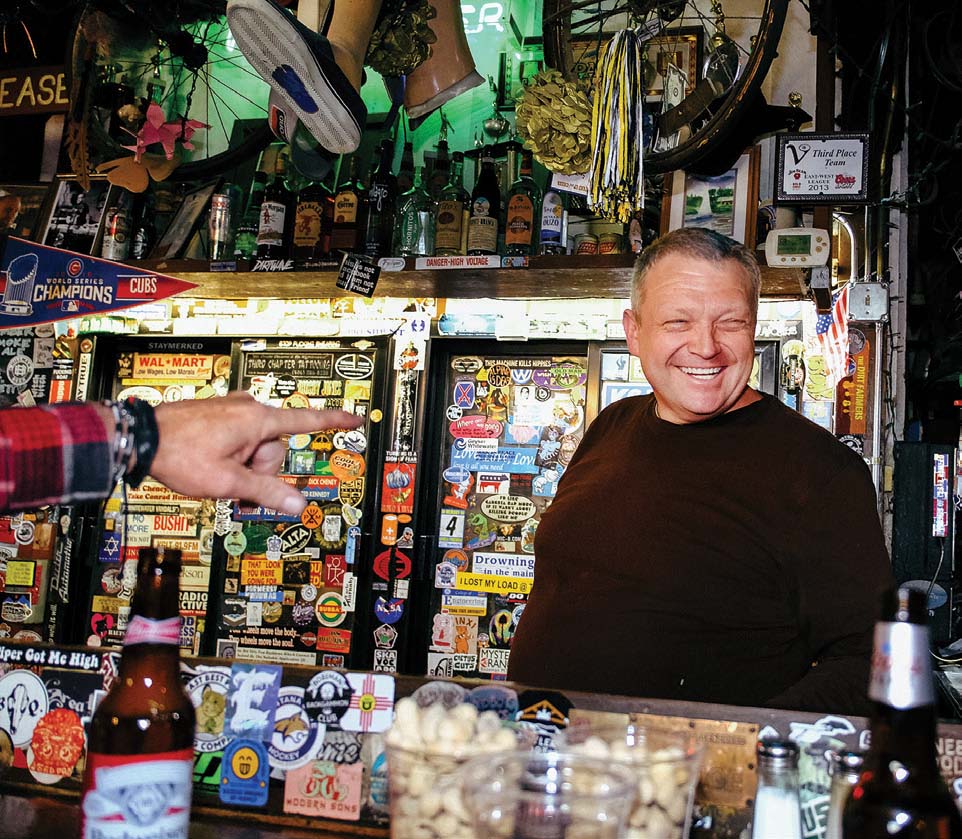
Don
Frye has been at the helm of The Hauf for over 35 years, operating it with his brother, Bill Frye, and mother, Cin Frye.
The Filler’s eclectic spirit is echoed at The Brothel in Big Sky.
Once a bike repair shop and then a bike repair shop with a bar, The Brothel is now a bar with a bike motif — and an enduring popular presence.
“[First] it was an office space [where] we worked on bikes,” says owner Chaz Boutsikaris, who opened the bar 15 years ago with his former spouse and a friend.
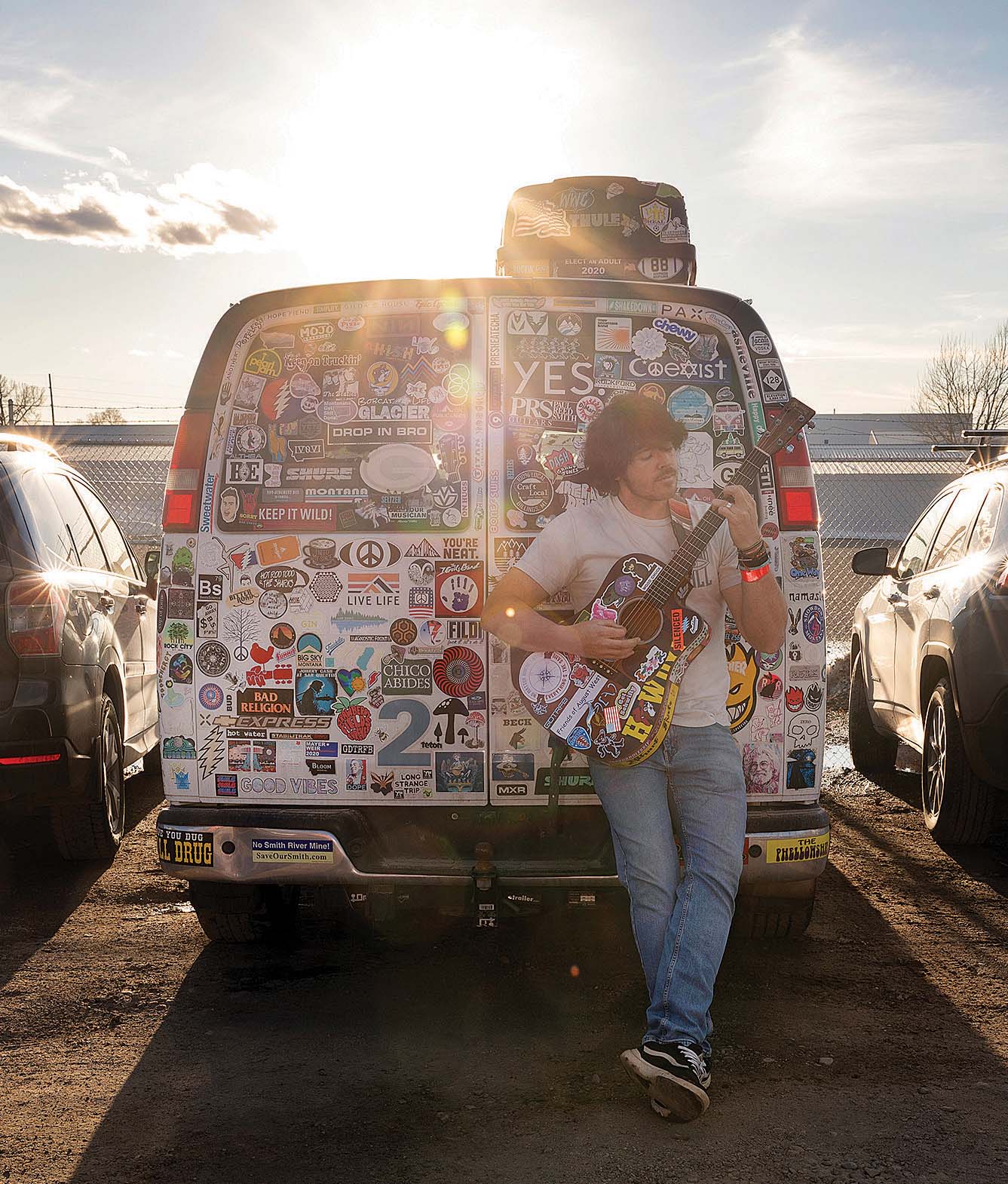
Bozeman musician Drew McDowell has been performing at The Filler since 2008. He appreciates the freedom the bar affords to both up-and-coming and experienced artists.
Like other dive bars, there are many items plastered on The Brothel’s walls, including a sign that reads, “For every prohibition you create, you also create an underground.” It captures the character of the place. If the “prohibitions” are the monetary barriers that come with Big Sky’s high-end growth, then the “underground” is The Brothel.
“We are that underground place where people can go when everything around them becomes less accessible, whether it is because of price, atmosphere, or attitude,” says Boutsikaris. “It’s a lot harder for someone to work in the service industry and live in Big Sky than it was 15 years ago.”
A patron of The Filler dons lightning-shaped earrings which are fitting for the evening’s 1980s theme.
Boutsikaris moved to Big Sky years ago to snowboard and is intimately familiar with the challenges posed by a high cost of living. “Our prices [at The Brothel] are cheaper. It has given the local service industry a place to gather and be a part of. We do a lot of our business late at night due to the fact that people in the restaurant industry are getting off work then.”
He wants The Brothel to be a stronghold, and it’s certainly true that regulars are comprised of service and restaurant workers. But on any Saturday night, especially during the busy tourist season, the bar is filled with a lively mix of patrons, including upscale locals and visitors to the region.
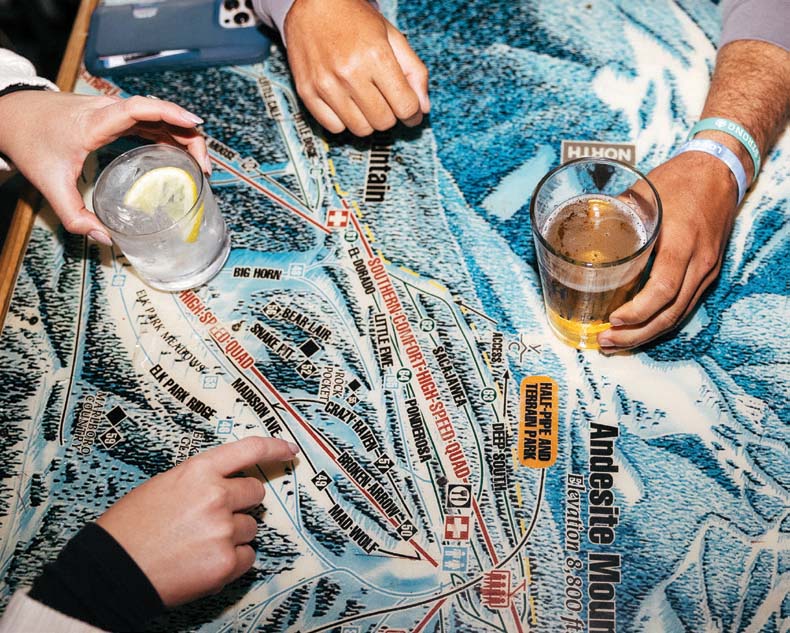
At The Brothel, a vintage map of Big Sky Resort makes for the perfect bar top.
“It’s always been a group effort,” says Boutsikaris. “I’m super grateful that people show up. That’s the biggest part.”
When I enter Dusty’s Bar in the dryland-farming community of Brady, Montana, my first reaction is surprise. It’s so clean.
The polished wooden bar and shiny floors are the result of a renovation during the COVID pandemic in 2020. Kourtney Combs purchased Dusty’s in 2019 and laughs as she acknowledges the irony of what she refers to as “The Clean Dive Bar.”
Located in Great Falls, Montana, the Sip ’n Dip embraces its tiki retro vibe.
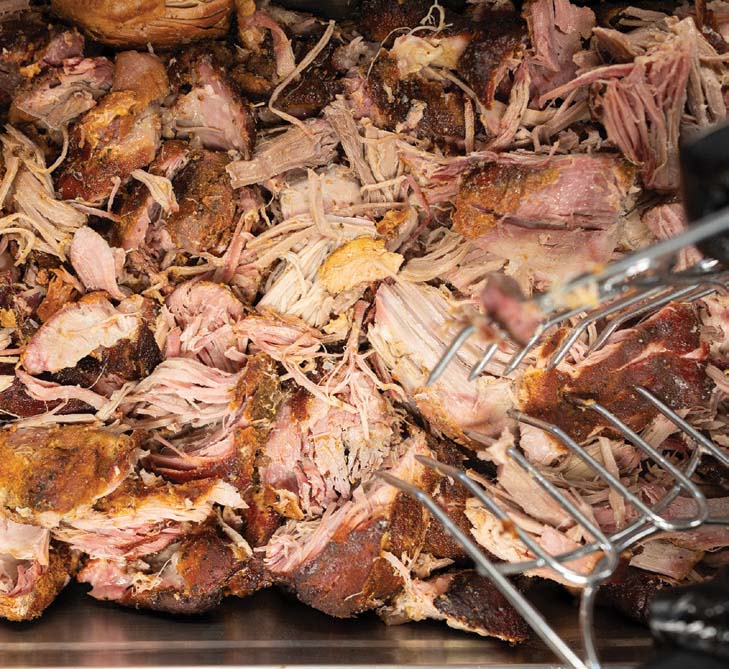
But it’s a good thing that the bar is immaculately clean because this is a place where many people come to eat. Every Friday, Combs’s partner, Travis Looney, spends the afternoon smoking meat. His barbecue pork, tri-tip, brisket, sausage, ribs, and turkey draw a crowd of people, some traveling nearly an hour from as far as Great Falls or Cut Bank.
Dusty’s is a place where customers chip in.
“If I get too busy, people will just get up and start helping,” Combs says. “They’ll take their dishes back. They’ll stock the cooler. They’ll clear other people’s plates. … If I have to leave the bar for 20 minutes, it will take care of itself. Customers will get their own drinks. Honor system. We trust them.”
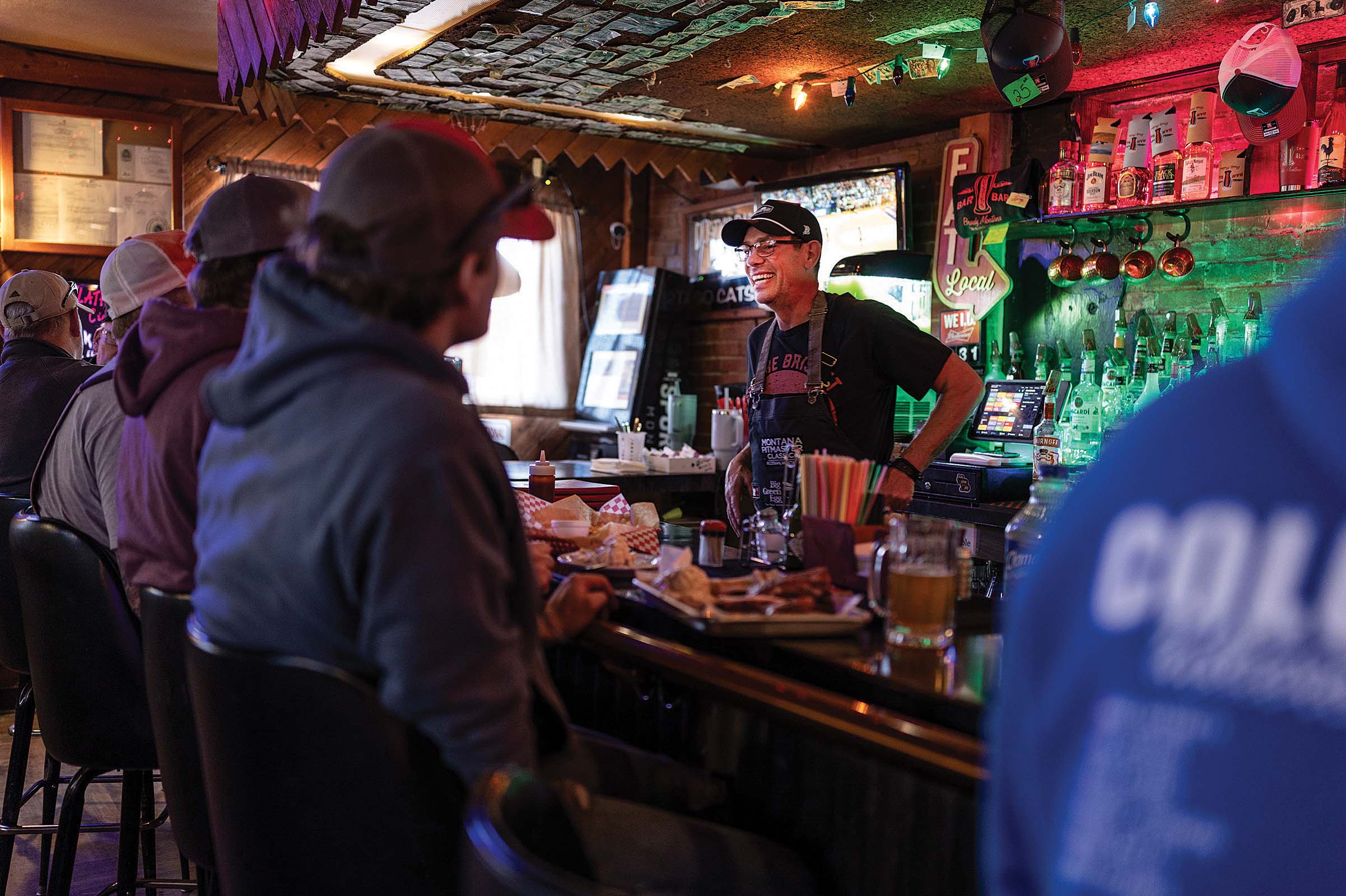
Travis Looney, the mastermind in Dusty’s kitchen, enjoys a laugh with customers at the bar.
When I sit at the bar with three locals — Gus Winterrowd, a retired farmer; Jeff Farkell, a crop consultant; and Dan Rouns, a retired farmer and previous Dusty’s owner — the conversation is meandering, touching topics as far-ranging as life-before-technology, soil samples, and memories of spinning records in the disco bar upstairs. For me, following along is like traveling down an unknown country road as it bends and winds and trails off in unexpected directions.
This is how we land on the topic of the “Cancer Belt.”
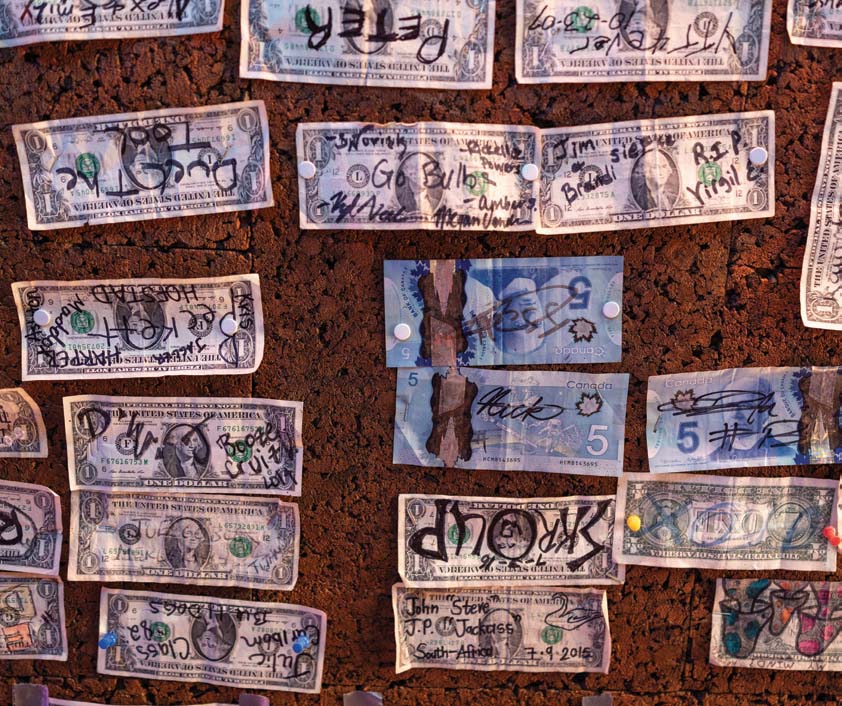
There’s a ritual at Dusty’s in which customers leave behind a signed dollar bill and pin it to the ceiling. There are bills from as far away as Canada, Mexico, and South Africa.
Winterrowd tells the group that he heard the term from his late wife’s doctor in Seattle. Winterrowd had asked the medical professional why so many women from the Midwest and Northern Plains were getting cancer.
“It’s the cancer belt,” the doctor had responded.
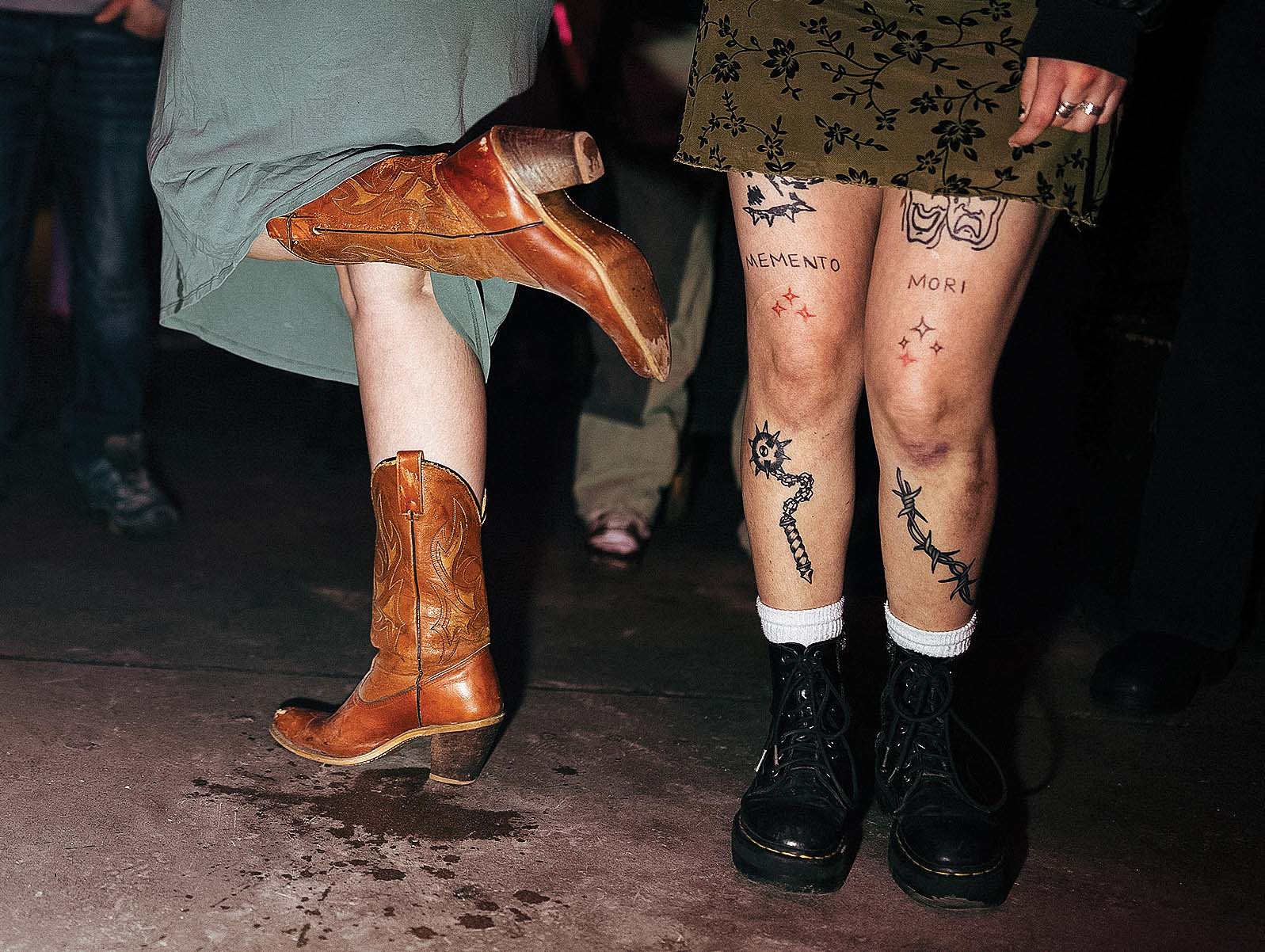
At The Filler, the variety of people — some in cowboy boots, some in 1980s attire, and some with tattooed legs — is as diverse as the eclectic collection of things covering the walls.
“She put up one hell of a fight,” says Rouns about Winterrowd’s wife. “She did anything any person could do.”
At this point in the conversation, I realize I’m witnessing the beauty of the dive bar: It is a place of connection, a place where real people come to know each other, in real time.
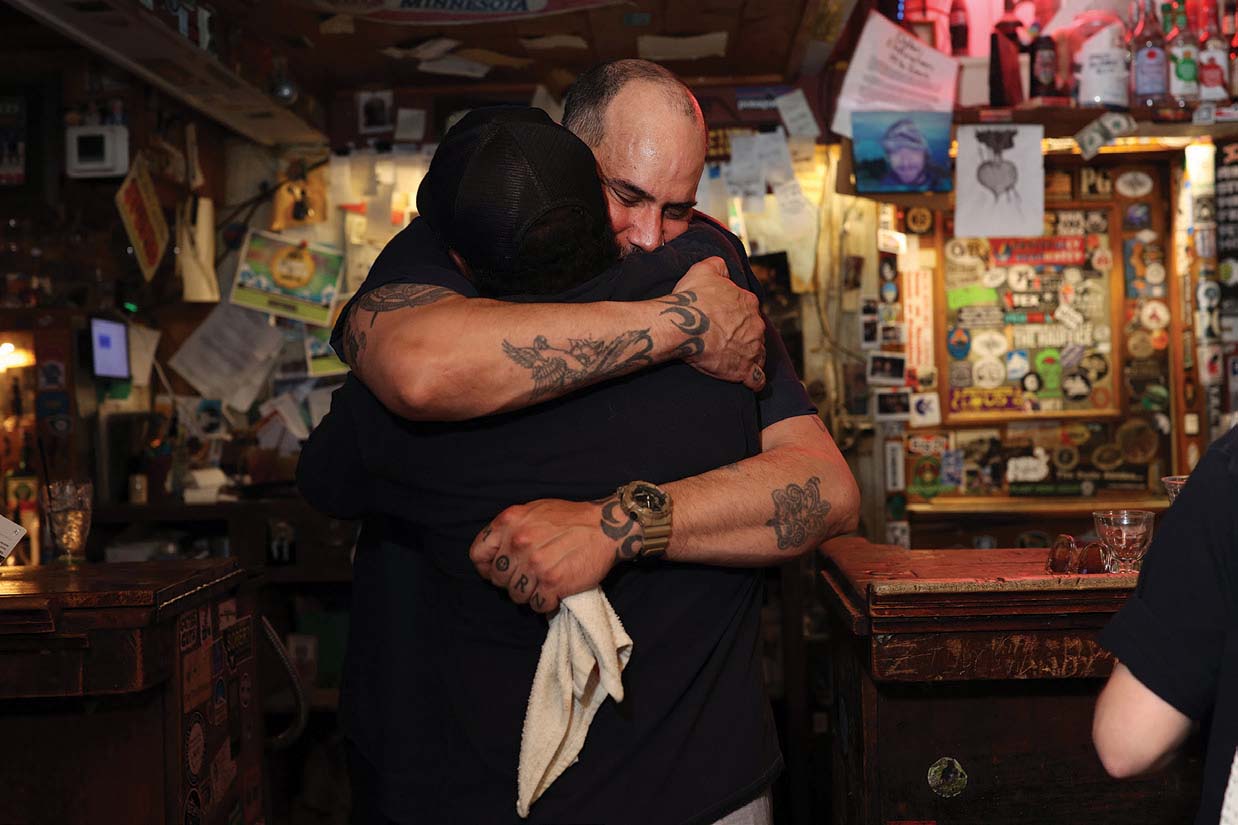
Justin Rochin,
who first bartended at The Hauf almost two decades ago, hugs a customer who has recently returned to Bozeman.
And of course, such moments of gravity are balanced with humor.
“We give each other shit,” Farkell says. “Ninety-ninety percent of the time we all get along. And we don’t talk politics unless we’re really drunk.”
At each dive bar I tour, people share their recommendations for other establishments to visit.
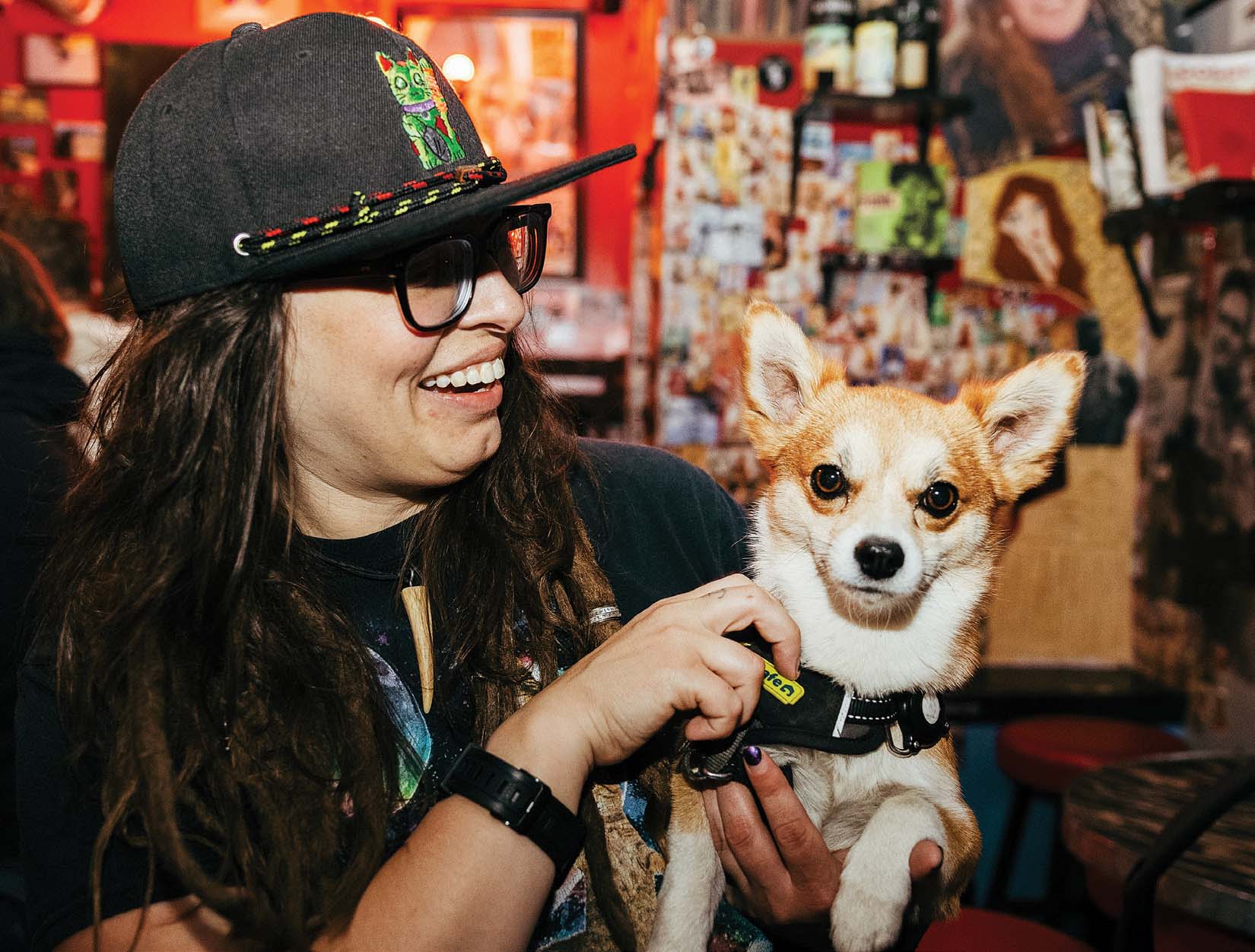
Justin Rochin, who first bartended at The Hauf almost two decades ago, hugs a customer who has recently returned to Bozeman.
While at the Sip ’n Dip, people point me in the direction of the nearby “Bra Bar,” more formally known as the Ramble Inn located west of Great Falls in Sun River. There, customers leave their bras behind to hang on the walls in exchange for free drinks. The bras are great fodder for good-natured double entendres regarding “cups,” and a fun starting point for lighthearted conversation.
Also on the list is Helsinki Bar, the last remaining building in Finn Town in the small mining community of Butte. I stop in on St. Urho’s Day, a Finnish holiday in March that honors the fictional Saint Urho. While there, I meet Fiina Heinze and witness her crowning as the 2025 Queen of Urho’s Day. The bar is packed, and patrons enjoy Jello shots and a mysterious mixed drink served in plastic bags.
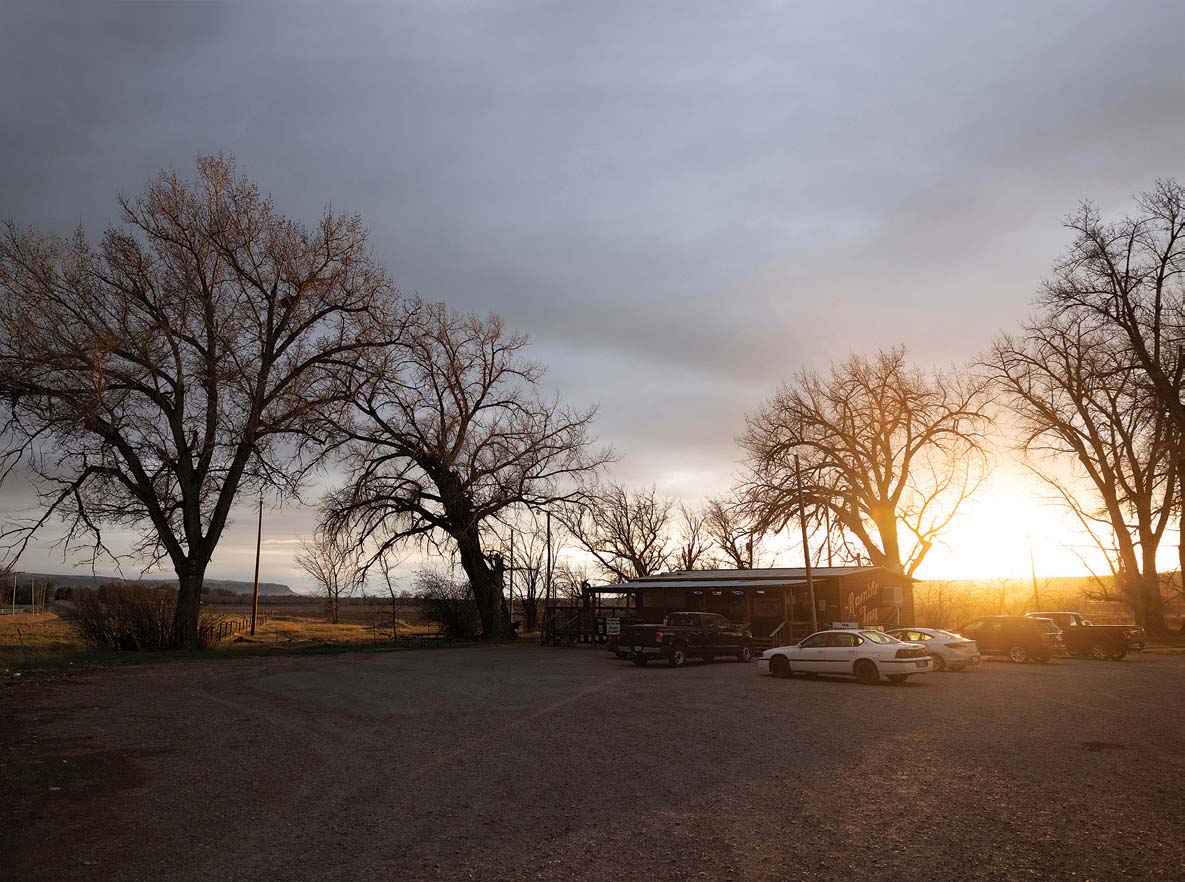
The Ramble Inn, also known as the
Bra Bar, is located in the tiny community of Sun River, Montana.
According to Heinze, who is of Finnish descent, Saint Urho is celebrated for driving away the grasshoppers that were destroying the grape crops in Finland, and the holiday is something of a whimsical Finnish rivalry to Saint Patrick’s Day. “It’s just a day that the Finns decided to have,” she says. “It’s not a national holiday.”
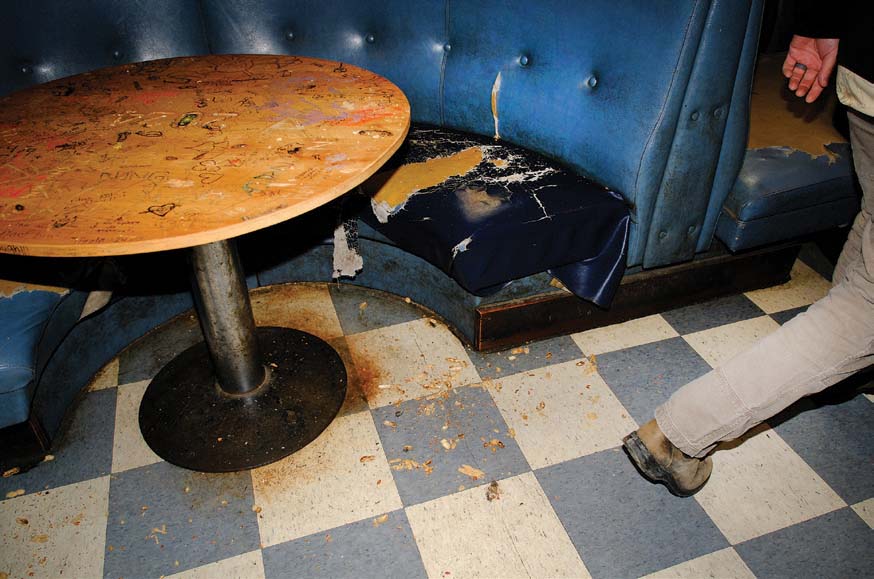
The torn booth seat at The Hauf is apropos of dive bar decor and culture.
Throughout my tour of Montana, I’m told countless tales that reveal the essence of the dive bar: In large part, they are about stories. The stories we listen to and share. Those we experience while we are there, and those we reflect on after we leave.
And, if you are anything like me, the dive bar can mark the beginning of a new story — one with a lifelong partner or newfound friends.
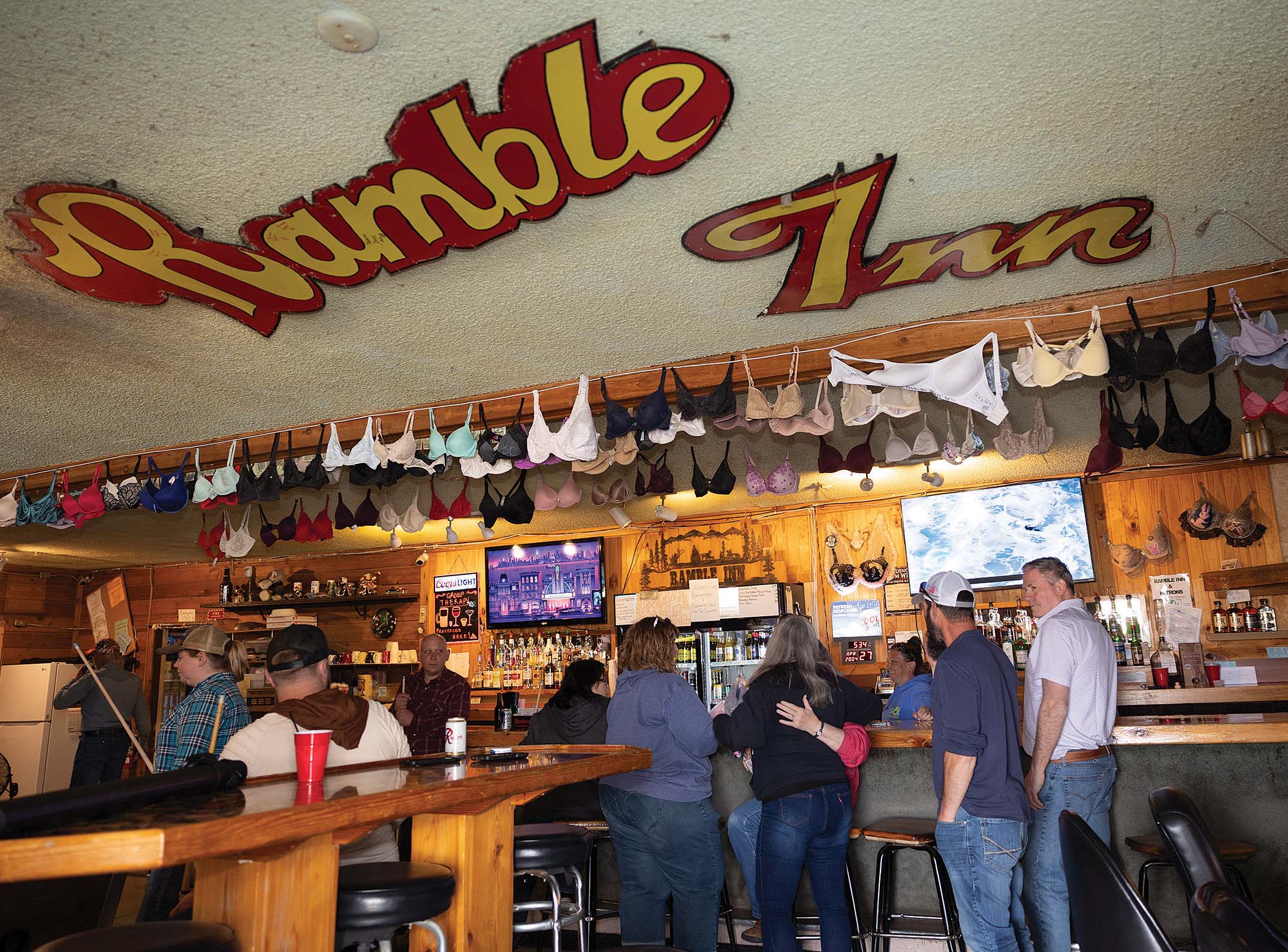
Customers enjoy the relaxed atmosphere at the Ramble Inn where women leave their bras behind to hang on the walls in exchange for free drinks.
Montana-based writer and photographer Janie Osborne covers projects that explore life in the American West. She is a longtime contributor to The New York Times, and her photography work has been recognized by American Photography, with selections appearing in both the AP 41 and AP 42 annuals in 2025 and 2026.
No Comments