


25 Sep Yellowstone’s Greatest Art
Charles Punchard arrived at the headquarters of Yellowstone National Park on July 19, 1918, with a letter in his hand. Signed by Stephen T. Mather, director of the newly formed National Park Service, the letter declared that Punchard had been hired as the agency’s first-ever landscape engineer, and, as such, he should be listened to. Punchard’s arrival marked a shift in the way the park operated, with much more input from Washington, D.C. It also marked a shift in how Yellowstone managers manipulated its natural wonders.
Punchard was a clean-shaven, Harvard-educated 33-year-old from a venerable New England family. A colleague described him as having “professional skill and keen judgment and likable manly qualities.” He suffered from tuberculosis and had been advised by his doctor to leave Washington, D.C., for the West’s drier climate. In Yellowstone, he became invigorated, quickly making many suggestions that colleagues found useful.
Mather later commended Punchard’s work on the placement of buildings: “employees’ cottages, ranger stations, gasoline and oil stations, automobile checking stations, comfort stations, etc.” At permanent camps — glamping operations with tents set on wooden platforms — Punchard improved the layout to give each tent better views.
Although federal personnel policies emphasized his technical prowess (“Landscape Engineer”), to Punchard, landscape architecture was his discipline and training. His previous job had been landscape architect for the national capital.
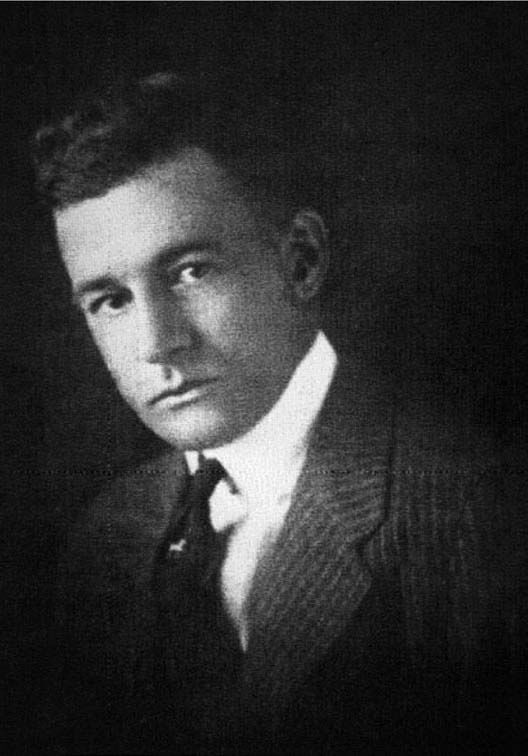
Charles Punchard was a New Englander appointed as park service landscape engineer. Photo by NPS
Landscape architecture is art. It relies on artistic principles such as form, scale, and color to create aesthetic experiences that evoke specific emotions. Its practitioners use trees, grasses, and open space the way other artists use paint, clay, or musical notes.
Thus Punchard’s two years in Yellowstone — sadly, the tuberculosis killed him in 1920 at age 35 — marked the launch of some of Yellowstone’s greatest and most overlooked works of art.
Yellowstone’s history as a national park is deeply tied to art. The photographs of William Henry Jackson and the sketches and paintings of Thomas Moran — both members of the 1871 Hayden Expedition — helped persuade Congress to set aside the world’s first national park on March 1, 1872.
Then Moran unveiled his oversized oil-on-canvas The Grand Canyon of the Yellowstone, which Congress purchased for $10,000. Displayed at the Capitol building, the artwork symbolized America’s greatness through landscape. Yellowstone quickly became a favorite setting for artists of the romantic Hudson River and Rocky Mountain schools, who used soaring cliffs, plunging canyons, and operatic weather to dominate late 19th century American art.
In the early 20th century, Yellowstone’s parkitecture — such as the innovative Old Faithful Inn and rustic roadside museums — earned plaudits. But since then, Yellowstone art has had a lower profile. Are its themes less relevant, its setting less meaningful, its execution of poorer quality? Or are we just looking for it in the wrong places?
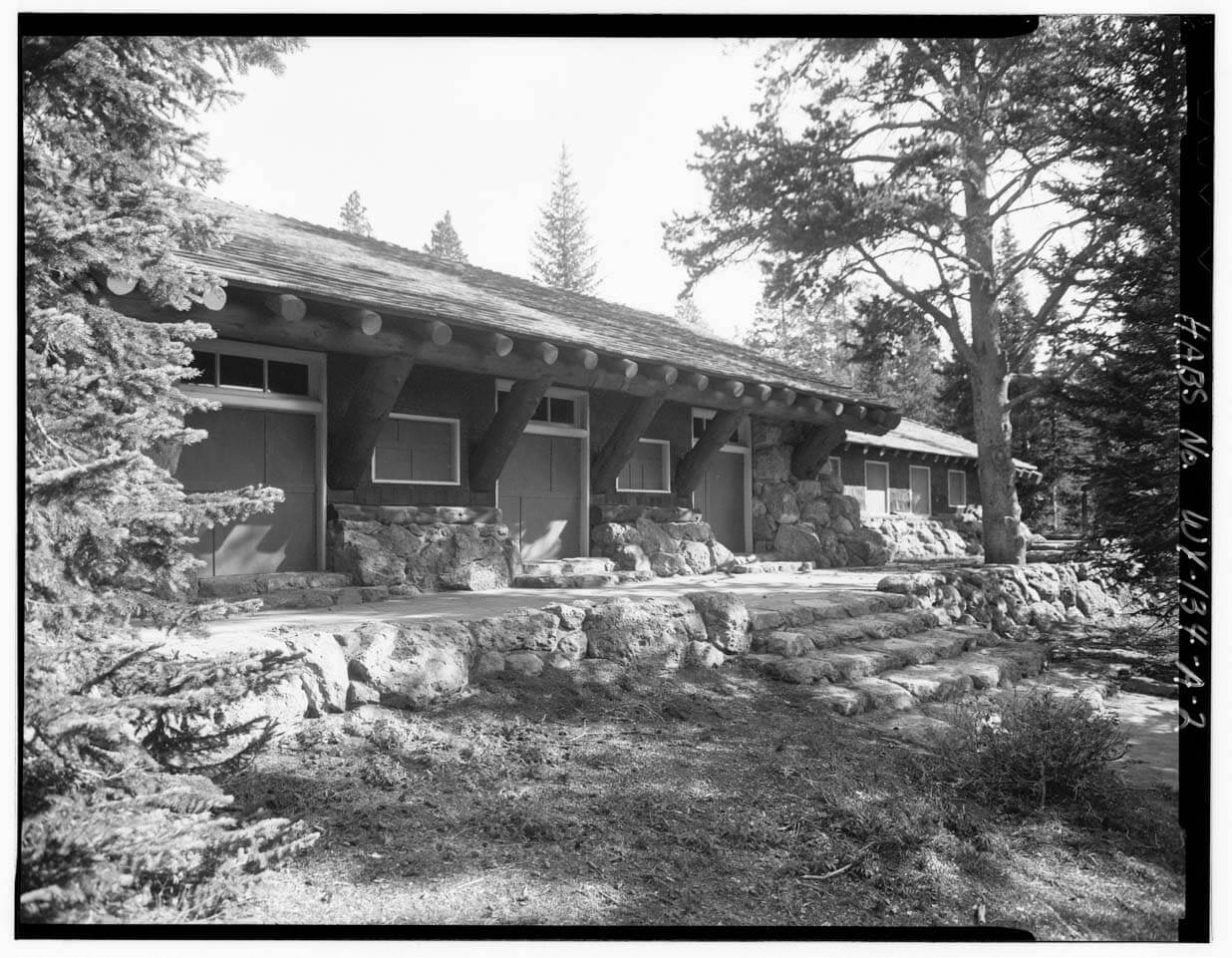
The log cabin-influenced design of the Fishing Bridge Museum was early rustic parkitecture. Photo by LIBRARY OF CONGRESS
Yellowstone’s landscape architecture is never encased in a frame or preserved in a museum. You can’t buy it to install in your living room. It’s so subtle and unmarked that when you’re in the middle of it, you may not be aware that it even exists.
Most visitors to Yellowstone rarely venture to the backcountry wilderness. Instead, they stay on the roads or in the developed destinations. They’re often impressed by the beauty. They ascribe it to God or nature. But many of those vistas — and the feelings people have as they gaze — were consciously engineered by Punchard and his successors.
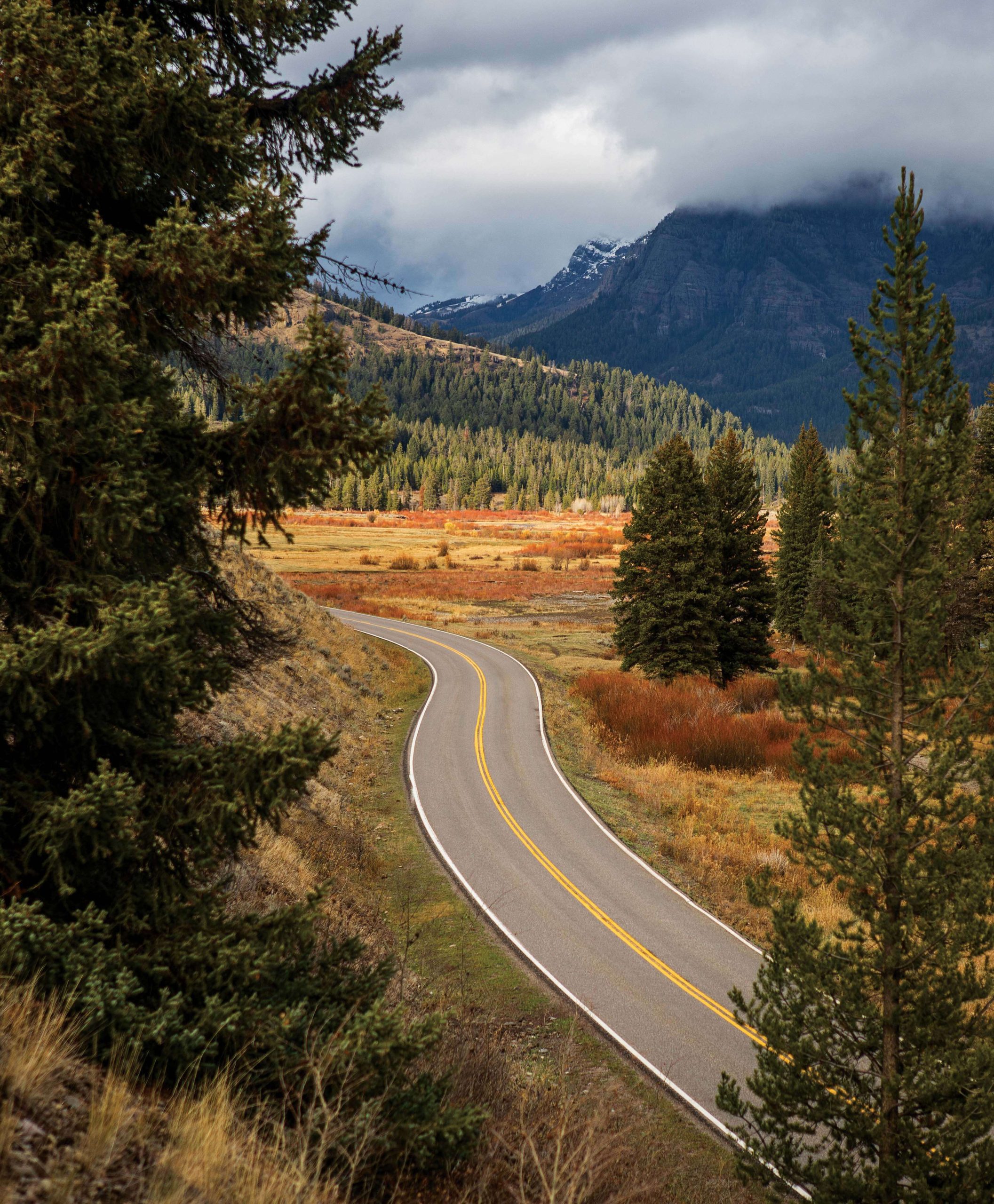
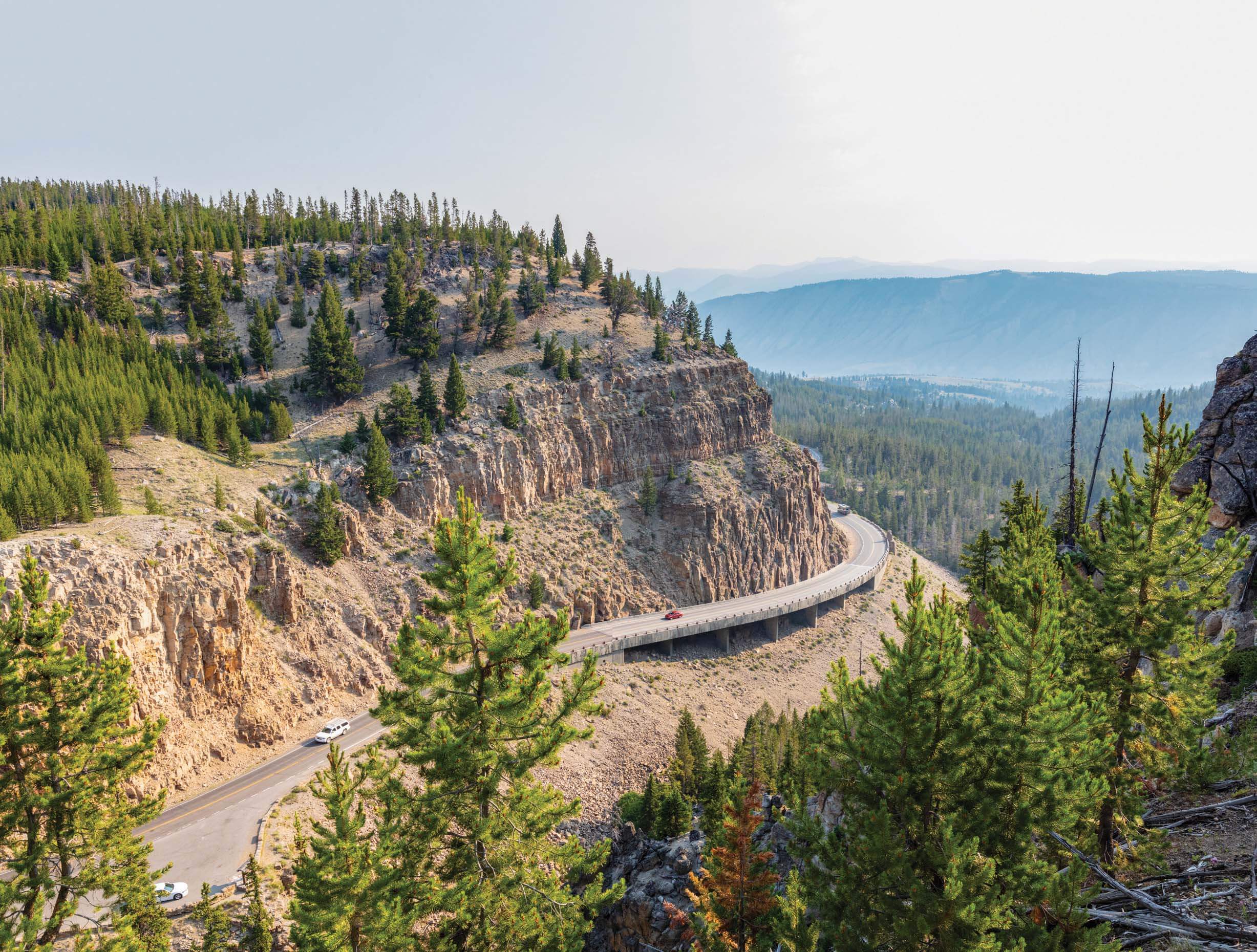
For example, if you’ve ever driven in Yellowstone, your every automotive experience was planned by a landscape architect: the way the roads curve, the way the views unfold, and the way the roadside has been manicured.
One big reason Mather hired Punchard in 1918 was that cars were then transforming the Yellowstone visitor experience. The first car officially entered the park on July 31, 1915. “It was inevitable that the automobile should revolutionize the park tour,” Mather wrote. By 1917, horses and stagecoaches were banned on the park’s Grand Loop Road to make way for cars. Now that cars fully owned the roadways, Punchard would maximize their aesthetic experience.
Thus, Punchard advised that borrow pits, which were used to gather fill for road construction, be located out of sight instead of alongside the road. He recommended clearing roadside timber to expose views of places such as Wraith Falls and Duck Lake. He and his successors encouraged engineers to lay out roadways to prioritize scenery rather than efficiency or speed.
The placement of roads and parking spaces, such as here at the Grand Canyon of the Yellowstone in about 1932, ensured that tourists’ emotional reactions to the landscape would resemble their reactions to a Thomas Moran painting. Photo by NPS / JACOB W. FRANK
Landscape architects did similar work in road-adjacent spaces, from boardwalks to campgrounds to parking lots. They placed rocks, trees, trails, bridges, and other elements to enhance visitors’ emotional journeys. For example, Punchard suggested removing dead wood and debris from the travertine terraces at Mammoth Hot Springs. He recommended the planting of lawns around hotels and the construction of ornamental fences around service areas.
Punchard drew on principles that had succeeded for decades in urban parks. In the 1850s, Frederick Law Olmsted had largely invented the discipline of landscape architecture in the United States with his design for New York City’s Central Park. For example, Olmsted designed a carriage road that navigated to all the major sites while constantly providing new and changing vistas and natural experiences.
Punchard had grown up in Brookline, Massachusetts, near a later Olmsted project: Boston’s Emerald Necklace park system. Punchard then worked with Olmsted’s son in Washington, D.C. It was easy for him to import Olmsted’s principles to Yellowstone — from ornamental plantings to the Grand Loop carriage road. Like an urban park planner, Punchard designed roads, pathways, campsites, and geyser-viewing benches to alter the way people experienced nature.
Indeed, like Olmsted, Punchard could think of the scenery as not just mountains or geysers, but a source of emotional transformation in the visitor. For example, when you drive around a corner and a mountain vista suddenly pops in front of you, the beauty pairs with surprise to bring a sense of awe. Neuroscientists say that with awe, dopamine is released, breathing deepens, the heart rate slows, and brain activity shifts away from internal processing of anxiety and stress. You feel calm, relaxed, and more connected to others. You feel a greater sense of meaning.
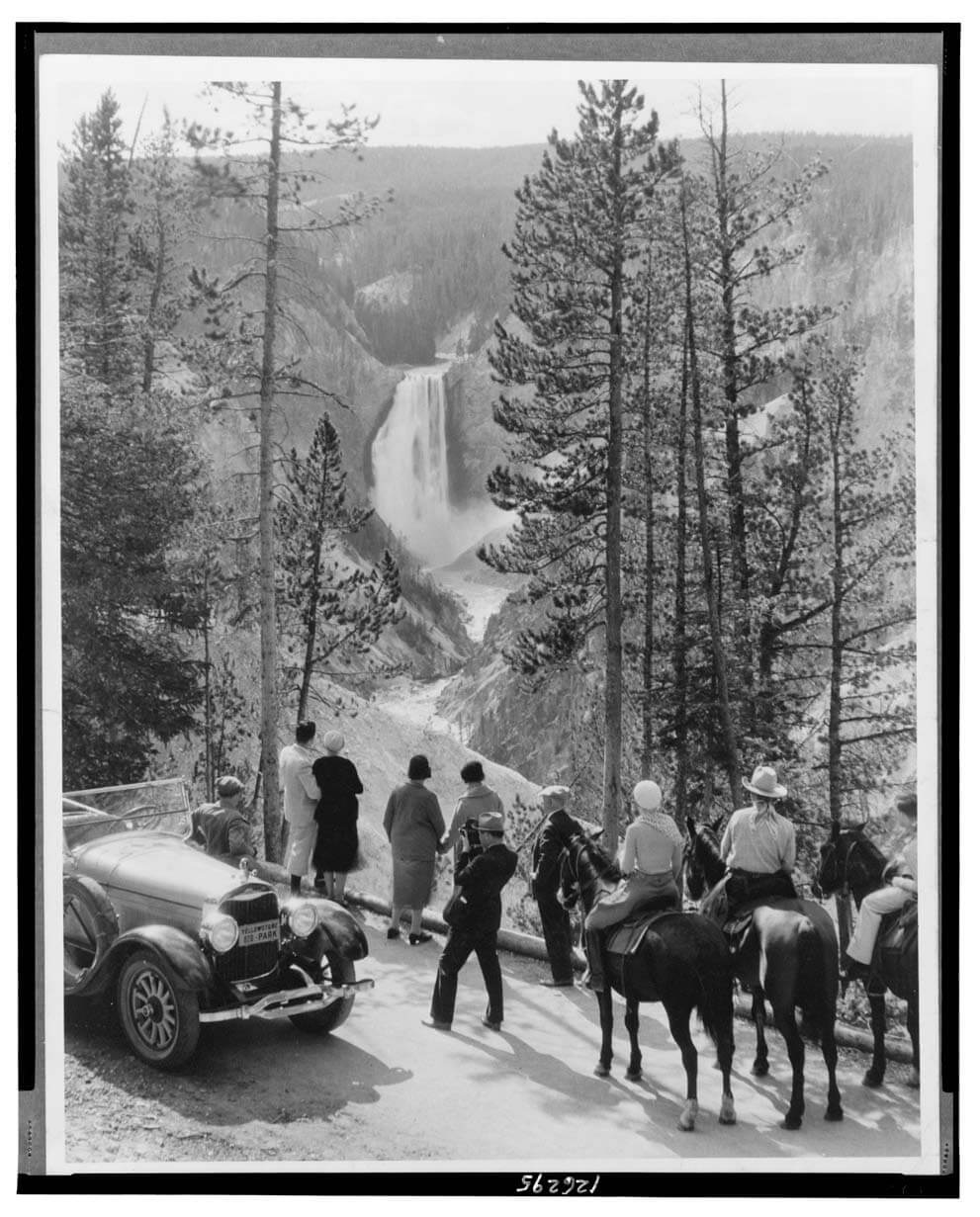
The road through Golden Gate canyon, a marvel of human engineering, enhances emotional reactions to the scenery. Photo by LIBRARY OF CONGRESS
In the moment, you may attribute that awe to nature — the geyser, waterfall, forest, mountain, or vast expanse. But in fact, in a built environment, you were set up. Your experiences were manipulated by landscape architects in the same way you are manipulated when you go to a museum or concert. This is what art does: It creates experiences that stimulate your emotions. Thus, in Yellowstone, you’re often having an emotional reaction to “nature” that’s only partly “natural” (if you think of “natural” as “the opposite of human”). It’s also shaped by artists — human beings.
When I first learned about Punchard and the long tradition of landscape architecture in national parks, I felt a bit cheated. A museum or concert is a product of human society, and a national park or wilderness area is where I go to get away from that. Like John Muir, I go to Yellowstone to revere wilderness, not humanity.
But Muir’s wilderness ideal is tied up with solitude, and Yellowstone receives almost 5 million visitors per year. As Anne Whitson Sprin wrote in the essay “Constructing Nature” (in the book Uncommon Ground: Rethinking the Human Place in Nature), “Olmsted could reconcile reverence and use, and he did this through art.” Despite the huge crowds that today nearly overwhelm Yellowstone, the art of landscape architecture can help us achieve Muir’s reverence.
Furthermore, the process of creating that art is a way of adding value to a place, investing in it. Yellowstone means more to Americans than a random wilderness area because of the work landscape architects did to turn untouched nature into a park. “It is the cultural value invested in natural places through their physical development as parks that assures the preservation of those places in a relatively natural state,” wrote Ethan Carr in Wilderness by Design: Landscape Architecture and the National Park Service.
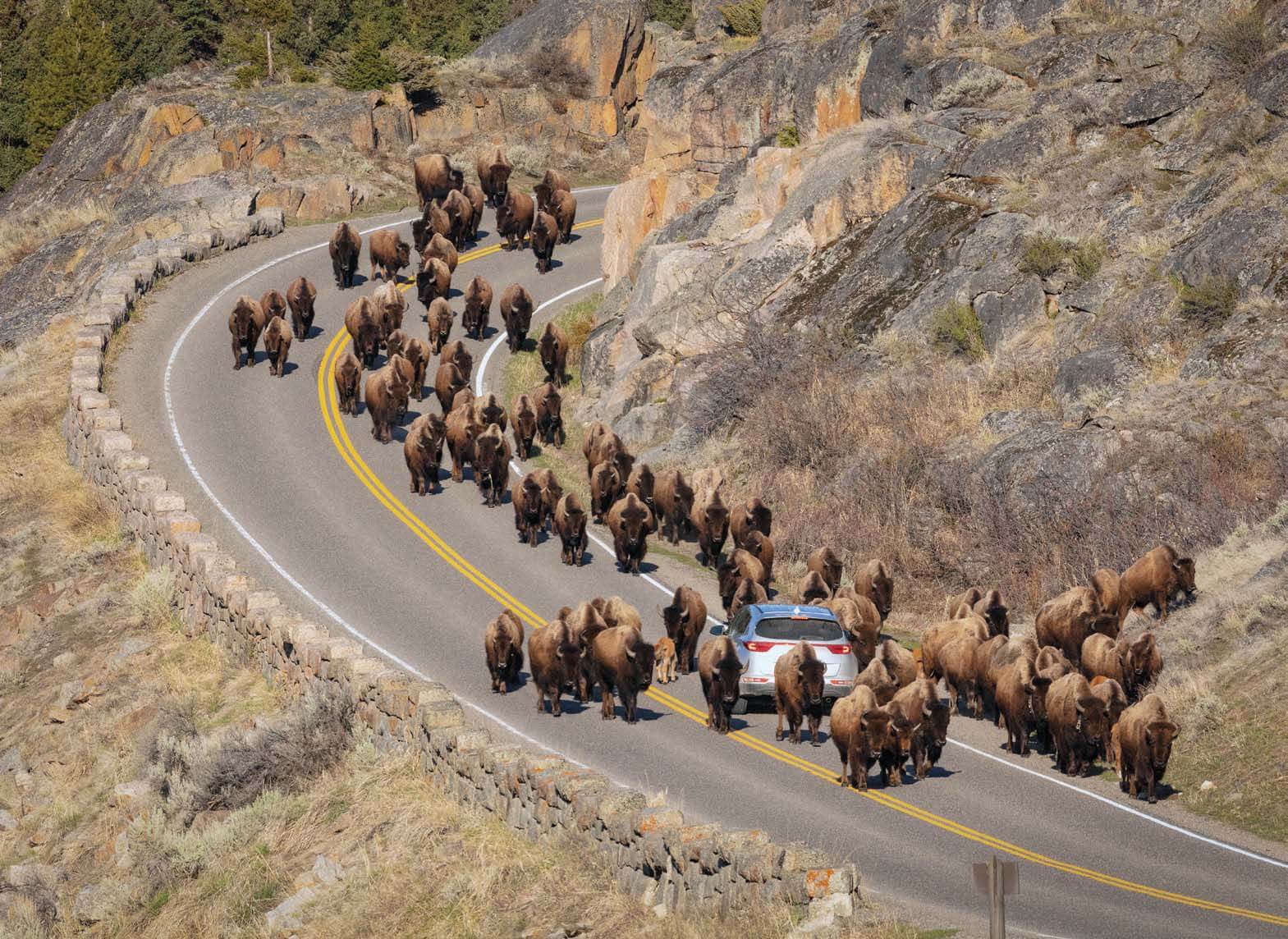
Although bison are a feature of nature, a road through their habitat alters the experience of encountering them.
In short, Yellowstone’s landscape architecture helps us love the park more, and thus preserve it better. Its aesthetics better connect us to science, conservation, natural history, wildlife and wild places, the value of open spaces and public lands, and the natural world in general.
This all comes as a result of art — beauty in service of emotion, and thus in service of humanity and culture. Furthermore, great art is also thought-provoking and culturally enriching.
Consider, for example, how Punchard defined beauty. As a New Englander and a disciple of Olmsted, he was influenced by the tradition of English country gardens. At Harvard, he’d studied English curving paths across grassy expanses with rustic stone stairways, seats, or walls. He admirably executed similar schemes in a corner of Wyoming that might otherwise seem foreign and forbidding, with steam weirdly bubbling up out of the ground.
Yet Punchard hadn’t studied Indigenous traditions. At Yellowstone, he never consulted with any tribes. He just went ahead and used the park’s natural resources in service of his own — his culture’s — creative vision. In doing so, a critic might argue, he erased previous such visions.
Indigenous tribes have inhabited Yellowstone for millennia. They used and managed these places in ways that created beauty and enhanced emotional reactions — just like Punchard did, except by their own terms, rather than English-country-garden ones. Some of those artworks might yet still be recovered, if we could learn to see and seek them.
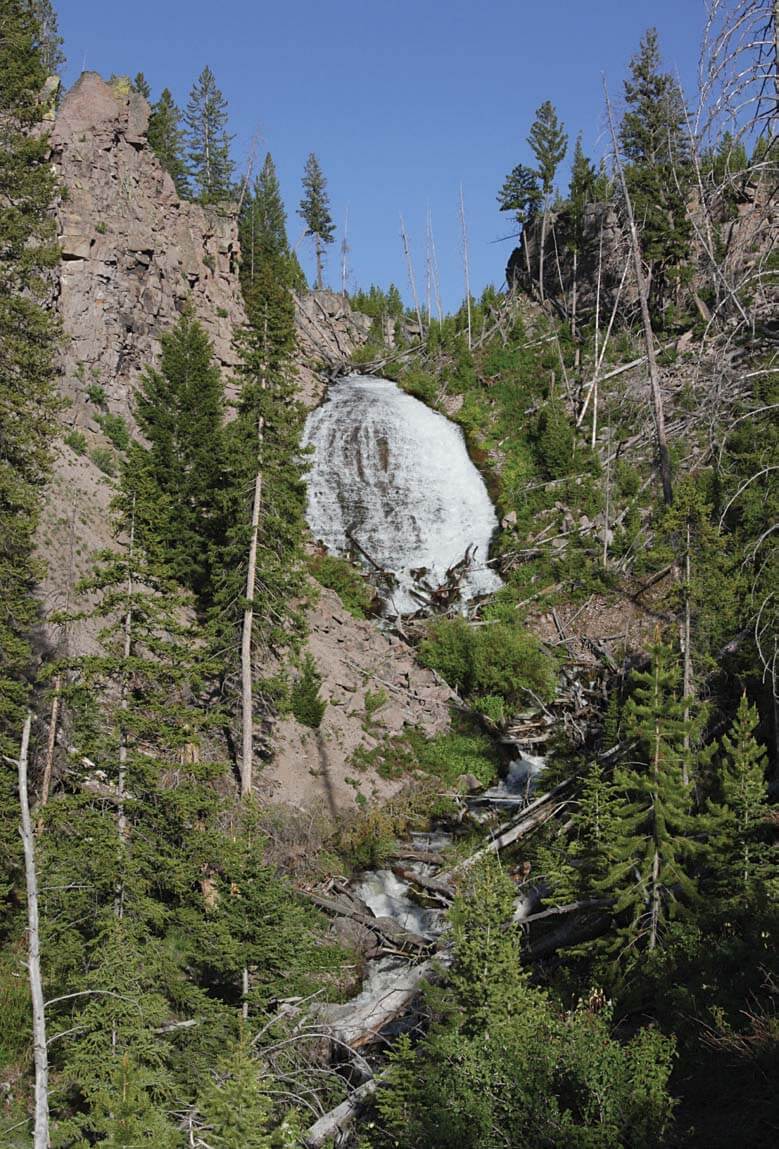
Wraith Falls was not visible from the road until Punchard recommended clearing roadside trees. Photo by NPS / JIM PEACO
But others have been literally paved over. After all, Yellowstone’s earliest white explorers followed Indigenous pathways. Those routes evolved into roads for stagecoaches and then automobiles — the Grand Loop we drive on today. Did the Indigenous cultures, too, value a sort of carriage road to take you to all the major sites? Or have we forgotten how to see the ways they valued other sites, other ideals of beauty?
In other words, as Punchard manipulated the roads and roadsides to serve his culture’s priorities — including English-garden beauty and automotive convenience — how much did he inadvertently obliterate the work of his predecessors? He hadn’t thought to look for any of that, hadn’t been trained to appreciate it. Because the values of his culture didn’t honor those elements of a previous cultural landscape, he manipulated the landscapes in ways that de-emphasized them. It’s as if he painted over a canvas without realizing its worth.
None of this makes Punchard a bad man, or anything less than a hero. Within the cultural values of the time, he and his successors unquestionably made Yellowstone a better place. For example, before Punchard, park administrators had strung telephone wires on poles beside the road. Then the concessionaire running the park hotels strung its wires on the opposite side of the road. Landscape architects insisted that the wires be consolidated, and ideally moved to places where they would not impede the view.
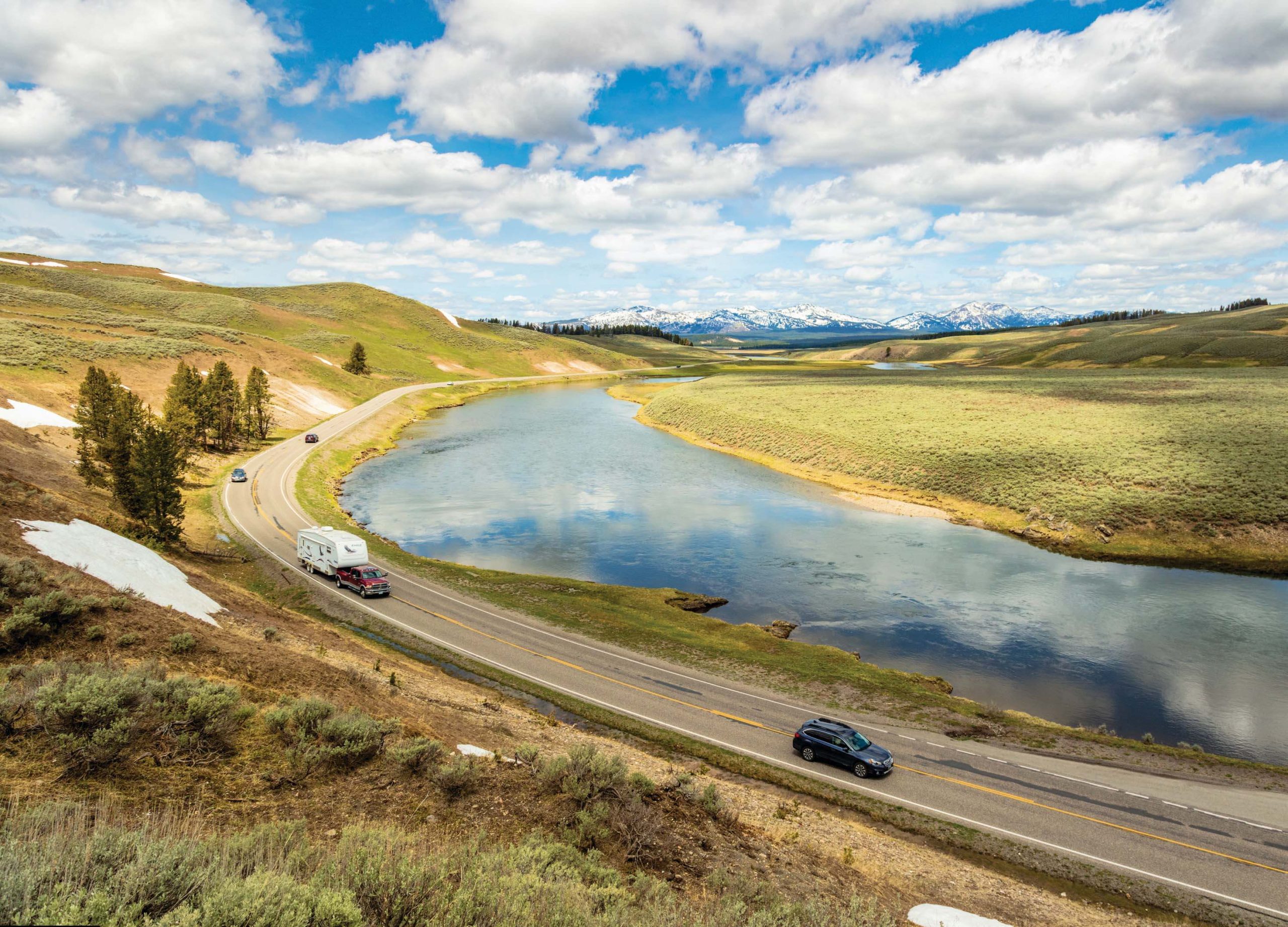
A destination such as Hayden Valley feels iconic in part because a road runs through it. Photo by NPS / JACOB W. FRANK
If America was going to put roads in Yellowstone, those roads needed to be designed to a standard of beauty. That standard needed to appeal to the public — to the taxpayers funding the new park service — while also honoring the stunning natural environment that was the park’s entire point.
Thus, following in the tradition of Olmsted at Central Park, Punchard and his successors created a public space that admirably reflected American values. Following in the tradition of Moran and The Grand Canyon of the Yellowstone, they stirred public emotions in positive, productive, patriotic ways.
Before I discovered Punchard’s story, I had regularly driven through Yellowstone without much noticing the roadsides. I’d walked through developed areas without much thinking about the placement of buildings. I’d approached the grand hotels without asking if their lawns were — or should be — landscaped like those of English gardens.
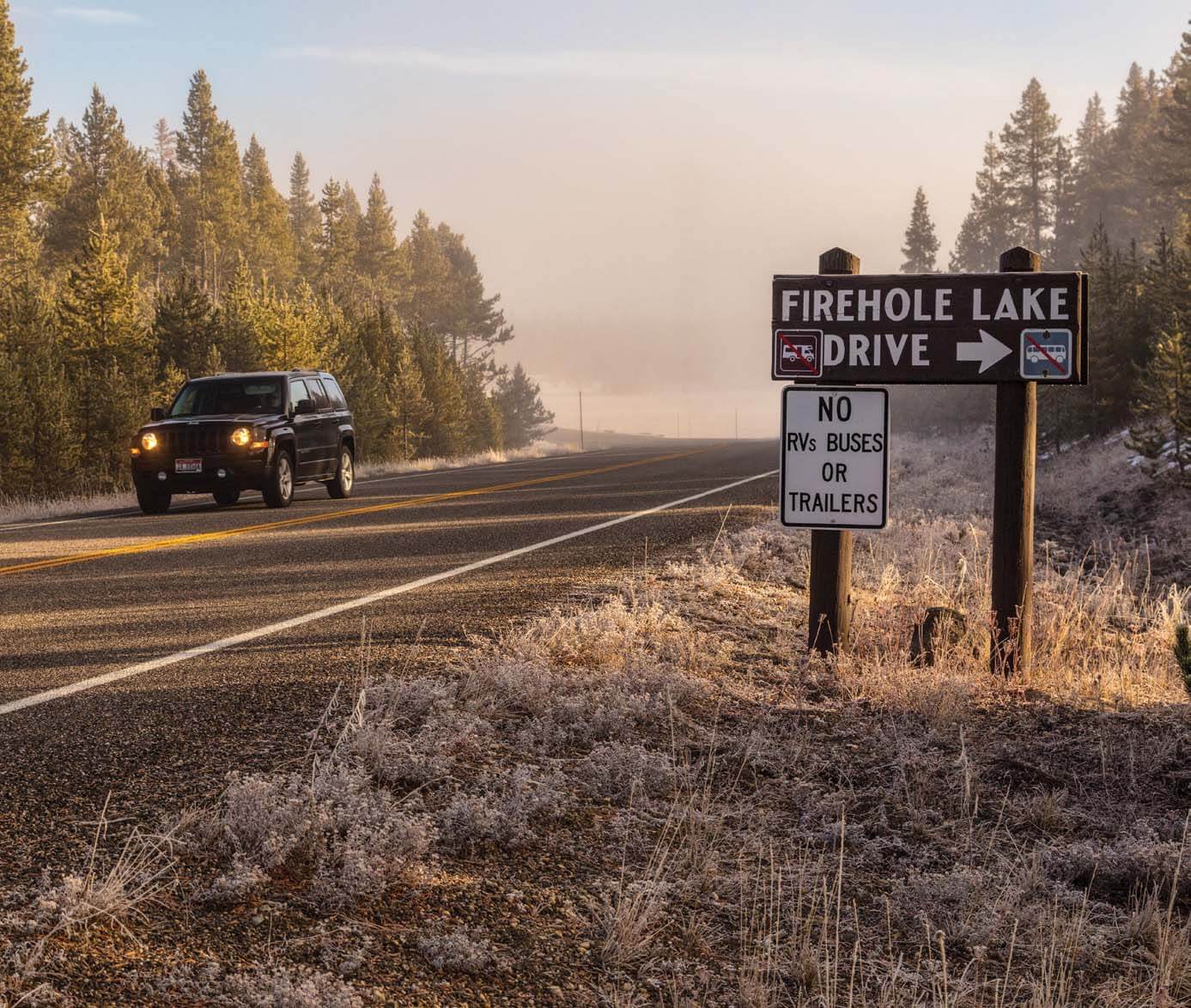
Yellowstone has been designed to be driven through. Those design choices — such as a road to Firehole Lake and a sign pointing toward it — are art. Photo by NPS / JACOB W. FRANK
The reason I hadn’t noticed the art of Yellowstone’s landscape architects was that I remained enthralled with the broader, preexisting landscape — the magnificent geysers, forests, mountains, and wildlife.
It turns out that Punchard and his successors had goosed those emotions in me by creating and manipulating more familiar, nearby landscape elements. Their role was hidden, humble, complementary, and awe-inspiring. I like to argue that their accomplishments were perhaps even greater than Moran’s because of the medium they worked in: It just seems appropriate that Yellowstone’s greatest art should be of the land itself.
This article was supported by a 2026 Pattie Layser Greater Yellowstone Creative Writing and Journalism Fellowship.
John Clayton, a regular contributor to Big Sky Journal, is the author of several books, including the forthcoming The Auto-Biography of Yellowstone: How Cars Continually Transform America’s Natural Treasure. He also writes the newsletter “Natural Stories;” johnclaytonbooks.com.
No Comments