


25 Sep Excursion: Postcards From Western Wyoming
I just baked some snickerdoodles. Eat ’em while they’re hot!”
It was an unsuspecting proclamation while camping on southwest Wyoming’s Green River. And yet, to my astonishment, my friendly campground neighbor strolled over from her site and presented a plate full of delicious cookies as I was rigging my fly rod.
I eagerly followed her advice.
She had sold her Arizona home, bought a trailer, and now travels around the country with her dog, lavishing unexpected kindness on folks she meets.
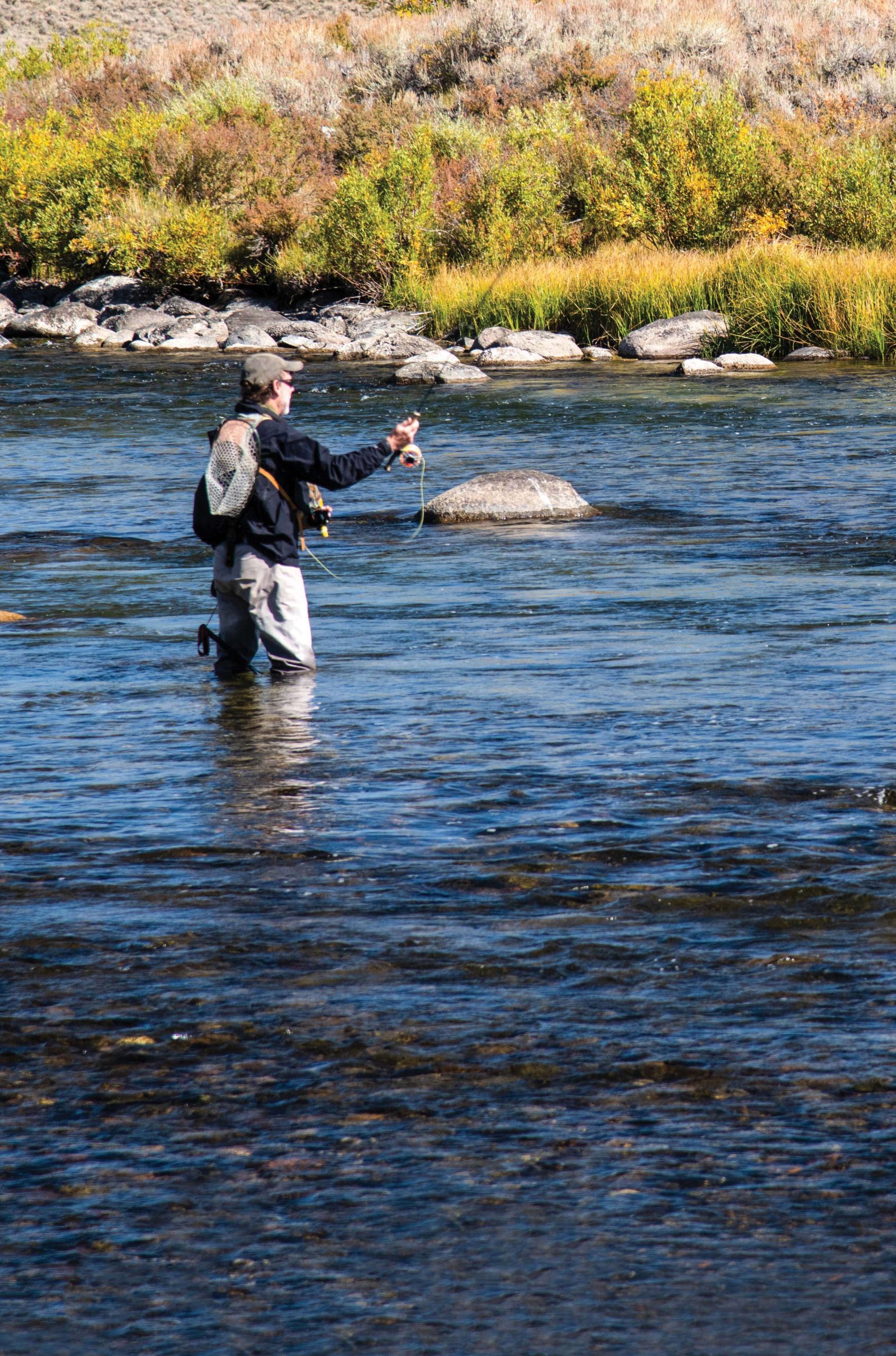
A fly angler works Wyoming’s boulder-filled upper Green River, which offers brown, rainbow, and cutthroat trout .
We live in a country where people are often polarized, eager to tear into each other like angry grizzly bears. Yet kindness and helpfulness still prevail on the road. Travelers mostly are curious, unjudgmental, and leave politics at home — just happy to be outdoors. Fall, especially, brings that out, with its relatively less crowded conditions, bluebird days, and psychedelic colors. It’s a time for reflection and gratitude. So often on fly angling road trips, the folks you meet — and their generosity and stories — are at least as important as the fish.
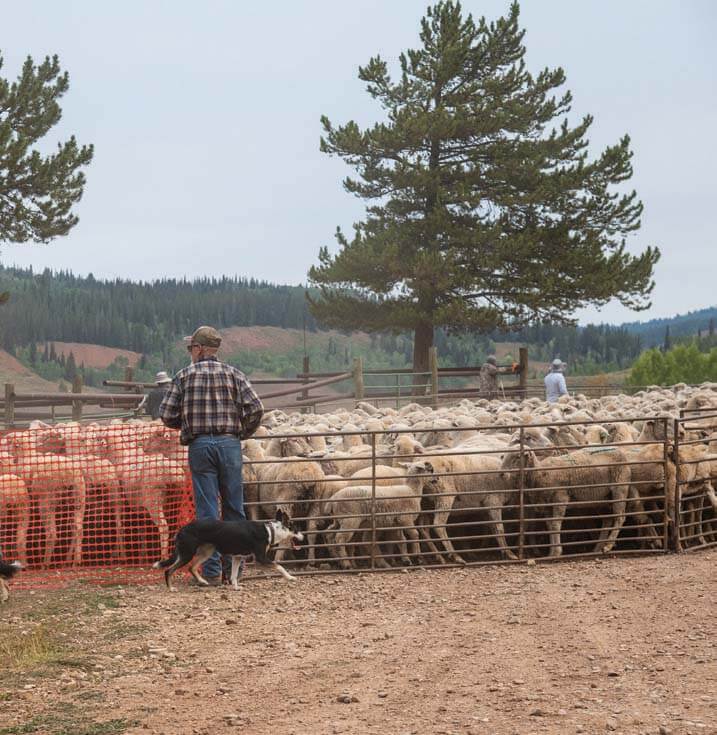
The author witnessed an early-fall sheep roundup on the Hams Fork River, with savvy, hard-working assistance from handsome border collies.
Which is not to discount the latter. One allure of this return trip traversing the Wyoming–Idaho border from Kemmerer to Jackson was catching three bejeweled trout subspecies — Bonneville, Colorado River, and Snake River fine-spotted cutthroats — each in adjacent drainages. They inhabit separate watersheds draining the isolated 8,680-foot-high Tri-Basin Divide in the Bridger-Teton National Forest, including the landlocked Great Basin; the Green and Colorado rivers flowing toward the Gulf of California; and the Snake system, running to the Columbia River and Pacific Ocean. It’s the country’s best place to corral unique cutts living in close proximity. A raindrop on the divide could help sustain any of these three beauties, depending on precisely where it lands.
Smiths Fork, Bonnevilles, and ‘Puddin’ Pie’
When I first visited the Smiths Fork a decade ago, I feared I might get run off for accidentally trespassing, or possibly shot. Instead, I was invited over to pony-tailed “Puddin’ Pie’s” ramshackle stream-side trailer for delicious pronghorn stew and campfire partying with his friends. This continued for two nights. Fortunately, I had a fresh bottle of Woodford Reserve bourbon to contribute to the mayhem. When I finally staggered back to my camper on the other side of the river the last night, Puddin’ instructed me to bring a larger bottle of whiskey if I returned.
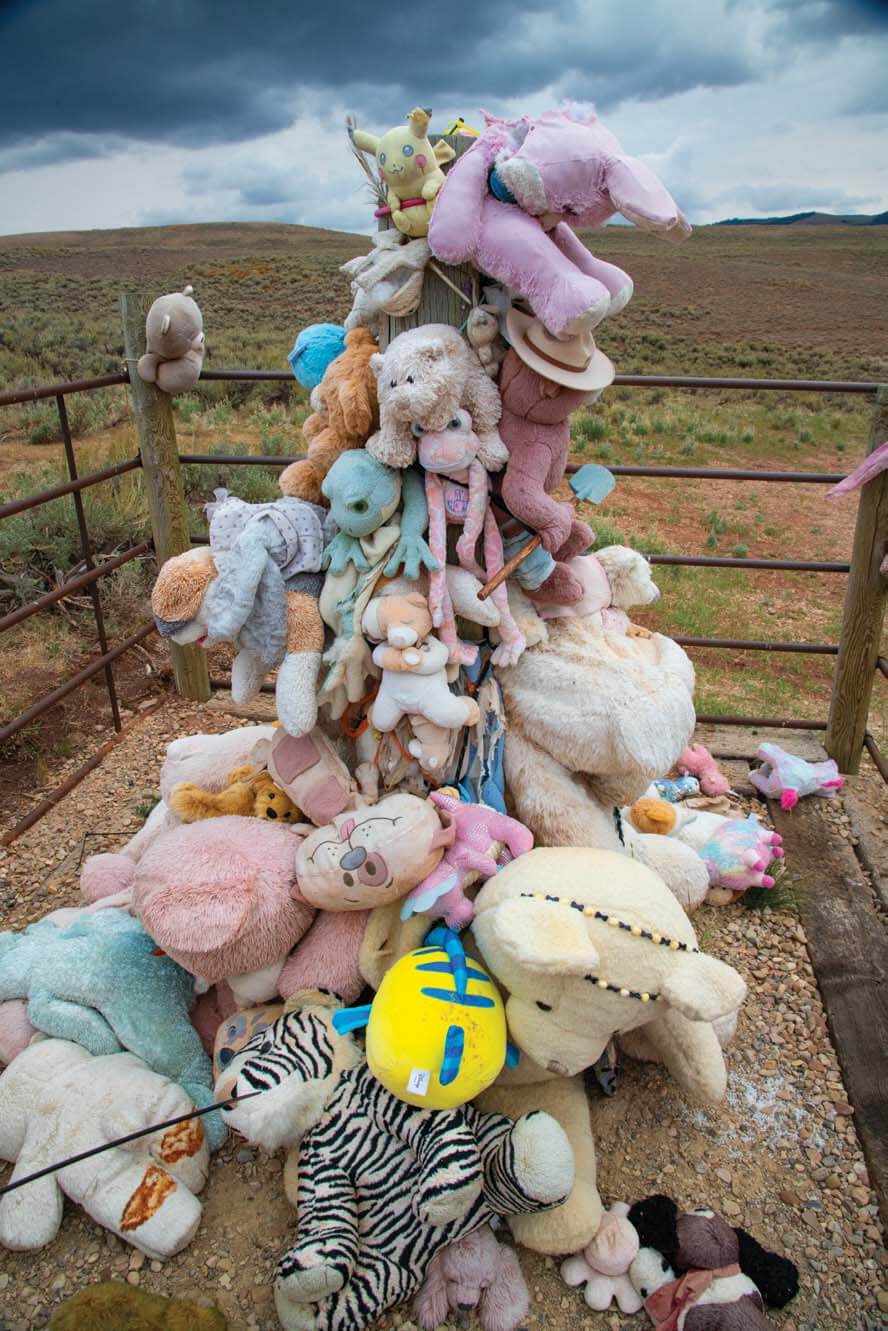
A strange teddy bear shrine, out in the middle of nowhere along the Hams Fork River, is lovingly maintained by locals.
The Smiths Fork feeds the convoluted Bear River, which heads north from Utah to Wyoming and Idaho, does a schizophrenic U-turn, and finally empties into the Great Salt Lake. The watershed shelters some of the healthiest remaining populations of Bonneville cutthroats, a trout many biologists thought was extinct until it was rediscovered in the 1970s. Because some Bonnevilles fatten up on Bear River bait fish before migrating up tributaries to spawn, they can grow surprisingly portly.
Sadly, when I returned last fall, Puddin’s party trailer was an abandoned, vandalized wreck, door swung open to the elements and rodents. The party was over, but the memories of new pals on the road remained vivid.
Hams Fork River Sheep Drive
Undertaking mundane morning chores at my U.S. Forest Service picnic table, I heard a cacophony of braying on the Hams Fork. As I searched for the reason for the noise, I spotted several indefatigable border collies racing around, expertly herding sheep into a fenced enclosure with the help of horseback cowboys.
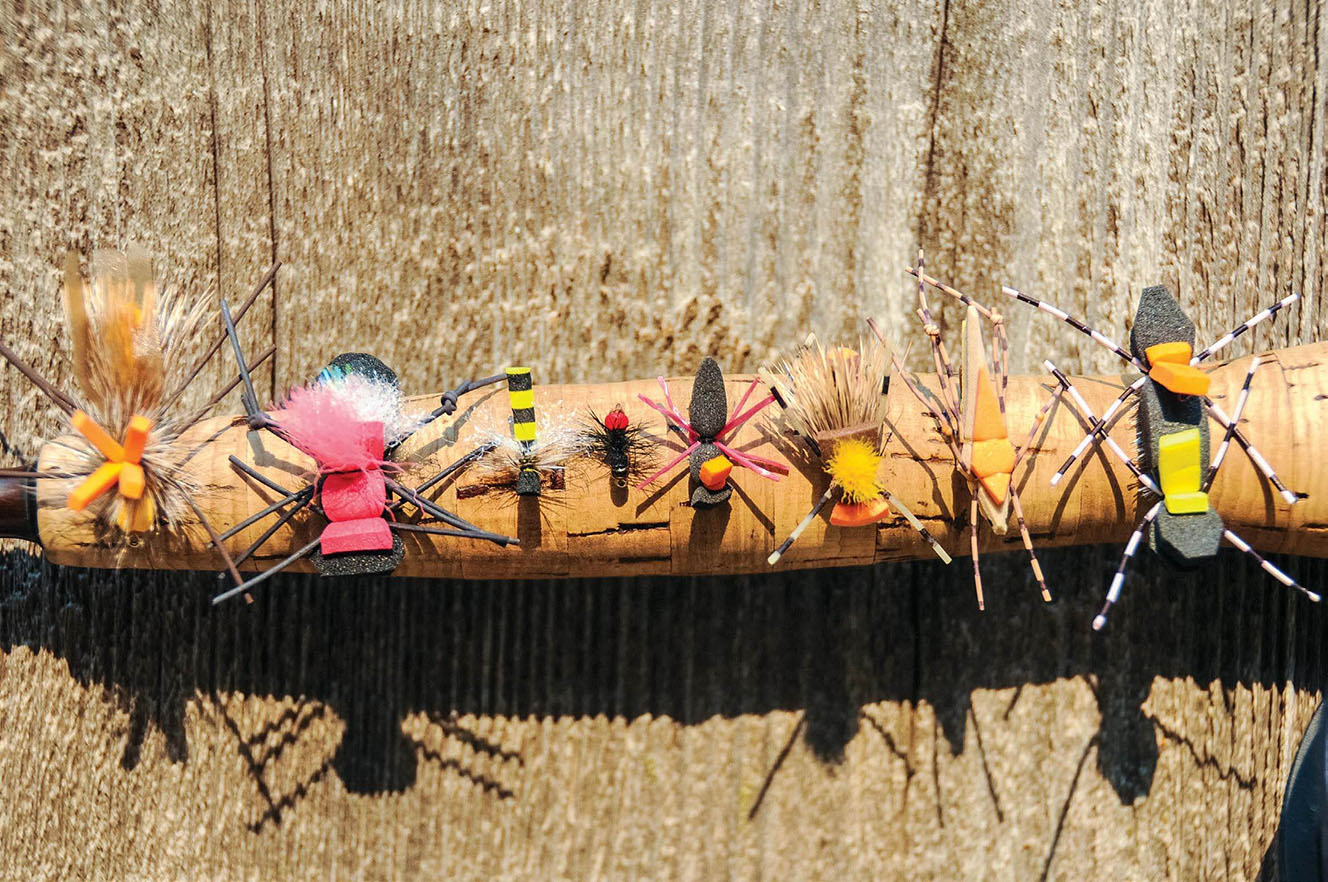
Fall fly fishing in Wyoming means terrestrial time: gaudy, twitchy, high-floating bugs that lure big boys up from the bottom, trying to fatten up for a long winter.
It was September, and the sheep were headed to lower-elevation pastures to evade early-winter mountain storms. It was an experience of the Old West, with an exclamation mark.
The modestly sized Hams Fork has a reputation for producing outsized trout. A cascading hillside spring feeds the upper river, keeping things cool. Further down, Lake Viva Naughton and Kemmerer Reservoir also hold trout, especially for anglers with boats.
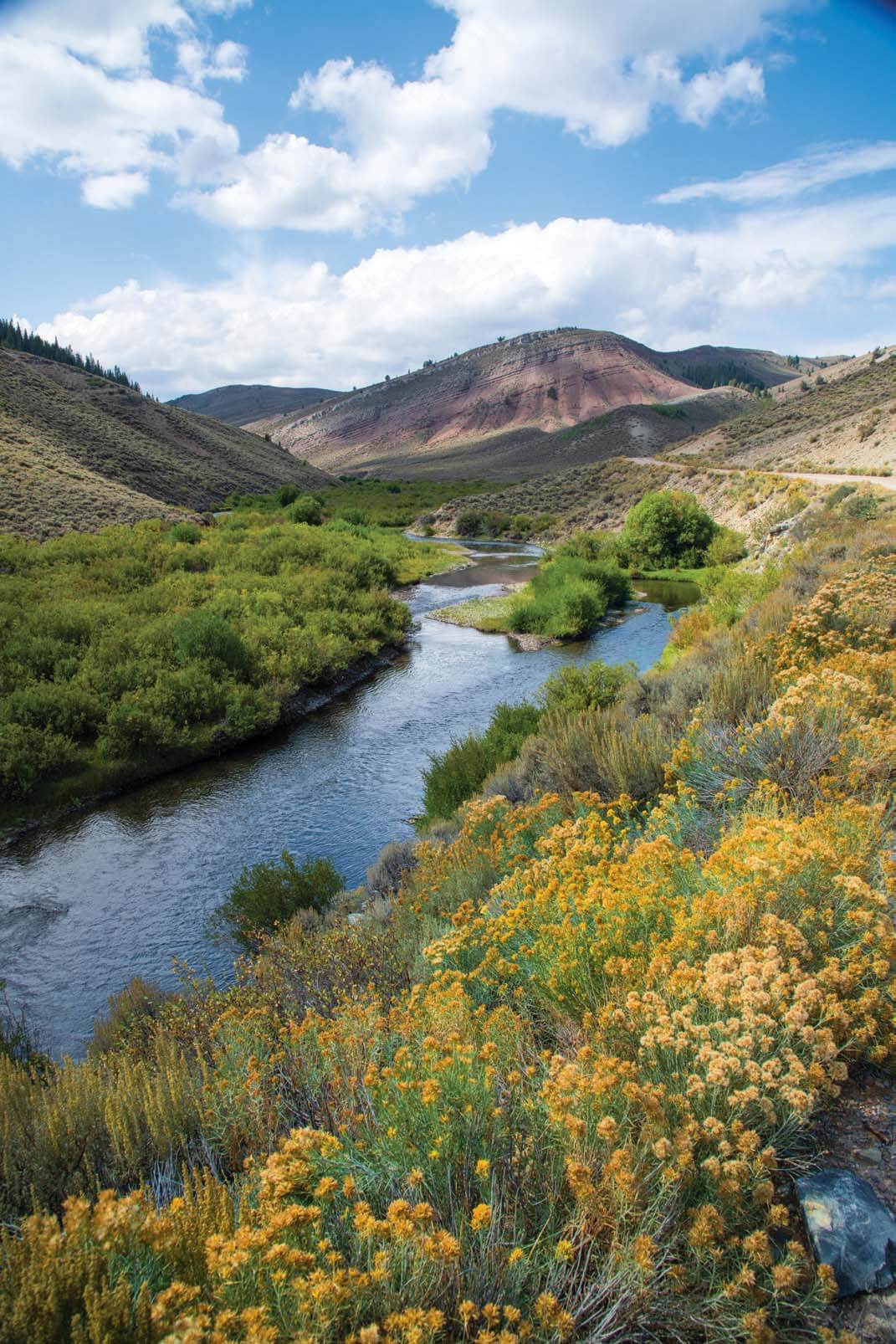
For folks fascinated by dinosaurs, nearby Fossil Butte National Monument is a treasure trove. And if you’re resupplying in Kemmerer, check out the nation’s first JCPenney store, which opened in 1902.
Green River Richness
The Green River offers such diverse trout water it’s hard to believe it’s all one stream. There are the pristine headwaters at Green River Lakes, in the Wind River Range on the edge of the Bridger Wilderness; the high plains and canyon reaches around Pinedale; the broad, productive tailwater below Fontenelle Reservoir; and the world-class Utah stretch south of Wyoming’s Flaming Gorge Reservoir.
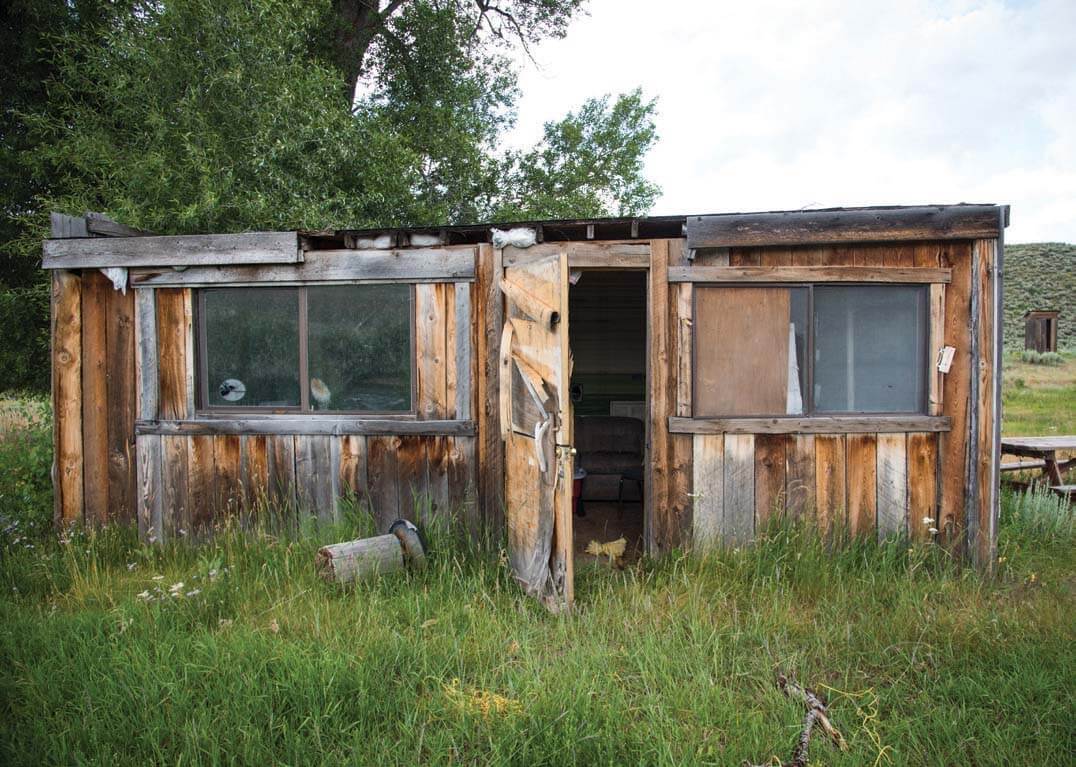
The decayed remnants of “Puddin’ Pie’s” friendly party encampment on the Smiths Fork River, where he and his buddies once caught Bonneville cutthroats in front of their abode, is a reminder that nothing lasts forever.
I revisited several Green runs last fall, and they were all as spectacular as I remembered. At the intimate Whiskey Grove Campground — which I first fly fished with my dad as a teenager — nearly all the sites were taken by firefighters battling the massive Dollar Lake Fire. Fortunately, there was still a prime site for me.
The firefighters were on the job every morning before I was up and returned well after dark. They were so tired there were no post-work campfires nor celebratory beer drinking. They went immediately to bed to rest up for the next day.
LaBarge Creek and Greys River Backroads
Mother, daughter, and dog hiked over from their joyful, primitive campsite on isolated LaBarge Creek.
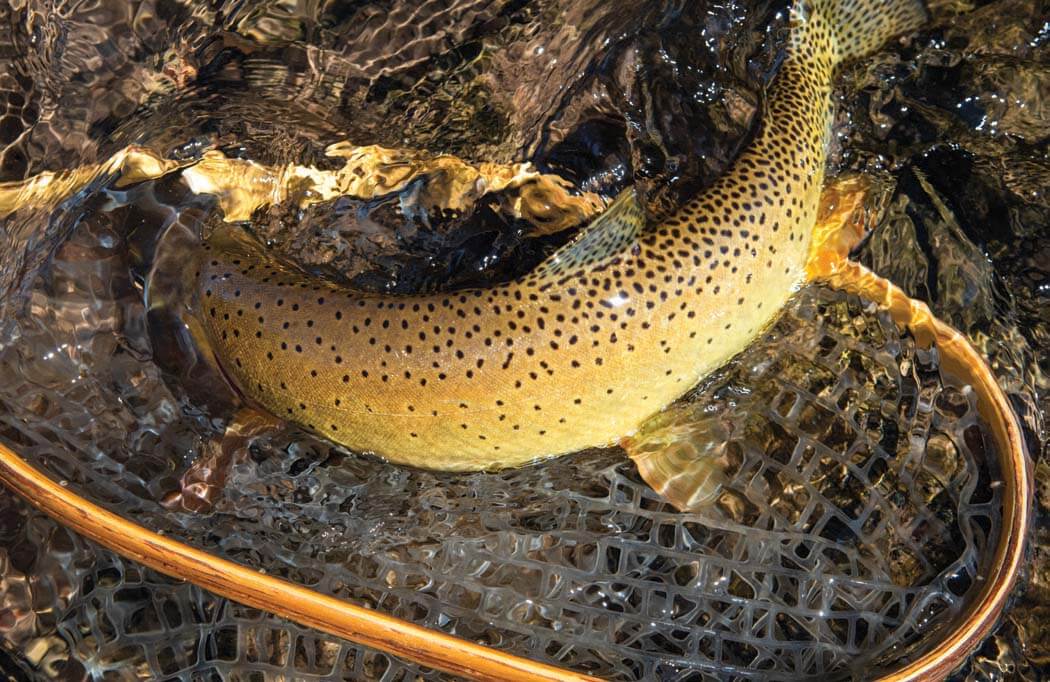
A lively western Wyoming cutthroat is ready for freedom.
“We just made some cake and ice cream in our camper,” the mother said. “Here you go.”
I thanked them profusely and wolfed it down. Like the Snickerdoodles, this, too, was delicious.
On my departing drive past their camp on LaBarge, the woman raced out, reached in through my open truck window, and said, “Here’s a grilled hot dog for the road.” That kind of generosity has happened my entire life on camping trips, ever since I was a kid. I’ve always been grateful.
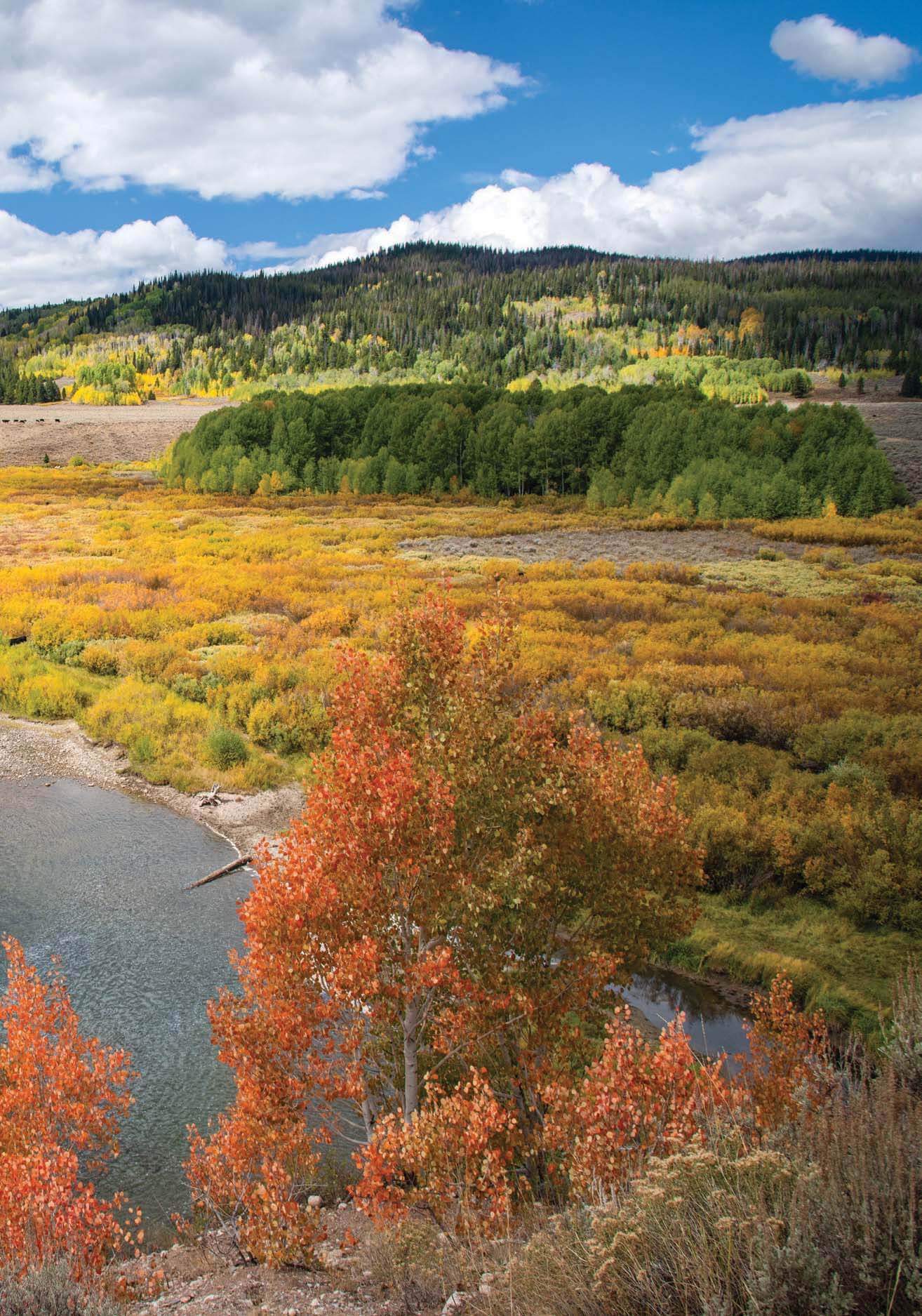
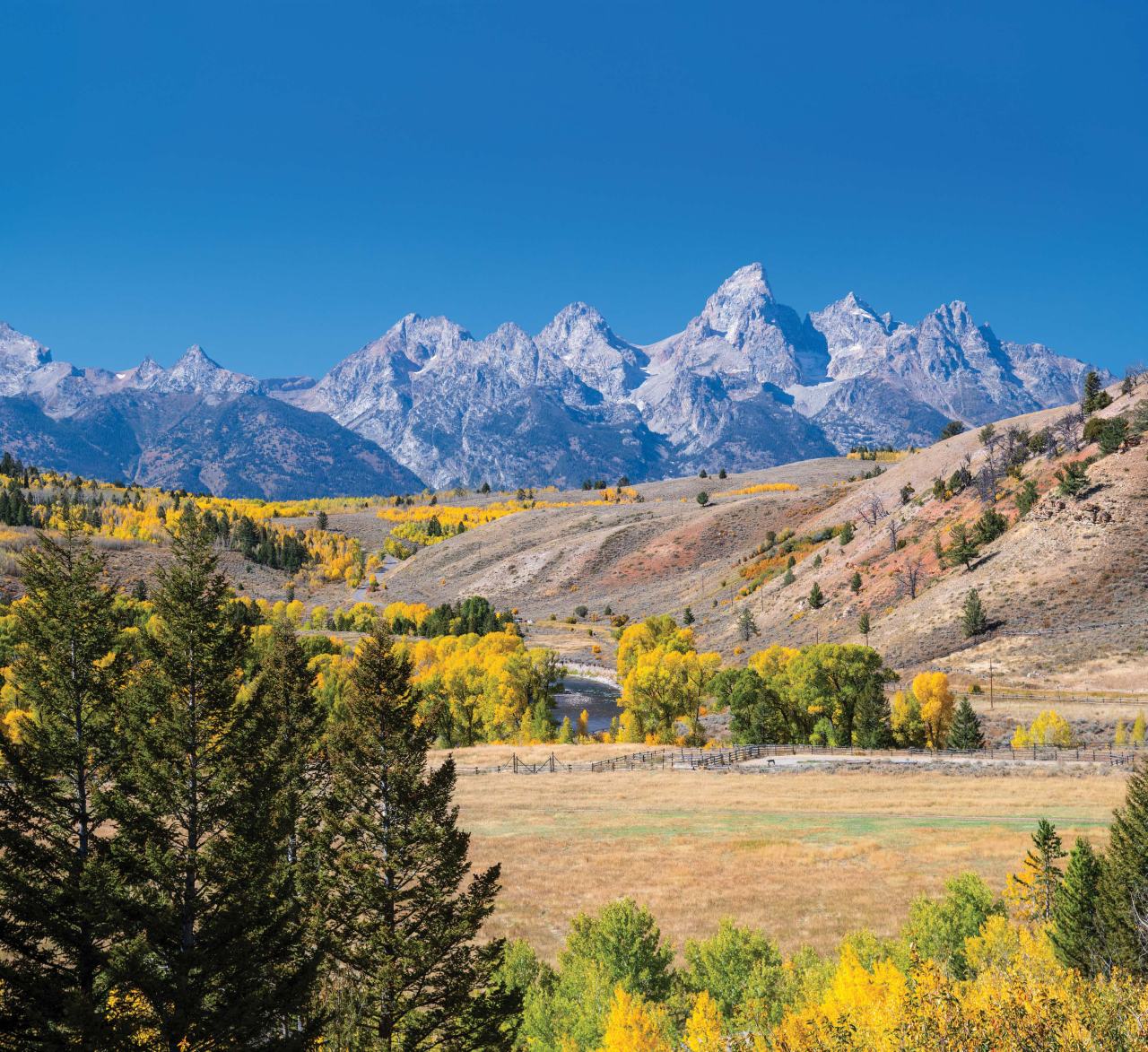
A prime fall run on the upper Green River, in the Bridger-Teton National Forest, is painted brilliantly with autumn’s palette.
On LaBarge, I tangled with a restored population of scarce Colorado River cutts, a major effort by the Wyoming Game and Fish Department. They removed exotic trout from the upper river, built a small dam to prevent upstream migration, and stocked it with pure-strain Colorados, now prolific, wild, and brilliantly colored.
I headed over Tri-Basin Divide and dropped down into the Greys River Basin to search for native Snake River fine-spotted cutthroats, camping on expansive, public U.S. Forest Service land.
The long, mostly gravel road trip from tiny LaBarge at the mouth of its namesake creek to Alpine at the end of the Greys is one of the West’s best backcountry trout excursions. Both streams and free-spirited travelers have plenty of room to roam.
Hoback River, Granite Creek, and Luxuriant Granite Hot Springs
The Hoback River and tributaries like Granite Creek host Snake River fine-spotted cutts. Threading along a scenic drive between Jackson and Pinedale, the Hoback rises in the remote Wyoming Range. Conversely, Granite Creek takes shape in the Gros Ventre Wilderness. Both streams offer U.S. Forest Service camping and good public access.
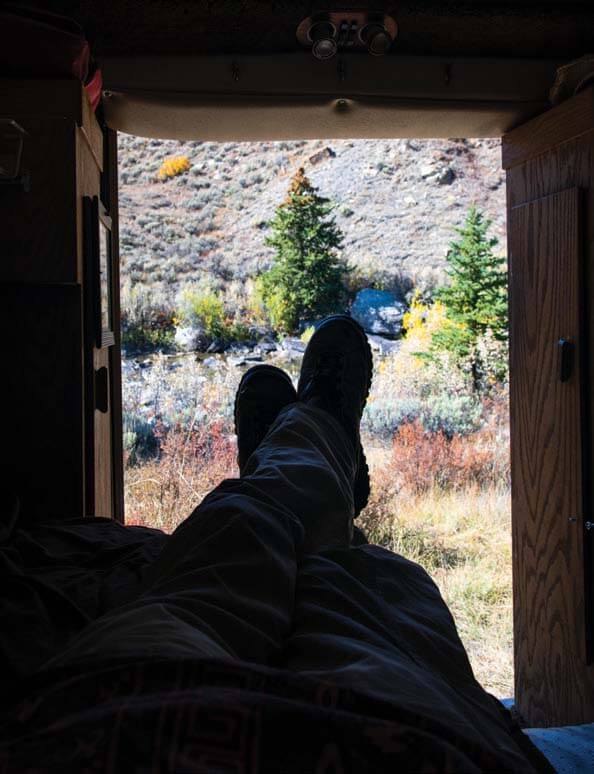
The author takes a well-deserved nap in his vintage 1977 Toyota micro-camper after tussling with cutts.
A 9-mile-long gravel road leads back to both the wonderful Granite Creek Campground and the sybaritic Granite Hot Springs. The pool was developed by the Civilian Conservation Corps during the Great Depression in 1933 and is now run by a U.S. Forest Service concessionaire. The water temperature is 93 degrees in the summer and, oddly, 112 in the winter. Tucked at an elevation of 6,987 feet, the spring and creek are fed by 400 inches of annual snowfall.
When I returned last fall, I visited with the genial European campground host, who helped me find a site while making his daily rounds. He took time to explain how he had been a musician in New York City but craved wilder horizons. Landing on Granite Creek was a lifesaving and affirming experience for him, which made perfect sense to me.
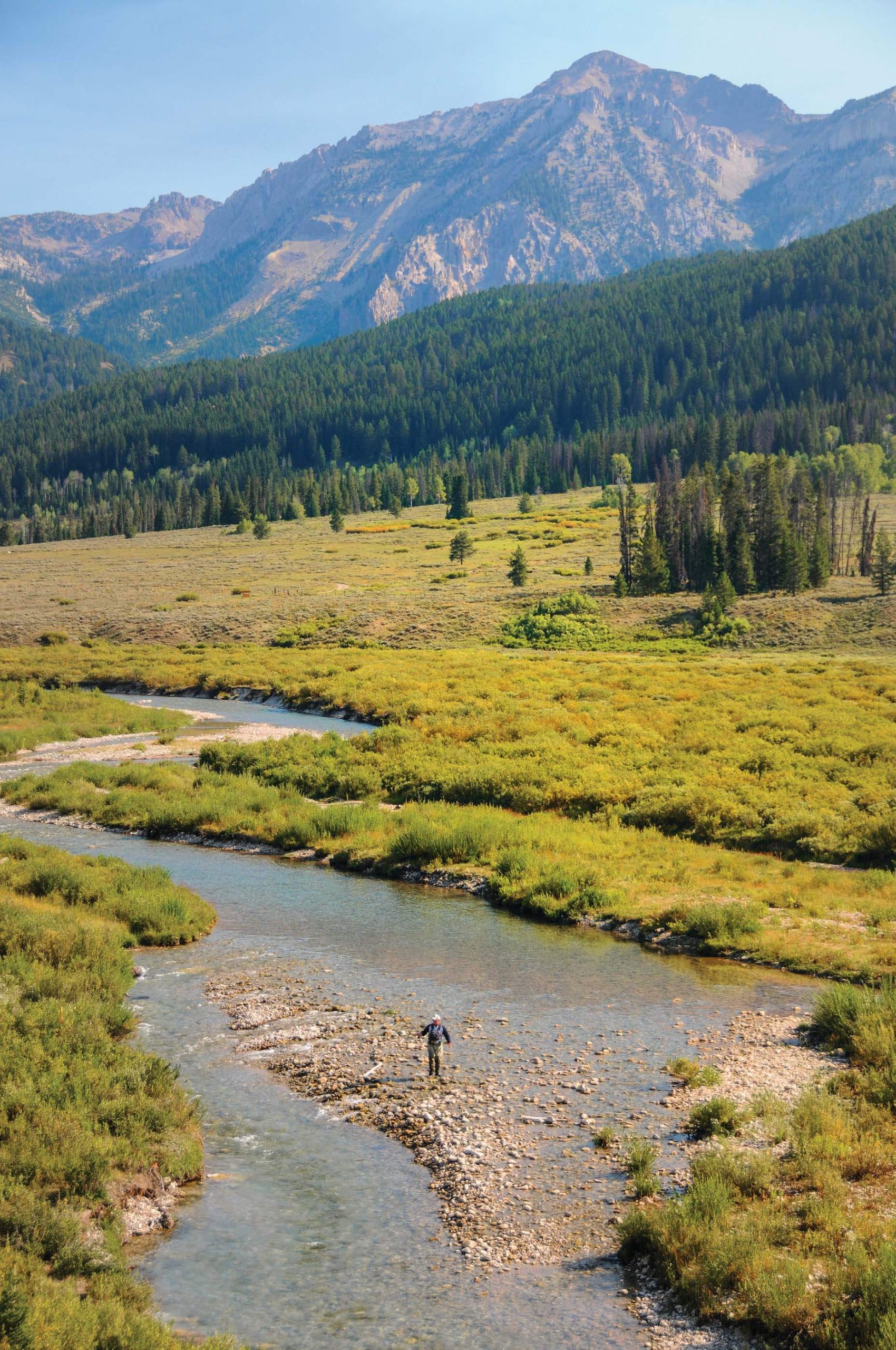
An angler works Granite Creek, southeast of Jackson, Wyoming, which hosts Snake River fine-spotted cutthroats and boasts an excellent U.S. Forest Service campground.
Kaleidoscopic Gros Ventre River and Grand Teton National Park
I finished my six-week odyssey in and around Grand Teton National Park for a final fireworks explosion of color as September concluded its glorious show. The park never looked more splendid, but I was surprised at how many visitors were still around so late — albeit they were happy, amazed people.
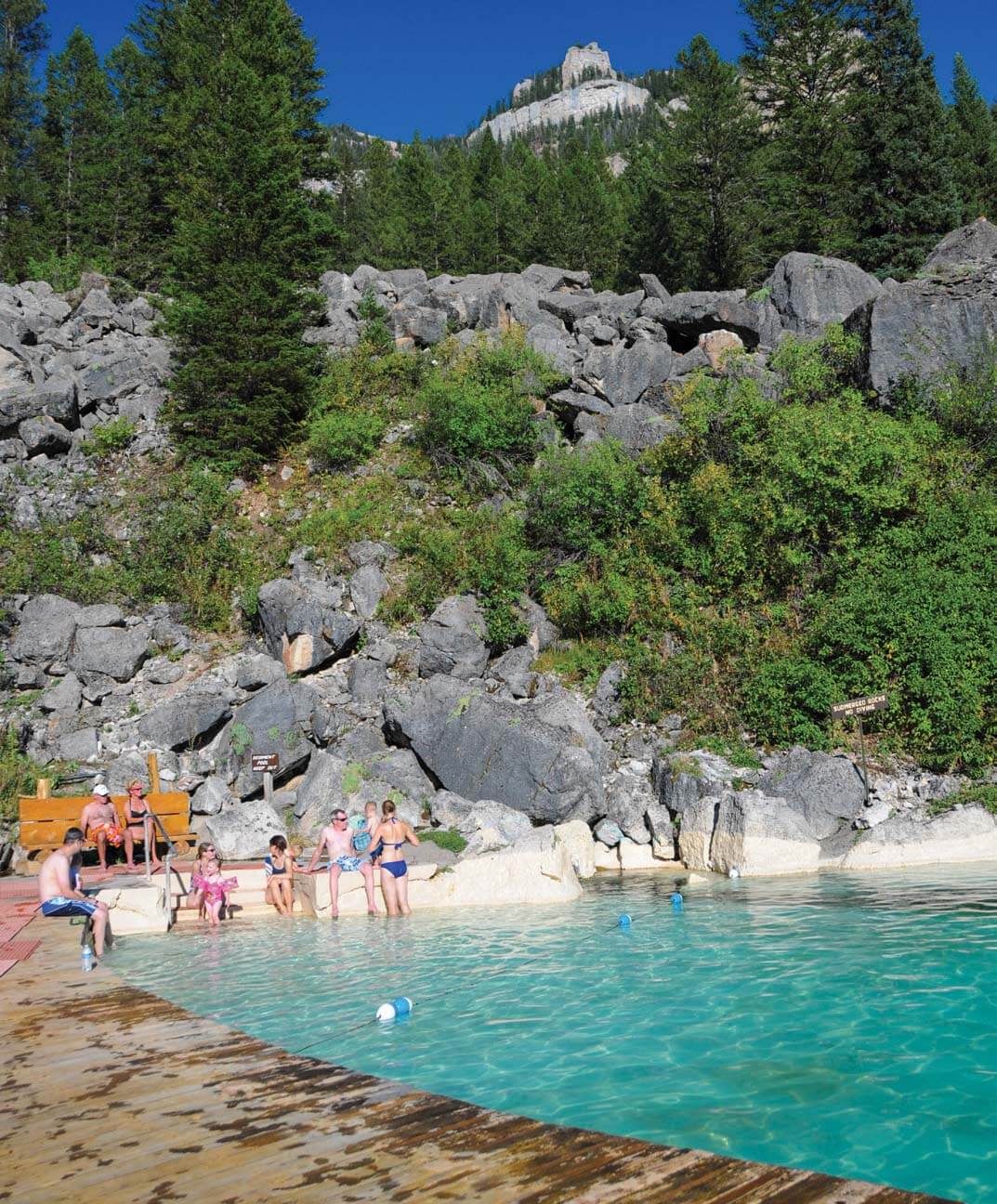
Granite Hot Springs is an alluring soak on the edge of the Gros Ventre Wilderness and is surely a tonic for a sore casting arm.
I stupidly neglected to make camping reservations, and one day I had to check at three campgrounds: all full. I was incredulous, but I had a plan B. I headed to the Gros Ventre river valley, upstream of the park, mostly encompassed by national forest land, with one established campground and a myriad of primitive, free, streamside sites. Snake River fine-spotted cutts awaited in the rapid river.
One night, just outside the park boundary, I was at a beautiful informal site when other dirtbag campers began to arrive. They were mostly in their 20s and, like me, probably couldn’t find a park site. A posse of friendly Utah college students pulled in next to me and built a campfire. The next morning, I woke up and discovered they not only cleaned up their site impeccably, but left a pile of leftover firewood outside the back of my camper door.
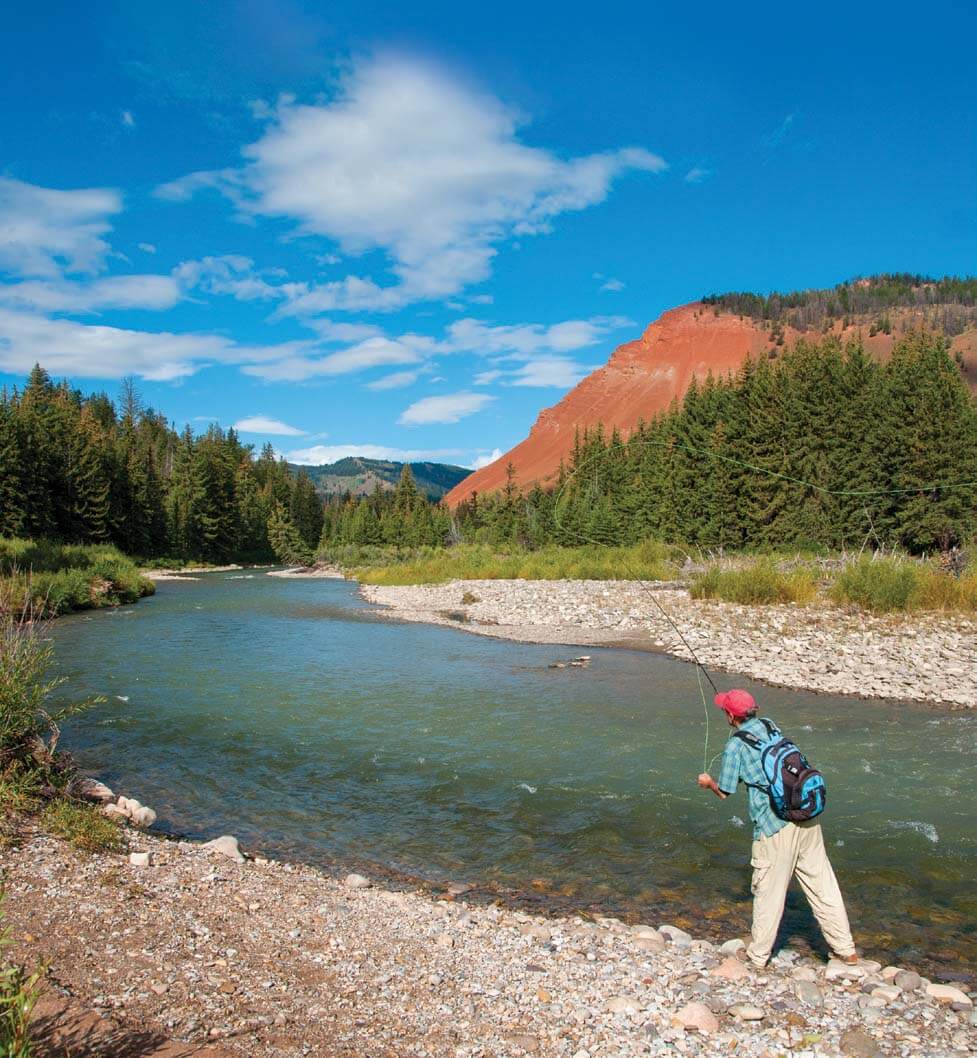
The Gros Ventre River is rimmed by red cliffs in spots and promising runs are aplenty.
As playwright Tennessee Williams wrote in A Streetcar Named Desire, “Whoever you are — I have always depended on the kindness of strangers.” Protagonist Blanche DuBois’s words might seem ironic, but not in my life.
Dispatches from the Beneficent Past
When I was a teenager, the plan was to ride my cool Honda Trail 70 over the backroads of Montana’s East Pioneer Mountains and meet up with my family at Elkhorn Hot Springs. Partway, the bike died and I couldn’t restart it. I was too far to push the bike out, so naturally I took a nap under a ponderosa, hoping someone would eventually come by. Finally, a couple of Montana cosmic cowboys came bouncing down the rough road in their old pickup. They greeted me like a long-lost friend and told me to throw the bike in back. They eventually deposited me at Bannack ghost town, where the state park manager contacted my parents, who retrieved me.
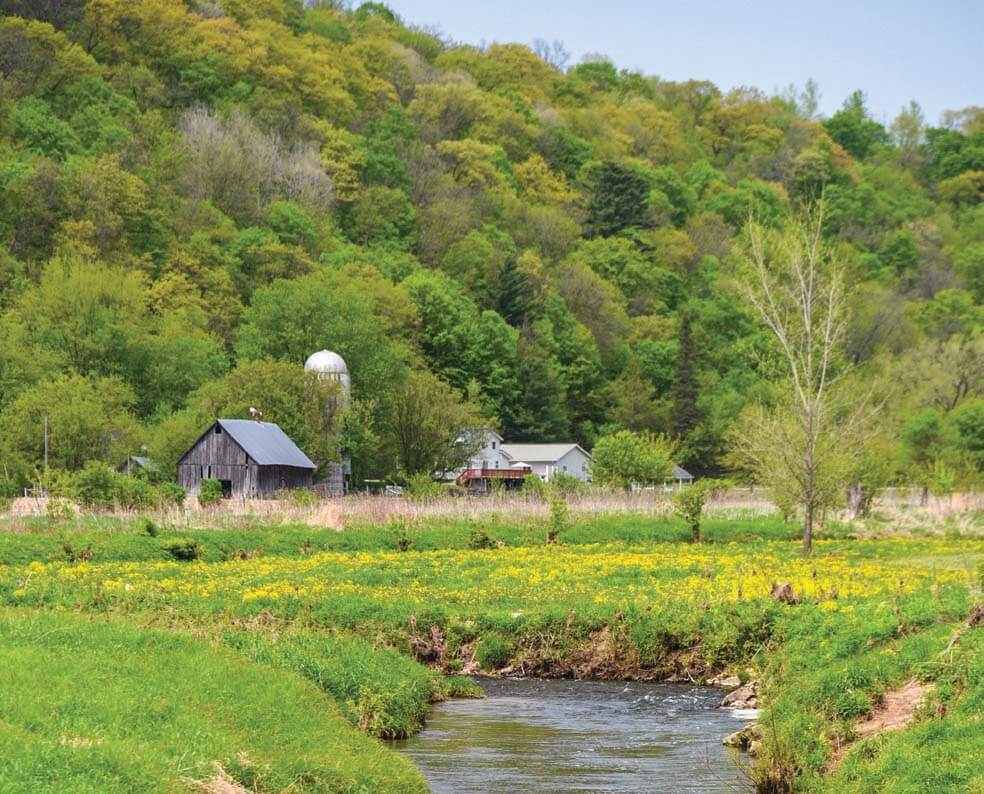
On the West Fork Kickapoo River in southwest Wisconsin the author received sage advice: “Pay it back down the road.”
Backpacking around the world for two years in my 20s, I washed up on distant shores like ocean driftwood, pushed by the currents, with little planning. I think mature adults in different countries felt sorry for me — sleeping on beaches and in parks — and tried to help out. One time, attempting to hitchhike over the austere heights of Dartmoor in southwest England, I was picked up by a local farm family. They invited me to stay at their remote home, and I got to visit local pubs with them and watch their sheep dogs work herding magic in the fog.
Several years ago, I was camped at the West Fork Sports Club on southwest Wisconsin’s Kickapoo River. I wanted a shower, but didn’t have any quarters. I ran into a woman who was part of a youth environmental event and asked her if she knew where I could get some change. She said she had some in her trailer and presented me with a bulging bag that had $10 of quarters in it. “Here it is,” she said. “Pay it back down the road.”
Jeff Erickson has logged thousands of road miles and 20-plus years as an environmental, land use, and outdoor recreation planner in Montana and Minnesota. His stories and photographs have been published in Montana Outdoors, Montana Magazine, American Fly Fishing, Nevada Magazine, Fly Fisherman, and Fly Rod & Reel, among others. Erickson does road trips in a 1977 Toyota micro-camper purchased from his dad in 1987 for $2,000, while a poverty-stricken grad student.
No Comments