


30 Jan Round Up: Spotlight: Learning to Drift
If you had told Heath Gunns in 2008 that he would eventually run a nonprofit organization for veterans, he would have called you crazy. After 15 years as a consultant for a hunting organization that catered to disabled veterans, Gunns launched Spoken Outdoors in 2023, a guided long-drift fly-fishing nonprofit based in Idaho that serves first responders, veterans, and even therapists. But it isn’t as simple as fishing from a wheelchair-accessible boat — it’s about creating a space where people can connect with each other and nature.
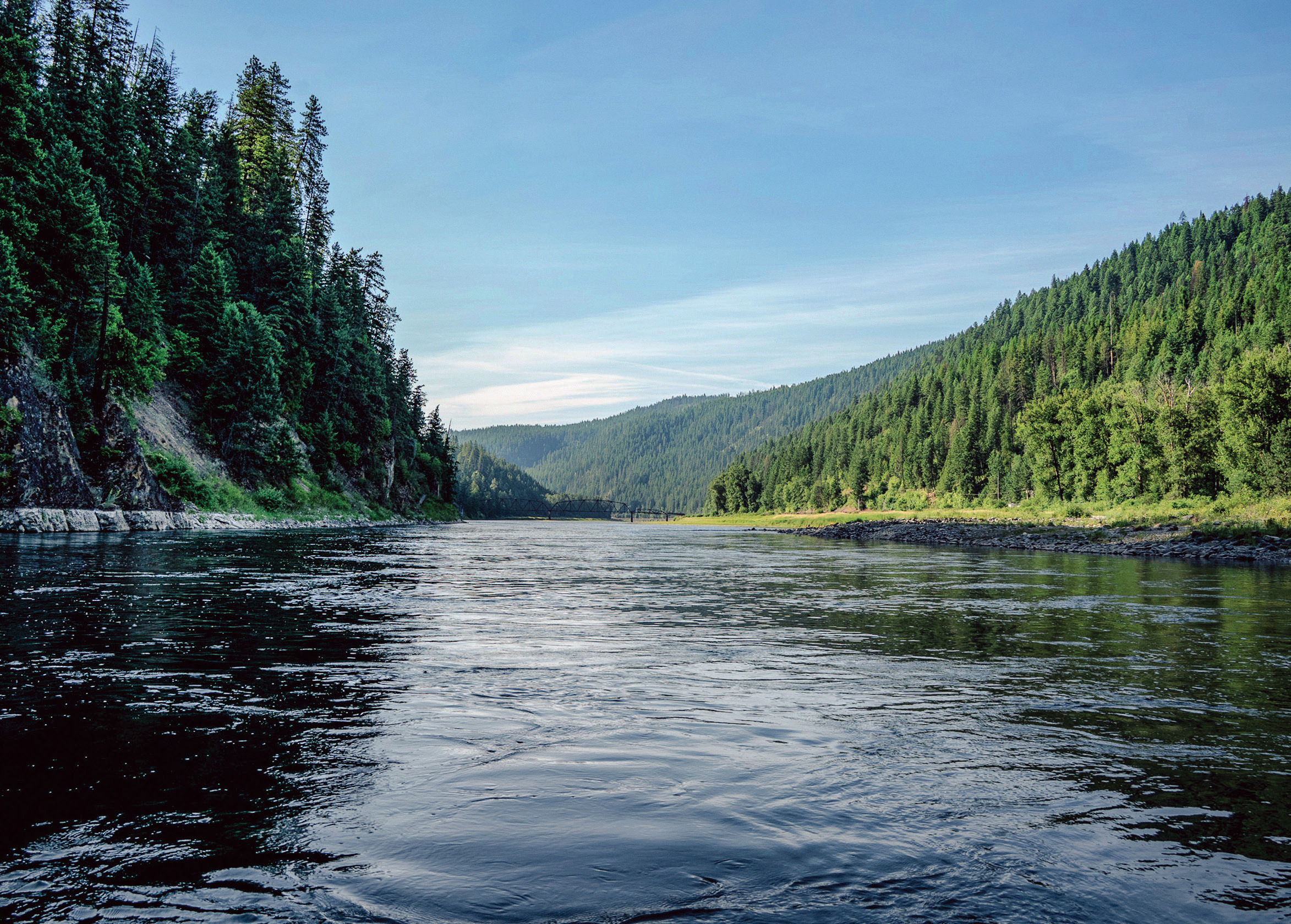
The tranquil solace of fly fishing in Paradise, Montana may well be unmatched.
In early summer 2025, I had the opportunity to spend the day with Gunns on the Kootenai River. Tall, broad-shouldered, and covered in tattoos, Gunns looks like the sort you wouldn’t want to mess with and the last person with whom I would expect to talk trauma. Gunns, a veteran and former police officer, has had his fair share of traumatic experiences. “I have had a wonderful life, full of horrific moments,” he says.
Gunns is surprisingly vulnerable. As a former service member, he recognizes how hard it is for people to get help. Trauma doesn’t discriminate, and where it comes from doesn’t always matter. We all have physiological responses to trauma, a capacity for storing stress, fear, and anger in our bodies. And yet, there is a long history of stigma when it comes to addressing trauma or any sort of mental health condition, especially for veterans and first responders.
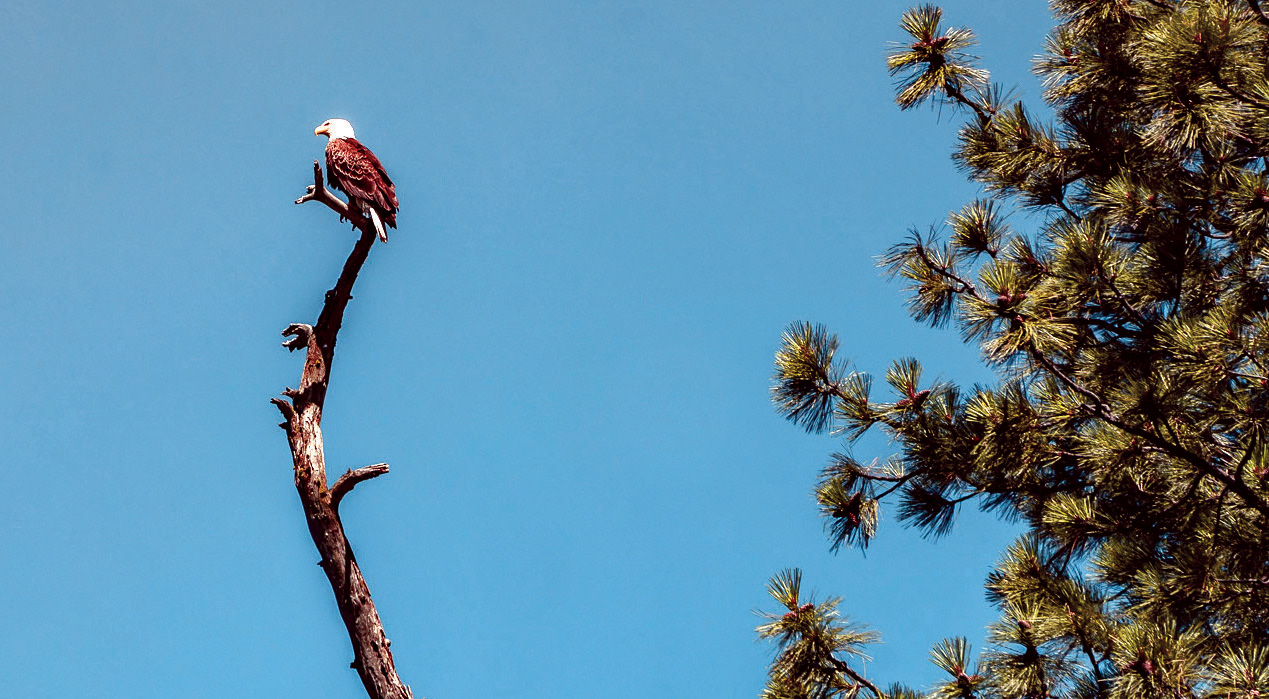
A bald eagle is content to ignore us completely as we drift beneath its perch.
“Most people need permission to be vulnerable,” he says. “We’re trying to change that narrative.”
Gunns details the role of outdoor connection in mitigating PTSD symptoms. He speaks at length about the science behind the healing sound of running water, how escaping everyday triggers has the potential to give your body a reset. And what Gunns describes anecdotally is well documented by research.
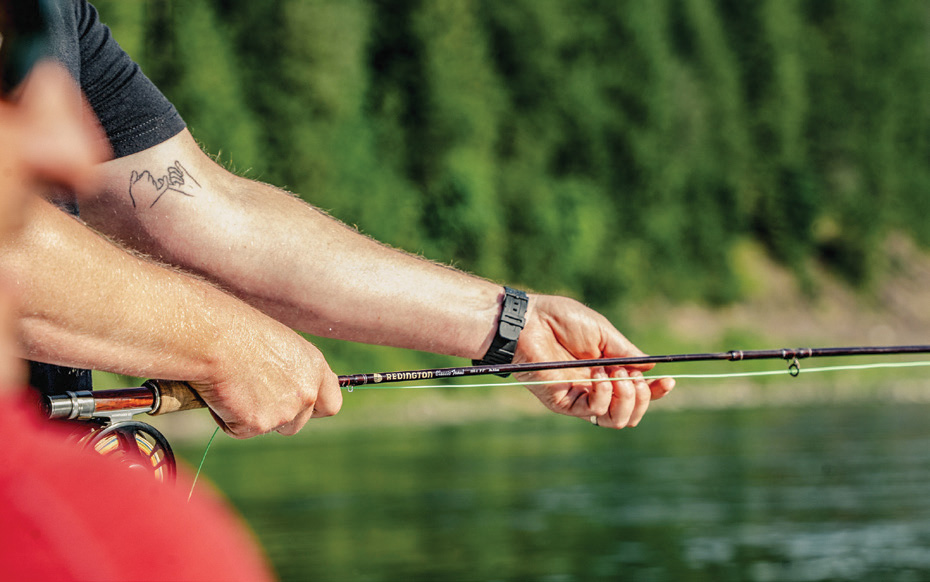
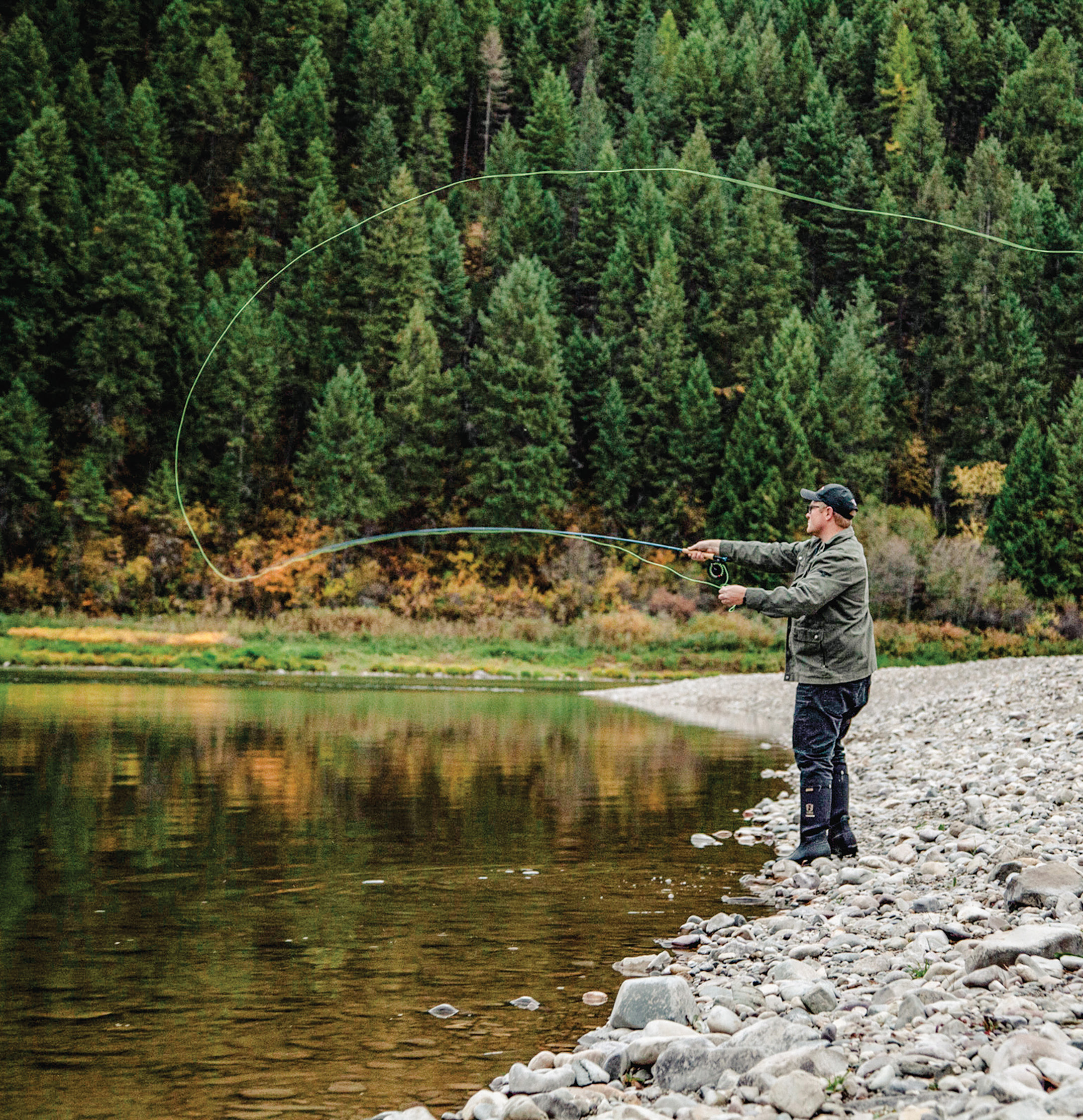
In fly fishing — as with much of life — timing is everything.
Published studies have long supported the benefits of nature on mental health, showing that contact with the natural world directly lowers cortisol levels and blood pressure while helping the body’s parasympathetic nervous system return to baseline after prolonged periods in fight-or-flight mode. While there are many theories about why exposure to nature helps with stress, anxiety, or the more egregious effects of trauma, findings consistently agree with an assertion we’ve perhaps always known: Nature is integral to our survival.
Fly fishing, I learn, isn’t about muscle. It’s about timing — and learning to stay present even when you get it wrong. This isn’t meant to be a metaphor, and yet somehow it is.
There is a soothing tranquility in drifting on the river. While the other members of my party cast and wait, sometimes swearing under their breath when lines get tangled and flies become waterlogged, I notice the way the morning light changes on the water’s surface. Yellows, pinks, and oranges give way to greens and blues as the sun climbs. Trees along the riverbank cast huge shadows that leave me chilled when we pass beneath them.
There is a lot to learn from the river as well. And with no cell service, it’s easy to stay present. I snap away with my camera. An osprey is hunting, poised midair as it surveys the land. Clouds of midges hover over the river, so imperceptible that I don’t notice them until they’re pointed out to me, like dust motes drifting through shafts of light. Eagles perch on the limbs of trees, so oblivious to our presence that I am reminded of how small I am in the world. And I find it somehow easier to breathe.
Trauma, by nature, is isolating. It disconnects us not only from the people around us but from our own sense of self. Our autonomy and memory are called into question. Our sense of safety is threatened.
Gunns says his mission isn’t about fixing people. It’s about creating space for meaningful relationships to happen, and it’s those relationships that he believes are lifesaving. “I’ll never be able to solve their issues or get rid of their trauma, but if we can give them two minutes, 10 minutes, or even eight hours of hope that maybe they’ll grab hold of,” Gunns says, “then I’ve done what I set out to do.” Even the trust it takes to get into a boat where you aren’t in control is a step.
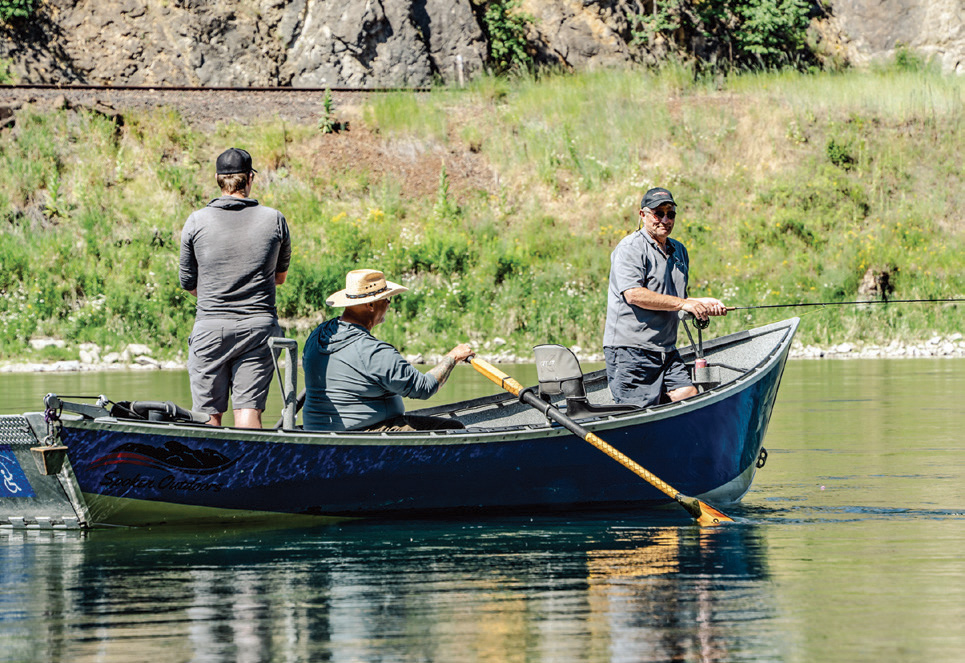
Heath Gunns navigates the Kootenai with ease in his wheelchair-accessible boat.
The river doesn’t demand that we speak. It asks only that we take note. That we bring a sense of wonder, curiosity, and trust — something that mirrors the process of emotional regulation and healing. That we notice the way the trees grow out of the river’s canyon walls, roots embedded in the rocky crevices, proof of all beings’ innate desires to live.
No Comments