


30 Jan Outside: The First Run of the Season
An icy splash of gritty snowmelt hits my lips as I push off into the Yellowstone River from Mallard’s Rest for the first time this season. The crisp breeze of late May chills the back of my neck while the sun beats down on my arms, warming me beneath my shirt. It won’t be long before I’ll have to share Montana’s Paradise Valley. Friends and family will join me on my drift boat in the coming weeks, and anglers and sun soakers will share the waters as the temperatures warm and the current eases. But the first run of the season is always one I navigate alone.
I’ve taken a bit of a risk by going so early this year. I usually prefer to let the more intrepid go sooner to scout the new eddies and channels, inspecting how the spring snags and floods have changed the river’s course and reporting what they’ve learned to their neighbors. But it’s been a warmer spring than usual. The air is simmering with repressed heat that seems to be thawing the upriver slopes more quickly, and it has also been taxing my patience. Maybe I’m just getting older, more wary and irritable, but I must get out and see for myself how the river has changed.
As I float past the stony shore, I am humbled — as I always am when out on the Yellowstone — at how small and insignificant my troubles are in a place so immense. All around me are scars from upheaval and catastrophe. Jagged boulders strewn across elevated fields far from the river like boxers’ teeth. Piles of long-dead trees stacked high above the far bank. Steep talus slopes sliding into the water, kicking the channel to the far shore. The riverbed, smooth with algae-covered stones, buries giants whose stiffened, rocky fingertips pierce the surface, warning me to steer clear and not disturb their slumber. For a place so beautiful, it has clearly known calamity.
Little of this is new, of course. Like my own troubles, erosion and the merciless ravages of changing times have long worn down the valley. Wind, rain, and snow are the hammer and chisel that have broken the peaks behind me, and the river is the hearse that carries the fallen away.
In my fiberglass vessel, I am little but a blade of grass joining the endless procession to the distant sea, powerless to tame the forces directing my path. All I can do is study my river: observe how the familiar has been lost, look for new obstructions that block my way forward, and find the safest and most enjoyable way to continue on.
Still, none of this suppresses the excitement that brings me here again, with the sun at my back, pulled by a current I can’t see, the dreamy snow-topped mountains rising behind me in the distance. Bald eagles study the rocking of my boat from treetops along the low shore as a three-story cliff of river-sheared sand and pebbles rises behind my right shoulder. Whitecaps of blossoming lilac wash through my nostrils, sweetening my heavy breath as my shoulders strain to guide me past logs not yet dislodged from bends in the river. My muscle memory is slow to return, and my body resists my commands. But still I pull, left two strokes, right three. The flow is strong, and I struggle to remain safely on course.
So I strain and I sweat and I swear. But every stroke takes me further from the mundane emergencies in the world of emails and artificially generated news feeds. As I wipe my brow and massage my legs, I remember how much easier it is to stay upright here on the Yellowstone than in the so-called real world. The forces of gravity and inertia are far more predictable, more forgiving than human frailty and judgment. The new river may be turbulent, but the sky above is tranquil. The only sounds that interrupt my thoughts are the reverberations of the waves on my hull.
Here, in Paradise Valley, my only struggles are with the current and the rocks and the fallen trees. I will find my way again, and I am at peace.
Rob Rogers is an award-winning writer and attorney from Winter Garden, Florida. His first book, Finding My Way Home: Fighting Depression Backpacking in Central Florida, won the bronze medal for autobiography/memoir at the 2025 Florida Authors & Publishers Association President’s Book Awards. Rogers’ essays have been published in Still Points Art Quarterly, Four Tulips, The Florida Writer, and Wilderness House Literary Review and on floridahikes.com. Rogers also writes a blog called Central Florida Backpacking Desk Jockey (backpackingdeskjockey.blog); robrogerswriter.com.
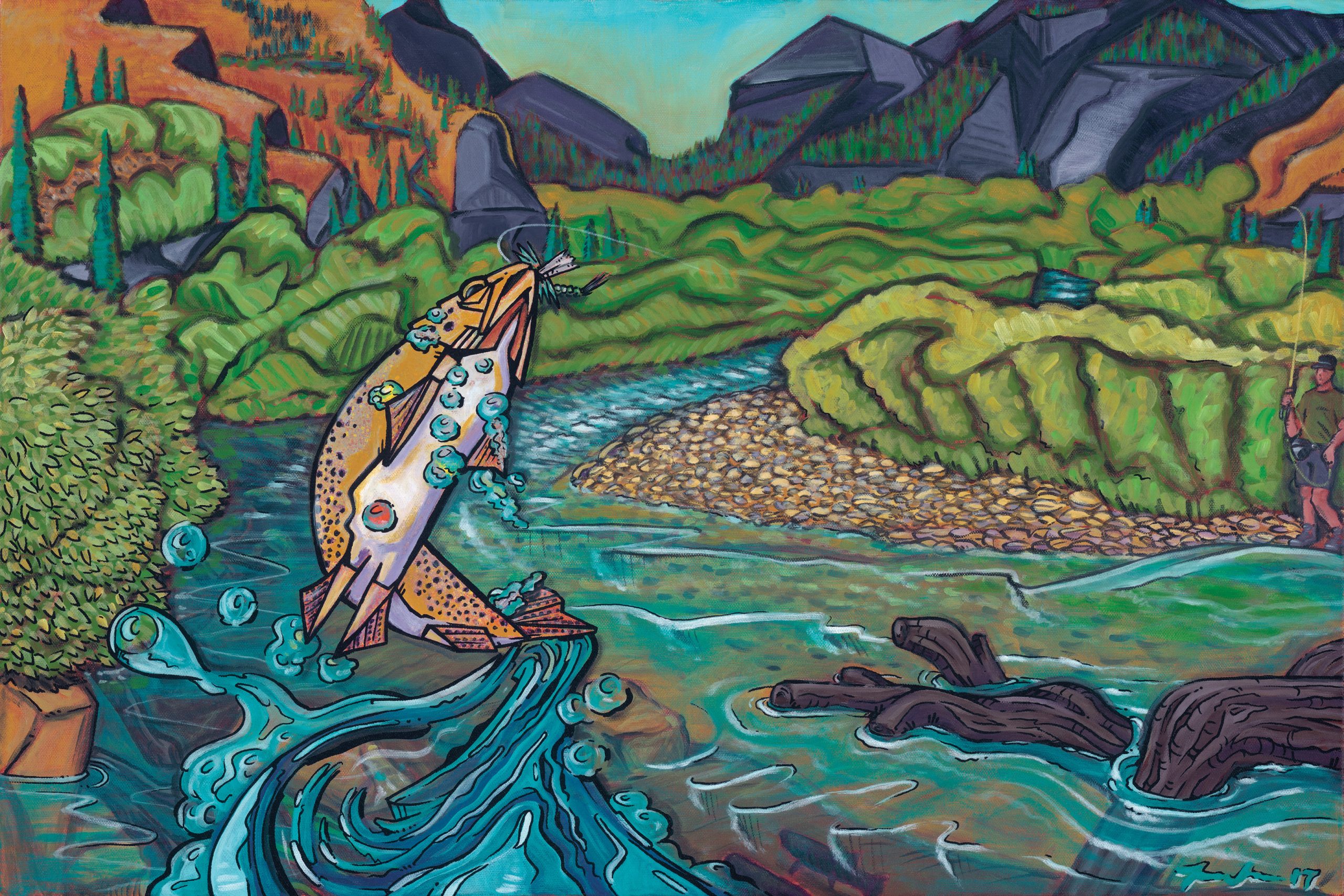
Josh DeSmit is a Minneapolis-based artist, fishing guide, husband, and father of three. He spends his summers rowing a drift boat on the Upper Mississippi River, chasing trophy smallmouth bass. DeSmit’s love for street art and art history, combined with his adventures outdoors, provides him with a unique blend of imagery from which he creates his one-of-a-kind works.
No Comments