


30 Jan Local Knowledge: The Gift of Inspiration
Summertime foot traffic blooms in the historic downtown district of Sheridan, Wyoming. Known for its rodeo culture, idyllic atmosphere, street dances, and proximity to the Bighorn Mountains, Sheridan has quietly secured its reputation as a popular mountain town with true Western flair.
I’m visiting on 3rd Thursday, a street festival where businesses and pop-ups welcome locals and visitors with specials, street food, and live music. J.T. Tucker, CEO of Sheridan Fly Rod Co., is busy putting the final touches on a dry-fly display that showcases many of the patterns intended to fool a local cutthroat trout: hoppers, Adams in size 16 and 18, and various elk-hair caddis imitations.
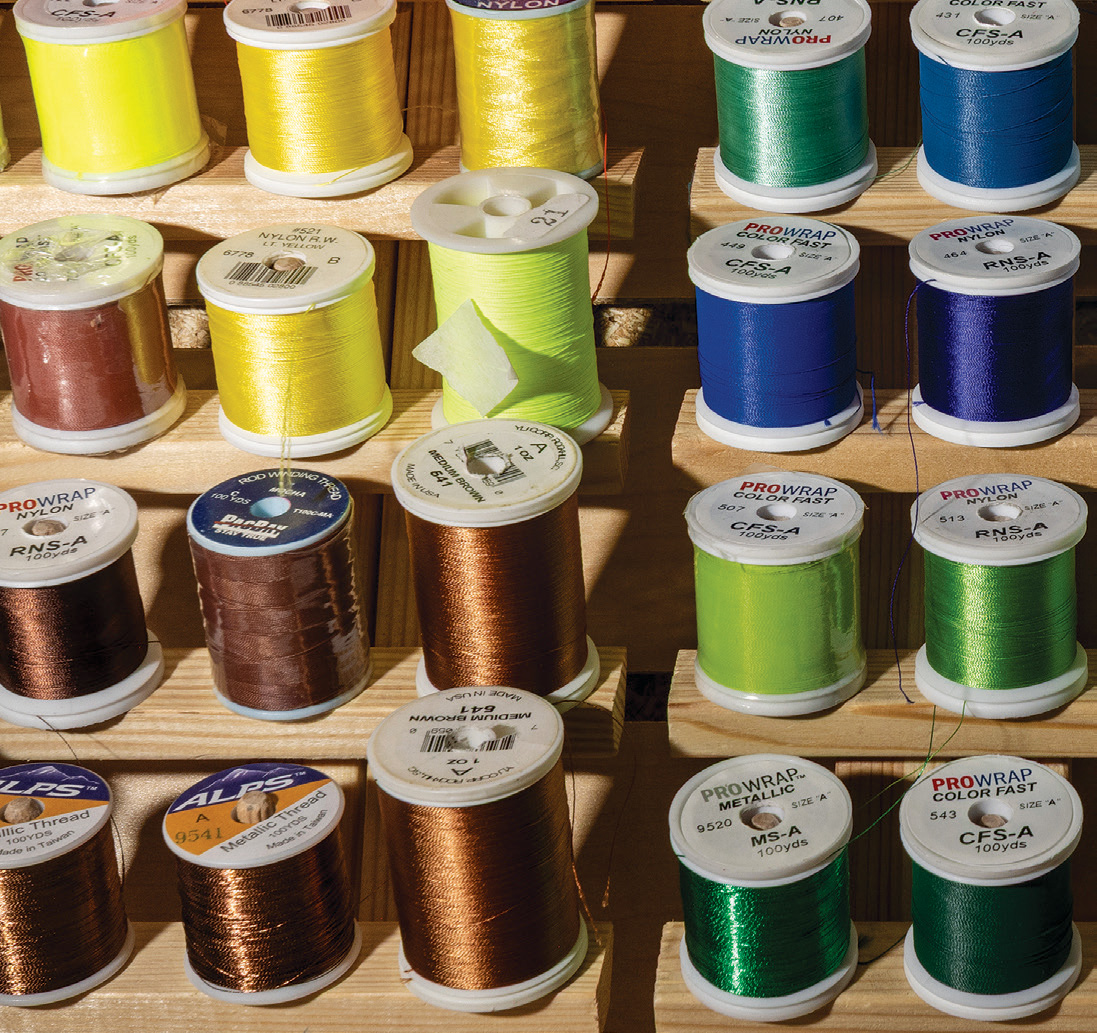
Sheridan Fly Rod’s clients can choose their own color and style, from the cork handle to the thread wraps.
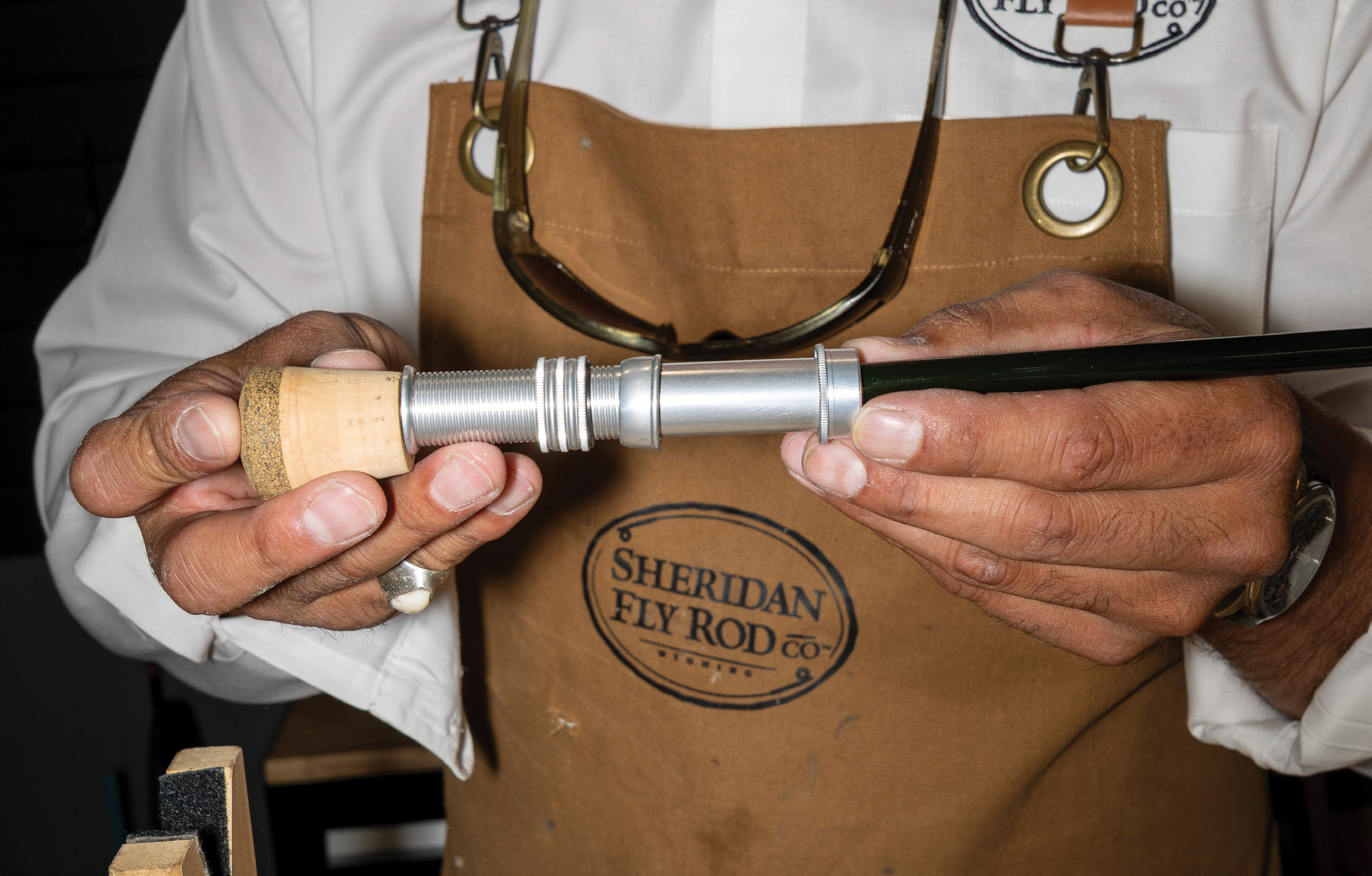
Tonight is Sheridan Fly Rod’s opening night, a first cast for the company that crafts custom fly rods on-site. They offer several rod models, ranging from the most affordable Greenback to the fast-action WYO-Jet. With top-of-the-line components, the WYO-Jet competes with higher-end rods from major companies like Sage and Orvis. And while the company is proud of its commitment to producing quality rods, the team has set its sights beyond rod production and fly sales, probably because the enterprise emerged from the nonprofit sector.
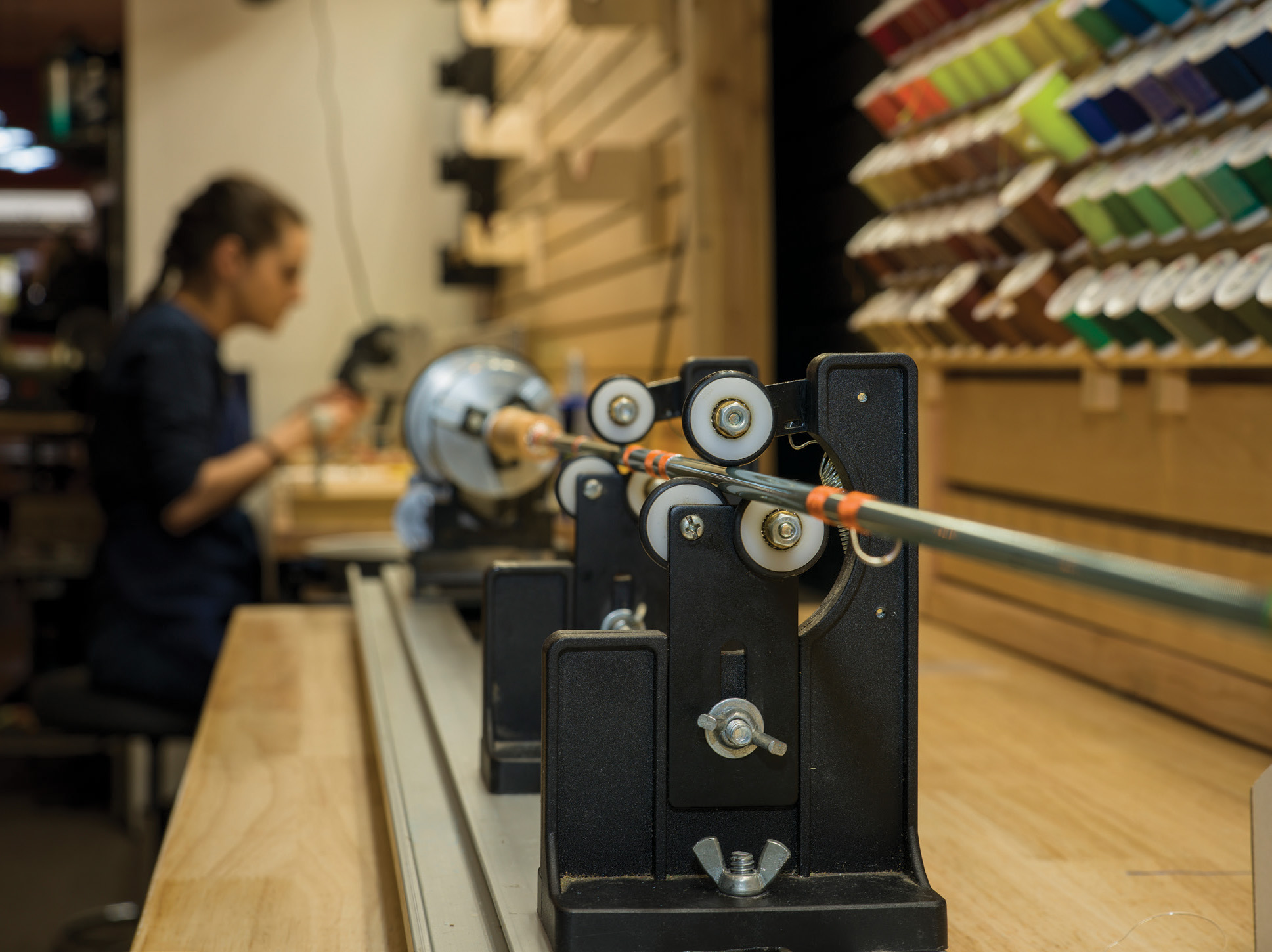
The manufacturing space at Sheridan Fly Rod is open to the public so clients can drop in and watch their rods come to life.
Tucker entered the fly-fishing world when he met Joey Puettman, who is now the president and founder of Sheridan Fly Rod. Puettman sponsored an annual fly-fishing tournament and Tucker volunteered as an adult mentor, assisting a student angler in landing fish for the day. Tucker viewed it as an opportunity to empower youth and get involved with the community, joking that he fished in the tournament every year but never won. He saw something valuable in what Puettman was doing, and, ready to retire from his previous career, he and Puettman developed the idea for Sheridan Fly Rod.
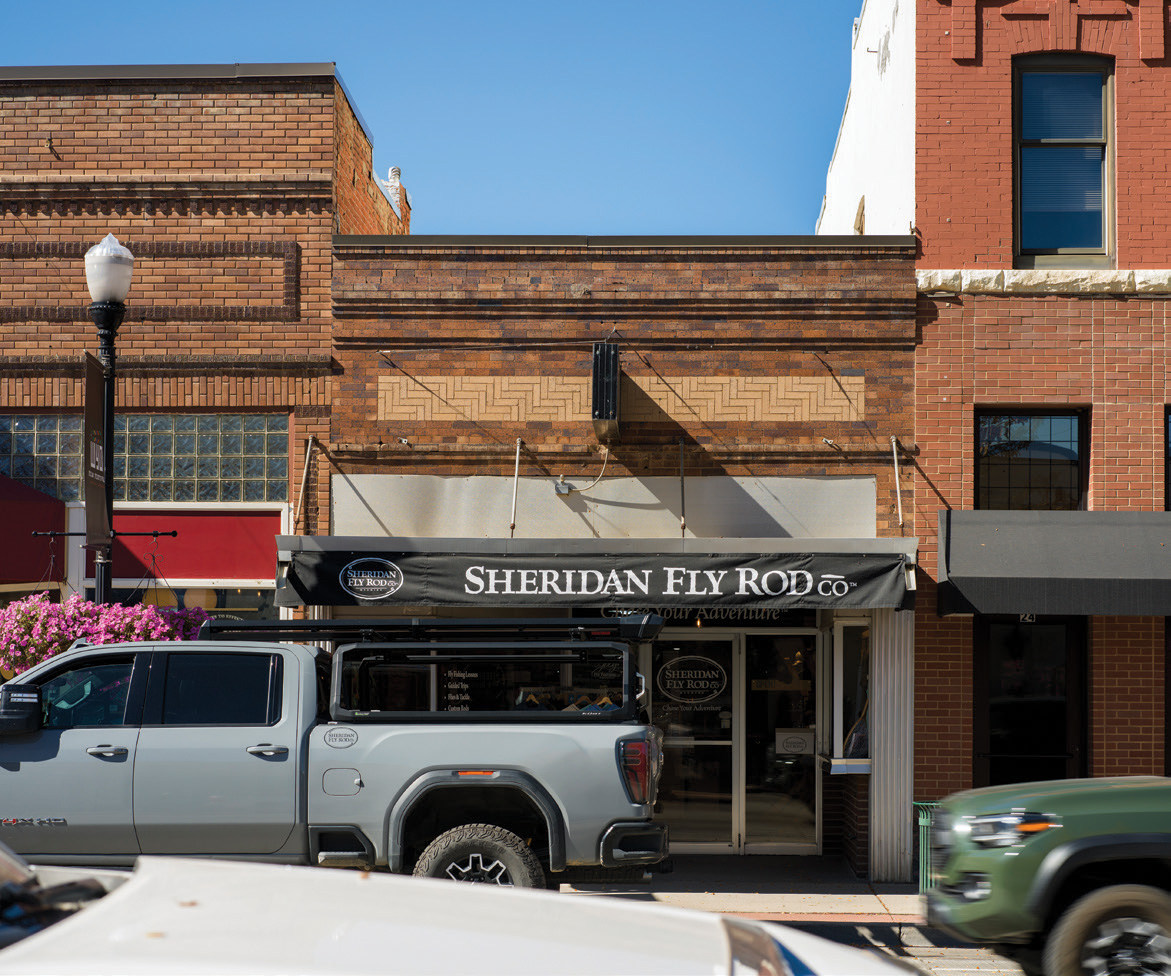
The company is nestled in Sheridan’s quintessential Western downtown.
Puettman cut his teeth in the industry by crisscrossing the state teaching rod building. Primarily, he enjoyed teaching the skill to at-risk teens. When he and Tucker devised a plan for the company, one of their guiding principles was connection to the community. They seek to have an impact on young people, achieved through rod-building classes, fly-fishing schools, and other youth programs.
“The programs that we offer are probably the thing that makes us the most different, everything from working with kids on reservations to providing programs for high schoolers and opportunities for veterans,” Tucker says.
But the endeavor is still a business at its core, with Tucker and Puettman competing with other artisan rod builders. Tucker is in the process of hiring and training more craftsmen to produce their custom fly rods. The average rod requires 30 to 40 hours of work, and the company is unwilling to cut corners. Furthermore, demand is so high that they’re playing catch-up, with rods in the showroom already spoken for as pre-orders fly in.
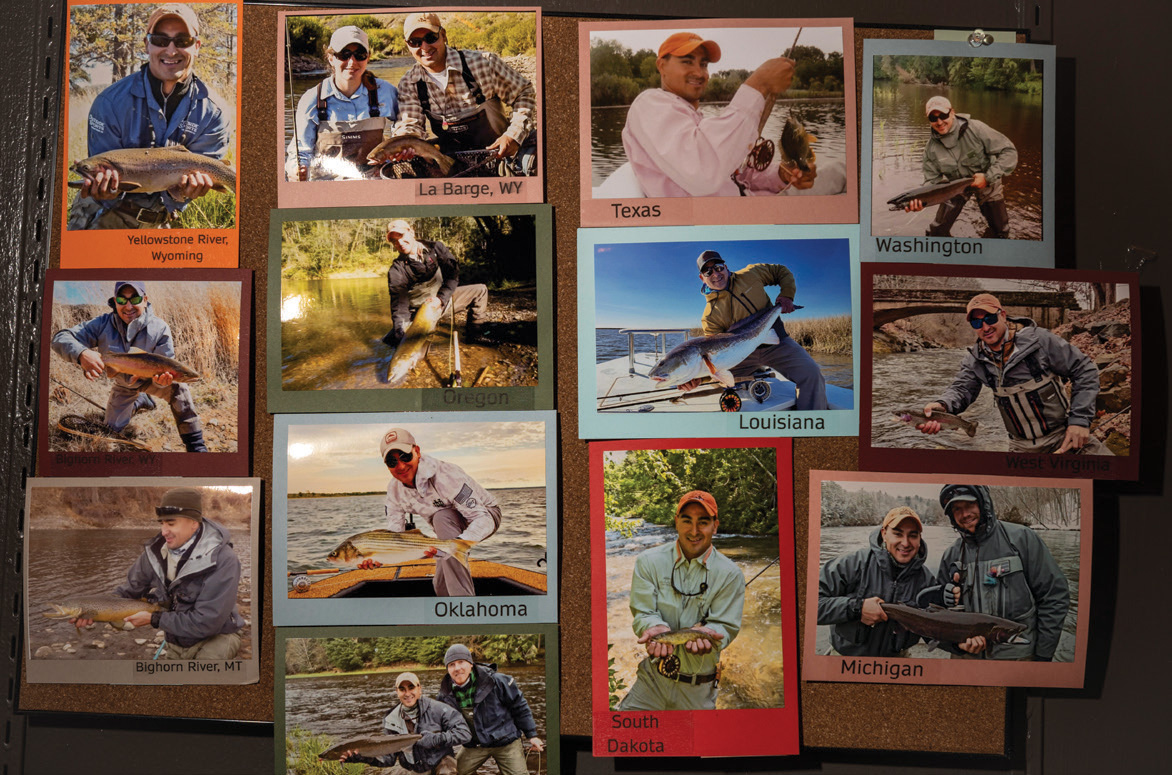
Sheridan Fly Rod’s mission and method is rooted in mentorship and community service.
In the rear of the shop, two employees sit at machines, patiently finishing a set of 5-weights. The smell of resin hangs in the air. A couple drifts in and buys a T-shirt. The 3rd Thursday crowd is building. Between fooling with the fly drawer, greeting customers, and answering his phone, Tucker describes where he wants the company to go from here. What excites him most are the programs where students purchase rod-building kits and build the rods with Puettman as their teacher.
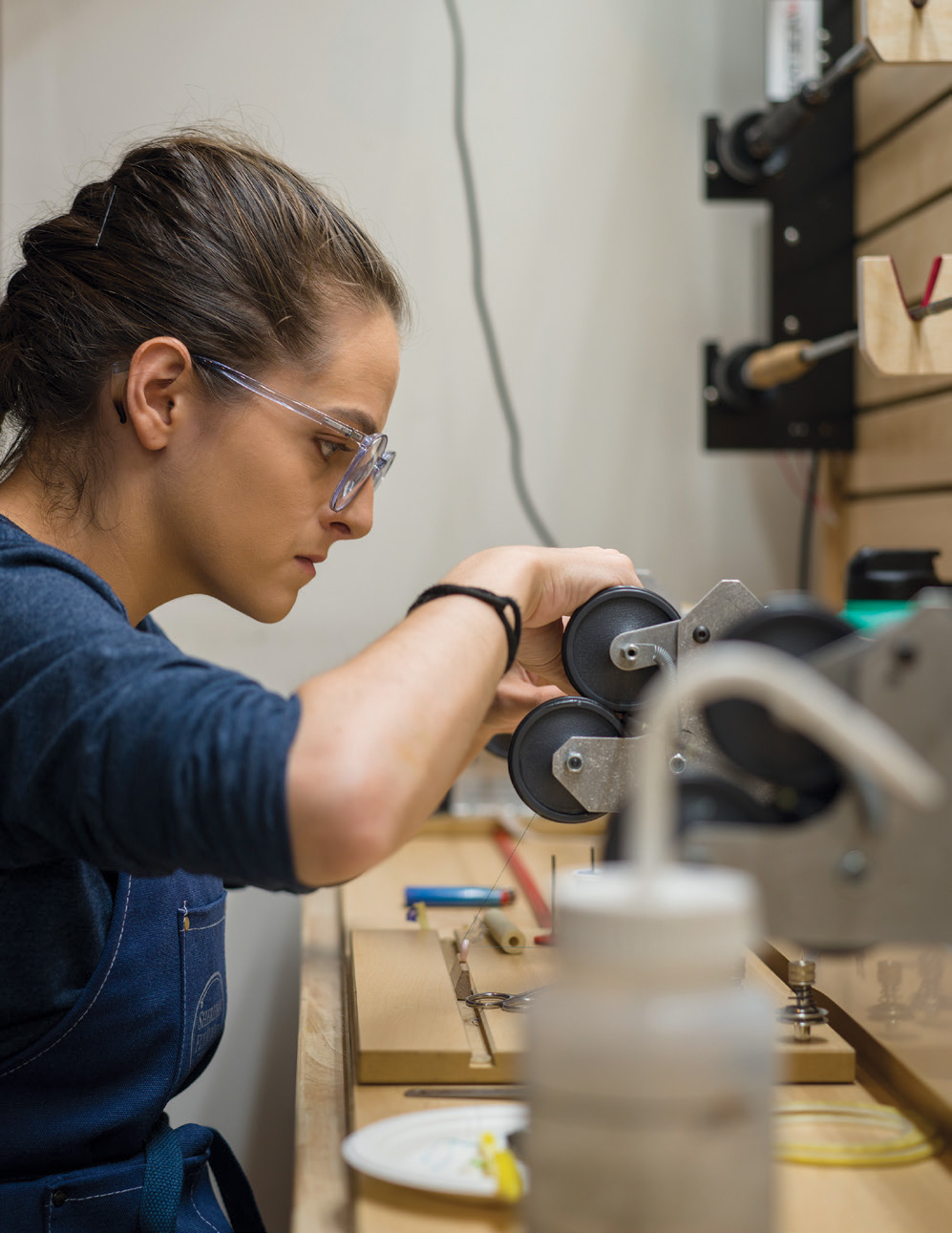
Crafting a custom-built fly rod requires attention to detail and lots of patience.
“You can come in, build a rod, and go fishing with it that same week,” Tucker says. “We even have private water on some of the local ranches where we can take you.”
“It’s on fire right now,” he adds. “The momentum that it has is great: We just met with 17 athletic directors and a couple of principals that came here to Sheridan from different high schools all around Wyoming.” Tucker and Puettman delivered a presentation on working rod building and fly fishing into the curriculum, allowing students to earn credits by learning the soft skills required to build their own rods from start to finish.
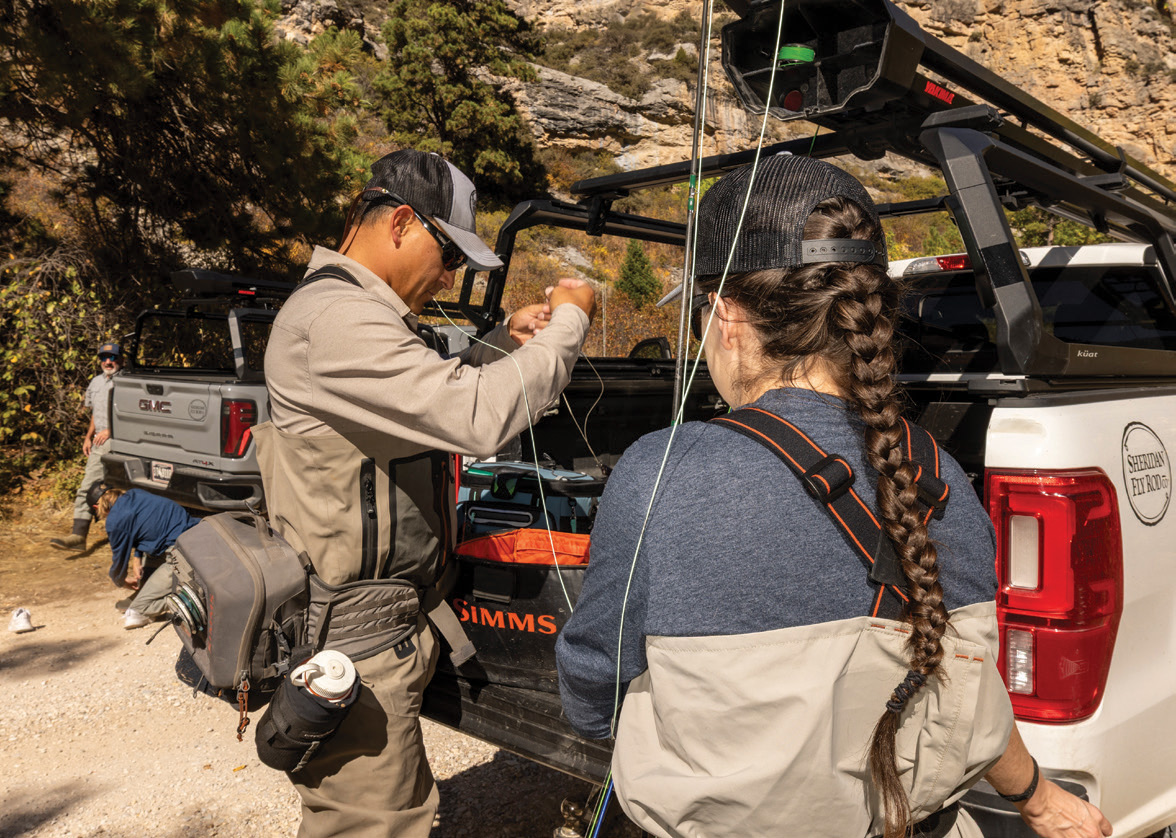
At Sheridan Fly Rod, a corporate outing means waders, sunscreen, and a rod built by somebody you know.
Here in the shop, as customers come and go, I hold one of the rods in my hand, wiggling it in space. I’ve always found fly rods to be beautiful, and this little Greenback 5-weight is indeed beautiful, perhaps even more so because of its origin.
A few weeks later, on the breezy campus of Casper College, I get the chance to see Puettman in action as he describes to a room full of students how he caught the fly-fishing bug.
“I was 12 years old,” he recalls. “I was elk hunting up in the Bighorn Mountains when one of my grandad’s friends asked me if I wanted to try something different that day. So, I put down my spinning reel and picked up a fly rod. When I got home, my mom asked me how the elk-hunting trip went. I told her, ‘I don’t know,’ because I was fly fishing the whole time.”
Puettman goes on to describe how, at 24 years old, he created a nonprofit mentoring program, working with kids with social and emotional needs. He believed he could use rod building and fly fishing to teach patience, respect, and self-care. He says students often enter a “flow state” while doing these activities. For 15 years, he taught the classes and ran the nonprofit, building thousands of rods with over 300 groups spanning from New York to Idaho. But most of his effort remained in Wyoming, where he wants to further develop this new enterprise.
With a four-piece rod blank and some rod-building supplies, Puettman demonstrates how each rod blank has a natural spine, a place where it arcs under pressure. He marks these on the blank and shows how to affix the chrome guides to the rod. While he works, his gaze on the rod, he talks about the world of fly fishing and how lucky the students are to be entering it.
“I was lucky, too,” he says. “I grew up one and a half blocks from the North Platte River. Every waking moment when I wasn’t on the baseball diamond or wrestling mat, I was on the river.”
Puettman’s youth coincided with the reclamation of the Amoco Refinery. Through Herculean efforts by the federal government and local organizations, the North Platte River was transformed from a polluted body of water to a Blue Ribbon trout stream. Puettman’s house near Fort Casper was right where Garden Creek flowed into the North Platte. Though he fished with an old fiberglass rod the “size of a broom handle,” he caught “rainbows, great big rainbows,” he says.
By now, the class is rapt with attention.
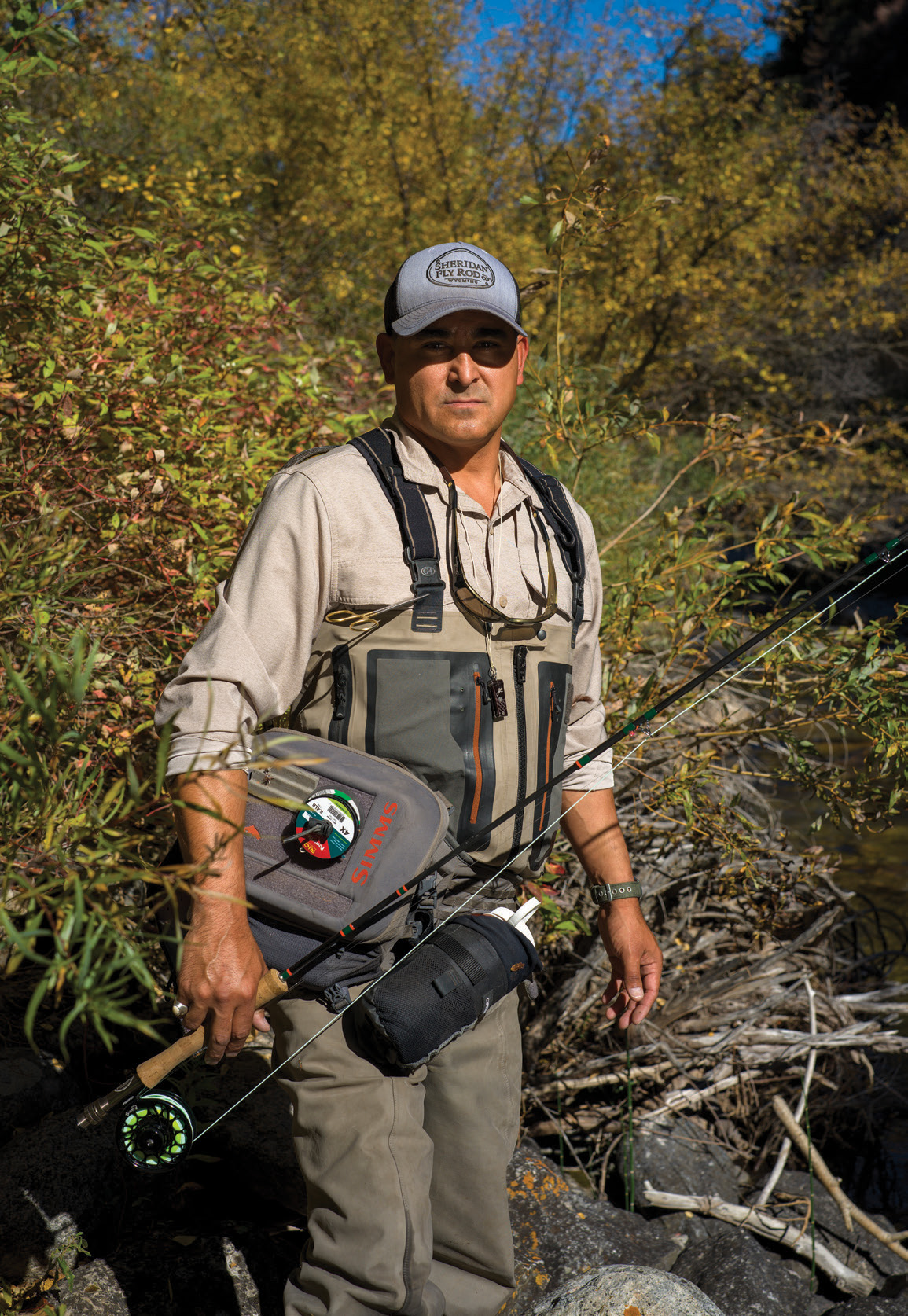
Founder Joey Puettman has taught thousands of young people how to build their own rods.
After the rod-building demonstration, Puettman offers to take the group out onto the lawn, between one of the academic buildings and the library. Here, he introduces the subtle art of casting. He uses a 5-weight Sheridan Fly Rod Greenback.
Tossing huge billowing loops into the air, he tells the students to watch his rod tip. It flexes and bows like a willow branch. Next, he has them assemble their rods — basic models that the college has been using for years — and affix the reels.
One young woman struggles with her cast. She admits that she’s always wanted to fly fish because she saw people doing it and thought it was “pretty.” Puettman helps untangle her line as she talks about wanting to be out on the river. But having to balance her kids and several part-time jobs means she’s never had the chance.
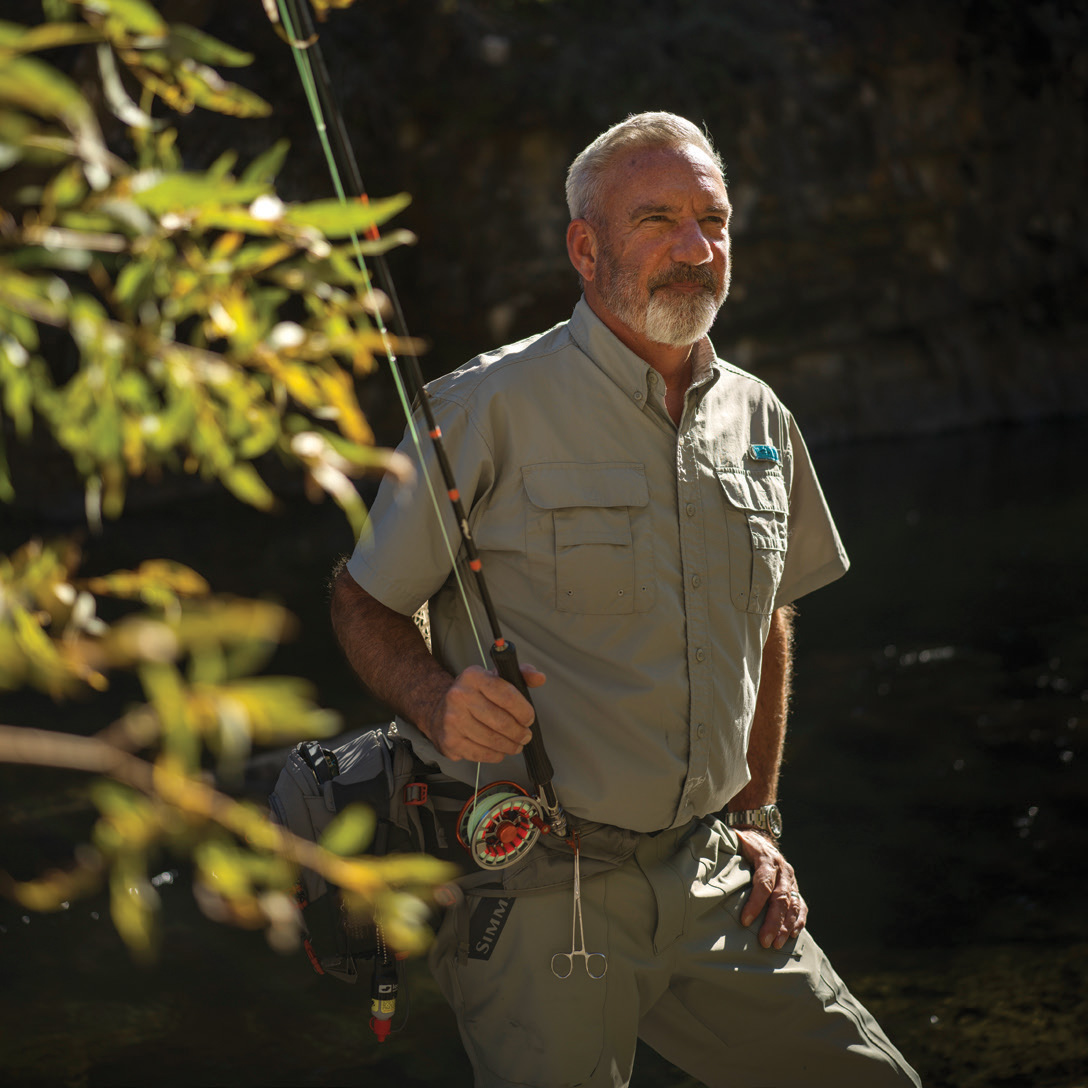
Sheridan Fly Rod CEO J.T. Tucker has come to love everything about fly fishing, especially the deep connection it’s given him with the local community.
The rest of the students are picking up their lines, doing something that’s beginning to resemble casting. But the young woman is still struggling. Puettman has her put down her fiberglass rod and use the little Greenback. Equipped with the nimble flex of a quality rod, she’s suddenly getting it, or at least some of it. He stays with the woman and encourages her until she seems to be enjoying the feeling of picking the line up off the grass and tossing it in the breeze.
“See how the rod loads?” he asks. “You’re getting it. See?”
When the class ends and the students pack up to go, Puettman leans in and tells the young woman to keep the rod. She’s visibly shocked. She tries to give it back to him, but he won’t take it.
“It’s yours,” he says, sealing the gift of inspiration.
David Zoby is a freelance writer from Casper, Wyoming who has been writing and publishing essays and stories for over 20 years. His work regularly appears in Gray’s Sporting Journal, The Drake, and The Sun Magazine; @davidzoby.
Natalie Behring is a freelance photojournalist based in Victor, Idaho. Behring has worked for major publications throughout the world and recently returned to Idaho to be close to her family. When not taking photos, she can be found hiking in the mountains with her border collie and hanging trail cameras in trees.
No Comments