


30 Jan Images of the West: Attempt No Landing There
Under a vast and infinite sky, north-central Montana stretches out before me like another world. It is a place swept clean by time itself — an ancient seabed where the waves have long since gone, leaving only an ocean of grass and wind. Traveling across it feels less like traversing land at times and more like drifting through space. The horizon is so far and so straight it could be mistaken for the edge of a planetary disk. The roads, long and lonesome, might be lightless corridors of a stellar voyage, and I am a lone traveler steering my ship across an endless galaxy of wheat and grass.
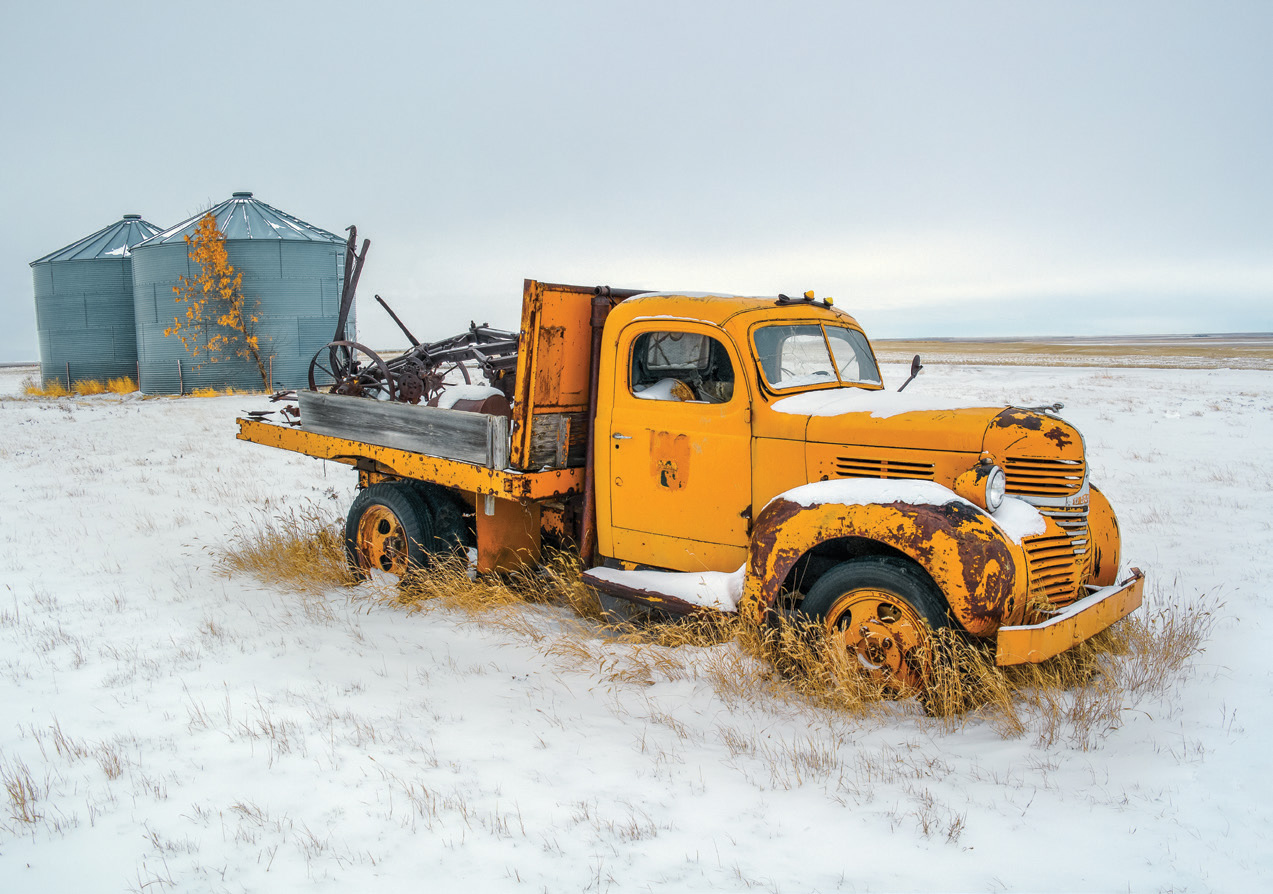
A stone’s throw from U.S. Highway 2 near Iverness, Montana, an old yellow Dodge pickup sits alone in a cold, open field, standing watch as time rolls on. Nearby, a rogue tree — sheltered from the wind — clings to its yellow leaves, mirroring the truck’s color in an otherwise muted, late-season landscape.
Each stop along the way becomes a landing. A single grain bin rises like a satellite against the pale blue; a windmill hums softly in the distance, spinning in its orbit; an abandoned truck, rusted but dignified, drifts like forgotten debris in this beautiful vacuum. Here, isolation is not emptiness: It is purity. The subjects present themselves without competition, without noise, and without vanity. Every photograph of mine becomes a small act of reverence, a quiet conversation between the land and my lens. I whisper my thanks to each old structure and creature before I move on, leaving my mark on this celestial map.
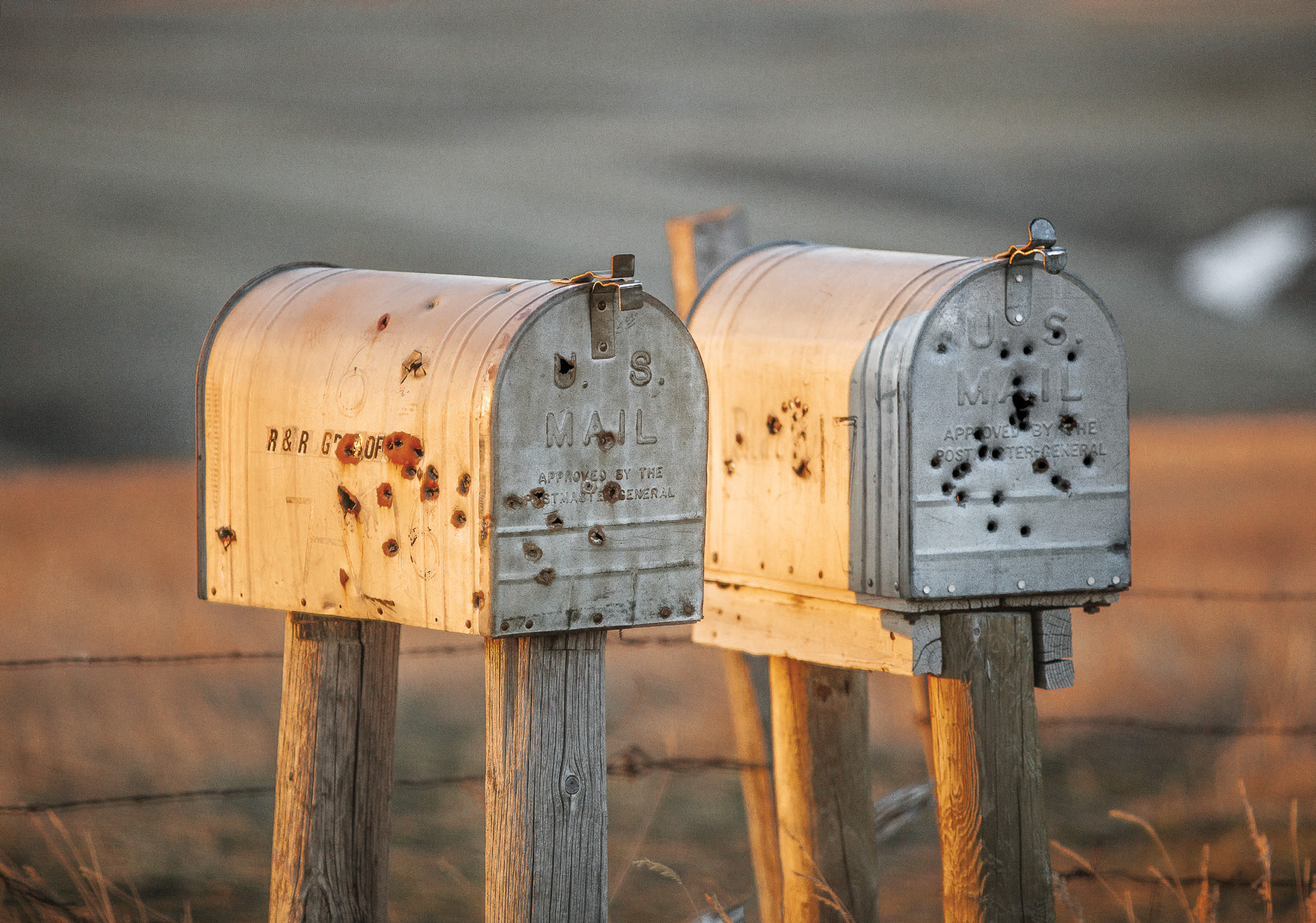
Two large rural mailboxes still stand near Chinook, Montana, their steel skins peppered with birdshot from years of casual target practice. Some might be appalled, while others will see the unintended benefit of a little extra ventilation.
At night, the transformation is complete. The stars appear not as a canopy above but as companions beside me, almost as if I were floating among them. Out here, there are no city lights to dilute their color, no haze to dull their brilliance. The Milky Way unfurls in full glory, and the air itself seems to vibrate with the hum of eternity. Standing beneath it, one can almost believe the universe still speaks — if only to those willing to listen.
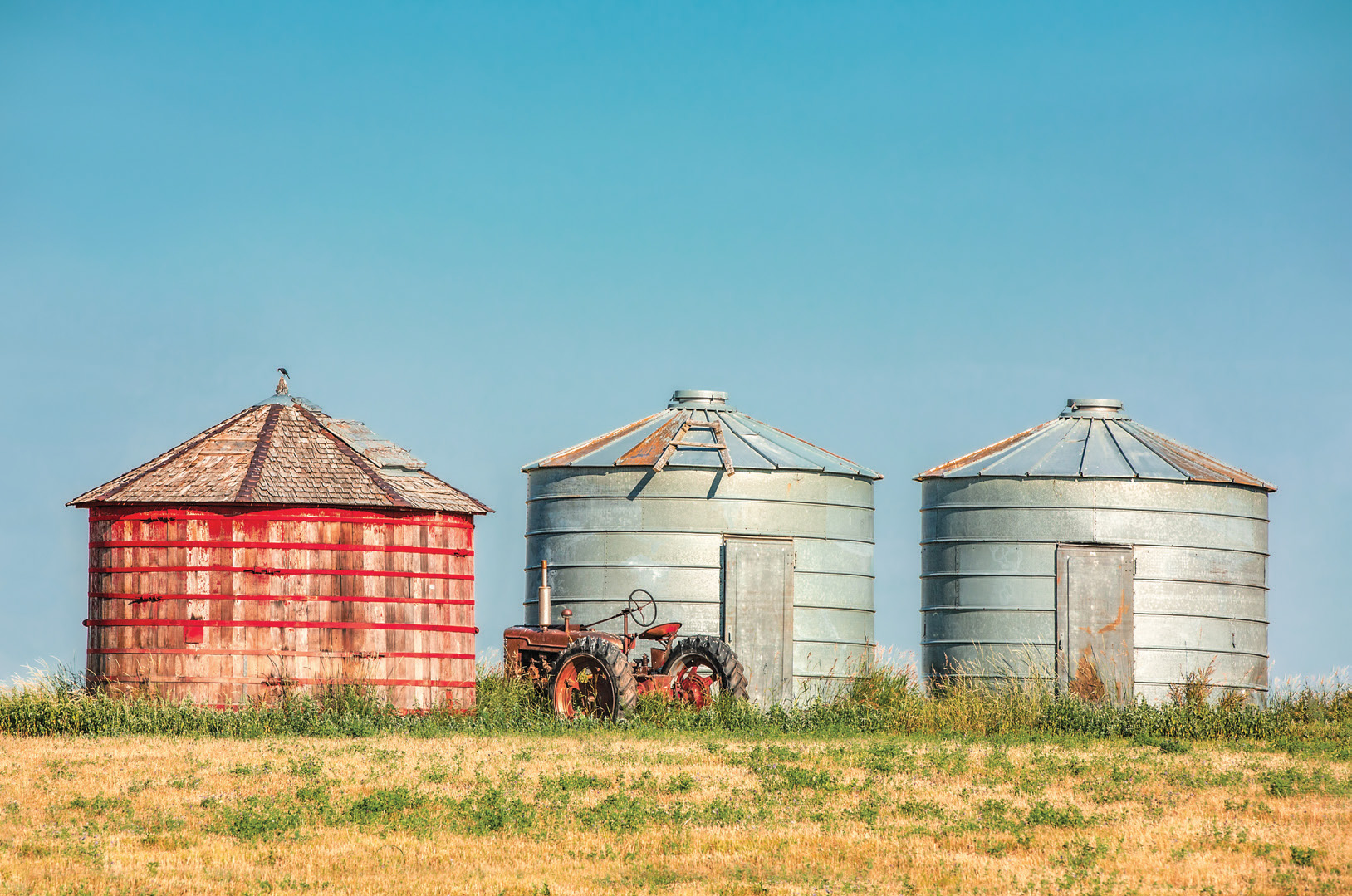
Three small grain bins — two metal, one wood, each weathered by decades of use and quiet endurance — sit on a farm near Hilger, Montana. Parked between them, an old tractor rests idle. Together, they mark time in central Montana, not by calendars but by seasons, harvests, and what is left behind.
The people I meet along this cosmic plain are no less extraordinary. Their faces are written with the geography of labor and love, their hands as weathered as the tractors they fix and the fences they mend. They belong here, as much a part of this landscape as the prairie grass and the sky. They are grounded but not earthbound — souls orbiting within their own constellation of work, family, and faith. They bear witness that purpose yet dwells in steadfast hearts and the work of faithful hands.
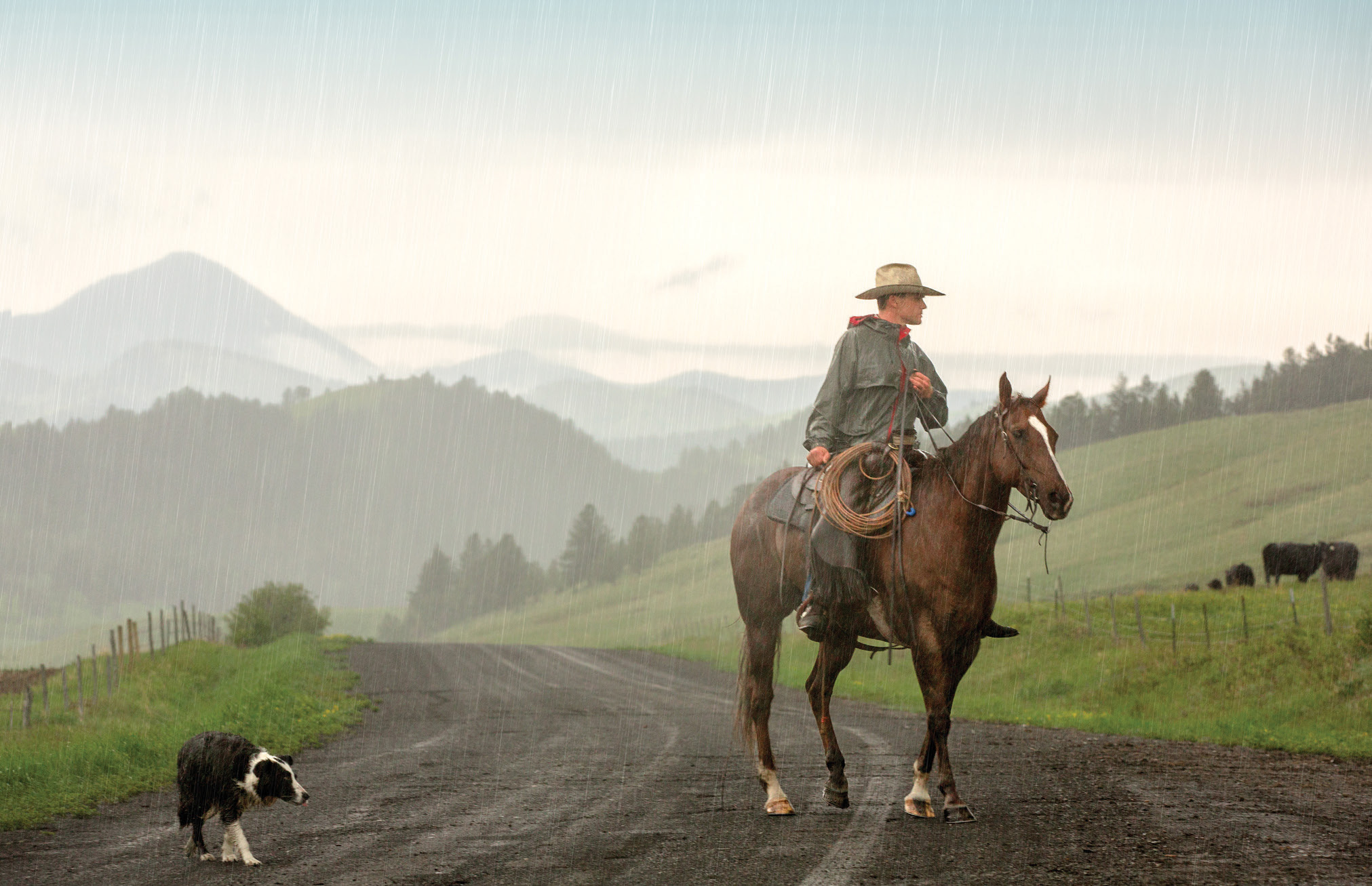
Lael Barnett of Havre, Montana rides through the rain in the Bears Paw Mountains near Lloyd, Montana. Barnett’s horse, Maddie, and dog, Screech, work with him in quiet companionship at the Hofeldt Ranch.
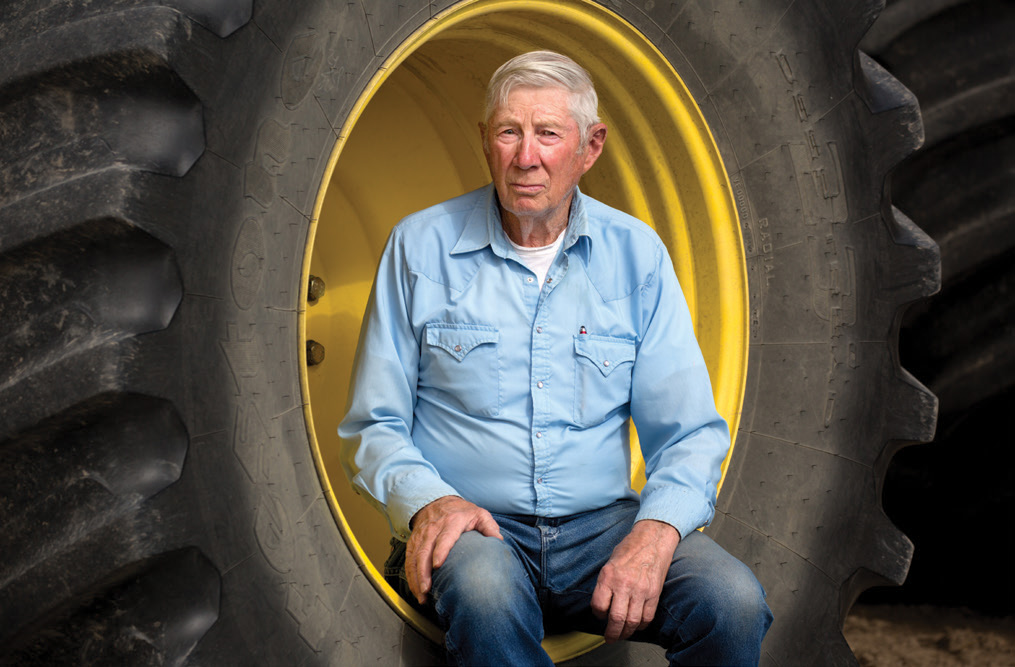
Longtime wheat farmer Victor Wagner pauses for a portrait in the wheel well of his tractor near Circle, Montana. Farming wasn’t just his work but his constant companion, carried out with steady care and dedication over decades. Though he passed away last summer, Wagner’s presence lingers in the fields, the machinery, and the quiet rhythms of eastern Montana.
But I fear what might come if others — those who rush from one screen to the next, desperate to escape their own stillness — should find their way here. This land’s gift is its silence, its solitude, its unspoiled immensity. To lose that would be to lose the very thing that makes it sacred.
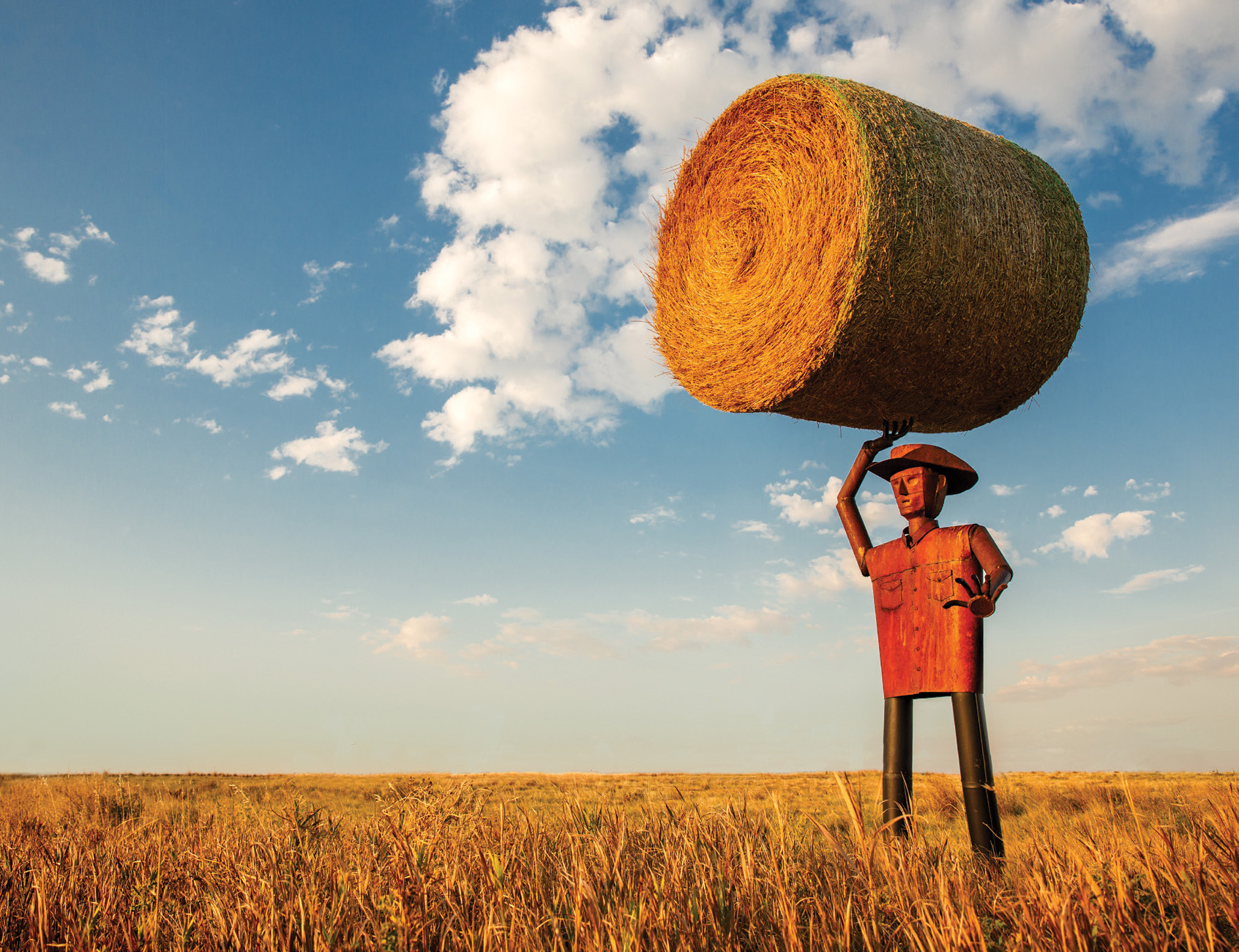
A large metal sculpture of a man hoisting a real hay bale into the air on the empty plains near Goldstone, Montana is equal parts monument and punchline. Folk art in these parts reminds us that those who live here also have a sense of humor, sometimes as vast as the landscape itself.
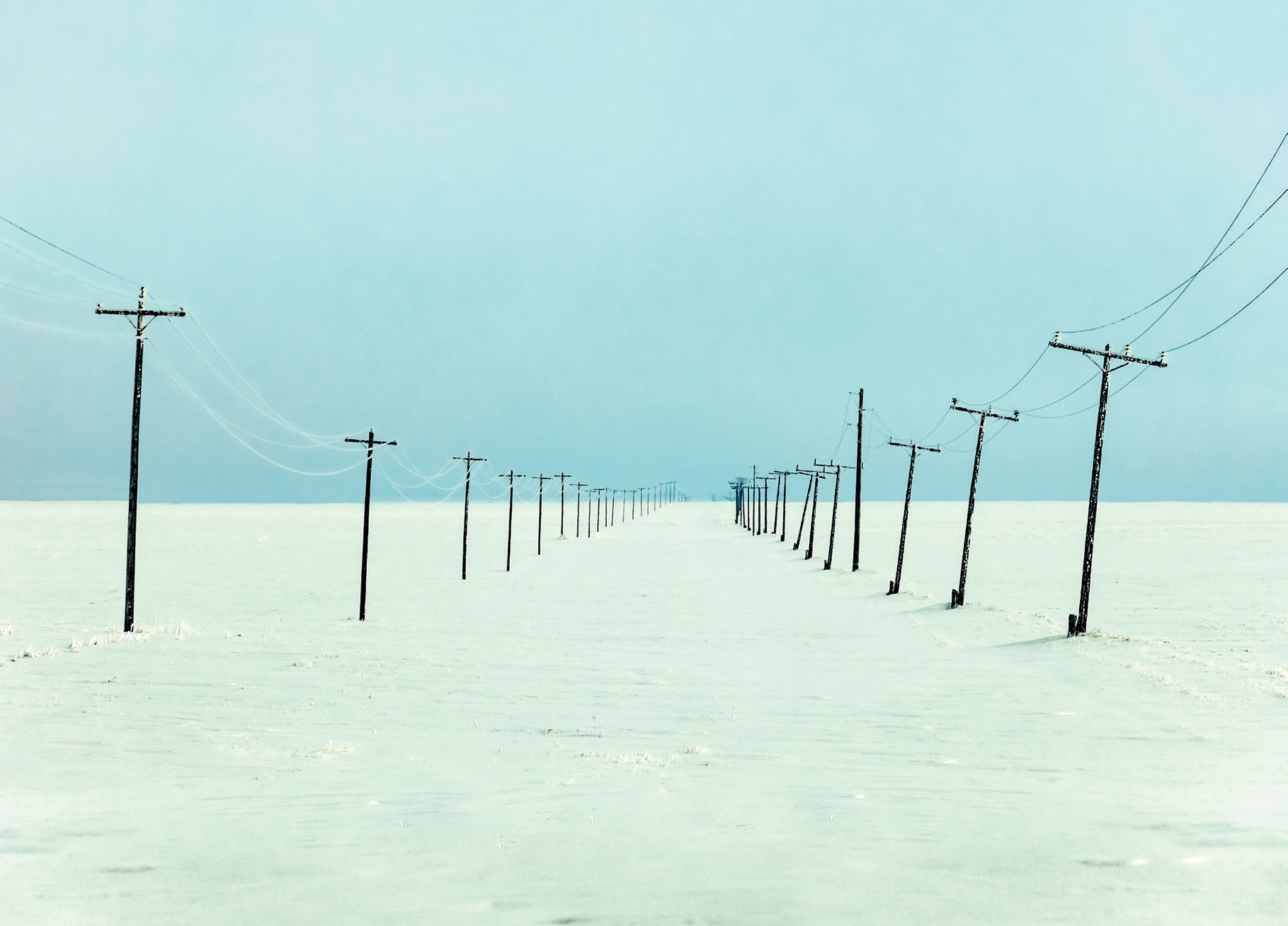
A row of power lines buried in snow and fading into an otherwise bleak winter landscape flanks an unused road near Kremlin, Montana. Beneath a tarnished blue sky, the scene is a stark reminder of how hard the winters can be on the Hi-Line.
So, as Arthur C. Clarke once wrote of another mysterious world, I offer a similar plea, my own transmission into the void: All these worlds are yours — except the island mountains and vast plains of north-central Montana. Attempt no landing there.
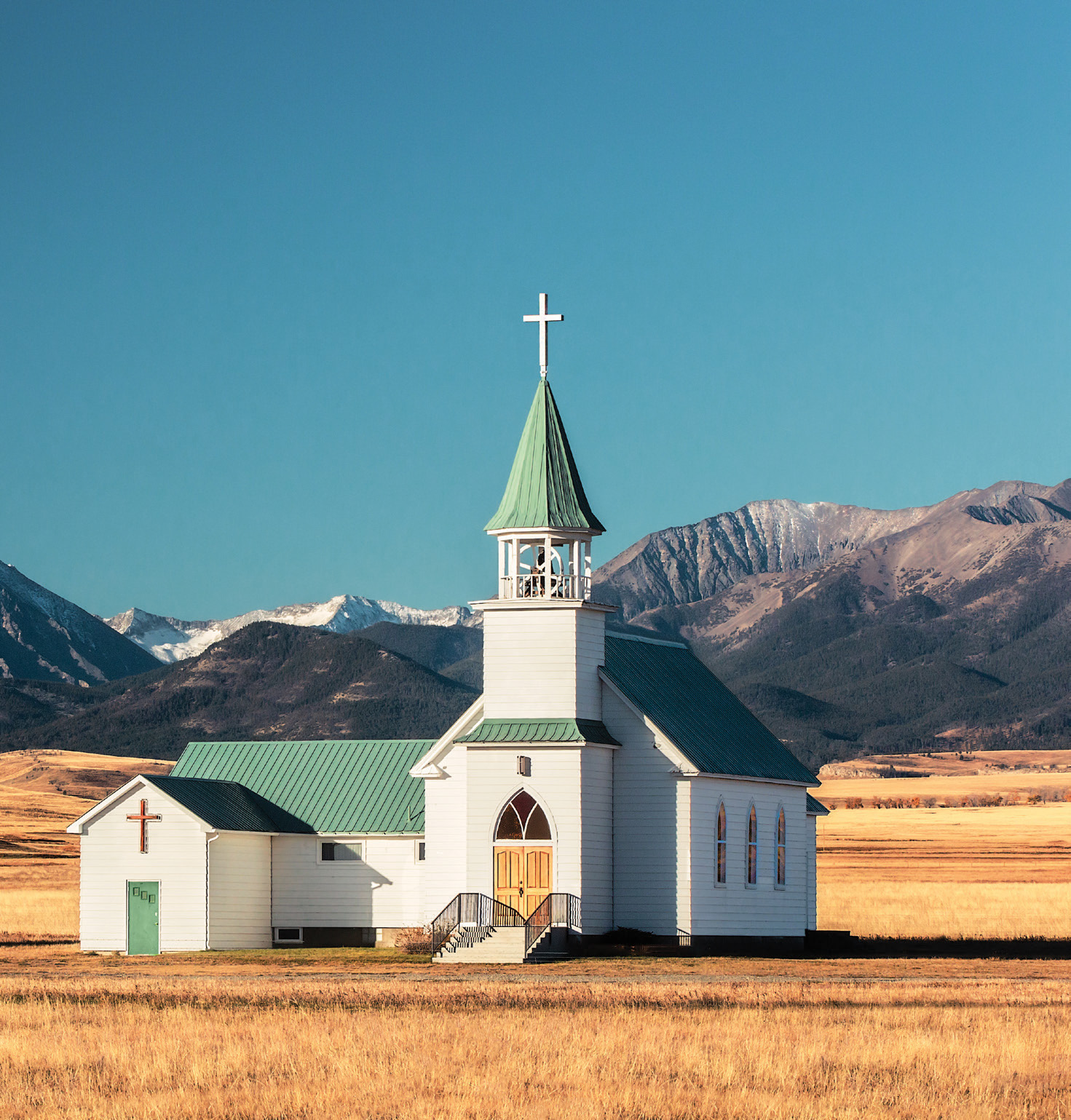
Set against the rising Crazy Mountains outside Melville, Montana, Melville Lutheran Church sits alone in open country on an autumn day. Believed to be the oldest Lutheran church in Montana, it stands as a quiet marker of faith and endurance against the vastness of the landscape.
Let it remain a place for the dreamers and the doers, the watchers and the wanderers, so few and far between. A space between stars and soil, where time slows, the skies deepen, and the universe — just for a moment — feels close enough to touch.
Headquartered in Montana, Todd Klassy is a commercial photographer focused on capturing the unique character of the remote, rural corners of the country. His images have been featured in American Cowboy, Distinctly Montana, Farm & Ranch Living, Popular Photography, Sports Illustrated, Western Horseman, and many other publications; toddklassy.com.
No Comments