


30 Jan Books: Reading the West
After enjoying a lavish multi-course dinner at his favorite French restaurant in San Francisco, an establishment so luxurious that “you need a wallet full of credit cards to eat there,” Russell Chatham admitted that his banker had finally reached his breaking point. “He wanted to know why I couldn’t do something I could afford, like jump into an ice-cold river and float downstream for 4 or 5 miles.”
Chatham replied, “I can’t help myself.”
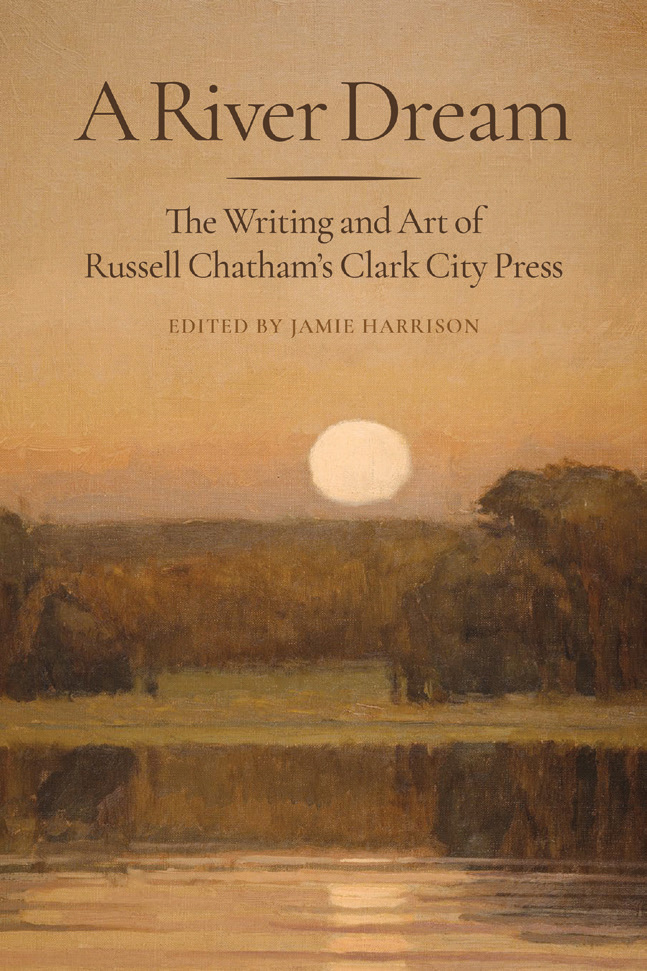
Although known first and foremost as a landscape painter, Chatham found his way into book publishing with the advent of his Clark City Press in Livingston, Montana. It was 1987 and his goal was simple: make quality books with quality writing. And he did just that. Clark City Press published, in its brief but brilliant existence, nearly 40 books of fiction, poetry, essays, and art.
A River Dream: The Writing and Art of Russell Chatham’s Clark City Press (Godine, $45) features a wide selection from the press’s publication history, edited by treasured novelist Jamie Harrison. With writings by Thomas McGuane, Rick Bass, Jim Harrison, Richard Hugo, and Chatham himself, among many others, Harrison has curated a volume that is worthy of the high standards of its subject.
In what must have felt like an archaeological excavation, Harrison pieces together the origins of Clark City Press in her introduction. The saga’s threads are many, as it involves not only Chatham’s life, but Harrison’s, too: As the managing editor of the press, she played a vital role in all of its publications. It was a role she didn’t necessarily expect.
Growing up in northern Michigan, Harrison’s childhood was spent in the company of writers who were friends with her father, Jim. And that was how she first met Chatham back in 1972. It was because of Chatham that she moved to Montana some 15 years later.
After a stint in New York City as a magazine writer and caterer, she and her husband moved to Livingston with the promise of cheap rent. In need of a job, she leapt at the opportunity when the legendary landscape painter said he needed help with his new publishing venture. It wasn’t long before Harrison found herself in the office above Sax & Fryer, learning everything she possibly could about the book-publishing business and working for a man who was, like a François Rabelais character, larger than life.
Chatham was a world-class painter and a world-class fly fisherman (he once held the record for the largest striped bass caught on a fly), but when it came to handling money and running a business, he was, to put it charitably, out of his element. In less than six years, the press folded.
Harrison manages to encapsulate the man in all his complexities when she writes that he “was a translator of light, a benevolent chaos agent, a man who ate not wisely but well, a man who (in Tom McGuane’s affectionate words) ‘ruined his life with sport.’”
Chatham changed the way we see Montana’s landscapes: We notice that certain vistas, when the light is just right, are Chathamesque. And he changed the way we see Montana’s literary legacy, too. It was because of his undying passion that each enduring work from his Clark City Press made its way to publication. It was because of his refined taste. It was because of his magnanimous spirit. It was because he couldn’t help himself.
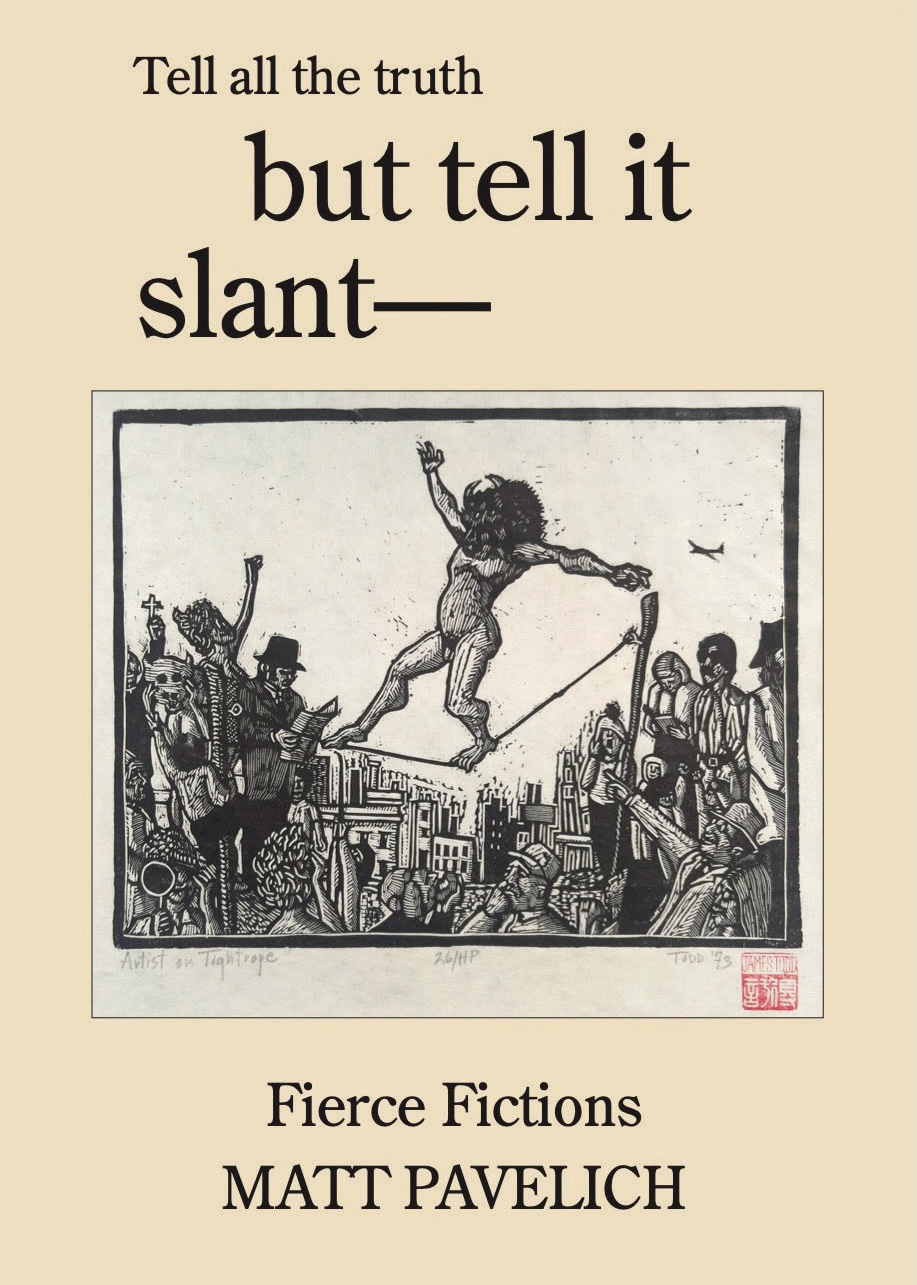
“Tell all the truth,” Emily Dickinson’s poem begins, “but tell it slant.” Matt Pavelich’s new collection of stories, But Tell It Slant: Fierce Fictions (Bar R Books, $24.95), introduces readers to varied subjects, from a troubled man eking out a life on the streets to a professional horn player attending a high school reunion to an aimless hardware store employee who inadvertently becomes a motivational speaker. These stories are peopled with characters who are confronting, some for the very first time, their own unique sense of loneliness. The loneliness within these characters reflects our own atomized existences.
But Pavelich never lets these stories succumb to that strong pull of despair. What saves them is his deft use of language, artfully rendered and emotionally precise. These stories reveal Pavelich’s remarkable ear for the nuances and cadences of speech, both to others and to ourselves.
The title story, and the longest piece in the collection, tells of a public defender, Mike Vinich, taking on a murder case in American Samoa. “His work had made him tired of people, or a good plurality of them, and it was by dint of will alone that Vinich did somehow continue to love humanity a little, but this was in the collective, in the abstract.”
Dickinson’s poem ends with the reason behind the suggestion: “The Truth must dazzle gradually / Or every man be blind — .” To slant the truth, the poet proposes, is a charitable act.
Pavelich’s stories show themselves to be charitable acts. It is while reading these fierce fictions of slanted truths that we find, among the maelstrom of cruelties and misunderstandings, a love of humanity. We may even find that we feel less alone.
Of Note
“There are a thousand ways to be devoured / You invent new ones every day / Sometimes you’re the fish, sometimes the bait / But almost never the one setting the hook”
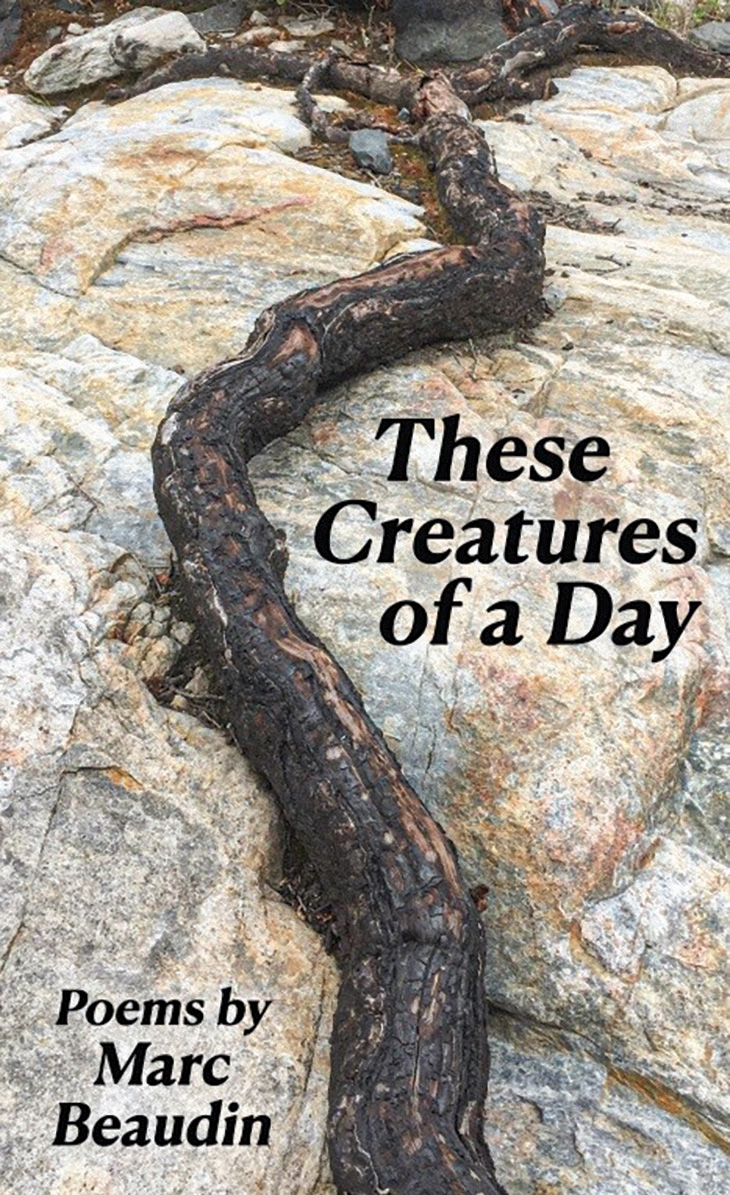
In the face of our grim reality, there seems little chance of succor. With no more gods for us to blame, we must choose what we do with the short time we have. It is our impermanence that makes us tragic creatures. But rather than an elegy, poet Marc Beaudin has given us a celebration of our brief, mortal lives with These Creatures of a Day (FootHills Publishing, $18).
James Joyce managed to fit an epic into just one day with Ulysses. John Coltrane packed the entire jazz spectrum into Giant Steps. And Beaudin has shown us creatures of a day how we might, in a single moment, find eternity. It’s there in a stone shaped like a heart. It’s there in a bowl of potato soup. It’s a mug of strong black coffee. It’s a flock of sandhill cranes overhead. It’s a handful of wild huckleberries. And it’s also the music that is inside this poet’s language. Listen.
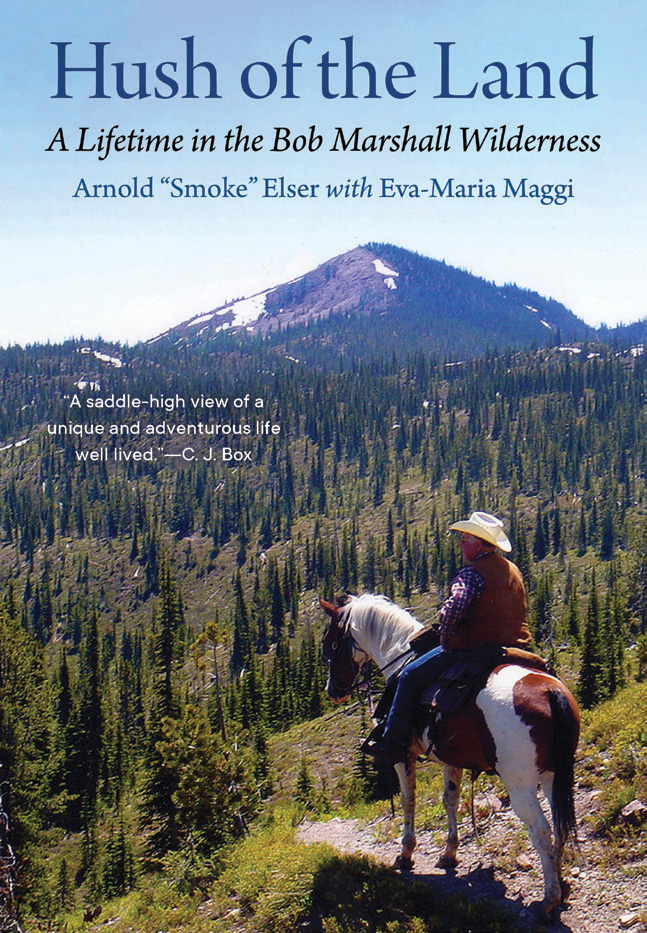
In his story “USFS 1919: The Ranger, the Cook, and a Hole in the Sky,” Norman Maclean describes horse and mule packing as an “almost lost art.” That story was published in 1976. Nearly 50 years later, this almost lost art has become rarer still.
Arnold “Smoke” Elser, with Eva-Maria Maggi, has taken readers for a ride into the backcountry with Hush of the Land: A Lifetime in the Bob Marshall Wilderness (Bison Books, $21.95). Every page is a reminder that packing is an art not yet lost.
Step by horseshoed step, Elser guides us from his early years as a forestry student and a lover of mountains and horses at the University of Montana through his long and storied career as a wilderness outfitter. His work has allowed him to bring thousands of guests of every background into the Bob Marshall Wilderness on horseback. He has taught hundreds of students how to manty a pack and balance a load on a mule. He became (and remains) an invaluable advocate for the conservation of Montana’s public lands. And, as we find in the pages of Hush of the Land, he is a powerful and inspiring storyteller. After a lifetime in the saddle, Elser has many stories to tell. His stories are gifts — and these gifts are to be treasured.
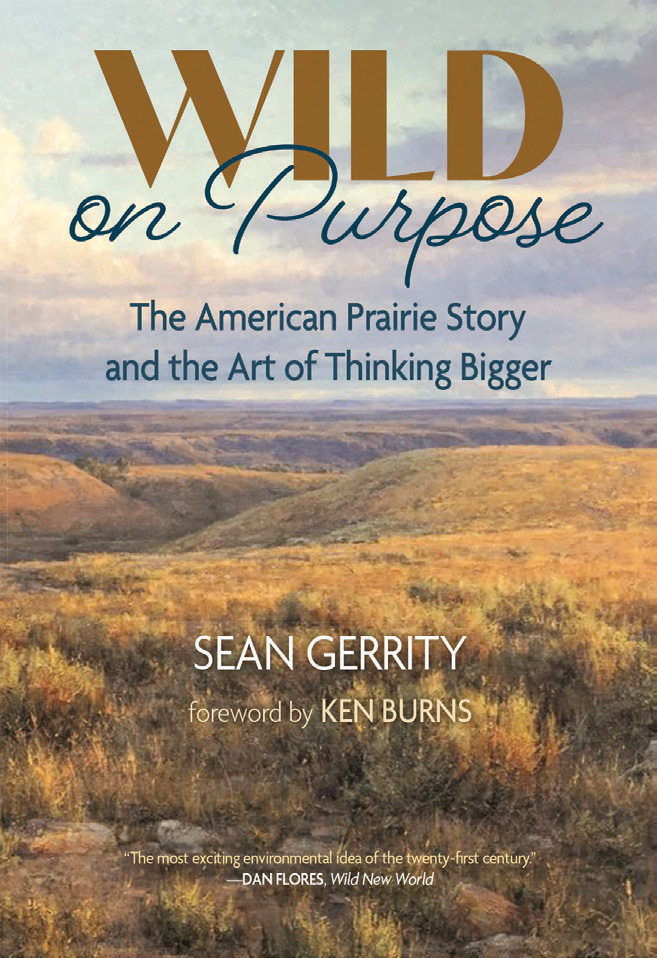
In Wild on Purpose: The American Prairie Story and the Art of Thinking Bigger (Torrey House Press, $23.95), Sean Gerrity gives us a profoundly personal history of his Montana childhood, his years as a consultant in Silicon Valley, and, eventually, his founding of American Prairie, a grassroots, nonprofit organization based in Bozeman, Montana that aims to connect over 3 million acres of wild prairie in the state.
But it is not only Gerrity’s personal journey; this book is a blueprint for anyone with their own conservationist ambitions. As Ken Burns writes in the foreword, “Sean’s example is one for all of us … Much of what American Prairie has accomplished can be replicated in various biomes around the world where nature sorely needs our help.”
In this day and age of witnessing the entrepreneurial spirit almost solely aimed at amassing still greater sums of personal wealth, this visionary book shows us how that spirit might be used to rewild once wild places — for our own sake, for the sake of our future, and for the sake of our planet. Wild on Purpose is a breath of fresh air.
Andrew Guschausky is a former bookseller. In 2014, he opened Cassiopeia Books in Great Falls, Montana.
No Comments