


30 Jan Artist of the West: Illuminations
Thwack, whizz, thwack. As Ben Miller’s sopping wet, paint-soaked “fly” hits the plexiglass, sound becomes a backdrop to his movements. His eyes squint to measure the sun’s position; he notices the flora and fauna. His painting feels intuitive, as if all of Miller’s years of art and school, of teaching and fishing, of learning the ways of both fish and currents, have led him to this very point.
His body moves with each cast, rhythmically, powerfully throwing colors at the large canvas positioned several feet away. He observes the nearby river, seeing through the ripples like an osprey. His work conveys each layer in turn, concluding with the channel’s tumbled stones.
Using a paint-splattered Winston 9-foot, 5-weight rod, Miller holds a handmade fly he’s created. Taking his cue from the many flies he’s made for actual fishing, he thinks about what he sees and contrives a brush from yarn, nylon, hemp, felt, buttons, chenille, and pieces of pantyhose to imitate the way sunlight illuminates a river.
The mind-bending thing about his work is the approach he takes: Painting “backwards,” he starts with the top layer and works his way down through the depths of the water. As layer upon layer is added to the piece, he can no longer see the initial brushstrokes. It is only upon completion, when he brings the plexiglass canvas back to his studio, that he peels away the paper protecting the front. The reveal, like a granted wish, brings both astonishment and validation.
“I had this thought of painting with a fly rod, so I loaded a sock with paint and cast it onto a canvas,” he says.
Not only did Miller believe he’d found a new technique to illustrate the beauty of rivers, so did Bozeman, Montana art consultant Gary Snyder. The 20-year veteran of the New York City art gallery scene thought he would “retire” in Montana after being “beat up and burned out.” But once he caught Miller painting with a fly-fishing rod on the Gallatin River, everything changed.
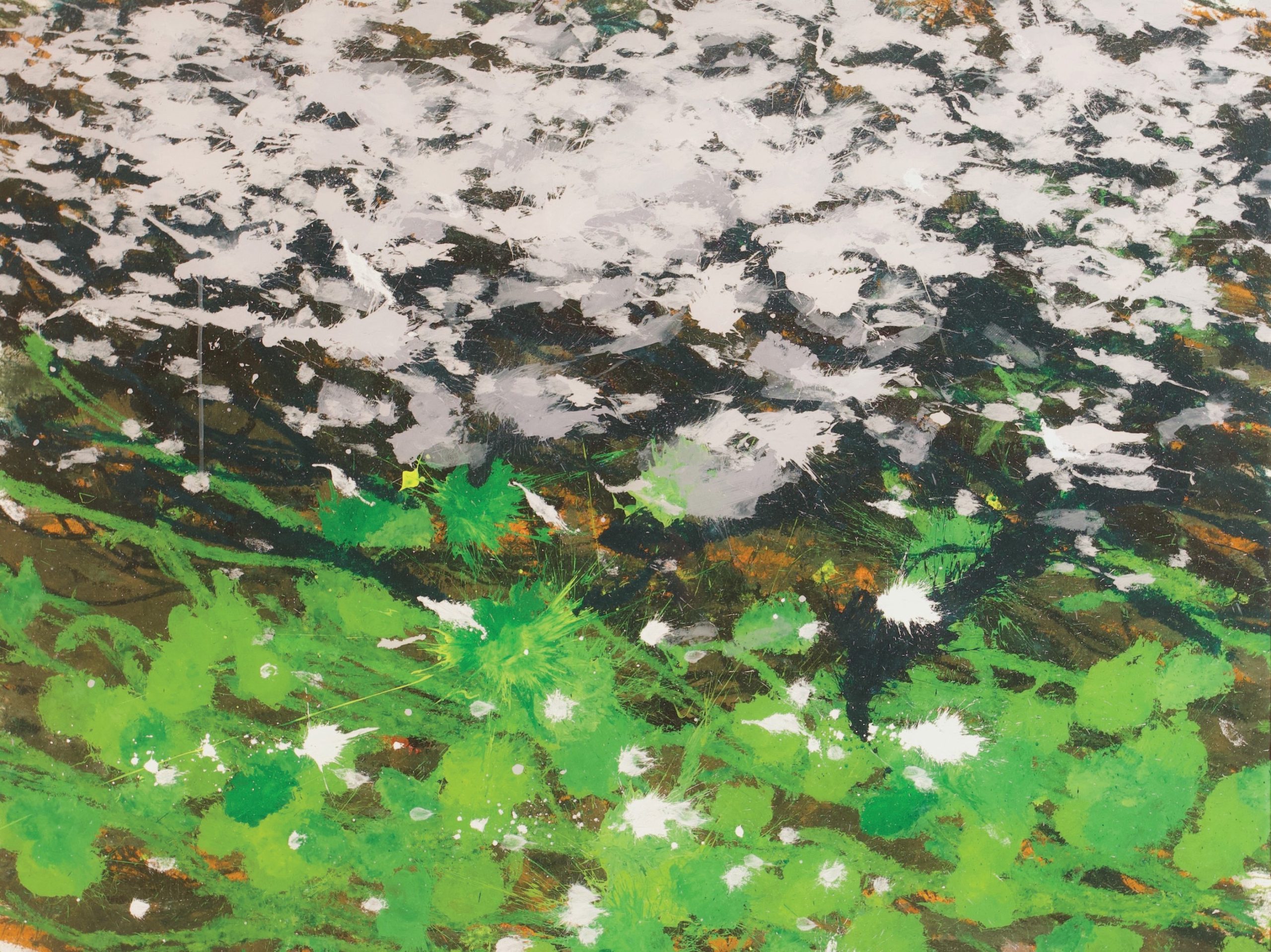
WHITE CHUCK RIVER, WA | ACRYLIC ON POLYCARBONATE | 36 X 48 INCHES
“I feel like Clement Greenberg championing Jackson Pollock in the 1950s,” Snyder says. “Ben has this powerful new energy. He’s so intimate with the wilderness; he’s able to represent nature in a whole new way. He’s already been recognized nationally for his work.”
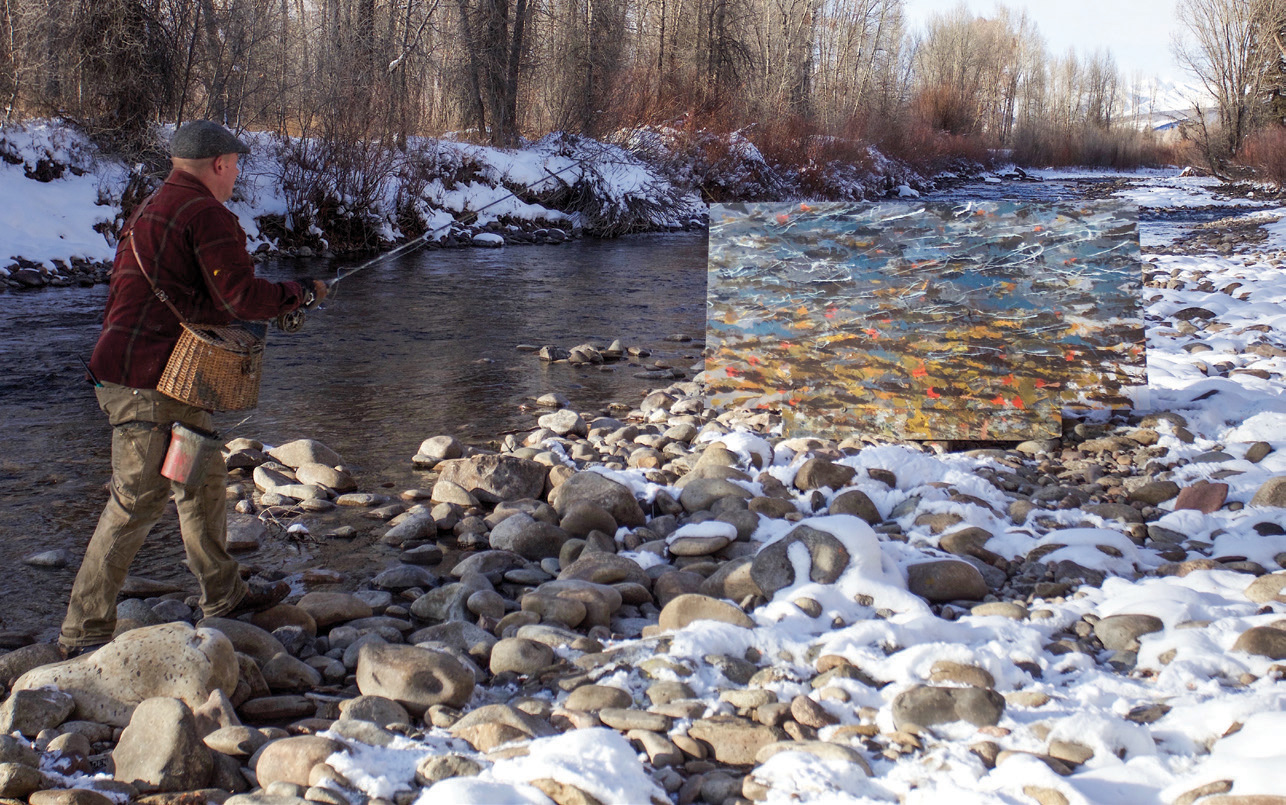
Artist Ben Miller works his large plexiglass canvas with his trusty fly-rod paintbrush at the river’s edge. | JON DODSON
Miller, usually found somewhere on a river regardless of the weather or season, left a safe job teaching high school art classes to pursue his new technique. That leap of faith paid off.
Miller believed in his work enough to throw himself into his art. Snyder believed in him enough to use his art-world connections to introduce Miller to venues like art fairs and expos. Between Miller’s original approach and Snyder’s enthusiastic support, Miller is garnering interest from buyers, collectors, and nonprofits.
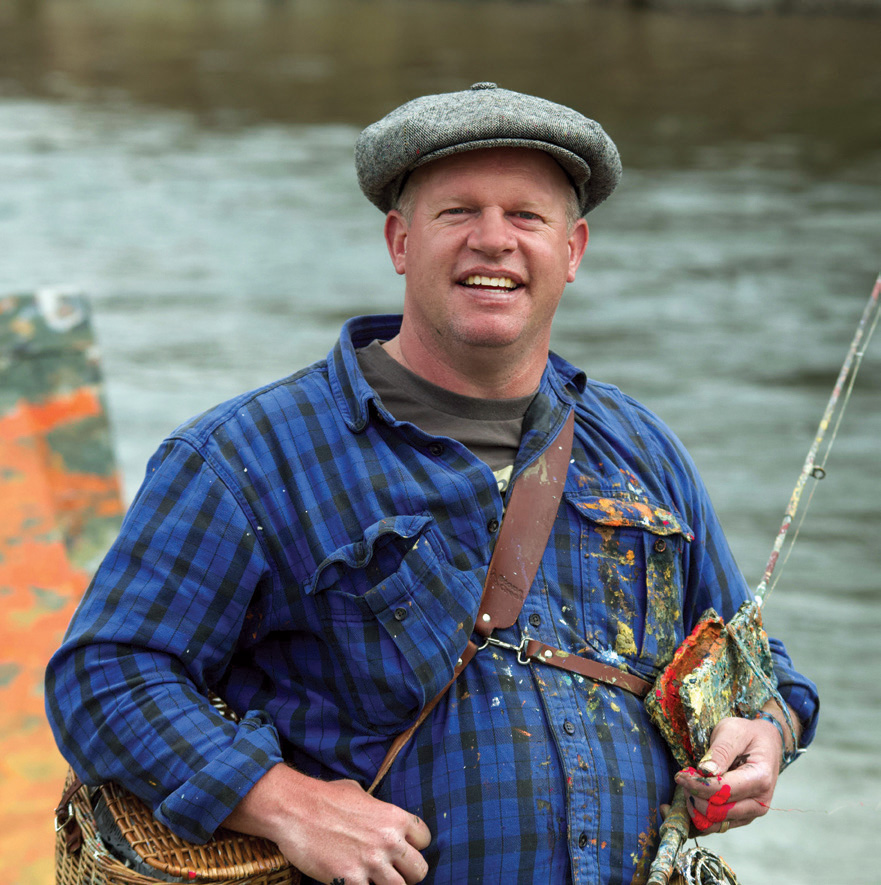
Rod in hand, Miller readies to load paint onto one of his handmade brushes. | JON DODSON
“I had this revelation that a painting is no more than a moving palette of colors, and that’s what a river is, too,” says Miller, who’s been an angler ever since his grandfather first took him out at 8 years old. His fingers move a long, stringy lure in a puddle of light-gray acrylic paint on his palette.
“My fly-cast paintings capture the feeling of a moving river and the culture of fly fishing. Fishing is a direct meditation on everything that is around you, from the interpretation of the current to the wind, and that is very much in line with fly-cast painting.”
Part invention, part sculpture, part painting, Miller’s fly-cast works mark the beginning and end of a day on the river. When the day is done, so is his painting. It is an act of divine conviction. Once the front paper is peeled off, there is no going back.
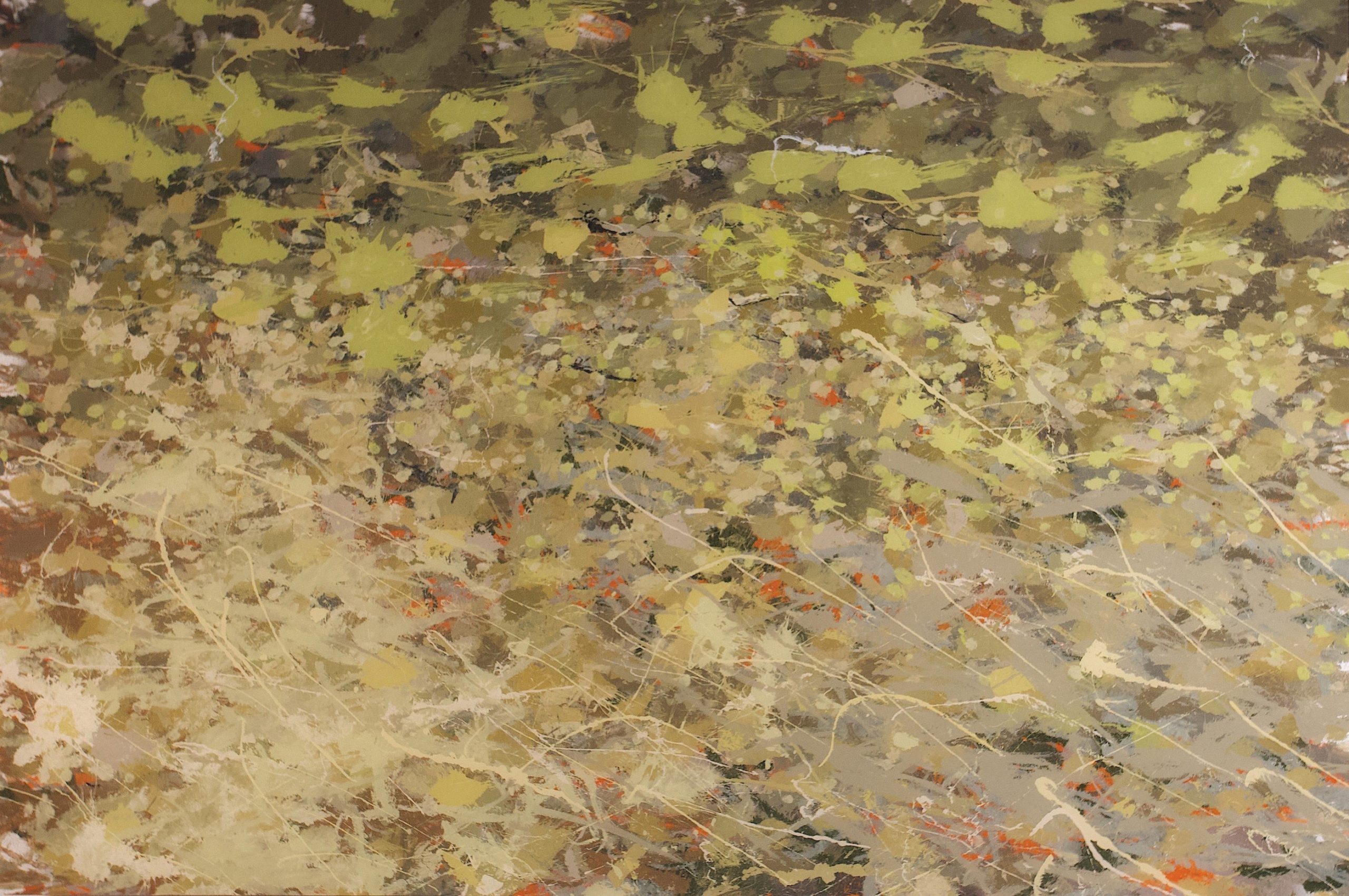
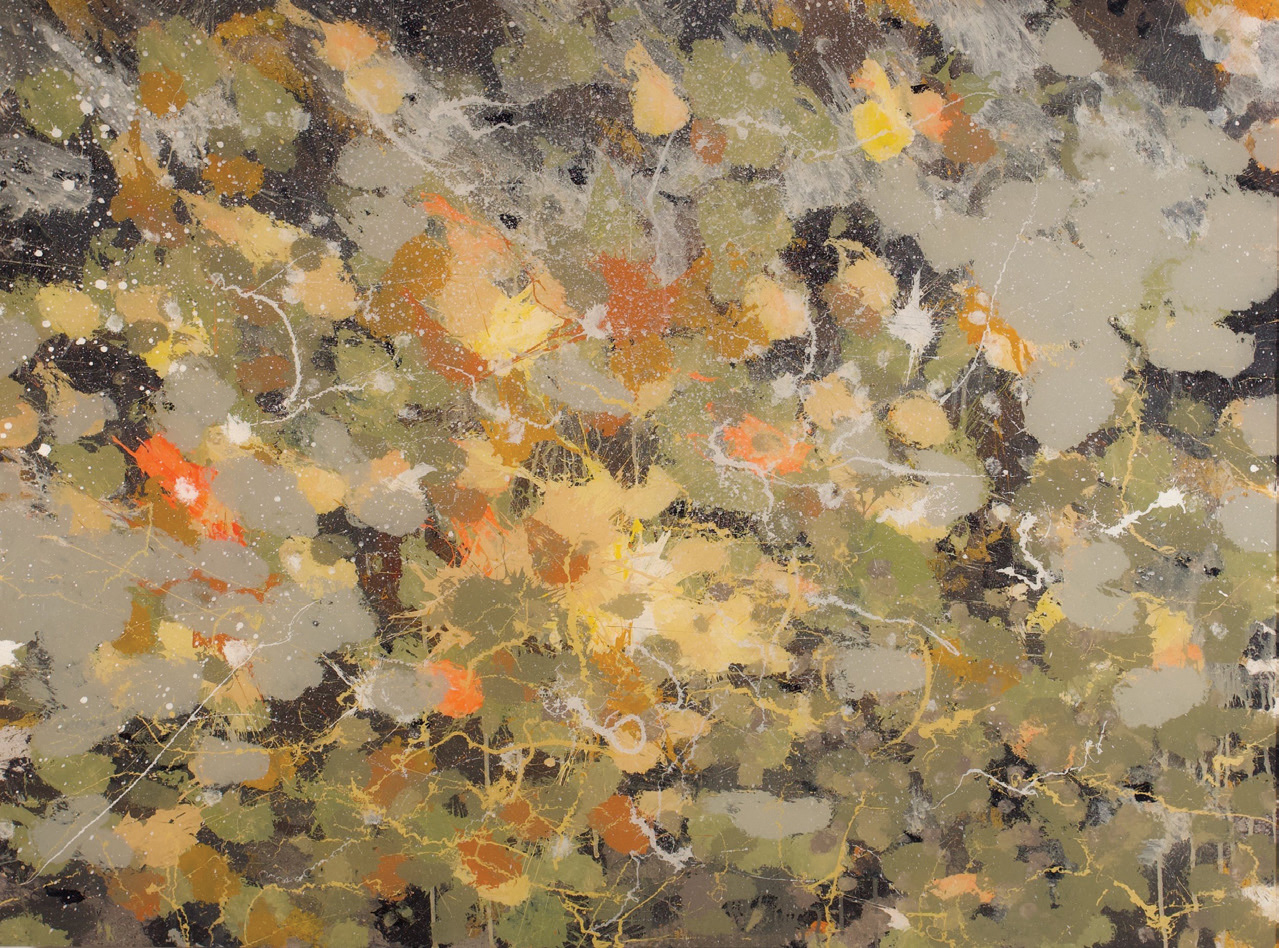
BULL RUN, MT | ACRYLIC ON PLEXIGLASS BLOCK | 48 X 96 X 1 INCHES
Miller describes a fly rod as a form of a paintbrush, just much further evolved.
“Painters in the past have used a remarkably similar paintbrush to make their marks, but [it is nothing like] how a fly rod can send materials, with ever-increasing momentum in an arching loop, with the smallest strand of connectivity to a presentation at the end of its line of travel,” he says. “Give me this ‘paintbrush’ — with the carbon fiber, nano technology, and options of Fuji guides and cigar grip, differentiations of tapers in the handles from the local artisan shop. Paintbrush options … have not changed or evolved anywhere close to the complexities of a fly rod. The effort and evolution put into a paintbrush are nowhere close to the craftsmanship and technology put into a fly rod.”
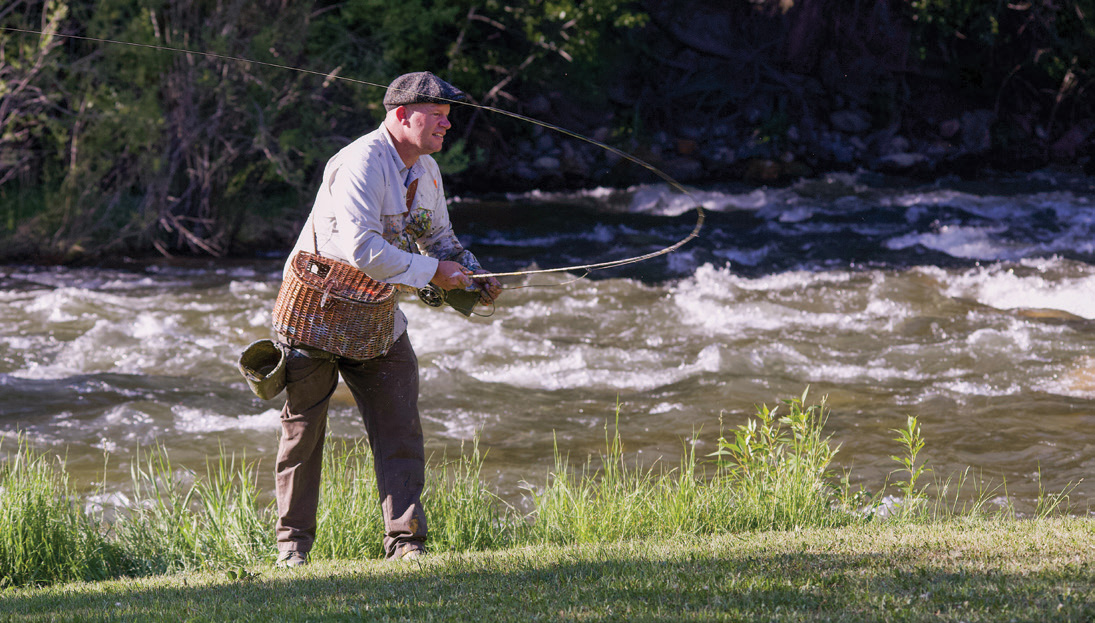
Miller combined two of the things he loves most in life — fly fishing and painting — to shape a living he loves. | JON DODSON
After Snyder began advocating for his work, Miller traveled around the country, painting rivers and helping conservation groups with waterway awareness. Recently, Miller was asked by the nonprofit group American Rivers to paint the Rappahannock River in Virginia. He’s also been to Chicago, for Friends of the Chicago River, setting up in the midst of the bustling city. Though it was quite the contrast to Montana’s Ruby River, where he’s also painted, Miller says he used his same approach, zoning out all the people and connecting to the movement of the water, as Snyder explained it all to passersby.
“We continue to do projects around the country, including the Gila River, the Yaak, the Duwamish River, and the Colorado River, where he will work with the tribes there, contributing the money from his sales to saving these iconic rivers,” Snyder says. “Each piece is a snapshot of a certain place and time.”
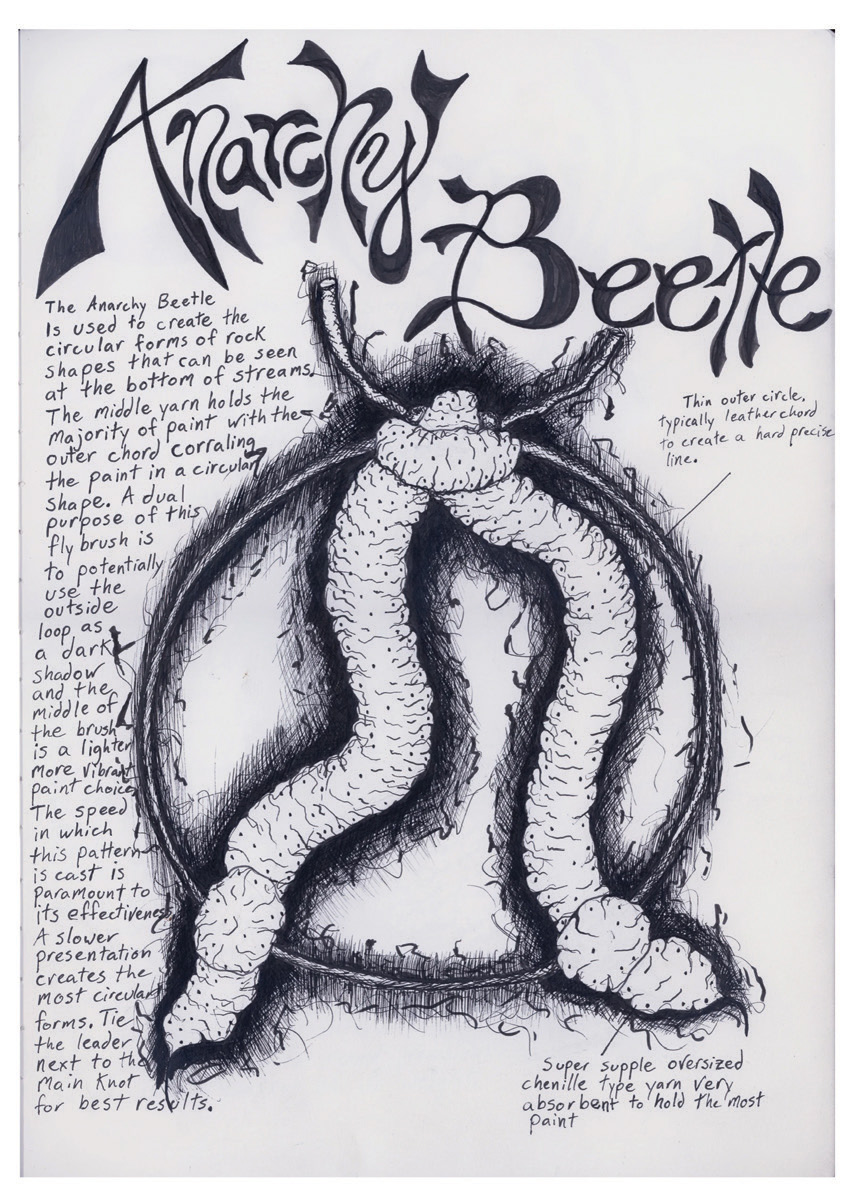
ANARCHY BEETLE | INK ON PAPER | 16.5 X 11.5 INCHES
Having found success with his new style of art, Miller has affectionately named a number of his fly brushes: Squid, Cocoon, Worm, Anarchy Beetle, Voop-Voop, and Major Tom’s, to name just a few. Miller draws each one in pen-and-ink, adding a notation that describes how he uses it to create his art.
Perhaps it’s their size, perhaps the near abstraction of the brushstrokes, but each painting mesmerizes. Usually between 3 by 5 feet and 6 by 8 feet, Miller’s paintings transport you, if they do their job, revealing the individual character of the river, imprinted with water-smoothed rocks and craggy, dark crevices. Each piece feels like jumping off a bridge into deep, cool waters. It calms the mind and settles the soul.
“They are portraits of beauty and flow,” Miller says. “It’s a way to conserve what we have.”
Freelance art writer, teaching professor, and author Michele Corriel earned her master’s degree in art history and her doctorate in American art. She has received a number of awards for her nonfiction, as well as her poetry. Her latest book, Montana Modernists: Shifting Perceptions of Western Art (Washington State University Press, 2022), won four awards, including a national award from the Western History Association.
No Comments