


20 Nov It’s All About Mindset
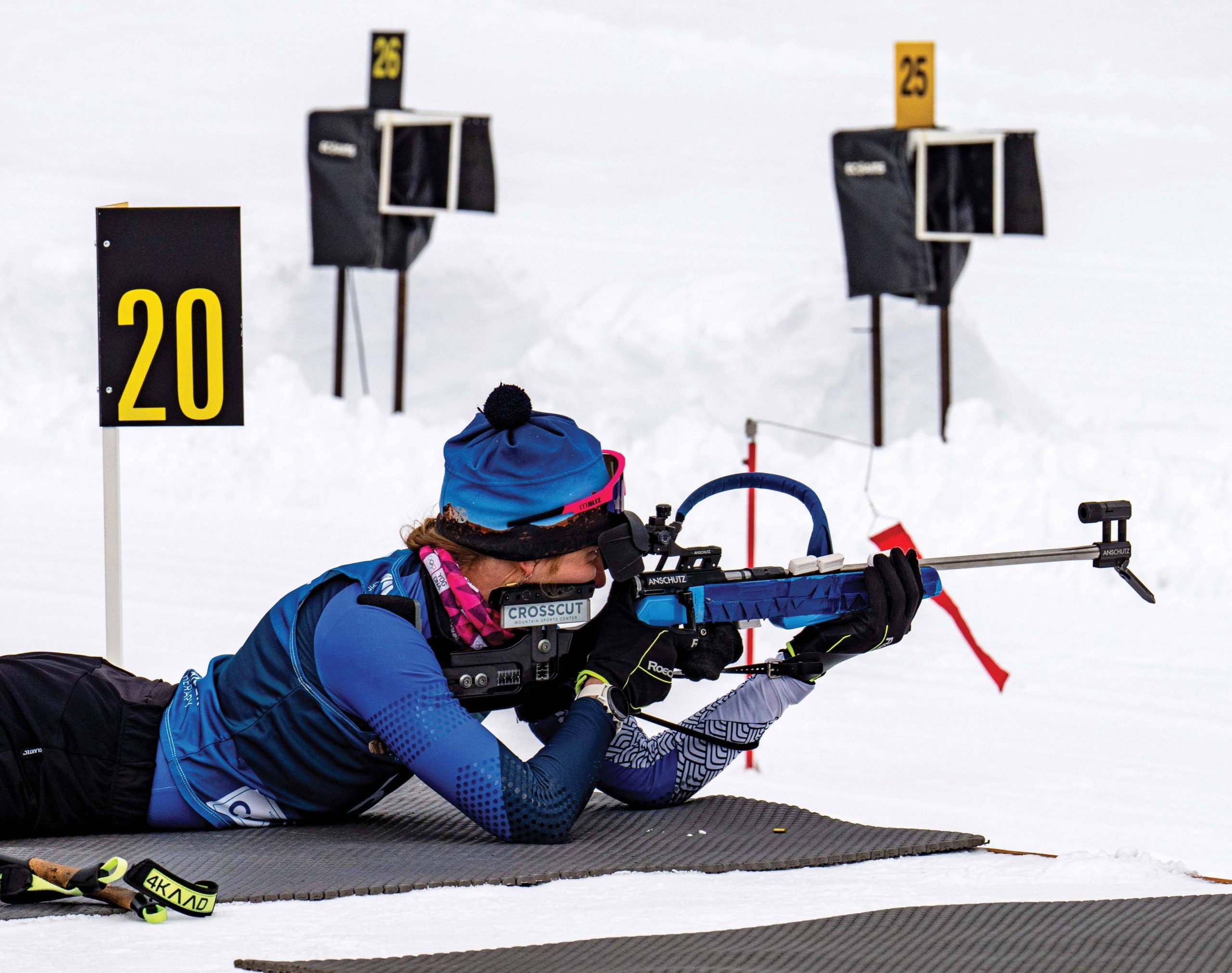
For 14-year-old Olin Hugo, an athlete with the Jackson Hole Ski and Snowboard Club (JHSC), biathlon comes down to mental mindset. The sport involves racing on cross-country skis and shooting rifles at targets — from both prone and standing positions — and he says much of the competition is in his own mind.
“I feel like it’s a lot more of a mental game because if you miss a shot, you can’t let that get you down, and you can’t get discouraged,” he says. “You have to keep on going and keep a good mindset, because if you get into a bad mindset, you’re going to end up missing more [shots] and not have as fun of a race. It’s a lot more of a mental game.”
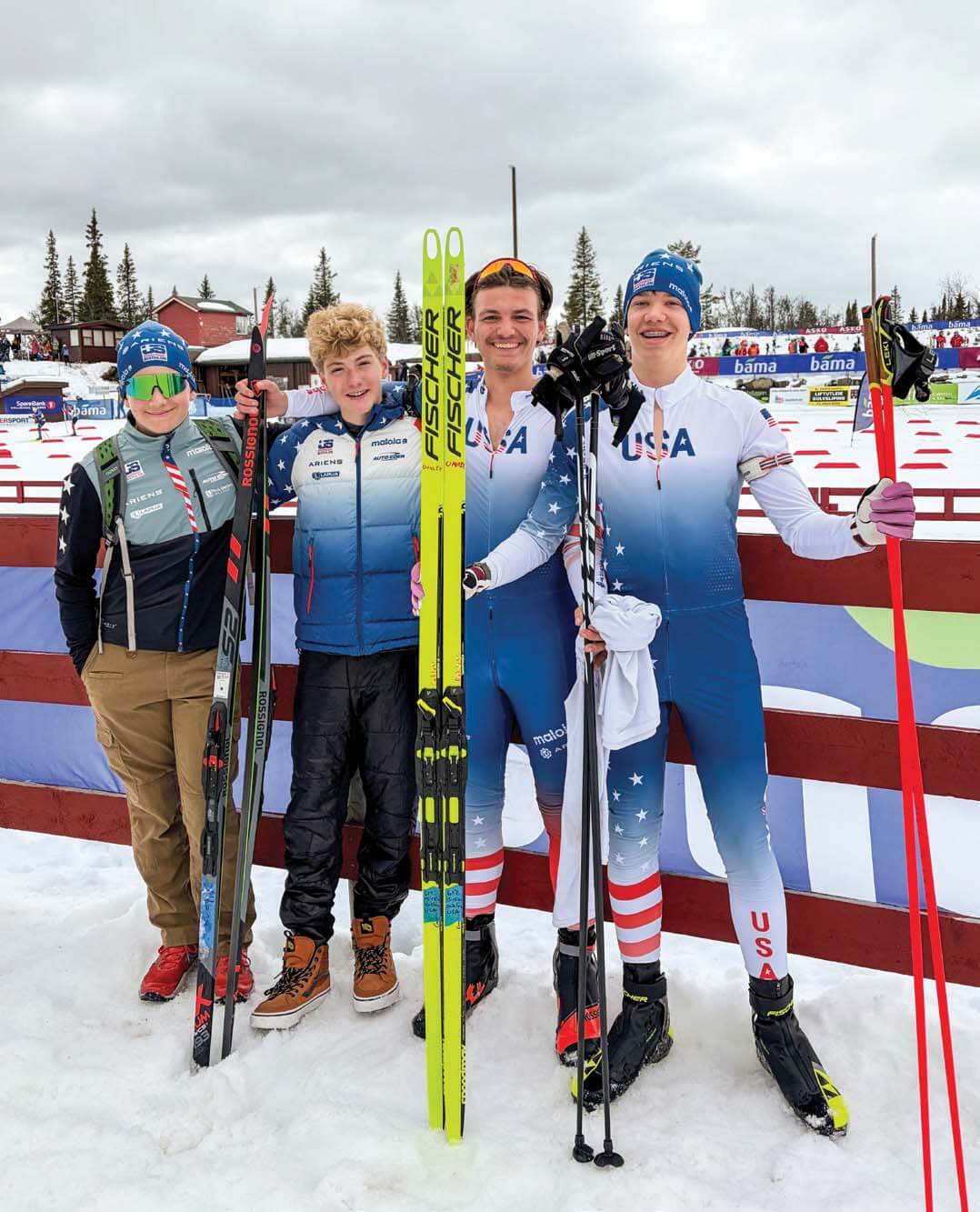
Olin Hugo (second from left), of Jackson, Wyoming, was selected to compete for Team USA during the Liatoppen Biathlon Festival in Norway this spring. | ANN SORENSEN
He brought that mindset with him in April when he participated in the Liatoppen Biathlon Festival in Norway, which is the largest youth biathlon festival in the world, bringing 1,000 athletes from around the globe. Selected to compete for Team USA, Hugo joined athletes from all over the country for a week of training and races.
A love of biathlon runs deep in the Hugo family, and his dad, David, was a biathlete as a kid and young adult in Vermont. Today, David helps his son practice, and they lug targets to shooting ranges near Jackson so Hugo has more opportunities for live-fire shooting, since Jackson doesn’t currently have a live-fire biathlon range.
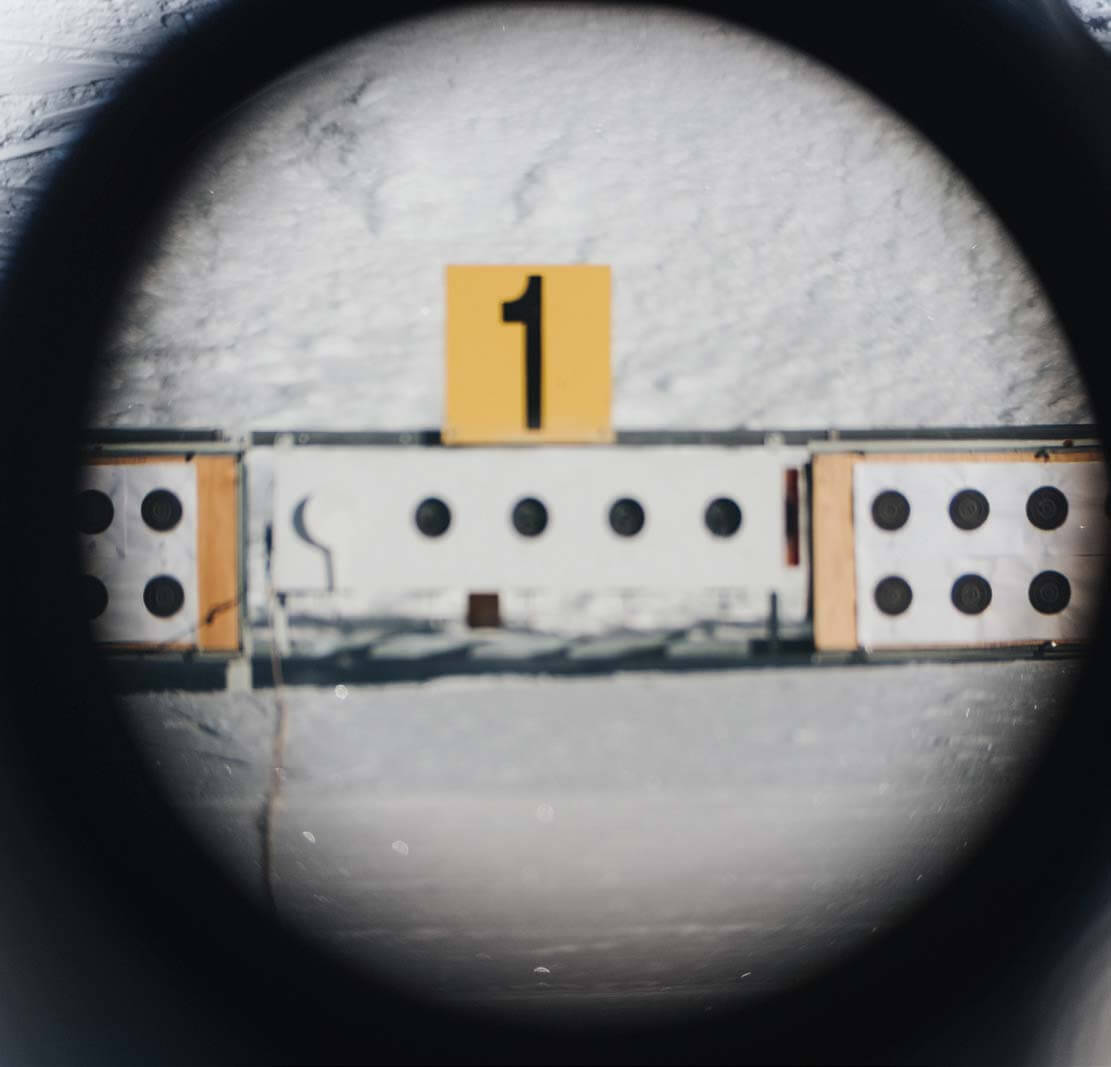
A view through a spotting scope frames the targets at Crosscut’s biathlon range. On the shooting line, athletes must shift from the exertion of skiing to the steady control required for an accurate shot.
In Norway, Hugo faced competitors who practice their live-fire shooting almost daily, whereas he and his dad are only able to practice maybe once or twice a week.
“It was just crazy, the level of competition,” Hugo says. “There were some Norwegian kids who’ve been doing this since they could walk. … It’s awesome how much you can look up to these people and learn from them.”
Hugo is a key player in the revival of JHSC’s biathlon program, which is reemerging after going dormant for nearly 30 years. Jackson Hole has a rich biathlon and Nordic skiing history, including hosting the U.S. Biathlon National Championships and Olympic Trials in the 1970s and ’80s. Jackson Hole has also produced four Olympic biathlon team members.
However, a few decades ago, the land the team used for live-fire training became unavailable, and it was difficult to run a program without a range. Now, solutions like laser rifles are helping bridge the gap, allowing team members to train more easily, and the club is having a revival.
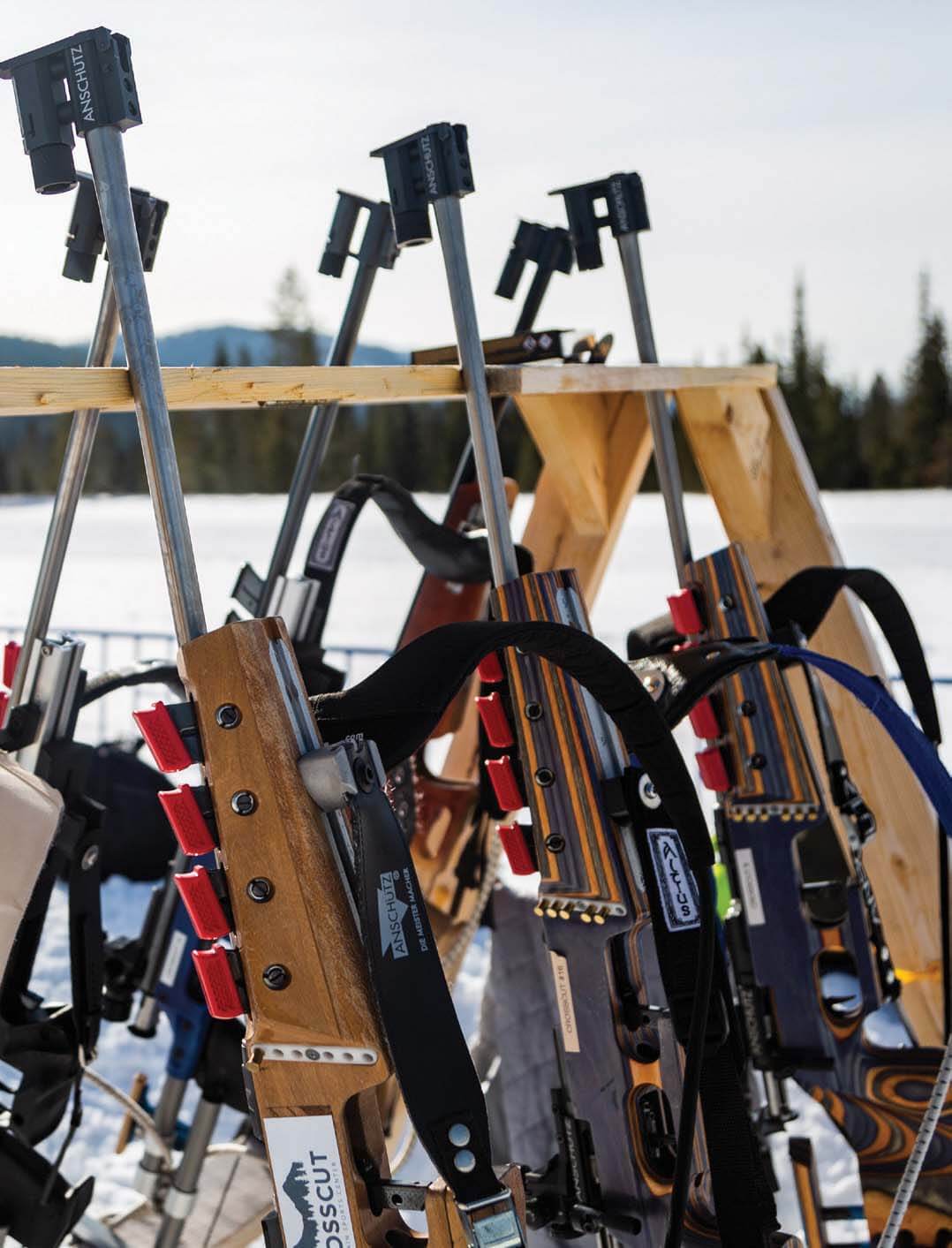
Biathlon rifles line a rack during a youth training session at Crosscut. Access to program rifles helps younger athletes learn the sport before investing in equipment of their own. | CROSSCUT MOUNTAIN SPORTS CENTER
“There was interest from families and people in the community to bring it back because it’s such a historic part of the club,” says JHSC Nordic Program Director Will Wicherski. “Back in the ’70s, ’80s, and ’90s, we had a really robust program, and it was developed in conjunction with the Nordic program. … We’re just kind of slowly but surely working on bringing it back to the valley, which is pretty cool.”
In a place with a Western ranching heritage and a rich ski culture, biathlon fits right in. “Rifles and skiing are the perfect amalgam of culture here,” says Hugo’s mom, Lauren.
Wicherski, JHSC, and the local biathlon community are working to overcome obstacles to bring the sport back in an even bigger way.
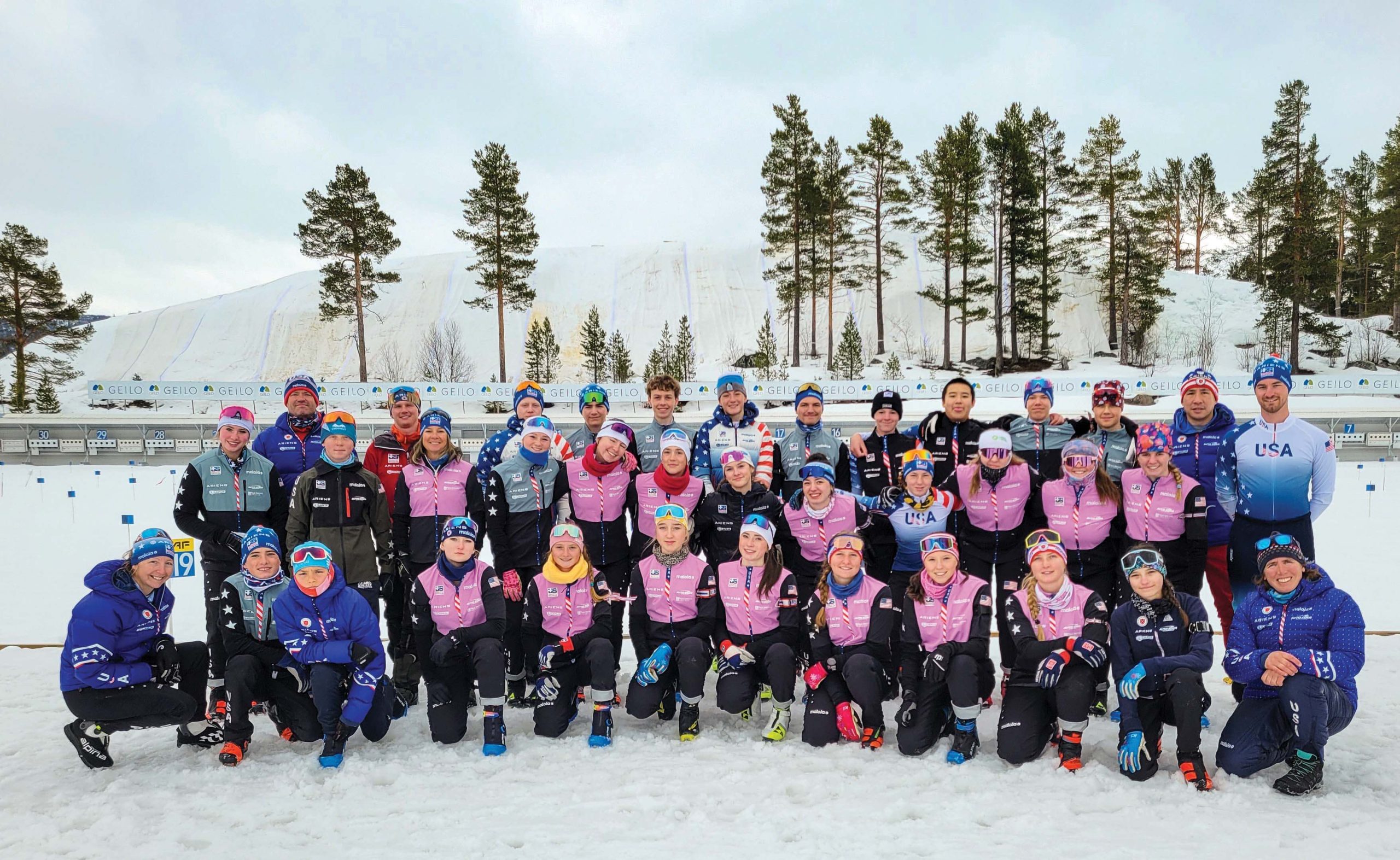
The Liatoppen Biathlon Festival brings together over 1,000 youth from around the globe. Here, the U17 and U15 Team USA athletes and coaches pause for a group photo after training and competing in the week-long event. | TEAM USA YOUTH DEVELOPMENT
“It’s a pretty infrastructure-intensive sport, but once [the infrastructure is] there, it’s really easy,” Wicherski says. “We don’t really have a range where we can actually ski and shoot the real rifles, and I think that’s the major challenge. That’s a ways down the road. … There’s interest from a lot of kids, but not having the opportunity to practice in the valley right now is kind of the biggest challenge.”
The club is incorporating specialized laser rifles into practice sessions to introduce kids to the sport while incorporating some elements of biathlon training.
“There’s no ammunition or anything, but the rifles are actually really realistic,” Wicherski says, adding that they set up targets to create a mini range and work on skiing while trying to get a feel for the shooting elements.
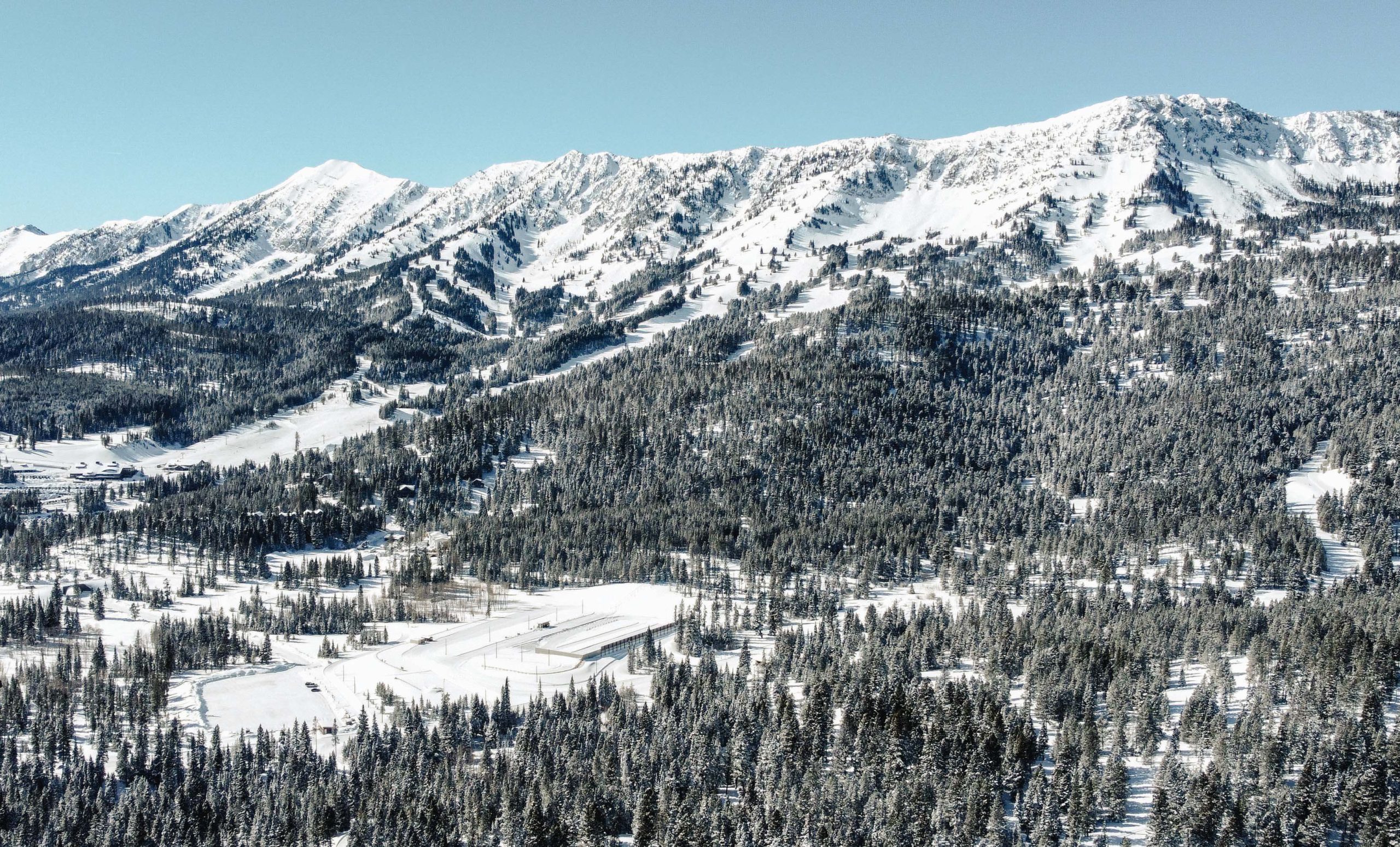
Crosscut, nestled in Bridger Canyon near Bridger Bowl Ski Area, is among just a few biathlon centers in the region. Biathlon events are also held at Rendezvous Ski Trails in West Yellowstone, and the Jackson Hole Ski and Snowboard Club holds programming for athletes at its laser rifle range. | CROSSCUT MOUNTAIN SPORTS CENTER
While the laser training rifles are helpful training tools, they’re not perfect, and Hugo points out that they feel different than regular biathlon rifles. “They’re like a pound lighter than a normal rifle, so it’s just not the same feel, because the real rifle has a little bit of kick, so you have to be really, really precise with your breathing and holding the rifle still [when] you shoot,” he says. “But it’s still a great way to train.”
Wicherski says a lot of kids are interested in learning about biathlon, and around 150 club members have had the opportunity to try the sport using laser rifles at practices so far. The coaches work to introduce the sport by incorporating biathlon elements as a fun way to mix up practices for other programs. He says they start by teaching the basics, such as how to use the equipment, then incorporating some activities to elevate the heart rate. This could mean skiing in the winter or running or roller skiing in the fall, practicing bursts of aerobic activity followed by rounds of target practice with laser rifles.
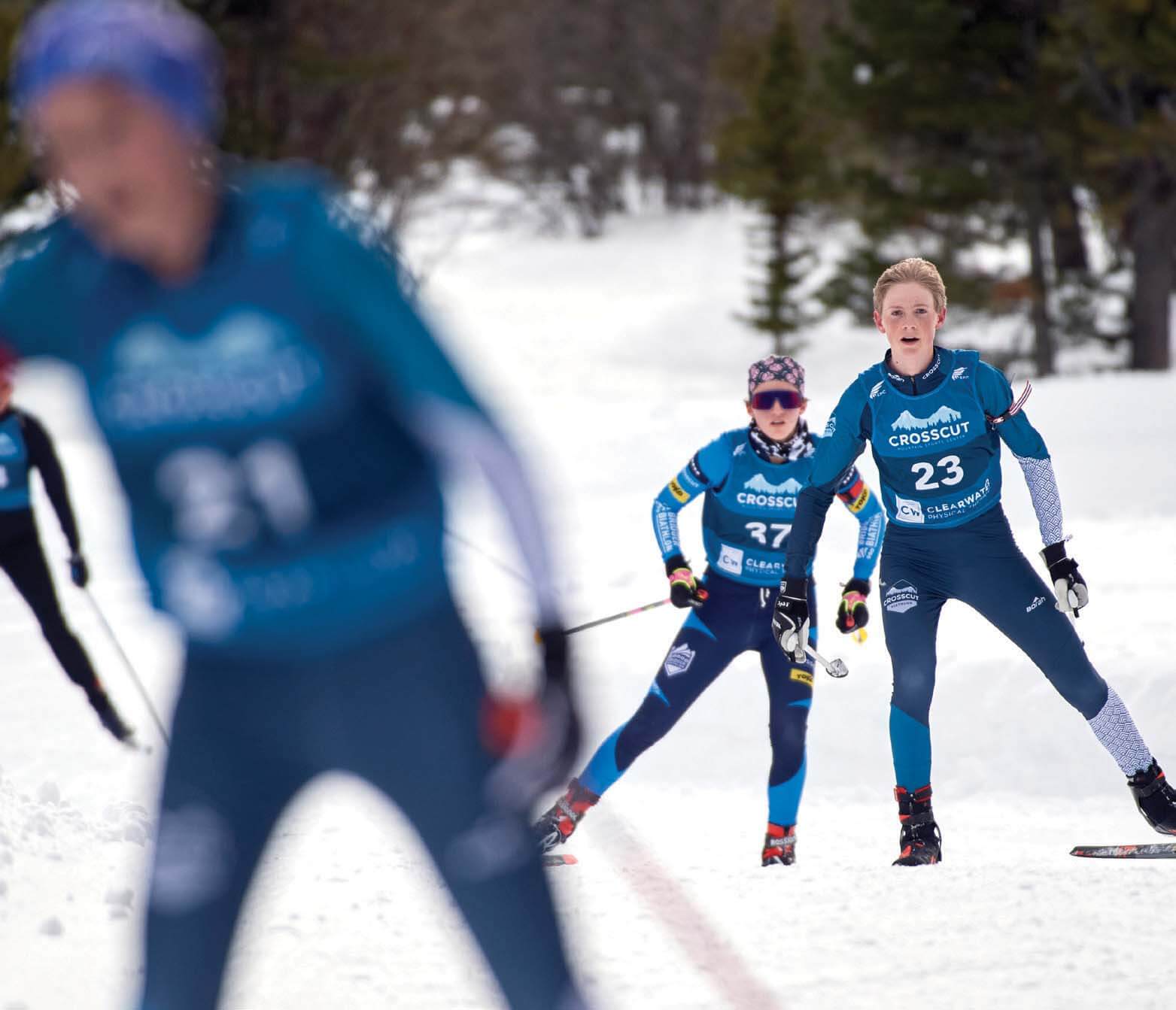
Racers ski at Crosscut during the Bangtail Biathlon event, which brings together newcomers and experienced biathletes for a sport that pairs Nordic skiing with rifle marksmanship. | CROSSCUT MOUNTAIN SPORTS CENTER
While the club’s offerings are a great way to introduce kids to the sport, biathletes who want to compete more seriously generally turn to regional biathlon centers where they can practice the sport with live-fire ranges. A number of JHSC competitors have entered races and attended events at regional biathlon centers in West Yellowstone and the Bozeman area.
Rendezvous Ski Trails in West Yellowstone hosts biathlon events each season, including “try-it days” for people who want to give biathlon a shot.
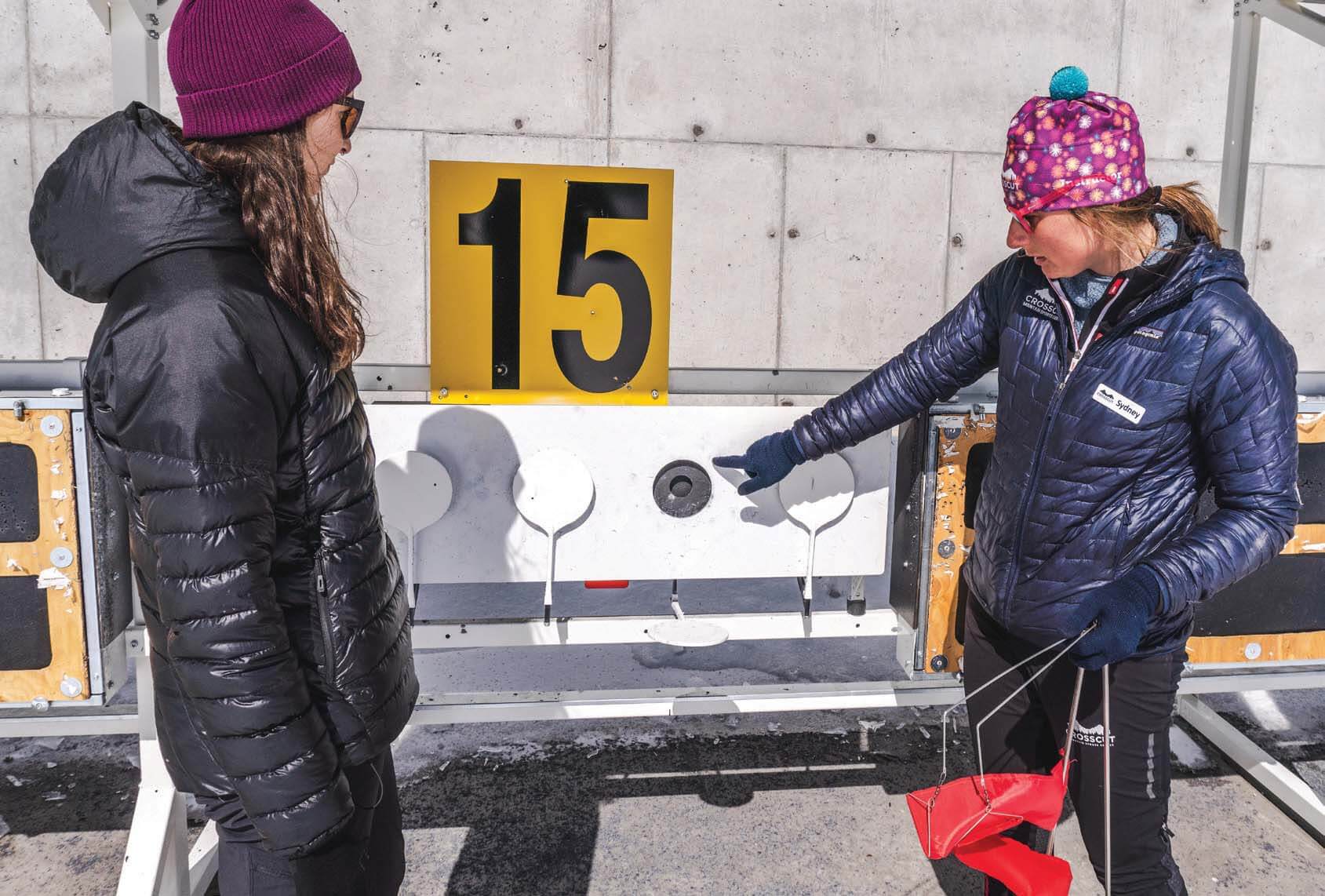
An instructor explains the target system during a biathlon lesson at Crosscut. Individual and small-group lessons introduce skiers to the range and the fundamentals of rifle marksmanship. | CROSSCUT MOUNTAIN SPORTS CENTER
Crosscut Mountain Sports Center, located near Bozeman, has a 30-target biathlon range with Kurvinen electronic targets used with biathlon rifles. The center also has 12 electronic targets that are designed for the air rifles used by Paralympic athletes.
“We are the official training venue of the U.S. Paralympics Nordic team, which includes cross-country skiing events as well as biathlon events,” says Laurie Stahle, senior director of communications at Crosscut.
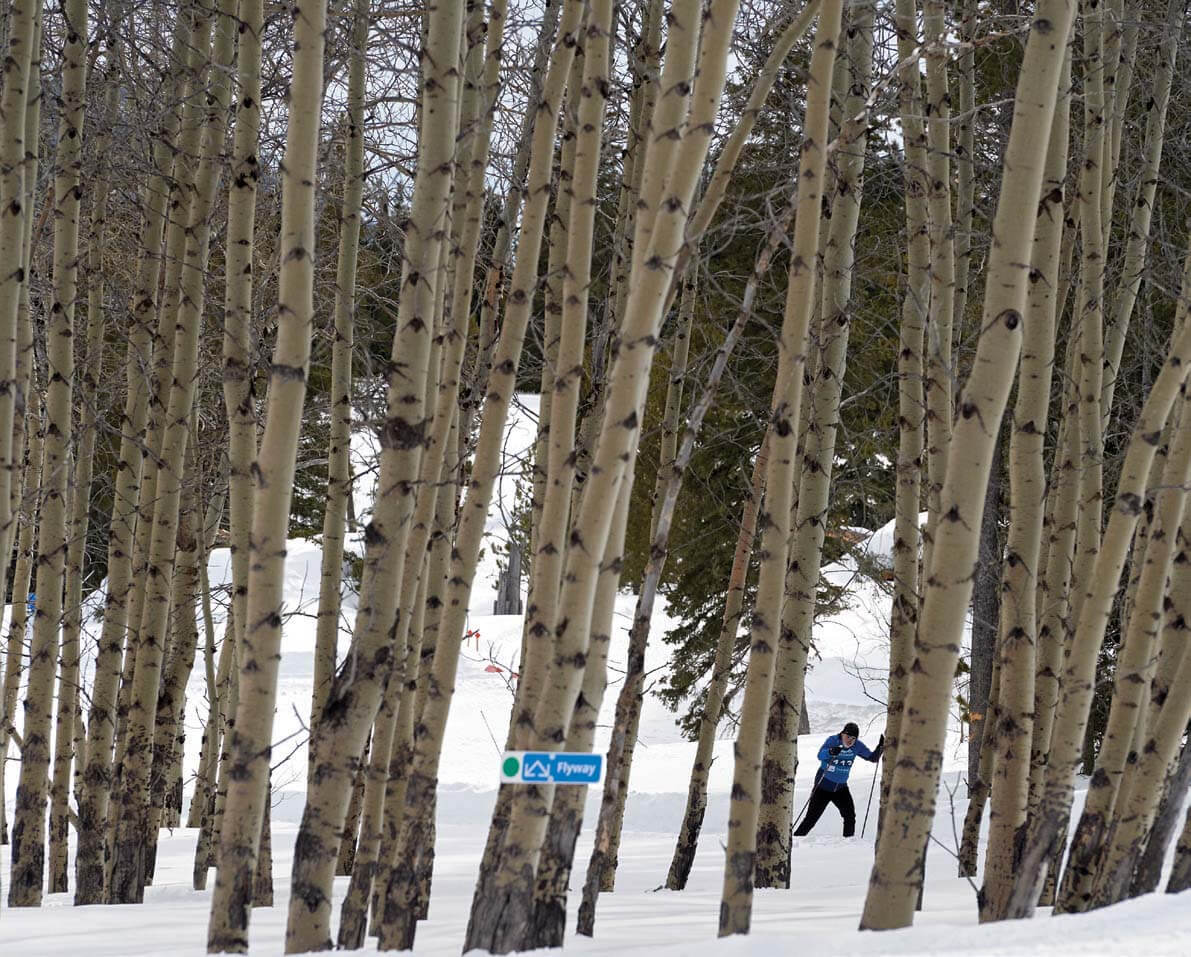
A Bangtail Biathlon racer skis through an aspen grove at Crosscut. Between stops in the shooting range, competitors navigate trails in Bridger Canyon. | CROSSCUT MOUNTAIN SPORTS CENTER
The facility offers programs for youth and adults, including an open range. The youth program features three age classes (U12, U14, and U16–18) and involves year-round components. The summer camps incorporate elements of shooting alongside aerobic activities, which can be jogging for younger kids or roller skiing for older ones.
“It’s a lot easier to learn when it’s warm outside and you’re not also sliding on skis,” Stahle says. “That’s been an important addition to our program.”
Crosscut also has a number of offerings for adults, including an adult masters program for all levels, a novice program, a rec team, and a competition-focused team that trains multiple times per week while working toward competing at the Masters Nationals.
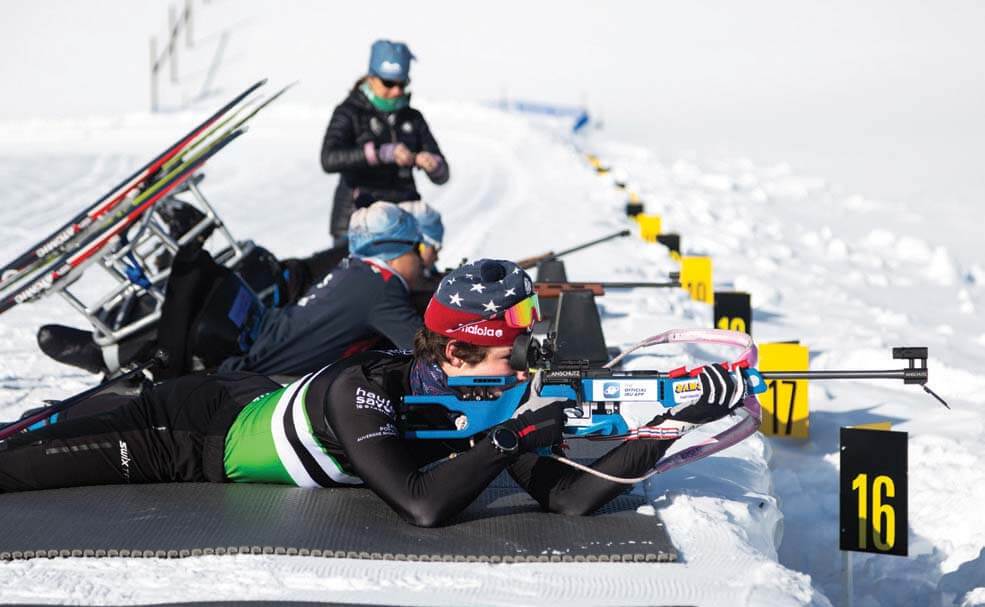
Young biathletes practice prone shooting at Crosscut Mountain Sports Center. Youth programming develops safe rifle handling and shooting skills alongside the confidence and camaraderie of training with a team. | CROSSCUT MOUNTAIN SPORTS CENTER
The sports center also hosts the Bangtail Biathlon each year, named after the nearby Bangtail Mountains. The multiday event features a few different components, including a day for training followed by sprint and novice races, as well as a mass start race. Additionally, the facility hosts community clinics for both brand-new biathletes and those curious about the sport, as well as people who have some experience.
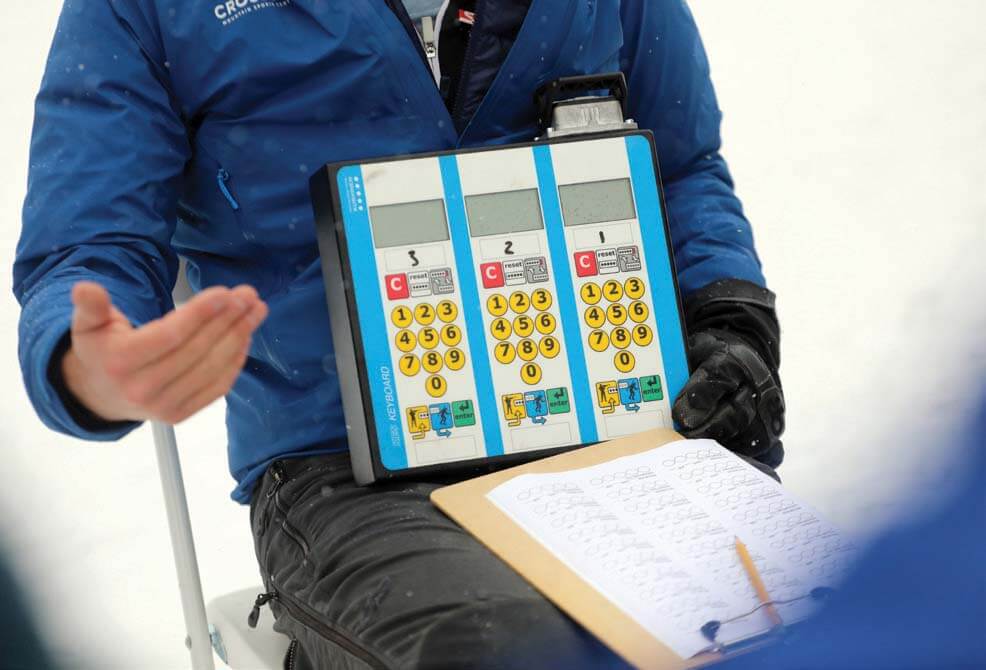
Behind the scenes at the Bangtail Biathlon event, a race worker holds a clipboard and target box controller, which tracks shooting performance during a biathlon event. | CROSSCUT MOUNTAIN SPORTS CENTER
While young biathletes can currently train and work on their live-fire techniques at a few regional ranges, JHSC is hoping to establish a local range within a few years. Wicherski is hopeful that the community will continue to embrace biathlon, and this enthusiasm will help the club provide even more opportunities.
“There’s a lot of good momentum right now from the community,” Wicherski says. “I hope we can keep pushing it forward in the years to come.”
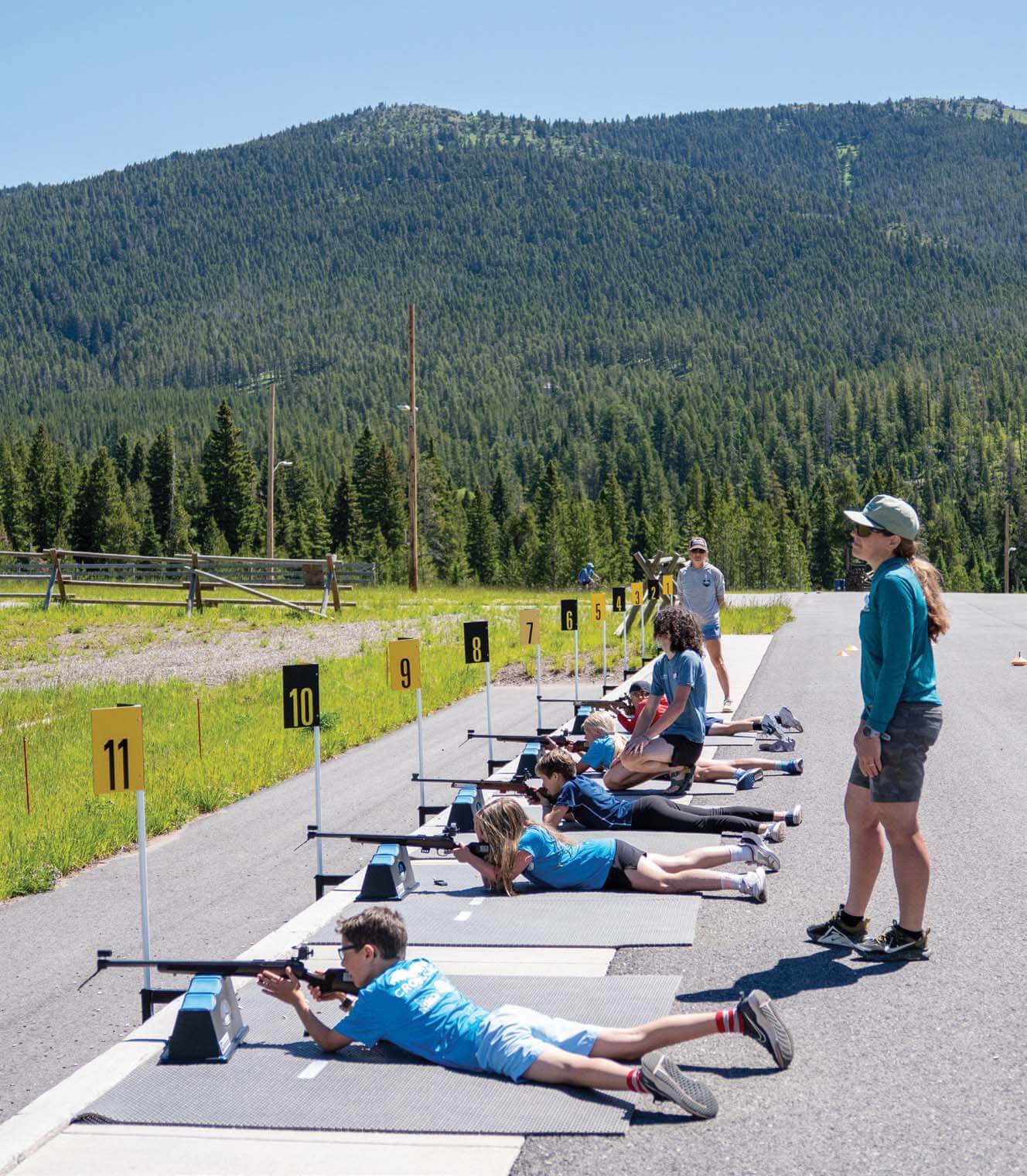
Summer campers practice prone shooting under an instructor’s supervision at Crosscut’s biathlon stadium. Dryland camps introduce young people to rifle safety and marksmanship long before winter brings skis back into the mix. | CROSSCUT MOUNTAIN SPORTS CENTER
Kristen Pope is a freelance writer and editor who covers stories about mountain living, science, conservation, travel, and the outdoors for a number of outlets; kepope.com.
No Comments