


20 Nov Books: Reading the West
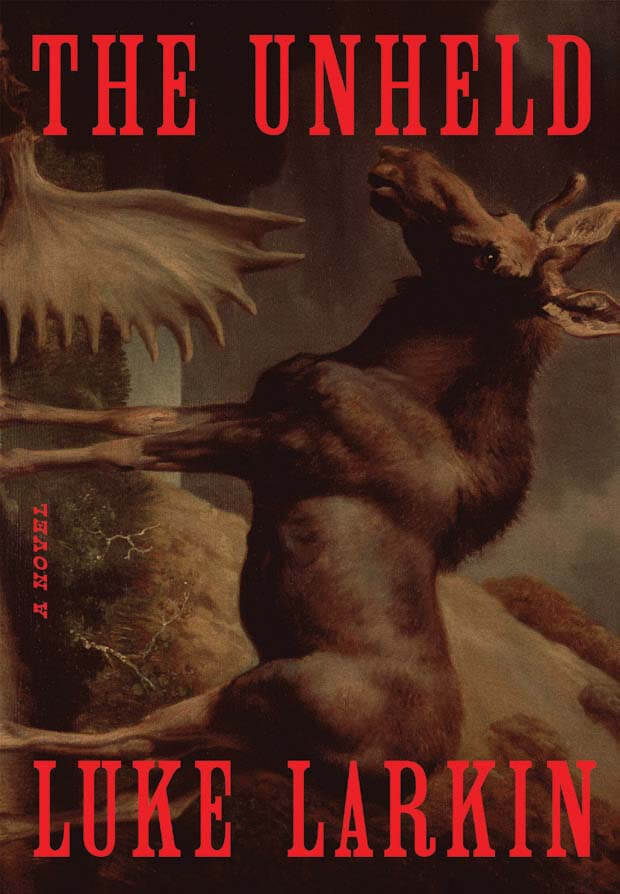
Luke Larkin’s debut, The Unheld (Hyperion Avenue, Hardcover $27.99, Paperback $18.99), a chilling Western horror novel, introduces readers to Charlie, a 12-year-old girl living with her gruff father in a cabin near the woods. Incapable of showing warmth or affection, her father is simply no good at being a parent. “In fact, Charlie often suspected that it would make little difference to her father if she were not there at all.”
She spends her long, lonely days doing chores while her father is out hunting. It is the one thing he is good at: putting food on the table — and what they don’t need he sells to the butcher in the nearby fictional town of Plainsend.
But things become dire when suddenly there is no more game to be found. The animals are gone. The birds have vanished. The forest is silent. Mostly. The occasional dynamite explosion in the far distance as the railroad is built westward is a reminder that this wild Montana Territory is on the cusp of a dramatic change.
And as suddenly as they disappeared, the animals return; but something is wrong. Terribly wrong. Charlie’s father kills a coyote that has, instead of a head, a mound of fur. He shoots a goose that has sprouted hair instead of feathers and a rabbit that has the legs of a fawn. These strange creatures, monstrous in appearance and foul in taste, might be a symptom of something much more malevolent. “A force was at work on the land itself.”
The Unheld opens as Charlie waits while her father tries to sell a hog to the local butcher, hoping he’ll be willing to overlook the dead animal’s two heads. “‘It’s a fine pig, just got a little extra on top is all,’ her father was saying inside.”
And while she waits, her eye catches a new storefront: a curio shop. The dark, dusty store is filled with wooden crates stacked to the ceiling, their contents odd and unknowable. The shop’s proprietor turns out to be a curiosity all his own: a tall man in a black suit with a mustache and an English accent. Theodore is his name, and he’s a member of a shadowy organization called the Society. He has a warm and gentlemanly air about him, and yet his interests are mysterious indeed. Charlie tells this newcomer, with his shop of oddities, about the strange beasts her father has encountered, and he finds himself intrigued.
It becomes apparent to Charlie’s father that these supernatural creatures could make him money beyond the local butcher. But it’s not long before the seasoned hunter becomes the prey. A creature, so terrifyingly otherworldly, drags him deep into the forest. And now it’s up to his young daughter to summon the courage to rescue him.
With a will strong enough to remind readers of Mattie Ross from Charles Portis’s True Grit, Charlie recruits the help of the mysterious shopkeeper, Theodore, and also Patton, a Northern Cheyenne police officer. Brought together and connected through their own losses, these three disparate souls forge ahead into the unknown.
The Unheld takes readers by the hand and transports them into a strange, nightmarish land where so much is unfamiliar. But Larkin knows that we will also find something profoundly familiar: our deep desire to connect in a lonely world crawling with monsters.
With a thrilling story full of surprises and full of heart, characters that live on after its final pages, and beautiful, vivid passages about Montana’s landscapes, this debut novel leaves just one spine-tingling question: Where will Luke Larkin take us next?
Of Note
The history of the American West is always evolving, always changing as we come to have a better understanding of it. We learn more, we uncover what was once lost, and we fill in the blank spots. And part of this process, perhaps most difficult, is that we also unlearn the myths that have been handed down to us.
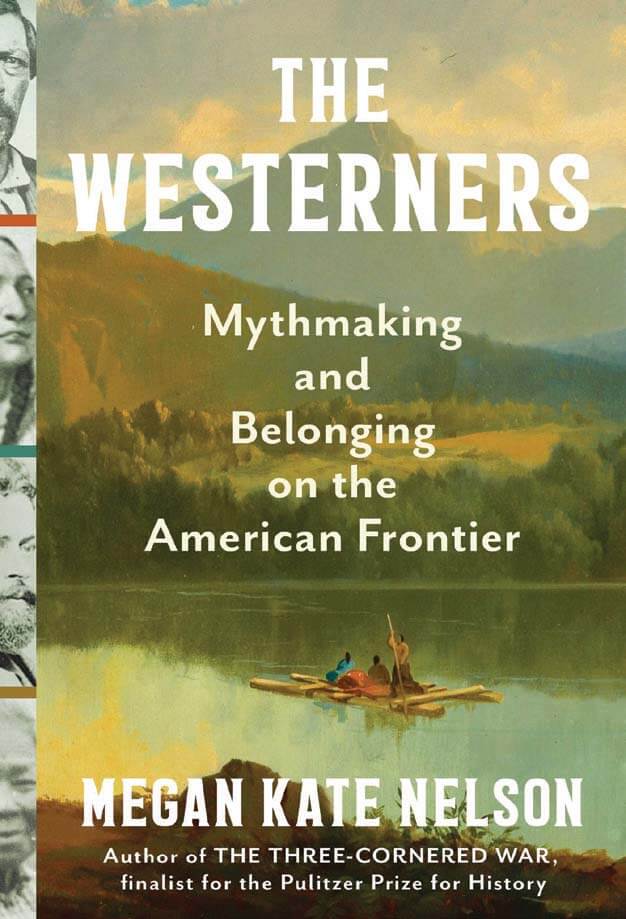
In her new book, Megan Kate Nelson has not only given us a rich history of the American West, she has also dismantled several pesky myths that have hung on like cockleburs. The Westerners: Mythmaking and Belonging on the American Frontier (Scribner, $31) tells the stories of men and women who, because their lives undermined the convenient categories of the past, have often been overlooked.
Among others, we meet a remarkably resilient Chinese American woman who became an Idaho pioneer, an industrious Hispana saloon owner in the Southwest, and a former slave from Virginia who moved out West to become an explorer, fur trapper, and businessman. “We can and should recognize ourselves in the messy, complicated lives of the real people who built the West,” Nelson writes. “They reveal a rich regional and national history that belongs to all Americans.”
The Westerners is an impactful and important work, one that shows us that to truly understand our past is to better understand ourselves.
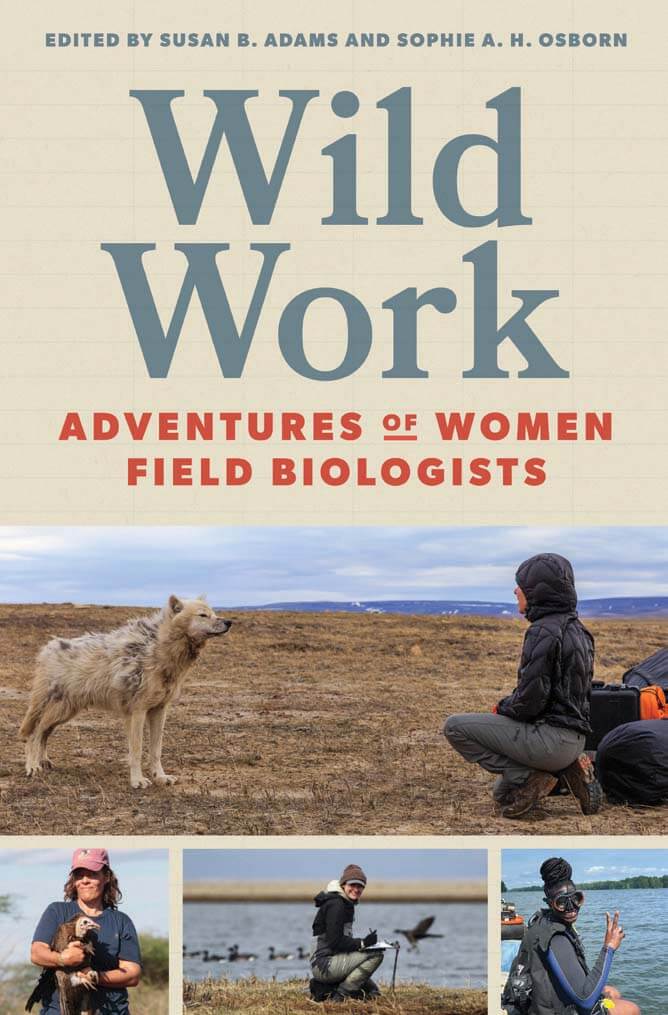
Wild Work: Adventures of Women Field Biologists (Skipstone, $24.95) is a treasure trove of an anthology that brings together over 40 stories of outdoor adventures. Editors Susan B. Adams and Sophie A. H. Osborn spent years compiling this collection that takes readers to some of the most remote places in the world. Whether it’s in the rainforest of Belize, the swamps of Mississippi, or the mountains of Yellowstone National Park, these intrepid, dedicated field biologists show us what it takes to collect data and document information vital to conservation efforts, all while avoiding predators and poachers, enduring extreme weather, and braving the harsh elements.
“As you will see in this anthology, despite the occasional hazards, a career in field biology often leads to incredible fulfillment and a life of wonder and delight.” These inspiring stories themselves offer wonder and delight, both for readers who are content to enjoy them from the comfort of their homes and for those adventurous readers who might make their own journeys into the wild field of field biology.

First published over 20 years ago, Jon Bennion’s new release of Big Sky Politics: Campaigns & Elections in Modern Montana, 1945 to 2025 (Montana Free Press, $29.95) is an updated and expanded edition that brings this indispensable book up to present day.
“I hope this updated edition will be an even greater resource to Montanans who take an interest in the state’s politics,” writes Bennion in his introduction. “Montana’s political history has always been worthy of close attention that avoids flippant or inaccurate oversimplification of what it means to be a Montana voter.”
Montana’s political landscape is as varied as its natural landscape. Covering 80 years of statewide elections through political analysis, candidate biographies, and cultural and economic context, along with county maps and voter turnout numbers, Bennion reveals Montana’s shifting political concerns. Never being a one-party state, Montana has avoided being painted with a broad brush. But there are patterns to be noticed. And Big Sky Politics is an essential guide to help us understand those patterns — one that can shed light on how we have arrived at this current political moment, and where we may go in the future.
In the act of climbing, “something pure and unmediated takes place.” There is a point where, even for a poet and songwriter like Brian Laidlaw, language breaks down. Erratica: On Climbing, Language, and Touching Stone (Milkweed, $20) isn’t so much a book about climbing, Laidlaw admits, as it is a book about thinking about climbing.
To be a climber is to accept the danger that comes with it, the mortal fear that one feels in their soul. “In my own moments inside this sublime and terrible void, awash in awe, I’m getting a glimpse of a world realer than anything I can perceive through the veil of language.” How can we possibly hope to convey an experience that places us so impossibly close to the raw material of life?
After becoming a part of the climbing community, and after learning that the wall has a language all its own, Laidlaw shows us that it is precisely that place between our experience and our thought, our body and our mind, where our own humanity exists. We will always strive to climb stones, and we will always attempt to describe it. And after we are gone, the stones will remain. Just the same.
Andrew Guschausky is a former bookseller. In 2014, he opened Cassiopeia Books in Great Falls, Montana.
No Comments