


20 Nov History: Winter on the Trapline
The mountain men of the 19th century and their endurance beyond the reach of roads
Trapping brought some of the first white men to the Rocky Mountains. In the early 19th century, beaver fur was the first great gold rush in American history, drawing young men westward in pursuit of a commodity that could turn wilderness into wealth. For a few decades, the Rocky Mountain fur trade flourished. But soon enough, the market for beaver collapsed, and with it went the great era of the mountain man. Commercial trapping never again occupied the same place in the American West.
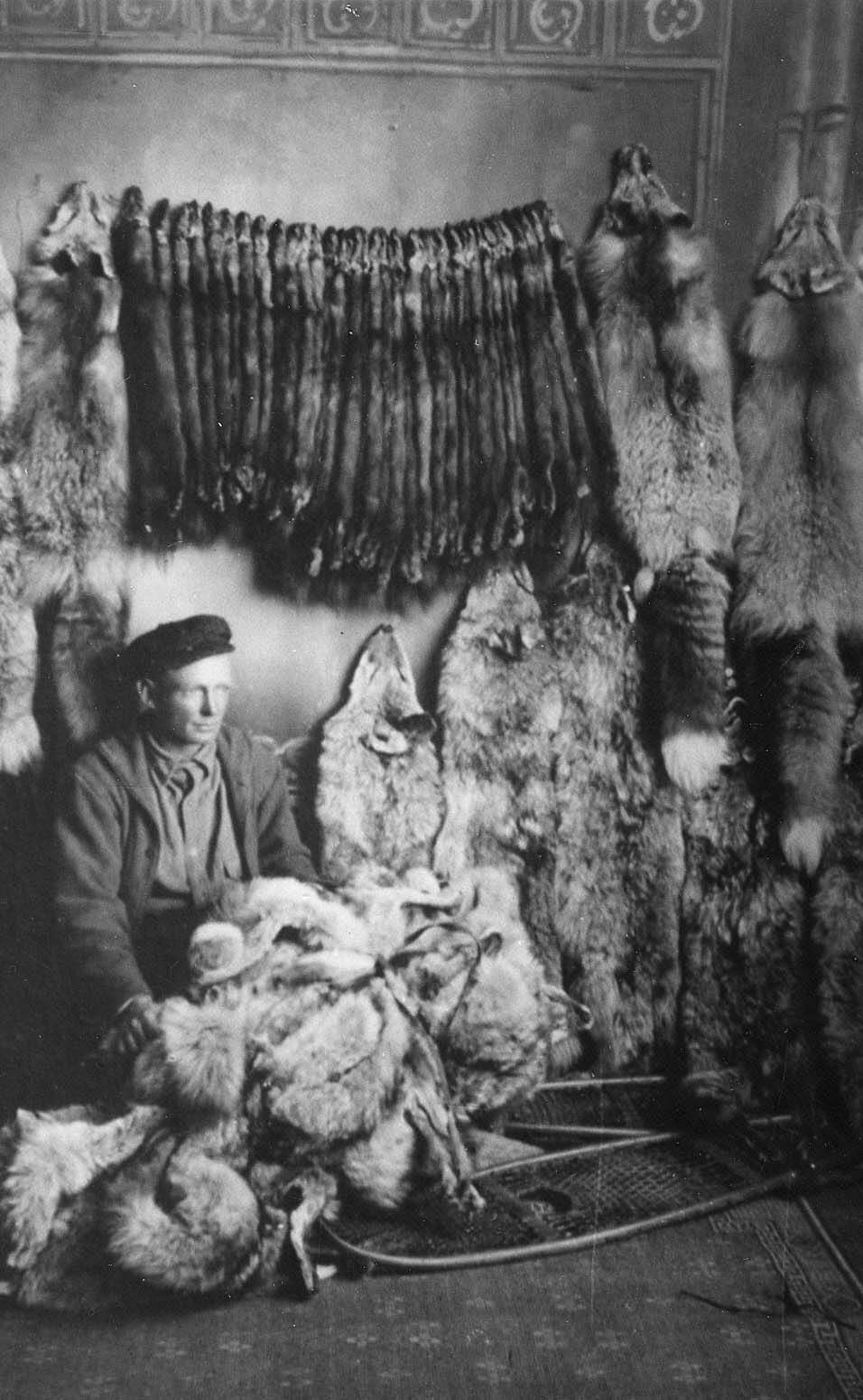
Jones poses in a studio with his catch of furs arranged for the camera. | PARK COUNT Y ARCHIVES COLLECTION
Yet, trapping itself did not disappear. It only assumed a different character. The men who continued to trap were rarely the legendary mountain men of an earlier generation. They were more likely to be ranch hands, cowboys, hunting guides, or other working men whose lives were dictated by seasonal employment. For some, trapping was a way to supplement an otherwise precarious income. For others, it was an opportunity to escape civilization altogether for several months each year.
Because trapping historically occurred during winter, when pelts are in their prime, men engaged in such work had to be comfortable with solitude, familiar with the winter wilds, and capable of surviving for months beyond the reach of roads, telephones, and modern frills.
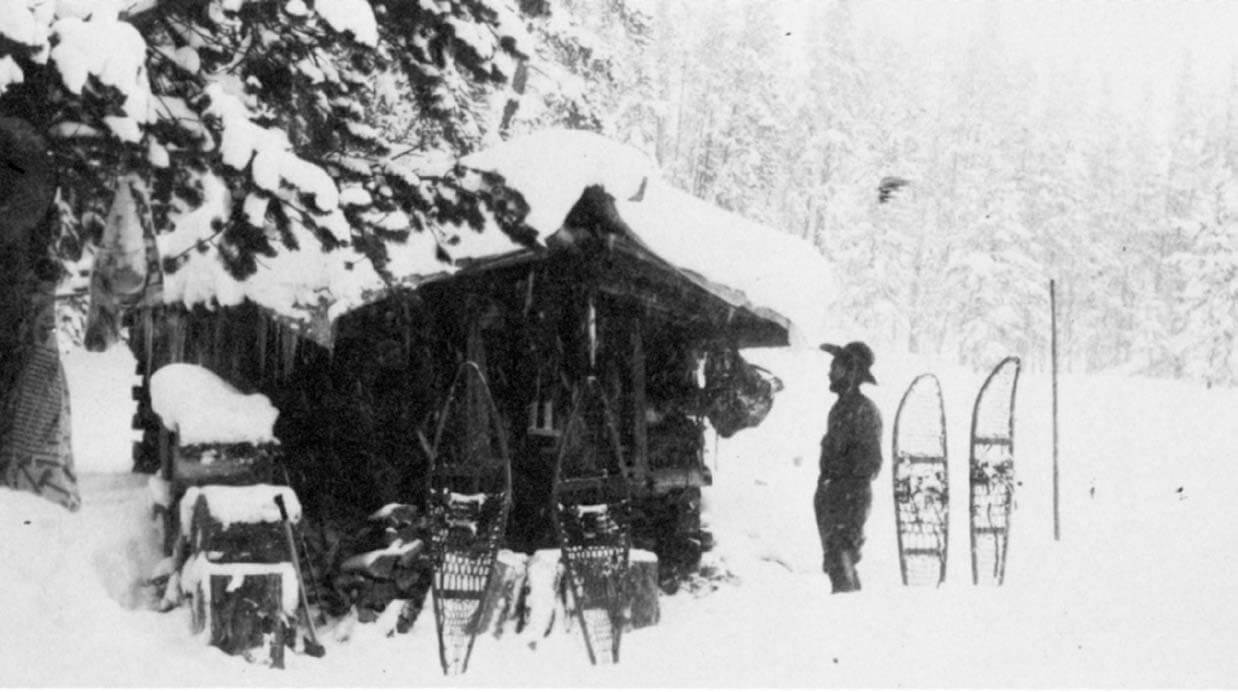
Longtime trapper Anson Eddy stands with his snowshoes by one of his winter trapping cabins in the Thorofare | PARK COUNTY ARCHIVES COLLECTION
In the vast high country surrounding Yellowstone National Park, the winter season effectively cut these men off from their homes and families, sometimes for months on end. Once the snow became deep enough, trails disappeared beneath the drifts and the mountains became a world accessible only by skis or snowshoes.
Charles Hartung experienced this isolation firsthand in the winter of 1897–98. In the autumn, Hartung and his partner traveled up the South Fork of the Stinking Water River in northwest Wyoming toward the Continental Divide, where they planned to spend the winter trapping. They improvised a small cabin on a tributary creek and used another cabin constructed the previous year farther upriver. Before winter closed in, they rode horses to distribute supply caches throughout their trapping territory, then led the horses out of the mountains before the trails became impassable.
As Hartung set off once again into the wilderness, his attention wandered to the upcoming season. “As I started back walking through a thin snow, I began to realize there was a long winter ahead,” he wrote in his journal. “The trails would soon be blocked. And the deep snow as a barrier would exclude us from the outside world.”
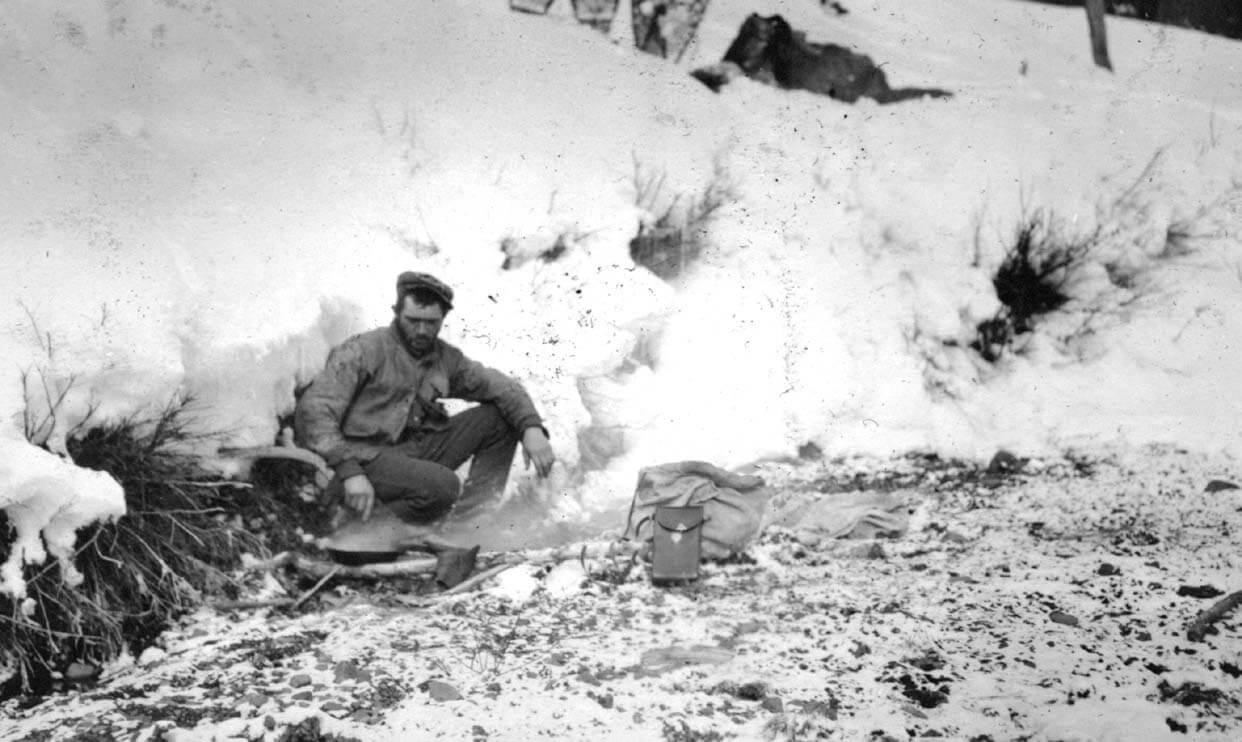
Wilde cooks over a small fire while on the trapline in the Thorofare. | BUFFALO BILL CENTER OF THE WEST, CODY, WYOMING; MCCRACKEN RESEARCH LIBRARY
Hartung and his partner prepared by drying elk meat and making their own skis. Game was plentiful, and they carried enough ammunition to supplement their food supply. “There was no need of us starving,” Hartung wrote.
Their quarry was primarily pine marten, along with fox and coyotes. The economics could be considerable. A good marten pelt brought more than $20 around the turn of the 19th century — worth roughly $500 today. The ultimate prize was the silver fox, a melanistic form of the red fox, which could command an extraordinary payday.
Running the trapline itself required extensive organization. Most trappers worked with 10 to 12 dozen traps, using different sizes and types depending on the species they targeted. They arranged these traps along established circuits through the mountains, setting them one day and returning soon afterward to inspect. Some trappers worked in pairs, with one man traveling ahead to set traps while the other followed a day or two later to check them. Their crude cabins were often positioned at intervals along the route or served as central bases from which smaller loops could be traveled.
Baiting the traps could be an unpleasant business. Trappers used powerful-smelling concoctions containing substances such as Siberian musk, oil of anise, and rotten fish. The odors were effective at attracting animals, but could also follow a trapper back to civilization, with consequences for anyone unfortunate enough to share his personal space.
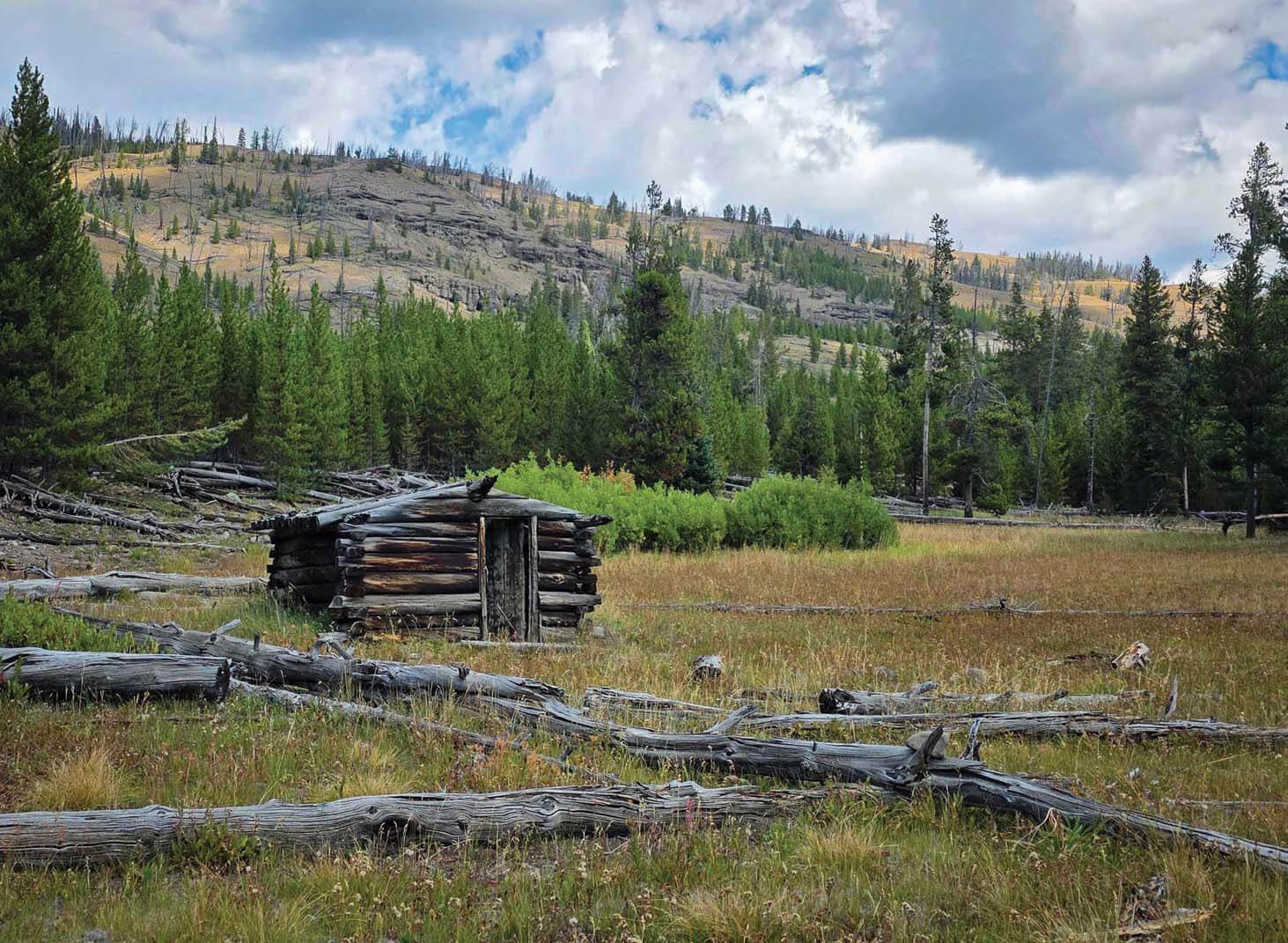
One of Eddy’s cabins still sits in a small meadow on lower Pass Creek in the Thorofare, having survived forest fires and falling trees. | BRIAN BEAUVAIS
Hide preservation, of course, was just as important as making the catch. A valuable pelt could easily be ruined through careless handling. Every trace of fat had to be trimmed from a hide before it was properly dried. Grease left behind could interfere with the tanning process and damage the fur.
Coyotes were regarded by many trappers as the smartest animals in the winter woods, supporting their long-standing reputation as the wily trickster of the American West. Other critters could be more threatening. Bears were usually hibernating in the deep winter, but moose remained active. An encounter with an angry cow protecting a calf in deep snow could be hazardous even for an experienced woodsman.
Over time, trapping became increasingly regulated. Trappers were required to obtain permits to harvest their quarries and to abide by prescribed seasons. On public lands such as national forests, trappers were assigned defined territories, either individually or in small groups. The system helped distribute trapping pressure and reduce conflicts over productive areas.
Many trappers left the mountains in early March when the animals began breeding, leaving their territories undisturbed to help replenish populations. Experienced trappers sometimes deliberately left certain areas or species untouched for a year or two, referring to the animals left behind as “seed stuff.”
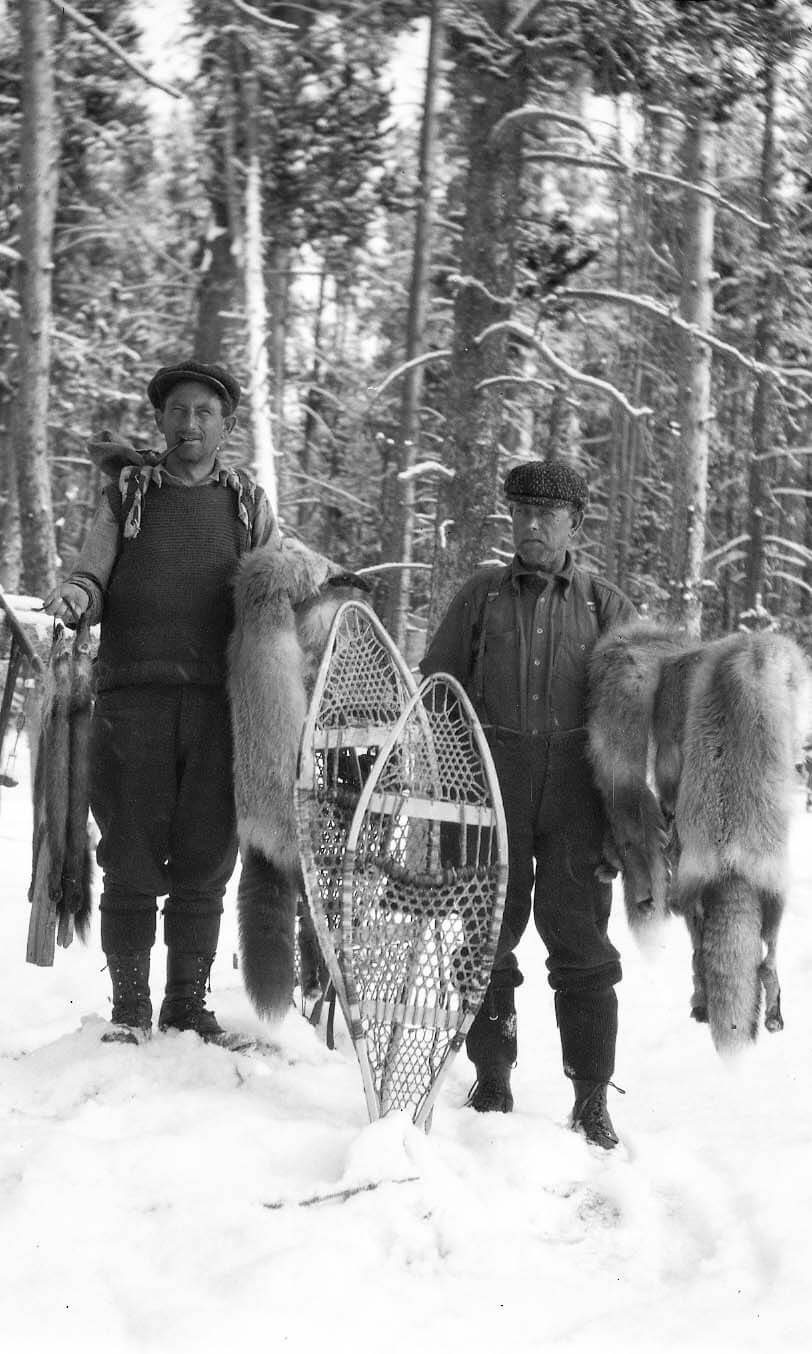
Two trappers hold their catch of marten and fox pelts. | PARK COUNTY ARCHIVES COLLECTION
Decades later, men in the same wild country were still following similar seasonal rhythms. Max Wilde came to the Absaroka Mountains of Wyoming from Indiana in 1913. During the summer and autumn, he worked on ranches that accommodated tourists and hunters. When the season ended, however, Wilde’s time was his own. On a neighboring ranch he met Ed Jones, another young man who worked around the area as a cook. Together they conceived a plan to spend the winter of 1918–19 deep in the Thorofare country southeast of Yellowstone National Park.
The men spent the winter traveling back and forth on skis and snowshoes between pre-established camps. Sometimes they occupied existing trapping cabins; at other times they erected canvas wall tents. Their diet consisted largely of elk meat supplemented with beans, rice, dried fruit, and, importantly, plenty of hot coffee.
Another local trapper, Anson Eddy, built his own small cabin in an isolated meadow on the upper reaches of the Thorofare. “It was built of logs, hewn twelve inches square, chinked with moss and equipped with everything from Jaybird corn plaster to a winter’s supply of Postum,” a visiting hunter wrote.
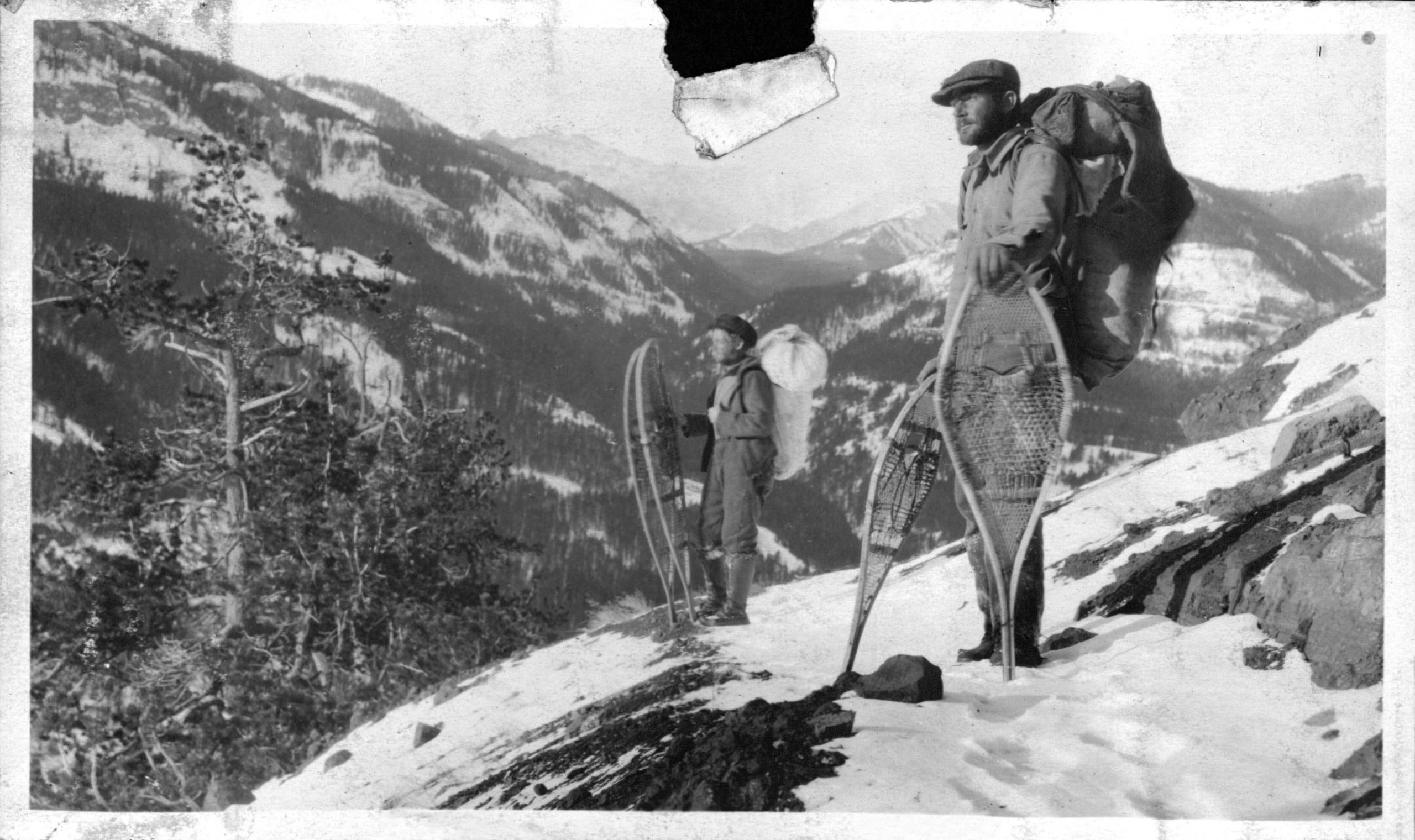
By the spring, Wilde and Jones had accumulated a sizable fur haul: 126 marten, 10 foxes, and 12 coyotes. They carried their catch out of the mountains on snowshoes, large bundles of fur strapped to their backs. For Wilde, the profits helped finance the purchase of a horse string and a pack outfit, allowing him to establish his own hunting and guiding business. Winter trapping had therefore provided not only income, but a route into another form of wilderness employment.
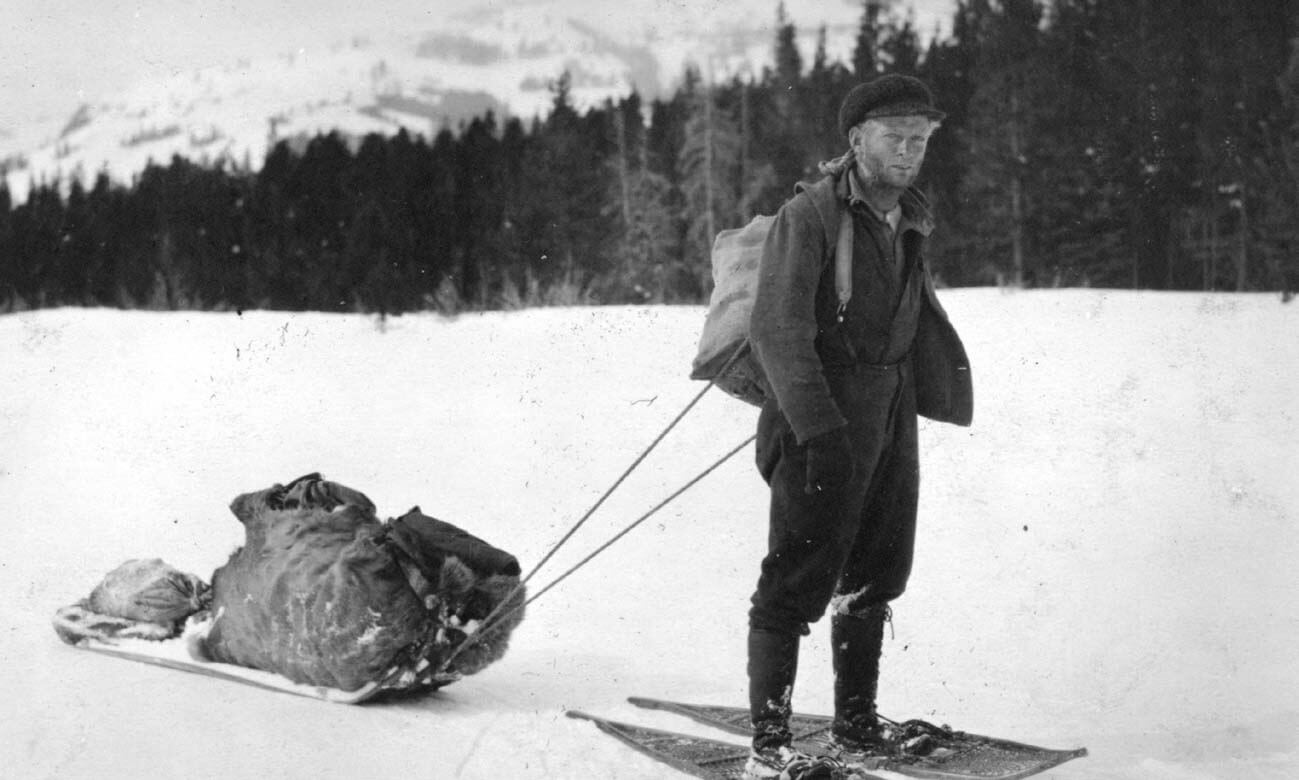
While moving from camp to camp in the winter wilderness, trappers had to transport all their food, supplies, traps, and furs on a large toboggan or on their backs. | BUFFALO BILL CENTER OF THE WEST, CODY, WYOMING; MCCRACKEN RESEARCH LIBRARY
By the middle of the 20th century, however, the economics of trapping had begun to change. Fur prices fluctuated with the vicissitudes of fashion, international markets, and wider economic conditions. The high prices of earlier decades eventually declined, and since the early 1980s, the market has generally provided far less incentive for the kind of extended wilderness trapping practiced by the men of yesteryear.
With the waning of winter trapping ventures, many of the old trapline cabins were abandoned. Some were destroyed by natural forces, though ruins can still be found deep in the wilderness, reminders of days gone by.
Yet the end of the old trapline economy did not erase the experience these men had gained in the mountains. Hartung, looking back on his years in the wilderness, remembered the country less for its commercial possibilities than for its seclusion. “Today the best feature of it all is that the beautiful land cannot be invaded by automobiles,” he wrote, “which would destroy the originality of the land which had been endowed with nature’s most beautiful environment.”
Brian Beauvais is the curator of the Park County Archives in Cody, Wyoming. He has written about and given public programs on various topics relating to the history of northwest Wyoming, including wildlife conservation, prospecting, recreational pack trips, historic preservation, ranching, and local art.
No Comments