


09 Apr In the Workshop: Human Centered
In Bozeman, where long winters insist on still attention and summer light stretches days like opportunity, MFGR has humbly built a design practice shaped by patience, materiality, utility, and purpose. The studio’s work — spanning everything from Adirondacks to carefully articulated homes — resists spectacle. Instead, it offers unassuming environments and objects that belong, not only to this place but to the humans who move through it.
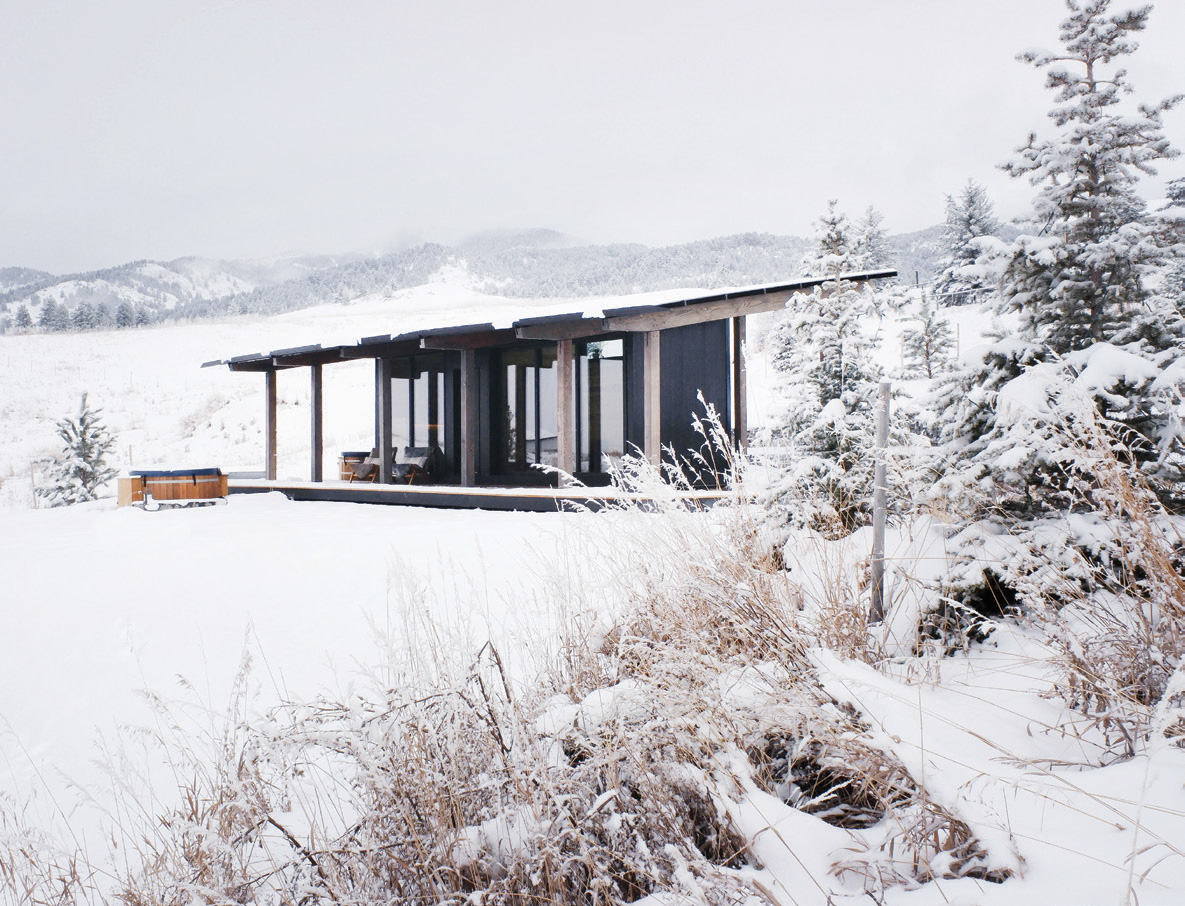
MFGR engages in the full expression of constructive creativity, from handcrafting furniture to designing and building structures like this sauna in Bozeman. “Our diverse projects reflect our diverse team of architects, builders, and makers,” says founder and CEO Peter Costanti. “Any project that employs the holistic team is a project we are excited about.” | JONAH GORDER
Occupying a space between distinct disciplines — a madhya of both meaning and manifestation — MFGR refuses clean definition. Neither an architecture firm nor a fabrication shop, MFGR is a place for making with hands, pure and simple, where drawing, constructing, and inhabiting are understood as continuous acts, as conversations without beginning or end. At the center of these conversations is founder Peter Costanti, whose leadership has shaped MFGR’s culture of thoughtful work — one grounded in considering, listening, experimenting, and respecting the answers that come, whatever they may be.
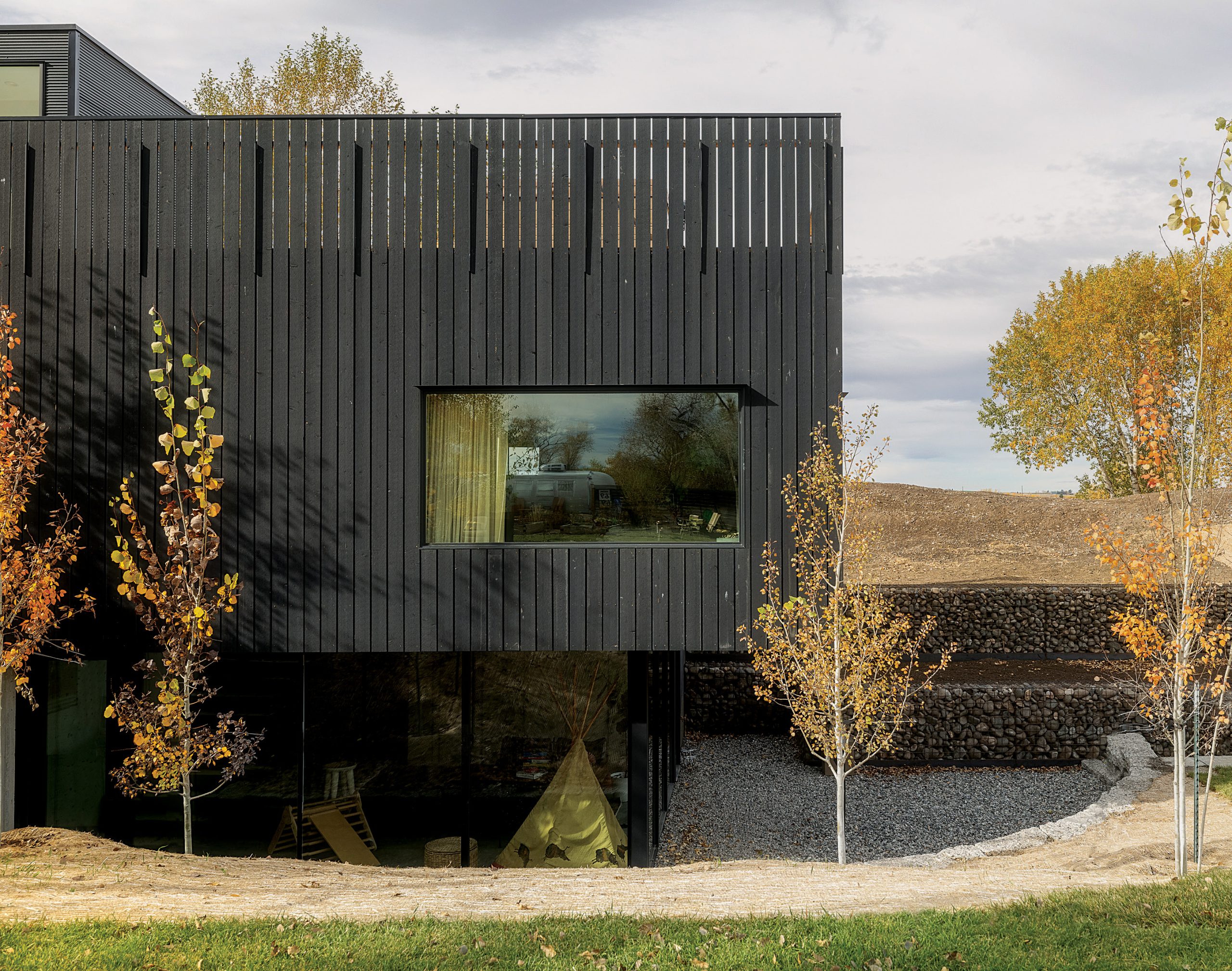
Grounded yet minimal, this MFGR home’s black exterior contrasts with the changing landscape, emphasizing form, proportion, and place. | JORDAN SIEMENS
MFGR’s projects don’t begin with conceptualization; they start with attention. This focus comes not from inside the maker’s psyche and self, but rather in the environments and situations that define how that psyche or self might develop at all. Perhaps it’s how a family might gather around a table for supper. Or how a hand might gently balance a glass of wine on the arm of a chair at the end of a long day. How a space might hold heat in the winter, light in the summer, and community in the moments in between. Surfaces, whether wood or metal, patina with honest grace, demanding creative conversation with life to reach their full potential and evolve.
“Pete believes in and loves the materiality of wood and metal,” says fellow architect Byoung Cho, who has partnered with Costanti on past projects. “MFGR’s unique understanding of design doesn’t come from abstract digital figures, but rather from that concrete materiality and craftsmanship. In the home project we partnered on, he demonstrated this interest and ability in the simple design, beautifully executed in wood, steel, and concrete.”
In form, this style reads most obviously as restraint. Furnishings are substantial and durable, but not heavy or heavy-handed. Bent steel and charred wood are adjoined with visible care — the subtle marks of their making left intact, like fingerprints. Built elements — stairs, millwork, details — are treated much the same as furniture at architectural scale.
“Materials and details don’t know scale,” Costanti says. “A chair blends to a table like a house blends to its landscape.”
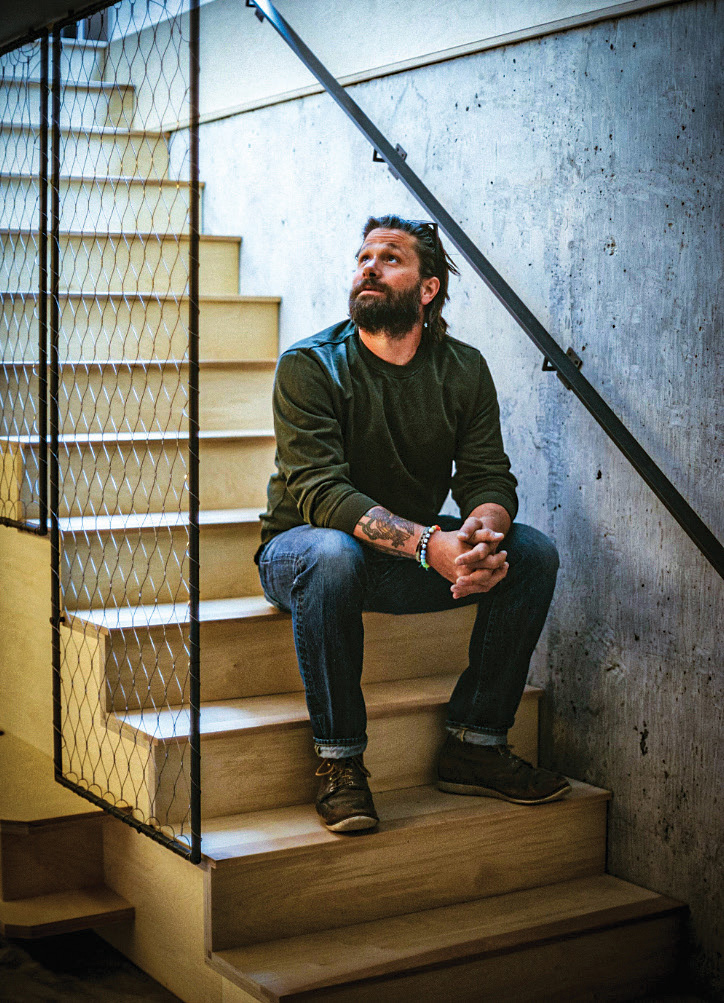
Costanti (pictured) stresses balance in life as in business. And he advocates the same work-life balance for the many craftspeople and makers that share in his vision at MFGR. Ski days are an expectation, community parties a regular occurrence. “Above all, we’re hard workers, but that doesn’t mean we dedicate all hours of our life to this firm,” says Costanti. “It means we stay focused, we stay motivated, and we try to get better everyday.” | MORGAN KEMP
Born in Bellingham, Washington to a commercial fisherman father and an interior designer mother — both of whom impacted the eventual shape and ethos of MFGR — Costanti first moved to Montana to ski and stayed to pursue an unexpected passion for architecture and design he discovered while working for a landscape company on a home by Dan Harding and Richard Charlesworth. The latter is now Costanti’s mentor of more than 20 years.
“I went down to MSU that very week and enrolled,” Costanti says. “I started my own landscape install company, which led me into a great design network here in Bozeman. It proved to be true that it’s all who you know.”
Costanti launched MFGR, a multidisciplinary design-build concept so named as an acronym for Made For Good Reason, in a two-car garage on the south side of Bozeman in 2009. “The dream from the beginning was to combine designers, makers, dreamers, and builders under one roof to drive efficiency through vertical integration and direct communication,” explains Costanti. “MFGR isn’t separately siloed businesses, but rather a comprehensive operation, fluid from discipline to discipline, with a team of specialists who are eager to learn from one another, to dream together and create together. We’re about legos, not egos.”

An interior gallery of glass and wood creates a quiet moment of transition, blurring architecture and landscape through reflection and light. | JORDAN SIEMENS
Since that humble start, MFGR has grown alongside Bozeman, evolving in line with both an internal vision and an intentionality around its impact on a community that has seen more than its share of growth.
“We all moved here for the freedom to explore and find opportunity while not diluting the authenticity that’s here,” Costanti says. “It’s a hard line to straddle. We see new buildings every day that fail to do so, that seek to snuff the soul of our town. We try for the opposite; we want to add to the beauty, embrace the individuality, and support the people that make it wonderful.”
That responsibility to design around the soul — of a material, a client, a place, a structure, a ritual — is the singular defining force behind the range of MFGR’s creative reach. It continues to defy simple definition, instead remaining elusive and ever open to possibility, to experimentation, and to roads not yet ventured down. And it’s not accidental. “Building is building,” says Costanti. “We make beautiful things with our hands; we tell a story. Those stories become a part of our community, continuing the narrative.”
Part of that narrative is firmly grounded in environmental advocacy and sustainable design. Whether it’s a restoration project, insulating an aging structure through both salvaged resources and modern innovation, or the Burnt Forest Collection of functional art inspired by the region’s wildfire ecology, MFGR “continues the story of Montanans being resourceful and conscientious while also simply solving a problem.”
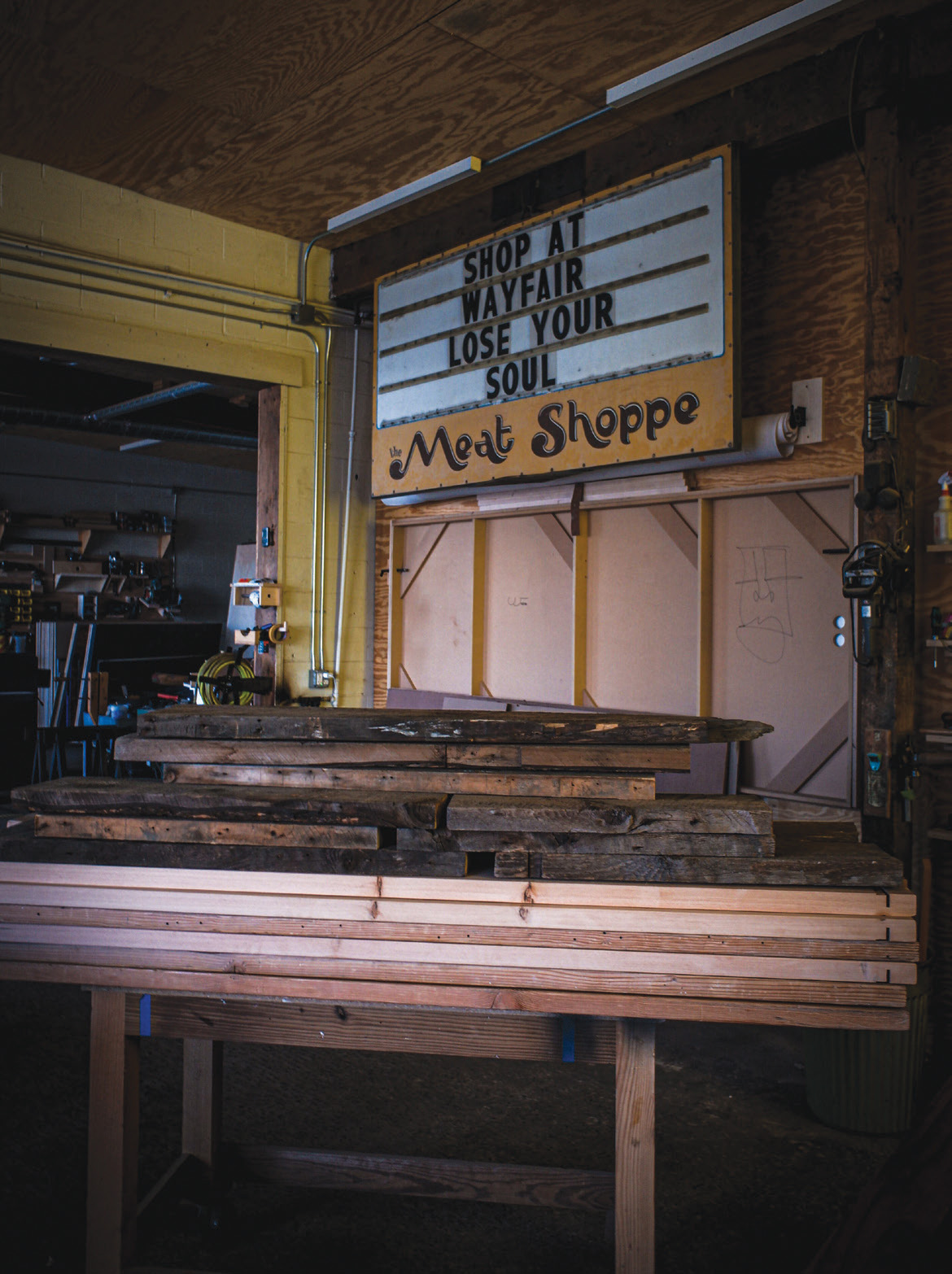
MORGAN KEMP
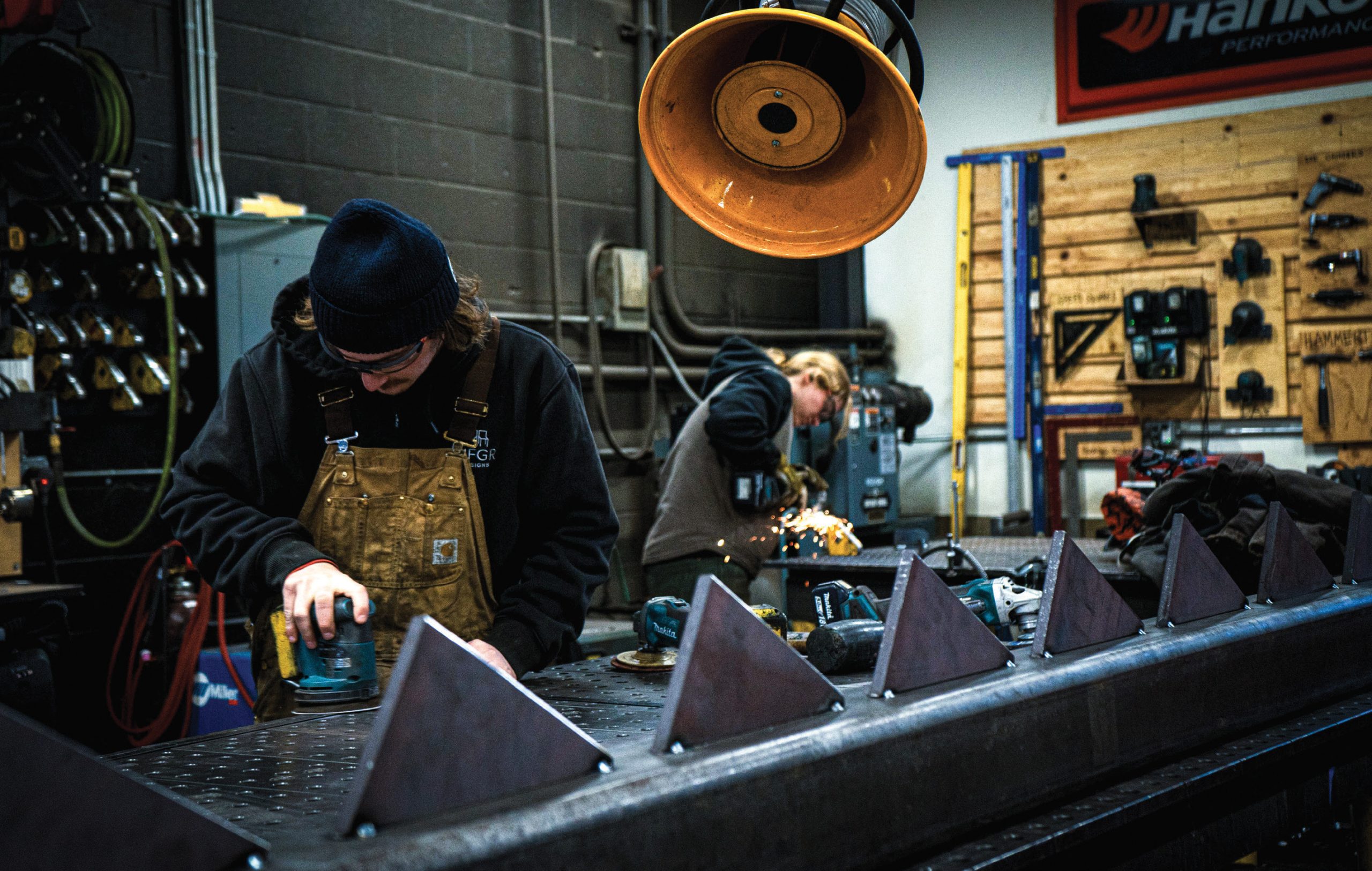
In September 2021, Costanti moved MFGR into the classic Eagle Tire building a block off Main Street, situated between an old-school residential neighborhood and the historic downtown corridor, a space he’d repurposed for the growing firm’s headquarters. The design studio now shares walls with both the metal and wood shops, so the answer to any question lies beneath one roof.
“These space adjacencies allow us to literally lock arms and solve our problems in a collective way,” Costanti says. “All the teams share lunches — accompanied by stories and jokes — on the driveway, and we regularly hold community parties right here on site.”
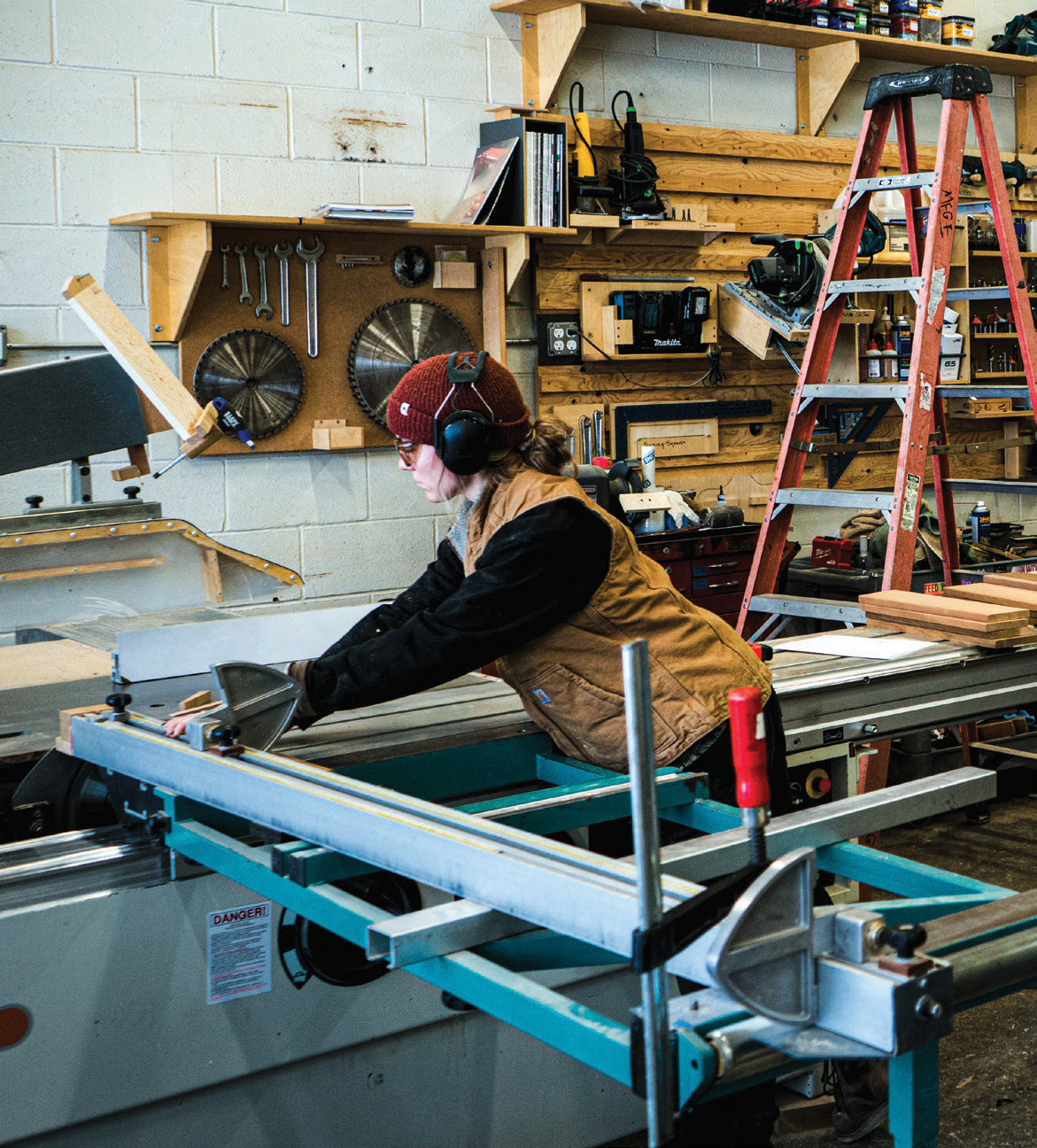
Housed in the old Eagle Tire building on North Wallace Avenue, one block off Main Street in downtown Bozeman, the MFGR design studio shares walls with both the metal (top left) and wood (bottom right) shops, allowing for collective problem-solving and teamwork in all things. | MORGAN KEMP
When designers and fabricators work in tandem — each discipline a distinct finger, part of the larger creative hand — the distance between conceptualization and craft collapses. And this proximity, this simple shared space, influences everything from proportions and joinery to finish and assembly. Ideas are tested early and often; design solutions are the result of tactile engagement rather than abstraction. This isn’t to say that digital tools aren’t used. They have their role in MFGR’s processes and production, but where much of the world is embracing the transformative ease of digital innovation, Costanti and his team see it as yet another tool, one still reliant on the hand that wields it.
“Our work is a constant dance between the digital and analog worlds, and I believe that’s really important,” Costanti says. “As our worlds become so heavily digitized, we lack the tactile, the connection with creation. We’re currently working on an outdoor-furniture line where we play with aesthetics, form, and materiality in the digital world, and then the digital moves to analog in our shops as we prototype to test ergonomics and proportions. This is where we make it real. It continues down the analog road as hands touch the digital creations to give them soul, to give them life.”
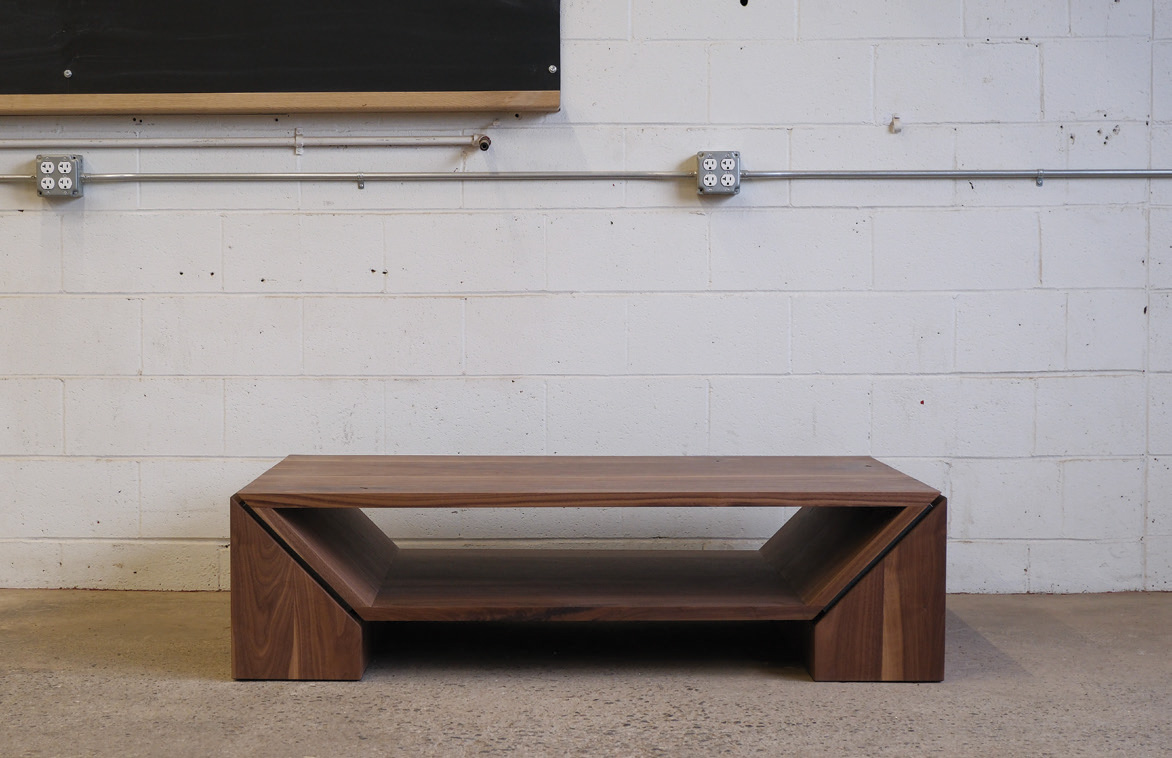
Anchored by solid wood and softened by negative space, this custom coffee table is both architectural and understated. | MORGAN KEMP
Costanti shares a story about acclaimed NCAA basketball coach John Wooden, who began the first day of every practice teaching his players to tie their shoes. Wooden explained to the talented players, among the best in the country, that if we can’t tie our shoes, we can’t be champions. If we can’t master the simplest of things, we’ll never achieve the greatest. “We need to always remember that good is the enemy of great, and greatness comes from doing the small things well: preparation, routine, foundation,” says Costanti.
The team at MFGR has mastered the simple: The diversity of focus and fabrication doesn’t make them generalists doing everything, but rather specialists free to solve problems with inspired solutions, to take risks, to lean on one another as family for support as much as insight. And it’s what makes MFGR so special.
“From monster 8-foot fire pits to the Peets Hill mountain range interactive art installation, Pete never backs down from a challenge,” says Troy Scherer, principal and owner of Design 5 Landscape Architecture in Bozeman. “I appreciate his willingness to operate on the ‘What if we try this…?’ wavelength. Our work together has always leaned into art, science, and experiences.”
At the end of the day, life is the point. Costanti strives for balance in all things, for sustainability in life as in design. To better embrace that ethos, he’s stepping away from the management of MFGR, reconnecting with his creative design roots while expanding his team to include his wife and brother. As the growing crew embraces an evolving future in larger-scale architectural projects, they do so with the same passion for play, creative curiosity, and love for their community that has defined MFGR since its inception, and for good reason. Laces tied.
Jessica Bayramian Byerly is a freelance writer and editor whose work has appeared in various publications, including The Montana Historian, Destination Big Sky, Views., and Big Sky Journal. She also curates distinctive content for a range of regional businesses, multimedia agencies, and nonprofits. A Bozeman native, Byerly is currently the associate editor for Big Sky Journal.
No Comments