


28 May Round Up: Between the Pages: An Excerpt From Trail Creek: A North Fork Saga
Editor’s Note: Professor Daniel G. Block wrote his wilderness memoir at the end of his life in the late 2010s, and the unpublished manuscript was found in a box nearly a decade later by his grandson, Zach Block. Zach worked with a Montana historian and archivist throughout 2025 to bring the book to print. Including numerous tales of homesteading in northwest Montana during the post-WWII 1940s, the book reflects on triumphs and failures in the wilderness and what that means for future generations. The following paragraphs have been thoughtfully selected from several chapters of the book and are published with permission from Zach and the publisher.
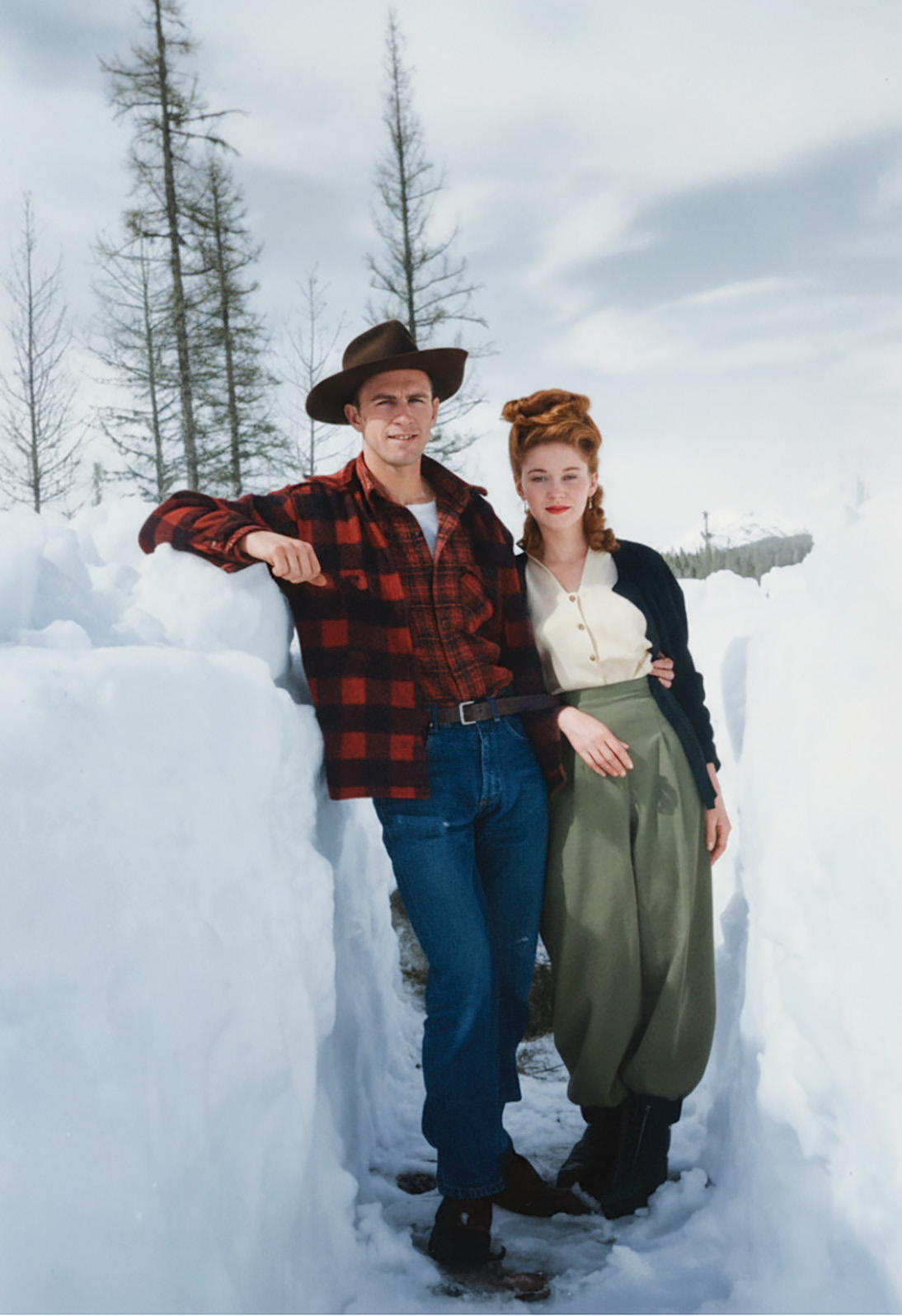
The American public’s romantic attachment to the frontier has grown ever since the frontier ceased to exist. In 1946, however, a small chunk still survived in northwest Montana. To me, Trail Creek lay at the center of it. Living off the country was an overcrowded occupation up the North Fork during the Depression years. Settlers, homesteaders, down-on-their-luck Depression casualties, the North Fork was home to all of them during the Thirties. They had left their mark behind: old cabins — some just shacks — stony gardens, and small patches of land cleared for homesteads. It represented the bottom rung of existence, the survival level. But we were different, we thought. We had dreams — as though we were the first. …
… Over long periods of time, memory tends to fade as the years meld together, but not from that first year at Trail Creek. I can still recall every month — and sometimes every day. The memories have been so vividly etched into the past that only a failing mind could erase them. From the first minute that we pulled into the front yard of the old Price homestead to unload our gear in early April until the storms of December buried every living thing — the details are still vivid. …
… Most of the North Fork was never meant for people to make a living. A closer look at the map years earlier could have told me that. Today, the clues jump out: Dead Horse Ridge, Kintla Glacier, Starvation Creek, Frozen Lake — all within a day’s foot travel from our cabin. But dreamers are not looking for reality. The only name I saw was Trail Creek, or on the old maps, Yakinikak, the Indian name meaning Trail of the Moose. There, we would build our cabin.
DANIEL G. BLOCK
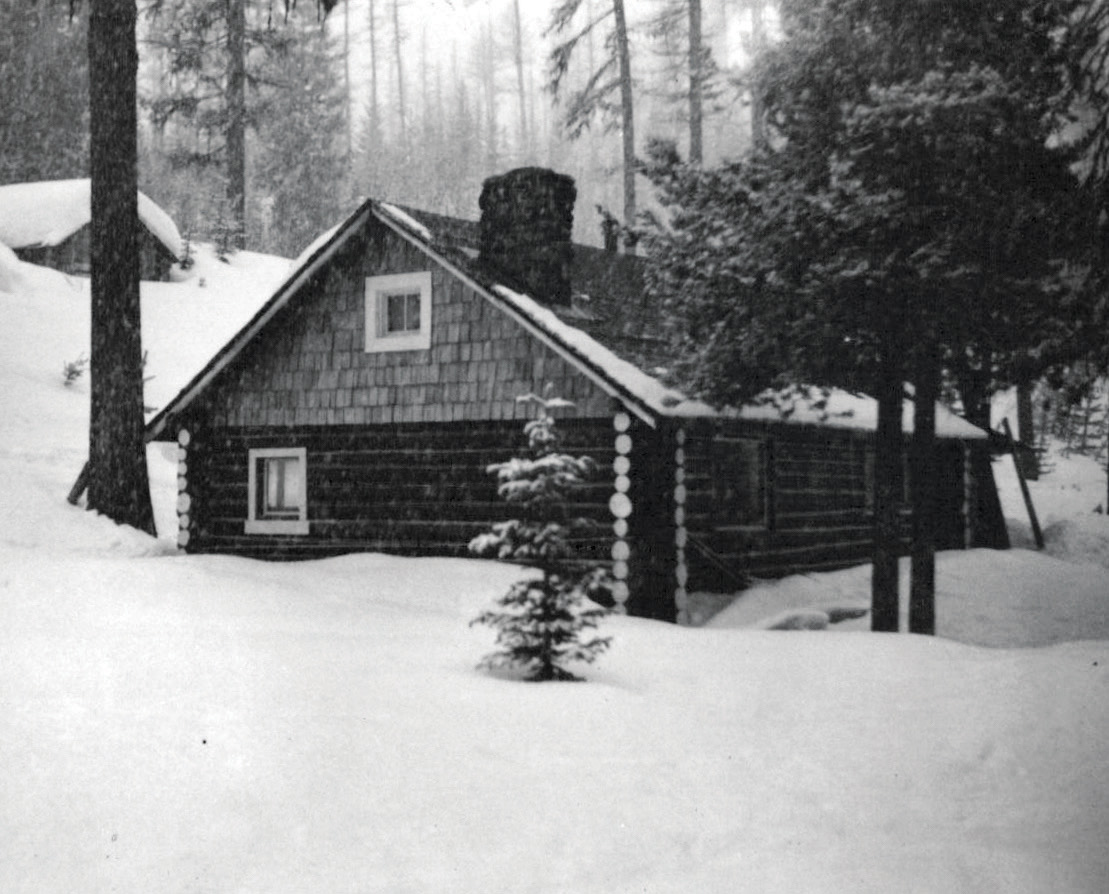
I thought of writing in the mortar of our cabin chimney up in the attic, “We did our best, but it wasn’t enough.” I never did. How many would have understood the hard work that went into the building of a dream and the pain of having to leave it all behind? The greatest pain was that of failure and the inability to support a family. Few ever find a pot of gold in their lives, but all have the opportunity to enjoy the rainbows. …
… Mother Nature may be beautiful but she is no sentimentalist and harbors no love for the slow, the weak, the old, and the misfits. Even the selected survivors are destined to die of disease, starvation, injury, or predation, but rarely of old age. …
In the Words of Zach Block
The settlement of the American West was driven by legislative and cultural forces that encouraged people to conquer the land, but the reality was often far harsher than the myth. In Trail Creek, we witness a 26-year-old Daniel Block leaving civilization for the wilds of Montana with his young bride, building a life from timber, river ice, and endurance. What unfolds is less a story of survival than a meditation on belonging, mortality, and grace in a vanishing American wilderness.
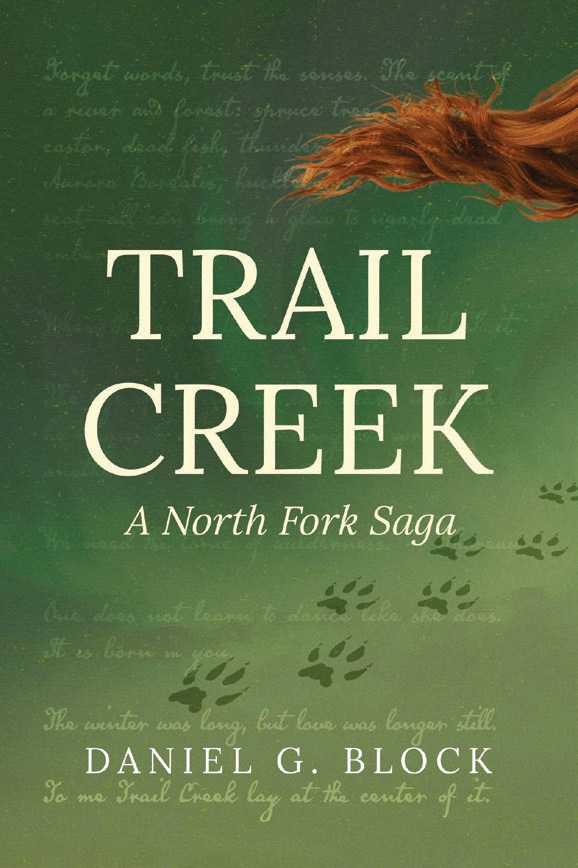
What’s remarkable is not how Dan felt when he left Trail Creek but how he felt decades later. He talked about it as a dream, one of life’s many dreams but the greatest of them: in his words, “dreams that only come once in a lifetime and only to young lovers.”
The adventure that broke him is the one that defined him. And this reframes everything. So if our youth have a destiny to explore and conquer, what does it mean to set out to conquer the wilderness? What do these individuals do in a world with no spots left unmapped? What does that mean for those of us who live in a place like Montana that’s still a bit wild? How do we share that, but still protect it?
No Comments