


27 May Luxury Accommodations In The Middle of Nowhere
A day shy of the summer solstice, Travis Taylor launches our skiff into the spring-fed pond on Jemas Ranch. It is already 7:30 p.m. But this time of year, the days are so long you can fish a hatch up until 9:30 p.m. and still see your fly. Besides, Wyoming is renowned for its abundant wind. The lake had been laced with whitecaps all day. Taylor says our best bet is to launch in the evening when the winds typically settle.
The 12-acre lake is ringed with natural grasses. Just a few yards from Green River, the lake has a unique relationship with the river and some abundant springs that constantly recirculate the water. A Western assortment of aquatic insects — caddisflies, damselflies, green drakes, and mayflies — wobble over the still water, way back in the protected coves. A large trout slashes at something, then slashes again.
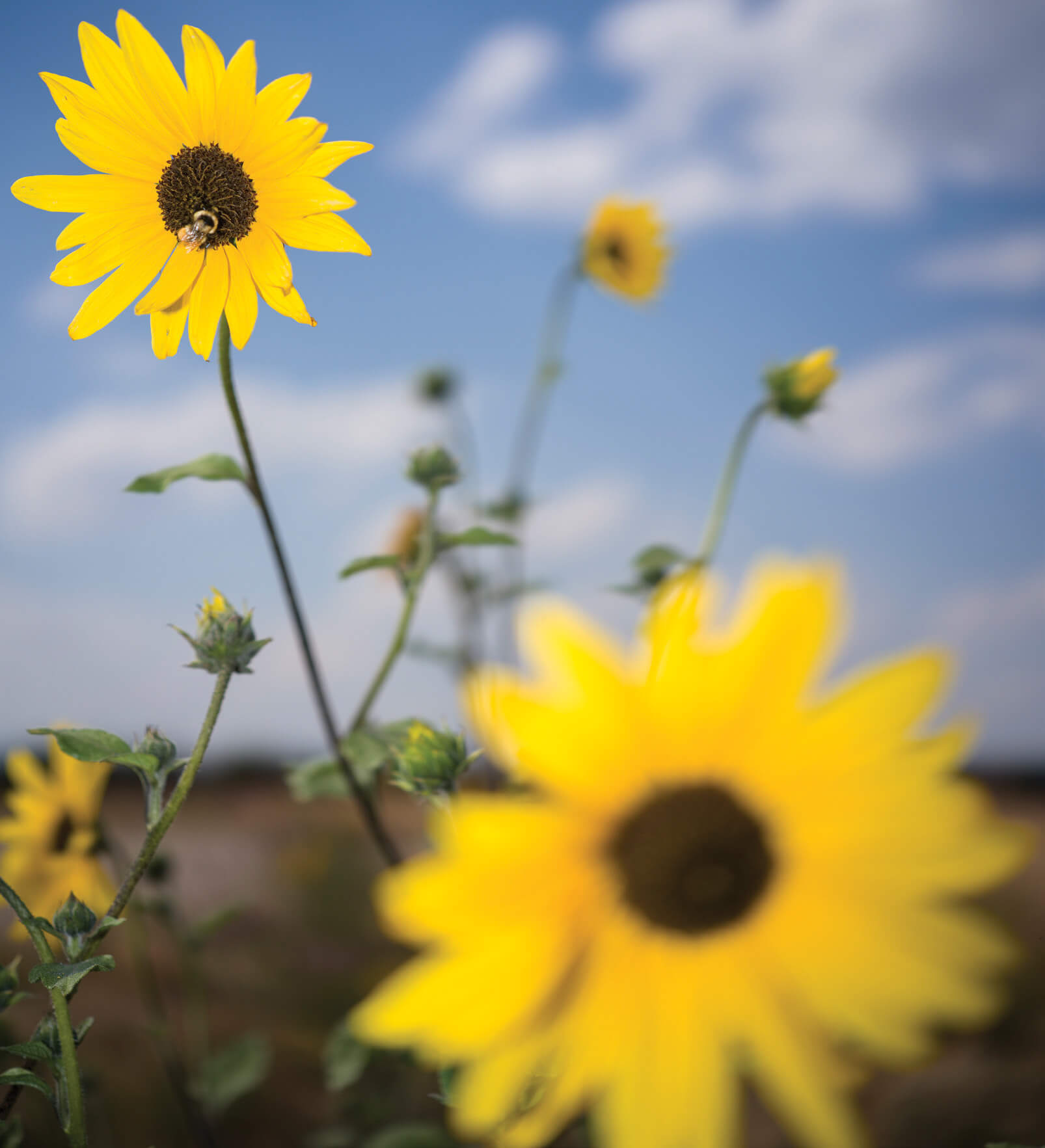
Restoring endemic plants and flowers is one of the goals at Jemas Ranch.
“Here we go,” Taylor says. He had predicted the hatch would begin as soon as the wind died. He works the oars and heads for the cove.
I’m using a Purple Bruce, a dry fly Taylor tied on for me. I had never heard of this particular pattern. Taylor, the head guide at Jemas, says it was developed by a tyer and guide from Jackson Hole. It is a combination of legs, a purple thorax, and a flourish of white synthetic wing material to keep it afloat. The guide positions the boat so I can make a cast to the rising fish. The sun is in my eyes, and I am squinting, but I can make out the rings and dimples where fish feed. I put the Purple Bruce in the middle of the commotion and come tight to a lovely 17-inch Eagle River rainbow, which leaps and makes a run for the deeper water.
For over two hours, Taylor shows me around the lake. The rising rainbows and browns, emboldened by the slanting light, begin to take the caddisflies in violent gulps. Blue herons and bald eagles watch us. A herd of cattle bellows from the neighboring ranch. Red-winged blackbirds sway on the tallest stalks of marsh grass. The more the wind stills, the more the caddisflies emerge and skate across the dark water. The lake boils with slurps, rises, and honest takes that bend my rod to the cork.
“They’re sharking,” Taylor says, referring to the way trout will expose their dorsal fins when they are gorging on emerging insects.
The author awoke to stunning sunrises and a cow and calf moose just outside his window.
We fish until we can hardly see the fly on the water. I simply set the hook when I hear the splash of a feeding trout. The last of the sunset paints the sky purple above the Salt River Range. To the north, the ragged Wind River Range blackens. I reel in and clip off the Purple Bruce. It is battered and coming apart. Taylor tells me to keep it.
Jemas Ranch is like no other fishing lodge I’ve visited. Surrounded by water in every direction, the landscape teems with wildlife — we see an adolescent bull moose when we drive through the gate. Nighthawks and shorebirds patrol the marshy areas. I startle a young skunk by one of the hay meadows. He aims his tail at me, but never fires a shot.
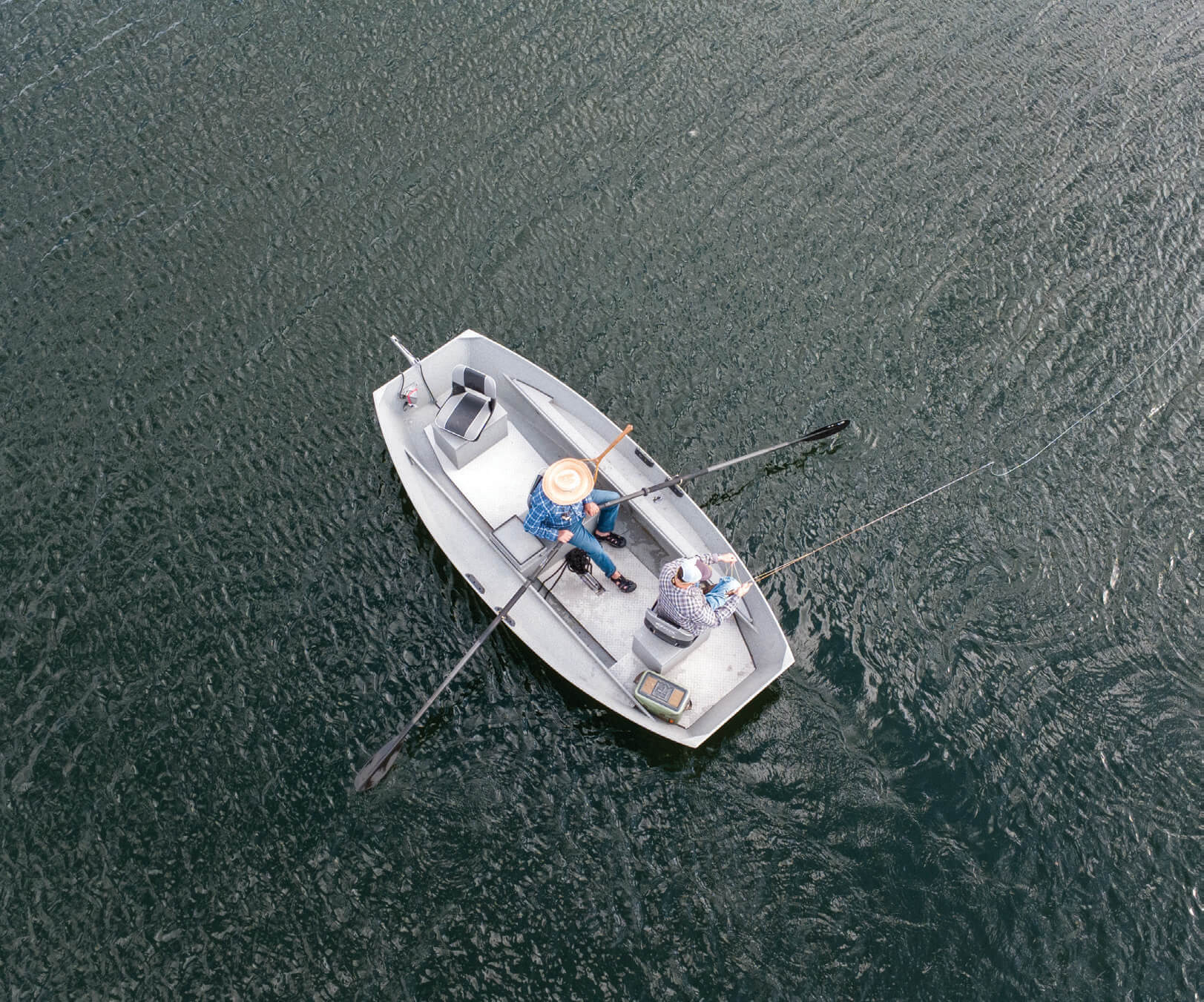
Local guides are available to showcase the river and various lakes.
Jemas is smack dab in some of the most productive trout waters in the Lower 48. The Green River dominates the valley. The New Fork feeds into the Green. The Salt isn’t too far away. Same for the Hoback, where public access is abundant and so, too, are the native cutthroat trout. Twenty minutes from the ranch gates, Pinedale, Wyoming (“All the Civilization You Need”) is a cowboy town that still retains some of the old saloons but has recently embraced a new wave of tourism. Coffee shops, a brewery, a comprehensive fly shop, and a boutique specialty store where you can dollar up for local honey and grass-fed beef from Killpecker Creek Cattle Co. are signs that the area is changing. Trucks glide the main drag with drift boats in tow. Pinedale is a great jumping-off place for trekkers who want to vanish into the Winds with their backpacks and a 3-weight fly rod. The Winds are dotted with lakes, laced with creeks.
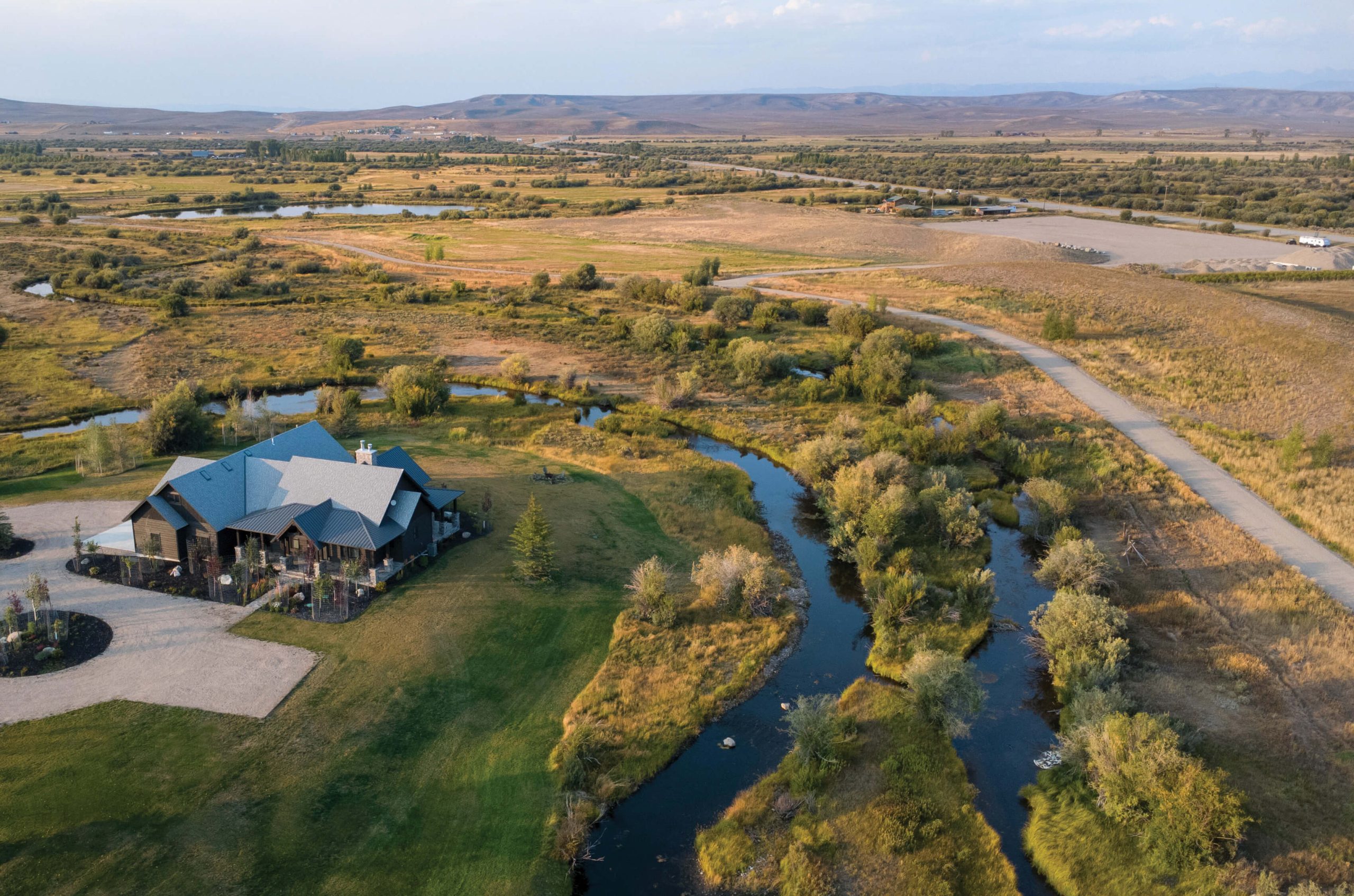
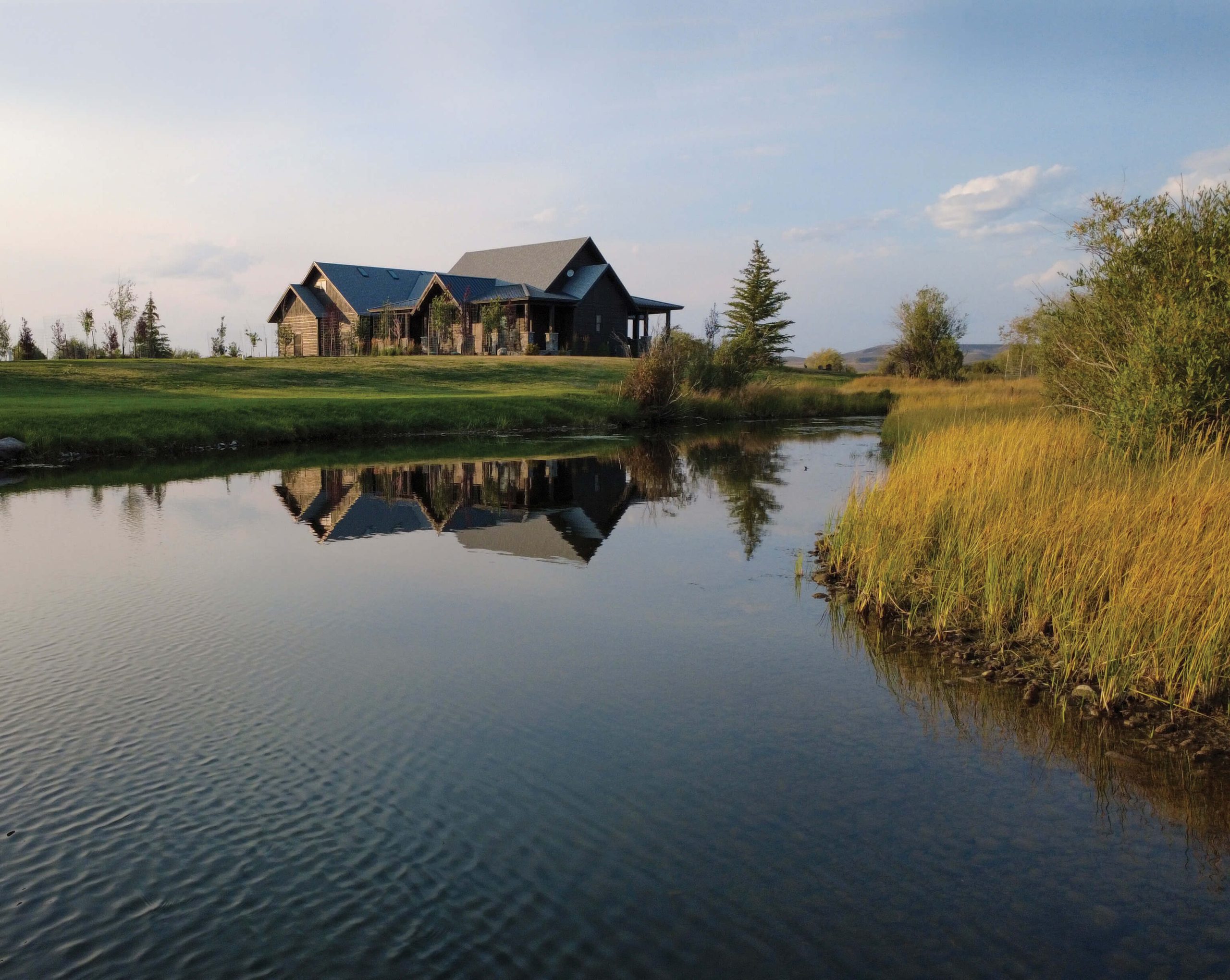
The concept for Jemas Ranch was to fit into the ecosystem and culture that was already in place in this remote part of Wyoming. The ranch is laced with spring creeks that are being restored to hold trout and robust insect populations.
Once a 400-acre homestead, Jemas features two spring-fed creeks — Prairie and Spring — cutting diagonally across the hay meadows. Spring creeks are rare things, and the word is that there is no way to make any more. Like the spring creeks famous among Montana fly fishers, these special waterways can be a trout angler’s delight. However, years of grazing has collapsed the banks and degraded the riparian habitat. The owner of Jemas Ranch, Jeff Aleixo, hopes to bring them back.
“When you think about the ranch, you really want to think about what’s around the ranch, and what the ranch becomes part of up here,” he says. “Sublette County is not like any other county. It’s almost like the Last Frontier. It’s very raw here.”
Aleixo describes his early interest in fly fishing and how it has always been part of his life. After a career in the corporate world, he wanted to shift his focus to hospitality. Though he has only owned the ranch for a few years, the transformation is astounding. Four new compounds have been built to accommodate up to 18 traveling anglers. Thousands of trees and wildflowers have been planted. Bridges have been built where farm trucks used to ford the creeks. There’s a rustic “whiskey barn” that has been converted into a comfortable gathering space, complete with a wood stove, a bar, and a pool table.
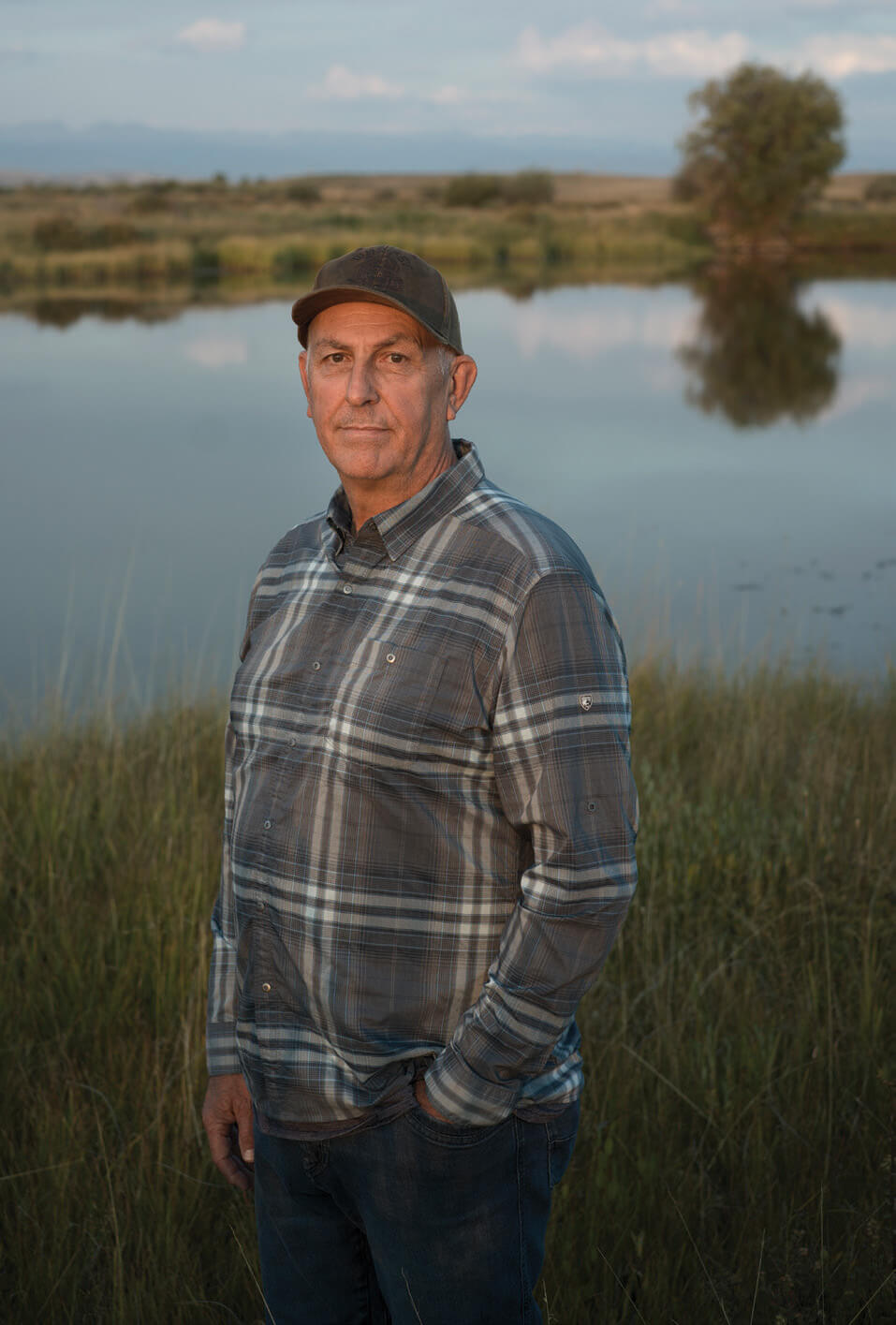
Owner Jeff Aleixo dreams of a time when anglers will be able to experience the whole picture — the Green River, the spring-fed lakes, and the fully restored spring creeks. He has dedicated himself to making Jemas a special place.
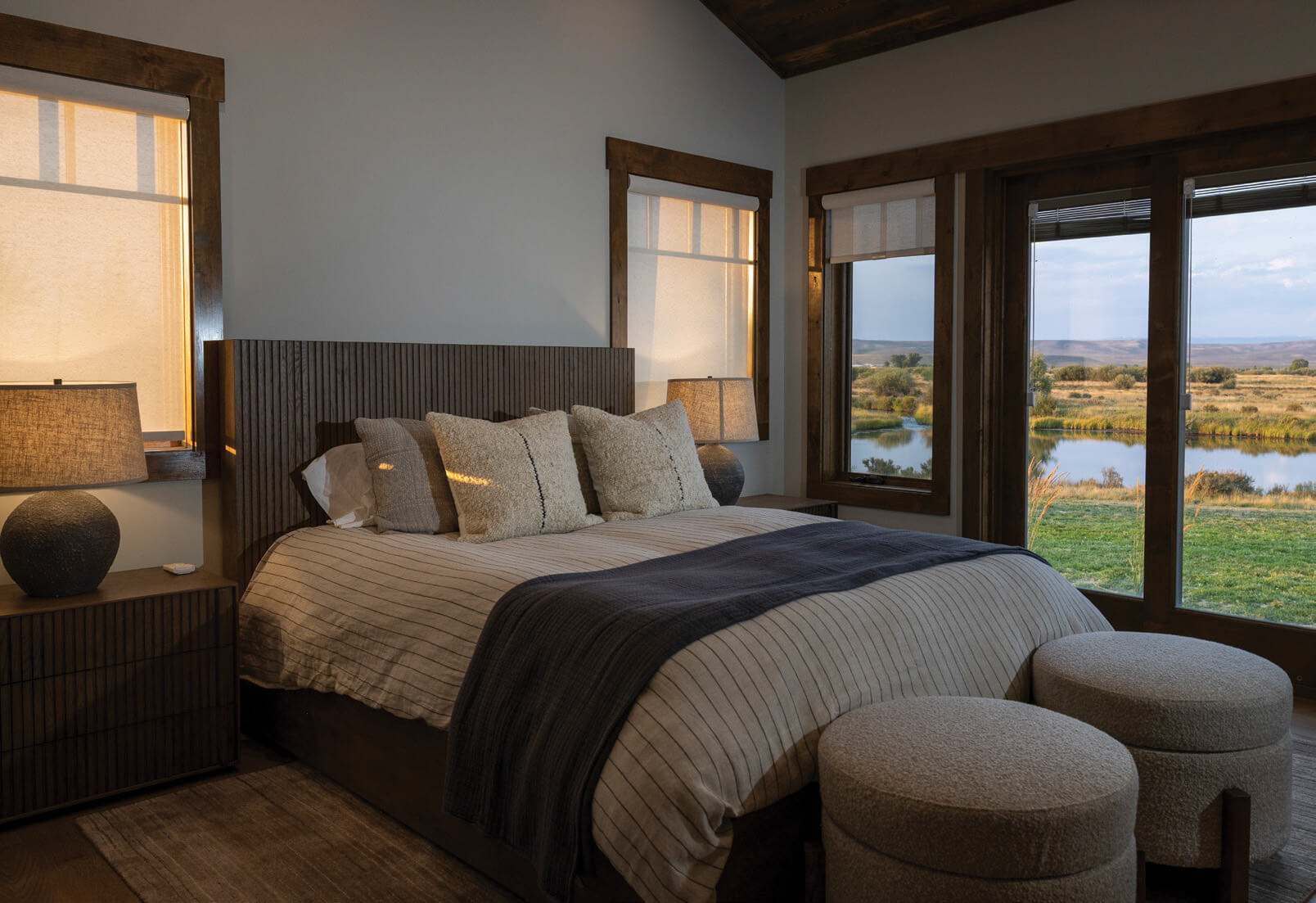
While Aleixo calls the accommodations “modern rustic,” to me, a guy who is accustomed to sleeping in the bed of his truck with his Labrador, these houses are deluxe. With spacious, open kitchens and comfortable living spaces, high-end appliances, and expansive windows that look out to the distant Wind River Range, I can see right away how Aleixo envisions treating his guests. The private lakes and spring creeks are bonuses that can make a fishing trip, especially if you get lots of rain and the local rivers become chocolate milk. It’s rare, but it happens.
Aleixo says the constant circulation of fresh water keeps the lakes filled to the “tip-top,” and the grasses and sedges ringing them thrive, creating terrific insect habitat. Like so many fly fishermen I have met over the years, Aleixo is an aspiring entomologist, and he knows that you must have fresh, oxygenated water to have insects and trout. When he talks about the ranch, he often discusses the bigger picture: the whole ecosystem working together to provide an unmatched angling experience.
“What a great way, on a 12-acre natural lake, to be able to learn and understand how the whole thing is supposed to work,” he says, describing how he takes guests out on the lake who are new to fly fishing.
“Or maybe you’re tired, and you don’t want to fish three days on the river, and you just want to hit the lake for a hatch — have an early dinner and get out there and fish right until dark,” he continues. With the lakes and the spring creeks at Jemas Ranch, you’re only a few minutes from fishing. You can do as much or as little as you want. This is a great option for families who are introducing children to fly fishing. They might not necessarily want to do nine hours in a drift boat. At Jemas, they can easily take a break or do something entirely different.

Aleixo describes the decor at Jemas as “rustic-chic.” Each house features comfortable rooms and spacious kitchens.
But restoring a spring creek that has been excoriated by cattle for a hundred years is a whole other ballgame. Bringing trout creeks back to life is a costly and technical proposition. Talking about the challenges he faces in restoring Prairie Creek, Aleixo describes the concept of “fall,” the angle of gravity that forces water through the system to create insect and trout habitat. The key is to create enough flow to oxygenate the water and scour the gravel bars clear of sediment. “You could make the creek look good — you could put in pools and riffles — but if it doesn’t scrub, and it doesn’t make undercut banks, now you’ve engineered it too big,” he explains.
These concepts occupy his mind. Several times during my stay, I see him driving the property in his pickup, stopping by the spring creek to look at something I can’t see. His dream is to create an exceptional fishery where visiting anglers will use vintage equipment — bamboo rods and Hardy reels — to fish the restored creek. They’ll book guides like Taylor and explore the nearby rivers. Perhaps, they’ll buy some local beef from the neighboring ranch. They’ll come with their families and leave with a new perspective on Wyoming.
I lift my head from the pillow the next morning to the distant views of the Wind River Range. The sun isn’t up yet. The mountain range is purple, lit from behind with golden light. Birdsong fills the air as I make coffee and think about where I want to go. I am rich with options. I consider wading the Green, or driving over to the Salt to try for cutthroats. I have never fished the New Fork, and I think, maybe, I should take a look. Eventually, I settle on exploring the Hoback, a river I usually drive right past.
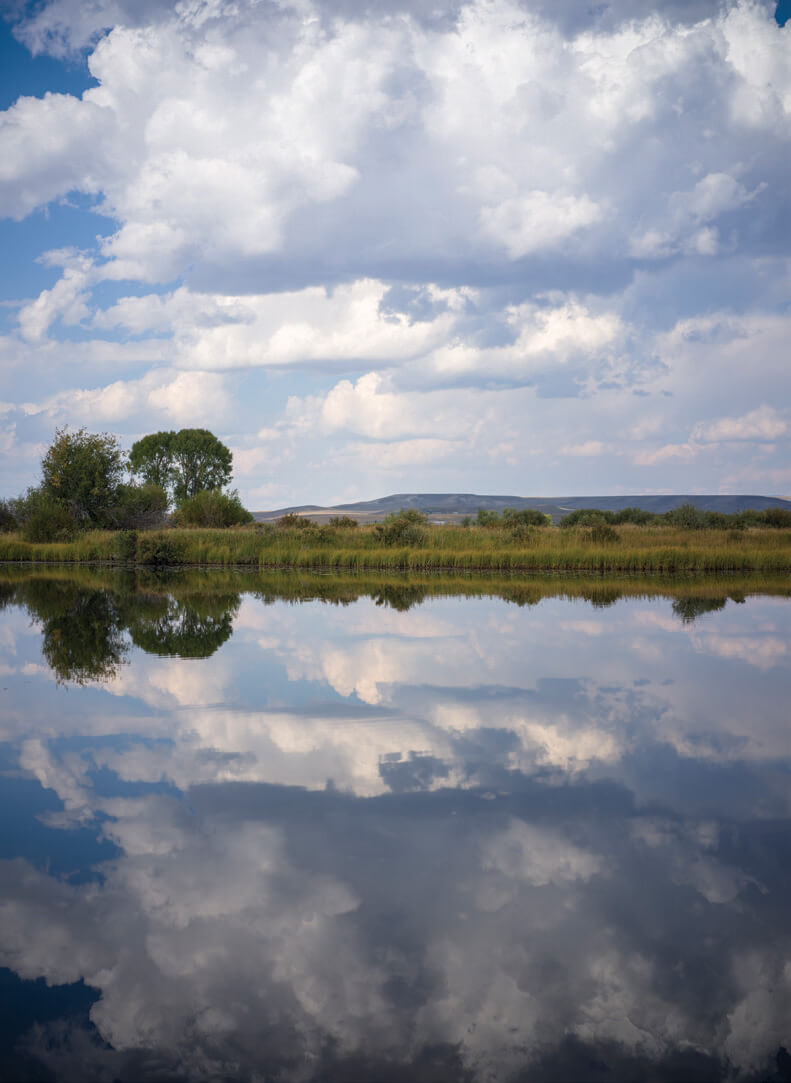
Jemas Ranch’s spring-fed lakes are ringed with sedges and native grasses that support various aquatic insects.
First, I stop at the Bear’s Den, a Wyoming staple comprising a liquor store/archery shop/gas station/restaurant/convenience store. Located at the intersection of highways 189 and 191, the Bear’s Den is where anglers meet their guides first thing in the morning. The family-owned business sells a prodigious amount of ice, bug dope, and coffee. Perhaps belying recent changes in the economy, the clerks rush around filling to-go boat lunches and stacking breakfast burritos in the display case. Every other guy in the place looks like a river guide. I get a coffee.
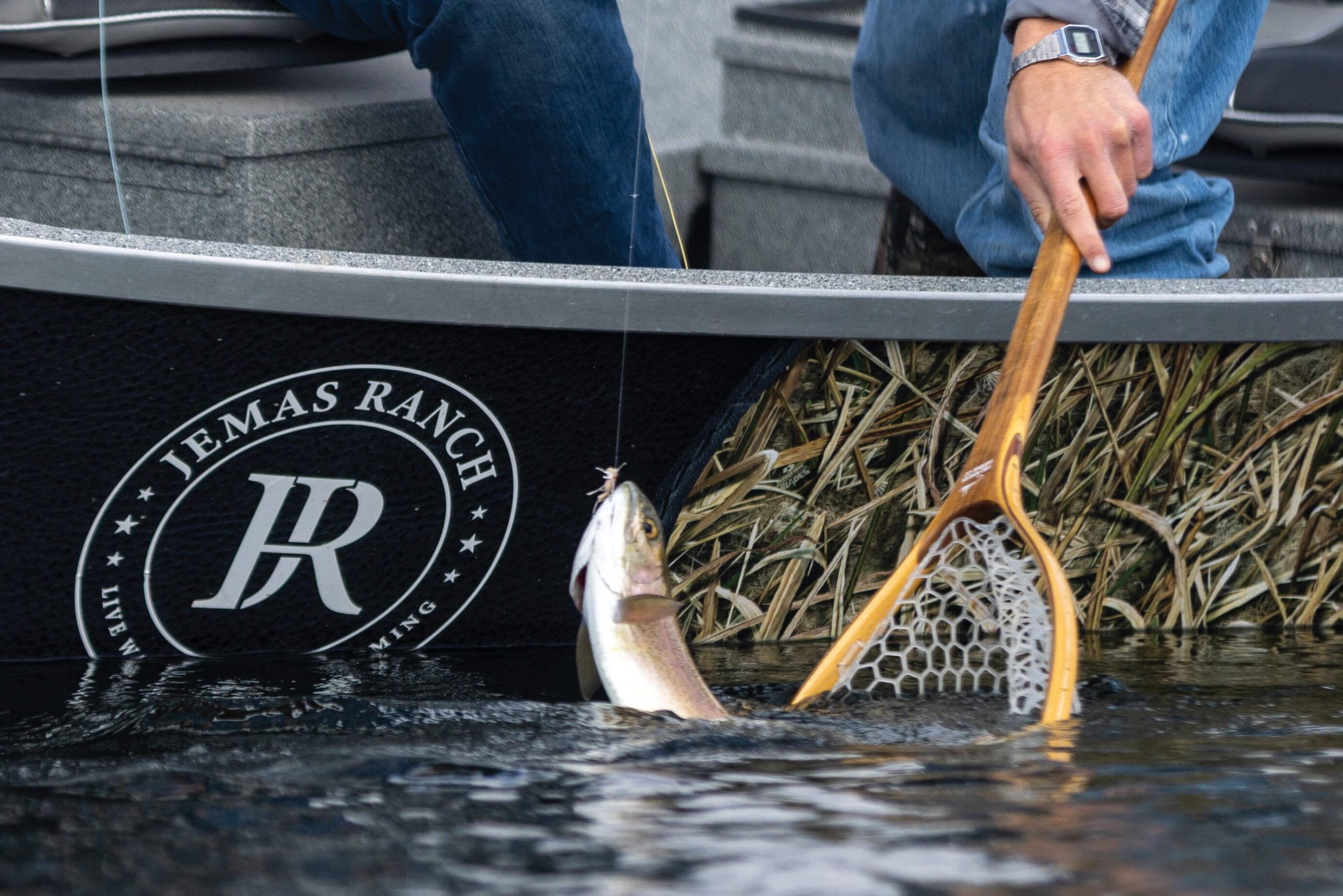
Eagle River rainbow trout are the stars of the lakes. There are also brown, brook, and tiger trout.
Venturing on, I check a few kidney-shaped pullouts along the Hoback. Eventually, I select a place where the hike to the river doesn’t seem too daunting. There isn’t much going on down there, unless you count the water ouzels coming and going, dipping under the fast current for insect larvae. A caddisfly lands on my arm. And then another. In a few moments, the air is full of tan moths. And pretty soon, I see the back of a large trout break the surface.
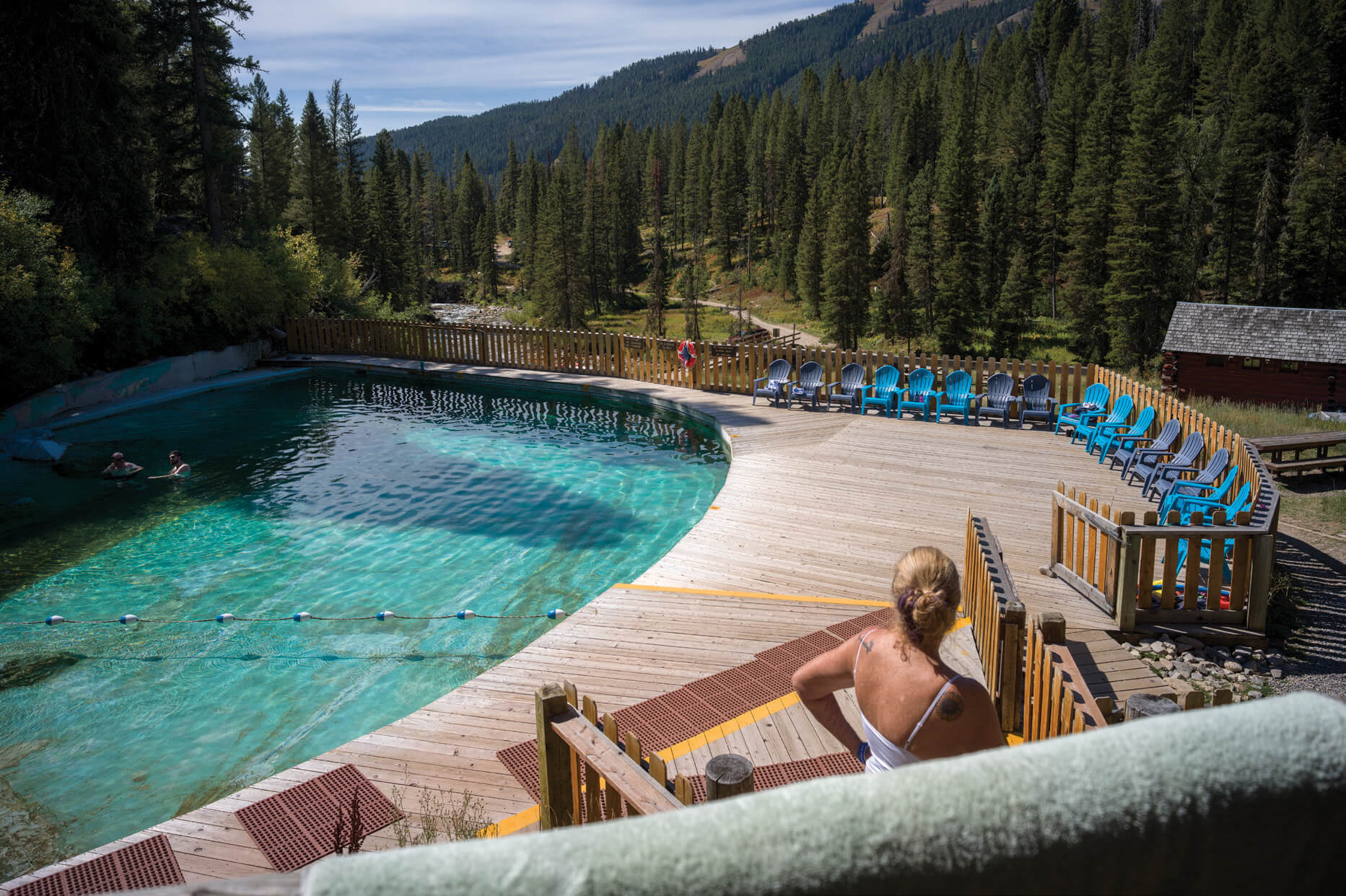
While staying at Jemas, the author made day trips to fish the Hoback River and soak at Granite Hot Springs.
With a PMX soaked in flotant (I don’t have any Purple Bruces), I begin picking off gorgeous 10- to 14-inch native Snake River cutthroats. No one bothers me. I have the run of the place for hours. At one point, I count nine caddisflies on my sleeves.
When I finish with the fish, for nostalgic reasons, I drive up Granite Creek Road and stop at the hot springs for a soak. When I was a dedicated bow hunter, I used to rely on this place to work out the soreness after three days of plying the slopes. There are a few people at the springs. A couple from Indiana is there with their children on a month-long camping excursion. They ask me how the fishing is.

After a long day of fishing, anglers can return to their quarters and relax by the fireplace or shoot pool and play music in the “whiskey barn.”
Before heading back to the ranch, I stop at the bar in Daniel, Wyoming, a town with a population of 150. I am the only one drinking non-alcoholic beer. And also, the only one not wearing cowboy boots. The bar is located about 100 yards from a historic marker declaring that this spot was once a rendezvous location for trappers and mountain men. The patrons talk about cattle, rodeos, and stubborn horses. On the television, there is a rodeo from Nevada. It is team roping, but nobody is watching.
Back on the ranch, I stop on a bridge and look at Prairie Creek. I kill the engine and listen to the distant calls of sandhill cranes. I wait. I don’t see any fish rise, but I notice something moving above the water. Female green drakes hover over a slide-out. They dip and rise in the golden light. Already, Prairie Creek is showing signs of life.
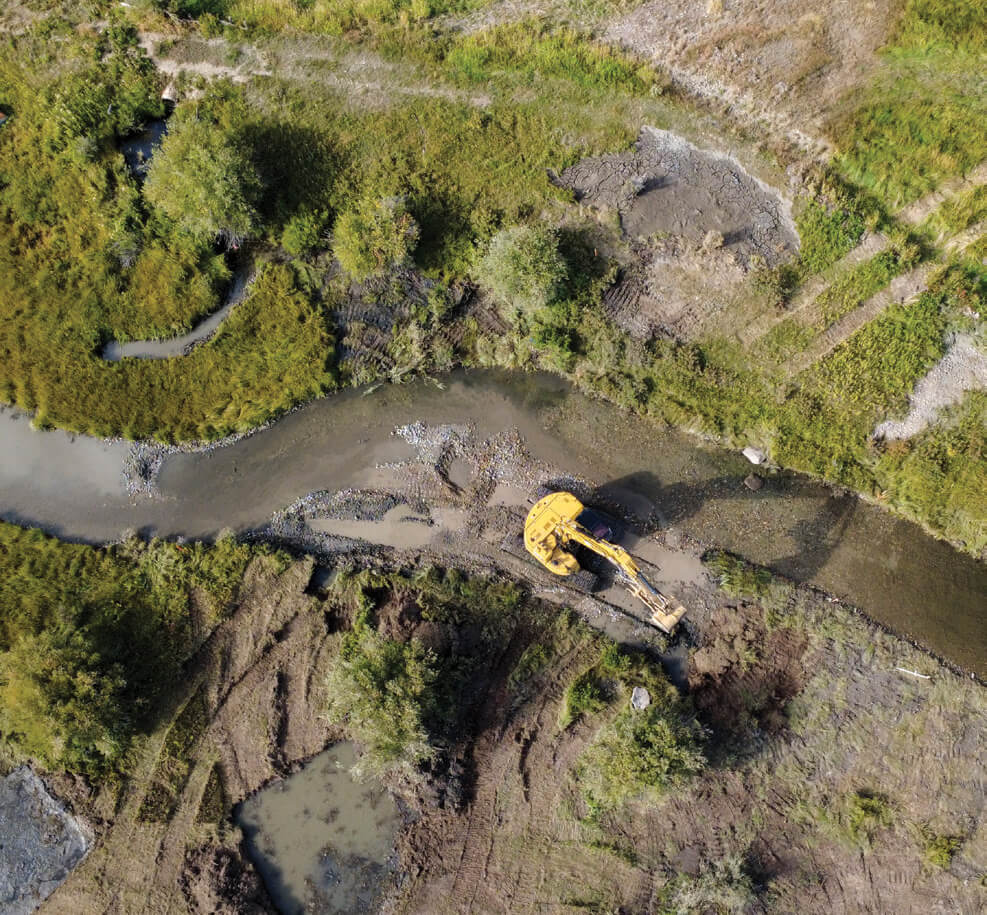
Restoring a spring creek following decades of cattle pressure takes a lot of effort, science, and faith. The banks have been repaired and the creeks are already showing signs of rebirth.
David Zoby is a freelance writer from Casper, Wyoming who has been writing and publishing essays and stories for over 20 years. His work regularly appears in Gray’s Sporting Journal, The Drake, and The Sun Magazine; @davidzoby.
Natalie Behring is a freelance photojournalist based in Victor, Idaho. Behring has worked for major publications throughout the world for decades, and recently returned to Idaho to be close to her family. When not taking photos, she can be found hiking in the mountains with her border collie and hanging trail cameras in trees.
No Comments