


09 Apr Western Focus: The Embrace of a Home’s Surroundings
As the climate shifts — as we face more and more wildfires, floods, and changing weather patterns — landscape architecture is responding with designs that not only amplify the visual impact and livability of the homes they embrace but also help protect homes and environments with thoughtful choices. The buzz these days is all about native planting, drought resistance, fire resistance, sustainability, zero-scaping, cultivation, and designed chaos, but the real word that defines landscape architecture today is “intentionality.”
On this rural Wasatch Back property, prairie dropseed and big mountain sagebrush are massed in loose drifts, softening the threshold between untamed hillside and cultivated garden while preserving the language of the high desert. | BRANDON HUTTENLOCHER
“When we’re thinking about planting design, particularly in the Rocky Mountains, there is so much that the context is trying to inform us,” says Mike Albert, landscape architect with Design Workshop, based in Aspen. Albert is particularly renowned for his skill at blurring the line between designed space and the natural environment.
Where we live
Albert’s clients invest in stunning homes, so his job is multifold: to enhance the beauty of the building, to connect the home seamlessly to the environment around it, and to design a space where people can enjoy the outdoors — both visually and in practice.
He must also factor in the elevation, which plays a vital role in what flora might grow and thrive near the home. “That’s as basic as it gets — the elevation, access to water, the soils,” Albert says. “Once we have that information, we can begin to derive a plant community — a vegetation community that wants to be there and flourish there.”
Albert says one of his first considerations when designing a space is the topography — simple things like determining the north-facing slopes and areas with more shade and protection, which support the moist conditions ideal for conifers. When the mountain turns ever so slightly to the south, the terrain is baked in the sun, where aspens, Gambel oaks, and grasslands thrive.
“How we approach a project and become intentional is derived first by where we are,” Albert says. “It accounts for the elevation, the soil, the microclimates, the availability of water, the ecosystem — all these things are taken into consideration before we put plants in the ground.”
Challenges for landscaping
In the Mountain West, people want to be immersed in magical natural landscapes, says Albert, so he’s always looking for ways to create space for people and nature to coexist. And it’s important that those interactions are positive. Some communities have rules around planting berry-producing shrubs, for example, in an effort to prevent human-bear conflicts.
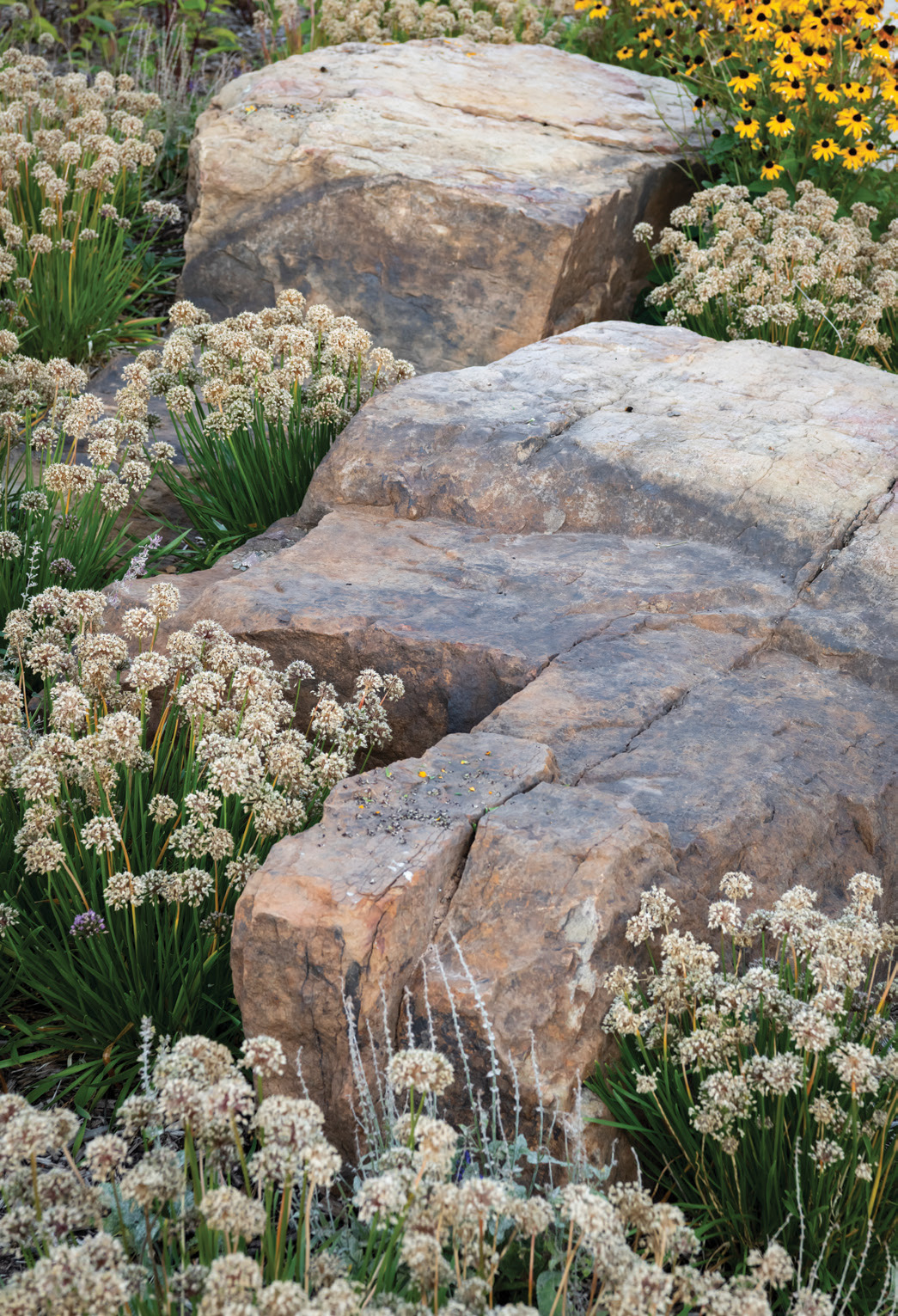
Up close, pockets of allium — known for its vibrant spring display — lie dormant in fall, their fading forms echoing the quiet tones of the surrounding boulder outcroppings. | BRANDON HUTTENLOCHER
“That’s a serious consideration when we’re looking at native plants, because as much as we want to honor the native ecosystem, we also want to protect the clients and the bears,” Albert says. “Not only do we need to contend with human-animal interactions with bears, deer, birds, and pollinators, but we also have wildfires and flooding to consider.”
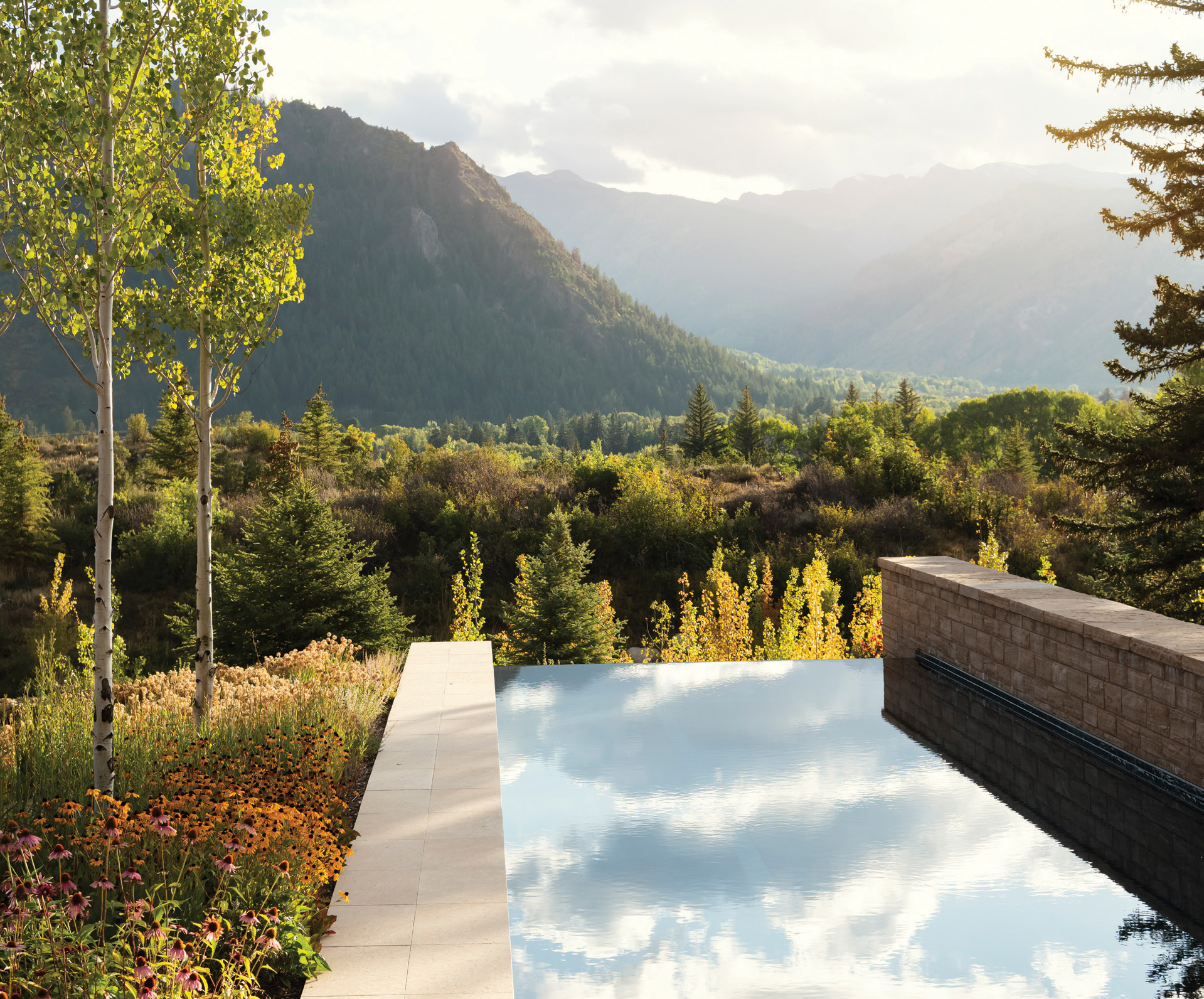
Framed by native aspen and spruce, layered perennial plantings introduce seasonal color at the garden’s edge before dissolving into restored woodland that reconnects the site to its broader mountain landscape. | BRANDON HUTTENLOCHER
Albert has a client in the Yellowstone Club near Big Sky, where water is very limited. And while it seems counterintuitive to have a water feature in a drought-stricken environment, he added a reflecting pool, which collects rainwater and creates a cooling, inviting space. The pool is filled with recycled water that’s redirected from the roof, which, in turn, is incorporated into the landscape. It has become a restorative place for the owners and a welcome refuge for pollinators.
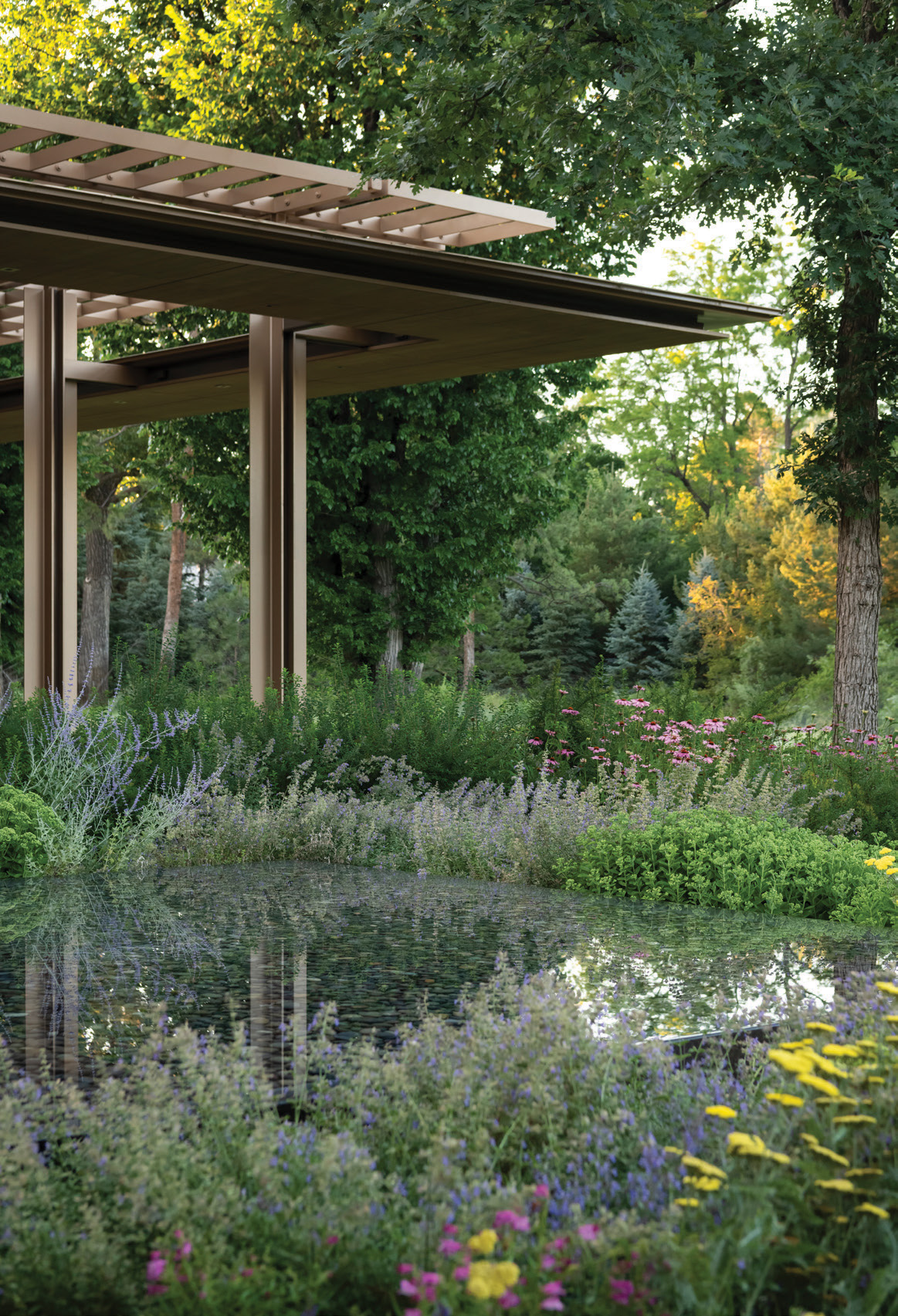
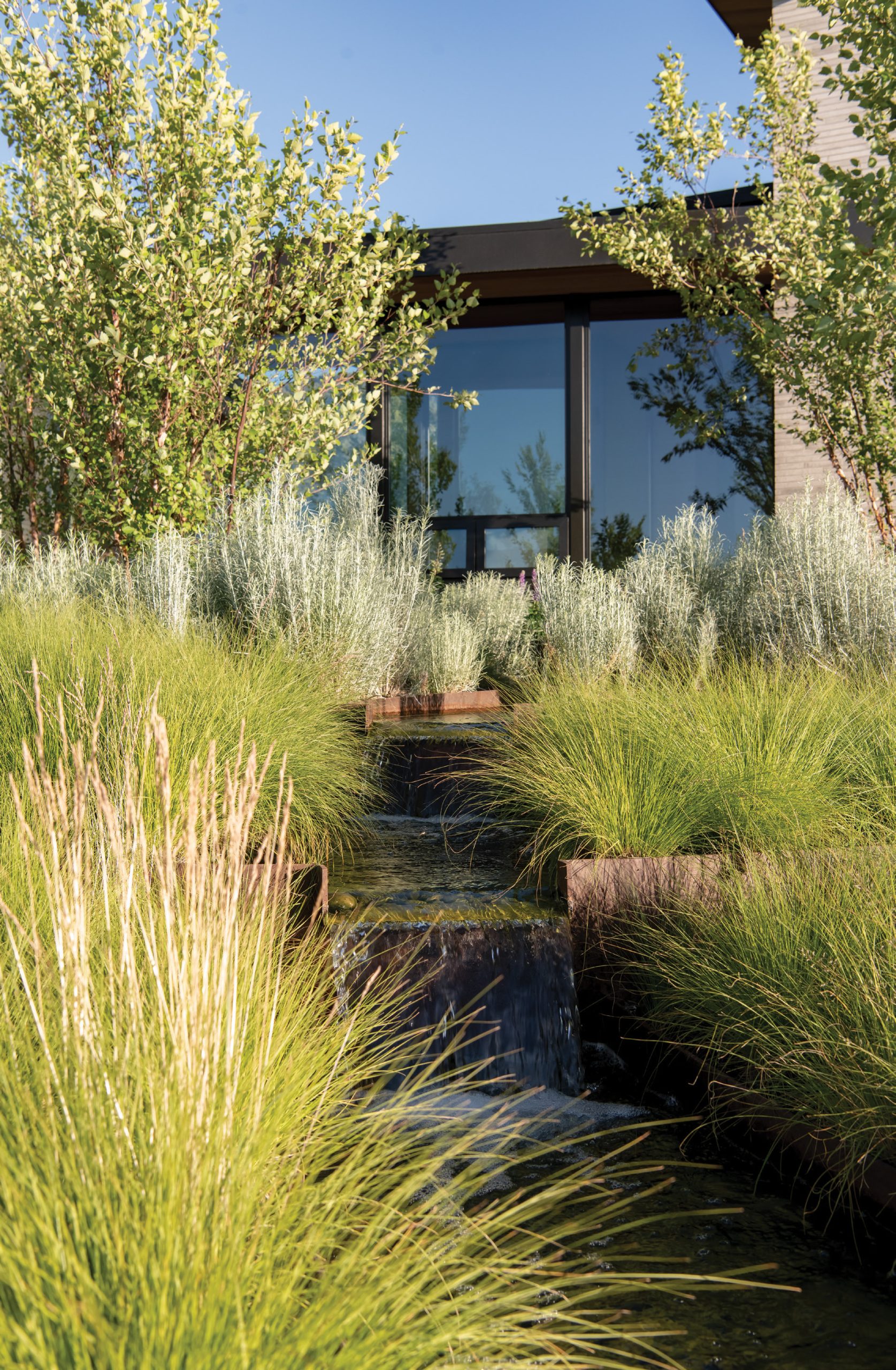
In the heart of Denver, a once formal landscape of sculpted shrubs and expansive lawns was transformed into a biodiverse garden designed to support pollinators. The rewilded planting contrasts intentionally with the modern geometries of the home and fountain. | BRANDON HUTTENLOCHER
How we live
Lindsay Schack, an architect with Love Schack Architecture in Bozeman, says she likes to bring on landscape architects and civil engineers early in the build process. “I have a ton of respect for expertise with landscape architecture because, here in the Mountain West, the climate is definitely challenging,” she says. The early input from professionals helps create a cohesive, beautifully livable home.
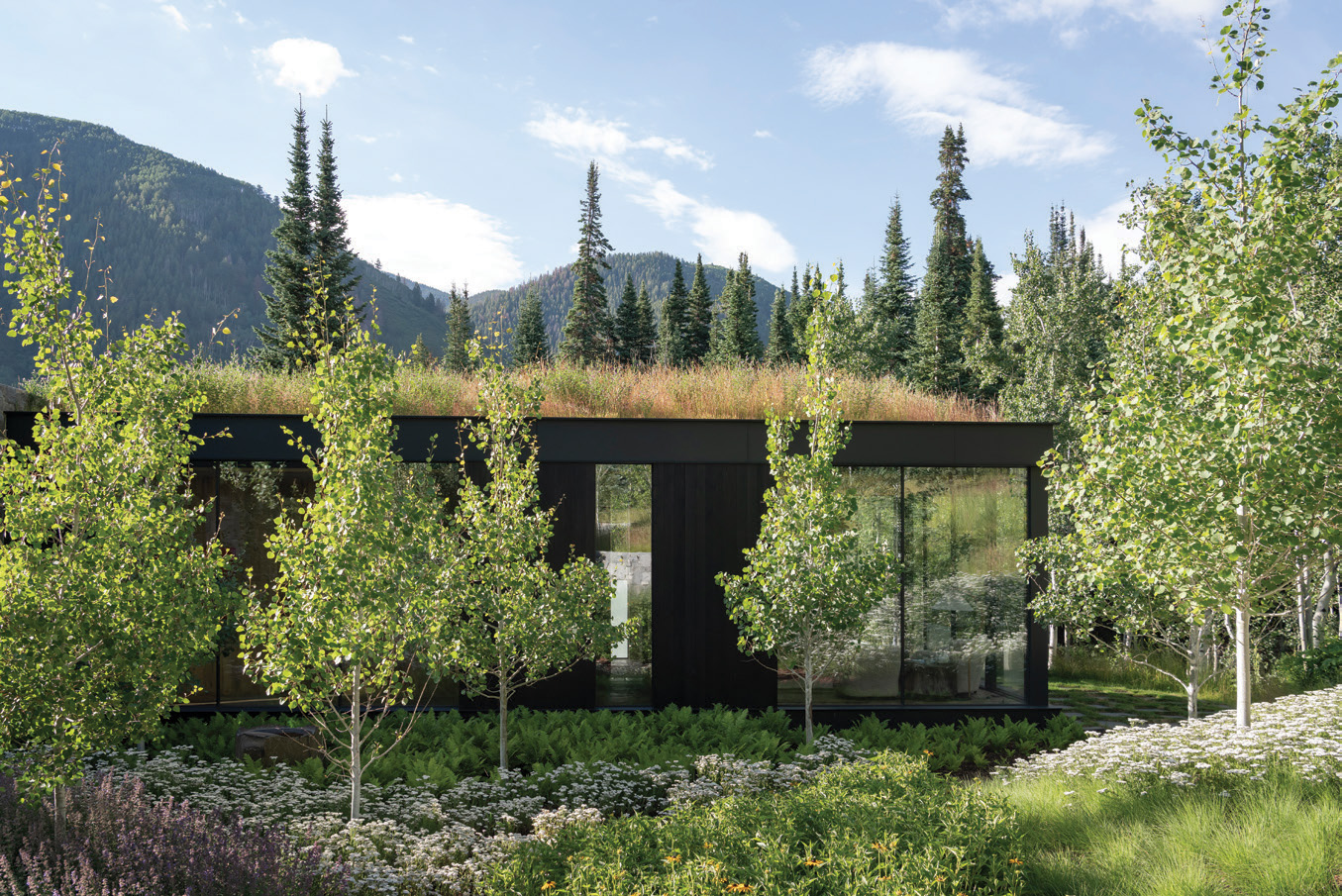
Designed to recede into its setting, this home is immersed — literally and figuratively — within a courtyard tapestry of mountain perennials, including yarrow, ferns, and catmint. Native quaking aspens provide dappled screening, while a lifted meadow roofscape reduces runoff and enhances insulation. | BRANDON HUTTENLOCHER
“I had a client trying to find more space in the fitness room in the lower level of their home because they really felt like they needed multiple treadmills for the members of the family,” Schack says, describing one of her favorite anecdotes about a client who relocated to the West. “There was a debate about how big to make the room, and it just seemed like we couldn’t quite make it work.”
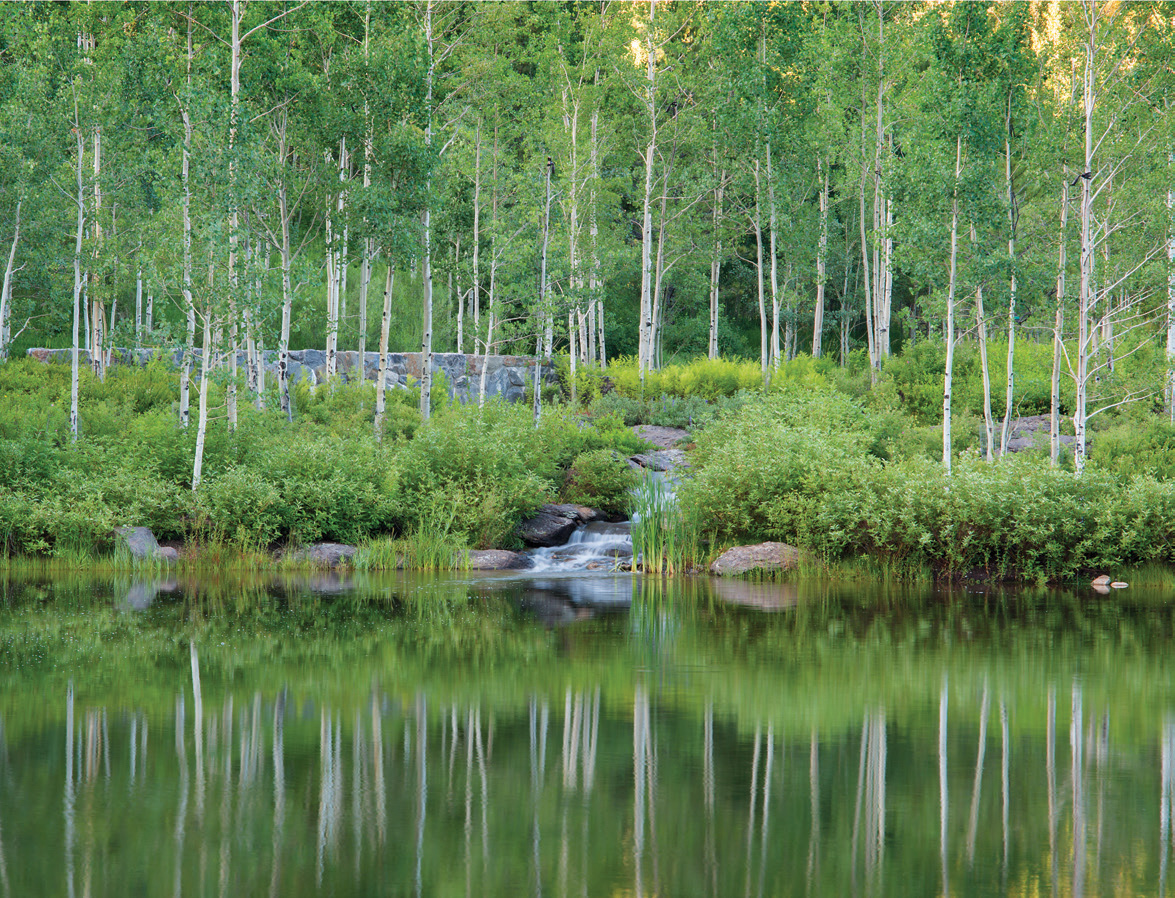
A former gravel pit has been transformed into a regenerative aspen ecosystem, structured by aquatic margins, native dogwood drifts, and massed quaking aspens. Seen only a year after completion, the project demonstrates the speed and power of intentional ecological restoration. | D.A.HORCHNER/DESIGN WORKSHOP
Schack’s advice? “Well, what if we just developed some walking trails at your house? Would that service the overflow time? Does everyone need to be using the treadmill in the gym at the same time? Let’s take a step back and ask ourselves, ‘What are we trying to do in our home here? Are we trying to be indoors on a treadmill or are we trying to be outside?’”
“The answer was outside,” she says. “The answer was one treadmill for inclement weather inconvenience, and then we actually developed this trail system around their property with a couple stop spots and grassland, and some viewpoints.” It became a beautiful, intentional, and functional outdoor space. When they started the process, the client didn’t understand they could do that. They were used to solving the problem of exercise in a particular way.
For some people, that solution might not have been the right one. But for this particular client, they realized that when they were in their home, they wanted reasons that would pull them outside. “It became this really fun thing that came out of a sort of silly struggle,” says Schack.
Why we live in the Mountain West
As an architect, Schack says a big part of designing homes in the Rocky Mountains is framing specific views through windows and understanding the proper orientation of the building so that you know what the spaces will feel like in the finished structure, with morning light, a western view, or protection from wind and sun.
A landscape architect can answer some of those questions, helping to account for the outside views while designing a landscape that safely and responsibly invites nature into the home.
For one of Albert’s projects, he designed the landscape for a modern interpretation of a ranch that featured traditional architectural forms and was perched on the edge of extraordinary pastureland that looks out to Aspen Mountain in Colorado. After completing a microclimate study, he and his team discovered a natural zone in which people could congregate. According to Albert, the heart of the home became the garden — an open space between two structures. To create a canopy and frame the space, Albert added aspen trees, inviting nature into an otherwise structured area.
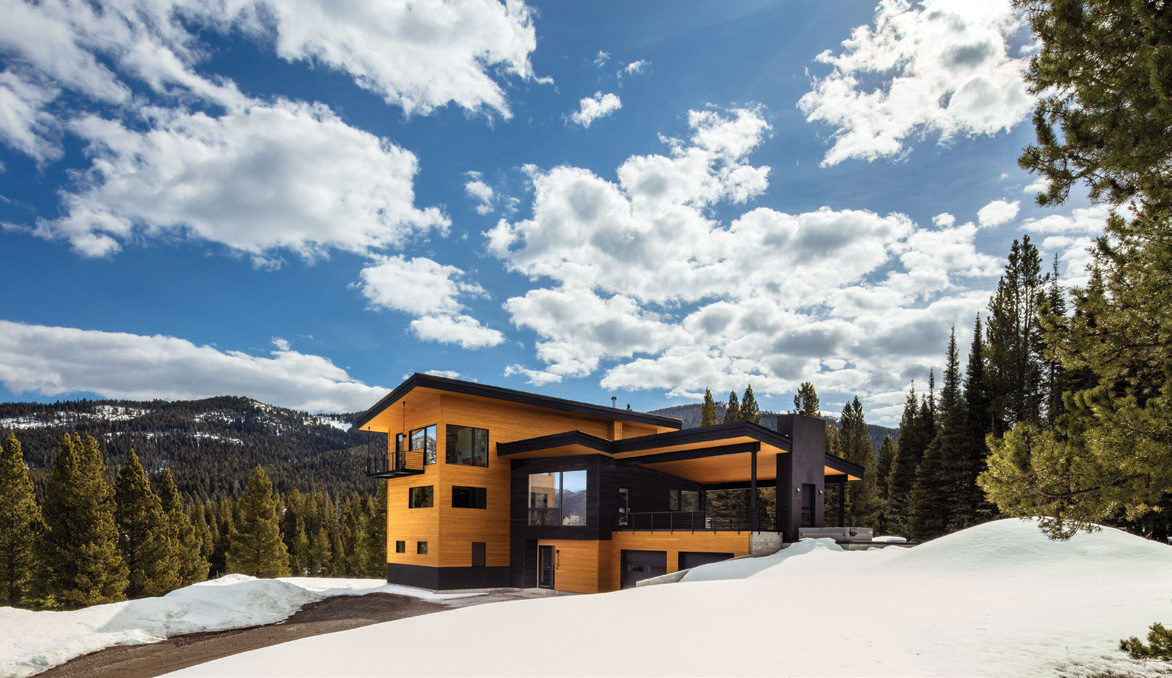
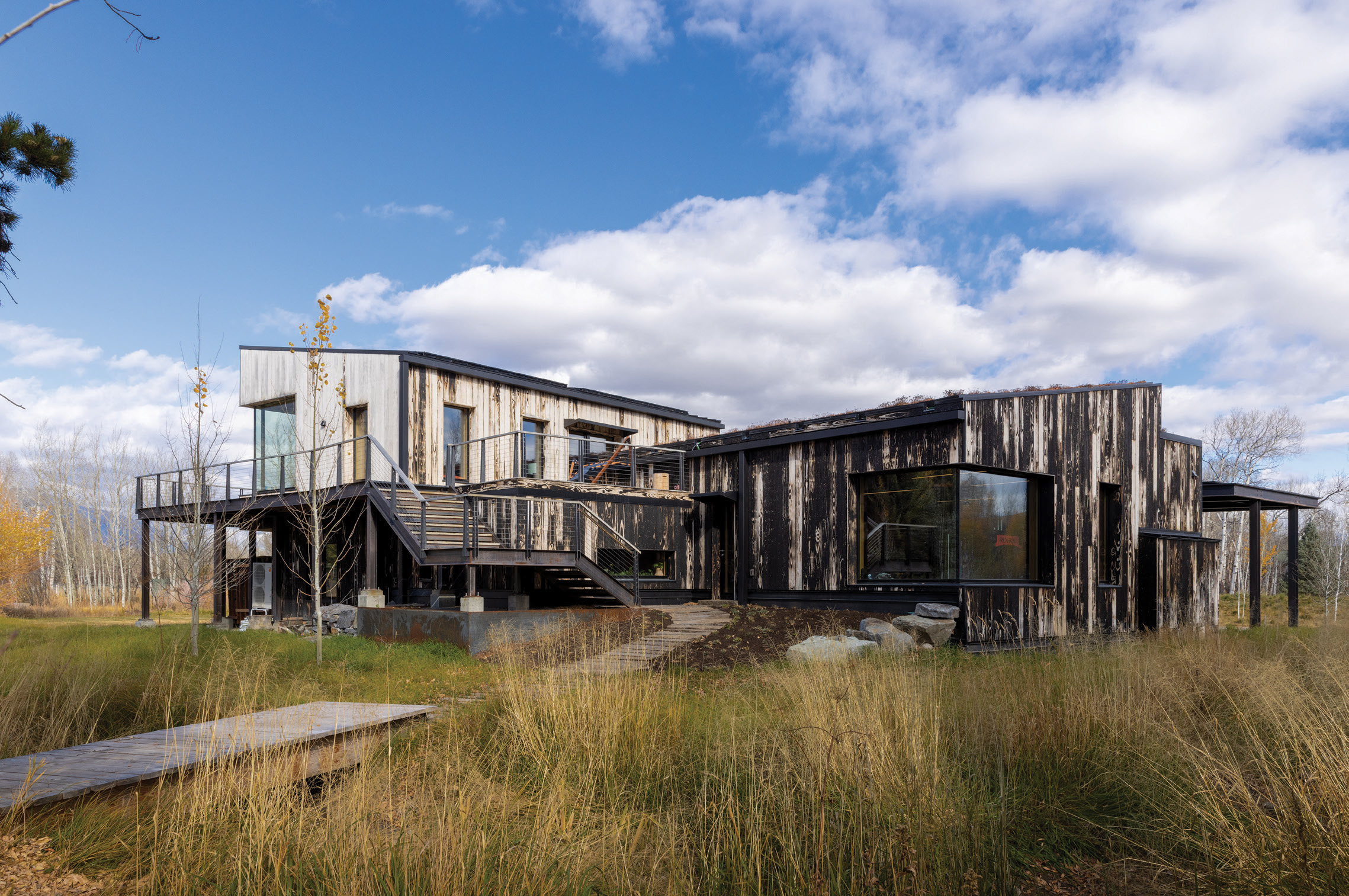
This Bridger Canyon home by Love Schack is nestled in the heart of the mountains outside of Bozeman. The retreat is designed to Passive House standards and built to withstand Montana’s harsh winters. The native landscaping helps integrate the home seamlessly into the ecology of the mountainside. | CODY BROWN
“The dappled light through the trees in the middle of the day makes it feel like a wonderful space to inhabit,” he says. “Even in the wintertime, the staccato of their trunks and branching structures mirrors the framing of the architecture. It’s all very intentional but at the same time draws the inhabitants outdoors.”
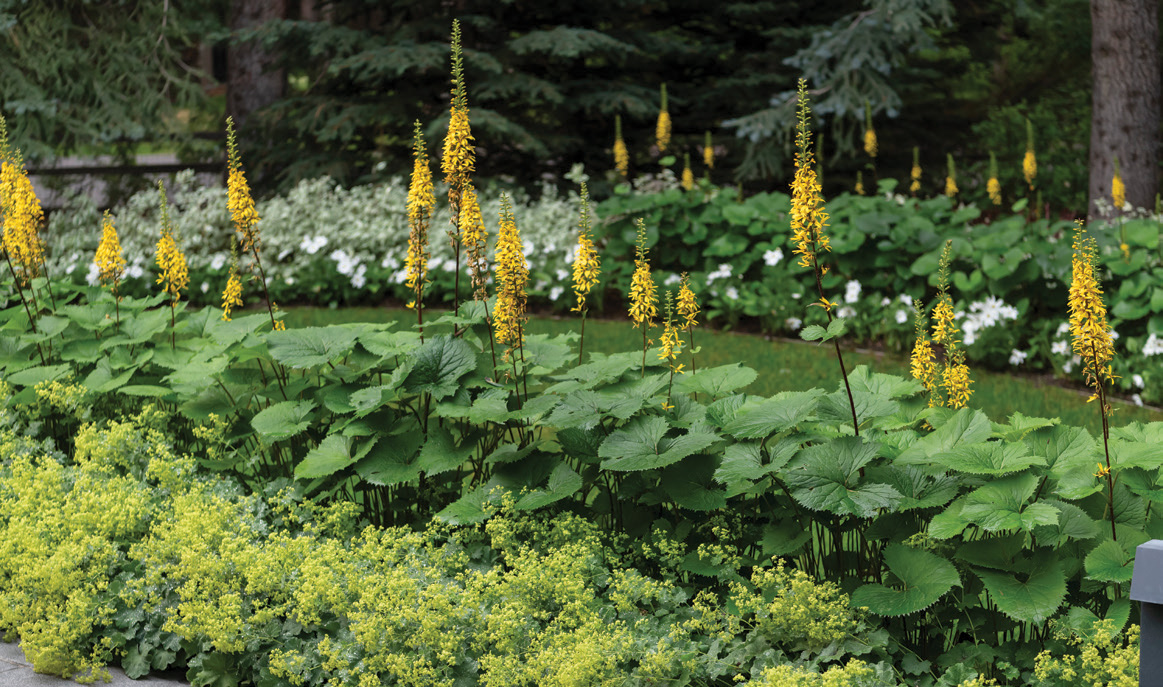
By massing lady’s mantle and ligularia in a consistent tonal palette, this planting strategy creates depth through repetition rather than contrast — shaping an intimate garden that is both immersive and refined. | BRANDON HUTTENLOCHER
“I love that our attempt to recreate nature is our desire to make things look like they just happened,” he adds. “There is a term out there that we use — it’s called ‘messy vitality.’ There is just this messiness, but it’s actually the messiness that makes it work. It’s not meant to be perfect. The views, the wildfire setbacks, the habitat, the vegetation community … if we are in an aspen grove, it’s an aspen property, so we look for ways to let aspens flourish there.”
Jeanne Allgood Gaisford is a freelance writer based in Clyde Park, Montana. Her commitment to family, love of Montana’s untamed outdoors, and passion for stories about inspiring people and the world we inhabit informs everything she writes. Her work often appears in the pages of Edible Bozeman and occasionally on Instagram; @jeannjeannie.
No Comments