




09 Apr Design Elements: Noteworthy: A student’s sustainable design is about taking less and giving more
A foundational focus at Montana State University (MSU), the language of sustainability inspired architecture master’s student Elena Silverman to submit a project that earned her an international award. Last fall, shortly after she discarded her model into a recycling bin at MSU’s Cheever Hall, she received an email announcing that her design was one of 10 selected from more than 1,300 worldwide submissions in a competition hosted by the American Institute of Architects Committee on the Environment and the Association of Collegiate Schools of Architecture. Hers is the fifth MSU design to receive the honor since 2017.
COURTESY OF AIA COTE
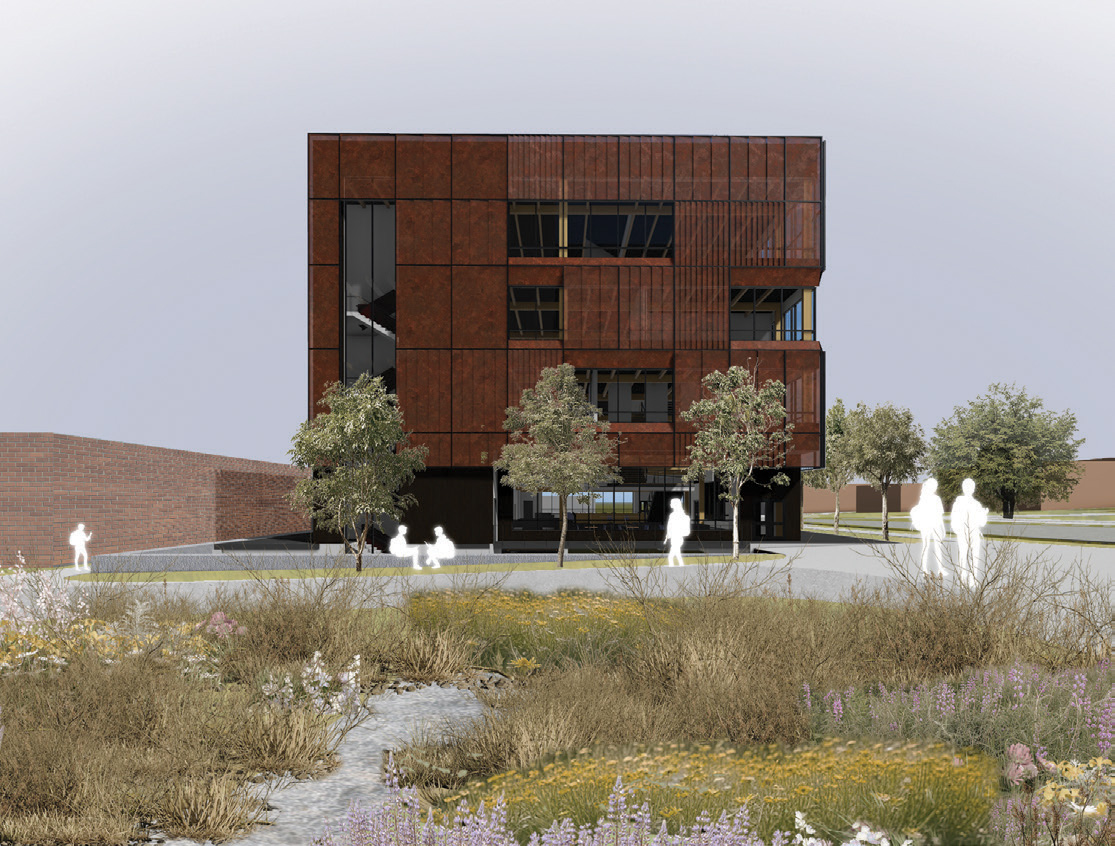
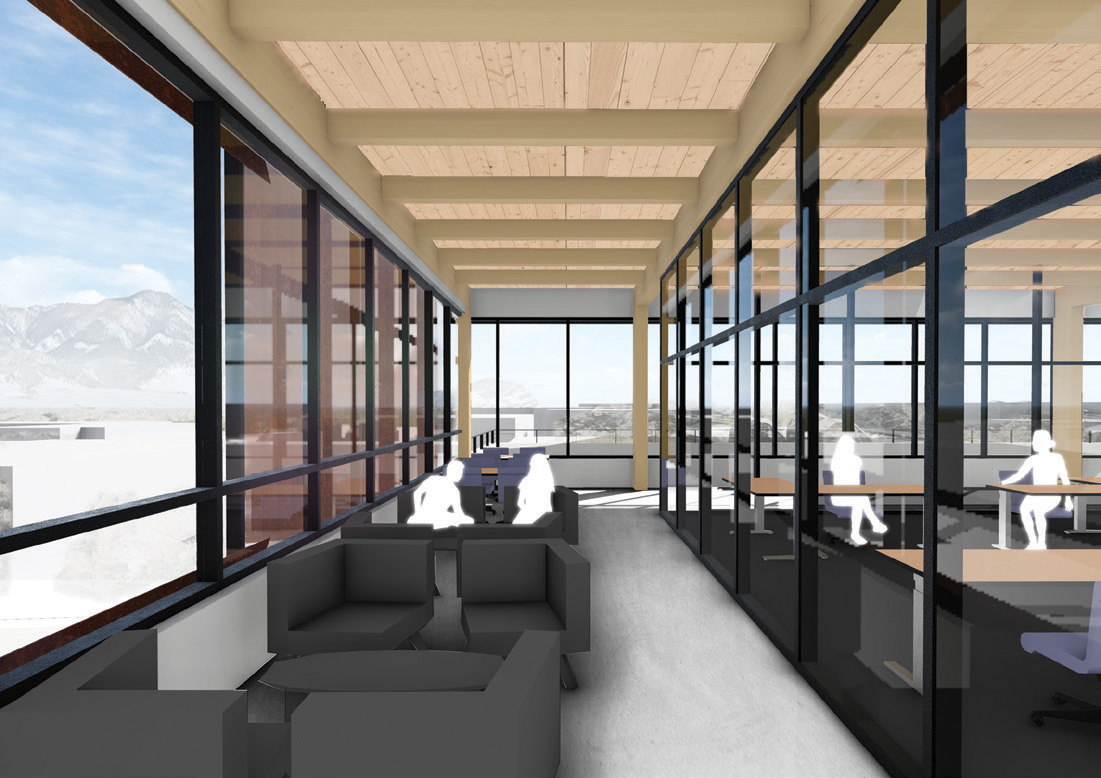
Entitled Center for Information and Collaboration, Silverman’s project was submitted to the competition’s upper-level category. The multistory educational building she imagined, positioned adjacent to Cheever Hall, incorporates low-energy systems for heat, water, and ventilation; a sunken library; gallery spaces for architecture students; a 300-seat auditorium; conference rooms; and underground parking. During the academic year, the building would offer interdisciplinary connection; during offseasons, it would be open to the broader community.
Silverman refined her design through critiques with faculty three times a week for four hours at a time. Throughout the process, she learned to set aside perfectionism and adopt the mindset that a project is never truly finished. Assistant teaching professor Eric Watson describes her as curious and disciplined — qualities essential to making a lasting impact.
COURTESY OF AIA COTE
Jurors from the competition remarked that, “Center for Information and Collaboration is an exceptional design for clarity and organization, making all aspects of the project easy to understand. … The design showcases careful integration of sustainability measures, resulting in a low-energy, high-performance building that reflects strong ecological responsibility.”
Buildings account for 75 percent of the electricity and 40 percent of the total energy used in the United States, contributing to 36 percent of the nation’s total carbon emissions, according to the U.S. Department of Energy. Watson advocates for moving beyond simply reducing energy use, asking how buildings might give back to the power grid or return cleaner water to aquifers. Likewise, Silverman’s design suggests that sustainability isn’t just about using less but about replenishing what’s been taken.
No Comments