


21 Nov Dancing on Ice
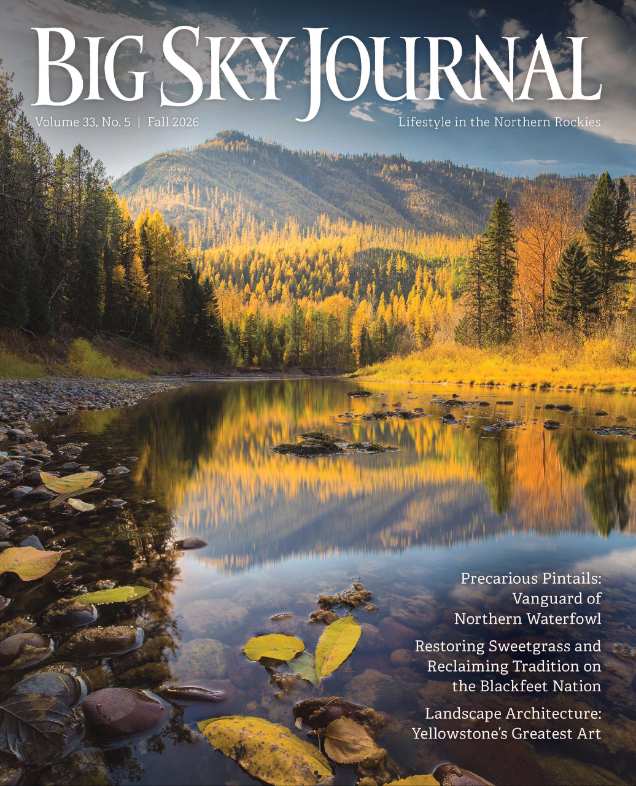
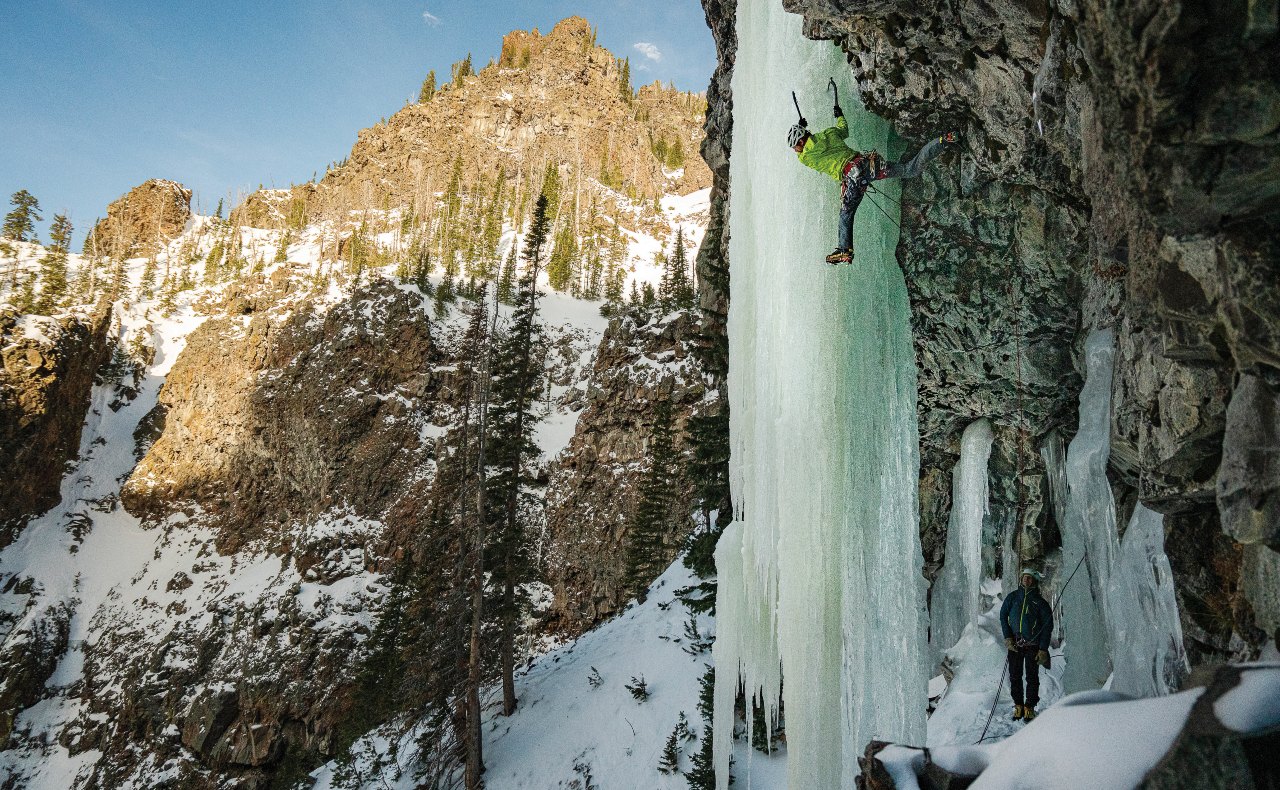
In Montana, ice climbing has a bit of a medieval-cult feel. Those who belong are fiendishly devoted; those who’ve never tried it wonder why anyone would fall into its grip. Hanging off frozen icicles, with razor-sharp daggers that might bite more than the ice if one is not precise, takes a certain twisted mind to fully enjoy. Montana is home to many of the best ice and mixed climbs in the Lower 48, and its neighbor to the north is only a short drive to world-class climbs and test pieces. Montana ice climbers share in the secret bonus that, if you also crave cold-smoke skiing, you’ll always have a mountain adventure at the ready, no matter what conditions winter dishes out.
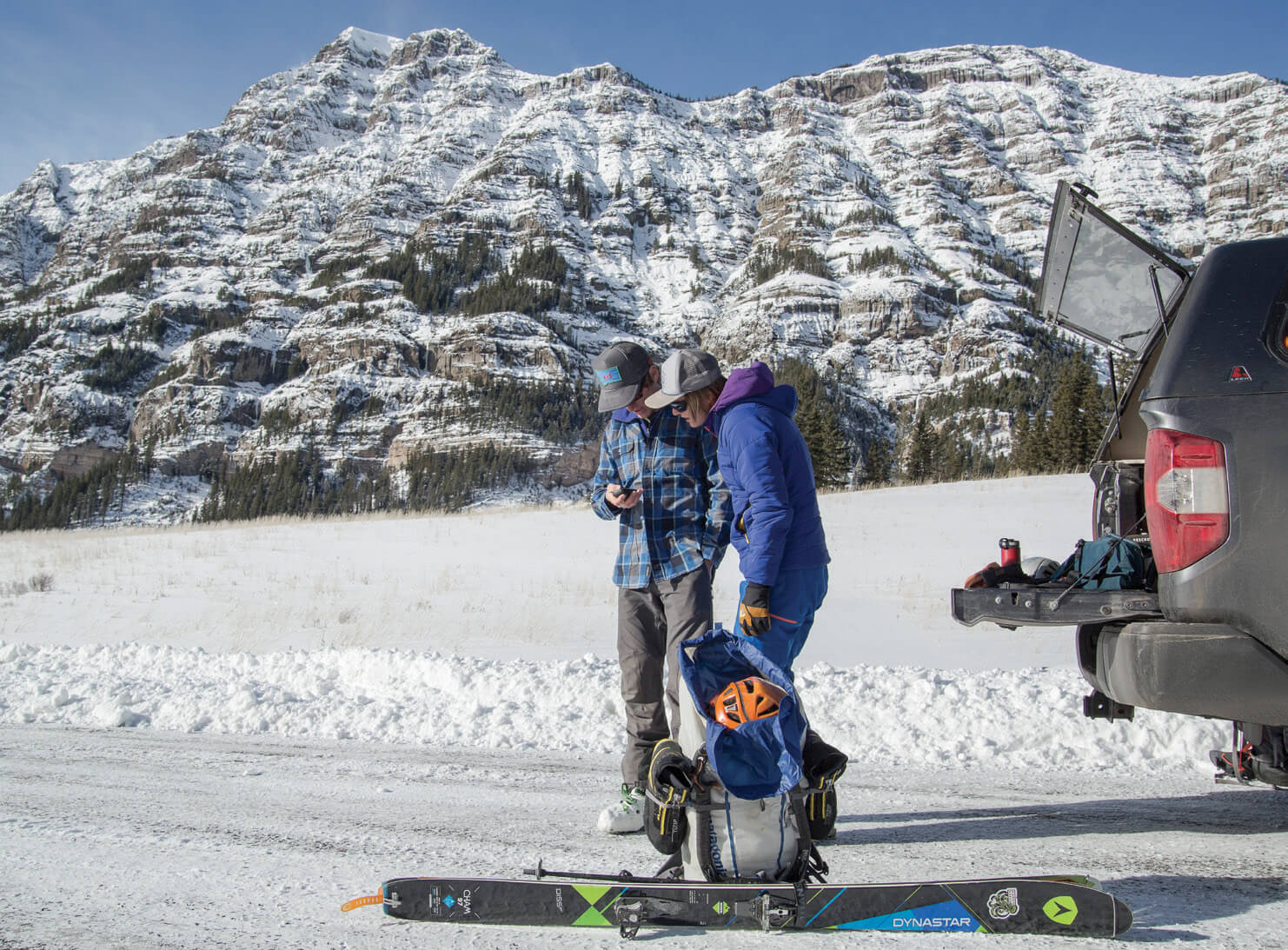
With Barronette Peak announcing itself in the distance, Anne Gilbert Chase and Noah Ronczkowski gear up for a skin approach to an ice climb in Yellowstone National Park, in Montana.
Ice climbing is not destined to become mainstream, maybe that is also part of the allure. It’s a small tribe that embraces and respects its magic. Montana is one of the few landscapes in the Lower 48 where ice consistently forms due to its cold winters. Hyalite Canyon in Bozeman boasts hundreds of climbs, some of which rarely appear but most do form each winter to open a wonderland of climbing. They attract a strange clan that migrates here from neighboring states, living old-school “van life” in the Hyalite Peak parking lot — not exactly the epitome of modern glamping.
Back in the 1990s, the fun really began when the Hyalite gate closed on January 1. A few fortunate ice climbers clever enough to own a snowmobile ruled the canyon, and friends willing to be pulled for 13 miles of rugged track on skis shared in the canyon’s serenity, but make no mistake: There is nothing serene about being pulled on skis by a sled.
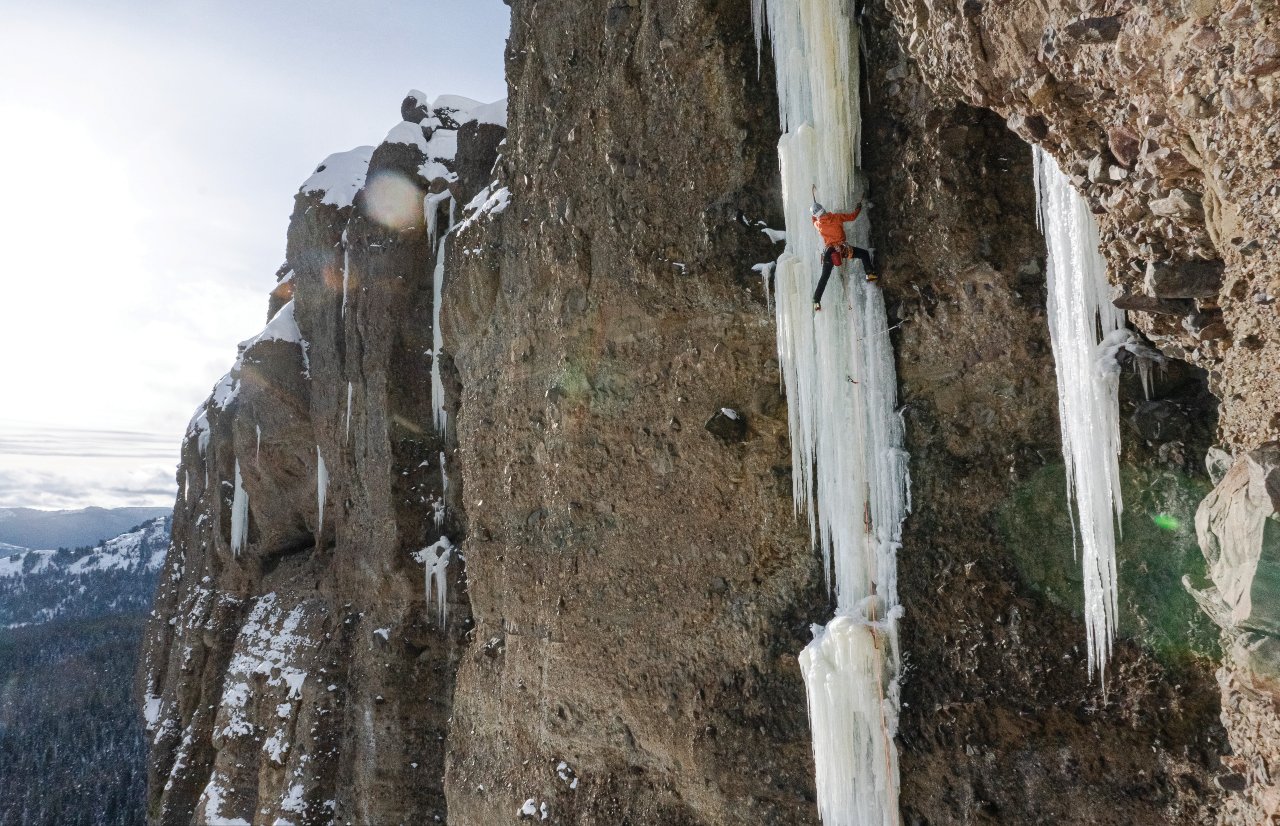
Gilbert Chase climbs ice on a cold December day. The location, just north of the Lamar Valley in Yellowstone National Park, offers a unique glimpse of the vast open space.
I am fortunate to live 5 minutes from Hyalite’s entrance. Though I grew up in Wisconsin and had my first foray onto ice in a dank ravine that did not inspire, I got hooked on climbing ice my first real winter season here in ’95. Hyalite is now teeming with climbers and skiers, but those early years were not exactly what I’d call the “good ol’ days” of climbing ice in our canyon. I’m happy to have today’s relative plethora of partners (especially women) and modern ice climbing gear in trade for the solitude of being among only a few teams of climbers in the canyon. Some of the best days in Hyalite have been the busiest, when a group of local friends spontaneously ends up sharing ropes, laughs, and a wall full of great climbs.
Cooke City, Montana harbors some of the wildest and most stunning ice and mixed lines in the state, but their ephemeral nature requires a diehard dedication to catch them in shape. Cooke City is the end of the road in winter, and the sole access point is through Yellowstone National Park on the only road the park plows. Foreboding Barronette Peak, which guards the west side of the highway and the Nordic trail at its base, harbors some of the most technical and exciting climbs in the region, along with huge avalanches that roar down its face after big storm cycles.
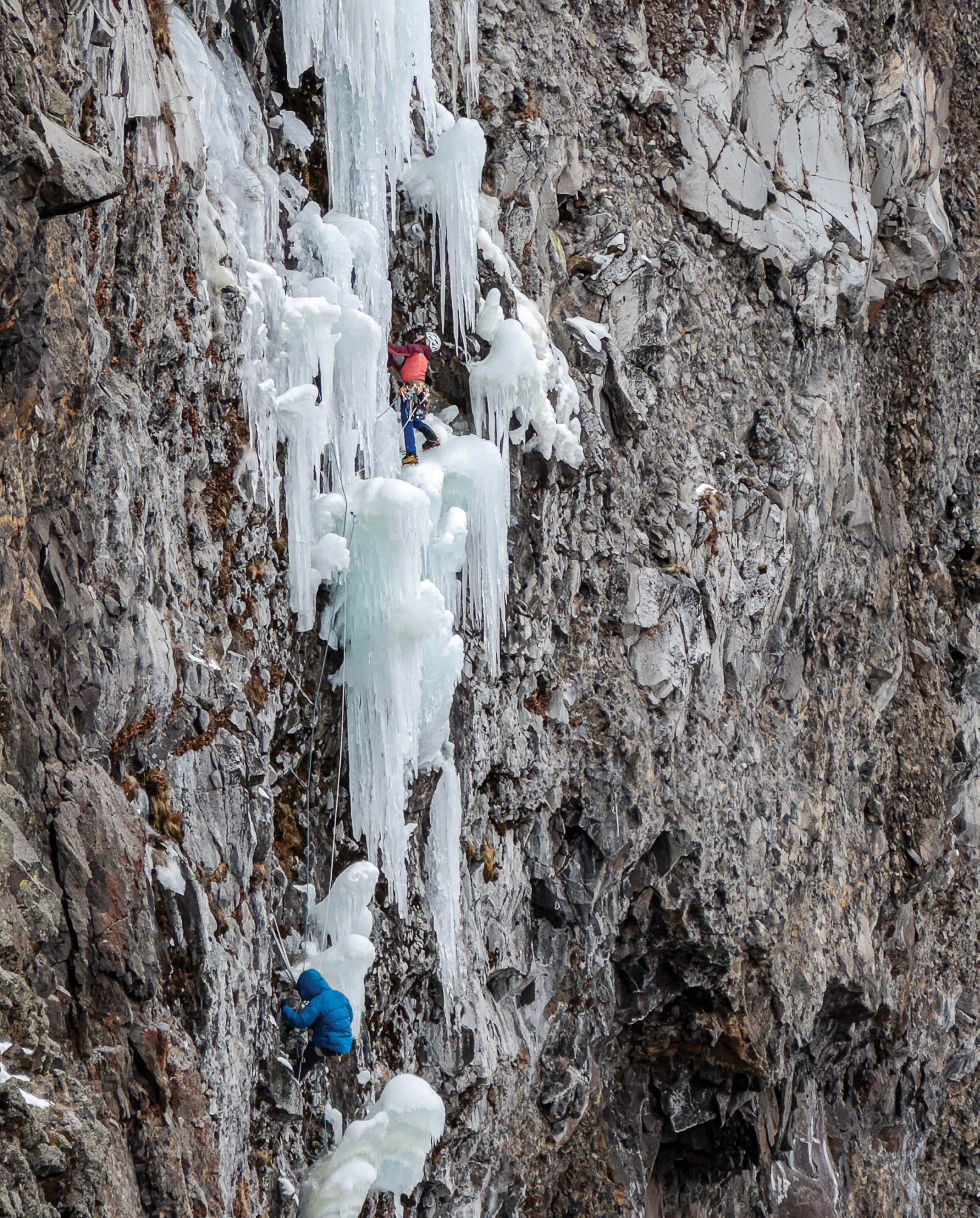
The author leads an ascent up Winter Dance in Hyalite Canyon outside Bozeman, Montana.
Living in Bozeman and climbing in Cooke City also demands one embrace “dawn patrol” to catch a magical climbing day. And checking local avalanche conditions is mandatory. One winter morning, we got word that Cooke City’s infamous Petrified Dreams ice climb was most likely “in nick,” as we say, or in ideal condition. My alarm jolted me awake at 4:45 a.m. and I painstakingly peeled myself out of bed. I poured espresso into a thermos. I pulled my egg sandwich out of the fridge, popped it in the microwave, then wrapped it in tin foil. After triple checking my gear list, I loaded the car: rope; rack; a garbage bag for stashing my ski boots, skis, tools, spikes, screws, and draws; snacks; my thermos; and enough down layers to make a polar bear jealous.
Doug, Lindsey, and I met in the predawn and carpooled toward Cooke City to climb its wild and esoteric icicle. We drove in groggy silence into the subtle hues of Yellowstone’s dawn. As the sun rose over the Lamar Valley, a soft fog blanketed herds of bison, their frozen fur tips sparkling in the morning light. My stupor dissolved into the prehistoric landscape. We scouted for a coveted wolf sighting. There was still enough drive time for my climbing nerves to lie dormant.
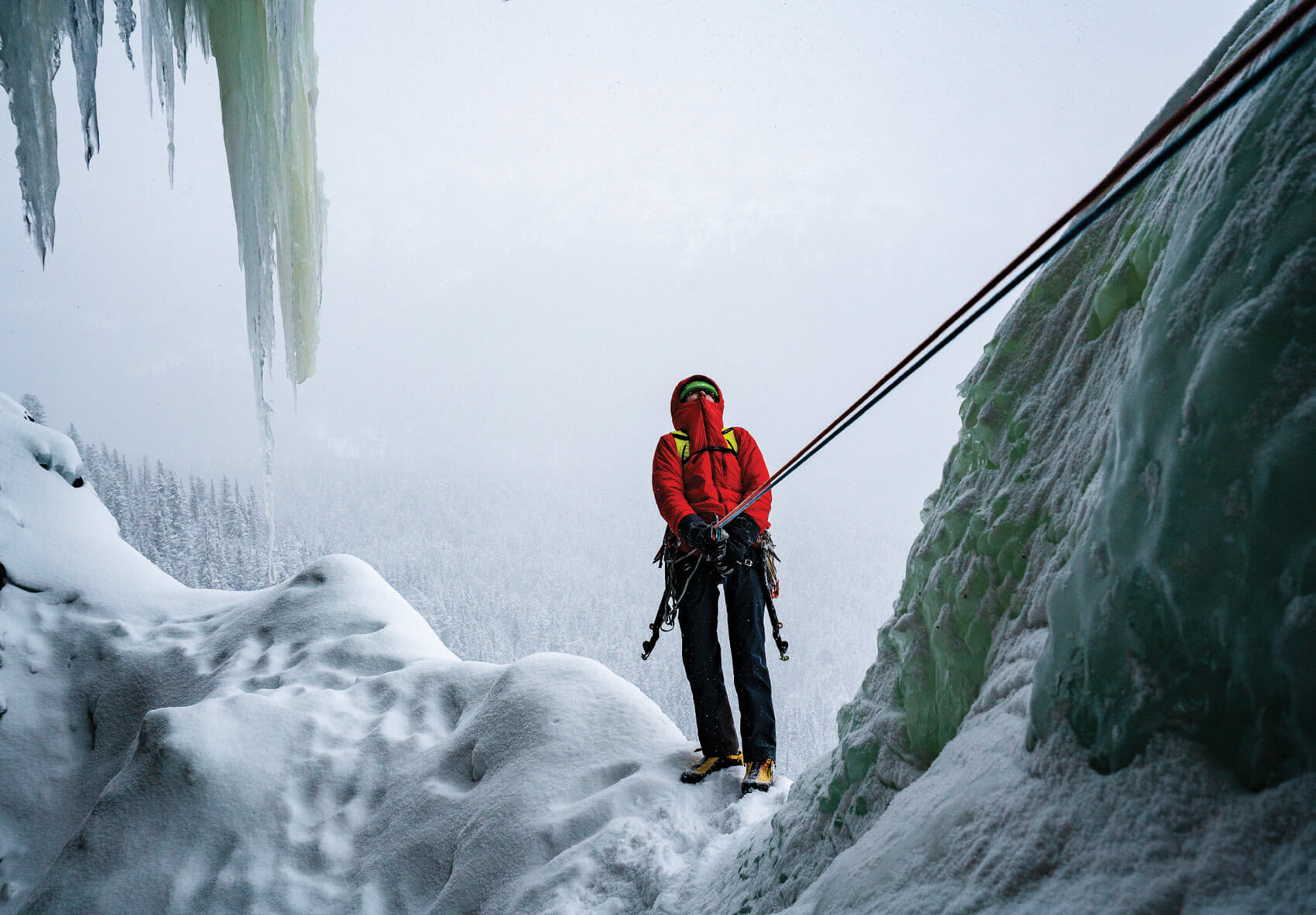
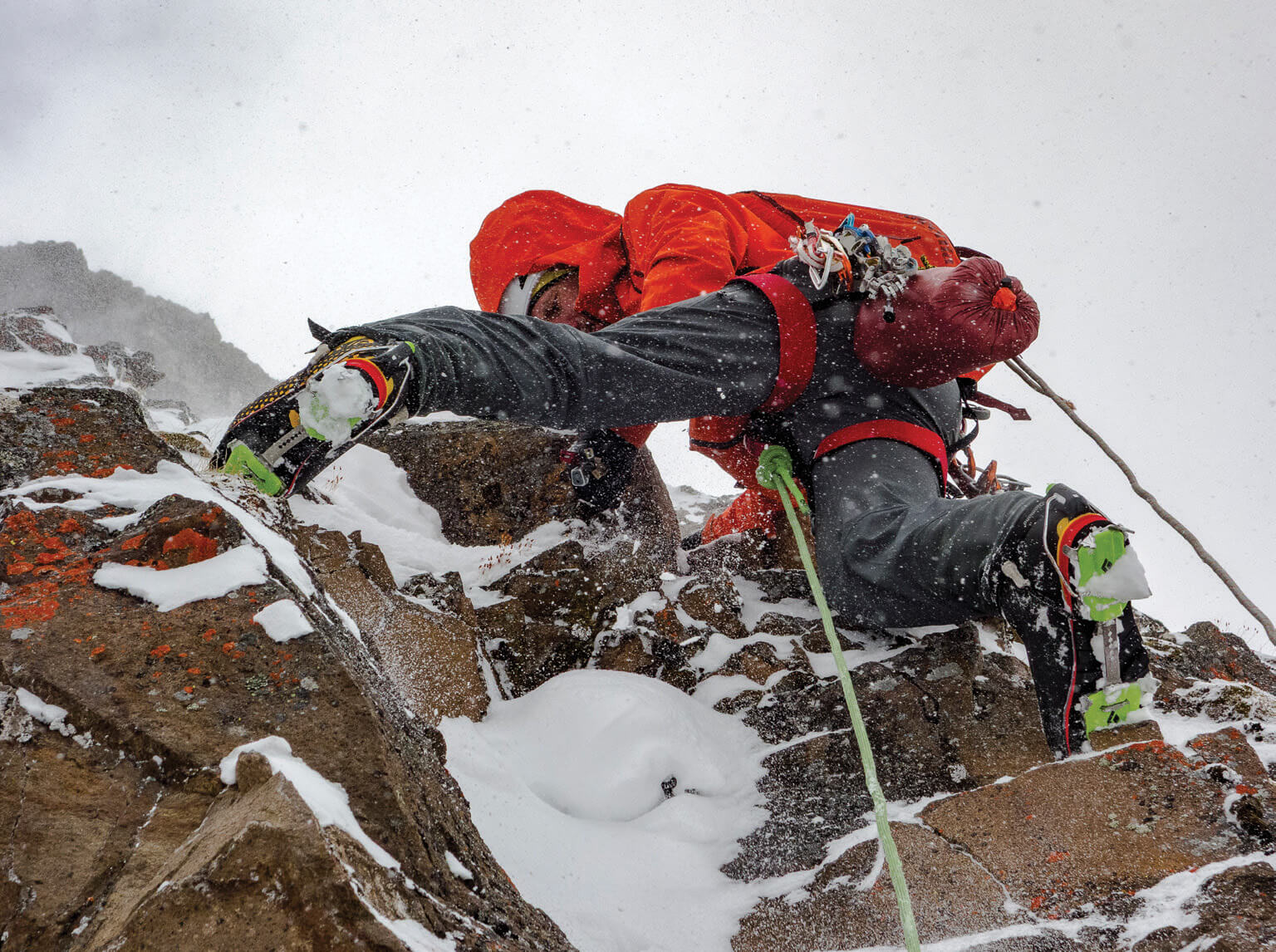
Kate Rutherford descends Cleopatra’s Needle, also up Hyalite Canyon, on a cold and blustery winter day.
Sipping the last of my coffee, the car heater cranking, I glanced at the outside temperature; it read minus 28 degrees Fahrenheit. Each of us held our breath, pausing to absorb the reality that climbing ice at this temperature is dangerous, if not impossible. Ice this cold is brittle, shattering like glass with the subtle touch of a pick. Just driving through this vast landscape before the chaos of tourists arrive is a fleeting gift, a wildness that reaches deep and wide. But we also craved the climb.
We’d driven too far, woken too early, to turn back now. We resolved to at least “go for a little ski,” and started the skin up to our climb, which lies a thousand or more feet above the steaming river valley. Our blood flowed thick and slow like the water below. Wearing every layer, we were careful to check each other’s faces for signs of frostbite. The snow glistened as the biting cold air we tried to filter through our Buffs gave clarity to the fragility of life at these temperatures. I groaned like the river below, slowly and methodically putting one ski in front of the other. I told myself it wasn’t that brutally cold, that maybe, just maybe, with another hundred feet below us, we would start to feel a temperature inversion, and our digits.
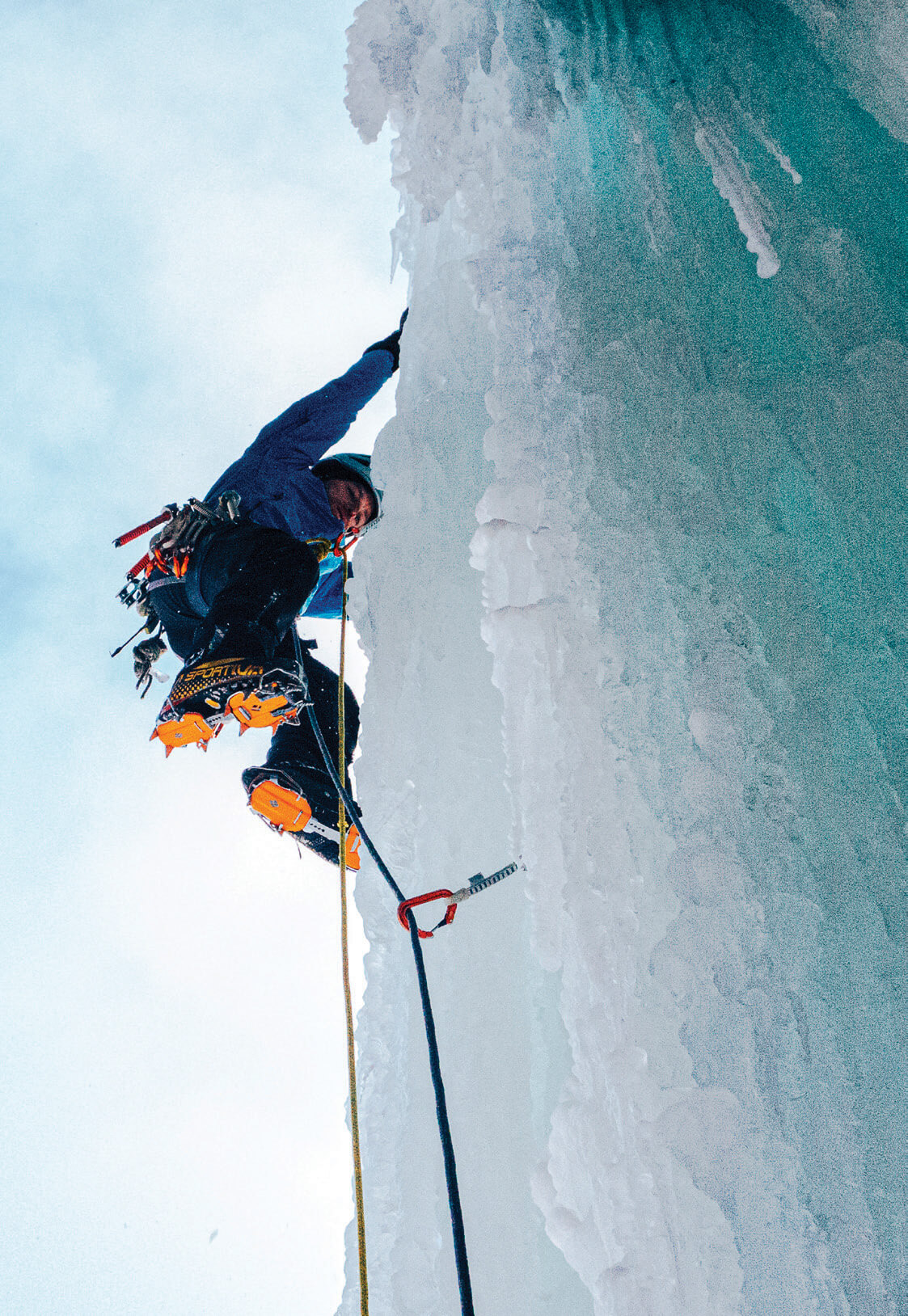
Noah Ronczkowski climbs Hyalite Canyon’s Killer Pillar.
Why do we have this esoteric and arguably bizarre passion for climbing ice? What might seem like an insane love of suffering is more about the wild places, trusted partnerships, and feeling that we are getting away with something precious and ephemeral as we dance up an icicle. There is nothing quite like dangling off an icy cliff to make you focus completely on living the present moment to its fullest.
Though I immediately found the fluidity and joy of climbing ice, it took over a decade for modern gear and easy access to open my mind to the unique adventures that continue to inspire me. Back in the ’90s, Hyalite Road wasn’t plowed. Before the gate closed, we’d rally up the canyon, bouncing in the only set of car tracks available through deep snow, where passing wasn’t an option. The crux of the day was not on the ice; it was white knuckling the steering wheel and trying not to slide out of the ruts and into the river (on one side) or snowbank (on the other), where you might wait hours for anyone to help try to pull you out, putting a quick end to the life of your climbing rope. The reality? We always ended up stopping to get someone else unstuck, if not requiring the service ourselves. There was camaraderie and expectation: You always stopped to help.
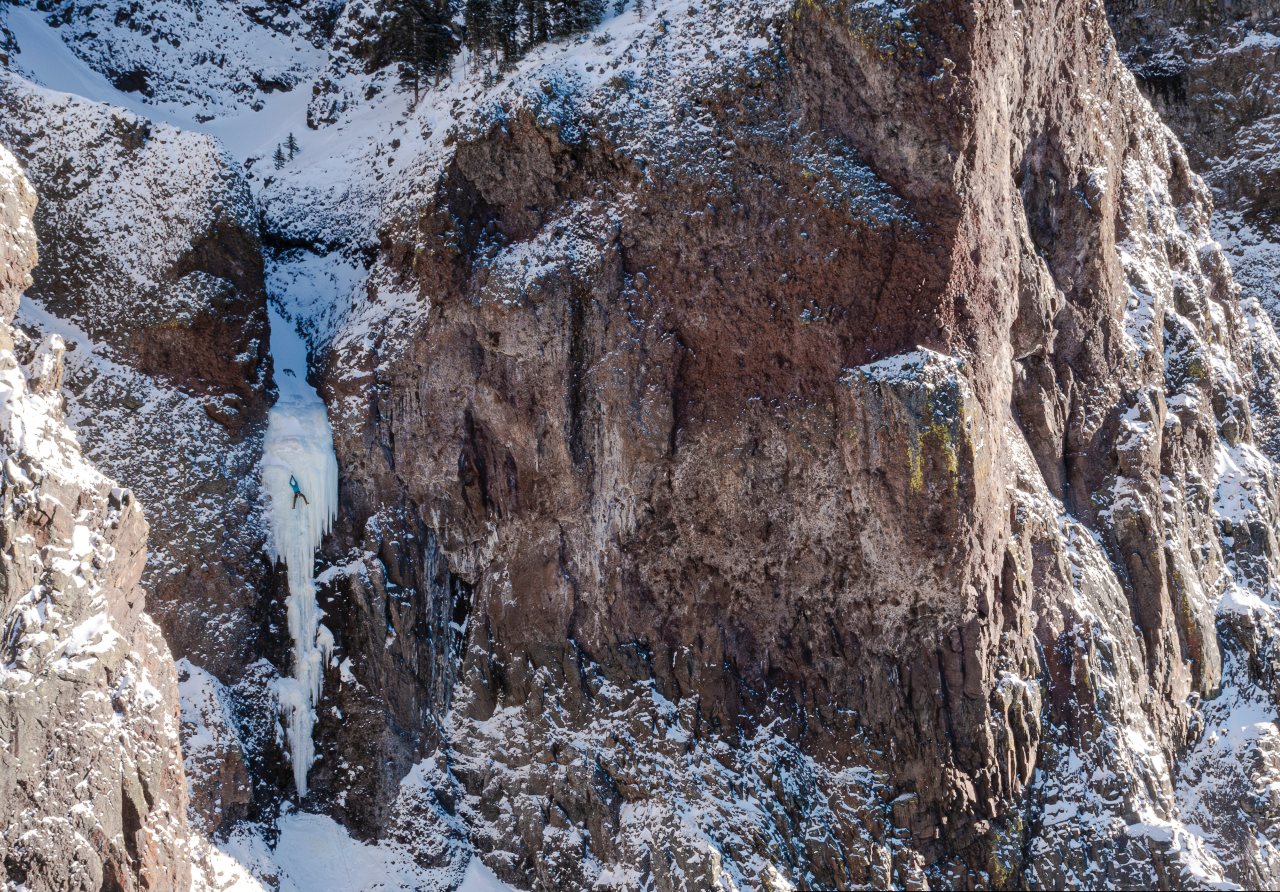
Ronczkowski climbs The Upper Mummy on a perfect bluebird early-winter day in Hyalite Canyon.
One morning, we were stopped by a Chevy Impala blocking the road just below History Rock. A metal reflector was stuck in its engine, which was shooting out smoke and steam from an overheated radiator. They were “city folk” years before we called Bozeman a real city. They were apparently out for a scenic drive (at 8 a.m.?) dressed only in city clothes, looking cold, confused, and maybe a little hungover or, more accurately, still altered. They were in the middle of a domestic argument that did not involve the immediate need to sort out how to get out of their predicament. Of course, that meant our day ended before it began.
Other days, the fun was had in seeing a brand-new Hummer being pulled out of the river. At least driving epics were good for a laugh.
These days, the road is plowed impeccably and the gear is lightyears from the options available even in the early aughts. Tools are lighter and leashless, gloves are better fitting, and ice screws are easy to place, all of which allows you to climb longer and harder routes without freezing your extremities. In the last few years, even the temperatures feel warmer. As the gear gets better, the climbs get harder and the list of new adventures in our small canyon surprisingly continues to grow. The freeze-thaws that happen more often now allow for more ice to form and the modern gear creates opportunities for lines that once proved impossible to be climbed multiple times a season. Hyalite now attracts climbers from all over the U.S. as the list of new ascents and more technically difficult mixed routes (employing ice- and rock-climbing techniques and gear) continues to expand.
Drew Smith takes on the Magro-Opp (aka In Search of Sunrise) on the north face of Palace Butte in Hyalite Canyon.
A good thaw was FAR from our thoughts that brutal morning in Cooke City, however. But luck held out and, sure enough, a few hundred feet off the valley floor, we skinned into the relative warmth of an inversion. Finally stopping in the sun, peeling off the extra layers and stress that the arctic temperature imposed, we smiled with the realization that our “little ski hike” would turn into a chance to climb Petrified Dreams after all. We stashed our skis and boots as the approach got steep and post holed in our climbing boots to the base of a stunningly huge and daunting ice flow. Leaving the petrified and going after our dream, we swapped leads and witnessed the crazy reality that the sun’s warmth, even in these temperatures, produced actual running water over the ice, dousing us at each belay. We delicately danced up this rarely formed climb to a view of Lamar Valley and the deeply satisfying wildness of place and passion.
Jeannie Wall has called Bozeman, Montana home since 1994. She spent 30 years developing technical products in the outdoor industry and recently founded Broad Beta, an initiative emboldening women through their shared stories to embrace wild ideas, wild experiences, and the preservation of wildness. She has also worked to develop local food systems and raced on a world-class level in Nordic and ski mountaineering. Now, she’s an avid climber, renowned throughout the tight-knit community; broadbeta.com.
Jason Thompson is a Montana-based photographer and user-experience researcher whose work bridges visual storytelling and design thinking. After 15 years capturing authentic outdoor culture for leading brands, he now applies that same curiosity and empathy to research and digital design, helping brands and people connect through meaningful experiences.
No Comments